
This lesson explores the essential principles of maintaining a safe following distance from the vehicle in front of you. By understanding how speed, reaction time, and road conditions influence your total stopping distance, you will be better prepared to avoid hazards and pass the Category B theory exam.

Lesson content overview
Maintaining a safe following distance is one of the most fundamental habits of defensive driving. In traffic, conditions can change in a fraction of a second. A vehicle ahead might brake suddenly due to an obstacle, a pedestrian, or a sudden change in traffic flow. If you are driving too closely behind, a collision becomes almost inevitable.
In the Turkish Driving License Category B Theory Course, understanding following distance (known in Turkish as takip mesafesi) is crucial not only for passing the official MTSK e-sınav but also for preserving lives on the road. Rear-end collisions (arkadan çarpma) are among the most frequent accidents on Turkish highways, and they are almost always legally attributed to the driver behind for failing to maintain a safe following distance.
Safe following distance is defined as the space or time gap that a driver must maintain behind the vehicle directly ahead. This gap serves as a safety buffer, giving you sufficient time to perceive a hazard, react, and bring your vehicle to a complete, controlled stop without colliding with the lead vehicle.
When you follow another vehicle, you are entirely dependent on their actions. If the vehicle in front of you encounters an emergency and stops instantly, your safety depends entirely on the physical gap between your front bumper and their rear bumper.
This safety buffer serves several critical purposes:
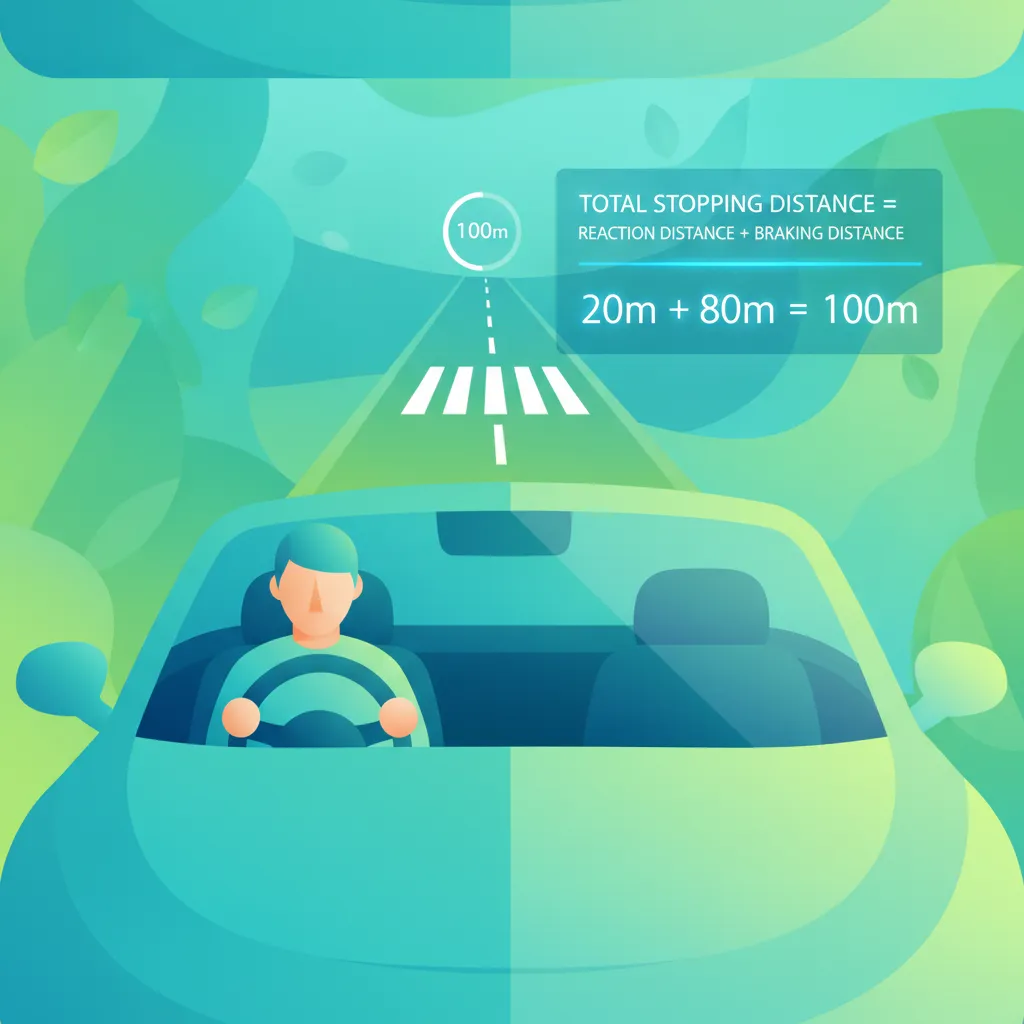
To understand why specific following distances are mandated by law, you must master the physics of how a vehicle stops. A vehicle never stops the instant you press the brake pedal. Stopping is a continuous process divided into two main phases, which together make up the Total Stopping Distance (Duruş Mesafesi).
The total distance a vehicle travels from the exact moment the driver sees a hazard to the moment the vehicle comes to a complete standstill. It is calculated as:
Reaction time is the interval between a driver perceiving a hazard (e.g., brake lights illuminating ahead) and the physical initiation of a response (e.g., hitting the brake pedal).
For an average, alert driver, the reaction time is approximately 0.75 to 1.5 seconds. During this split second, your vehicle continues to travel at its current speed. The distance covered during this time is called the Reaction Distance (Reaksiyon Mesafesi).
Several factors can dangerously increase your reaction time:
Once you physically press the brake pedal, the vehicle's braking system engages. The distance the vehicle travels from this point until it comes to a complete halt is the Braking Distance (Fren Mesafesi).
Braking distance is governed by physical laws, specifically kinetic energy. The formula for kinetic energy is:
Because velocity () is squared, braking distance increases quadratically with speed. If you double your speed (e.g., from 50 km/h to 100 km/h), your braking distance does not double—it increases fourfold. If you triple your speed, your braking distance increases ninefold.
Additionally, braking distance is heavily influenced by:
The Turkish Highway Traffic Law (Karayolları Trafik Kanunu) and the associated regulations define precise legal guidelines for following distances. Every driver preparing for the Category B license must know how to calculate and apply these rules in various scenarios.
In normal weather and road conditions, the official Turkish traffic regulations state that the minimum following distance (in metres) must be at least half of the vehicle’s current speed value (in km/h).
For example:
MTSK Exam Tip: The "half-the-speed" rule applies strictly under ideal road and weather conditions. If the road is wet, icy, or visibility is poor, this distance must be increased significantly.
Because it is highly difficult to accurately estimate physical distances in metres while driving, traffic authorities recommend using a time-based measurement known as the Two-Second Rule. In Turkish driver training, this is famously referred to as the "88-89 Rule" (88-89 Kuralı).
Saying the numbers "eighty-eight, eighty-nine" (in Turkish, "seksen sekiz, seksen dokuz") at a normal speaking pace takes exactly two seconds.
Choose a fixed object on the side of the road ahead, such as a traffic sign pole, a tree, or a bridge shadow.
As soon as the rear bumper of the vehicle in front of you passes that fixed object, start speaking: "Eighty-eight, eighty-nine" (or "Seksen sekiz, seksen dokuz").
If your front bumper reaches or passes the chosen fixed object before you finish speaking the numbers, you are following too closely. You must slow down and expand the gap.
If you reach the object after saying the numbers, you are maintaining a safe, legal two-second following distance.
One of the most frequently tested legal exceptions in the Turkish theory exam involves vehicles carrying hazardous materials (tehlikeli madde taşıyan araçlar).
Regardless of their speed, drivers of vehicles carrying dangerous goods must maintain a minimum following distance of at least 50 metres when driving outside residential areas (non-urban roads).
The standard two-second rule and the "half-the-speed" rule are only designed for dry asphalt, clear daylight, and standard passenger cars. Real-world driving frequently presents conditions that require you to calculate a Compound Safe Following Distance.
When environmental factors reduce traction or visibility, you must proactively increase your following distance.
At higher speeds on Turkish intercity highways (otoyollar), a two-second gap translates to a much longer physical distance.
| Speed (km/h) | Legal Minimum Distance (Metres) | Distance Traveled in 2 Seconds (Metres) |
|---|---|---|
| 50 | 25 m | ~28 m |
| 90 | 45 m | ~50 m |
| 120 | 60 m | ~67 m |
| 140 | 70 m | ~78 m |
Because a high-speed crash involves immensely higher kinetic forces, experienced drivers on motorways often extend their gap to three or four seconds even in perfect weather, as this provides a wider safety cushion to avoid multi-vehicle pileups.
If you are driving a Category B vehicle that is carrying a heavy load of passengers/luggage, or if you are towing a light trailer, your stopping distance is greatly increased. The added mass pushes your car forward when braking. Under these circumstances, you should treat your vehicle as a heavy vehicle and maintain a minimum of a three-to-four-second following distance.
Tailgating is the act of driving too closely behind another vehicle, consciously or unconsciously violating the legal following distance rules. It is a highly dangerous driving violation penalized under the Turkish Highway Traffic Law.
Special caution must be exercised when following vulnerable road users:
Why does speed increase stopping distance so rapidly? Let us look at the mathematical reality of kinetic energy in driving:
Speed:   50 km/h  --> Braking Distance: ~12.5 meters
Speed:  100 km/h  --> Braking Distance: ~50 meters  (Speed doubled, braking distance quadrupled!)
This quadratic relationship is the primary physical reason why driving limits and following distances are strictly enforced. As speed climbs, the margins for human error shrink. By keeping a wide, conscious following distance, you guarantee your own safety regardless of the erratic behavior of other drivers on the road.
To master your driving theory and stay safe on the roads:
Explore all units and lessons included in this driving theory course.
Lesson content overview
Explore all units and lessons included in this driving theory course.
Explore search topics learners often look for when studying Following Distance Principles. These topics reflect common questions about road rules, driving situations, safety guidance, and lesson level theory preparation for learners in Turkey.
Browse additional driving theory lessons that cover connected traffic rules, road signs, and common driving situations related to this topic. Improve your understanding of how different rules interact across everyday traffic scenarios.
Learn the scientific relationship between vehicle speed and braking distance in Turkish driving theory. Understand how reaction time, road conditions, and vehicle load combine to determine total stopping distance and why these physics principles are essential for safe driving on Turkish highways.
In this lesson, learners examine the components and calculation of stopping distances. Topics include reaction distance, braking distance, and total stopping distance. The lesson covers factors affecting stopping distances, such as vehicle speed, road conditions, and tire condition. Real-world examples illustrate how to estimate stopping distances.
Explore specialized safety protocols and following distance requirements for high-speed motorway driving in Turkey. This lesson covers essential lane etiquette, hazard anticipation at speed, and the specific adjustments needed to maintain safety while driving on intercity highways and motorways.
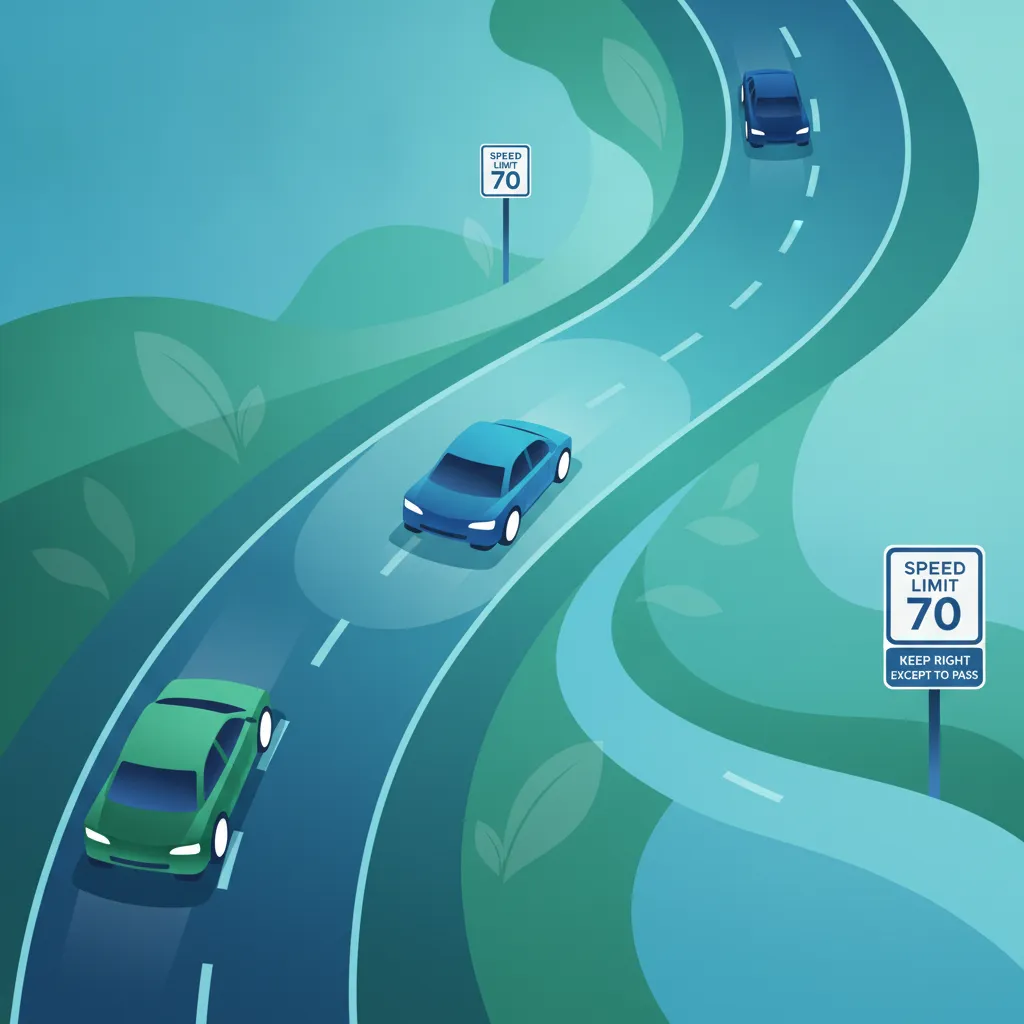
This lesson explains the specific rules, driving etiquette, and safety protocols for operating a vehicle on high-speed Turkish motorways. It covers correct lane usage, overtaking procedures, emergency lane restrictions, and how to maintain consistent high speeds safely. Drivers will learn to avoid dangerous tailgating and sudden lane changes.

This lesson focuses on the importance of maintaining safe following distances for goods vehicles, taking into account longer braking distances and increased load. Learners will learn how to calculate appropriate gaps based on speed, road conditions, and vehicle dynamics. The lesson emphasizes safe following practices to prevent rear-end collisions and improve overall traffic safety in Turkey.
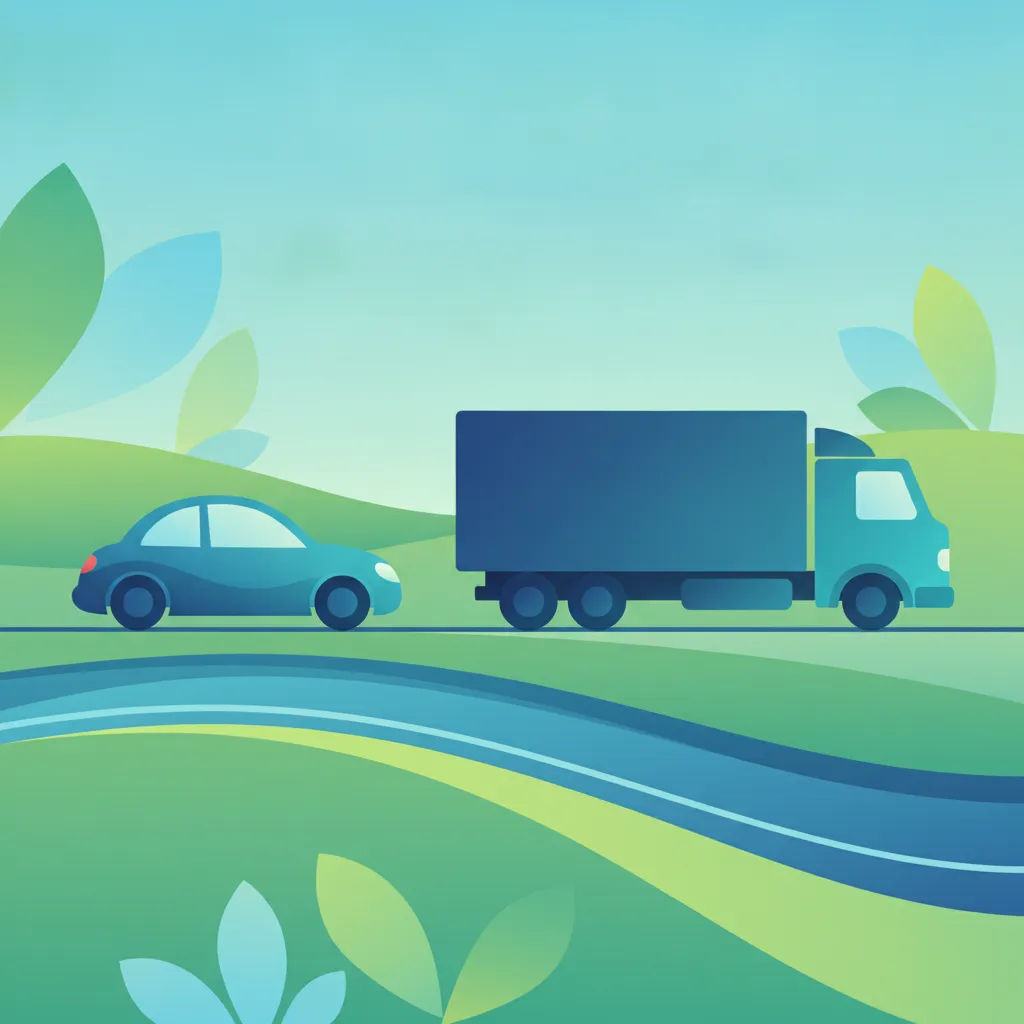
Learners will learn how to calculate and maintain safe following distances, accounting for the longer braking distances and reaction times inherent to larger passenger vehicles. The lesson emphasizes the importance of a sufficient time gap to allow for safe stopping and to prevent rear-end collisions, particularly in varying traffic conditions.

In this lesson, learners will focus on the specific considerations and safety practices required when riding motorcycles on high-speed roads and motorways. Topics covered include maintaining appropriate lane discipline, safe overtaking at high speeds, dealing with increased wind resistance, and the importance of accurate speed control and appropriate following distances on faster roadways.

This lesson focuses on the unique requirements and best practices for operating passenger vehicles on highways and expressways. Topics include maintaining appropriate speed, adhering to lane discipline, executing safe overtaking maneuvers, and managing merges and exits. Emphasis is placed on ensuring a smooth ride for passengers while integrating safely with faster-moving traffic.
Find clear answers to common questions learners have about Following Distance Principles. Learn how the lesson is structured, which driving theory objectives it supports, and how it fits into the overall learning path of units and curriculum progression in Turkey. These explanations help you understand key concepts, lesson flow, and exam focused study goals.
The most effective method is the 'two-second rule'. Pick a stationary object on the side of the road and count two seconds from when the car in front passes it until you pass it. In wet or slippery conditions, this distance should be increased to at least three or four seconds.
While you may not need to perform complex physics equations, you must understand the relationship between speed and stopping distance. The exam often tests your knowledge that doubling your speed results in a significantly longer total stopping distance, not just a linear increase.
Following a large vehicle limits your visibility of the road ahead and the traffic signals. Maintaining a larger gap allows you to see around the vehicle and provides extra reaction time should the truck driver need to brake suddenly or encounter an obstacle.
Speed is the primary factor, but road surface conditions, weather, and vehicle maintenance status also dictate safety. You must adapt your distance based on reduced traction, such as on gravel, wet asphalt, or during snow, to ensure you can stop safely.
Use our comprehensive practice search to find exactly the Turkish driving theory questions you need to master. Whether reviewing specific road signs, traffic rules, or first aid scenarios, select your perfect practice set and boost your confidence for the official ehliyet sınavı.