
This lesson guides you through the essential principles of speed management for Category B drivers in Turkey. You will learn how to analyze road conditions, weather, and traffic factors to adjust your speed, ensuring you can anticipate hazards and respond safely in any situation as required for the MTSK e-sınav.
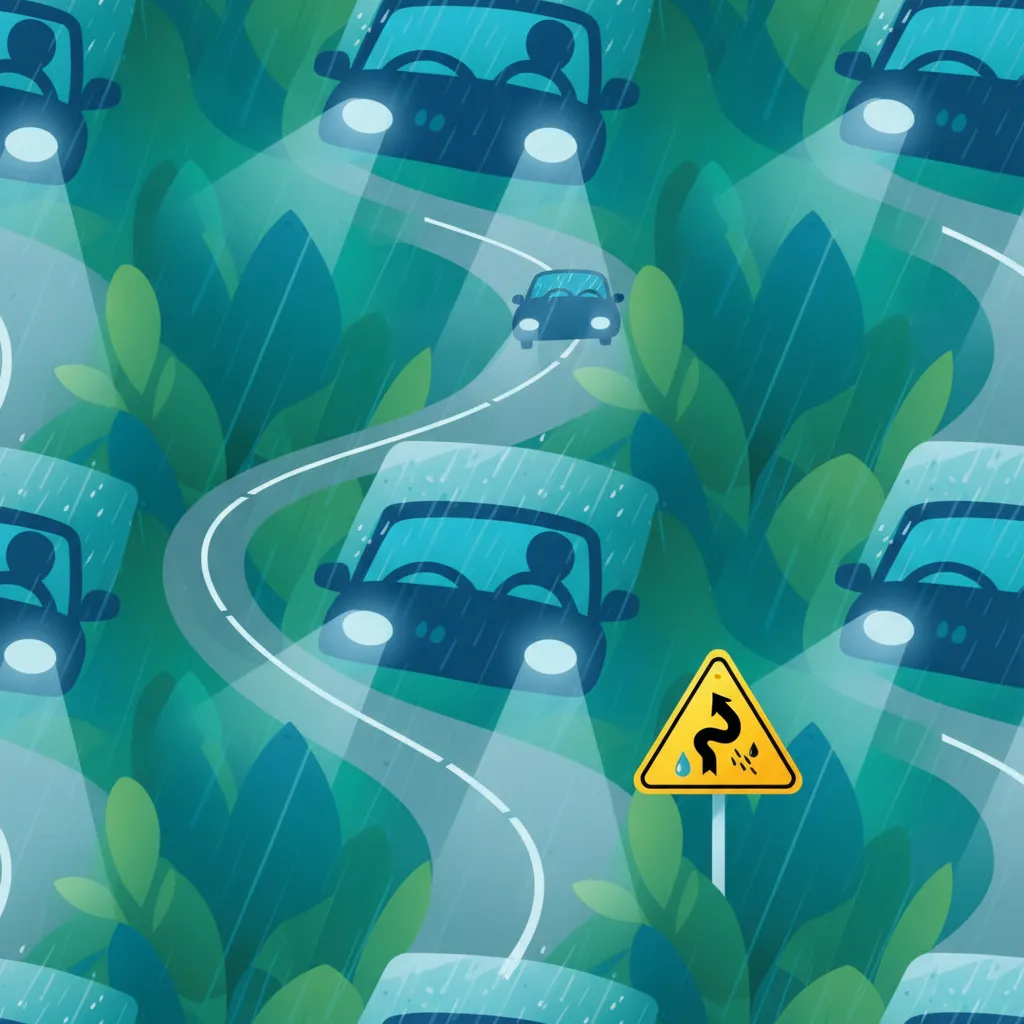
Lesson content overview
To pass the official Turkish Driving License Category B theory test (MTSK e-sınav) and become a competent driver, understanding how to determine a safe driving speed is paramount. Many candidates mistakenly believe that as long as they stay under the posted maximum legal limit, they are driving safely. However, Turkish Traffic Law (Karayolları Trafik Kanunu) mandates that drivers must adjust their speed dynamically according to the prevailing environmental, vehicle, and physical conditions.
This lesson details the principles of dynamic speed management, the physical forces at play, and how to adapt your speed to ensure absolute control over your vehicle at all times.
A common pitfall on the driving theory exam is confusing the maximum posted speed limit with a safe driving speed.
The maximum speed legally permitted on a specific road segment under optimal conditions, indicated by regulatory road signs. It represents the absolute ceiling of speed, not a target speed to maintain.
The dynamic speed at which a driver can maintain full control of the vehicle, perceive hazards, react to unexpected obstacles, and bring the vehicle to a complete stop safely within the clear distance ahead.
Under ideal conditions—dry asphalt, clear daylight, and light traffic—the posted speed limit and the safe speed may align. However, when any variable in the driving environment degrades, the safe speed drops below the posted limit.
Driving at the legal speed limit of 90 km/h during a torrential downpour is not only dangerous; it is also a violation of Turkish traffic regulations, which require drivers to reduce speed in hazardous conditions.
Dynamic speed management is a proactive, continuous feedback loop. As a driver, you must constantly scan your environment, assess risk factors, and adjust your speed before a hazard materializes. This approach relies on risk matching: aligning your vehicle's kinetic energy with your physical ability to react and the vehicle's capacity to stop.
The Physics of Motion: Kinetic energy increases with the square of your speed (). If you double your speed, your vehicle carries four times the kinetic energy. This means your braking distance also increases fourfold.
The interaction between your tyres and the road surface (the coefficient of friction) dictates how effectively your vehicle can accelerate, turn, and stop.
Your safe speed is directly limited by your visual range. You must never drive at a speed where your total stopping distance exceeds the distance you can see clearly ahead.
The physical layout of the road requires structural speed adaptations. Speed limits are designed for straight sections; curves, crests, and junctions require specialized caution.
Centrifugal force acts on your vehicle when cornering, pulling it outward. Entering a curve at an excessive speed can cause the tyres to lose lateral traction, leading to understeer (plowing straight ahead) or oversteer (the rear spinning out).
Assess the curve: Look ahead at the curve warning signs, the road markings, and the banking of the road.
Brake before the curve: Complete all necessary deceleration while your vehicle is still traveling in a straight line.
Maintain a constant speed: Keep a steady foot on the accelerator through the apex of the curve to keep the vehicle's weight balanced across all four wheels.
Accelerate out of the curve: Gently apply acceleration only as you begin to straighten the steering wheel.
At intersections, your field of view is restricted, and the likelihood of cross-traffic conflicts increases. Turkish traffic law mandates that drivers must reduce speed when approaching unsignalized intersections, junctions, roundabouts, and blind hill crests where oncoming traffic cannot be seen.
Traffic flow and the presence of other road users demand dynamic speed adjustments. You must tailor your speed to protect not only yourself but also those who lack the protective metal shell of a car.
In heavy, stop-and-go urban traffic, maintaining a high speed is impossible and dangerous. Attempting to accelerate rapidly into small gaps only decreases your following distance and increases the risk of rear-end collisions. Your speed should match the steady flow of traffic, maintaining a minimum two-second following distance.
Vulnerable road users include pedestrians, children, cyclists, motorcyclists, and elderly or disabled individuals. Their movements can be unpredictable, and they are highly susceptible to severe injury in a collision.
The weight and mechanical health of your vehicle directly influence its handling limits and stopping distances.
Carrying a heavy load, passengers, or towing a trailer changes the driving dynamics:
Many modern vehicles are equipped with Anti-lock Braking Systems (ABS) and Electronic Stability Program (ESP). A dangerous misconception among new drivers is that these electronic systems allow them to drive faster in poor conditions.
The Reality of ABS and ESP: ABS prevents your wheels from locking up during emergency braking, allowing you to steer while stopping. ESP applies selective braking to individual wheels to prevent skidding in corners. Neither system can overcome the laws of physics. If your speed is too high for the available tyre traction, no electronic aid can prevent you from sliding off the road.
A safe speed is only as good as the driver's ability to process information and execute physical inputs.
Your reaction time is the period between perceiving a hazard and physically moving your foot to the brake pedal. For an alert, healthy driver, this takes approximately 0.75 to 1.5 seconds.
| Speed (km/h) | Distance Covered During 1-Second Reaction Time |
|---|---|
| 30 km/h | ~8.3 metres |
| 50 km/h | ~13.9 metres |
| 90 km/h | ~25.0 metres |
| 120 km/h | ~33.3 metres |
If your reaction time is compromised by external or internal factors, you must reduce your driving speed to preserve a safety buffer:
Let's look at how these principles are applied in real-world scenarios on Turkish roads.
This lesson establishes the critical distinction between the legal posted speed limit and the actual safe speed required by current conditions. It covers the physics of kinetic energy and how braking distance grows exponentially with speed, then applies these principles across multiple variables: road surface type (dry, wet, icy, gravel), weather conditions (fog, darkness, sun glare), road geometry (curves, intersections, hill crests), traffic density, vehicle load and safety systems, and the driver's physiological state. Practical scenarios demonstrate how to apply these concepts in Turkish driving contexts, emphasising that safe speed is a dynamic, situation-dependent calculation—not a fixed number. Mastering this topic is essential for both passing the MTSK e-sınav and developing defensive driving habits on Turkish roads.
A short set of high-value points that capture the most important learning from this lesson.
The posted speed limit is a legal ceiling under ideal conditions, not a target speed; safe speed is always lower when conditions degrade.
Kinetic energy increases with the square of speed (Ek = ½mv²), meaning doubling your speed quadruples braking distance.
Wet roads reduce tyre traction by approximately 50%, and icy roads can extend stopping distance tenfold compared to dry conditions.
You must always be able to stop your vehicle within the distance you can see clearly ahead—visibility sets the absolute speed limit.
Safety systems like ABS and ESP cannot overcome physics; they help manage traction but do not increase the available grip.
Explore all units and lessons included in this driving theory course.
Reduce speed immediately when rainfall begins on a dry road, as the first minutes create the most slippery conditions due to oil and dust mixing with water.
In fog with visibility under 30 metres, safe speed often drops to 30 km/h or lower—at 90 km/h you travel 25 metres per second.
Brake in a straight line before entering a curve; never brake mid-corner, as this destabilises vehicle weight distribution.
Driver fatigue can double or triple your reaction time, requiring you to drive significantly below the legal limit or stop entirely.
Overdriving your headlights means your stopping distance exceeds the distance your lights illuminate—reduce speed at night on unlit roads.
Assuming that driving at or below the posted speed limit automatically means driving safely regardless of conditions.
Braking while already in a curve, which transfers weight forward and reduces rear tyre grip, potentially causing oversteer.
Believing ABS or ESP allow faster driving in poor conditions—these systems manage traction but cannot create more of it.
Failing to increase following distance in rain; maintaining a 2-second gap when a 4-second gap is needed for the reduced traction.
Relying on medication labels that say 'may cause drowsiness' without adjusting speed downward or choosing not to drive.
Lesson content overview
A short set of high-value points that capture the most important learning from this lesson.
The posted speed limit is a legal ceiling under ideal conditions, not a target speed; safe speed is always lower when conditions degrade.
Kinetic energy increases with the square of speed (Ek = ½mv²), meaning doubling your speed quadruples braking distance.
Wet roads reduce tyre traction by approximately 50%, and icy roads can extend stopping distance tenfold compared to dry conditions.
You must always be able to stop your vehicle within the distance you can see clearly ahead—visibility sets the absolute speed limit.
Safety systems like ABS and ESP cannot overcome physics; they help manage traction but do not increase the available grip.
Explore all units and lessons included in this driving theory course.
Reduce speed immediately when rainfall begins on a dry road, as the first minutes create the most slippery conditions due to oil and dust mixing with water.
In fog with visibility under 30 metres, safe speed often drops to 30 km/h or lower—at 90 km/h you travel 25 metres per second.
Brake in a straight line before entering a curve; never brake mid-corner, as this destabilises vehicle weight distribution.
Driver fatigue can double or triple your reaction time, requiring you to drive significantly below the legal limit or stop entirely.
Overdriving your headlights means your stopping distance exceeds the distance your lights illuminate—reduce speed at night on unlit roads.
Assuming that driving at or below the posted speed limit automatically means driving safely regardless of conditions.
Braking while already in a curve, which transfers weight forward and reduces rear tyre grip, potentially causing oversteer.
Believing ABS or ESP allow faster driving in poor conditions—these systems manage traction but cannot create more of it.
Failing to increase following distance in rain; maintaining a 2-second gap when a 4-second gap is needed for the reduced traction.
Relying on medication labels that say 'may cause drowsiness' without adjusting speed downward or choosing not to drive.
Explore search topics learners often look for when studying Determining Safe Speed. These topics reflect common questions about road rules, driving situations, safety guidance, and lesson level theory preparation for learners in Turkey.
Browse additional driving theory lessons that cover connected traffic rules, road signs, and common driving situations related to this topic. Improve your understanding of how different rules interact across everyday traffic scenarios.
Learn the physics behind stopping distances and the importance of maintaining a safe following gap. This guide explains how speed, reaction time, and road conditions influence the space required to stop safely according to Turkish traffic regulations and defensive driving principles.

This lesson focuses on the principles governing safe following distances between vehicles. Topics include understanding time and distance gaps, reaction times, and braking distances. Learners will explore guidelines for maintaining proper following distances based on speed and road conditions. Real-world examples demonstrate the importance of safe following practices in preventing rear-end collisions.
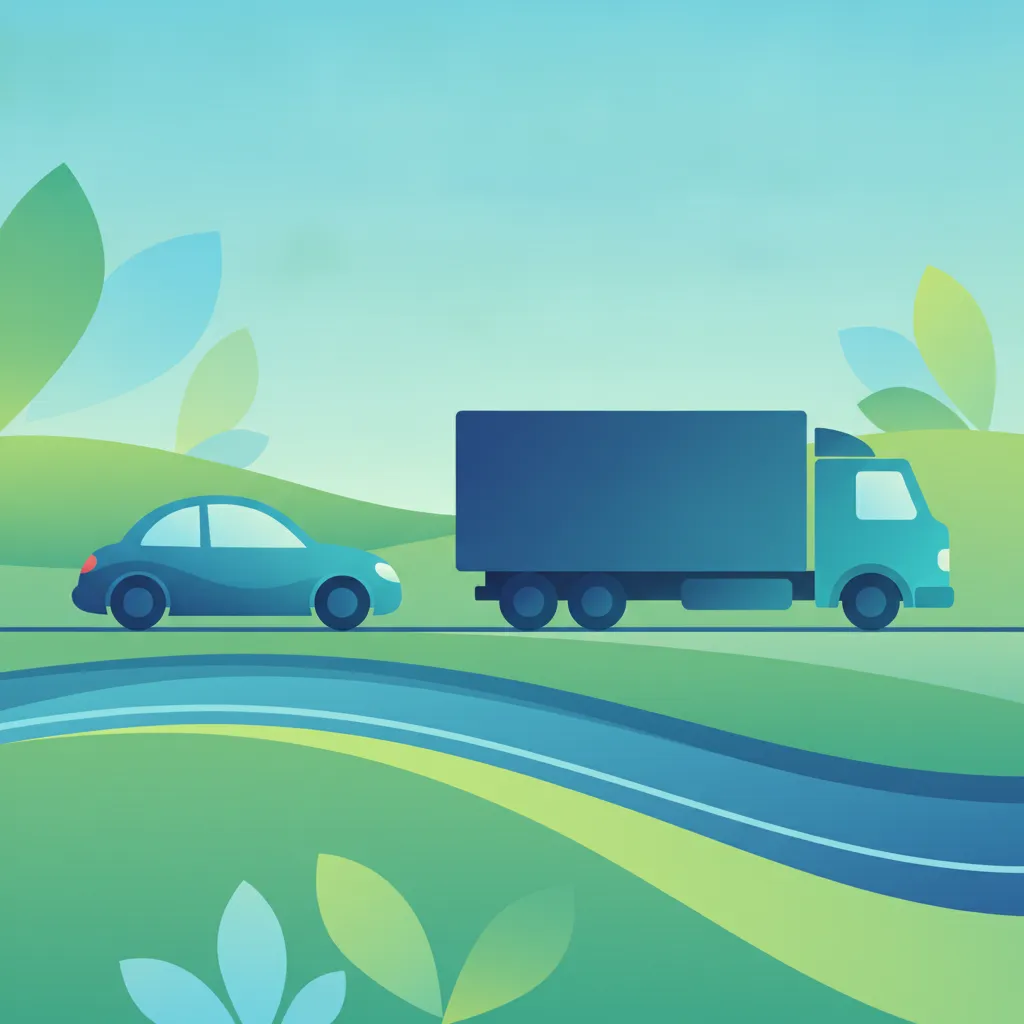
Learners will learn how to calculate and maintain safe following distances, accounting for the longer braking distances and reaction times inherent to larger passenger vehicles. The lesson emphasizes the importance of a sufficient time gap to allow for safe stopping and to prevent rear-end collisions, particularly in varying traffic conditions.
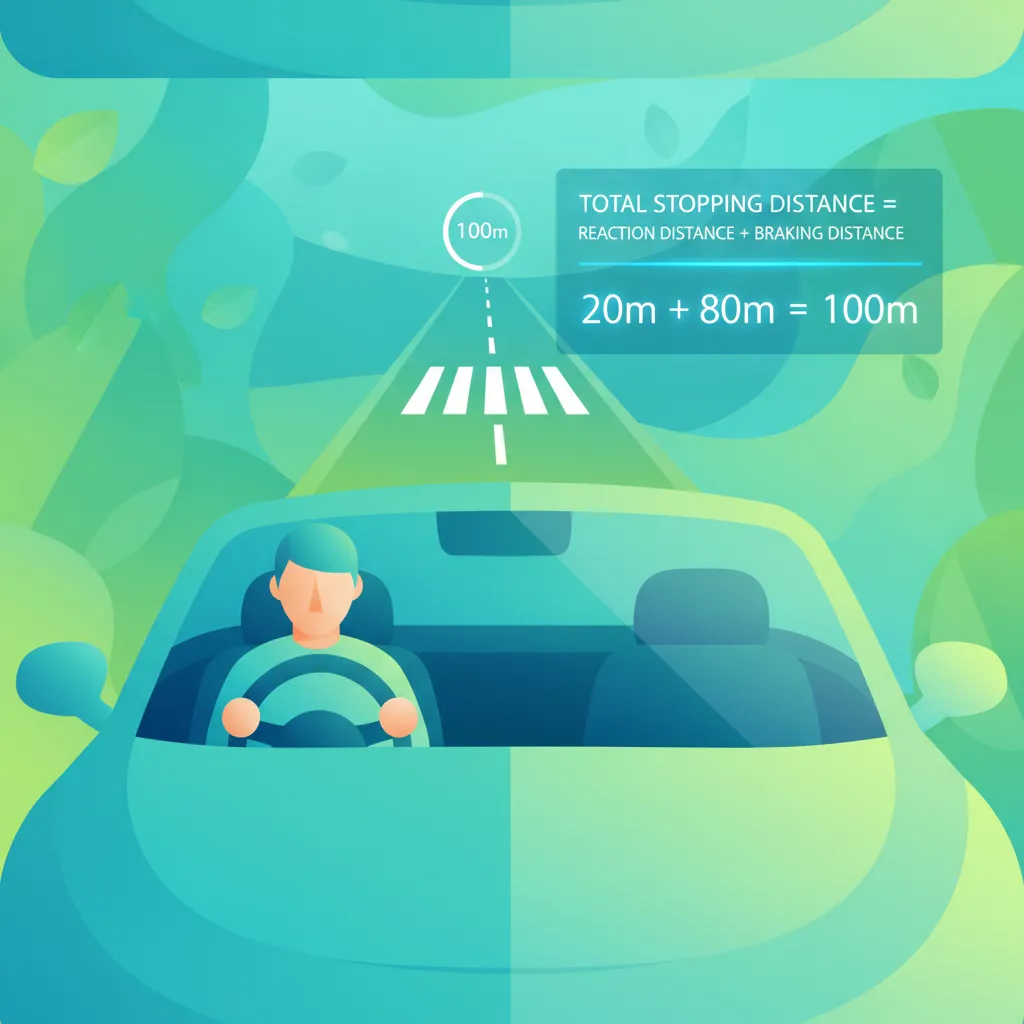
In this lesson, learners examine the components and calculation of stopping distances. Topics include reaction distance, braking distance, and total stopping distance. The lesson covers factors affecting stopping distances, such as vehicle speed, road conditions, and tire condition. Real-world examples illustrate how to estimate stopping distances.
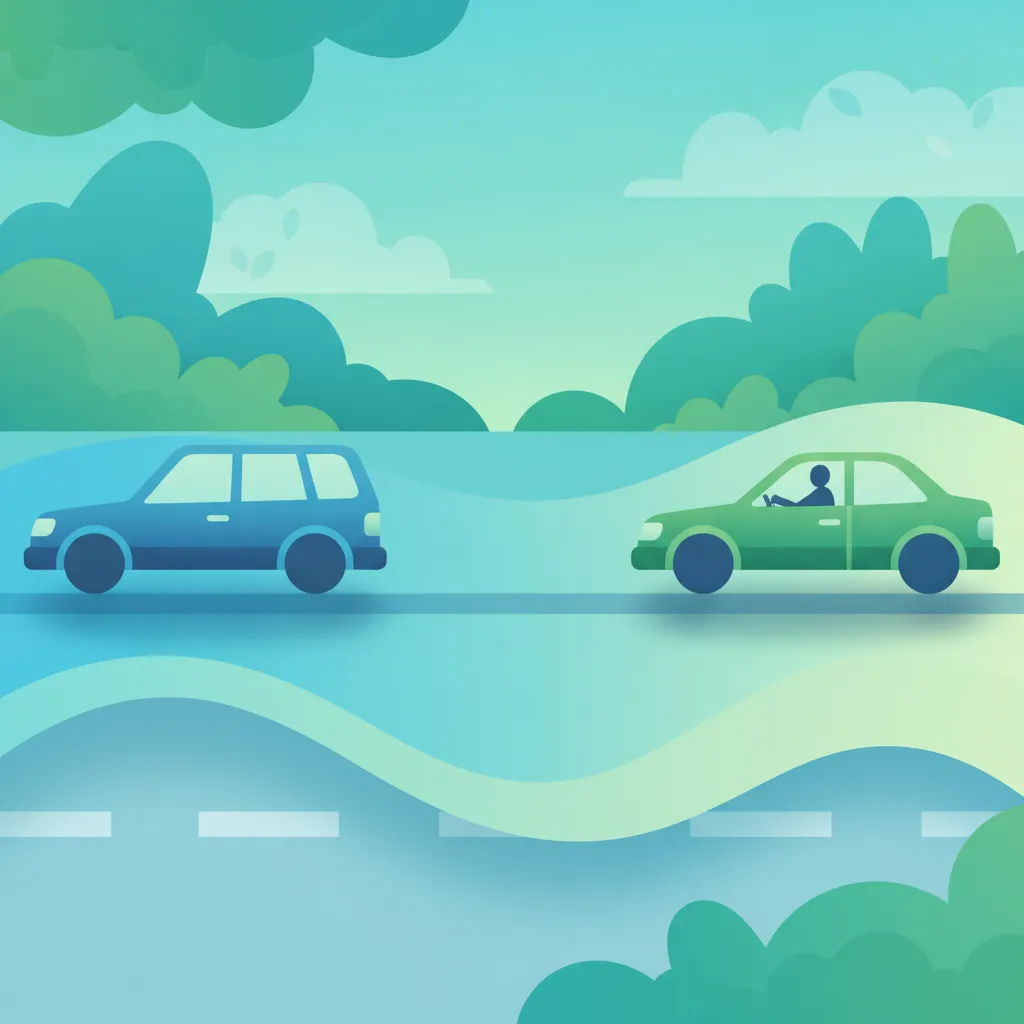
This lesson focuses on the importance of maintaining safe following distances for goods vehicles, taking into account longer braking distances and increased load. Learners will learn how to calculate appropriate gaps based on speed, road conditions, and vehicle dynamics. The lesson emphasizes safe following practices to prevent rear-end collisions and improve overall traffic safety in Turkey.
Understand how to proactively scan the environment to identify potential road hazards before they become critical. This lesson focuses on the cognitive skills required to anticipate risks from other road users, changing weather conditions, and infrastructure layout to enhance overall safety on Turkish roads.
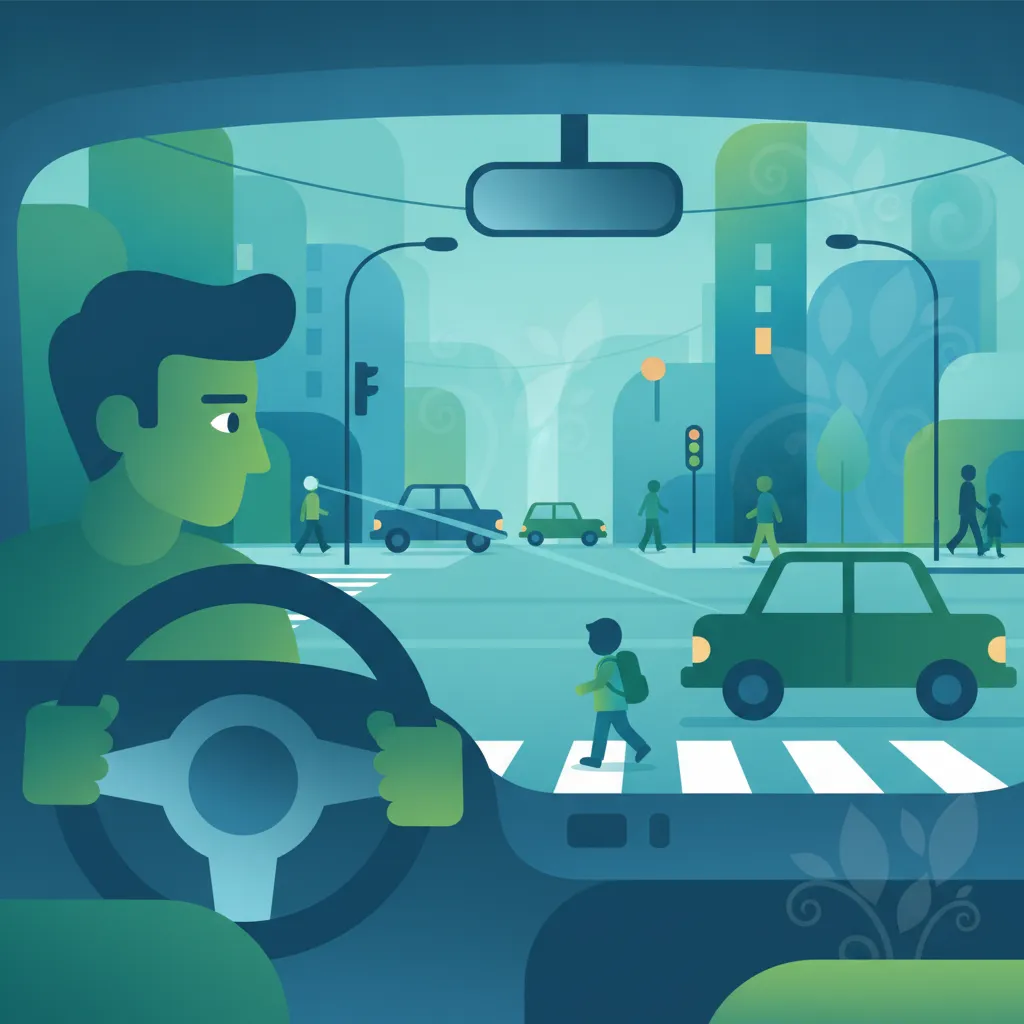
This lesson explores the critical skill of hazard identification and anticipation while driving. Topics include recognizing potential risks in traffic, road conditions, and environmental factors. Learners will develop skills in anticipatory driving to proactively address hazards before they become dangerous. Real-world examples illustrate how to maintain vigilance.
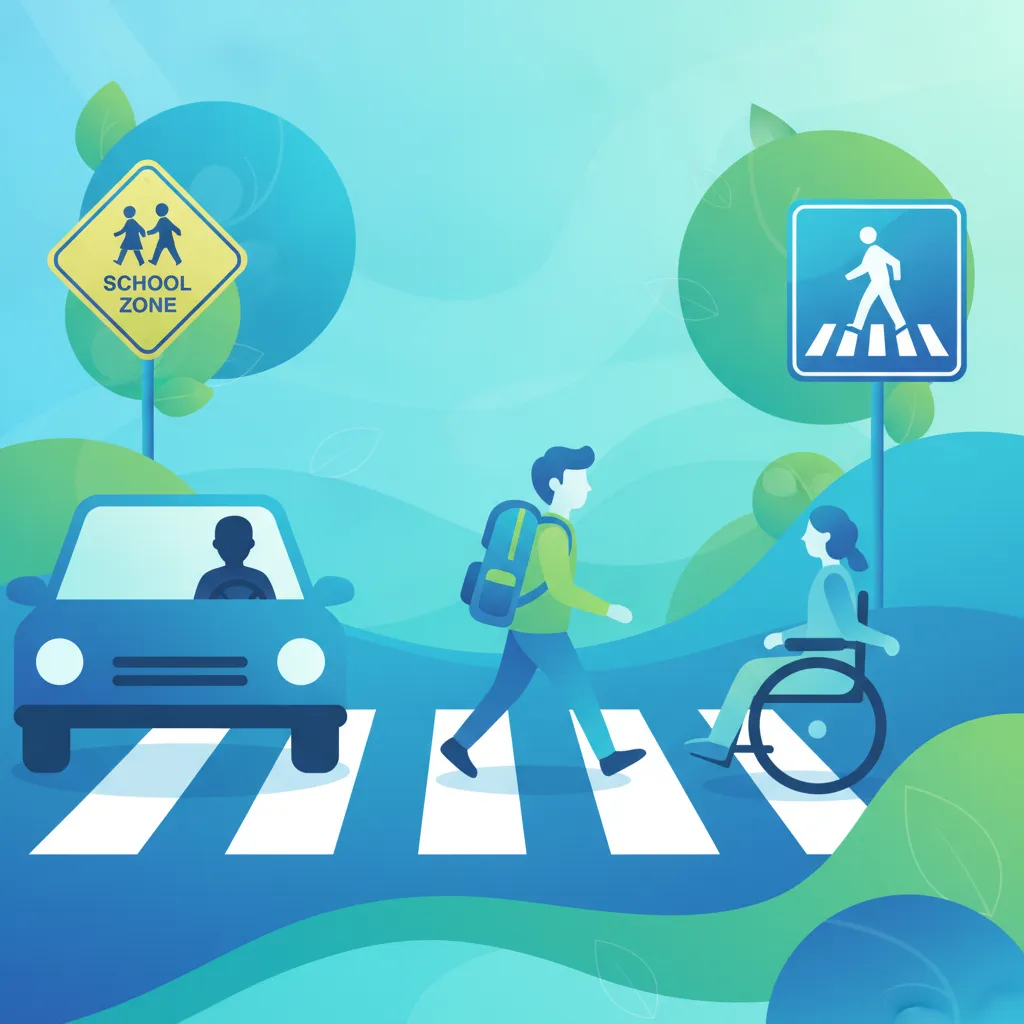
Learners will identify the different categories of vulnerable road users and understand the heightened risks they face. The lesson emphasizes the importance of recognizing these users, anticipating their actions, and taking proactive measures to ensure their safety while operating passenger vehicles. Strategies for mitigating danger and fostering a protective driving environment are explored.

In this lesson, learners explore warning traffic signs designed to alert drivers to potential hazards ahead. Topics include signs indicating curves, steep descents, slippery surfaces, pedestrian crossings, and school zones. The lesson emphasizes the importance of interpreting these signs correctly to adjust speed and driving behaviour, thereby preventing accidents.

This lesson focuses on protecting vulnerable road users, such as pedestrians, cyclists, and motorcyclists, in mixed traffic environments. Learners will examine specific strategies for increased vigilance, anticipatory driving, and properly yielding to these users. The lesson also covers high-risk zones, such as school areas and public transport stops, emphasizing the need for heightened safety.

Learners will explore techniques for adjusting driving styles based on different road surface conditions, such as gravel, potholes, and wet pavement. The lesson emphasizes the importance of adapting speed, braking, and steering inputs to maintain vehicle control and passenger comfort. Strategies for detecting and responding to road hazards are discussed to ensure safety across diverse driving environments.

This lesson explores the hazards characteristic of rural roads, including narrow paths, lack of lighting, slow agricultural vehicles, and sharp curves. It teaches drivers how to anticipate blind corners, adjust speed, and pass slow-moving tractors safely. Motorists will learn to remain highly alert for unexpected roadway obstructions.

This lesson introduces the proper utilization of mirrors, rearview cameras, and additional sensor systems to enhance situational awareness for goods vehicle drivers. Learners will understand the importance of correctly adjusting mirrors for optimal coverage, interpreting camera feeds, and relying on sensor alerts. The lesson emphasizes integrating modern safety technology into daily driving practices.

This lesson details defensive driving techniques for adverse weather conditions such as rain, snow, black ice, dense fog, and strong winds. It explains the physics of aquaplaning and how to regain vehicle control when losing traction on slippery surfaces. Drivers will learn how to adjust speed and increase safety gaps to prevent weather crashes.

Proper road positioning is your primary shield against being squeezed, sideswiped, or overlooked by larger motor vehicles in daily traffic. This lesson explains how to ride in the center or slightly off-center of your lane to prevent unsafe overtaking within the same lane. You will study how to identify the massive blind spots of buses and trucks, maintain appropriate following distances, and execute overtaking maneuvers with maximum safety margin and clear signal warning.
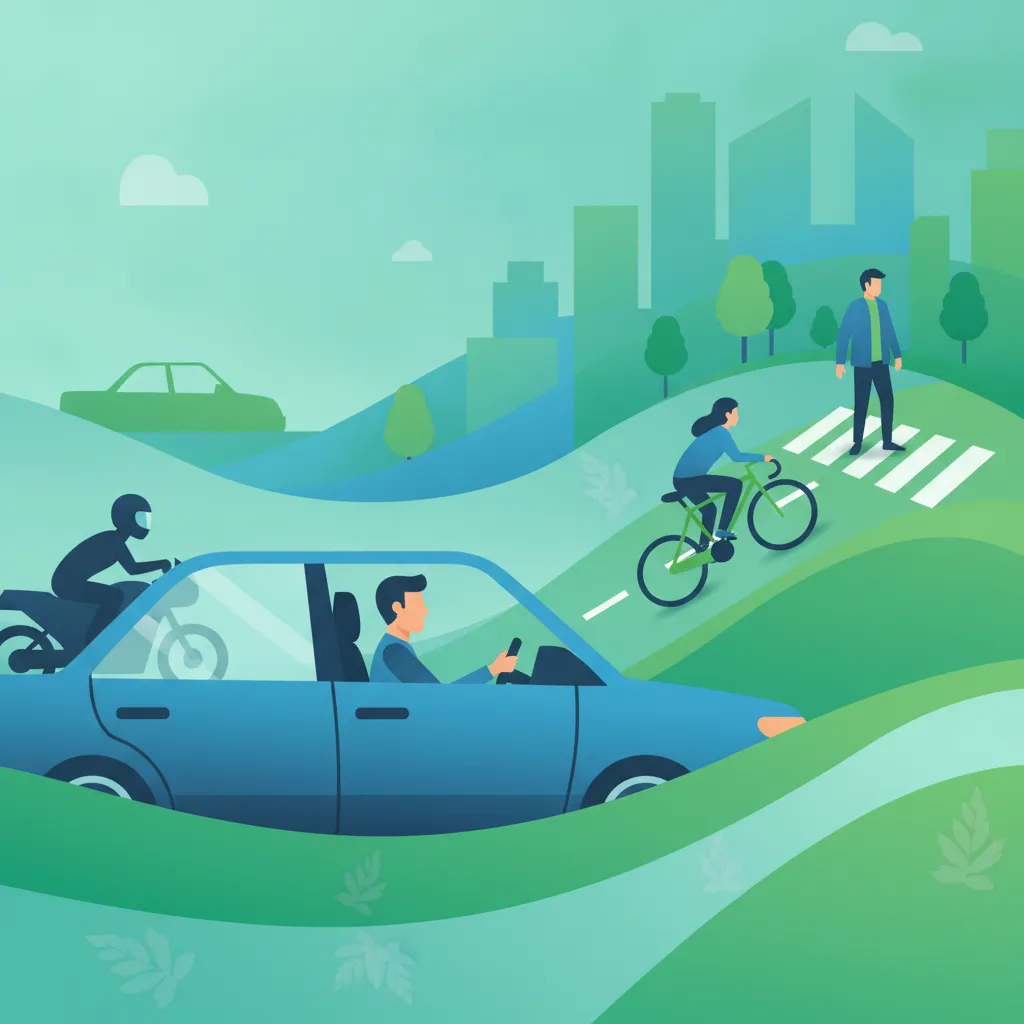
Learners will examine the complexities of operating in environments where various road users, including pedestrians, cyclists, and motorcyclists, coexist. The lesson emphasizes the need for heightened situational awareness, defensive driving techniques, and proactive hazard anticipation. Strategies for navigating mixed traffic safely, especially in congested urban areas, are highlighted.
Find clear answers to common questions learners have about Determining Safe Speed. Learn how the lesson is structured, which driving theory objectives it supports, and how it fits into the overall learning path of units and curriculum progression in Turkey. These explanations help you understand key concepts, lesson flow, and exam focused study goals.
Posted speed limits are maximums for ideal conditions. You must lower your speed during rain, fog, heavy traffic, or when road surfaces are damaged to maintain full control of your vehicle.
High traffic density reduces your reaction window. Maintaining a lower, steady speed in congested areas helps you account for sudden braking or maneuvers by other drivers.
Yes, the exam often includes scenarios where you must choose the correct speed adjustment based on rainy, snowy, or low-visibility conditions. Always prioritize safety over the posted limit.
The primary factor is visibility and stopping distance. If you cannot see far enough ahead to stop safely for an obstacle, your speed is too high regardless of the road limit.
Use our comprehensive practice search to find exactly the Turkish driving theory questions you need to master. Whether reviewing specific road signs, traffic rules, or first aid scenarios, select your perfect practice set and boost your confidence for the official ehliyet sınavı.