
This lesson provides an essential overview of speed limit regulations in Turkey, forming a core part of your safe driving knowledge. You will learn the maximum and minimum speed requirements for different road types and how to interpret speed zones to ensure you stay within the law. Mastering these regulations is crucial for both passing your Category B theory exam and ensuring safety on the road.
Lesson content overview
Every driver on Turkish roads must develop a precise understanding of speed limit regulations. Speed management is not merely a legal requirement governed by the Highway Traffic Law (Karayolları Trafik Kanunu); it is a core tenet of defensive driving and hazard mitigation.
For candidates preparing for the official MTSK e-sınav (Milli Eğitim Bakanlığı Elektronik Sınavı) to obtain a Category B license, mastering these speed limits is essential. Speed limits in Turkey are systematically structured around road classifications, vehicle categories, and prevailing environmental conditions. This lesson details the statutory speed limits, the physical principles underpinning these rules, and the legal consequences of non-compliance.
The Turkish Highway Code establishes default speed limits based on the design, location, and structural configuration of the roadway. For passenger cars (otomobiller), which constitute the primary vehicle type under a Category B license, these limits are divided into four main road environments.
Within city limits, residential zones, and commercial districts, the default maximum speed limit is 50 km/h. This lower threshold is designed to protect vulnerable road users, such as pedestrians, cyclists, and children. Near schools, playgrounds, and pedestrian-heavy intersections, authorities often reduce this limit further to 30 km/h or 20 km/h via local signage.
These are standard rural highways outside urban centers that feature one lane of travel in each direction without a physical central barrier. The default maximum speed limit for passenger cars on these roads is 90 km/h. Drivers must remain highly alert on these routes due to oncoming traffic, agricultural vehicles, and potential animal crossings.
A divided highway is a road where traffic traveling in opposite directions is physically separated by a median, barrier, or wide neutral zone. For passenger cars, the default maximum speed limit is 110 km/h. The physical separation reduces the risk of head-on collisions, allowing for a safer high-speed driving environment.
Motorways represent the highest tier of high-speed transit networks. They are fully access-controlled, multi-lane highways without grade intersections. Speed limits on Turkish motorways depend on the specific administration and age of the toll road system:
Always verify the specific motorway's posted speed limit. While newer highways allow up to 140 km/h, older sections may still be restricted to 130 km/h or lower. Never assume a speed limit without consulting road signs.
| Road Environment | Turkish Term | Default Limit (km/h) | Key Traffic Hazard |
|---|---|---|---|
| Urban / Residential | Yerleşim Yeri İçi | 50 | Pedestrians, parked cars, cyclists |
| Two-Lane Rural | Çift Yönlü Karayolu | 90 | Oncoming traffic, slow farm vehicles |
| Divided Highways | Bölünmüş Yol | 110 | Merging traffic, lane switching |
| State Motorways | Otoyol (KGM) | 130 | High-speed lane changes, tailgating |
| Private/New Motorways | Otoyol (YİD) | 140 | Extreme speeds, wind gusts, fatigue |
While excessive speed represents an obvious risk, driving too slowly can be equally hazardous, particularly on high-speed arterials. Slowly moving vehicles disrupt the natural traffic flow, force high-speed lane changes, and dramatically increase the risk of severe rear-end collisions.
To maintain safe and uniform traffic flow:
Static speed limit signs represent ideal driving conditions. However, road environments are subject to constant change, requiring regulatory adjustments.
On modern Turkish highways and motorways, traffic control centers utilize electronic Variable Message Signs (VMS) to dynamically adjust speed limits.
These digital displays communicate real-time speed adjustments based on:
Variable speed limits are legally binding and supersede permanent static speed signs. If a digital sign displays 80 km/h on a motorway with a normal limit of 130 km/h, you must comply with the 80 km/h restriction immediately.
Construction and maintenance zones are highly hazardous environments for both drivers and road workers. Standard speed limits are temporarily reduced inside these zones to protect workers and manage altered lanes, debris, or uneven surfaces.
These temporary limits are signaled using temporary yellow-background signs. Drivers are legally required to drop their speed to the indicated level well before entering the designated zone.
The Turkish General Directorate of Highways (Karayolları Genel Müdürlüğü) uses standard European traffic signs to regulate speed. Understanding these visual indicators ensures you can quickly adapt your driving behavior on the road.
When passing a maximum speed limit sign, the restriction applies immediately from the point of the sign forward, until it is cancelled by another sign or a change in road classification.
This sign indicates that the specific speed restriction has ended, and you may return to the default speed limit of the road classification you are currently traveling on (for example, transitioning from a temporary 60 km/h construction zone back to the default 90 km/h rural road limit).
To fully appreciate the necessity of speed limits, drivers must understand the direct correlation between speed and vehicle dynamics.
A vehicle's stopping distance consists of two primary components:
Braking distance is not linear; it is quadratic. Because kinetic energy () increases with the square of the velocity, doubling your speed from 50 km/h to 100 km/h does not double your braking distance—it increases it by approximately four times.
The severity of an accident is directly linked to the kinetic energy dissipated during impact. Because this energy scales quadratically with speed, even a minor increase in velocity can turn a survivable collision into a fatal accident. In urban areas, hitting a pedestrian at 50 km/h yields an extremely high risk of fatality; reducing that speed to 30 km/h dramatically improves pedestrian survival rates.
A common misconception among student drivers is that they should always drive at the exact posted speed limit. The posted speed limit is a legal ceiling, not a target. Under the Turkish Highway Traffic Code, drivers must adjust their speed to match real-world conditions, even if that speed falls well below the legal limit.
Assess Weather and Visibility: In conditions of rain, snow, black ice, or dense fog (sis), lower your speed to maintain control and ensure your stopping distance remains within your field of clear vision.
Analyze Road Surface and Terrain: Reduce speed when navigating sharp bends, driving on wet asphalt (which presents a high risk of hydroplaning or akvaplaning), or traveling on unpaved gravel roads.
Evaluate Traffic Density: In heavy bumper-to-bumper traffic, adjust your speed to match the safe flow of the surrounding vehicles, maintaining a proper following distance (takip mesafesi).
Consider Vehicle Load: If your passenger car is fully loaded with luggage or towing a light trailer, its handling characteristics and braking efficiency are compromised. Reduce your travel speed accordingly.
To ensure compliance, Turkish traffic authorities deploy sophisticated monitoring systems, including static and mobile radar units, LiDAR speed guns, and point-to-point average speed enforcement corridors (Ortalama Hız İhlal Tespit Sistemi).
Under Turkish traffic law, a 10% calibration tolerance is applied to maximum speed limits. This buffer is designed to account for minor variations in vehicle speedometer calibration and radar equipment tolerances.
Penalties for exceeding the speed limit are divided into three progressive severity tiers under the Karayolları Trafik Kanunu:
To build a comprehensive foundation for your Category B theory exam, remember how speed regulations connect to other critical safety lessons:
This lesson covers Turkey's statutory speed limits for Category B drivers across five distinct road environments, ranging from 50 km/h in urban areas to 140 km/h on modern build-operate-transfer motorways. It explains that speed limits are legal maximums, not targets, and drivers must continuously adjust to weather, visibility, and road surface conditions. The physics of stopping distance and kinetic energy demonstrate why even small speed increases dramatically extend stopping distance. Enforcement includes a 10% tolerance, three penalty brackets with point deductions, and potential license confiscation for extreme violations. Understanding variable speed limits and temporary work zone restrictions is essential, as these digital and yellow-background signs are legally binding and override standard limits.
A short set of high-value points that capture the most important learning from this lesson.
Speed limits in Turkey are structured by road type: 50 km/h urban, 90 km/h two-lane rural, 110 km/h divided highways, and 130–140 km/h on motorways.
The posted speed limit is a legal ceiling, not a target—drivers must always adjust speed to match actual conditions such as weather, road surface, and traffic density.
Braking distance scales quadratically with speed, meaning doubling speed from 50 to 100 km/h quadruples the distance needed to stop.
The 10% tolerance rule exists for equipment calibration, not as a driving margin—treat the posted limit as the absolute maximum.
Variable and temporary speed limits (displayed on electronic signs or yellow work-zone signs) are legally binding and override permanent static limits.
Explore all units and lessons included in this driving theory course.
Motorway minimum speed is 40 km/h—vehicles unable to maintain this must not enter motorways and must move to the emergency shoulder if they drop below it.
Three penalty tiers exist: exceeding by 10–30% earns 10 points, 30–50% earns 15 points, and above 50% triggers license confiscation for repeat offenders.
Variable speed limits (VMS signs) supersede all permanent speed signs—comply with the electronic display immediately.
Speed limit signs apply from their position forward until cancelled by another sign or a change in road classification.
Hydroplaning risk on wet roads requires reducing speed below the posted limit—never maintain legal speed blindly in adverse weather.
Assuming the speed limit is a target speed rather than a maximum, leading to driving faster than conditions safely allow.
Ignoring temporary speed reductions in work zones because the driver did not see workers immediately.
Believing the 10% tolerance is a guaranteed buffer for speeding, which can result in fines and points when enforcement thresholds are crossed.
Failing to reduce speed below the limit in hazardous conditions such as heavy rain, fog, or icy roads.
Maintaining motorway speed after a sudden weather change, not accounting for the dramatic increase in stopping distance and loss of tyre grip.
Lesson content overview
A short set of high-value points that capture the most important learning from this lesson.
Speed limits in Turkey are structured by road type: 50 km/h urban, 90 km/h two-lane rural, 110 km/h divided highways, and 130–140 km/h on motorways.
The posted speed limit is a legal ceiling, not a target—drivers must always adjust speed to match actual conditions such as weather, road surface, and traffic density.
Braking distance scales quadratically with speed, meaning doubling speed from 50 to 100 km/h quadruples the distance needed to stop.
The 10% tolerance rule exists for equipment calibration, not as a driving margin—treat the posted limit as the absolute maximum.
Variable and temporary speed limits (displayed on electronic signs or yellow work-zone signs) are legally binding and override permanent static limits.
Explore all units and lessons included in this driving theory course.
Motorway minimum speed is 40 km/h—vehicles unable to maintain this must not enter motorways and must move to the emergency shoulder if they drop below it.
Three penalty tiers exist: exceeding by 10–30% earns 10 points, 30–50% earns 15 points, and above 50% triggers license confiscation for repeat offenders.
Variable speed limits (VMS signs) supersede all permanent speed signs—comply with the electronic display immediately.
Speed limit signs apply from their position forward until cancelled by another sign or a change in road classification.
Hydroplaning risk on wet roads requires reducing speed below the posted limit—never maintain legal speed blindly in adverse weather.
Assuming the speed limit is a target speed rather than a maximum, leading to driving faster than conditions safely allow.
Ignoring temporary speed reductions in work zones because the driver did not see workers immediately.
Believing the 10% tolerance is a guaranteed buffer for speeding, which can result in fines and points when enforcement thresholds are crossed.
Failing to reduce speed below the limit in hazardous conditions such as heavy rain, fog, or icy roads.
Maintaining motorway speed after a sudden weather change, not accounting for the dramatic increase in stopping distance and loss of tyre grip.
Explore search topics learners often look for when studying Speed Limit Regulations. These topics reflect common questions about road rules, driving situations, safety guidance, and lesson level theory preparation for learners in Turkey.
Browse additional driving theory lessons that cover connected traffic rules, road signs, and common driving situations related to this topic. Improve your understanding of how different rules interact across everyday traffic scenarios.
Understand the critical relationship between speed and situational awareness on Turkish roads. Learn how to identify potential hazards early and adjust your driving behavior in response to changing environmental conditions, road surfaces, and traffic density to ensure defensive driving standards.
In this lesson, learners explore the factors influencing the determination of a safe driving speed. Topics include adjusting speed for road conditions, weather, traffic density, visibility, and vehicle performance. The lesson emphasizes the importance of dynamic speed management and how to assess appropriate speeds for varying situations.

This lesson explores the critical skill of hazard identification and anticipation while driving. Topics include recognizing potential risks in traffic, road conditions, and environmental factors. Learners will develop skills in anticipatory driving to proactively address hazards before they become dangerous. Real-world examples illustrate how to maintain vigilance.

Learners will explore techniques for adjusting driving styles based on different road surface conditions, such as gravel, potholes, and wet pavement. The lesson emphasizes the importance of adapting speed, braking, and steering inputs to maintain vehicle control and passenger comfort. Strategies for detecting and responding to road hazards are discussed to ensure safety across diverse driving environments.
This lesson explains the specific rules, driving etiquette, and safety protocols for operating a vehicle on high-speed Turkish motorways. It covers correct lane usage, overtaking procedures, emergency lane restrictions, and how to maintain consistent high speeds safely. Drivers will learn to avoid dangerous tailgating and sudden lane changes.

This lesson explores the hazards characteristic of rural roads, including narrow paths, lack of lighting, slow agricultural vehicles, and sharp curves. It teaches drivers how to anticipate blind corners, adjust speed, and pass slow-moving tractors safely. Motorists will learn to remain highly alert for unexpected roadway obstructions.
Learners will examine the complexities of operating in environments where various road users, including pedestrians, cyclists, and motorcyclists, coexist. The lesson emphasizes the need for heightened situational awareness, defensive driving techniques, and proactive hazard anticipation. Strategies for navigating mixed traffic safely, especially in congested urban areas, are highlighted.
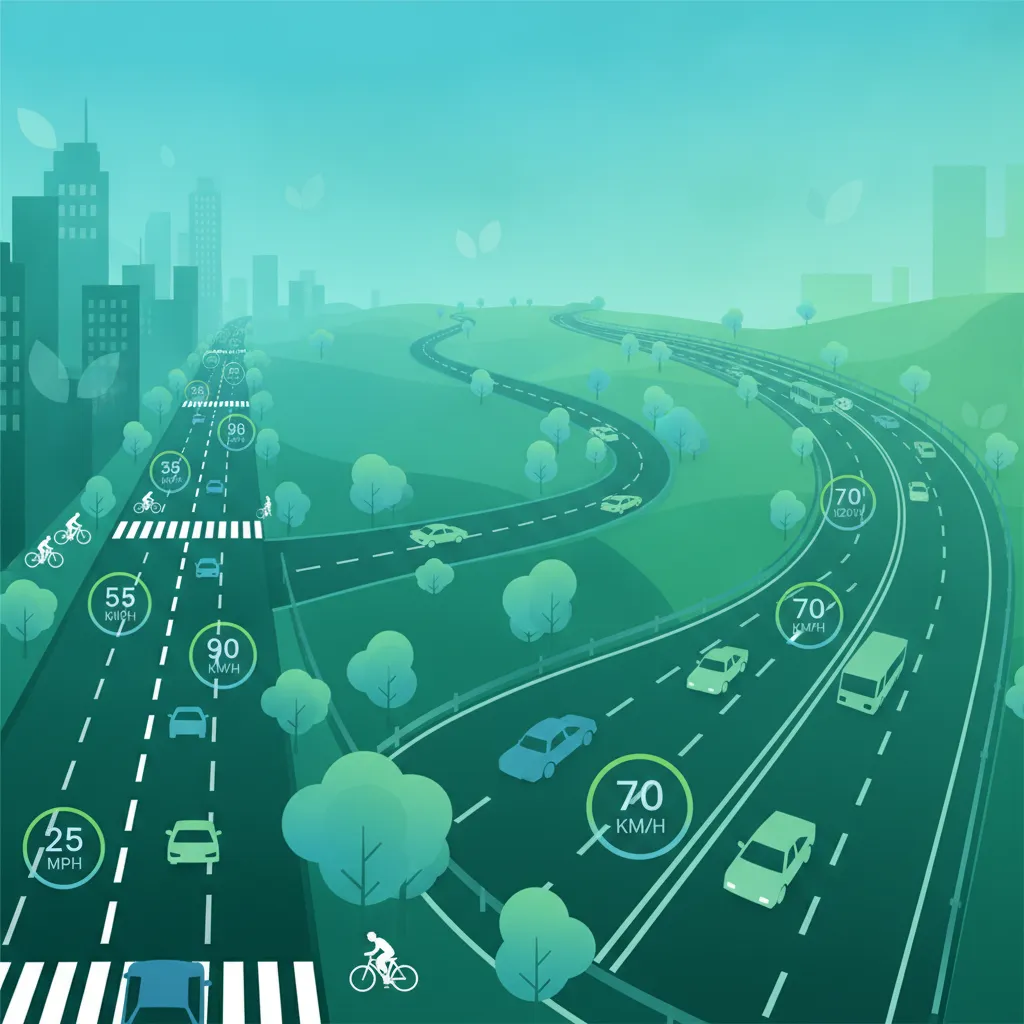
This lesson focuses on managing vehicle speed according to different road environments—urban, rural, and highways—while complying with legal speed limits and traffic flow. Learners will understand how to adjust speed for varying road conditions, traffic density, and safety considerations, ensuring a balance between efficiency and risk mitigation.

In this lesson, learners explore warning traffic signs designed to alert drivers to potential hazards ahead. Topics include signs indicating curves, steep descents, slippery surfaces, pedestrian crossings, and school zones. The lesson emphasizes the importance of interpreting these signs correctly to adjust speed and driving behaviour, thereby preventing accidents.
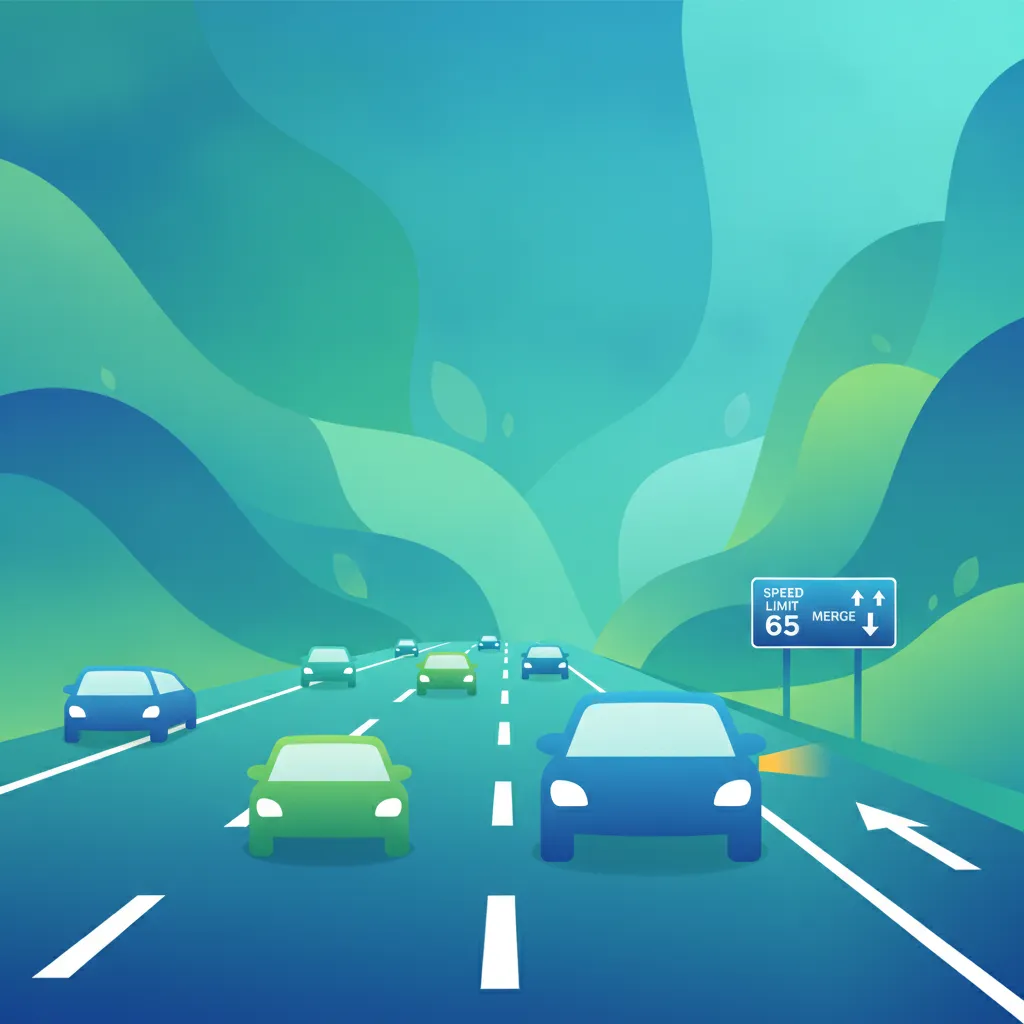
This lesson focuses on the unique requirements and best practices for operating passenger vehicles on highways and expressways. Topics include maintaining appropriate speed, adhering to lane discipline, executing safe overtaking maneuvers, and managing merges and exits. Emphasis is placed on ensuring a smooth ride for passengers while integrating safely with faster-moving traffic.

Managing your speed effectively is not just about obeying posted legal limits; it is about adjusting your pace to the immediate traffic context. This lesson teaches you how to evaluate traffic density, pedestrian presence, and blind corners to select an appropriate speed that guarantees safe stopping distances. You will learn to anticipate flow fluctuations, allowing you to avoid sudden, unstable speed changes that can compromise your balance and traction in mixed traffic.
Explore the physics behind vehicle stopping distances and the legal requirements for maintaining safe following gaps on Turkish highways. Learn how speed, vehicle load, and road conditions dictate the necessary distance between you and the vehicle in front to prevent rear-end collisions.

This lesson focuses on the principles governing safe following distances between vehicles. Topics include understanding time and distance gaps, reaction times, and braking distances. Learners will explore guidelines for maintaining proper following distances based on speed and road conditions. Real-world examples demonstrate the importance of safe following practices in preventing rear-end collisions.

This lesson focuses on the importance of maintaining safe following distances for goods vehicles, taking into account longer braking distances and increased load. Learners will learn how to calculate appropriate gaps based on speed, road conditions, and vehicle dynamics. The lesson emphasizes safe following practices to prevent rear-end collisions and improve overall traffic safety in Turkey.
Learners will learn how to calculate and maintain safe following distances, accounting for the longer braking distances and reaction times inherent to larger passenger vehicles. The lesson emphasizes the importance of a sufficient time gap to allow for safe stopping and to prevent rear-end collisions, particularly in varying traffic conditions.
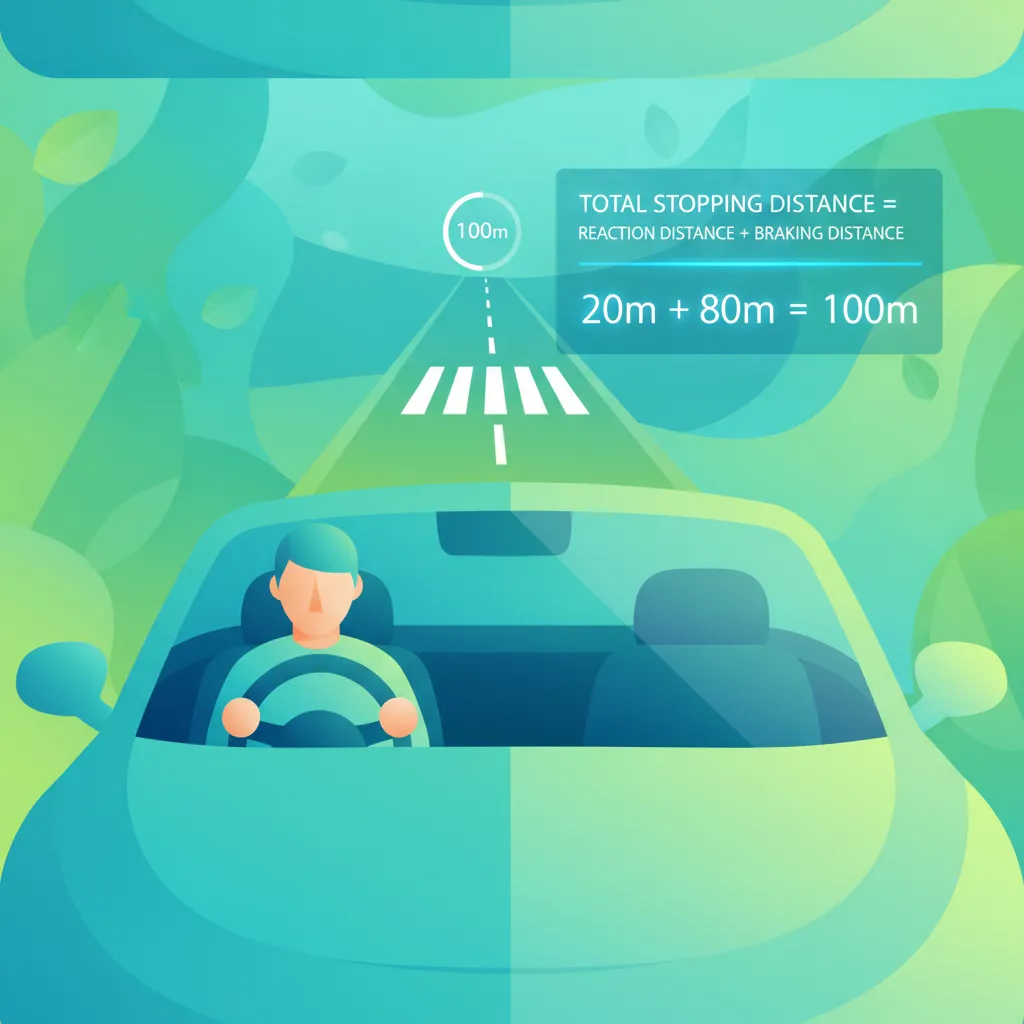
In this lesson, learners examine the components and calculation of stopping distances. Topics include reaction distance, braking distance, and total stopping distance. The lesson covers factors affecting stopping distances, such as vehicle speed, road conditions, and tire condition. Real-world examples illustrate how to estimate stopping distances.
In this lesson, learners explore the factors influencing the determination of a safe driving speed. Topics include adjusting speed for road conditions, weather, traffic density, visibility, and vehicle performance. The lesson emphasizes the importance of dynamic speed management and how to assess appropriate speeds for varying situations.
Find clear answers to common questions learners have about Speed Limit Regulations. Learn how the lesson is structured, which driving theory objectives it supports, and how it fits into the overall learning path of units and curriculum progression in Turkey. These explanations help you understand key concepts, lesson flow, and exam focused study goals.
Yes, while Category B licence holders generally follow standard car speed limits, it is important to monitor specific zones where limits may be lowered due to construction, weather, or local urban regulations.
In the theory exam, questions often ask about the impact of speeding on stopping distance. Exceeding limits drastically increases the risk of accidents, which is a key concept tested to ensure you understand the physics of driving.
Yes, highways have both maximum and minimum speed limits to ensure traffic flow is maintained safely. It is important to know these thresholds to avoid creating hazards by driving too slowly.
The best way to remember them is to group them by road type—urban, rural (single carriageway), and highway. Focus on the specific regulatory signs associated with each, as the exam frequently uses image-based questions to test your recognition.
Use our comprehensive practice search to find exactly the Turkish driving theory questions you need to master. Whether reviewing specific road signs, traffic rules, or first aid scenarios, select your perfect practice set and boost your confidence for the official ehliyet sınavı.