
This lesson covers the critical physiological and legal aspects of managing driver fatigue while operating heavy goods vehicles. As part of your professional driving course, you will learn to spot early signs of tiredness and apply mandatory rest periods to comply with Turkish transport legislation.
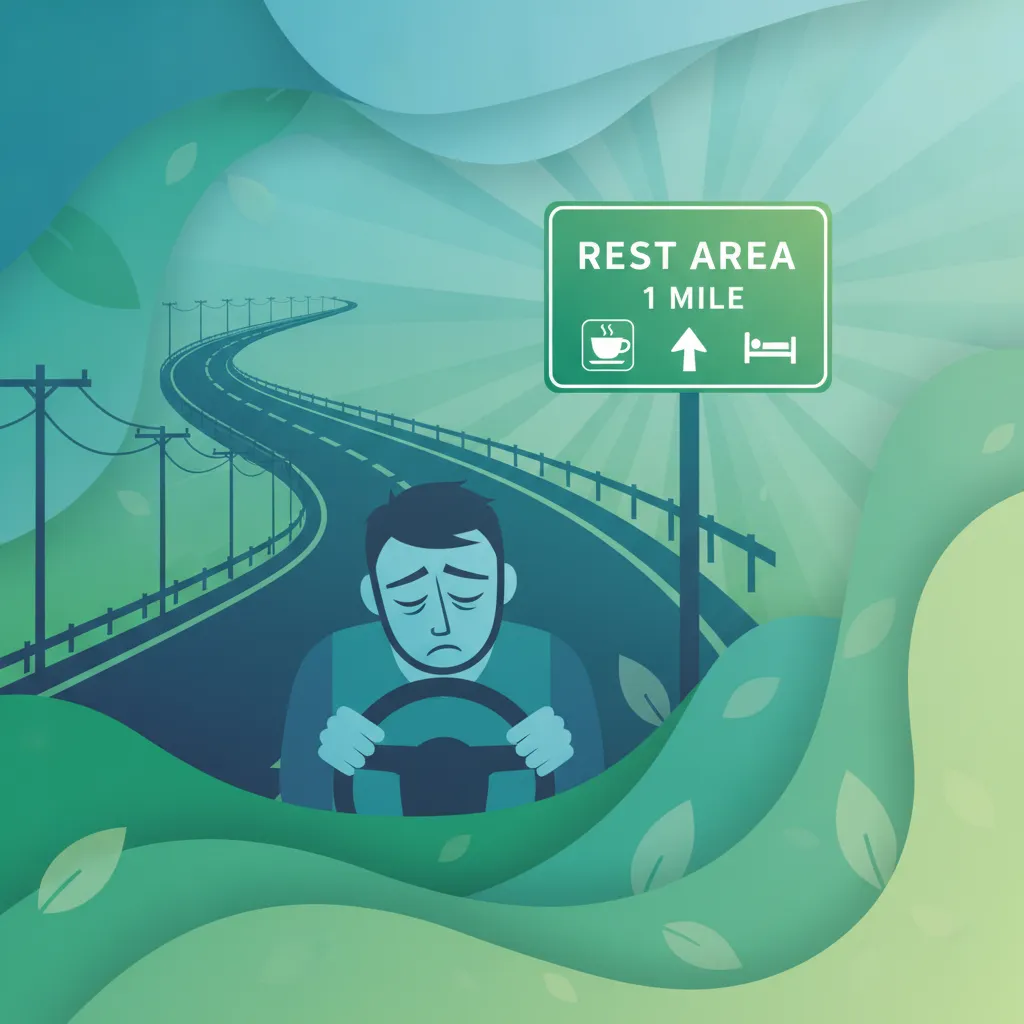
Lesson content overview
Operating a heavy goods vehicle (HGV), such as a rigid truck (Category C1 or C) or an articulated vehicle combination (Category CE), demands immense cognitive processing, rapid motor coordination, and continuous vigilance. Unlike passenger car drivers, professional drivers in Turkey handle massive vehicle dimensions and heavy cargo loads. Any lapse in control can have catastrophic consequences on highways and urban roads alike.
Driver fatigue is not merely "feeling tired." It is a complex physiological state that impairs the central nervous system, degrading a driver’s ability to safely operate a vehicle. In professional logistics and transport, managing this state is both a safety imperative and a strict legal requirement under Turkish road safety laws and international agreements.
To effectively combat fatigue, a professional driver must understand how it manifests. Fatigue is not a uniform condition; its causes can be acute or cumulative, arising from physical strain, mental workload, or disruptions to the body's natural sleep-wake cycle.
Physical fatigue is characterized by muscle exhaustion, stiffness, and slow physical response times. It is often caused by maintaining a static driving posture for hours or performing heavy manual tasks—such as loading cargo, securing lashing straps, or conducting pre-trip physical vehicle safety checks—prior to departure.
Mental fatigue is cognitive exhaustion where the brain's ability to process information, assess hazards, and maintain concentration is depleted. This is particularly common during long, monotonous highway drives where the visual field changes very little, or during intense, high-stress urban driving in congested Turkish cities like Istanbul, Ankara, or Izmir.
Circadian fatigue is governed by the body's natural internal clock (the circadian rhythm). The human body is naturally programmed to sleep during dark hours (typically between 02:00 and 06:00) and to experience a secondary dip in alertness in the afternoon (between 14:00 and 16:00). Driving during these periods increases the risk of sleep onset, regardless of how well-rested the driver feels.
An involuntary, temporary episode of sleep or drowsiness that lasts from a fraction of a second up to 30 seconds. During a micro-sleep, the brain temporarily shuts down and stops processing sensory input, leaving the vehicle completely uncontrolled.
Many drivers falsely assume they can predict exactly when they are about to fall asleep and will pull over "just in time." In reality, the transition from drowsiness to sleep is often seamless and uncontrollable. Recognizing the early, subtle indicators of fatigue is the only way to prevent a serious incident.
The impact of fatigue on a driver's cognitive and physical capabilities is severe. Research indicates that being awake for 17 to 19 hours straight results in a level of cognitive impairment comparable to a Blood Alcohol Concentration (BAC) of 0.05%, which is the legal limit for many non-professional drivers.
A fatigued brain takes significantly longer to perceive a hazard (such as a sudden braking vehicle ahead or a pedestrian stepping onto the road) and execute a physical response. At a highway speed of 90 km/h, a heavy vehicle travels 25 meters every single second. A delay of just one second in braking due to fatigue can mean the difference between a safe stop and a fatal rear-end collision.
Fatigued drivers are more likely to make poor risk assessments. This includes attempting risky overtaking maneuvers on narrow rural roads or failing to adjust their speed to compensate for adverse weather conditions like rain or heavy fog.
Fatigue causes "tunnel vision." The driver’s visual field narrows, focusing almost exclusively on the road directly ahead while failing to monitor side mirrors, blind spots, or adjacent lanes where vulnerable road users, such as motorcyclists or cyclists, may be present.
In Turkey, professional driver hours and rest periods are heavily regulated to prevent fatigue-related crashes. These regulations are aligned with international standards (such as the AETR agreement for international transport) and are strictly enforced under the Turkish Highway Traffic Regulation (Karayolları Trafik Yönetmeliği).
Compliance with driving and rest time rules is mandatory for all professional goods vehicle drivers operating vehicles over 3.5 tonnes. Non-compliance results in heavy administrative fines, penalty points, vehicle grounding, and potential suspension of the driver's professional competence card (SRC certificate).
Compliance is monitored using a Tachograph (Takograf), an electronic or digital device installed in the vehicle that automatically records speed, distance, driving hours, other work periods, and rest breaks. Professional drivers must:
While complying with the law is mandatory, safe drivers go beyond legal minimums to actively manage their alertness levels.
Establish a Consistent Sleep Schedule: Prioritize 7 to 9 hours of uninterrupted sleep before starting any long-distance haul. Avoid changing sleep shifts abruptly.
Plan Rest Stops in Advance: Before starting your journey, plan where you will take your 45-minute break. Choose designated, secure truck parking areas (Tır Parkı) or highway service stations (Dinlenme Tesisi) where you can safely park a large vehicle.
Utilize Your Breaks Effectively: Get out of the vehicle cab. Walk around, stretch your muscles, and perform light physical exercises to stimulate blood circulation and oxygen flow to the brain.
Hydrate and Eat Light: Dehydration worsens fatigue. Drink plenty of water and avoid heavy, high-fat meals before or during driving, as they divert blood flow to your digestive system, inducing drowsiness.
Use Caffeine Strategically: A cup of coffee or a caffeinated beverage can temporarily boost alertness, but it takes approximately 20 to 30 minutes to take effect. Do not rely on caffeine as a substitute for sleep; once the stimulant wears off, a sudden "caffeine crash" can cause severe fatigue.
The severity of fatigue and how quickly it develops depends heavily on the driving environment and operating conditions:
Understanding the mistakes other drivers make helps you avoid them. Here are the most common violations and errors regarding driver fatigue:
| Regulation Area | Legal Standard (Turkey / AETR) | Key Driving Safety Rationale |
|---|---|---|
| Daily Driving Limit | Max 9 hours (can be 10 hours twice per week) | Prevents cumulative physical and mental strain over the working day. |
| Continuous Drive Limit | Max 4.5 hours continuous | Ensures the brain receives a necessary break from constant hazard scanning. |
| Mandatory Break Duration | At least 45 minutes (or split 15 + 30 mins) | Gives the body time to stretch, hydrate, and recover alertness. |
| Weekly Rest Period | Minimum 24 continuous hours | Facilitates full recovery and prevents chronic exhaustion patterns. |
| Record Keeping | Mandatory use of Tachograph (Takograf) | Standardizes compliance and prevents unsafe commercial competition. |
By mastering fatigue management, professional drivers protect not only their own health and livelihoods but also ensure the safety of all vulnerable road users sharing the network.
Explore all units and lessons included in this driving theory course.
Lesson content overview
Explore all units and lessons included in this driving theory course.
Explore search topics learners often look for when studying Recognizing and Managing Driver Fatigue. These topics reflect common questions about road rules, driving situations, safety guidance, and lesson level theory preparation for learners in Turkey.
Browse additional driving theory lessons that cover connected traffic rules, road signs, and common driving situations related to this topic. Improve your understanding of how different rules interact across everyday traffic scenarios.
Understand the legal requirements for using tachographs in heavy goods vehicles under Turkish traffic law. This guide explains how to document driving hours, mandatory rest periods, and professional work logs to ensure compliance with transport regulations and avoid penalties during roadside inspections by traffic authorities.

This lesson emphasizes the critical importance of maintaining accurate and up-to-date documentation for professional goods vehicle operation. It covers essential documents such as driver's licences, vehicle registration, logbooks, cargo permits, and inspection certificates. Learners will understand the legal requirements for record keeping and the role of tachographs in monitoring driver activity.

This lesson emphasizes the critical importance of maintaining accurate documentation and records for goods vehicle operation. Learners will explore the legal requirements for logbooks, permits, and other essential paperwork, and understand how proper documentation supports compliance and safety. The lesson also highlights the potential consequences of inaccurate or missing records on the road.
Learners will gain insight into the essential documentation and registration processes for passenger vehicles, covering the requirements for legal operation and fleet management. The lesson details the necessary paperwork, periodic inspections, and permits required to maintain compliance with Turkish transport regulations. Mastery of these administrative aspects ensures that drivers are prepared to meet all legal obligations for vehicle operation.

This lesson provides an exhaustive breakdown of the mandatory vehicle and driver documents that must be carried inside the vehicle at all times. It explains the exact validity terms of a Turkish driving licence, standard renewal steps, and compulsory insurance procedures. Drivers will understand how to verify document accuracy to pass police roadside checks.

This lesson focuses on the health and fitness criteria required for passenger vehicle drivers, outlining the medical examinations and certifications needed to maintain a valid licence. Additionally, it emphasizes the importance of continuing education and professional development to keep drivers updated on new regulations, technologies, and best practices. By prioritizing driver health and lifelong learning, the overall safety and quality of passenger transport are enhanced.

Learners will explore the risks associated with driver fatigue, distraction, and stress, particularly during long trips with passengers. The lesson provides strategies for recognizing fatigue, scheduling appropriate rest breaks, and employing techniques to maintain focus and reduce stress. Emphasis is placed on the impact of these factors on safety and passenger comfort.

This lesson focuses on the unique requirements and best practices for operating passenger vehicles on highways and expressways. Topics include maintaining appropriate speed, adhering to lane discipline, executing safe overtaking maneuvers, and managing merges and exits. Emphasis is placed on ensuring a smooth ride for passengers while integrating safely with faster-moving traffic.
Learners will examine strategies for planning and executing long-distance and intercity routes with passenger vehicles. The lesson covers effective route planning, managing driver fatigue, scheduling rest stops, and addressing passenger comfort and informational needs during extended journeys. Understanding these aspects ensures safe, efficient, and passenger-friendly long-distance service.
This lesson examines the integral role of the goods vehicle driver in contributing to overall traffic safety and a positive safety culture. It focuses on proactive driving behaviors, hazard identification, and effective risk management strategies. Communication techniques with other road users, compliance with traffic flow regulations, and competent emergency responses are highlighted as essential skills.

This lesson delves into the ethical responsibilities and professional standards expected of goods vehicle drivers, emphasizing their pivotal role in ensuring traffic safety. It explores the duty of care owed to other road users and the broader societal expectations placed upon professional drivers. Learners will examine how their conduct directly influences public trust and overall traffic flow in urban environments.
Learn essential driving safety practices for operating heavy vehicles in challenging conditions such as adverse weather, high-speed motorways, and dense urban traffic. This lesson covers vehicle stability, hazard management, and defensive driving techniques required to maintain safety and reduce risks while managing a commercial load in Turkey.

This lesson focuses on the challenges of driving goods vehicles in adverse weather conditions, such as rain, fog, snow, and strong wind. Learners will explore safe speed management, increased following distances, proper use of headlights and windshield wipers, and techniques to maintain traction. The lesson emphasizes the importance of adapting driving behavior to the specific weather conditions.

This lesson details defensive driving techniques for adverse weather conditions such as rain, snow, black ice, dense fog, and strong winds. It explains the physics of aquaplaning and how to regain vehicle control when losing traction on slippery surfaces. Drivers will learn how to adjust speed and increase safety gaps to prevent weather crashes.

Learners will explore the specific challenges presented by adverse weather conditions, such as rain, fog, and nighttime driving. The lesson emphasizes the importance of adjusting speed, increasing following distances, and using appropriate lighting to maintain safety. Strategies for handling reduced road surface grip and visibility issues are discussed, ensuring drivers can adapt to changing weather while protecting passengers and other road users.

This lesson addresses the techniques required for safely navigating grades and slopes with heavy goods vehicles. Learners will explore the use of engine braking, proper gear selection, and auxiliary retarders to manage speed on steep downhill sections. The lesson also covers strategies for starting on uphill grades without rollback, considering vehicle weight and load distribution.
This lesson addresses the specific considerations for goods vehicle operation on highways and expressways, covering speed limits, lane discipline, safe merging, and overtaking. Learners will learn how to adapt to traffic flow, manage heavy vehicle dynamics at higher speeds, and ensure safe operation. The lesson emphasizes the importance of vigilance and proper lane usage to prevent accidents.
Find clear answers to common questions learners have about Recognizing and Managing Driver Fatigue. Learn how the lesson is structured, which driving theory objectives it supports, and how it fits into the overall learning path of units and curriculum progression in Turkey. These explanations help you understand key concepts, lesson flow, and exam focused study goals.
Early signs include heavy eyelids, frequent blinking, drifting between lanes, missing traffic signs or exits, and difficulty maintaining a consistent speed. If you experience these, you are already dangerously fatigued.
Turkish highway regulations mandate specific driving and rest times to prevent exhaustion. Adhering strictly to these is not only a legal requirement for your C/CE license but a vital safety measure to ensure you remain alert.
Caffeine is only a temporary stimulant and does not replace the restorative power of sleep or a proper break. Relying on stimulants to mask fatigue is a common cause of accidents and will be flagged as incorrect in your exam.
You must find a safe location to pull over immediately. Do not attempt to push through the fatigue. Take a power nap or a walk to refresh yourself before continuing, while ensuring you remain within your legal driving time limits.
Use our comprehensive practice search to find exactly the Turkish driving theory questions you need to master. Whether reviewing specific road signs, traffic rules, or first aid scenarios, select your perfect practice set and boost your confidence for the official ehliyet sınavı.