
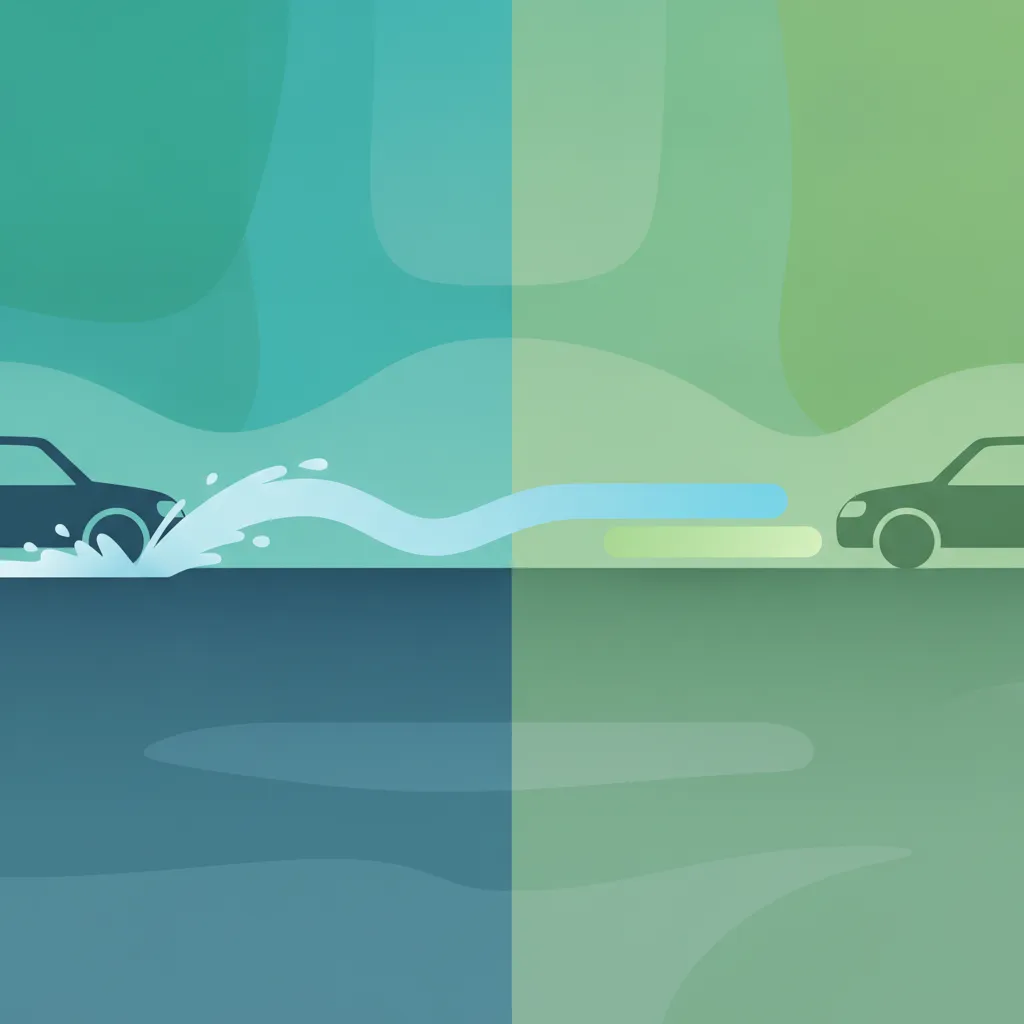
When rain or standing water covers the road, the friction between your tires and the surface is drastically reduced. This fundamental change means your vehicle will need a longer distance to come to a stop, and you face a higher risk of skidding or aquaplaning. Understanding these effects is vital for maintaining safety and passing your ehliyet sınavı.
Theory topic content overview
Read the full theory topic guide for Wet Road Braking with structured, easy-to-scan content built for learners in Turkey. This detailed section explains the exact rule, meaning, traffic context, comparison points, and exam logic behind this Turkish driving theory topic so you can study faster, understand the concept more clearly, and avoid common interpretation mistakes on the theory test.
Braking on wet road surfaces fundamentally alters how your vehicle responds, demanding significant adjustments from the driver. When rain or standing water is present, the critical friction between your tires and the road is severely reduced. This reduction means that your vehicle will take a much longer distance to come to a stop, and your control over steering and direction will be compromised. For drivers in Türkiye, mastering wet road braking techniques and understanding its hazards is not just about safety, but also a key component of the ehliyet sınavı.
At the heart of wet road hazards is the lubricating effect of water. Even a thin film of water acts as an "invisible barrier" between your tires and the road surface, preventing the tire's tread from making full, direct contact. This dramatically reduces the coefficient of friction, which is the force that allows your tires to grip, accelerate, steer, and brake effectively.
The consequences of this reduced grip are immediate and profound:
ehliyet candidates.In driving theory, stopping distance is the sum of two main components: reaction distance and braking distance.
The ehliyet sınavı often tests your understanding that both components contribute to the increased overall stopping distance, and that drivers must account for this by significantly increasing their following distance and reducing speed.
Several elements can make wet road braking even more challenging:
To safely navigate wet roads and pass your ehliyet sınavı, adopt these critical driving adjustments:
otoyol) or roads with standing water. Slower speeds give your tires more time to disperse water and give you more time to react.kısa farlar) even during daylight rain to improve your visibility to other drivers. If visibility is severely reduced, fog lights (sis farları) may be appropriate, but use them correctly to avoid dazzling others.Learners and even experienced drivers often make critical errors when facing wet conditions:
Ehliyet SınavıThe core message for ehliyet learners regarding braking on wet roads is anticipation and adaptation. Your ehliyet sınavı will likely feature questions that test your understanding of increased stopping distances, the risks of skidding and aquaplaning, and the necessary adjustments in driving behaviour. Remember that water is an "invisible barrier" that steals your grip. Proactively reduce your speed, significantly increase your following distance, and use smooth, gentle control inputs to maintain safety and pass your exam. Always prioritize a safe speed over the legal speed limit when road conditions are poor.
Start with a short, direct summary of Wet Road Braking before reading the full explanation below.
Braking on wet roads requires significantly longer distances to stop due to reduced tire friction with the road surface. Water acts as a lubricant, decreasing grip and increasing the risk of skidding or aquaplaning, where tires lose contact with the road. Drivers in Türkiye must therefore reduce their speed, increase following distances, and apply brakes smoothly to maintain control and safety.
Review the most important terms, rule signals, and traffic concepts linked to Wet Road Braking.
Explore related theory topic pages connected to Wet Road Braking and continue with the next useful rule explanation.
See the common search queries learners use when trying to understand Wet Road Braking in Turkey.

Dive deeper into specific Turkish driving theory topics like traffic signs, first aid, or vehicle mechanics. Each section offers clear explanations to enhance your understanding of official traffic legislation and prepare you effectively for every aspect of your upcoming ehliyet exam in Türkiye.
Explore Turkish Driving Theory TopicsTheory topic content overview
Start with a short, direct summary of Wet Road Braking before reading the full explanation below.
Braking on wet roads requires significantly longer distances to stop due to reduced tire friction with the road surface. Water acts as a lubricant, decreasing grip and increasing the risk of skidding or aquaplaning, where tires lose contact with the road. Drivers in Türkiye must therefore reduce their speed, increase following distances, and apply brakes smoothly to maintain control and safety.
Review the most important terms, rule signals, and traffic concepts linked to Wet Road Braking.
Explore related theory topic pages connected to Wet Road Braking and continue with the next useful rule explanation.
See the common search queries learners use when trying to understand Wet Road Braking in Turkey.
Dive deeper into specific Turkish driving theory topics like traffic signs, first aid, or vehicle mechanics. Each section offers clear explanations to enhance your understanding of official traffic legislation and prepare you effectively for every aspect of your upcoming ehliyet exam in Türkiye.
Explore Turkish Driving Theory TopicsUse this exam-focused revision tip to understand how Wet Road Braking is likely to appear in theory questions for learners in Turkey. This section helps you identify the most testable part of the rule, avoid common traps, and remember the concept more effectively during Turkish driving theory exam preparation.
In your ehliyet sınavı, expect questions on how adverse weather, particularly rain, impacts stopping distances. Remember that both reaction time and braking distance are affected, requiring a substantial reduction in speed and a greater safety margin. Don't underestimate the effect of a seemingly small amount of water on tire grip.
Read direct answers to the most common learner questions about Wet Road Braking in Turkey. This FAQ focuses on rule confusion, practical meaning, comparison with similar concepts, and the exact uncertainties that appear most often in Turkish driving theory revision and exam preparation.
Water on the road surface creates a layer between the tire and the asphalt, significantly reducing the friction needed for effective braking. This reduced friction means the tires cannot grip as well, requiring more distance to slow down or stop the vehicle.
Skidding occurs when tires lose traction and slide across the road surface due due to excessive braking or acceleration, often on a wet patch. Aquaplaning (or hydroplaning) is a more extreme form where a layer of water builds up completely underneath the tires, lifting them off the road surface and causing total loss of steering and braking control.
While exact distances vary based on speed, tire condition, and road surface, braking distances on wet roads can be two to three times longer than on dry roads. This is a critical factor for drivers to consider in Türkiye.
If your vehicle aquaplanes, do not brake suddenly or steer sharply. Ease off the accelerator, keep the steering wheel straight, and allow the vehicle to slow down naturally until the tires regain contact with the road.
Tires designed for wet weather, with deeper and more effective tread patterns, are better at displacing water and maintaining grip. Ensuring your tires have adequate tread depth, as required by Turkish regulations, is crucial for wet road safety.
Regularly check your tire pressure and tread depth, ensure your wipers are in good condition, and keep your lights clean and functional. These checks are essential for visibility and control in wet conditions.
While official speed limits in Türkiye remain the same, drivers are legally required to adjust their speed to road and weather conditions. This means driving significantly slower than the posted limit is necessary for safety in heavy rain.
Increasing following distance gives you more time and space to react to hazards and compensate for the longer braking distances required on wet surfaces, greatly reducing the risk of rear-end collisions.
Use our comprehensive practice search to find exactly the Turkish driving theory questions you need to master. Whether reviewing specific road signs, traffic rules, or first aid scenarios, select your perfect practice set and boost your confidence for the official ehliyet sınavı.