
This lesson teaches you the correct techniques for setting and utilizing your motorcycle mirrors to maintain full 360-degree awareness. It focuses on the crucial lifesaver shoulder check, a non-negotiable habit for safe merging and lane changes on Austrian roads.

Lesson content overview
Effective observation is the cornerstone of safe motorcycle riding, and a significant part of this involves the diligent use of mirrors and proactive blind-spot management. This lesson, part of your Austrian Motorcycle Theory curriculum, will equip you with the essential techniques for setting and using your motorcycle mirrors, understanding their limitations, and mastering the crucial "lifesaver" shoulder check to cover areas mirrors cannot reach. A disciplined observation routine is paramount for safely navigating traffic, making lane changes, merging, and overtaking, ultimately reducing collision risks.
Motorcycles, by their very nature, offer a different perspective and unique challenges compared to cars when it comes to observing surrounding traffic. Unlike a car driver who might have multiple large mirrors and a wider rear window, a motorcyclist relies on smaller mirrors and must actively turn their head to gain full situational awareness. Mastering mirror use and understanding blind spots are not just recommendations; they are fundamental skills that directly contribute to your safety and the safety of others on the road. Without a systematic approach to observation, you are significantly more vulnerable to unforeseen hazards, especially from vehicles approaching from behind or to the sides.
Motorcycles are typically equipped with different types of mirrors, each serving a specific purpose in providing a comprehensive view of the surrounding environment. Knowing the function and proper adjustment of each is essential for maintaining constant awareness.
The rearview mirror is generally positioned centrally on the handlebars or sometimes on the fuel tank, offering a direct view of the traffic immediately behind your motorcycle. Standard rearview mirrors provide a focused, relatively narrow field of view. Expanded rearview mirrors, often convex or aspheric, are designed to offer a much wider field of vision, although objects may appear smaller and further away than they actually are. Both types are vital for assessing following distances and detecting vehicles approaching from directly behind.
Side mirrors are mounted on the handlebars, one on each side, providing lateral and rearward views of adjacent lanes. These mirrors are critical for detecting vehicles in the lanes directly beside you and for monitoring traffic that might be preparing to overtake or that you are planning to overtake. Most side mirrors are convex to offer a broader perspective, which helps reduce the size of the blind spot directly beside the motorcycle. However, they do not eliminate these blind spots entirely. Adjustable side mirrors, with swiveling mounts, allow you to fine-tune their position for optimal coverage based on your riding posture and preferences.
Austrian road traffic regulations, specifically § 54 Abs 2 StVO, stipulate that motorcycles must be equipped with at least one rearview mirror. While the law mandates a minimum, best practice and enhanced safety dictate the use of two side mirrors, providing balanced visibility to both the left and right sides. Mirrors must be securely attached, free from obstruction, and provide a clear, undistorted view.
Proper mirror adjustment is a critical pre-ride check. Mirrors must be set up to provide the widest possible field of view with minimal head movement, aligning with your natural riding posture.
Mount Helmet and Gear: Always adjust your mirrors after you have donned your helmet and any other essential riding gear. The position of your helmet can subtly change your eye line and head posture, affecting the optimal mirror angle.
Assume Normal Riding Posture: Sit on your motorcycle in your usual riding position. Your back should be straight, arms relaxed, and feet on the footpegs. This ensures mirrors are adjusted for how you will actually ride.
Adjust Rearview Mirror: Position your central rearview mirror so that your left eye can easily glance at it to see directly behind you without needing to turn your head. It should give you a clear view of the lane you are in and the immediate surroundings behind.
Adjust Inside Side Mirror: This is typically your left side mirror in countries with right-hand traffic like Austria. Adjust it to provide a continuous view of the rear and the adjacent lane to your left when you glance directly to that side. You should see just a sliver of your own shoulder or arm on the innermost edge of the mirror.
Adjust Outside Side Mirror: For right-hand traffic, this is your right side mirror. Adjust it to cover the "main object zone" – the lane next to you on the right, extending slightly ahead of your motorcycle. Again, only a minimal portion of your own arm should be visible.
After adjusting your mirrors, take a moment to ensure that your helmet or any part of your body does not obstruct the view. If your helmet position changes during a ride, or if you adjust your seating, briefly re-check your mirror alignment.
Carrying a passenger or heavy luggage significantly alters your motorcycle's dynamics and your own riding posture. A passenger's body can shift your weight distribution and restrict your ability to turn your head, thereby changing the effectiveness of your mirror settings and potentially enlarging blind spots.
Always re-check and, if necessary, re-adjust all your mirrors after a passenger has boarded or after you have loaded luggage onto your motorcycle. Failure to do so can severely compromise your rearward visibility.
Blind spots are specific areas around your motorcycle that cannot be seen through your mirrors due to the physical limitations of the mirrors themselves, the motorcycle's structure, and the rider's own body. These zones are inherently dangerous because they can hide entire vehicles, making them invisible to you until it might be too late.
Mirrors work by reflecting light, but your own body and the motorcycle's components create physical obstructions. This phenomenon, known as visual occlusion, means that certain angles will always be blocked from a mirror's view. No matter how perfectly adjusted your mirrors are, they cannot physically see through your shoulder or the motorcycle frame. This inherent limitation is why supplementing mirror checks with a direct visual confirmation is absolutely vital.
The lifesaver shoulder check, sometimes called a "quick glance" or "visual check," is a brief, decisive turn of your head and shoulders towards the blind spot area. Its purpose is to physically shift your line of sight into those zones not covered by mirrors, providing direct visual confirmation that the area is clear of vehicles immediately before you perform a lateral maneuver.
The lifesaver shoulder check is mandatory before any lateral movement of your motorcycle. This includes:
Check Rearview Mirror: First, quickly glance at your rearview mirror to assess the traffic directly behind you.
Check Inside Side Mirror: Next, glance at the side mirror on the side you intend to move towards. This gives you a broader view of the adjacent lane.
Signal Your Intention: Activate your turn signal to indicate your planned maneuver.
Perform the Shoulder Check: Immediately before initiating your lane change or merge, rapidly turn your head and upper body over your shoulder in the direction you intend to move. This should be a full, decisive rotation, allowing you to see directly into the blind spot. The duration should be long enough to confirm the area is clear (at least one second) but quick enough not to disrupt your forward momentum or steering.
Confirm Clear, Then Maneuver: Only if the blind spot is clear should you smoothly and safely execute your maneuver.
Practicing the shoulder check until it becomes second nature is crucial. It must be a fluid, integrated part of your observation routine, not an afterthought. An incomplete or too early shoulder check can be just as dangerous as not performing one at all.
Maintaining continuous situational awareness is paramount for motorcyclists. This is achieved through a continuous observation routine, a disciplined and repeatable sequence of visual checks performed at regular intervals, typically every 5-10 seconds, and always before any maneuver. This routine reduces reliance on memory and ensures you are always aware of rapidly changing traffic conditions.
The standard sequence for your continuous observation routine should be:
Before any lateral maneuver, this routine culminates with the lifesaver shoulder check after signaling your intention, as described above. This systematic approach ensures that you detect fast-approaching vehicles or changes in traffic patterns in a timely manner, allowing you sufficient reaction time.
In dense traffic or complex environments, increase the frequency of your observation routine. The quicker traffic conditions can change, the more often you need to check your mirrors and blind spots.
Austrian traffic law places a high emphasis on safe driving practices and continuous observation. Several regulations underscore the importance of mirror use and blind-spot management:
Failure to adhere to these principles can lead to legal penalties and, more importantly, can result in serious accidents. In the event of a collision resulting from an unobserved blind spot, the rider may be found negligent.
Understanding common mistakes helps reinforce correct behavior and prevents dangerous situations.
The effectiveness of your mirror use and blind-spot management can be influenced by various external factors. Adapting your observation routine to these conditions is a mark of a skilled rider.
In adverse weather, visibility is significantly reduced for everyone.
Night riding presents challenges with reduced ambient light and the potential for headlight glare.
City riding involves shorter distances between vehicles, frequent stops, and numerous lane changes.
High speeds on motorways demand extended observation distances and quick reactions.
As discussed, additional load changes your motorcycle's dynamics and your posture.
The fundamental principle behind effective mirror use and blind-spot management is to achieve continuous and comprehensive situational awareness.
By consistently applying these techniques, you significantly reduce the risk of collisions, especially those involving lane changes or merging. This proactive approach to observation builds confidence and competence, preparing you for the varied and dynamic challenges of riding on Austrian roads.
This lesson teaches the essential Austrian motorcycle techniques for maintaining 360-degree awareness through proper mirror setup and blind-spot management. Motorcyclists must understand that mirrors have inherent physical limitations due to visual occlusion caused by the rider's body and motorcycle geometry, making the mandatory 'lifesaver' shoulder check the only way to directly confirm blind spots are clear before changing lanes, merging, or overtaking. A disciplined continuous observation routine—cycling through rearview mirror, side mirror, and forward scan every few seconds—counters natural attention decay and provides crucial reaction time. Austrian traffic law explicitly requires this verification under § 36 StVO and § 90 StVO, and failure to perform proper checks can result in both legal liability and serious collisions.
A short set of high-value points that capture the most important learning from this lesson.
Mirrors alone are insufficient for safe lane changes; the lifesaver shoulder check is mandatory to cover blind spots that mirrors cannot see.
Proper mirror adjustment must be performed after donning your helmet and assuming your normal riding posture, not before.
A continuous observation routine—checking rearview, side mirror, and forward—should be performed every 5–10 seconds to maintain situational awareness.
Carrying passengers or luggage changes your riding posture and can enlarge blind spots, requiring mirror re-adjustment each time.
Austrian law (§ 36 StVO) explicitly requires verifying that lane changes and overtaking can be performed safely, including checking blind spots.
Explore all units and lessons included in this driving theory course.
The correct observation sequence before any lateral maneuver is: rearview mirror → side mirror → signal → shoulder check → execute.
Visual occlusion means mirrors physically cannot see through your body, your motorcycle frame, or a passenger—only a direct head turn can clear these zones.
For right-hand traffic in Austria, the near-side blind spot (left) is typically the larger danger zone for hidden vehicles.
Mirrors must be clean, undamaged, and correctly positioned before every ride; compromised mirrors are effectively useless.
The shoulder check must be performed immediately before—not well before—executing a maneuver, as traffic conditions can change within seconds.
Relying solely on mirrors for lane changes, believing wide-angle mirrors eliminate all blind spots.
Adjusting mirrors before putting on your helmet, then riding with misaligned eye lines that miss critical areas.
Performing the shoulder check too early in the maneuver sequence, then forgetting to reconfirm before actually changing lanes.
Neglecting to re-check mirror alignment after taking a passenger or loading luggage, leaving enlarged blind spots unaddressed.
Skipping shoulder checks in dense urban traffic under the false assumption that slow speeds reduce risk.
Lesson content overview
A short set of high-value points that capture the most important learning from this lesson.
Mirrors alone are insufficient for safe lane changes; the lifesaver shoulder check is mandatory to cover blind spots that mirrors cannot see.
Proper mirror adjustment must be performed after donning your helmet and assuming your normal riding posture, not before.
A continuous observation routine—checking rearview, side mirror, and forward—should be performed every 5–10 seconds to maintain situational awareness.
Carrying passengers or luggage changes your riding posture and can enlarge blind spots, requiring mirror re-adjustment each time.
Austrian law (§ 36 StVO) explicitly requires verifying that lane changes and overtaking can be performed safely, including checking blind spots.
Explore all units and lessons included in this driving theory course.
The correct observation sequence before any lateral maneuver is: rearview mirror → side mirror → signal → shoulder check → execute.
Visual occlusion means mirrors physically cannot see through your body, your motorcycle frame, or a passenger—only a direct head turn can clear these zones.
For right-hand traffic in Austria, the near-side blind spot (left) is typically the larger danger zone for hidden vehicles.
Mirrors must be clean, undamaged, and correctly positioned before every ride; compromised mirrors are effectively useless.
The shoulder check must be performed immediately before—not well before—executing a maneuver, as traffic conditions can change within seconds.
Relying solely on mirrors for lane changes, believing wide-angle mirrors eliminate all blind spots.
Adjusting mirrors before putting on your helmet, then riding with misaligned eye lines that miss critical areas.
Performing the shoulder check too early in the maneuver sequence, then forgetting to reconfirm before actually changing lanes.
Neglecting to re-check mirror alignment after taking a passenger or loading luggage, leaving enlarged blind spots unaddressed.
Skipping shoulder checks in dense urban traffic under the false assumption that slow speeds reduce risk.
Explore search topics learners often look for when studying Mirror Use and Blind‑Spot Management. These topics reflect common questions about road rules, driving situations, safety guidance, and lesson level theory preparation for learners in Austria.
Browse additional driving theory lessons that cover connected traffic rules, road signs, and common driving situations related to this topic. Improve your understanding of how different rules interact across everyday traffic scenarios.
Learn the systematic observation routine for motorcyclists, including mirror use and lifesaver checks. Essential for maintaining continuous situational awareness and safe riding in Austrian traffic.
This lesson focuses on developing comprehensive observation skills, which are the foundation of safe driving. It teaches systematic scanning techniques, including the correct sequence for mirror checks and the critical importance of the shoulder check (Schulterblick) to cover blind spots. Learners will understand how to look far ahead down the road while also maintaining awareness of their immediate surroundings to detect potential hazards as early as possible.

This lesson provides advice for navigating popular scenic routes, which often feature heavy traffic, cyclists, and distracted drivers. It emphasizes maintaining focus on the road despite beautiful scenery and anticipating unpredictable actions from other tourists who may stop suddenly. Adopting a patient and defensive mindset is key to safely enjoying these remarkable roads.

This lesson explains how to use different positions within a lane to maximize visibility, create safety buffers, and plan escape routes. It introduces the concept of anticipative riding, which involves actively scanning for potential hazards and predicting the actions of other drivers. Strategic positioning is a dynamic skill that allows a rider to manage space and time effectively in changing traffic.
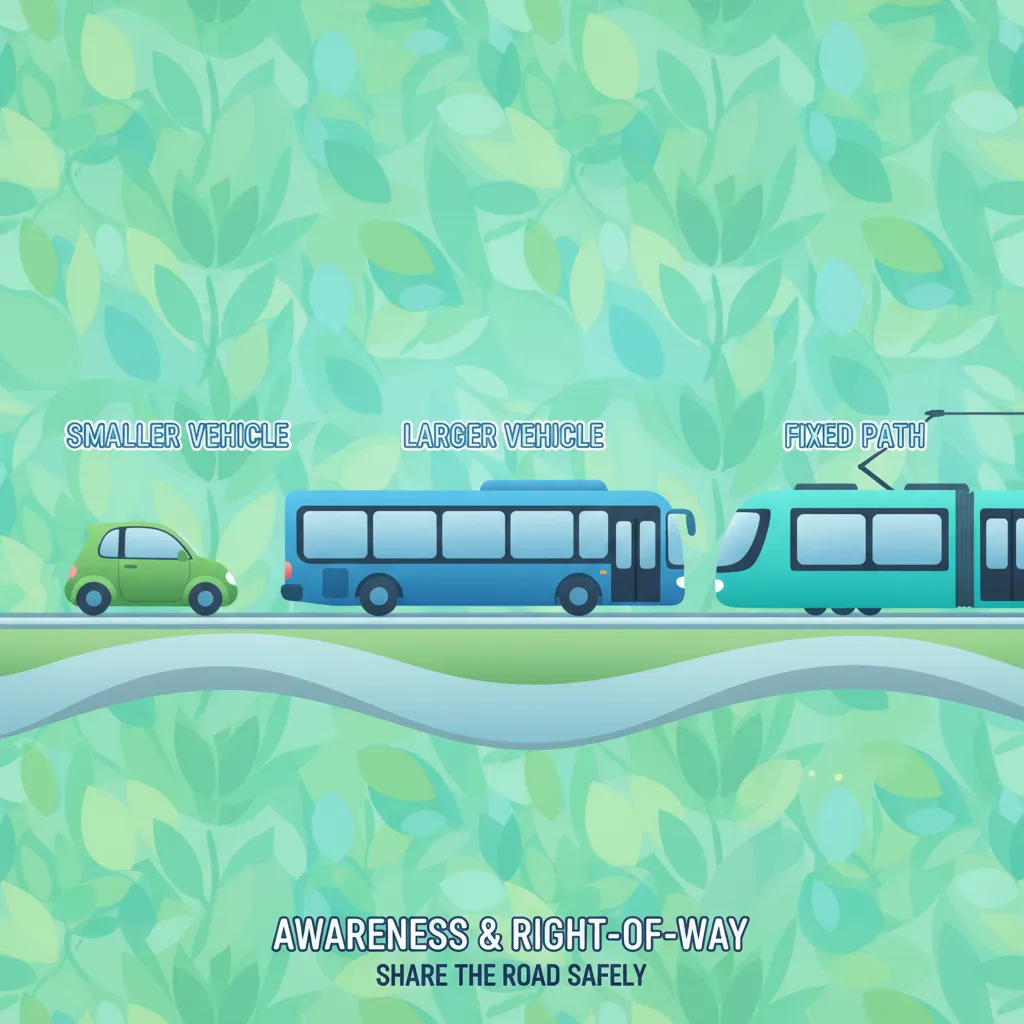
This lesson provides specific guidance for sharing the road with different types of vehicles in Austria. It covers the dangers of large vehicle blind spots, the rules for navigating near buses and dedicated tram tracks, and common conflict points at intersections. Understanding the behavior and limitations of other vehicles is key to safely navigating complex urban environments.

This lesson provides essential knowledge for using Austria's high-speed road network. It covers the correct procedure for entering via acceleration lanes, maintaining strict lane discipline (keeping right, passing left), and understanding the digital or physical Vignette (toll sticker) requirement. The formation of the 'Rettungsgasse' (emergency corridor) during traffic jams is also a key topic.

This lesson covers the foundational principles of making a motorcyclist conspicuous to other road users. It examines the role of brightly colored and reflective clothing, effective helmet colors, and the mandatory use of headlights during the day. Understanding how to create a strong visual presence in traffic is a key component of proactive accident prevention for any rider.

This lesson addresses the heightened vulnerability of motorcyclists and outlines essential strategies for personal safety and risk mitigation. It covers the importance of wearing certified protective gear, maintaining situational awareness, and adopting a defensive riding posture. By understanding and anticipating potential hazards in the Austrian traffic environment, riders can actively reduce their risk of accidents.

This lesson provides a detailed guide on how to use a vehicle's mirrors and camera systems to their full potential. It explains the purpose of different types of mirrors (e.g., wide-angle) and how to integrate them into a continuous scanning pattern. This proactive observation is essential for detecting hazards early.

This lesson breaks down the overtaking maneuver into a safe, repeatable process: assess, signal, check, move, and return. It emphasizes the importance of ensuring a sufficient gap in oncoming traffic, checking mirrors and blind spots thoroughly, and maintaining a proper speed differential. Adherence to Austrian laws regarding where overtaking is prohibited is also covered in detail.

This lesson prepares riders for the specific conditions of Austria's mountain passes. It highlights hazards such as tight hairpin turns, potential for sudden weather changes, rockfall, and variable road surfaces. Awareness of these unique challenges allows riders to anticipate risks and adapt their technique for safe and enjoyable alpine touring.
Understand common errors in motorcycle mirror use and blind-spot checks. Learn about edge cases and challenging conditions like weather and urban traffic for safer riding.

This lesson explains the correct techniques for using mirrors to maintain awareness of surrounding traffic and for checking blind spots. It details the proper timing and use of indicators to signal turns and lane changes effectively. The content reinforces that clear, early communication is key to preventing misunderstandings with other drivers.

This lesson focuses on the critical role of mirrors, cameras, and other electronic aids in minimizing blind spots around a large vehicle. It provides guidance on how to properly adjust mirrors to maximize visibility. Effective use of these systems is vital for detecting smaller vehicles, cyclists, and pedestrians, especially during manoeuvres.

Buses and coaches have significant blind spots that pose a major risk to pedestrians, cyclists, and other vehicles. This lesson teaches you how to correctly set up and systematically scan all mirrors, including wide-angle and kerb-view mirrors. It also covers the use of modern camera systems to gain a complete picture of the area surrounding the vehicle, especially before moving off.
This lesson provides a detailed guide on how to use a vehicle's mirrors and camera systems to their full potential. It explains the purpose of different types of mirrors (e.g., wide-angle) and how to integrate them into a continuous scanning pattern. This proactive observation is essential for detecting hazards early.
This lesson covers the foundational principles of making a motorcyclist conspicuous to other road users. It examines the role of brightly colored and reflective clothing, effective helmet colors, and the mandatory use of headlights during the day. Understanding how to create a strong visual presence in traffic is a key component of proactive accident prevention for any rider.

Passive mirror use is not enough. This lesson teaches active, systematic scanning techniques, including moving your head to look around A-pillars and using all available mirrors and cameras in a set sequence. The focus is on building a constant mental map of the space around the vehicle, especially before any change of direction or speed, to account for unseen pedestrians or cyclists.

This lesson delves into the psychology of riding, exploring how mental states like stress, anger, or overconfidence can lead to poor decisions. It discusses common cognitive errors, such as tunnel vision and risk compensation, that can compromise a rider's safety. Developing self-awareness and maintaining a calm, focused mindset are presented as key defensive skills.

This lesson focuses on the safety-critical skill of reversing, emphasizing the importance of all-around observation before and during the manoeuvre. It covers the correct use of mirrors and the necessity of checking blind spots to ensure the path is clear of pedestrians, obstacles, and other vehicles. Learners will understand techniques for maintaining slow, controlled speed and making accurate steering adjustments while backing up in various situations.
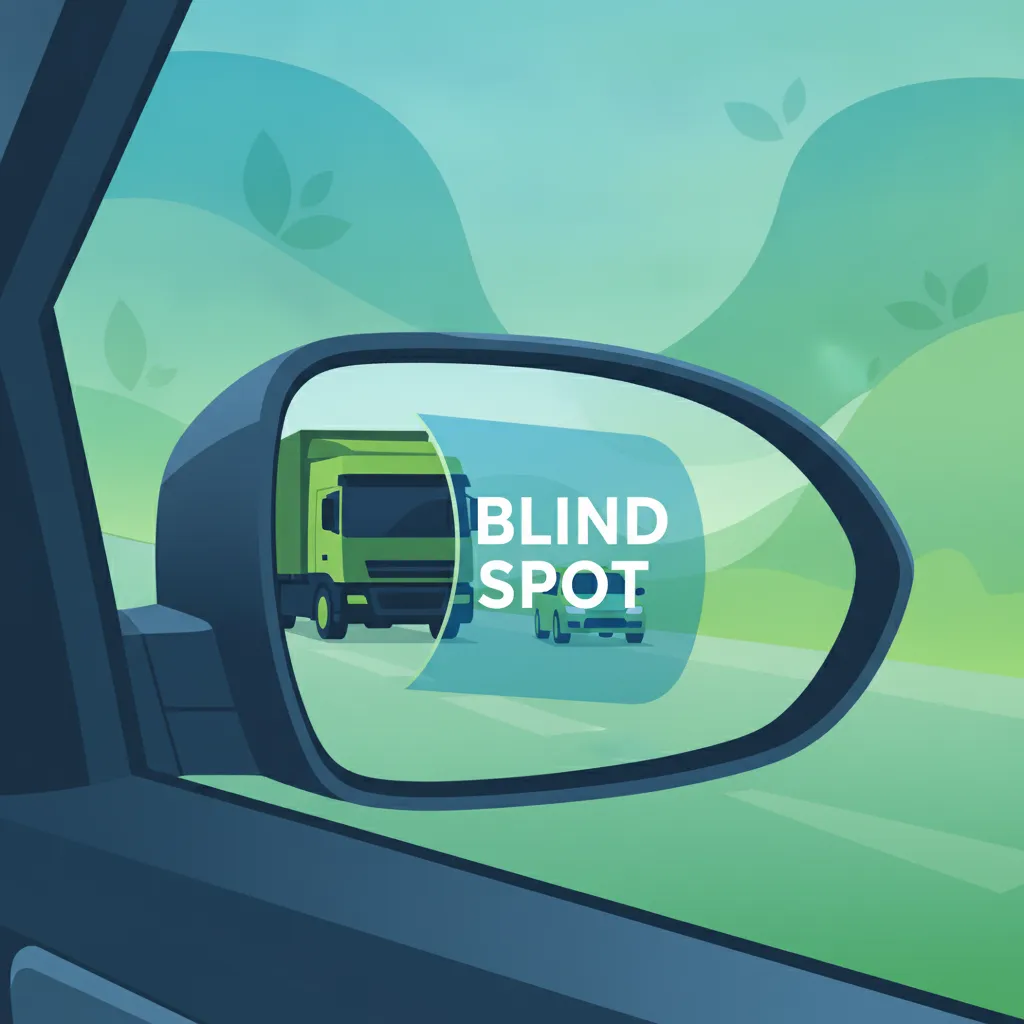
This lesson details the location and size of the significant blind spots to the front, sides, and rear of large vehicles. It explains how the vehicle's size and articulation create these 'no-zones' where other road users can disappear from view. Recognizing these areas is the first step toward developing safe observation habits.
This lesson focuses on developing comprehensive observation skills, which are the foundation of safe driving. It teaches systematic scanning techniques, including the correct sequence for mirror checks and the critical importance of the shoulder check (Schulterblick) to cover blind spots. Learners will understand how to look far ahead down the road while also maintaining awareness of their immediate surroundings to detect potential hazards as early as possible.
Find clear answers to common questions learners have about Mirror Use and Blind‑Spot Management. Learn how the lesson is structured, which driving theory objectives it supports, and how it fits into the overall learning path of units and curriculum progression in Austria. These explanations help you understand key concepts, lesson flow, and exam focused study goals.
It is called a lifesaver because it covers the 'blind spot' that mirrors cannot see. In heavy Austrian traffic, failing to perform this check before changing lanes is a leading cause of collisions with other vehicles.
You should adjust them while sitting in your normal riding position so you can see as much of the road behind you as possible, with only a small portion of your own elbows visible in the inner corners.
The exam focuses on the principles of safe observation and the necessity of checking blind spots. You should understand the limitations of your equipment to answer these situational questions correctly.
Yes, always. Even at high speeds on the Autobahn, other vehicles can be hidden in your blind spot. Checking over your shoulder before shifting lanes is a fundamental safety requirement.
Refine your study plan by searching for specific Austrian driving theory practice sets. Pinpoint questions related to particular road rules, signs, or challenge levels, and begin practicing immediately to reinforce your knowledge and excel in your official exam with confidence. Get started with focused revision today.