
This lesson guides you through the essential communication tools for motorcyclists in Austria, ensuring you can signal your intentions clearly to other road users. By mastering indicators, brake light operation, and standard hand signals, you will build the defensive riding habits required for both your theory exam and real-world safety.

Lesson content overview
Effective communication with other road users is paramount for motorcycle safety, especially in the dynamic traffic environments of Austria. This lesson, part of your Austrian Motorcycle Theory: Comprehensive Guide for A, A1, & A2 Licences, delves into the critical role of hand signals and light usage. Mastering these forms of communication allows you to clearly convey your intentions, enabling other drivers to anticipate your actions and react safely.
As a motorcyclist, your visibility and predictability directly impact your safety. Signals are your primary tool for communicating your intended maneuvers to others. This clear communication helps prevent misunderstandings that could lead to dangerous situations or accidents.
When you signal, you are effectively "speaking" to other drivers, pedestrians, and cyclists around you. You are informing them of your intention to turn, change lanes, or slow down. This advance notice is crucial because it allows others sufficient time to process your signal, adjust their speed, or alter their position accordingly. Without clear signals, your actions can appear sudden and unpredictable.
The principle of predictable intent is fundamental to road safety. When your actions are predictable, other road users can react smoothly and safely, reducing the likelihood of abrupt braking, swerving, or collisions. Proper signaling minimizes ambiguity, creating a safer and more fluid traffic flow for everyone, including fellow riders and drivers of larger vehicles.
Turn indicators, often referred to as blinkers, are vehicle-mounted lights designed to signal an upcoming directional change. On a motorcycle, these are critical for communicating turns and lane changes.
Turn indicators are activated via a switch on your handlebar, causing the lights on the intended side of your motorcycle to flash. It's not enough to simply activate them; you must also remember to cancel them once your maneuver is complete. Forgetting to cancel an indicator can be just as dangerous as not signaling at all, as it provides misleading information to other road users, suggesting you intend another turn or lane change.
Austrian traffic laws require motorcyclists to use turn indicators whenever they intend to change direction, including turns and lane changes. It is crucial to activate your turn signal sufficiently in advance, typically at least 30 meters before the point of the maneuver when travelling at speeds up to 60 km/h. This allows enough time for other road users to perceive your signal and adjust. At higher speeds, an even greater distance is advisable to ensure adequate warning time.
Always activate your turn indicator before you start to slow down or change your position on the road for a turn. This gives other drivers the earliest possible warning.
One of the most frequent errors made by motorcyclists is failing to cancel their turn indicator after completing a maneuver. Unlike many cars, most motorcycles do not have automatic self-cancelling indicators. Another common mistake is late signaling, where the indicator is activated only a few meters before the turn, giving insufficient warning to others. Both scenarios can lead to confusion and increase accident risk.
The brake light is a critical safety feature located at the rear of your motorcycle, designed to illuminate brightly whenever you apply the brakes. It serves as an immediate visual warning to following traffic that you are slowing down or stopping.
Most motorcycles utilize a hydraulic brake light system, where pressure in the brake lines (from applying either the front or rear brake lever) activates a switch, which in turn illuminates the brake light. Modern motorcycles, especially those with advanced ABS systems, may also incorporate electric sensors that activate the brake light even with very light brake pressure or engine braking deceleration. Regardless of the mechanism, the purpose remains the same: to provide an unambiguous signal of deceleration.
The prompt activation of your brake light is vital for preventing rear-end collisions. Following drivers rely on your brake lights to gauge your speed and maintain a safe following distance. A delay in activation or a non-functional brake light system deprives them of this essential information, forcing them to react more abruptly to your slowing speed, which can be particularly dangerous in heavy traffic or at high speeds.
Regularly check that your brake lights are functioning correctly. This involves inspecting both the front and rear brake lever activation. Engage each brake lever separately and ensure the light illuminates immediately and brightly. Also, check for any damage to the lens or bulb (if applicable) and replace as needed. Proper maintenance ensures consistent communication of your braking intentions.
Never assume your brake lights are working just because your motorcycle is running. Always perform a quick check before each ride.
While electronic turn indicators and brake lights are primary communication tools, hand signals serve as a vital backup and supplementary method. They are particularly useful when electronic signals fail, are not equipped on the vehicle (e.g., some older scooters), or when increased visibility is needed in adverse conditions.
Hand signals are not just for emergencies. They can significantly enhance your communication, especially in situations where your electronic signals might be less visible, such as bright sunlight, heavy rain, or when obscured by other vehicles. Using both electronic and hand signals provides a strong, redundant message to other road users, reinforcing your intentions.
Motorcyclists primarily use their left arm for all standard hand signals, ensuring the right hand remains on the throttle and front brake lever for vehicle control.
To signal a left turn or a lane change to the left, extend your left arm straight out horizontally from your side. Ensure your arm is fully extended and clearly visible to traffic behind and to your front (if applicable).
To signal a right turn or a lane change to the right, extend your left arm vertically upward, bent at the elbow, with your palm facing forward. This signal mimics the indicator arm of a car driver but is performed with the left arm for safety and control.
To signal that you intend to stop or significantly slow down, extend your left arm vertically downward, with your palm facing backward. This warns following traffic of your deceleration, supplementing your brake light.
When performing a hand signal, ensure it is clear, distinct, and held long enough for other road users to perceive and understand it. You should maintain the signal until the maneuver is safely underway, then return your hand to the handlebar for full control. Practice these signals regularly so they become second nature, allowing you to execute them smoothly and without compromising your control of the motorcycle.
Adhering to specific Austrian traffic regulations regarding signaling is not only a legal requirement but also a fundamental aspect of safe riding for categories A, A1, and A2.
In Austria, the use of turn indicators is mandatory for any change of direction or lane. This includes turning at intersections, changing lanes on multi-lane roads, and entering or exiting roundabouts. As previously mentioned, the signal must be activated at least 30 meters before the maneuver. While hand signals are generally recommended as a supplement or backup, they become mandatory if your electronic indicators are non-functional, ensuring continuous communication.
Hazard warning lights (or hazard lights) activate all turn indicators simultaneously. Their primary purpose is to warn other road users of a stationary vehicle that poses a danger, such as a breakdown on the side of the road or a vehicle stopped in an unexpected location. They are not to be used while the vehicle is in motion, as this can cause significant confusion and ambiguity regarding your intended actions.
Failure to signal, late signaling, or neglecting to cancel signals can result in fines and can significantly increase your risk of an accident. Misleading signals create uncertainty for other drivers, leading to unpredictable reactions and potentially dangerous situations. Legal compliance directly contributes to safer roads for all.
Effective signaling involves more than just knowing the rules; it requires adapting your approach to various riding conditions and environments.
In adverse weather conditions such as heavy rain, fog, or snow, visibility is significantly reduced for all road users. In these situations, your electronic indicators might be harder to see. It is highly advisable to use hand signals in conjunction with your turn indicators to enhance your communication. Make your hand signals larger and hold them for a longer duration to maximize their chances of being seen. Additionally, consider increasing your signaling distance before a maneuver.
In urban environments with heavy traffic, numerous intersections, and frequent lane changes, prompt and precise signaling is critical. Other road users expect immediate and clear communication. On rural roads, while traffic may be sparser, the same rules apply. You might need to adjust your signaling distance to account for higher speeds, giving following vehicles ample time to react, especially on winding roads where visibility might be limited.
When interacting with pedestrians, cyclists, or other vulnerable road users, extra care and clarity in your signaling are essential. These users may be less predictable and harder to spot. Use clear, early signals, and consider supplementing your electronic indicators with hand signals to provide an unmistakable message of your intentions, giving them maximum time to react safely.
The ultimate goal of signaling is to ensure your intentions are clearly perceived and understood by others. This hinges on two key factors: visibility and timing.
Early signaling is a cornerstone of defensive riding. It provides a crucial window for other road users to register your signal, process the information, and respond appropriately. This advance warning prevents sudden maneuvers from your side and avoids forcing others into sudden evasive actions, which are common causes of collisions.
It takes approximately 1.5 seconds for an average driver to perceive a signal, decide on a response, and initiate that response. This reaction time needs to be factored into your signaling. At 60 km/h, 1.5 seconds translates to roughly 25 meters travelled. Activating your signal at least 30 meters before a turn, as required in Austria, generally provides a safe margin for other drivers to react. At higher speeds, this distance naturally needs to increase to maintain the same reaction time margin.
Always think about the road users behind you and to your sides. Are your signals clear and timely enough for them to react safely?
By consistently applying these principles, you contribute significantly to your own safety and the safety of everyone on Austrian roads.
This lesson covers the critical communication tools motorcyclists must master for safe riding in Austria: turn indicators must be activated at least 30 meters before maneuvers and cancelled immediately after, while hand signals serve as an essential backup or supplement using specific left-arm positions for left turns, right turns, and stopping. Brake lights provide immediate deceleration warning to following traffic and should be checked before every ride. The lesson also addresses contextual adaptation for weather, urban versus rural environments, and interactions with vulnerable road users, all governed by Austrian traffic regulations for A, A1, and A2 licence categories.
A short set of high-value points that capture the most important learning from this lesson.
Activate turn indicators at least 30 meters before any maneuver when traveling up to 60 km/h in Austria to give other road users adequate warning time.
Always cancel your turn indicators immediately after completing a turn or lane change to avoid misleading other road users about your next move.
Use hand signals as a backup when electronic indicators fail or as a supplement in poor visibility conditions like rain, fog, or bright sunlight.
Brake lights provide immediate visual warning to following traffic—ensure they activate instantly whenever you apply either brake lever.
Hand signals are mandatory in Austria when electronic indicators are non-functional, so learn the three standard positions for left turn, right turn, and stopping.
Explore all units and lessons included in this driving theory course.
For a left turn or lane change, extend your left arm horizontally; for a right turn, extend your left arm vertically upward with elbow bent; for stopping or slowing, extend your left arm vertically downward.
Hazard warning lights are for stationary vehicles only—never use them while riding as they confuse other road users about your intentions.
Most motorcycles lack automatic self-cancelling indicators unlike cars, so you must manually cancel them after each maneuver.
At 60 km/h, the 1.5-second average human reaction time translates to approximately 25 meters, making the 30-meter signal distance legally and practically essential.
When interacting with vulnerable road users such as pedestrians and cyclists, signal earlier and consider supplementing electronic indicators with hand signals for maximum clarity.
Forgetting to cancel turn indicators after completing a maneuver, which misleads other drivers into anticipating another turn or lane change.
Activating turn signals too late—only a few meters before the turn—providing insufficient warning for other road users to react safely.
Assuming brake lights are working without checking them before each ride, potentially leaving following traffic without deceleration warning.
Using hazard warning lights while the motorcycle is still in motion, which creates dangerous ambiguity about your intended actions.
Failing to use hand signals as a supplement in poor weather conditions, reducing visibility of your intentions to other road users.
Lesson content overview
A short set of high-value points that capture the most important learning from this lesson.
Activate turn indicators at least 30 meters before any maneuver when traveling up to 60 km/h in Austria to give other road users adequate warning time.
Always cancel your turn indicators immediately after completing a turn or lane change to avoid misleading other road users about your next move.
Use hand signals as a backup when electronic indicators fail or as a supplement in poor visibility conditions like rain, fog, or bright sunlight.
Brake lights provide immediate visual warning to following traffic—ensure they activate instantly whenever you apply either brake lever.
Hand signals are mandatory in Austria when electronic indicators are non-functional, so learn the three standard positions for left turn, right turn, and stopping.
Explore all units and lessons included in this driving theory course.
For a left turn or lane change, extend your left arm horizontally; for a right turn, extend your left arm vertically upward with elbow bent; for stopping or slowing, extend your left arm vertically downward.
Hazard warning lights are for stationary vehicles only—never use them while riding as they confuse other road users about your intentions.
Most motorcycles lack automatic self-cancelling indicators unlike cars, so you must manually cancel them after each maneuver.
At 60 km/h, the 1.5-second average human reaction time translates to approximately 25 meters, making the 30-meter signal distance legally and practically essential.
When interacting with vulnerable road users such as pedestrians and cyclists, signal earlier and consider supplementing electronic indicators with hand signals for maximum clarity.
Forgetting to cancel turn indicators after completing a maneuver, which misleads other drivers into anticipating another turn or lane change.
Activating turn signals too late—only a few meters before the turn—providing insufficient warning for other road users to react safely.
Assuming brake lights are working without checking them before each ride, potentially leaving following traffic without deceleration warning.
Using hazard warning lights while the motorcycle is still in motion, which creates dangerous ambiguity about your intended actions.
Failing to use hand signals as a supplement in poor weather conditions, reducing visibility of your intentions to other road users.
Explore search topics learners often look for when studying Hand Signals and Light Usage. These topics reflect common questions about road rules, driving situations, safety guidance, and lesson level theory preparation for learners in Austria.
Browse additional driving theory lessons that cover connected traffic rules, road signs, and common driving situations related to this topic. Improve your understanding of how different rules interact across everyday traffic scenarios.
Explore advanced scenarios and common mistakes related to motorcycle signaling in Austria. Learn how to effectively use indicators, brake lights, and hand signals for clear communication with other road users, enhancing safety and predictability.

This lesson focuses on the interpretation of traffic lights and road surface markings that guide riders through intersections. It covers the meaning of each traffic light phase, the rules for amber lights, and the significance of various lane lines and stop lines. Properly understanding these signals is essential for maintaining traffic flow and ensuring safety at junctions.

This lesson provides essential knowledge for using Austria's high-speed road network. It covers the correct procedure for entering via acceleration lanes, maintaining strict lane discipline (keeping right, passing left), and understanding the digital or physical Vignette (toll sticker) requirement. The formation of the 'Rettungsgasse' (emergency corridor) during traffic jams is also a key topic.
This lesson provides a comprehensive explanation of Austria's right-of-way laws, which are fundamental to intersection safety. It covers the meaning of different priority signs and clarifies the 'Rechts vor Links' (priority to the right) rule that applies at unmarked junctions. A clear understanding of these rules is essential to prevent conflicts and collisions in urban and rural settings.
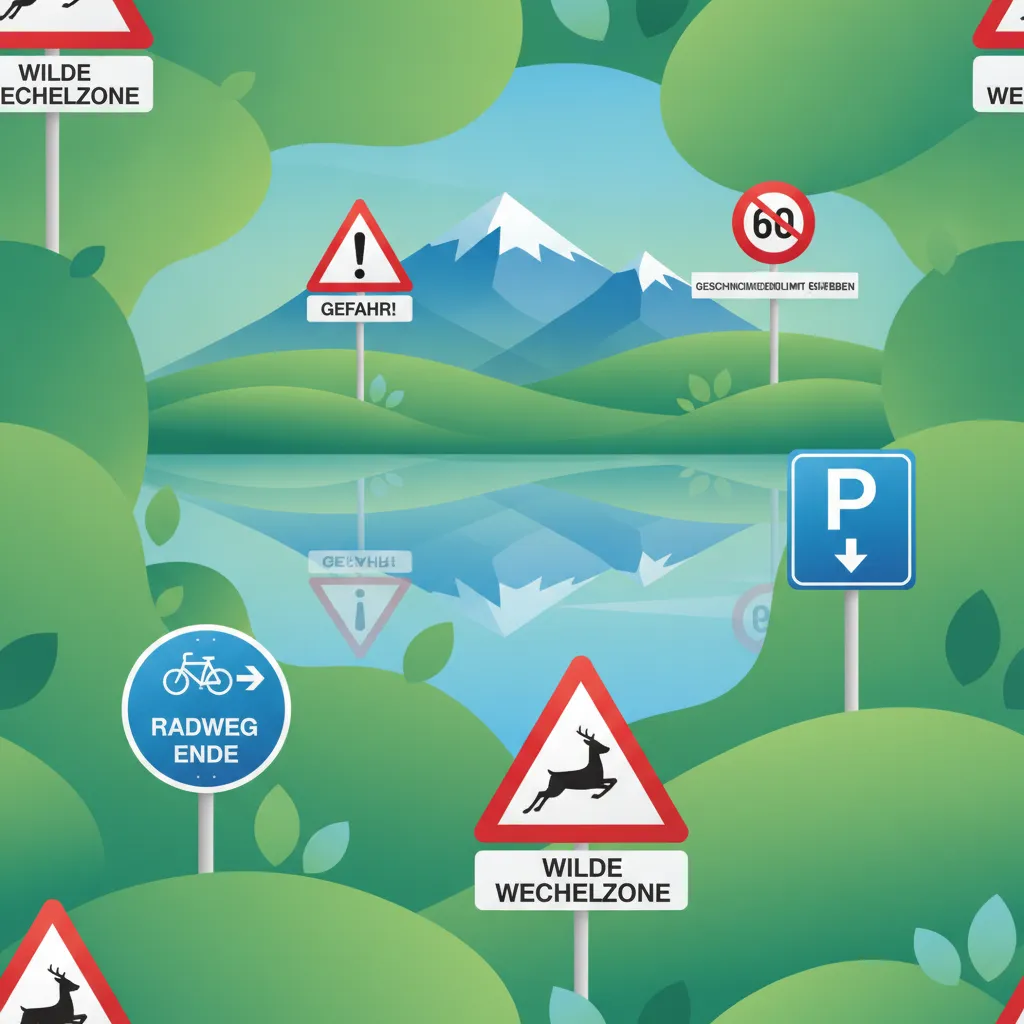
This lesson categorizes and explains the different types of Austrian road signs, including warning, regulatory, and informational signs. It details how the shape and color of a sign indicate its function, such as communicating speed limits, prohibitions, or mandatory actions. Understanding this visual system is fundamental for making correct and safe decisions while riding.
This lesson prepares riders for safely transiting through construction zones ('Baustellen'). It covers the interpretation of temporary signage, adherence to reduced speed limits, and awareness of hazards suchas altered lane markings, abrupt surface changes, and loose gravel. Respecting the safety of road workers and anticipating unpredictable traffic patterns are key themes.

This lesson addresses the specific challenges of interacting with larger vehicles like buses and trams in an urban environment. It explains how to signal intentions clearly and predictably to avoid conflicts in shared spaces. Key topics include safely crossing tram tracks and maintaining awareness around public transport stops.

This lesson explains the correct techniques for using mirrors to maintain awareness of surrounding traffic and for checking blind spots. It details the proper timing and use of indicators to signal turns and lane changes effectively. The content reinforces that clear, early communication is key to preventing misunderstandings with other drivers.
This lesson provides clear instructions for maneuvering through single and multi-lane roundabouts. It covers the critical rule of giving way to traffic already in the circle, proper lane selection based on the intended exit, and the correct use of indicators when entering and exiting. Mastering roundabouts is key to efficient and safe travel in modern Austrian traffic systems.
This lesson explains the operation and meaning of traffic light signals in Austria, including the standard red, yellow, and green phases, as well as flashing signals and arrows. It also covers other priority control devices, such as stop signs and yield signs, which are used to manage right-of-way at intersections. Understanding the hierarchy between these signals and signs is crucial for navigating junctions safely and in compliance with the law.

This lesson breaks down the overtaking maneuver into a safe, repeatable process: assess, signal, check, move, and return. It emphasizes the importance of ensuring a sufficient gap in oncoming traffic, checking mirrors and blind spots thoroughly, and maintaining a proper speed differential. Adherence to Austrian laws regarding where overtaking is prohibited is also covered in detail.
Understand how to adapt signaling techniques for different conditions like poor weather, urban traffic, and interactions with vulnerable road users. This lesson focuses on ensuring your signals are seen and understood in complex Austrian traffic situations.
This lesson covers the foundational principles of making a motorcyclist conspicuous to other road users. It examines the role of brightly colored and reflective clothing, effective helmet colors, and the mandatory use of headlights during the day. Understanding how to create a strong visual presence in traffic is a key component of proactive accident prevention for any rider.
This lesson explains the correct techniques for using mirrors to maintain awareness of surrounding traffic and for checking blind spots. It details the proper timing and use of indicators to signal turns and lane changes effectively. The content reinforces that clear, early communication is key to preventing misunderstandings with other drivers.

This lesson focuses on strategies for riding safely in conditions of poor visibility, such as rain, fog, and low sun glare. It explains how to use lights effectively, increase following distances, and moderate speed to maintain control. The content also addresses braking techniques on wet surfaces to prevent skidding and hydroplaning.
This lesson focuses on the interpretation of traffic lights and road surface markings that guide riders through intersections. It covers the meaning of each traffic light phase, the rules for amber lights, and the significance of various lane lines and stop lines. Properly understanding these signals is essential for maintaining traffic flow and ensuring safety at junctions.
This lesson provides advice for navigating popular scenic routes, which often feature heavy traffic, cyclists, and distracted drivers. It emphasizes maintaining focus on the road despite beautiful scenery and anticipating unpredictable actions from other tourists who may stop suddenly. Adopting a patient and defensive mindset is key to safely enjoying these remarkable roads.

This lesson focuses on the rider's primary responsibility: ensuring they are visible and their actions are predictable to other road users. It explains effective strategies such as using proper lighting, wearing reflective clothing, and adopting a safe road position. The content also emphasizes how clear signaling and anticipating the actions of others can significantly reduce the risk of collisions.
This lesson prepares riders for safely transiting through construction zones ('Baustellen'). It covers the interpretation of temporary signage, adherence to reduced speed limits, and awareness of hazards suchas altered lane markings, abrupt surface changes, and loose gravel. Respecting the safety of road workers and anticipating unpredictable traffic patterns are key themes.

This lesson details the mandatory lighting and reflector requirements for Category AM vehicles in Austria. It explains the functions of different light settings, including daytime running lights, and their importance for being seen. Additionally, it covers the legal standards for protective helmets, a critical component of rider safety.
This lesson provides essential knowledge for using Austria's high-speed road network. It covers the correct procedure for entering via acceleration lanes, maintaining strict lane discipline (keeping right, passing left), and understanding the digital or physical Vignette (toll sticker) requirement. The formation of the 'Rettungsgasse' (emergency corridor) during traffic jams is also a key topic.
This lesson explains how to use different positions within a lane to maximize visibility, create safety buffers, and plan escape routes. It introduces the concept of anticipative riding, which involves actively scanning for potential hazards and predicting the actions of other drivers. Strategic positioning is a dynamic skill that allows a rider to manage space and time effectively in changing traffic.
Find clear answers to common questions learners have about Hand Signals and Light Usage. Learn how the lesson is structured, which driving theory objectives it supports, and how it fits into the overall learning path of units and curriculum progression in Austria. These explanations help you understand key concepts, lesson flow, and exam focused study goals.
Yes, manual hand signals serve as a vital supplementary tool. While electronic indicators are primary, manual signals can be used to provide additional clarity or in situations where sunlight makes lights less visible to other drivers.
The most common error is forgetting to cancel the indicator after completing a turn or lane change. Always ensure your indicator is off once the maneuver is finished to avoid misleading other road users.
You must use your indicator when exiting the roundabout. In Austria, it is standard practice to signal right as you approach the exit you intend to take to notify others behind you.
Yes, your brake light is your primary communication tool to warn trailing traffic of your intention to slow or stop. Ensure it is functional as part of your pre-ride checks covered in earlier units.
Refine your study plan by searching for specific Austrian driving theory practice sets. Pinpoint questions related to particular road rules, signs, or challenge levels, and begin practicing immediately to reinforce your knowledge and excel in your official exam with confidence. Get started with focused revision today.