
This lesson focuses on the critical skills required to interact safely with larger vehicles like buses and trams, as well as passenger cars, on Austrian roads. Building upon basic road rules, it explores how to anticipate the movements of other traffic participants to ensure your safety as a motorcycle rider.
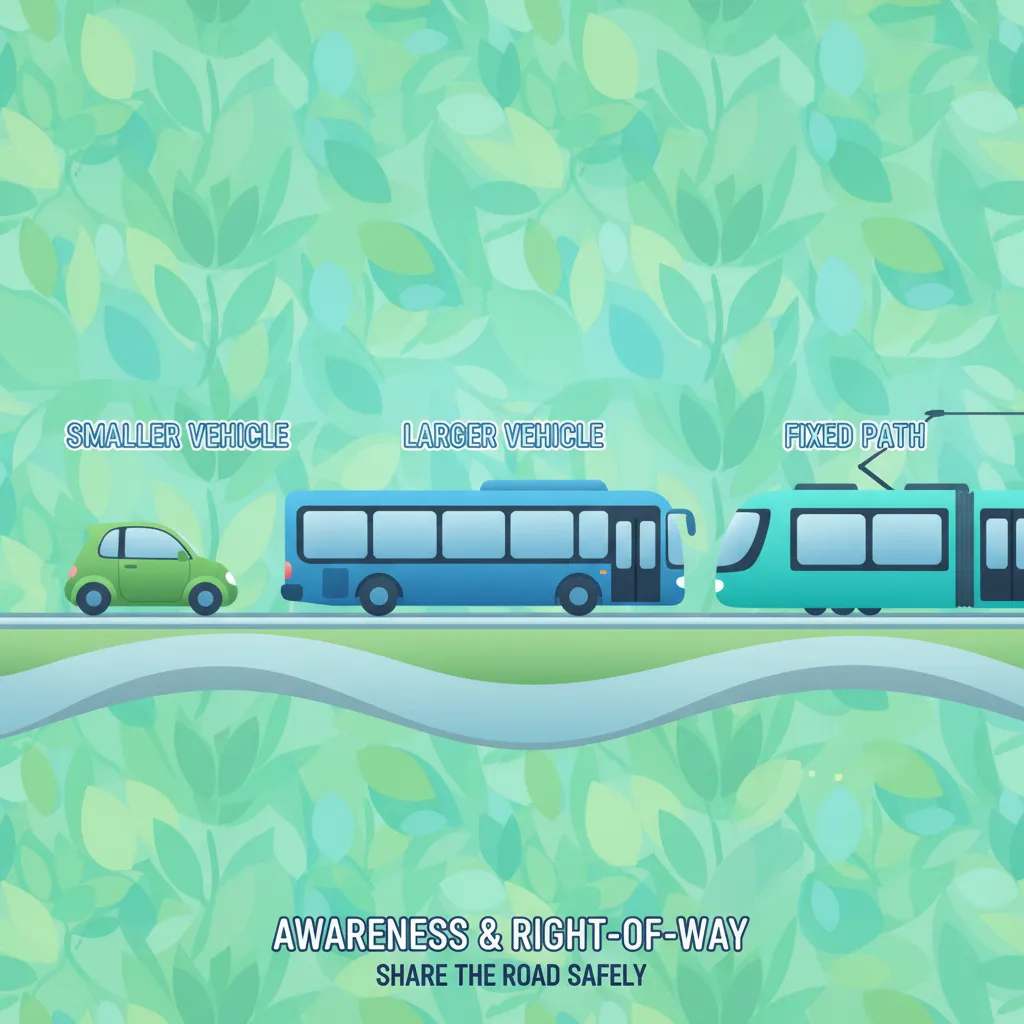
Lesson content overview
Riding a motorcycle in Austria's diverse traffic environment requires a keen understanding of how to interact safely with larger vehicles like cars, buses, and trams. These vehicles have distinct characteristics, such as significant blind spots, limited maneuverability, and specific right-of-way rules, which can pose unique challenges for motorcyclists. Mastering these interactions is crucial for preventing collisions, especially in bustling urban areas and at complex intersections.
This lesson provides comprehensive guidance tailored for Austrian motorcycle riders, building upon foundational knowledge of traffic signs, right-of-way protocols, and effective lane positioning. By understanding the operational dynamics and legal obligations of other road users, you can develop proactive riding strategies that enhance your safety and confidence on Austrian roads.
The sheer size and mass of cars, buses, and trams fundamentally change how they operate compared to a motorcycle. These differences necessitate a specific approach from motorcyclists to ensure safe coexistence.
A car's design, particularly its pillars and the location of mirrors, creates areas around the vehicle that are completely invisible to the driver. These are known as blind spots. For motorcyclists, understanding and avoiding these zones is paramount.
Car blind spots are typically located at the rear corners of the vehicle, extending along the sides. The right rear blind spot is often the most dangerous for motorcyclists, as drivers may not see a motorcycle when changing lanes to the right or merging. Furthermore, the area directly behind the car, especially in taller vehicles like SUVs or vans, can also be obscured.
To mitigate this risk, motorcyclists should always strive to position themselves where they are visible in the car's mirrors or, even better, in the driver's direct line of sight. When approaching a car from behind or preparing to overtake, briefly accelerate to pass through the blind spot quickly and safely, never lingering alongside. Always assume you are unseen if you cannot clearly see the driver's face in their mirror.
Buses, due to their substantial length and height, possess significantly larger blind spots than cars. These extensive blind areas present increased risks for motorcyclists, particularly in urban settings where buses frequently stop, start, and turn.
The primary blind spots on a bus include:
Motorcyclists must maintain a generous lateral clearance when alongside a bus. When passing a bus, ensure a minimum lateral distance of 1.5 metres from its side, particularly the front half. Never ride close to the rear pillar of a bus or assume the driver can see you simply because you are alongside. Avoid cutting in front of a bus, especially when it is signaling a turn, as its long body requires considerable space to manoeuvre.
The mass and physical dimensions of cars, buses, and trams impose significant limitations on their maneuverability compared to motorcycles. These limitations affect their ability to accelerate, decelerate, and change direction, directly impacting the safety of nearby motorcyclists.
Longer Stopping Distances: Due to their weight, large vehicles require substantially longer distances to stop, especially at higher speeds or in adverse weather conditions. Motorcyclists must account for this by maintaining ample following distance and avoiding sudden braking in front of them.
Wider Turning Radii: Buses and trams, in particular, require much wider turning arcs than motorcycles. When a bus or tram turns, its rear wheels track significantly closer to the curb (or inner arc of the turn) than its front wheels. This phenomenon, known as "off-tracking," means a bus turning right might swing wide to the left before commencing its turn.
Never attempt to squeeze past a bus or tram on its inside when it is signaling a turn. You risk being crushed against the curb or struck by the vehicle's rear.
Slower Acceleration and Deceleration: Large vehicles generally accelerate and decelerate more slowly. This affects merging situations, where a bus may take longer to gain speed, and stopping, where it requires more time to come to a halt. Motorcyclists need to anticipate these slower reactions and adjust their speed and positioning accordingly.
Intersections are critical conflict points where the distinct right-of-way rules for buses and trams come into play. Understanding these specific regulations, particularly those outlined in the Austrian Straßenverkehrsordnung (StVO), is vital for preventing collisions.
Trams operate on fixed tracks, making them less agile and slower to react than other vehicles. Recognising this, Austrian traffic law grants trams specific priority at intersections, even over other traffic with a green light in certain situations.
According to StVO § 57, if a tram has a green signal light, it has priority to proceed, regardless of the colour of the main traffic light for other road users. This dedicated tram signal is often integrated into the standard traffic light system but applies exclusively to the tram.
A dedicated traffic light for trams, often integrated into standard traffic lights, displaying specific signals (e.g., a vertical bar for proceed, a horizontal bar for stop) that must be obeyed by trams and other vehicles interacting with them.
Practical Application: If you are at an intersection and your traffic light turns green, but the tram signal light for a tram crossing your path is also green, you must yield to the tram. This often means waiting at the stop line until the tram has passed, even though your own signal allows you to proceed. Misinterpreting this hierarchy is a common cause of accidents.
In urban areas, buses often use dedicated bus lanes to maintain scheduled services and reduce congestion. These lanes are clearly marked by road markings, such as a solid yellow line or a bus symbol painted on the road surface, and often specific signage.
StVO § 31 mandates that all vehicles must obey lane markings and signs. This means that motorcyclists are generally prohibited from entering or using dedicated bus lanes unless specific supplementary signage explicitly permits it (e.g., during certain hours or for specific vehicle types like taxis or even motorcycles, though this is rare in Austria).
A lane marked for exclusive bus use, often indicated by a specific colour or symbol on the road or by signs, which other traffic must not enter unless permitted by additional signage or rules.
Practical Application: Never assume you can use a bus lane to bypass traffic. Always check for specific signs that might permit other vehicles. Entering a bus lane without permission is a violation and can lead to fines, besides creating hazardous situations for buses trying to maintain their schedule and path. When merging with traffic where a bus lane ends, be aware that buses will be merging too, and they may have priority depending on the specific road layout and signage.
Trams, with their fixed tracks, introduce a unique dynamic to road sharing. Motorcyclists must adopt specific strategies when riding near, crossing, or even considering overtaking trams.
StVO § 18 clearly states that riding on tram tracks is prohibited unless otherwise explicitly signposted. This regulation is crucial for motorcyclist safety. Tram tracks present a significant hazard for motorcycle tyres, especially when wet, as the rails can cause a loss of traction and control.
Fixed rails embedded in the road surface, used exclusively by trams, presenting a slip hazard for motorcycle tyres.
Practical Meaning: Generally, avoid riding directly on tram tracks. Only do so if there is a specific sign permitting it and if it is absolutely necessary, and only when no tram is present. Even then, extreme caution is required, particularly when crossing them.
When you need to cross tram tracks, choose a designated crossing point and do so with care:
Approach Perpendicularly: Cross tram tracks as close to a 90-degree angle as possible. This minimises the risk of your tyre getting caught in the groove or slipping on the rail.
Slow Down: Reduce your speed significantly before crossing, especially in wet conditions where the rails are extra slippery.
Maintain Steady Speed: Do not accelerate or brake sharply while crossing the tracks. Keep the handlebars straight and maintain a consistent, slow speed.
Look Ahead: Ensure the track is clear of any approaching trams and potential hazards before you commit to crossing.
Overtaking a tram requires careful judgment and adherence to specific rules:
Overtaking on Dedicated Tracks: If the tram is operating within a tram priority aisle (an area clearly designated for exclusive tram use, often separated from regular traffic lanes), overtaking is strictly prohibited. These aisles are designed for trams only, and a motorcycle entering them creates an immediate danger.
A tram track area specifically designated by signage and/or road markings for the exclusive use of trams, where other vehicles are prohibited from entering or overtaking.
Overtaking in Mixed Traffic: If the tram tracks are integrated into a mixed traffic lane and there is sufficient space to safely pass the tram without entering a tram-only zone or endangering other road users, overtaking may be permitted. However, always exercise extreme caution. Ensure a generous lateral distance and sufficient clear road ahead. Be particularly aware of passengers disembarking or boarding the tram at stops.
Never overtake a tram that is stopped at a passenger stop if doing so requires you to enter a tram priority aisle or puts pedestrians at risk. Always wait for the tram to depart safely or find an alternative route if available.
Overtaking and merging are common maneuvers that demand heightened awareness when sharing the road with larger vehicles. Proper technique and adherence to StVO regulations are crucial.
When overtaking a car, remember the general principles for safe overtaking, as detailed in StVO § 23:
Overtaking a bus requires even greater care due to their size, blind spots, and typical urban routes.
Merging involves entering a lane or road where traffic, including buses, is already flowing.
Understanding the specific sections of the Austrian Straßenverkehrsordnung (StVO) is critical for lawful and safe interaction with cars, buses, and trams.
This regulation governs where and how vehicles may interact with tram tracks.
This section sets the legal framework for safe overtaking maneuvers.
This regulation pertains to obeying traffic lane rules and signs.
This important rule clarifies the right-of-way hierarchy involving trams.
Awareness of frequent errors can help motorcyclists proactively avoid dangerous situations:
Safe interaction with larger vehicles requires constant adaptation to changing road conditions and environments.
Adverse weather conditions significantly impact safety:
The type of road dictates specific interactions:
Consider specific states of the vehicles you are interacting with:
Understanding the theory is essential, but applying it in real-world scenarios is what makes a safe rider.
Situation: You are approaching an urban intersection on your motorcycle. Your traffic light for straight-ahead travel is green. A tram is approaching from your left, intending to cross your path, and its dedicated tram signal is also green.
Correct Behavior: Despite your green light, you must yield to the tram as per StVO § 57. You stop your motorcycle at the stop line, allowing the tram to proceed safely through the intersection before you continue.
Incorrect Behavior: You proceed through the intersection, assuming your green light grants you priority, potentially causing the tram to brake suddenly or leading to a collision.
Situation: You are riding on a three-lane urban road, approaching a city bus in the rightmost lane. The bus signals a right turn.
Correct Behavior: You assess the situation. Recognizing the bus's wide turning radius and its significant right-side blind spot, you do not attempt to overtake on the right. Instead, you either slow down and wait behind the bus until it completes its turn, or if conditions permit, you move to the middle lane (if clear and safe) to overtake on the left, ensuring you stay well clear of its turning path.
Incorrect Behavior: You try to squeeze past the bus on its right side, cutting into its turning lane, risking being struck by the bus's rear as it executes its wide turn.
Situation: You are riding on a street with tram tracks. Ahead, a tram is stopped at a designated tram stop, with passengers potentially getting on or off.
Correct Behavior: You approach with caution. If the tram is within a tram priority aisle, you must not overtake it. You slow down and wait behind the tram, being highly vigilant for pedestrians crossing the road to or from the tram. Once the tram departs and the path is clear, you can proceed, still exercising caution. If the lane is mixed traffic, you may overtake on the left if there is ample space, it's safe, and you give a wide berth to the tram and potential pedestrians.
Incorrect Behavior: You quickly accelerate to overtake the stopped tram, riding alongside it within a tram priority aisle or close to its doors, endangering yourself and pedestrians.
Mastering interactions with cars, buses, and trams is a cornerstone of safe motorcycling in Austria. By internalizing these key principles, you enhance your hazard perception and reduce collision risks:
By consistently applying these principles, you will navigate complex urban environments, busy intersections, and roads shared with public transport with confidence, ensuring a safer riding experience for yourself and all road users.
Safe interaction with cars, buses, and trams requires understanding vehicle blind spots and maintaining adequate visibility and clearance. Austrian law grants trams priority when their signal is green (StVO § 57), prohibits motorcycles from using dedicated bus lanes unless explicitly permitted (StVO § 31), and bans riding on tram tracks without signage (StVO § 18). When overtaking buses, maintain at least 1.5 metres lateral distance and never pass a turning bus on its right side due to off-tracking. Cross tram tracks at right angles, and always yield to existing traffic when merging while anticipating the slower acceleration and braking of large vehicles.
A short set of high-value points that capture the most important learning from this lesson.
Always position yourself to remain visible in other drivers' mirrors or direct line of sight, never lingering in vehicle blind spots.
When a tram has a green signal at an intersection, you must yield even if your own traffic light is green (StVO § 57).
Maintain at least 1.5 metres lateral clearance when overtaking buses and never attempt to pass a turning bus on its right side.
Riding on tram tracks is prohibited unless explicitly signposted, and tracks must always be crossed at close to 90 degrees.
Dedicated bus lanes are generally off-limits to motorcycles unless supplementary signage specifically permits entry.
Explore all units and lessons included in this driving theory course.
StVO § 57 grants trams priority at intersections when their signal is green, regardless of other traffic lights.
StVO § 18 prohibits riding on tram tracks unless signage explicitly permits it.
StVO § 31 requires all vehicles to obey lane markings, including dedicated bus lanes.
Large vehicles (buses, trams) have wider turning radii and off-track significantly, meaning rear wheels swing closer to curbs during turns.
Articulated buses (Gelenkbusse) have even larger blind spots and more pronounced off-tracking than standard buses.
Attempting to overtake a bus on its right side while the bus is signaling a right turn, placing the rider directly in the bus's turning path.
Proceeding through an intersection on a green light without yielding to a tram that also has a green signal, violating StVO § 57.
Riding within a dedicated bus lane without checking for specific permission signs, violating StVO § 31.
Crossing tram tracks at shallow angles instead of perpendicularly, risking tyre catching in the rail groove.
Merging or overtaking without maintaining sufficient lateral clearance, entering the vehicle's blind spot where the driver cannot see the motorcycle.
Lesson content overview
A short set of high-value points that capture the most important learning from this lesson.
Always position yourself to remain visible in other drivers' mirrors or direct line of sight, never lingering in vehicle blind spots.
When a tram has a green signal at an intersection, you must yield even if your own traffic light is green (StVO § 57).
Maintain at least 1.5 metres lateral clearance when overtaking buses and never attempt to pass a turning bus on its right side.
Riding on tram tracks is prohibited unless explicitly signposted, and tracks must always be crossed at close to 90 degrees.
Dedicated bus lanes are generally off-limits to motorcycles unless supplementary signage specifically permits entry.
Explore all units and lessons included in this driving theory course.
StVO § 57 grants trams priority at intersections when their signal is green, regardless of other traffic lights.
StVO § 18 prohibits riding on tram tracks unless signage explicitly permits it.
StVO § 31 requires all vehicles to obey lane markings, including dedicated bus lanes.
Large vehicles (buses, trams) have wider turning radii and off-track significantly, meaning rear wheels swing closer to curbs during turns.
Articulated buses (Gelenkbusse) have even larger blind spots and more pronounced off-tracking than standard buses.
Attempting to overtake a bus on its right side while the bus is signaling a right turn, placing the rider directly in the bus's turning path.
Proceeding through an intersection on a green light without yielding to a tram that also has a green signal, violating StVO § 57.
Riding within a dedicated bus lane without checking for specific permission signs, violating StVO § 31.
Crossing tram tracks at shallow angles instead of perpendicularly, risking tyre catching in the rail groove.
Merging or overtaking without maintaining sufficient lateral clearance, entering the vehicle's blind spot where the driver cannot see the motorcycle.
Explore search topics learners often look for when studying Interaction with Cars, Buses, and Trams. These topics reflect common questions about road rules, driving situations, safety guidance, and lesson level theory preparation for learners in Austria.
Browse additional driving theory lessons that cover connected traffic rules, road signs, and common driving situations related to this topic. Improve your understanding of how different rules interact across everyday traffic scenarios.
Understand the specific challenges and safety strategies for interacting with cars, buses, and trams in Austria. This lesson focuses on navigating urban environments with mixed traffic safely, covering blind spots and priority rules.
Cities like Vienna and Graz have extensive tram networks that require special attention from bus drivers. This lesson covers the rules of priority concerning trams, the dangers of crossing tracks, and the specific hazards at shared stops where passengers cross traffic lanes. It emphasizes the need for extreme caution and clear communication with other road users in these complex environments.
This lesson addresses the specific challenges of interacting with larger vehicles like buses and trams in an urban environment. It explains how to signal intentions clearly and predictably to avoid conflicts in shared spaces. Key topics include safely crossing tram tracks and maintaining awareness around public transport stops.
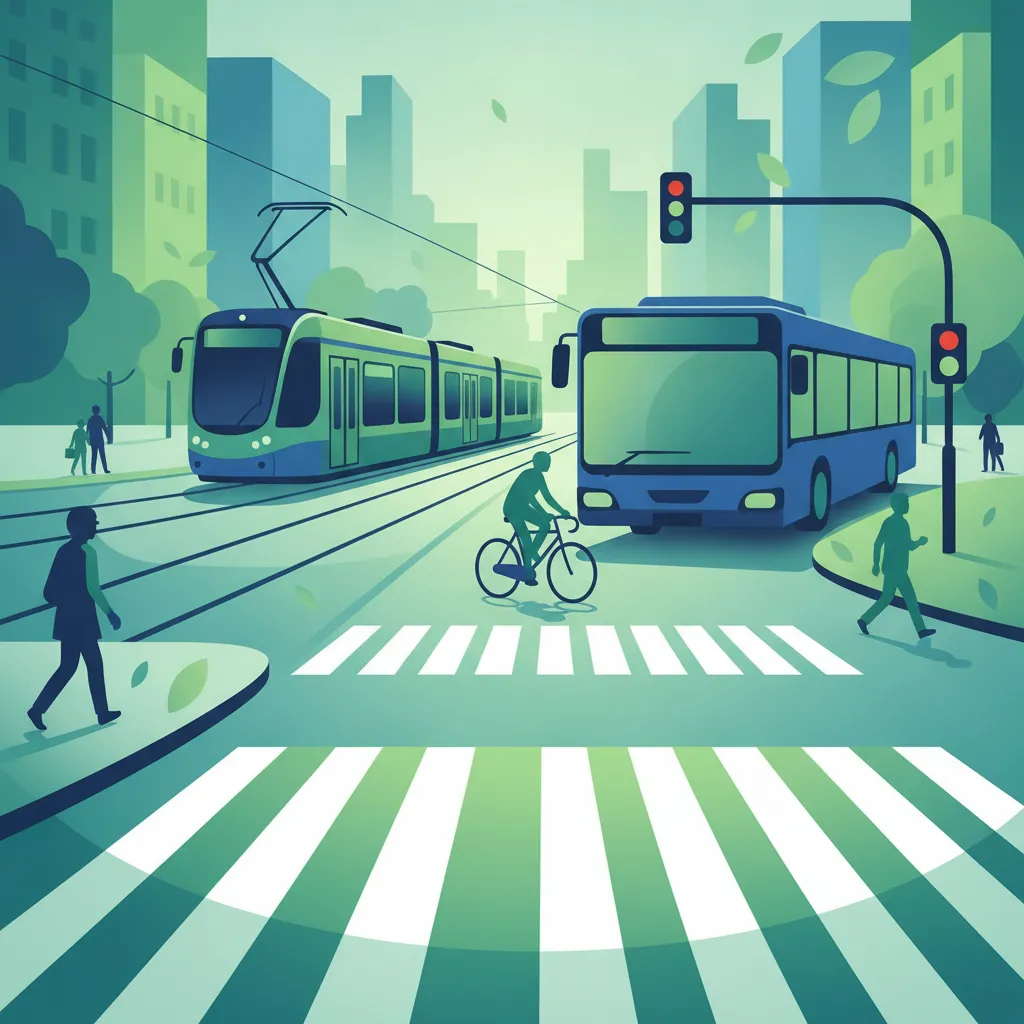
This lesson addresses the unique challenges and priority rules that apply when interacting with public transport and cyclists at intersections. It clarifies the specific right-of-way regulations for trams, which often have priority over other traffic, and the procedures for navigating around bus stops. The content also covers how to safely manage crossings with dedicated bicycle lanes, ensuring the protection of all road users.
This lesson details the specific regulations and best practices for driving in areas with high pedestrian activity, such as bus stops and school zones. It explains the driver's obligation to stop for school buses with flashing lights and to yield to public buses pulling out from a stop. The content emphasizes the requirement to significantly reduce speed in marked school zones to ensure the safety of children.
Pedestrians have absolute priority on marked crossings in Austria, and a bus driver must always be ready to give way. This lesson covers the rules for approaching and stopping for pedestrians, and highlights the risk of pedestrians being hidden by the vehicle's structure. It also stresses the danger of passengers crossing the road after alighting from your bus.
Cyclists and e-scooter riders are highly vulnerable and can be hard to see from a high driving position. This lesson focuses on the critical danger points, such as making right turns across cycle lanes and checking blind spots before pulling away from a stop. It teaches the importance of giving ample space when overtaking and anticipating their movements in busy city traffic.
This lesson focuses on the specific regulations and safety protocols for driving near trams (Straßenbahn) in Austrian cities. It clarifies the priority rules, which almost always favor the tram, and explains how to safely share lanes or cross tram tracks. The content provides critical guidance on how to behave at tram stops, ensuring the safety of boarding and alighting passengers is always the primary concern.
This lesson focuses on the unique challenges presented by tram systems in Austrian cities. It teaches riders how to cross tracks at a safe angle to avoid tyres getting caught, especially in wet conditions, and explains the absolute priority trams have in most situations. Awareness around tram stops and bus lanes is also covered to ensure safe coexistence with public transport.

Buses and coaches have significant blind spots that pose a major risk to pedestrians, cyclists, and other vehicles. This lesson teaches you how to correctly set up and systematically scan all mirrors, including wide-angle and kerb-view mirrors. It also covers the use of modern camera systems to gain a complete picture of the area surrounding the vehicle, especially before moving off.
Many Austrian towns and city centres feature narrow roads not designed for large vehicles. This lesson provides strategies for assessing tight spaces, positioning the vehicle to maximize clearance, and navigating complex, non-standard junctions. It emphasizes the importance of slow speeds, constant observation, and understanding the vehicle's swept path to avoid contact with buildings, street furniture, and other vehicles.
Learn how to identify and navigate the extensive blind spots of cars, buses, and other large vehicles on Austrian roads. Develop crucial defensive riding techniques to avoid dangerous hidden zones and ensure your visibility.
This lesson teaches the correct technique for setting and using motorcycle mirrors to maintain awareness of traffic behind and to the sides. It emphasizes that mirrors alone are not enough, detailing the necessity of the 'lifesaver' shoulder check to cover critical blind spots. A disciplined observation routine is crucial for safe lane changes, merging, and navigating dense traffic.
This lesson covers the foundational principles of making a motorcyclist conspicuous to other road users. It examines the role of brightly colored and reflective clothing, effective helmet colors, and the mandatory use of headlights during the day. Understanding how to create a strong visual presence in traffic is a key component of proactive accident prevention for any rider.
Buses and coaches have significant blind spots that pose a major risk to pedestrians, cyclists, and other vehicles. This lesson teaches you how to correctly set up and systematically scan all mirrors, including wide-angle and kerb-view mirrors. It also covers the use of modern camera systems to gain a complete picture of the area surrounding the vehicle, especially before moving off.

This lesson focuses on the critical role of mirrors, cameras, and other electronic aids in minimizing blind spots around a large vehicle. It provides guidance on how to properly adjust mirrors to maximize visibility. Effective use of these systems is vital for detecting smaller vehicles, cyclists, and pedestrians, especially during manoeuvres.
This lesson addresses the heightened vulnerability of motorcyclists and outlines essential strategies for personal safety and risk mitigation. It covers the importance of wearing certified protective gear, maintaining situational awareness, and adopting a defensive riding posture. By understanding and anticipating potential hazards in the Austrian traffic environment, riders can actively reduce their risk of accidents.
This lesson provides advice for navigating popular scenic routes, which often feature heavy traffic, cyclists, and distracted drivers. It emphasizes maintaining focus on the road despite beautiful scenery and anticipating unpredictable actions from other tourists who may stop suddenly. Adopting a patient and defensive mindset is key to safely enjoying these remarkable roads.
This lesson addresses the specific challenges of interacting with larger vehicles like buses and trams in an urban environment. It explains how to signal intentions clearly and predictably to avoid conflicts in shared spaces. Key topics include safely crossing tram tracks and maintaining awareness around public transport stops.

This lesson provides essential knowledge for using Austria's high-speed road network. It covers the correct procedure for entering via acceleration lanes, maintaining strict lane discipline (keeping right, passing left), and understanding the digital or physical Vignette (toll sticker) requirement. The formation of the 'Rettungsgasse' (emergency corridor) during traffic jams is also a key topic.

This lesson explains the correct techniques for using mirrors to maintain awareness of surrounding traffic and for checking blind spots. It details the proper timing and use of indicators to signal turns and lane changes effectively. The content reinforces that clear, early communication is key to preventing misunderstandings with other drivers.
This lesson focuses on the unique challenges presented by tram systems in Austrian cities. It teaches riders how to cross tracks at a safe angle to avoid tyres getting caught, especially in wet conditions, and explains the absolute priority trams have in most situations. Awareness around tram stops and bus lanes is also covered to ensure safe coexistence with public transport.
Find clear answers to common questions learners have about Interaction with Cars, Buses, and Trams. Learn how the lesson is structured, which driving theory objectives it supports, and how it fits into the overall learning path of units and curriculum progression in Austria. These explanations help you understand key concepts, lesson flow, and exam focused study goals.
The biggest risk is the bus pulling away from the curb suddenly and passengers stepping into the street. Always be prepared to stop and watch for pedestrians emerging from in front of or behind the bus.
Generally, trams on tracks have priority when they are moving, even if they are turning. Always check for signals or signs, but assume the tram has the right-of-way unless specific traffic signs indicate otherwise.
Cross tram tracks at as close to a 90-degree angle as possible to prevent your tyres from slipping or getting caught in the grooves. Avoid riding directly inside the tracks if the surface is slippery.
Buses need significant space to maneuver and may swing wide or pull over quickly. Filtering in such a tight space puts you in a major blind spot where the driver cannot see you, creating a high risk of being squeezed or hit.
Refine your study plan by searching for specific Austrian driving theory practice sets. Pinpoint questions related to particular road rules, signs, or challenge levels, and begin practicing immediately to reinforce your knowledge and excel in your official exam with confidence. Get started with focused revision today.