Navigate Belgium's unique traffic landscape by mastering the specific rules for overtaking trams, buses, and cyclists. This guide details when and how to safely pass these road users, crucial knowledge for the Belgian theory test and for everyday safe driving. Understand the nuances of tram priority, bus stop etiquette, and cyclist interaction on narrow streets to avoid hazards and penalties.
Article content overview
Driving in Belgium, especially in its vibrant cities like Brussels, Ghent, and Bruges, often presents unique challenges that require a nuanced understanding of traffic laws. Unlike many other driving environments, Belgium has specific regulations for overtaking certain road users, particularly trams, buses, and cyclists. Mastering these rules is not only crucial for ensuring the safety of all road users but is also a critical component of the Belgian driving theory exam. Failing to adhere to these specific regulations can lead to dangerous situations, accidents, and significant fines. This comprehensive guide will break down the essential principles and practical applications of overtaking these vulnerable road users, ensuring you are well-prepared for your theory test and confident on Belgian roads.
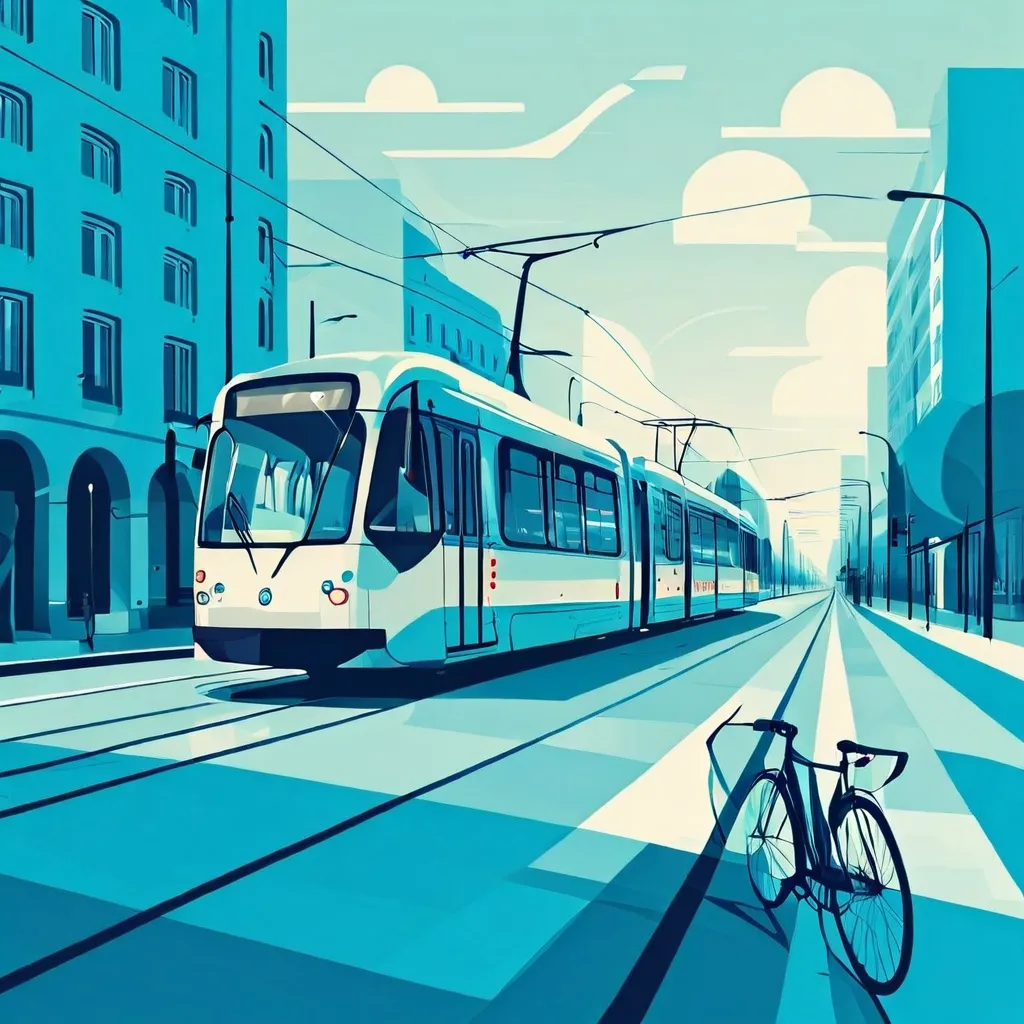
Trams, due to their fixed track paths, operate under a distinct set of rules in Belgium, fundamentally impacting how and when you can overtake them. Belgian traffic law, as outlined in the Wegcode, grants trams a significant level of priority, reflecting their size and inability to manoeuvre around obstacles. Understanding this priority is paramount to avoiding collisions and demonstrating your competence as a driver during your theory exam.
A fundamental rule to remember when encountering a tram in Belgium is that you may only overtake it on the right. This is stipulated by Article 61 of the Belgian Highway Code. Since trams are confined to their tracks and cannot deviate, attempting to overtake them on the left would either force them off their path or lead to a head-on collision. This rule applies irrespective of whether the tram is moving or stationary, as long as it is on its designated tracks. Always check your right-hand side for traffic and ensure there is sufficient space before proceeding to overtake.
The "overtake on the right only" rule for trams is a frequent exam question. Remember that trams, by their nature, cannot swerve to avoid you if you try to pass them on the left.
When a tram stops to pick up or drop off passengers, your obligation to yield becomes even more pronounced. You must stop behind the tram and allow passengers to alight or board safely, especially if they need to cross the tracks. This extends to ensuring passengers can reach the pavement or designated safe areas. While traffic lights might regulate some tram stop situations, the general principle is that the tram's passengers have priority. If there are no traffic lights specifically governing passenger movement at the stop, you must exercise extreme caution and be prepared to wait.
Buses, particularly public transport buses, also have specific considerations when it comes to overtaking in Belgium. While they do not operate on fixed tracks like trams, their size and their role in public transport necessitate particular rules to ensure passenger safety and smooth traffic flow.
Article 17ter of the Belgian Highway Code addresses a specific scenario: when a bus is stopped at a designated bus stop within urban areas and signals its intention to re-enter the traffic flow (usually by activating its hazard lights or turn signal). In such cases, drivers in the adjacent lane are required to yield to the bus. This means you must slow down and be prepared to stop, allowing the bus to merge back into the main carriageway safely. This rule is designed to facilitate the efficient operation of public transport, but it also places a clear responsibility on other drivers to be observant and accommodating.
The requirement for drivers to yield to buses signalling to re-enter traffic from a bus stop is a crucial point for your Belgian theory test. Always anticipate this possibility when approaching bus stops.
When a bus is stationary at a bus stop purely for the purpose of loading or unloading passengers, the rules are slightly different. If the road width is sufficient to allow you to pass the bus safely without endangering alighting or boarding passengers—especially those who might need to cross the road—you may proceed with caution. However, if there is insufficient space for a safe manoeuvre, you must wait behind the bus until it departs. This might be particularly relevant in areas where bus stops are integrated into the carriageway rather than having dedicated bay areas.
Belgian cities often feature narrow streets, particularly in historic centres such as those found in Ghent, Bruges, or parts of Brussels. In these confined spaces, overtaking cyclists becomes a critical safety concern, and the law prioritises cyclist safety over the driver's desire to overtake.
Belgian law, and recommendations from bodies like the Vias Institute, emphasize the need for a safe lateral clearance when overtaking cyclists. While 1 meter is the legal minimum, 1.5 meters is widely recommended for enhanced safety. Many urban streets in Belgium are simply not wide enough to provide this clearance. When you encounter a cyclist on a road that is too narrow for you to overtake them while maintaining the legally required distance, you are not permitted to attempt to squeeze past.
Attempting to overtake a cyclist on a narrow Belgian street without sufficient clearance is a common cause of accidents and is heavily penalised. The cyclist has the right to use the lane.
If the road width prevents you from safely overtaking a cyclist, your legal obligation is to wait behind them until the road widens sufficiently or you reach a point where a safe overtake is possible. You must not pressure the cyclist by riding too close behind them, honking unnecessarily, or attempting to force them to the edge of the road. Cyclists have a right to occupy their lane, and their speed should not dictate your impatience. The theory exam often tests this understanding, as it's a practical skill for safe urban driving.
To ensure you are fully prepared for the Belgian theory exam, understanding the precise terminology used in traffic regulations is essential. These terms will appear in your learning materials and exam questions.
The Belgian theory test is designed to assess your understanding of complex and sometimes counter-intuitive traffic situations. Overtaking trams, buses, and cyclists presents several common areas where candidates can make mistakes.
One frequent pitfall relates to the absolute prohibition of overtaking trams on the left. Even if the road appears wide and the tram is moving slowly, attempting to pass on the left is illegal and dangerous. Similarly, mistaking the rules for passing a bus at a stop can lead to errors. Remember, the priority to yield to a bus signalling to re-enter traffic is absolute in urban areas. For cyclists, the most common error is misjudging the road width and attempting to overtake when it is unsafe, assuming the cyclist should simply move out of the way. Belgian law is clear: the onus is on the driver to ensure a safe overtake, and if that's not possible, they must wait.
When studying, pay close attention to questions that involve specific road markings, urban environments, and interactions with public transport or cyclists. These are prime areas for tricky exam questions.
To solidify your understanding and prepare effectively for the Belgian driving theory exam, practice is key. Focus on questions that specifically address priority rules, interactions with trams and buses, and the safe passing distances for cyclists. Understanding the 'why' behind these rules – namely, safety and efficient traffic flow – will help you recall them under exam pressure.
Mastering these specific rules for overtaking trams, buses, and cyclists in Belgium is fundamental for safe driving and passing your theory test. By understanding the unique priorities granted to trams, the conditions under which buses have precedence, and the critical need for safe clearance when passing cyclists on narrow roads, you will be well-equipped to navigate Belgium's streets confidently and responsibly.
Article content overview
Explore related topics, search based questions, and concepts that learners often look up when studying Belgian Overtaking Rules. These themes reflect real search intent and help you understand how this topic connects to wider driving theory knowledge in Belgium.
Find clear and practical answers to common questions learners often have about Belgian Overtaking Rules. This section helps explain difficult points, remove confusion, and reinforce the key driving theory concepts that matter for learners in Belgium.
No, in Belgium, you must always overtake trams on the right, as they are confined to their tracks and cannot move sideways.
You must yield to a bus if it is stopped at a designated stop and signals to re-enter traffic (Article 17ter of the Belgian Highway Code). If a bus is stationary loading passengers and there isn't enough space to pass safely, you must wait behind it.
On narrow roads where there isn't at least 1 meter (1.5m recommended) of lateral clearance for safe overtaking, you must wait behind the cyclist until you can pass safely without endangering them. Attempting to squeeze past is illegal and dangerous.
Trams generally have priority over all other road users in Belgium, even at intersections where you might have priority from the right, unless traffic lights or qualified officers indicate otherwise. You must always ensure the tracks are clear before crossing them.
If a bus is stopped to load or unload passengers, and the road is too narrow to pass with sufficient clearance (at least 1 meter), you must slow down and wait behind the bus to ensure the safety of alighting passengers who might cross the road.
Continue your learning journey by exploring related articles and guides on specific Belgian traffic situations, advanced road signs, or vehicle safety topics. Use our search to pinpoint what you need to review next, deepening your understanding for your driving license theory exam.