
Riding in adverse weather requires specific adjustments to your speed, visibility, and braking technique. This lesson explores how to safely navigate rain, fog, and glare, helping you prepare for the practical and theoretical challenges of the Austrian Category AM exam.

Lesson content overview
Riding a moped or small scooter offers freedom, but it also demands a high level of situational awareness and skill, especially when weather conditions deteriorate. Reduced visibility due to rain, fog, or low sun glare significantly increases the risk of accidents by impairing your ability to see hazards, perceive distances, and react in time. This lesson, part of the Austrian AM Driving Theory curriculum, focuses on crucial strategies and legal requirements to ensure your safety and the safety of others under these challenging circumstances.
Poor visibility is one of the most significant hazards faced by moped and scooter riders. Unlike cars, you are more exposed to the elements, and your smaller profile can make you harder for other road users to spot. Rain, fog, and low sun glare each present unique challenges that can dramatically affect your ability to ride safely.
Rain-induced visibility loss goes beyond just the water falling from the sky. Raindrops on your visor or glasses distort your vision, and spray from other vehicles can temporarily blind you. The road surface becomes slick, reducing tire grip, and contrast is lost, making potholes, road markings, and other hazards harder to distinguish. The overall effect is a significant increase in stopping distances and a reduction in your reaction time.
Fog-induced visibility loss occurs when tiny water droplets suspend in the air, scattering light and creating a dense, opaque veil. This condition drastically reduces your line of sight, often making it impossible to see more than a few metres ahead. In fog, objects can appear suddenly, leaving little to no time to react. It also makes your vehicle less visible to others, increasing the risk of a collision.
Low sun glare is particularly insidious because it can strike without warning, often around sunrise or sunset. When the sun is low in the sky, it can shine directly into your eyes or reflect off wet roads, vehicle surfaces, or even snow, causing temporary blindness. This intense glare can hide other vehicles, pedestrians, or road signs, making it extremely dangerous, especially at intersections or during turns.
Proper use of your moped's lighting system is fundamental for both seeing and being seen when visibility is poor. Austrian traffic law (StVO) has specific requirements for lighting under various conditions.
Your headlights serve two primary purposes: to illuminate the road ahead and to make your moped visible to other road users. Under normal conditions, you should always use your dipped beam (Abblendlicht).
When fog descends, conditions can become extremely challenging. Knowing how and when to use your fog lights (Nebelschlussleuchte) and position lights (Positionslichter) is vital.
Speed adaptation is perhaps the most critical skill when riding in adverse conditions. The posted speed limit is the maximum permissible speed under ideal conditions, not a target to be maintained regardless of the weather.
On a dry road, a moped requires a certain distance to stop. On a wet road, this stopping distance can increase by 30-50% or even more, due to the reduced friction between tires and pavement. In fog, your visible distance shrinks dramatically. Your speed must always be low enough that you can stop safely within the distance you can clearly see ahead. This is known as the "sight distance rule."
Austrian traffic law, specifically § 4 StVO, mandates that drivers adapt their speed to prevailing conditions, including visibility, road surface, vehicle state, and traffic density. This means that even if the speed limit is 50 km/h, you might need to ride at 30 km/h or even slower in heavy rain or dense fog to remain safe and compliant.
For example, if you can only see 30 metres ahead in fog, you must reduce your speed to a level where you can bring your moped to a complete stop within those 30 metres. This requires constant assessment of your surroundings and proactive speed reduction.
Maintaining an adequate following distance (Sicherheitsabstand) is crucial to prevent rear-end collisions. On a moped, your exposure and vulnerability are higher, making a safe gap even more important.
A common guideline for a safe following distance under good conditions is the "2-second rule." This means you should stay at least two seconds behind the vehicle in front of you. To measure this, pick a fixed point on the road (e.g., a sign or lamppost). When the vehicle ahead passes that point, start counting "one thousand one, one thousand two." If you reach the point before you finish counting, you are too close.
In rain, fog, or on wet roads, you must significantly increase this following distance. Aim for at least 4 seconds, and even more if conditions are extremely poor. This extended gap provides crucial extra time and space to react to sudden braking by the vehicle ahead, or to maneuver around unexpected hazards that might appear out of the gloom. Remember that the vehicle in front might also be struggling with the conditions and could brake unexpectedly.
Braking on a wet road is fundamentally different from braking on a dry surface. Reduced tire grip means that abrupt or heavy braking can easily lead to a skid or wheel lock-up, causing you to lose control.
Progressive braking is the key to safe deceleration on wet surfaces. Instead of grabbing the brakes suddenly, apply them gently at first, gradually increasing pressure as you feel the tires maintaining traction. This technique allows the weight of the moped to shift forward smoothly and the tires to establish maximum grip before full braking force is applied.
Some modern mopeds and scooters are equipped with advanced braking systems that enhance safety:
Hydroplaning (also known as aquaplaning) is a dangerous phenomenon that occurs when a layer of water builds up between your tires and the road surface, causing your tires to lose contact with the pavement. When this happens, you lose steering and braking control.
Low sun glare can be a surprisingly dangerous condition, especially when it blinds you at critical moments. Unlike rain or fog, which can reduce visibility for all, glare can be intensely directional, making it seem like you're the only one affected.
Adhering to the Austrian Road Traffic Act (Straßenverkehrsordnung or StVO) is not just a legal obligation but a fundamental aspect of safe riding. Several sections of the StVO are particularly relevant when dealing with challenging weather conditions.
StVO § 55 mandates the use of headlights during reduced visibility. This includes twilight, night, and any time visibility is significantly impaired by weather conditions such as rain, fog, or snow. The rule emphasizes that vehicles must be visible and illuminate the road. For AM riders, this means turning on your dipped beam (Abblendlicht) whenever conditions are less than ideal. Neglecting to use required lighting can result in fines and, more importantly, increase your risk of an accident due to poor visibility.
StVO § 56 specifically addresses the use of fog lights. Front fog lights are permitted to be used only when visibility is severely reduced, typically below 50 metres, due to fog, heavy rain, or snowfall. Rear fog lights (if equipped) have similar restrictions. Using fog lights unnecessarily, especially in clear conditions, is illegal and can dazzle other road users. Always ensure you switch them off once visibility improves.
StVO § 4 is an overarching principle that places the responsibility on every road user to drive safely and adapt their conduct to all prevailing conditions. This includes adjusting your speed, following distance, and general riding behaviour based on factors like visibility, the condition of the road surface, your vehicle's state, and traffic density. This rule is crucial for justifying why you must reduce your speed below the posted limit in adverse weather.
StVO § 13 requires drivers to maintain a sufficient following distance (Sicherheitsabstand) to be able to stop safely in case the vehicle ahead brakes suddenly. While it doesn't specify a precise distance in metres or seconds, it implies that this distance must be extended significantly under poor visibility or wet road conditions. Failing to maintain a safe distance is a common cause of rear-end collisions and can lead to legal penalties.
StVO § 59 strictly prohibits the use of high beam headlights in situations where they could dazzle or impair other drivers, or when visibility is reduced by fog or precipitation. As discussed earlier, high beams in fog or heavy rain create a blinding glare that makes visibility worse for everyone. Always switch to dipped beam in these conditions.
Even experienced riders can make mistakes in challenging conditions. Being aware of these common pitfalls can help you avoid them.
The general principles of safe riding in poor visibility remain consistent, but their application varies depending on the road environment.
Low sun glare is most prevalent around sunrise and sunset. Its impact is highly dependent on your direction of travel relative to the sun.
Understanding the underlying physics reinforces why these safety strategies are so critical for Austrian AM license holders.
By understanding these principles, you move beyond simply following rules and develop a deeper, more intuitive sense of risk and safety, which is essential for becoming a responsible and skilled moped rider in Austria.
This lesson covers essential safety strategies for riding a moped in rain, fog, and low sun, with specific reference to Austrian traffic law. Key techniques include using dipped beam headlights in all reduced visibility situations, significantly extending following distance to at least 4 seconds, and employing progressive braking to prevent skids. The lesson explains the physics of why wet surfaces reduce tire grip and increase stopping distances, and details the legal requirements under StVO § 4, § 55, and § 56 for speed adaptation, mandatory lighting, and fog light usage. Hydroplaning prevention through speed control and tire maintenance is emphasized, along with practical methods for managing sun glare.
A short set of high-value points that capture the most important learning from this lesson.
Reduced visibility from rain, fog, or low sun significantly increases stopping distances and requires proactive speed reduction below posted limits.
StVO § 55 mandates dipped beam headlights whenever visibility is impaired, including twilight and light precipitation, not just darkness.
Use dipped beam (Abblendlicht) in fog and rain; high beam (Fernlicht) reflects off particles and worsens visibility for everyone.
Increase your following distance to at least 4 seconds in poor conditions (double the normal 2-second rule) to ensure safe stopping.
Progressive braking—gradually applying both front and rear brakes—prevents wheel lock-up and skids on wet surfaces.
Explore all units and lessons included in this driving theory course.
Fog lights (Nebelscheinwerfer) are permitted only when visibility drops below 50 metres; switch them off once conditions improve.
Stopping distance on wet roads increases by 30-50% or more; always adjust speed so you can stop within your visible sight distance.
Use both brakes simultaneously for balanced deceleration; the front brake provides most stopping power but the rear brake adds stability.
Hydroplaning risk increases with worn tires, high speed, and deep water; reduce speed and check tread depth regularly.
Low sun glare requires sunglasses, adjusted visor position, and reduced speed; if necessary, pull over safely until vision clears.
Waiting too long to activate headlights—StVO § 55 requires lights at twilight and in light rain, not only in darkness or heavy rain.
Using high beam in fog or heavy rain, which creates blinding glare that worsens visibility for all road users.
Braking abruptly on wet surfaces, causing wheel lock-up and loss of control instead of using progressive braking technique.
Maintaining posted speed limits without adapting to conditions, violating StVO § 4 which requires speed appropriate to visibility and road surface.
Riding with worn or underinflated tires, dramatically increasing hydroplaning risk and reducing wet-road grip.
Lesson content overview
A short set of high-value points that capture the most important learning from this lesson.
Reduced visibility from rain, fog, or low sun significantly increases stopping distances and requires proactive speed reduction below posted limits.
StVO § 55 mandates dipped beam headlights whenever visibility is impaired, including twilight and light precipitation, not just darkness.
Use dipped beam (Abblendlicht) in fog and rain; high beam (Fernlicht) reflects off particles and worsens visibility for everyone.
Increase your following distance to at least 4 seconds in poor conditions (double the normal 2-second rule) to ensure safe stopping.
Progressive braking—gradually applying both front and rear brakes—prevents wheel lock-up and skids on wet surfaces.
Explore all units and lessons included in this driving theory course.
Fog lights (Nebelscheinwerfer) are permitted only when visibility drops below 50 metres; switch them off once conditions improve.
Stopping distance on wet roads increases by 30-50% or more; always adjust speed so you can stop within your visible sight distance.
Use both brakes simultaneously for balanced deceleration; the front brake provides most stopping power but the rear brake adds stability.
Hydroplaning risk increases with worn tires, high speed, and deep water; reduce speed and check tread depth regularly.
Low sun glare requires sunglasses, adjusted visor position, and reduced speed; if necessary, pull over safely until vision clears.
Waiting too long to activate headlights—StVO § 55 requires lights at twilight and in light rain, not only in darkness or heavy rain.
Using high beam in fog or heavy rain, which creates blinding glare that worsens visibility for all road users.
Braking abruptly on wet surfaces, causing wheel lock-up and loss of control instead of using progressive braking technique.
Maintaining posted speed limits without adapting to conditions, violating StVO § 4 which requires speed appropriate to visibility and road surface.
Riding with worn or underinflated tires, dramatically increasing hydroplaning risk and reducing wet-road grip.
Explore search topics learners often look for when studying Riding in Rain, Fog, and Low Sunlight. These topics reflect common questions about road rules, driving situations, safety guidance, and lesson level theory preparation for learners in Austria.
Browse additional driving theory lessons that cover connected traffic rules, road signs, and common driving situations related to this topic. Improve your understanding of how different rules interact across everyday traffic scenarios.
Understand specific Austrian traffic laws (StVO) for using headlights, fog lights, and maintaining safe distances and speeds during rain, fog, or low sun glare. Essential knowledge for AM license holders.
This lesson provides practical information on the use of winter equipment for AM vehicles. It explains the legal requirements for winter tires and snow chains in Austria under specific conditions. The content includes guidance on how to correctly install and remove snow chains to ensure they are effective and safe.
This lesson covers the significant risks associated with riding in winter conditions, particularly snow and ice. It teaches riders how to identify areas where black ice is likely to form and the techniques for gentle acceleration, braking, and steering to maintain traction. The importance of appropriate tires and other winter equipment is also highlighted.
This lesson details the essential legal and administrative requirements for operating an AM vehicle in Austria. It covers the processes for vehicle registration, the obligation for licence plates, and the necessity of third-party liability insurance. Furthermore, it explains the importance of regular technical inspections to ensure the vehicle remains roadworthy and compliant with national standards.
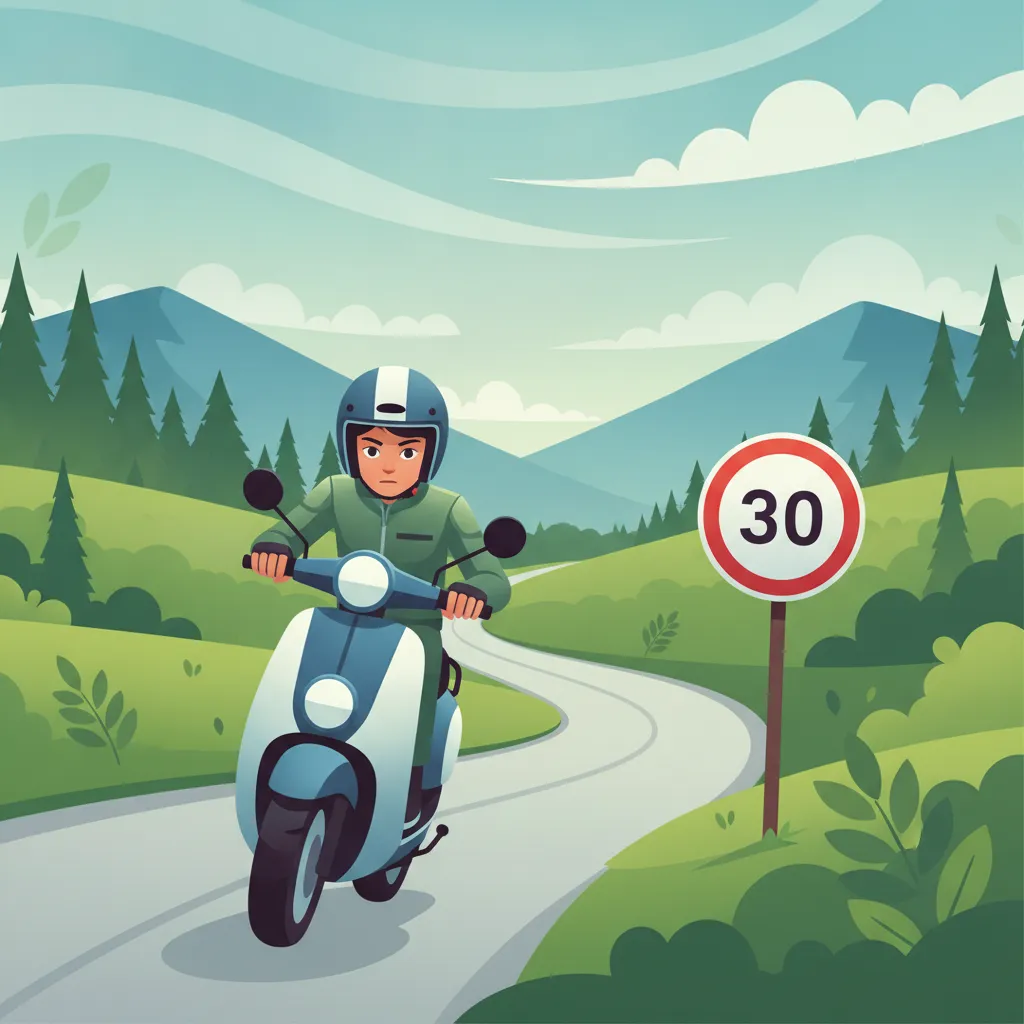
This lesson outlines the legal speed limits for Category AM vehicles in Austria, covering urban, residential, and rural areas. It explains how to identify different speed zones through signage and the importance of adjusting speed based on traffic, weather, and road conditions. Adherence to these limits is a fundamental aspect of both legal compliance and safety.

This lesson provides a clear overview of the legal penalties for traffic violations in Austria. It details the system of fines, demerit points, and the conditions that can lead to license suspension or revocation. Understanding these consequences reinforces the importance of lawful and responsible riding.
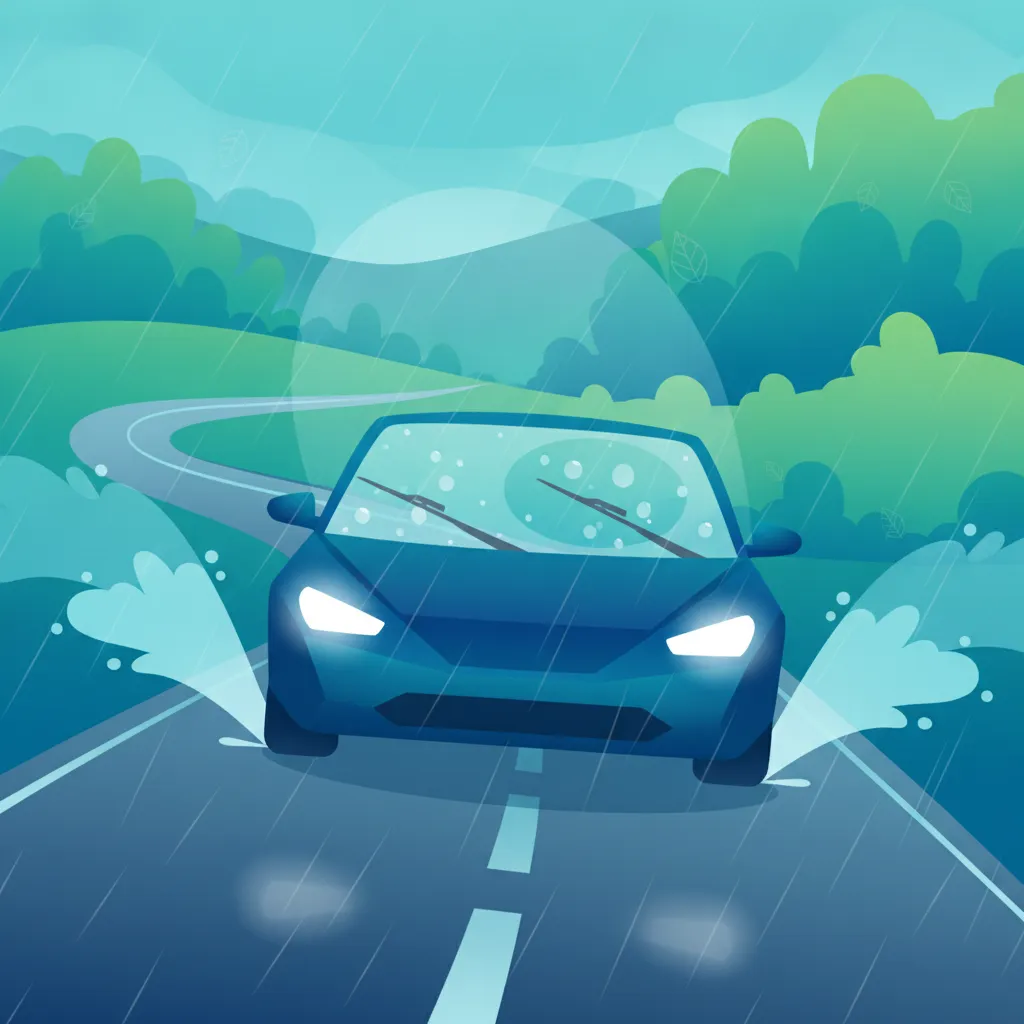
This lesson examines how adverse weather directly affects motorcycle safety. It explains how water on the road reduces tyre grip, increasing braking distances and the risk of aquaplaning. Strategies for riding in fog, dealing with reduced visibility from road spray, and identifying potential ice patches are covered to help riders manage weather-related risks.

This lesson details the mandatory lighting and reflector requirements for Category AM vehicles in Austria. It explains the functions of different light settings, including daytime running lights, and their importance for being seen. Additionally, it covers the legal standards for protective helmets, a critical component of rider safety.
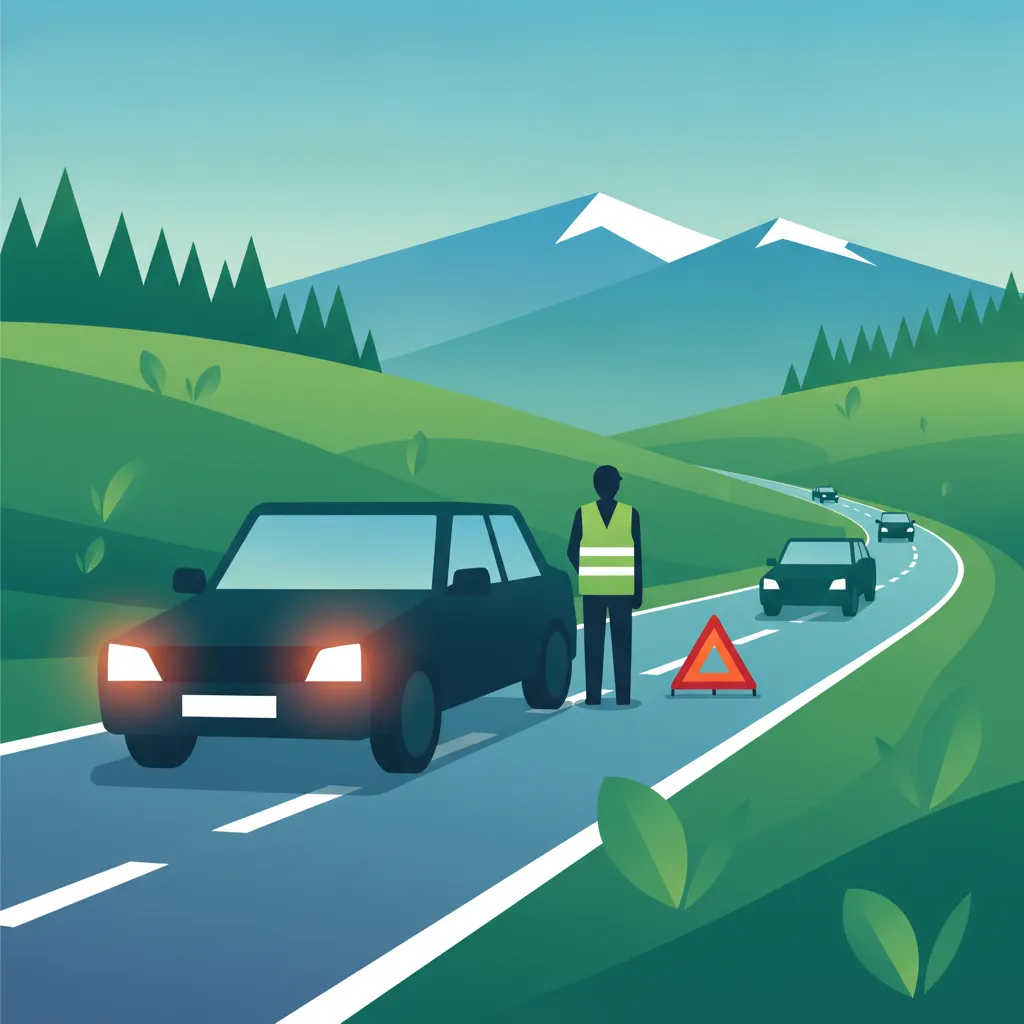
This lesson equips riders with the knowledge to manage an unexpected breakdown or accident. It outlines the steps for securing the vehicle and scene safely, including the use of hazard lights and a reflective vest. It also covers the procedure for contacting emergency services and providing essential information.
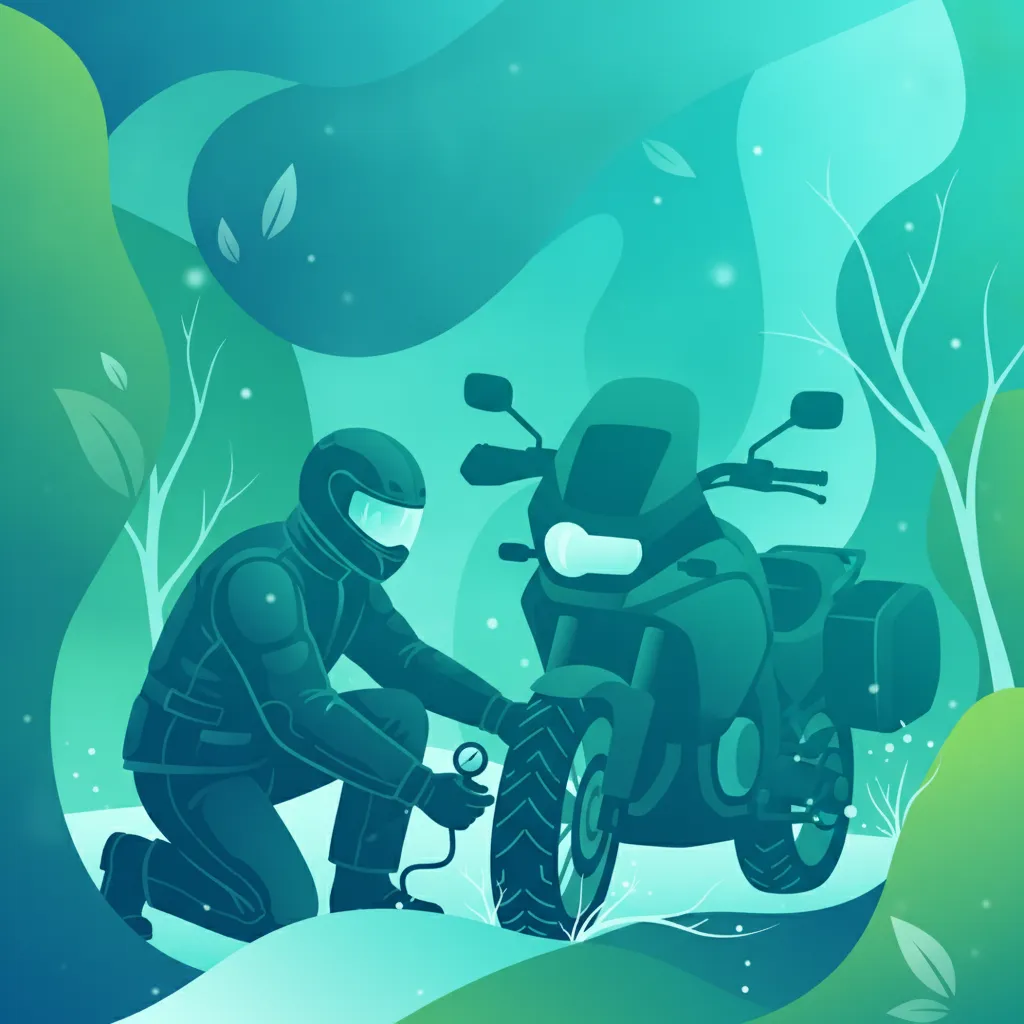
This lesson emphasizes the importance of conducting a thorough pre-ride inspection to ensure vehicle safety. It provides a simple checklist covering critical components such as tires, brakes, lights, and controls. Performing these checks regularly helps identify potential issues before they become dangerous on the road.
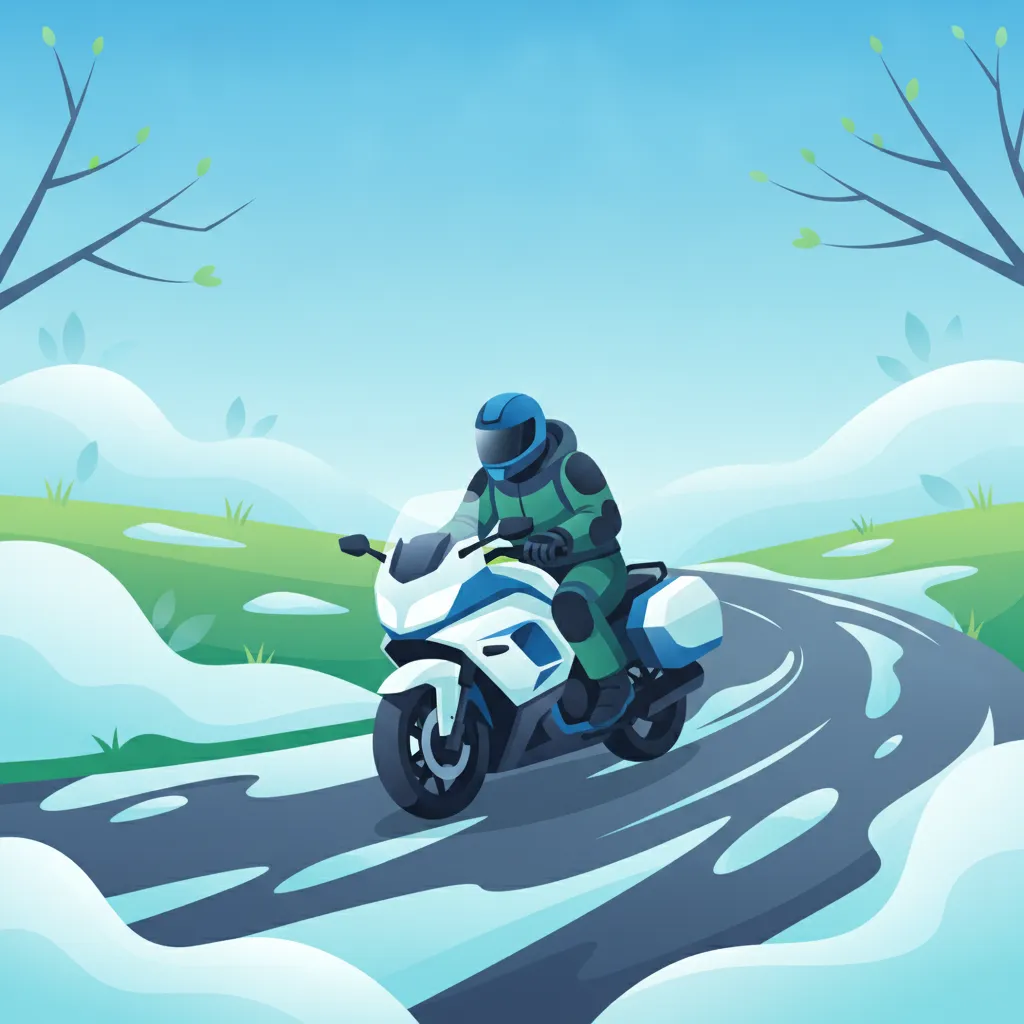
This lesson provides guidance on tailoring riding practices to the season. For colder months, it emphasizes the importance of layered clothing and awareness of icy patches, especially in shaded areas. For spring, it highlights hazards like leftover road salt and gravel from winter maintenance, as well as slippery wet leaves, requiring heightened caution.
Learn the physics behind reduced grip, hydroplaning, and glare, and how these affect your moped. Discover essential control techniques for braking, speed adaptation, and maintaining traction in poor visibility.
This lesson examines how adverse weather directly affects motorcycle safety. It explains how water on the road reduces tyre grip, increasing braking distances and the risk of aquaplaning. Strategies for riding in fog, dealing with reduced visibility from road spray, and identifying potential ice patches are covered to help riders manage weather-related risks.
This lesson covers the significant risks associated with riding in winter conditions, particularly snow and ice. It teaches riders how to identify areas where black ice is likely to form and the techniques for gentle acceleration, braking, and steering to maintain traction. The importance of appropriate tires and other winter equipment is also highlighted.
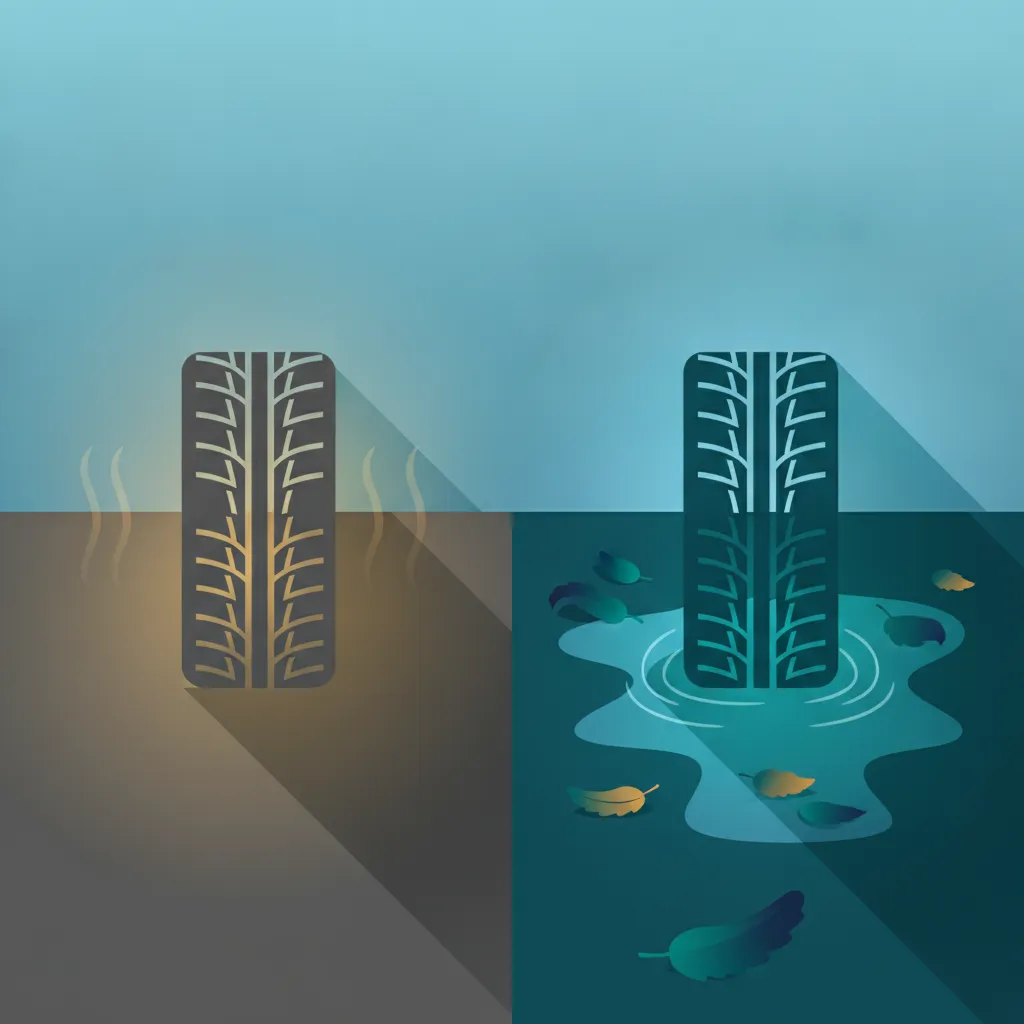
This lesson explores the critical relationship between tire grip and different road surfaces. It provides strategies for identifying and navigating hazards such as wet leaves, gravel, and potential black ice. The importance of maintaining correct tire pressure and monitoring tread wear for optimal traction is also emphasized.
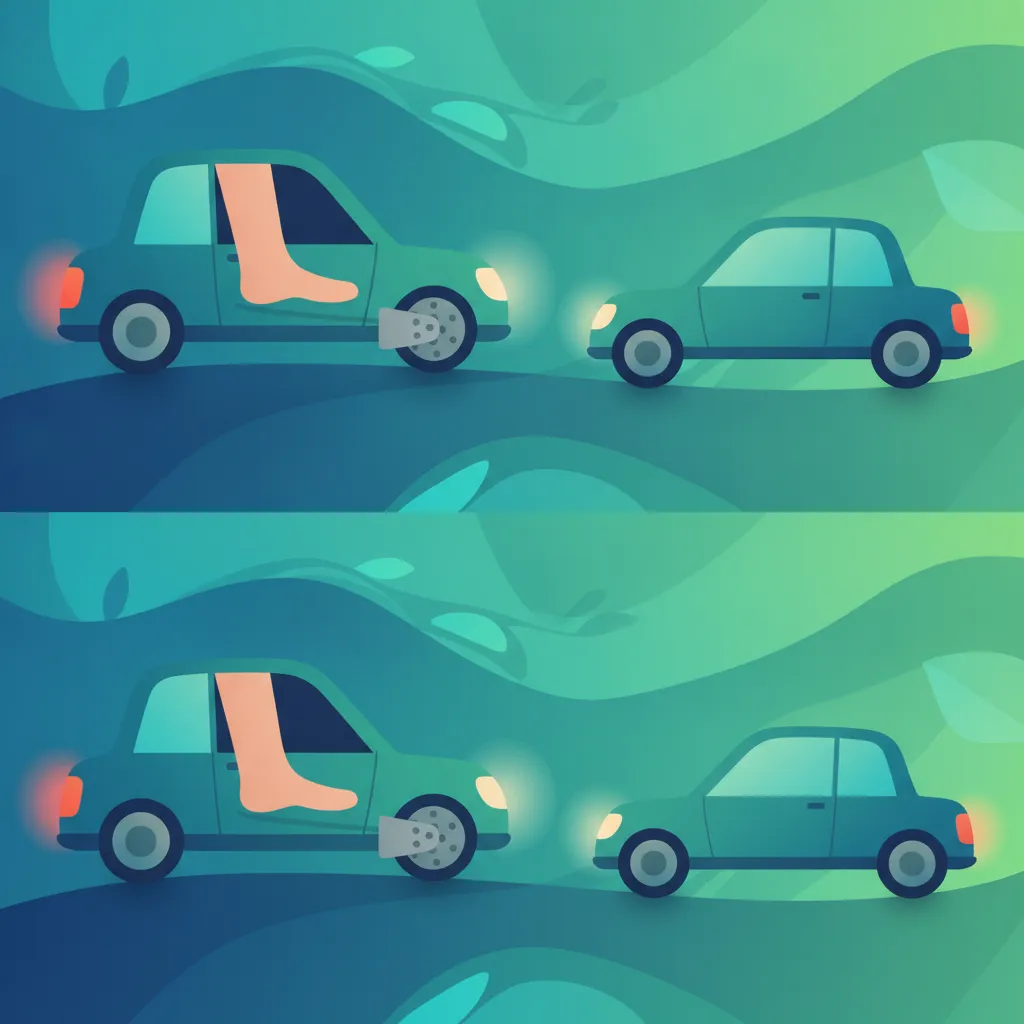
This lesson teaches correct braking techniques, including the coordinated use of front and rear brakes for maximum efficiency. It explains how to calculate total stopping distance based on speed, perception time, and reaction time. The content also covers adjustments needed for braking on wet or slippery surfaces to avoid loss of control.
This lesson provides practical strategies for riding in windy conditions, a common occurrence on open roads and mountain passes. It explains how to anticipate wind gusts, use a relaxed but firm grip on the handlebars, and make subtle steering inputs to counteract side forces. Proper body positioning and lane choice can also significantly reduce the effect of wind and turbulence.
This lesson focuses on the dynamics of safe cornering, explaining concepts like lean angle, body positioning, and counter-steering. It teaches the proper technique of adjusting speed before a turn, maintaining a smooth path through the apex, and accelerating out of the corner. Correctly applying these principles is key to maintaining stability and control.
This lesson emphasizes the importance of conducting a thorough pre-ride inspection to ensure vehicle safety. It provides a simple checklist covering critical components such as tires, brakes, lights, and controls. Performing these checks regularly helps identify potential issues before they become dangerous on the road.
This lesson provides a step-by-step guide to executing an emergency stop safely. It teaches riders how to apply firm, progressive pressure to both brakes to achieve the shortest possible stopping distance without locking the wheels. The role of ABS in these situations is also explained, highlighting how it assists the rider in maintaining steering control under maximum braking.
Find clear answers to common questions learners have about Riding in Rain, Fog, and Low Sunlight. Learn how the lesson is structured, which driving theory objectives it supports, and how it fits into the overall learning path of units and curriculum progression in Austria. These explanations help you understand key concepts, lesson flow, and exam focused study goals.
You must significantly reduce your speed to match your stopping distance to the range of your visibility. Ensure your lighting is functioning, stay alert, and consider pulling over in a safe, designated spot if you cannot see the road ahead clearly.
When rain first begins to fall, it mixes with oil, dust, and grime on the road, creating a very slippery film. This is often more hazardous than heavy rain, as it reduces tire grip significantly.
Low sunlight can create dangerous glare, especially at sunrise or sunset. You should increase your following distance, use your visor or sunglasses, and be prepared to stop if your visibility is suddenly blocked by the sun.
Yes, you must ensure your dipped headlights are on to increase your visibility to other drivers. High visibility clothing is also recommended to ensure other motorists can spot you more easily in gloomy conditions.
Refine your study plan by searching for specific Austrian driving theory practice sets. Pinpoint questions related to particular road rules, signs, or challenge levels, and begin practicing immediately to reinforce your knowledge and excel in your official exam with confidence. Get started with focused revision today.