
This lesson guides you through the legal speed limits for category AM mopeds and light quadricycles within the Austrian traffic system. Understanding these constraints is vital for both your theoretical exam success and maintaining safe, predictable behavior on the road.
Lesson content overview
Navigating Austrian roads safely and legally on a moped, small scooter, or light quadricycle requires a thorough understanding of speed limits. For riders of Category AM vehicles, these limits are distinct from those for cars or motorcycles, reflecting the unique characteristics and vulnerabilities of these vehicles. Adhering to the correct speed is not merely a legal obligation; it is a fundamental aspect of road safety, influencing everything from stopping distance to vehicle stability and the severity of potential accidents. This lesson will delve into the specific speed regulations for AM vehicles in Austria, how to interpret relevant road signs, and the critical importance of adjusting your speed to various road and weather conditions.
Before exploring specific speed limits, it's essential to understand what constitutes a Category AM vehicle in Austria and why these vehicles are subject to particular rules.
In Austria, a Category AM vehicle includes two-wheeled motor vehicles (mopeds and small scooters) with a maximum design speed of 45 km/h and an engine displacement up to 50 cc. It also encompasses light quadricycles, which are limited to a maximum design speed of 45 km/h and an empty weight not exceeding 350 kg.
Category AM covers a range of light motor vehicles designed for urban and suburban travel. These vehicles are characterized by their relatively low power output and maximum speed. This classification is crucial because it dictates the specific driving license required and, pertinently for this lesson, the unique speed limits that apply to them. Understanding your vehicle's classification ensures you comply with all associated rules.
Category AM vehicles, while offering agile and economical transport, possess distinct characteristics that necessitate specific speed regulations:
These factors combine to form the rationale behind the differentiated speed limits, prioritizing safety for both the rider and other road users.
Austrian road traffic law (StVO) sets default speed limits that apply unless otherwise indicated by road signs. These defaults vary significantly depending on whether you are in a built-up area, a residential zone, or on a rural road. For Category AM vehicles, these limits are generally lower than those for cars and motorcycles.
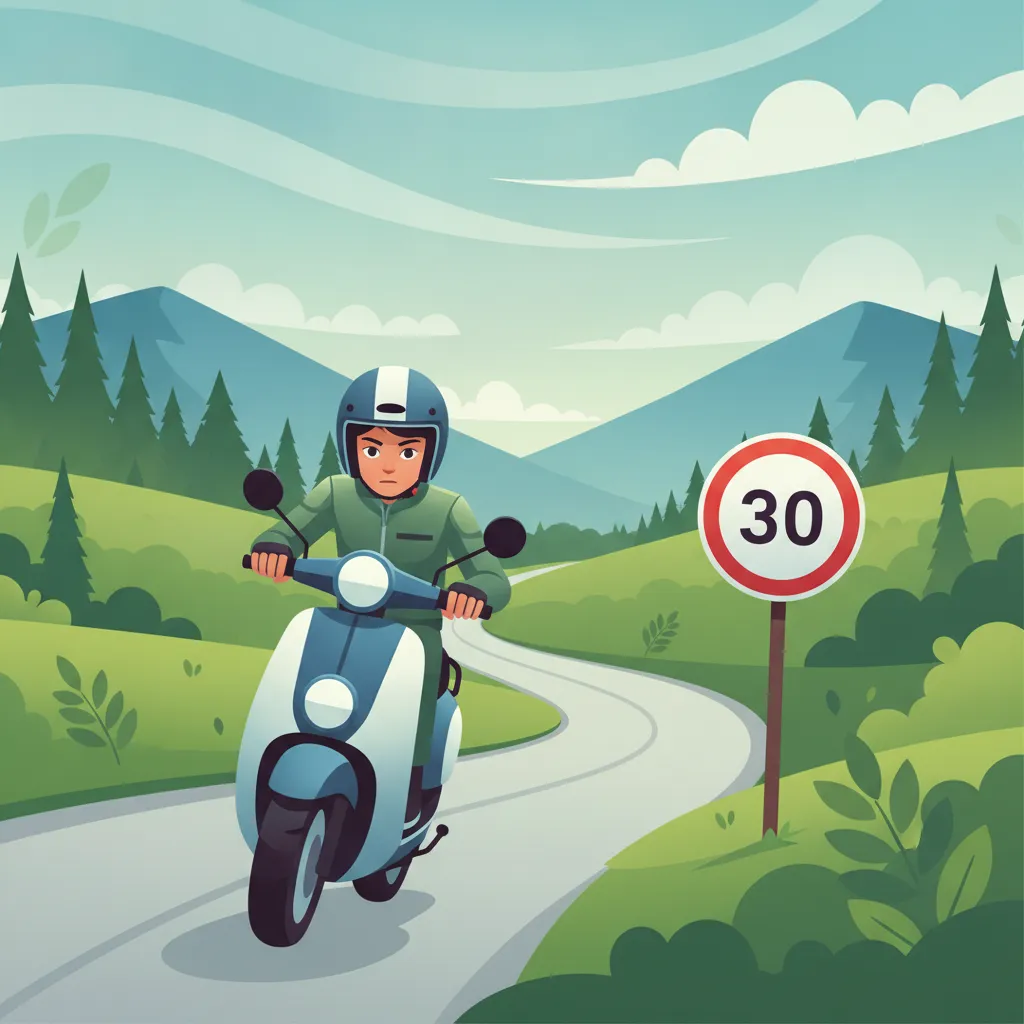
When riding your moped or scooter within a built-up area—which includes cities, towns, and villages—the default speed limit for Category AM vehicles is 30 km/h. This limit applies from the city limit signs or where residential development begins, and continues until you pass the corresponding end-of-built-up-area sign.
The primary reason for this lower limit is the increased density of traffic, pedestrians, and cyclists in urban environments. Lower speeds allow for:
It's a common misunderstanding to assume the general city limit of 50 km/h for cars also applies to mopeds. Always remember that for your AM vehicle, the default maximum speed in built-up areas is 30 km/h, unless specific signage dictates an even lower speed.
Always assume a 30 km/h limit in built-up areas for your AM vehicle unless a specific sign indicates otherwise. Exceeding this limit significantly increases accident risk and legal penalties.
Within built-up areas, specific zones designated as residential areas often impose an even stricter speed limit. If you encounter a sign indicating a residential zone, the speed limit for your AM vehicle, as for all vehicles, is typically 20 km/h.
These zones are characterized by a higher concentration of homes, parked cars, and often children playing or pedestrians walking in the street. The reduced speed limit serves to:
Upon entering a residential zone, you must immediately reduce your speed to 20 km/h or less, regardless of how clear the road appears. These limits are paramount for community safety.
Outside built-up areas, on open country roads, the default speed limit for Category AM vehicles is 50 km/h, unless otherwise posted. Rural roads typically have fewer intersections, pedestrians, and slower traffic compared to urban areas, allowing for a slightly higher default speed.
While 50 km/h is the maximum allowed, it's crucial to assess road conditions continuously. Rural roads can present unique challenges, such as:
Therefore, even with a 50 km/h default, your actual safe speed might be lower depending on the specific circumstances. It's important not to confuse this 50 km/h limit with the 100 km/h limit that applies to cars on many Austrian rural roads. For your AM vehicle, 50 km/h is the absolute maximum unless a specific sign permits less.
Road signs are the primary means of communicating speed limits and other traffic regulations. As an AM rider in Austria, understanding these signs, especially those that may be vehicle-specific, is essential for safe and legal riding.
Standard speed limit signs are circular with a red border and a black number on a white background, indicating the maximum speed in kilometers per hour.
These signs apply to all vehicles unless a supplementary plate specifies otherwise. When you see such a sign, that is the maximum speed you may travel in that section of the road.
Sometimes, a speed limit sign may be accompanied by a supplementary plate that indicates the limit applies only to certain vehicle categories. For AM riders, it's critical to look for plates that specify "M" (for motorcycles/mopeds) or similar symbols indicating two-wheeled vehicles.
For example, a 30 km/h sign with a supplementary plate showing the symbol for a motorcycle (or even "M") would indicate that the 30 km/h limit specifically applies to motorcycles and mopeds, while other vehicles might have a different limit. While less common for general speed limits, these supplementary plates are vital for precise interpretation. Always check under the main speed sign for any additional information.
When you pass an end-of-speed-limit sign, it means the previously indicated speed limit no longer applies. The default speed limit for the particular road type you are on will then resume.
This sign is a white circular sign with a black diagonal line running from the top right to the bottom left. For instance, if you were in a 20 km/h residential zone and saw this sign, you would then revert to the default 30 km/h urban limit, assuming you are still in a built-up area. If you were on a rural road that had a temporary 30 km/h limit and then saw this sign, the limit would revert to 50 km/h for AM vehicles on rural roads. Always be aware of your current road type to know the default limit after an end-of-speed-limit sign.
Legal speed limits represent the maximum permissible speed under ideal conditions. However, safe riding often demands that you travel at a speed significantly lower than the posted limit. This concept, known as contextual speed adjustment, is crucial for maintaining control and ensuring safety in varying circumstances.
Adverse weather and poor visibility are major contributors to accidents, and they demand immediate speed reduction:
Beyond weather, the physical characteristics of the road and the surrounding traffic also dictate appropriate speed:
Your vehicle's state and how it's loaded also affect safe speed:
Always consider the maximum safe speed for current conditions, which can be considerably lower than the legal speed limit. Prioritize safety over strictly adhering to the posted number.
One of the most crucial concepts in road safety, especially for AM riders, is the direct and exponential relationship between speed and stopping distance. Understanding this connection underscores why adhering to speed limits and adjusting for conditions is non-negotiable.
Stopping a vehicle involves two main phases:
Together, these make up the reaction time—the time it takes for a rider to process a situation and begin to act. The average human reaction time is about 1 to 1.5 seconds. During this time, your vehicle continues to travel at its current speed.
This demonstrates that even before braking, higher speeds dramatically increase the distance covered, reducing your safety margin.
Braking distance is the distance your vehicle travels from the moment you apply the brakes until it comes to a complete stop. This distance is not directly proportional to speed; rather, it increases with the square of your speed (v²). This means:
Total stopping distance is the sum of your perception distance, reaction distance, and braking distance. For a Category AM vehicle:
For AM riders, who often have less powerful brakes and lighter vehicles, the relationship between speed and stopping distance has critical implications:
Underestimating stopping distances at higher speeds is a common cause of accidents. By understanding this principle, you can make informed decisions about your speed, ensuring you can always stop safely.
Failure to comply with speed limits is a frequent traffic offense and carries significant risks for AM riders. Understanding common violations can help you avoid them.
The consequences of speeding for AM riders in Austria can be severe, both legally and in terms of safety:
By consistently adhering to posted speed limits and making prudent speed adjustments based on conditions, you protect yourself, other road users, and your driving privileges.
Mastering speed limits is a cornerstone of safe and legal riding for Category AM vehicles. By consistently applying the knowledge gained in this lesson, you will significantly reduce your risk of accidents and ensure compliance with Austrian traffic laws. Always remember that the legal speed limit is a maximum, not a target, and safe riding often requires even lower speeds.
This lesson covers the specific speed limits for Austrian Category AM vehicles (mopeds and light quadricycles up to 45 km/h), which differ from car limits in built-up areas where AM vehicles are restricted to 30 km/h rather than 50 km/h. It explains how to interpret speed limit road signs and their supplementary plates, as well as end-of-speed-limit signs that revert to default limits by road type. A key focus is the exponential relationship between speed and stopping distance—demonstrating why 50 km/h requires roughly four times the braking distance of 25 km/h. The lesson also covers contextual speed adjustment for weather, visibility, traffic density, and vehicle condition, and outlines common violations and their legal consequences under Austrian traffic law (StVO).
A short set of high-value points that capture the most important learning from this lesson.
Category AM mopeds are limited to 30 km/h in built-up areas, 20 km/h in residential zones, and 50 km/h on rural roads by default in Austria.
Legal speed limits are maximums, not targets—safe riding often requires traveling significantly slower based on conditions.
Stopping distance increases with the square of speed (v²), meaning doubling speed roughly quadruples braking distance.
Environmental factors like rain, fog, poor visibility, and poor road surfaces legally require you to reduce speed below the posted limit.
AM riders face the same speed limits in built-up areas as cars but are subject to the stricter 30 km/h default, not the 50 km/h that applies to cars.
Explore all units and lessons included in this driving theory course.
Built-up area limit for AM vehicles is 30 km/h (not 50 km/h like cars); residential zones require 20 km/h; rural roads allow up to 50 km/h.
Total stopping distance equals perception distance + reaction distance + braking distance; at 30 km/h it may be 12-15 meters, at 50 km/h it can exceed 25-30 meters.
The end-of-speed-limit sign (white circle with black diagonal) returns you to the default limit for your current road type.
Adverse conditions (rain, snow, ice, fog, night driving, poor road surface) impose a legal duty to reduce speed regardless of posted limits.
Your vehicle's condition (worn tires, brakes) and load (passenger, luggage) also affect safe speed and braking performance.
Assuming the 50 km/h urban limit for cars also applies to mopeds, leading to riding at 40-45 km/h in cities.
Failing to reduce to 20 km/h upon entering residential zones marked with the house/children sign.
Continuing at the posted limit during rain, fog, or on wet/slippery roads without adjusting speed.
After leaving a temporary speed zone (e.g., construction area), not correctly adjusting to the new default limit for the road type.
Underestimating stopping distances at higher speeds and following too closely behind other vehicles.
Lesson content overview
A short set of high-value points that capture the most important learning from this lesson.
Category AM mopeds are limited to 30 km/h in built-up areas, 20 km/h in residential zones, and 50 km/h on rural roads by default in Austria.
Legal speed limits are maximums, not targets—safe riding often requires traveling significantly slower based on conditions.
Stopping distance increases with the square of speed (v²), meaning doubling speed roughly quadruples braking distance.
Environmental factors like rain, fog, poor visibility, and poor road surfaces legally require you to reduce speed below the posted limit.
AM riders face the same speed limits in built-up areas as cars but are subject to the stricter 30 km/h default, not the 50 km/h that applies to cars.
Explore all units and lessons included in this driving theory course.
Built-up area limit for AM vehicles is 30 km/h (not 50 km/h like cars); residential zones require 20 km/h; rural roads allow up to 50 km/h.
Total stopping distance equals perception distance + reaction distance + braking distance; at 30 km/h it may be 12-15 meters, at 50 km/h it can exceed 25-30 meters.
The end-of-speed-limit sign (white circle with black diagonal) returns you to the default limit for your current road type.
Adverse conditions (rain, snow, ice, fog, night driving, poor road surface) impose a legal duty to reduce speed regardless of posted limits.
Your vehicle's condition (worn tires, brakes) and load (passenger, luggage) also affect safe speed and braking performance.
Assuming the 50 km/h urban limit for cars also applies to mopeds, leading to riding at 40-45 km/h in cities.
Failing to reduce to 20 km/h upon entering residential zones marked with the house/children sign.
Continuing at the posted limit during rain, fog, or on wet/slippery roads without adjusting speed.
After leaving a temporary speed zone (e.g., construction area), not correctly adjusting to the new default limit for the road type.
Underestimating stopping distances at higher speeds and following too closely behind other vehicles.
Explore search topics learners often look for when studying Speed Limits for AM Vehicles. These topics reflect common questions about road rules, driving situations, safety guidance, and lesson level theory preparation for learners in Austria.
Browse additional driving theory lessons that cover connected traffic rules, road signs, and common driving situations related to this topic. Improve your understanding of how different rules interact across everyday traffic scenarios.
Explore advanced speed limit regulations and complex scenarios for Category AM vehicles in Austria. Understand exceptions, specific zone interpretations, and challenging situations beyond basic limits. Essential for comprehensive driving theory.

This lesson provides a detailed definition of the vehicles covered by the Category AM license in Austria, including mopeds, small scooters, and light quadricycles. It clarifies the legal limitations on engine capacity, maximum design speed, and vehicle weight. The content also outlines the basic equipment requirements and eligibility criteria for young riders.
This lesson details the essential legal and administrative requirements for operating an AM vehicle in Austria. It covers the processes for vehicle registration, the obligation for licence plates, and the necessity of third-party liability insurance. Furthermore, it explains the importance of regular technical inspections to ensure the vehicle remains roadworthy and compliant with national standards.
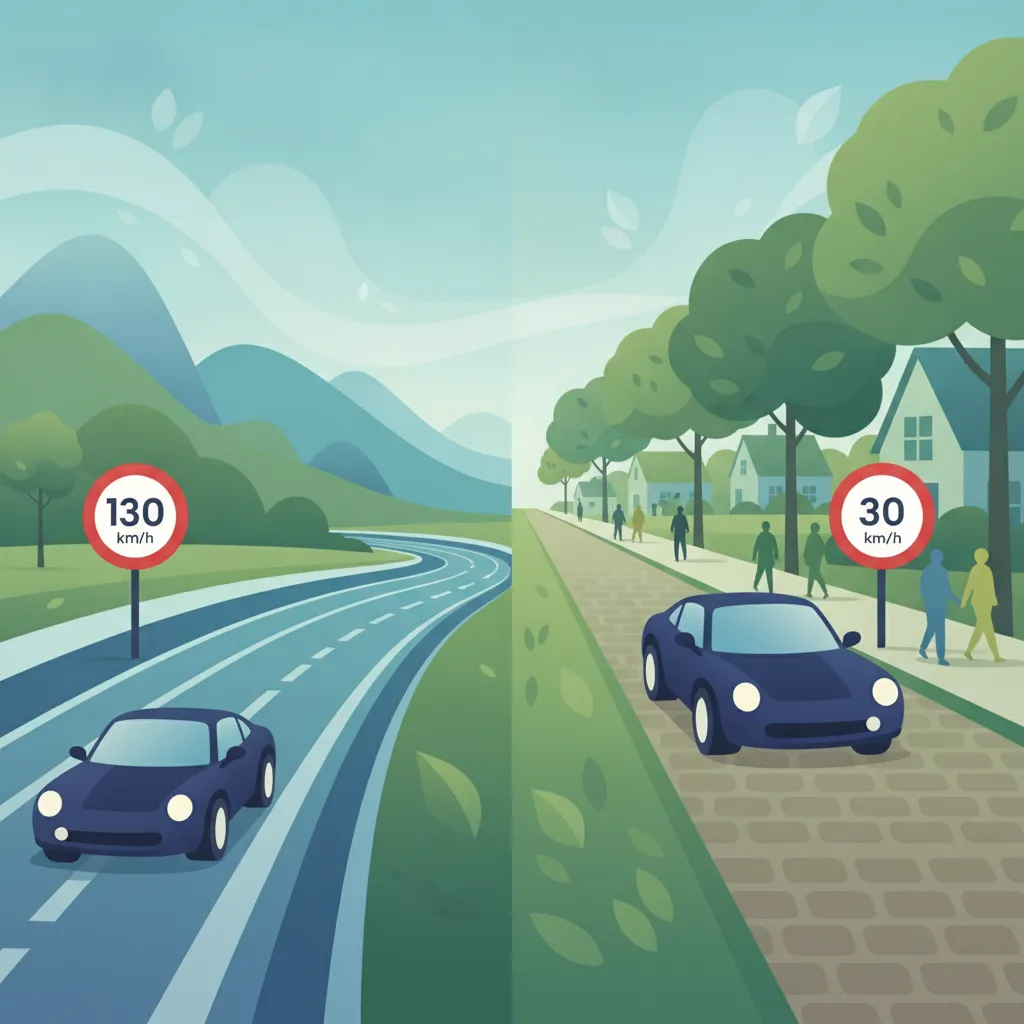
This lesson details the legally prescribed speed limits across Austria's road network, including the specific limits for urban areas (Ortsgebiet), rural roads (Landstraßen), motorways (Autobahnen), and expressways (Schnellstraßen). Learners will understand how to interpret speed limit signs, including those with supplementary conditions. Adherence to these legal requirements is a fundamental aspect of road safety and compliance with the Austrian road traffic act (StVO).

This lesson provides essential knowledge for using Austria's high-speed road network. It covers the correct procedure for entering via acceleration lanes, maintaining strict lane discipline (keeping right, passing left), and understanding the digital or physical Vignette (toll sticker) requirement. The formation of the 'Rettungsgasse' (emergency corridor) during traffic jams is also a key topic.

This lesson details the regulations for heavy goods vehicles on Austria's high-speed road network. It covers the specific speed limits, rules on lane usage (e.g., when overtaking is permitted), and procedures for entering and exiting the motorway. Adherence to these rules is crucial for safety in a fast-paced environment.

This lesson teaches a safe and systematic process for approaching and crossing intersections. It covers how to correctly assess priority based on signs and general rules, adjust speed appropriately, and perform thorough visual checks. Emphasis is placed on anticipating the actions of other road users to prevent conflicts at junctions.

This lesson provides a clear overview of the legal penalties for traffic violations in Austria. It details the system of fines, demerit points, and the conditions that can lead to license suspension or revocation. Understanding these consequences reinforces the importance of lawful and responsible riding.
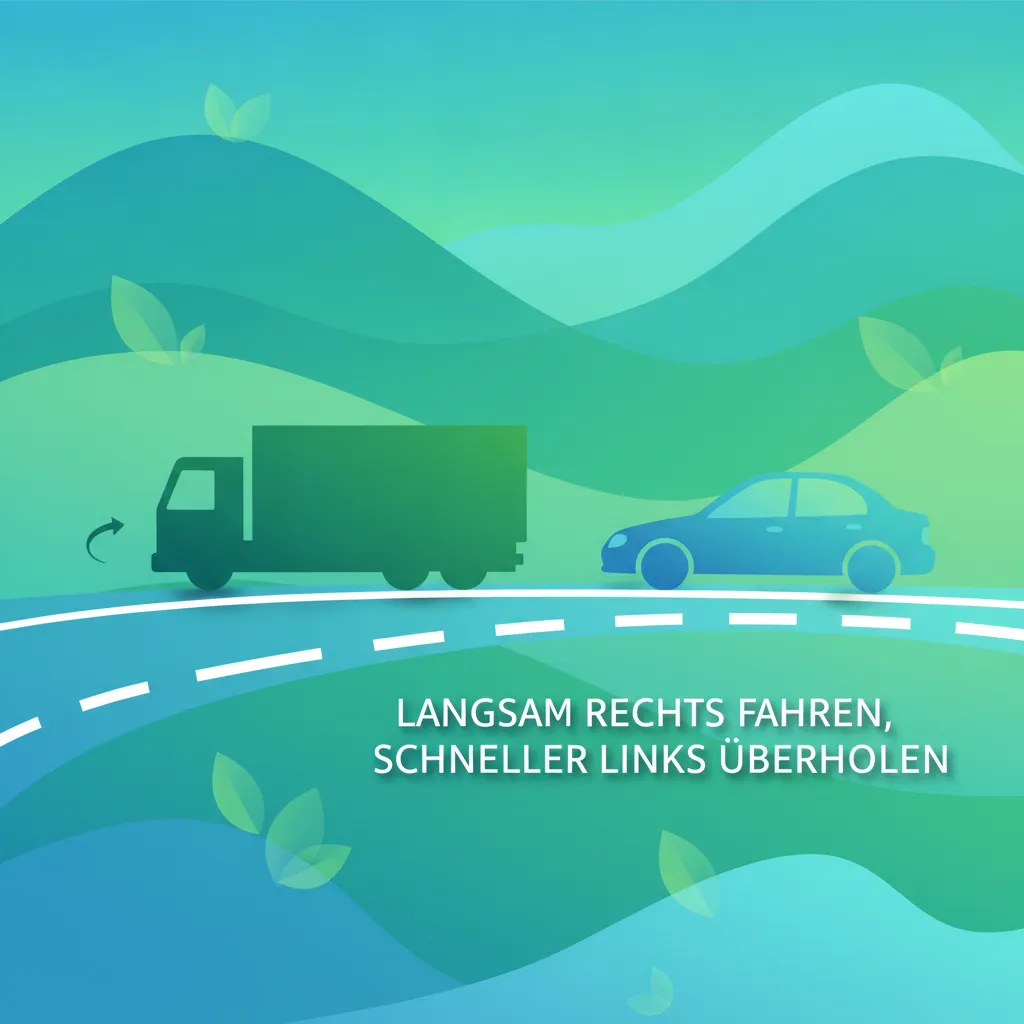
High-speed driving in a large vehicle requires excellent lane discipline and forward planning. This lesson covers Austrian speed limits for buses, rules for joining and leaving the motorway, safe overtaking procedures, and maintaining appropriate following distances. The critical importance of forming an emergency corridor ('Rettungsgasse') in traffic jams is also a key topic.

This lesson details the general traffic rules applicable to heavy goods vehicles on Austrian roads, highlighting differences from passenger car regulations. It covers key topics such as right-of-way at intersections, specific rules for overtaking, maintaining proper lane discipline, and adhering to designated speed limits. Understanding these rules is critical for safe integration into mixed traffic.
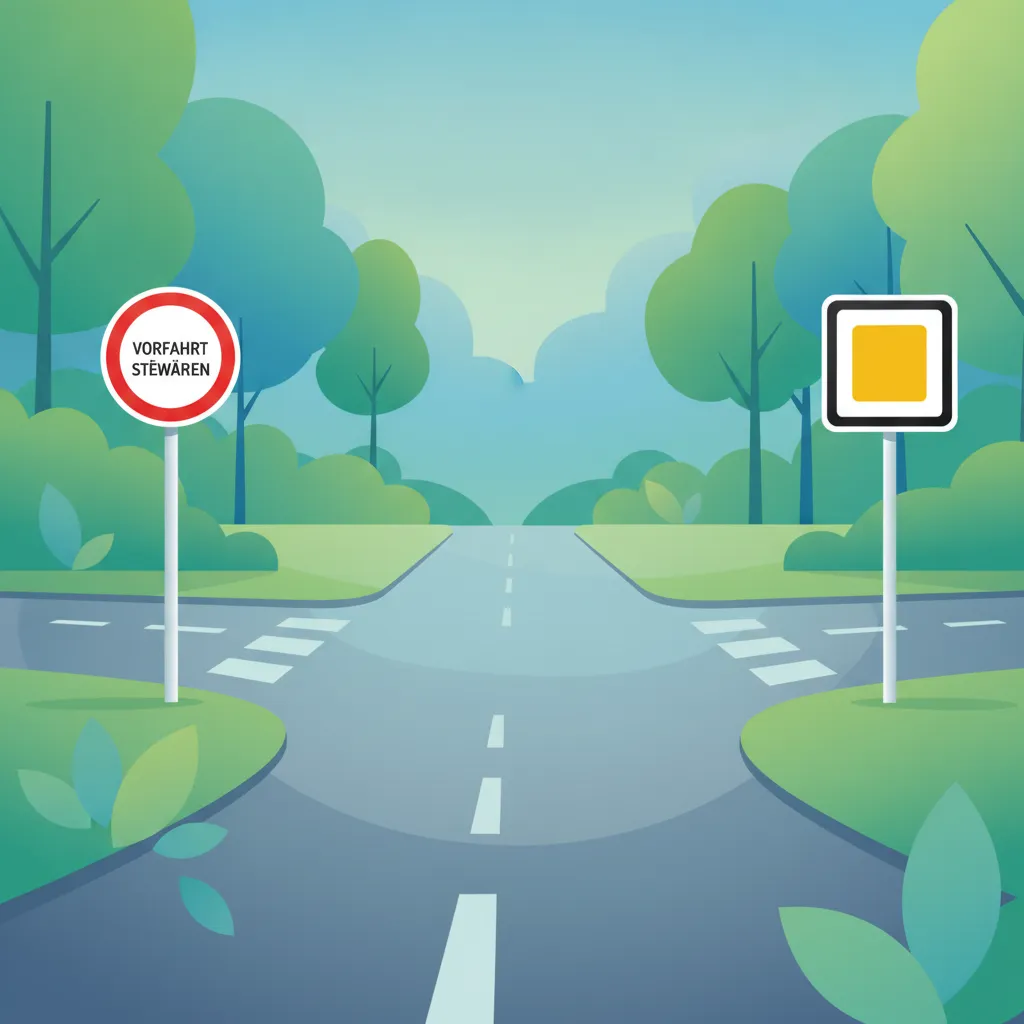
This lesson explains the fundamental concepts of priority that govern traffic at Austrian junctions. It differentiates between having priority ('Vorfahrt') and the duty to yield ('Nachrang'), detailing the signs that establish these rules. Correct application of these principles is critical for preventing collisions at intersections and roundabouts.
Learn how to adjust your speed for various Austrian weather conditions and road surfaces. Understand the critical relationship between speed, stopping distance, and safety for Category AM vehicles on different terrains.

This lesson focuses on strategies for riding safely in conditions of poor visibility, such as rain, fog, and low sun glare. It explains how to use lights effectively, increase following distances, and moderate speed to maintain control. The content also addresses braking techniques on wet surfaces to prevent skidding and hydroplaning.

This lesson brings together many concepts by focusing on the mindset of an adaptive rider. It teaches how to constantly scan the environment and adjust speed, position, and control inputs in response to changing conditions like road surface, weather, or traffic density. The goal is to develop a proactive, flexible riding style that prioritizes safety and control in any situation.

This lesson provides guidance on selecting the appropriate road position to maximize visibility and safety. It covers strategies for riding in different parts of a lane based on traffic, road conditions, and potential hazards like parked cars. The goal is to establish a defensive position that allows for adequate reaction time and makes the rider predictable to others.
This lesson details the essential legal and administrative requirements for operating an AM vehicle in Austria. It covers the processes for vehicle registration, the obligation for licence plates, and the necessity of third-party liability insurance. Furthermore, it explains the importance of regular technical inspections to ensure the vehicle remains roadworthy and compliant with national standards.
This lesson provides a detailed definition of the vehicles covered by the Category AM license in Austria, including mopeds, small scooters, and light quadricycles. It clarifies the legal limitations on engine capacity, maximum design speed, and vehicle weight. The content also outlines the basic equipment requirements and eligibility criteria for young riders.

This lesson addresses the critical skill of adapting driving behavior to conditions of reduced visibility, such as fog, heavy rain, snow, or darkness. It explains the principle of driving only as fast as you can see, ensuring your stopping distance is within your visibility range. The content covers the correct use of headlights and fog lights and emphasizes why speed reduction is essential for maintaining safety when your ability to perceive hazards is compromised.

This lesson focuses on identifying and mitigating common hazards in dense urban settings. It explains how to maintain a safe distance from parked cars to avoid opening doors and how to navigate narrow streets. Additionally, it covers the special rules and heightened awareness required when riding in or near pedestrian zones and school areas.
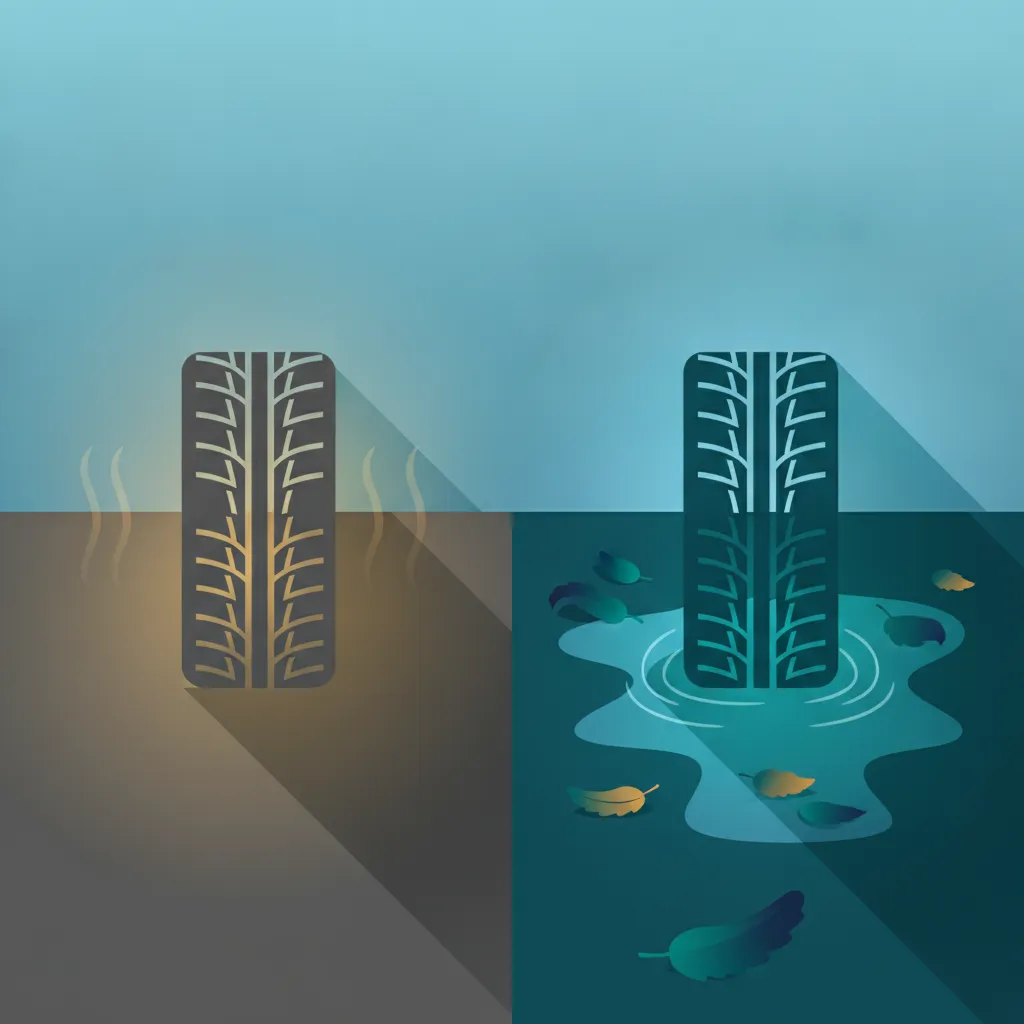
This lesson explores the critical relationship between tire grip and different road surfaces. It provides strategies for identifying and navigating hazards such as wet leaves, gravel, and potential black ice. The importance of maintaining correct tire pressure and monitoring tread wear for optimal traction is also emphasized.
This lesson provides essential knowledge for using Austria's high-speed road network. It covers the correct procedure for entering via acceleration lanes, maintaining strict lane discipline (keeping right, passing left), and understanding the digital or physical Vignette (toll sticker) requirement. The formation of the 'Rettungsgasse' (emergency corridor) during traffic jams is also a key topic.
This lesson details the legally prescribed speed limits across Austria's road network, including the specific limits for urban areas (Ortsgebiet), rural roads (Landstraßen), motorways (Autobahnen), and expressways (Schnellstraßen). Learners will understand how to interpret speed limit signs, including those with supplementary conditions. Adherence to these legal requirements is a fundamental aspect of road safety and compliance with the Austrian road traffic act (StVO).
Find clear answers to common questions learners have about Speed Limits for AM Vehicles. Learn how the lesson is structured, which driving theory objectives it supports, and how it fits into the overall learning path of units and curriculum progression in Austria. These explanations help you understand key concepts, lesson flow, and exam focused study goals.
Category AM mopeds in Austria are technically limited to a design-based maximum speed of 45 km/h. On public roads, you must always adhere to the posted speed limits if they are lower than this, and you are expected to drive at a safe speed regardless of the maximum capacity.
Yes. In designated residential zones or traffic-calmed areas (Wohnstraßen), you must adapt your speed accordingly. You should always watch for signs indicating 'Tempo 30' zones, where you must not exceed 30 km/h, regardless of your vehicle's top speed.
The Austrian theory exam often tests your judgment. When a question mentions rain, snow, or reduced visibility, the correct answer is usually to significantly reduce your speed below the legal maximum to maintain control, even if the road sign allows for a higher speed.
No. The speed limit is a maximum, not a target. You should always ride at a speed that allows you to react safely to hazards, such as opening car doors or unexpected pedestrians, while maintaining the flow of traffic.
Refine your study plan by searching for specific Austrian driving theory practice sets. Pinpoint questions related to particular road rules, signs, or challenge levels, and begin practicing immediately to reinforce your knowledge and excel in your official exam with confidence. Get started with focused revision today.