
This lesson focuses on identifying and mitigating hazards in dense Austrian urban environments, a critical skill for Category AM riders. You will learn to manage risks from opening car doors, narrow lanes, and pedestrian zones to ensure safety during your daily rides. This content is vital for both your practical safety and passing the Austrian theory exam.

Lesson content overview
Riding a moped or small scooter in urban environments presents a unique set of challenges and potential hazards. Dense traffic, numerous parked vehicles, narrow roadways, and the frequent presence of pedestrians demand heightened awareness and precise riding skills. This lesson is designed to equip you with the knowledge and strategies necessary to safely navigate these common urban scenarios. Mastering these concepts is crucial for avoiding collisions, preventing conflicts with other road users, and ensuring a safe and responsible riding experience on Austrian roads.
This module builds upon foundational knowledge from previous lessons, including basic traffic signs, signals, right-of-way rules, and essential visibility considerations. It will deepen your understanding of road positioning and hazard perception, preparing you for the complex interactions inherent in city traffic.
One of the most prevalent and often underestimated dangers in urban areas is the risk posed by parked vehicles. A sudden opening door or a pedestrian unexpectedly stepping out from between cars can create an immediate and severe hazard for moped riders. Therefore, maintaining a Minimum Safe Distance (MSD) from parked cars is not merely a recommendation; it is a critical safety principle.
The "door-opening hazard" refers to the danger of a vehicle occupant suddenly opening their door into your path. This risk is amplified for moped riders due to their smaller size and the speed at which such an event can unfold. The key to mitigating this hazard is to create a sufficient "safety buffer" or lateral clearance.
In Austria, the StVO § 40 (2) mandates that riders must maintain a safe distance from parked vehicles. This generally translates to a recommended lateral clearance of at least 1.5 metres for mopeds and small scooters when passing parked cars where feasible. This distance provides a crucial time-space buffer, allowing you to react and take evasive action if a door unexpectedly opens.
The required lateral clearance a rider must maintain when passing parked cars to prevent collision with opening doors, provide reaction space, and maintain visibility of pedestrians.
While 1.5 metres is the ideal, urban streets can often be too narrow to consistently maintain this distance. In situations where physical constraints prevent the standard clearance, StVO § 41 (1) states that a minimum lateral clearance of 1.0 metre should be kept on both sides of the vehicle if possible. When the distance from a parked car is less than 1.0 metre, you must significantly reduce your speed to enhance your reaction time.
Never assume that a parked car is inactive. Occupants can open doors, or pedestrians might emerge from behind it at any moment. Treat every parked vehicle as a potential source of unexpected movement.
Riding on sidewalks to bypass parked cars is generally prohibited unless explicitly indicated by signage. Sidewalks are reserved for pedestrians, and riding a motorized vehicle on them can result in fines and endanger vulnerable road users.
When approaching a row of parked cars:
By consciously implementing these strategies, you transform a passive row of parked cars into an actively monitored zone, significantly reducing the risk of a door-opening collision.
Urban areas are replete with narrow streets, particularly in residential zones or older city centres. These confined roadways pose challenges for maintaining safe distances, especially when encountering oncoming traffic or navigating tight corners. Effective road positioning and a willingness to yield are paramount in such situations.
Road Edge Clearance refers to the safe lateral space a rider must keep from the curb, gutters, or building edges when the roadway is too narrow for comfortable two-way traffic. While riding close to the curb might seem intuitive on a narrow street, it's essential to maintain enough space to prevent scraping your moped, avoid potholes or debris often found at the road's edge, and allow for safe manoeuvrability.
The safe lateral space a rider must keep from the curb or building edge when the roadway does not allow sufficient width for two lanes.
A standard edge clearance of 0.5 metres is generally ideal. However, in extremely tight situations, maintaining a critical edge clearance of less than 0.3 metres might indicate that the road is too narrow for safe passage, requiring you to stop or wait.
When a street is too narrow to comfortably accommodate two vehicles passing each other (typically less than 3.0 metres wide), special rules apply. StVO § 43 dictates that if the road width does not allow two vehicles to pass safely, both must reduce speed. If necessary, one vehicle must stop to allow the other to pass.
As a moped rider, your relatively smaller size often gives you an advantage in tight spaces. However, it does not grant you automatic priority. Always be prepared to:
Riding confidently and predictably is key. Avoid sudden swerving or hesitation that could confuse other road users.
Remember, safety always takes precedence over maintaining speed or perceived right-of-way in such constrained environments.
Pedestrians are among the most vulnerable road users. In urban settings, specific zones are designated to give them priority and enhance their safety. Moped riders must understand and strictly adhere to the rules governing Pedestrian Priority Zones (PPZ) and School Zones in Austria.
Pedestrian Priority Zones are urban areas where pedestrians have exclusive right-of-way. These zones are often found in bustling city centres, shopping streets, or near public transport hubs and are clearly indicated by specific signage.
Within a PPZ, the following rules typically apply to motor vehicles, including mopeds:
Urban areas, often marked by specific signage, where pedestrians have exclusive right-of-way and motor vehicles must yield and proceed with extreme caution.
School zones are a specific type of PPZ, or an area adjacent to a school, where additional restrictions apply, particularly during school start and end times. The presence of children, who can be unpredictable in their movements, necessitates extreme caution.
Key rules and considerations for school zones:
Failure to yield to pedestrians in PPZs or school zones, or exceeding the speed limit in these areas, can result in significant legal penalties and, more importantly, can lead to severe accidents involving vulnerable road users. Always prioritize the safety of pedestrians.
In the dynamic environment of urban traffic, simply reacting to immediate hazards is often not enough. Safe riding demands Anticipatory Observation – the continuous, proactive scanning of your surroundings to identify potential dangers before they fully materialize. This skill is fundamental to safe riding and integrates various observational techniques.
The continuous, proactive scanning of the environment to identify potential hazards before they become immediate, allowing for timely and safe reactions.
Effective anticipatory observation for moped riders involves several key practices:
Mirror Scanning: Regularly check your rear and side mirrors (at least every 5-7 seconds, or more frequently in complex situations). This keeps you aware of traffic approaching from behind, allows you to plan lane changes safely, and helps you understand the overall traffic flow. Knowing what's behind you prevents panic reactions to unexpected rear-end traffic.
Peripheral Scanning: Utilize your peripheral vision to detect movement around parked cars, side streets, and pedestrians. While your central vision focuses on your immediate path, your peripheral vision can pick up subtle cues like a car door beginning to open, a pedestrian stepping off a curb, or a vehicle preparing to pull out from a driveway.
Scanning for Door Opens: When passing parked cars, specifically focus on the vehicle occupants, the brake lights (if facing you), and the gap between the car and the curb. Look for heads appearing in windows, reflections of movement in mirrors, or the subtle shift of a door latch.
Forecasting Traffic Flow: Observe traffic further ahead. Are vehicles slowing down? Is there a traffic light changing? Are pedestrians gathering at a crossing? By looking beyond the immediate vehicle in front of you, you can anticipate changes in traffic flow and adjust your speed and position proactively.
Anticipatory observation builds comprehensive situational awareness. This means not just knowing what is happening around you now, but also predicting what might happen next. For a moped rider, this translates to:
Train your eyes to constantly move. Avoid fixating on any single object. A fluid scanning pattern ensures you gather maximum information from your environment.
This continuous mental process helps you manage the inherent risks of urban riding, transforming potential incidents into non-events through skilled foresight.
Adherence to specific sections of the Austrian Road Traffic Act (StVO) is critical for safe and legal moped operation in urban settings. These regulations underpin the safety principles discussed earlier.
StVO § 40 (2) – Safe Lateral Clearance: This regulation mandates that riders must maintain a safe distance from parked vehicles. The primary purpose is to prevent side impacts from unexpectedly opening doors, particularly relevant for two-wheeled vehicles.
StVO § 41 (1) – Minimum Lateral Distance: This rule specifies that a minimum lateral clearance of 1.0 metre should be maintained on both sides of the vehicle if physically possible. This provides a general guideline for adequate reaction time and safe manoeuvring space in various situations.
StVO § 43 – Slow Driving on Narrow Streets: When the road width is insufficient for two vehicles to pass each other safely (typically less than 3.0 metres), both vehicles must reduce speed. If necessary, one must stop to allow the other to pass, preventing head-on collisions.
StVO § 44 – Pedestrian Zones and School Areas: This section establishes rules for areas where pedestrians have priority. Motor vehicles must yield to pedestrians in designated zones. In school zones, an additional reduced speed limit of 20 km/h is often enforced during specific hours to protect children.
StVO § 45 – Overtaking Prohibition Near Pedestrian Crossings: To ensure pedestrian safety and visibility, overtaking is strictly prohibited within 5 metres before and after a pedestrian crossing in both directions of travel.
These regulations are not just abstract rules; they are legal obligations designed to promote predictable behaviour and reduce the risk of accidents in high-density urban environments. Understanding and internalizing them is fundamental to obtaining and maintaining your AM license in Austria.
Even experienced riders can sometimes overlook urban hazards, leading to common violations or dangerous situations. Being aware of these pitfalls can help you avoid them.
Avoiding these common mistakes requires constant vigilance, adherence to regulations, and a proactive approach to riding.
Safe urban riding isn't just about following fixed rules; it's about adapting your behaviour to dynamic conditions. External factors significantly influence the level of risk and the necessary precautions you must take.
By considering these contextual variations, you can adjust your riding strategy to maintain safety regardless of the specific urban conditions you encounter.
The rules and recommendations for urban hazards are not arbitrary; they are rooted in fundamental principles of human physiology, physics, and road safety psychology.
Understanding these underlying reasons strengthens your commitment to safe riding practices, making them intuitive rather than just obligatory.
Let's consider how the principles of urban hazard management apply in real-world Austrian driving scenarios.
Situation: You are riding your moped on a residential street with parked cars lining both sides. The street is moderately narrow, about 5 metres wide, and an oncoming car appears.
Correct Behavior:
Incorrect Behavior: You maintain a speed of 40 km/h, ride too close to the parked cars (e.g., 0.8 metres away), and fail to adequately scan for activity. A driver suddenly opens their door just as you pass, giving you no time to react and causing a collision.
Situation: You are approaching a designated school zone around 7:45 AM, marked by appropriate signage and the "Children" warning sign. There are children walking on the sidewalks and waiting at a pedestrian crossing.
Correct Behavior:
Incorrect Behavior: You continue at 30 km/h, assuming your moped is small enough to squeeze through. You see children waiting but accelerate slightly, hoping to pass before they step off the curb. This not only puts the children at severe risk but also constitutes a serious violation of traffic law.
Situation: You turn into a very narrow urban alley, approximately 2.8 metres wide, with buildings directly bordering the road. You see another moped approaching from the opposite direction.
Correct Behavior:
Incorrect Behavior: You continue at a slightly higher speed, assuming the other moped will yield or that you can both squeeze past. This forces both riders to brake sharply or risk scraping each other or the building, creating an unsafe and potentially confrontational situation.
Successful navigation of urban hazards in Austria requires a combination of knowledge, vigilance, and responsible riding practices. Remember these crucial points:
By internalizing and applying these principles, you will become a more confident, predictable, and ultimately safer moped rider in Austria's bustling urban environments.
This lesson covers critical urban riding hazards for Austrian AM riders, focusing on safe distances from parked vehicles (1.0–1.5m lateral clearance), narrow street navigation requiring yielding behavior under StVO § 43, and strict pedestrian priority rules in PPZs and school zones where 20 km/h limits apply. Key defensive techniques include anticipatory observation using mirrors and peripheral vision to detect door openings and pedestrian movement before they become immediate threats. The lesson emphasizes that safe urban riding requires continuous adaptation to conditions including weather, vehicle load, and traffic density, with legal compliance to StVO sections 40, 41, 43, 44, and 45 forming the foundation of both exam success and real-world safety.
A short set of high-value points that capture the most important learning from this lesson.
Maintain a Minimum Safe Distance of 1.5m from parked cars (minimum 1.0m when space is constrained) and reduce speed if you cannot maintain safe clearance
Yield proactively on narrow streets where width prevents two-way traffic; StVO § 43 requires both vehicles to reduce speed, with one stopping if necessary
Pedestrian Priority Zones require absolute yielding to pedestrians who have right-of-way even outside marked crossings
School zones mandate a 20 km/h speed limit during active periods; overtaking within 5m of crossings is prohibited under StVO § 45
Anticipatory observation through continuous mirror scanning, peripheral awareness, and scanning parked cars for door movement is essential for early hazard detection
Explore all units and lessons included in this driving theory course.
StVO § 40(2): Maintain lateral clearance from parked vehicles; StVO § 41(1): Minimum 1.0m clearance on both sides when physically possible
StVO § 43: On streets less than 3.0m wide, both vehicles must slow down and one must yield if passage is not safe
StVO § 44: In school zones, 20 km/h limit applies during school hours to protect unpredictable child pedestrians
Sidewalk riding is prohibited for mopeds in Austria unless explicitly permitted by specific signage
Heavily loaded mopeds have longer braking distances and reduced handling; increase all safe distances accordingly
Passing parked cars too closely (under 1.0m) without reducing speed, leaving insufficient reaction time for suddenly opening doors
Riding on sidewalks to bypass narrow sections; sidewalks are exclusively for pedestrians unless specifically marked otherwise
Failing to reduce speed to 20 km/h in school zones, assuming no children are immediately visible
Insufficient mirror checks leading to lack of awareness about traffic approaching from behind or vehicles preparing to pull out
Attempting to overtake other vehicles within Pedestrian Priority Zones, endangering vulnerable road users
Lesson content overview
A short set of high-value points that capture the most important learning from this lesson.
Maintain a Minimum Safe Distance of 1.5m from parked cars (minimum 1.0m when space is constrained) and reduce speed if you cannot maintain safe clearance
Yield proactively on narrow streets where width prevents two-way traffic; StVO § 43 requires both vehicles to reduce speed, with one stopping if necessary
Pedestrian Priority Zones require absolute yielding to pedestrians who have right-of-way even outside marked crossings
School zones mandate a 20 km/h speed limit during active periods; overtaking within 5m of crossings is prohibited under StVO § 45
Anticipatory observation through continuous mirror scanning, peripheral awareness, and scanning parked cars for door movement is essential for early hazard detection
Explore all units and lessons included in this driving theory course.
StVO § 40(2): Maintain lateral clearance from parked vehicles; StVO § 41(1): Minimum 1.0m clearance on both sides when physically possible
StVO § 43: On streets less than 3.0m wide, both vehicles must slow down and one must yield if passage is not safe
StVO § 44: In school zones, 20 km/h limit applies during school hours to protect unpredictable child pedestrians
Sidewalk riding is prohibited for mopeds in Austria unless explicitly permitted by specific signage
Heavily loaded mopeds have longer braking distances and reduced handling; increase all safe distances accordingly
Passing parked cars too closely (under 1.0m) without reducing speed, leaving insufficient reaction time for suddenly opening doors
Riding on sidewalks to bypass narrow sections; sidewalks are exclusively for pedestrians unless specifically marked otherwise
Failing to reduce speed to 20 km/h in school zones, assuming no children are immediately visible
Insufficient mirror checks leading to lack of awareness about traffic approaching from behind or vehicles preparing to pull out
Attempting to overtake other vehicles within Pedestrian Priority Zones, endangering vulnerable road users
Explore search topics learners often look for when studying Urban Hazards: Parked Cars, Narrow Streets, and Pedestrian Zones. These topics reflect common questions about road rules, driving situations, safety guidance, and lesson level theory preparation for learners in Austria.
Browse additional driving theory lessons that cover connected traffic rules, road signs, and common driving situations related to this topic. Improve your understanding of how different rules interact across everyday traffic scenarios.
Learn to navigate complex interactions with pedestrians, cyclists, and vehicles in Austrian urban environments. This lesson covers defensive riding strategies for dense city traffic, building on hazard perception for your AM license theory.

This lesson addresses the specific challenges of interacting with larger vehicles like buses and trams in an urban environment. It explains how to signal intentions clearly and predictably to avoid conflicts in shared spaces. Key topics include safely crossing tram tracks and maintaining awareness around public transport stops.
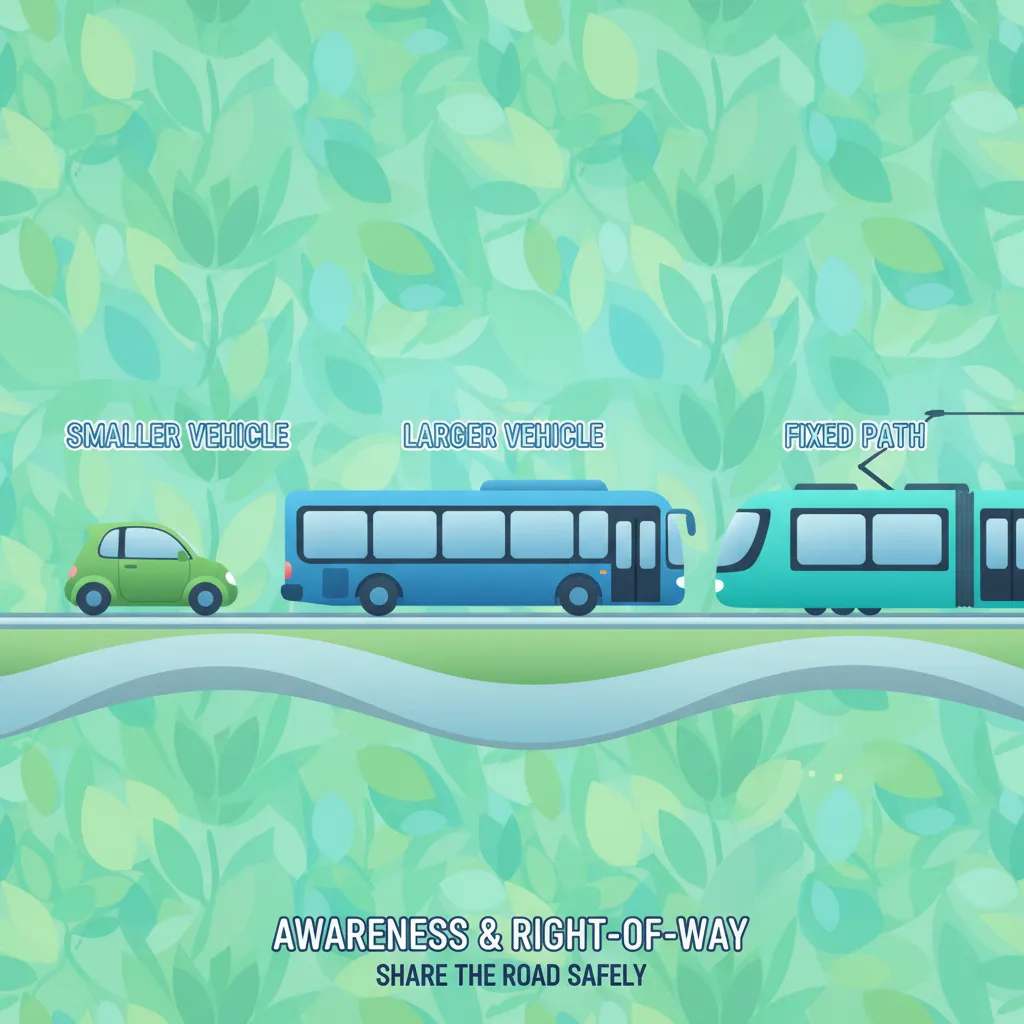
This lesson provides specific guidance for sharing the road with different types of vehicles in Austria. It covers the dangers of large vehicle blind spots, the rules for navigating near buses and dedicated tram tracks, and common conflict points at intersections. Understanding the behavior and limitations of other vehicles is key to safely navigating complex urban environments.
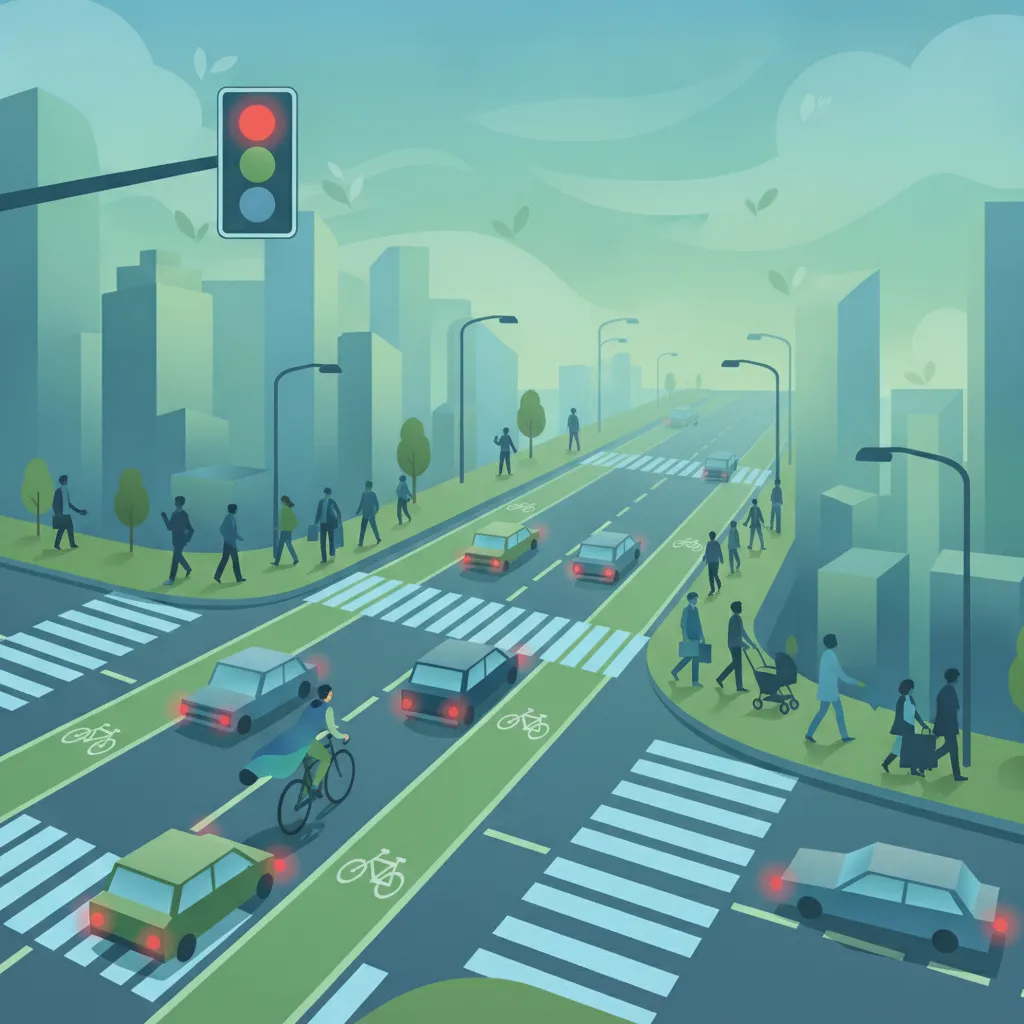
This lesson teaches drivers how to safely coexist with cyclists and pedestrians, who are prevalent in urban areas. It covers the rules for dedicated bike lanes (Radweg), the importance of yielding to pedestrians in designated zones, and the need for extra caution when turning or opening car doors. Maintaining safe overtaking distances and anticipating the movements of these vulnerable road users are key themes for preventing accidents.
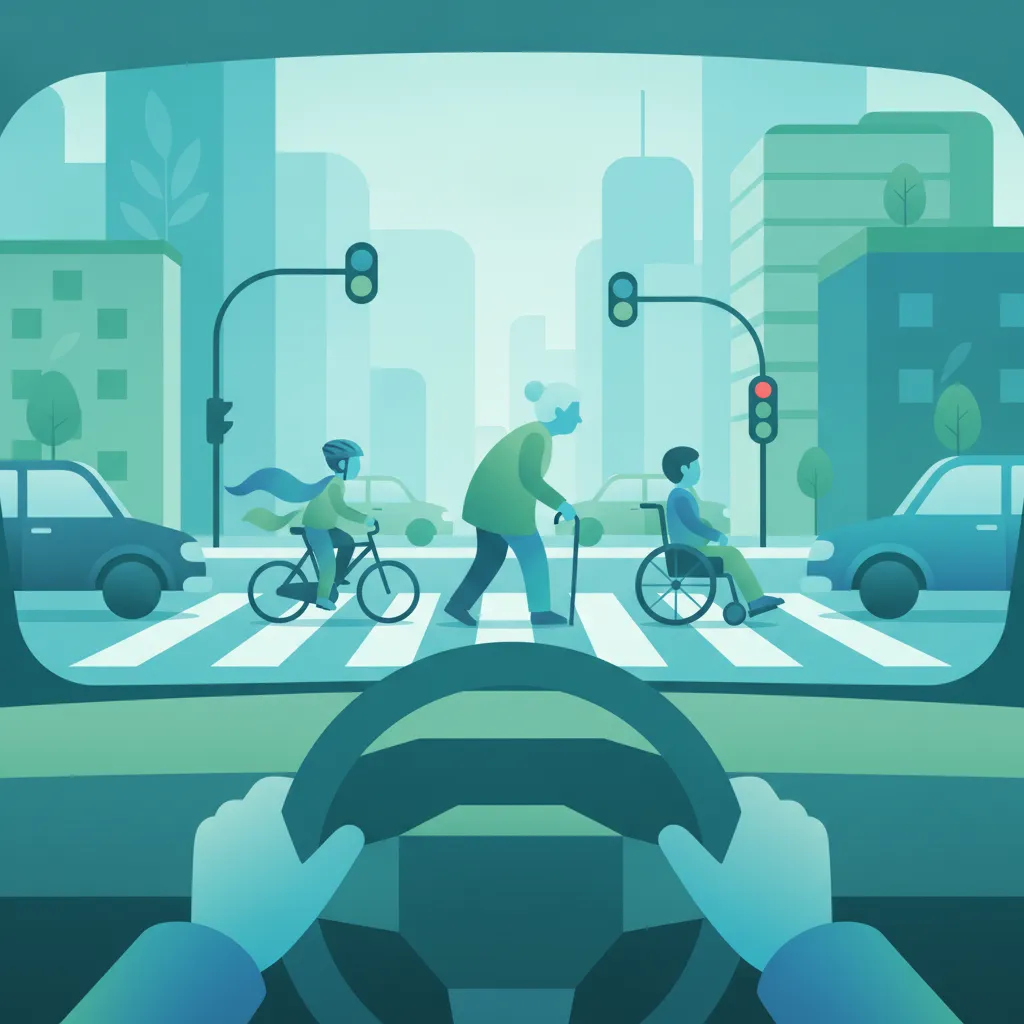
This lesson provides advanced strategies for proactively managing interactions with vulnerable road users to prevent conflicts before they arise. It teaches drivers to predict the likely behavior of pedestrians, cyclists, and e-scooter riders, especially at intersections and in congested areas. Key techniques include maintaining larger safety distances, covering the brake, and making eye contact to ensure mutual awareness and avoid accidents.
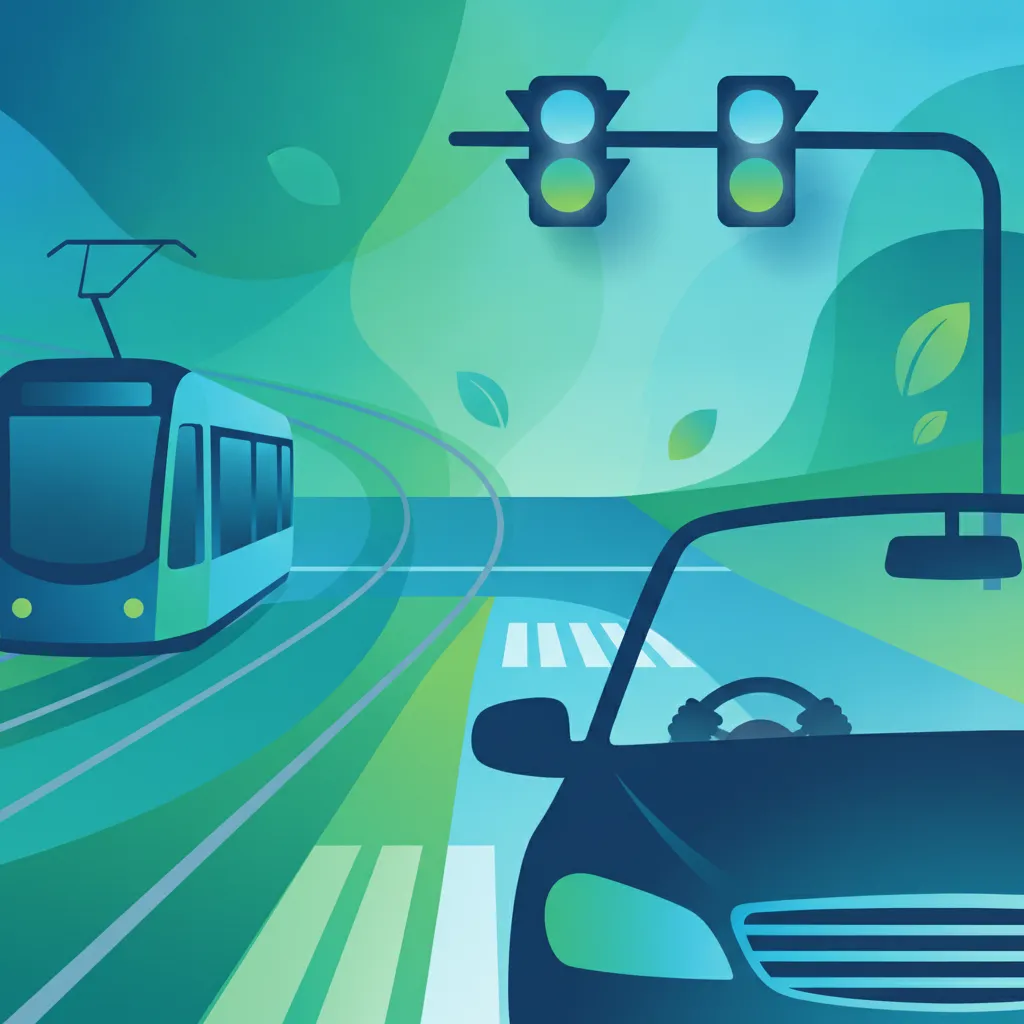
This lesson addresses the specific hazard of tram tracks in urban areas, which can be slippery and cause a loss of balance. It teaches the correct angle at which to cross tracks and the importance of being aware of tram signals and movements. The content also provides guidance for safely sharing road space near tram and bus stops.

This lesson teaches a safe and systematic process for approaching and crossing intersections. It covers how to correctly assess priority based on signs and general rules, adjust speed appropriately, and perform thorough visual checks. Emphasis is placed on anticipating the actions of other road users to prevent conflicts at junctions.
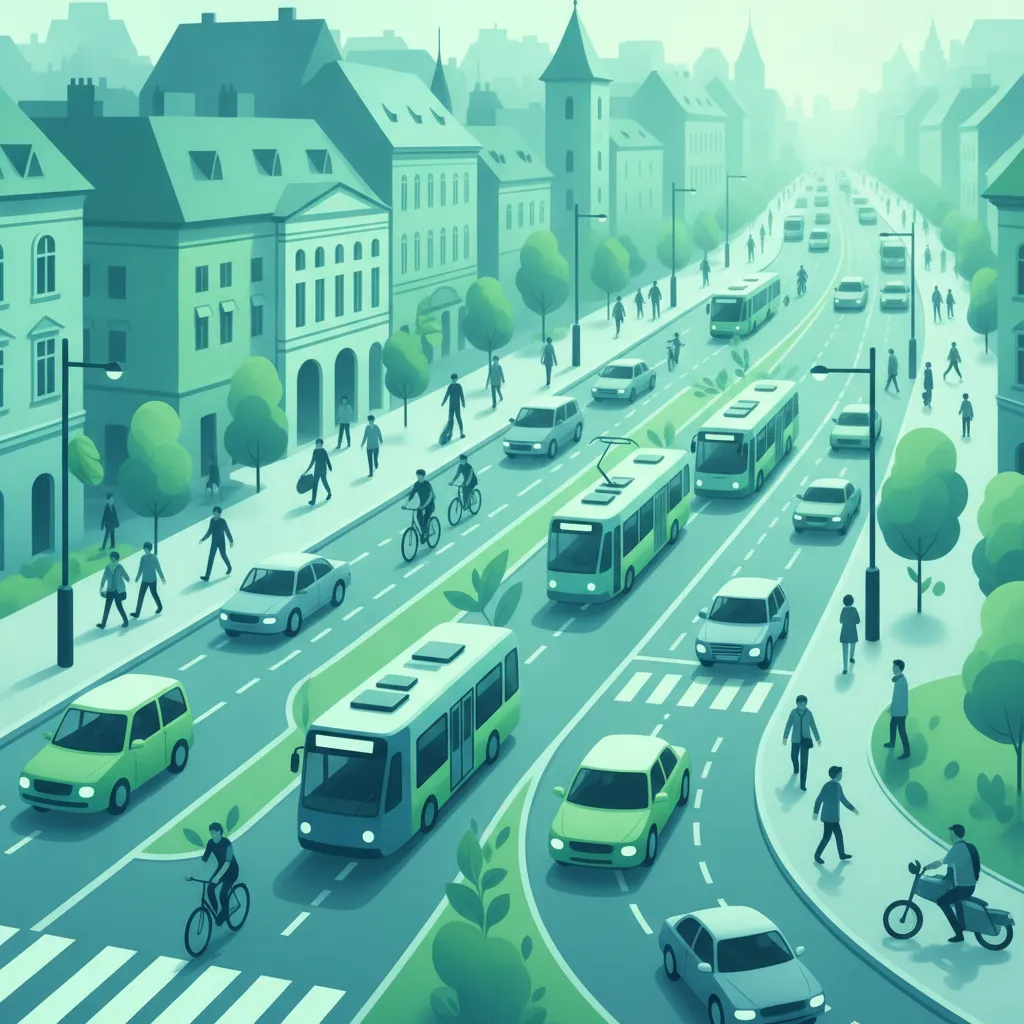
This lesson explores the distinct challenges of urban driving, focusing on managing the vehicle in dense, slow-moving, or stop-and-go traffic. It covers strategies for effective lane management, anticipating traffic signal changes, and navigating common city road features like one-way streets and traffic calming measures. Understanding these dynamics helps reduce stress and improve safety in congested environments.

This lesson outlines the legal speed limits for Category AM vehicles in Austria, covering urban, residential, and rural areas. It explains how to identify different speed zones through signage and the importance of adjusting speed based on traffic, weather, and road conditions. Adherence to these limits is a fundamental aspect of both legal compliance and safety.

This lesson provides guidance on selecting the appropriate road position to maximize visibility and safety. It covers strategies for riding in different parts of a lane based on traffic, road conditions, and potential hazards like parked cars. The goal is to establish a defensive position that allows for adequate reaction time and makes the rider predictable to others.

This lesson reinforces the critical importance of protecting vulnerable road users in dense urban settings. It teaches drivers to be hyper-aware of pedestrians and cyclists, especially near intersections and crosswalks. Key techniques include reducing speed, making eye contact to confirm intentions, and giving ample space.
Identify and avoid frequent errors and violations when dealing with urban hazards like parked cars, narrow streets, and pedestrian zones in Austria. Enhance your understanding of safe moped riding theory to prevent dangerous situations.
This lesson provides guidance on selecting the appropriate road position to maximize visibility and safety. It covers strategies for riding in different parts of a lane based on traffic, road conditions, and potential hazards like parked cars. The goal is to establish a defensive position that allows for adequate reaction time and makes the rider predictable to others.

This lesson identifies and analyzes common risk-taking behaviors prevalent among young and inexperienced riders. It covers the dangers of distractions like mobile phone use, the influence of peer pressure, and the false sense of security from overconfidence. The goal is to foster a mature and responsible approach to riding.

This lesson focuses on the rider's primary responsibility: ensuring they are visible and their actions are predictable to other road users. It explains effective strategies such as using proper lighting, wearing reflective clothing, and adopting a safe road position. The content also emphasizes how clear signaling and anticipating the actions of others can significantly reduce the risk of collisions.

This lesson focuses on strategies for riding safely in conditions of poor visibility, such as rain, fog, and low sun glare. It explains how to use lights effectively, increase following distances, and moderate speed to maintain control. The content also addresses braking techniques on wet surfaces to prevent skidding and hydroplaning.
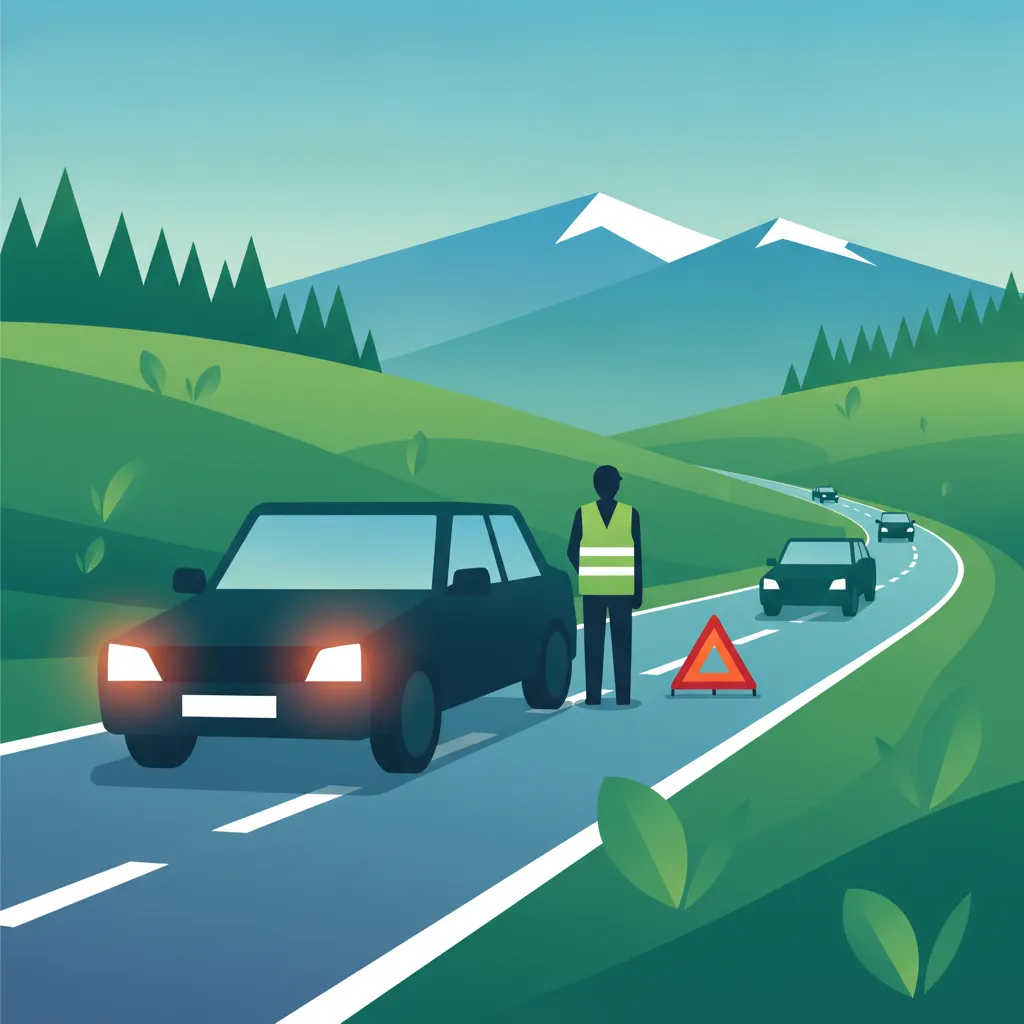
This lesson equips riders with the knowledge to manage an unexpected breakdown or accident. It outlines the steps for securing the vehicle and scene safely, including the use of hazard lights and a reflective vest. It also covers the procedure for contacting emergency services and providing essential information.
This lesson provides specific guidance for sharing the road with different types of vehicles in Austria. It covers the dangers of large vehicle blind spots, the rules for navigating near buses and dedicated tram tracks, and common conflict points at intersections. Understanding the behavior and limitations of other vehicles is key to safely navigating complex urban environments.

This lesson provides a clear overview of the legal penalties for traffic violations in Austria. It details the system of fines, demerit points, and the conditions that can lead to license suspension or revocation. Understanding these consequences reinforces the importance of lawful and responsible riding.
This lesson addresses the specific hazard of tram tracks in urban areas, which can be slippery and cause a loss of balance. It teaches the correct angle at which to cross tracks and the importance of being aware of tram signals and movements. The content also provides guidance for safely sharing road space near tram and bus stops.

This lesson details the mandatory lighting and reflector requirements for Category AM vehicles in Austria. It explains the functions of different light settings, including daytime running lights, and their importance for being seen. Additionally, it covers the legal standards for protective helmets, a critical component of rider safety.

This lesson highlights the specific hazards of riding on countryside roads in Austria. It teaches riders to be vigilant for wildlife crossing signs, especially at dawn and dusk, and how to safely approach and overtake slow-moving agricultural machinery. Awareness of potential surface hazards like mud, gravel, or manure from farm access points is also crucial for maintaining traction.
Find clear answers to common questions learners have about Urban Hazards: Parked Cars, Narrow Streets, and Pedestrian Zones. Learn how the lesson is structured, which driving theory objectives it supports, and how it fits into the overall learning path of units and curriculum progression in Austria. These explanations help you understand key concepts, lesson flow, and exam focused study goals.
The primary risk is a driver or passenger opening a car door suddenly without checking. You should always maintain a distance of at least one meter from parked vehicles and reduce your speed to allow for a quick reaction.
Generally, you cannot enter a pedestrian zone unless a specific sign explicitly permits access for mopeds. Always look for the 'except mopeds' or 'except bicycles' supplementary plates under the pedestrian zone sign.
On narrow streets, prioritize your safety by keeping a clear line of sight and reducing speed. If there is not enough room for two vehicles to pass, wait behind parked cars or in a safe pull-off area until the road is clear.
Exam questions often present visual scenarios of urban streets asking you to identify the greatest danger or the correct reaction to a specific hazard, such as a child near a parked car or an opening door.
Refine your study plan by searching for specific Austrian driving theory practice sets. Pinpoint questions related to particular road rules, signs, or challenge levels, and begin practicing immediately to reinforce your knowledge and excel in your official exam with confidence. Get started with focused revision today.