
This lesson teaches you how to perform an effective emergency stop, a critical skill for both your theory exam and real-world safety. We explore the mechanics of weight transfer and how to use your front and rear brakes in harmony to maximize traction on various road surfaces.
Lesson content overview
Emergency braking is a critical skill for every motorcycle rider, providing the ability to react swiftly and safely to unexpected hazards on the road. This lesson delves into the precise techniques required to execute an emergency stop, helping you achieve the shortest possible stopping distance while maintaining control. Understanding the physics, the role of modern braking systems like ABS, and the proper application of both front and rear brakes are paramount for collision avoidance and overall rider safety.
Effective emergency braking relies on a deep understanding of how a motorcycle behaves under extreme deceleration. Unlike cars, motorcycles require a delicate balance of braking force, especially given the dynamic weight transfer that occurs.
When you apply the brakes on a motorcycle, the vehicle's momentum shifts its weight forward. This phenomenon, known as weight transfer, significantly increases the load on the front wheel and simultaneously reduces the load on the rear wheel.
This shift is crucial because a tyre's maximum available grip, or traction limit, is directly proportional to the load pressing it against the road surface. As the front wheel gains load, its potential for braking force increases. Conversely, the rear wheel's reduced load means it can handle less braking force before its traction limit is exceeded, leading to a lock-up. Recognizing and compensating for this weight transfer is fundamental to effective emergency braking.
The cornerstone of safe and efficient emergency braking on a motorcycle is the progressive, simultaneous application of both the front and rear brakes. This technique ensures that you utilize the maximum available traction from both tyres, distributing the braking forces optimally.
Austrian traffic regulations (specifically, the Straßenverkehrsordnung – StVO) mandate the use of both the front and rear brakes for deceleration, unless a system defect prevents it. This isn't merely a rule; it's a safety principle. Relying on only one brake system significantly compromises your stopping capability and increases the risk of losing control.
Executing an emergency stop is a coordinated action that requires practice and precision. The goal is to apply maximum braking force smoothly and progressively, avoiding abrupt inputs that can overwhelm tyre grip.
Identify the Hazard and React: As soon as you perceive a need for an emergency stop, immediately begin to cover both brake levers. Your reaction time is critical.
Initial Pressure (Pre-Load): Gently but swiftly apply light pressure to both the front brake lever and rear brake pedal. This initial squeeze helps to pre-load the suspension, initiating the weight transfer to the front wheel.
Progressive Force Application: Simultaneously and smoothly increase pressure on both brakes. The key is "progressive" – meaning you gradually squeeze harder, rather than grabbing the brakes abruptly. Most of your braking power will come from the front brake as weight shifts forward.
Maintain an Upright Posture: Keep your body relaxed but firm against the tank. Avoid tensing up, which can lead to jerky inputs. Look ahead towards your intended stopping point, not directly down at the obstacle.
Modulate Pressure to Traction Limits: As you increase pressure, you will feel the bike decelerate rapidly. If you feel the front wheel begin to chatter or the rear wheel start to skid (if not ABS-equipped), ease off the pressure very slightly to regain traction, then reapply.
Release Smoothly at the Stop: Just before coming to a complete stop, slightly ease off both brakes. This prevents the motorcycle from lurching forward or stalling, allowing for a smoother, more controlled halt.
Practicing this sequence in a safe, controlled environment is invaluable for developing the necessary muscle memory and feel for your motorcycle's braking capabilities.
Understanding and managing your motorcycle's traction limits is paramount to safe emergency braking. Exceeding these limits leads to wheel lock-up, a condition where the tyre stops rotating and begins to slide.
Modern motorcycles are increasingly equipped with Anti-Lock Braking Systems (ABS), a significant safety feature that assists riders in maintaining control during hard braking.
ABS is an electronic system that constantly monitors the rotational speed of each wheel. If it detects that a wheel is about to lock up under braking, the system rapidly modulates (pulses) the brake pressure to that specific wheel. This prevents the wheel from locking, keeping it just at the threshold of its traction limit, allowing the rider to maintain steering control.
In Austria, as in many European countries, there are regulations concerning ABS on motorcycles. For newly manufactured motorcycles of certain categories, ABS is mandatory. For existing bikes equipped with ABS, it is generally prohibited to disable or tamper with the system while riding on public roads. The system must be maintained in good working order as intended by the manufacturer.
The proportional allocation of braking force between the front and rear wheels, known as brake bias, is dynamic and crucial for effective emergency stops.
Under normal, dry road conditions, the majority of a motorcycle's braking power comes from the front wheel, typically around 70% front and 30% rear. This is due to the significant weight transfer to the front during deceleration, which increases the front tyre's load and thus its available traction.
While a front-heavy bias is common, riders must be able to adjust this balance based on prevailing conditions:
Ignoring these adjustments can lead to an overloaded tyre and loss of control, underscoring the importance of adaptability.
Adherence to specific traffic regulations is not just about avoiding fines; it's fundamental to road safety in Austria. The Austrian StVO (Straßenverkehrsordnung) includes several provisions relevant to braking.
Rule: Use of Both Brakes
Rule: ABS Usage
Rule: Safe Stopping Distance
These regulations underscore that proper braking technique is not just a skill but a legal obligation that contributes significantly to overall road safety.
Even experienced riders can make mistakes during high-stress emergency braking situations. Recognizing these common errors is the first step to avoiding them.
The ideal emergency braking technique is not static; it must be adapted to various environmental and contextual factors.
Understanding these variations and practicing appropriate adjustments will make you a safer and more confident rider capable of handling unexpected situations effectively.
This lesson teaches the essential technique of emergency braking on motorcycles, emphasizing progressive simultaneous use of both front and rear brakes to achieve maximum deceleration while maintaining control. Key physics concepts include weight transfer shifting load forward during braking and the critical difference between static and kinetic friction, where keeping wheels rolling maintains maximum grip. The lesson covers ABS functionality as a safety net that prevents lock-up but does not replace skilled progressive braking, and it addresses Austrian StVO requirements mandating use of both brakes and functional ABS. Learners also gain practical guidance on adapting braking technique for different surfaces, weather conditions, and vehicle loads, plus awareness of common mistakes like front-brake-only application, panic grabbing, and target fixation.
A short set of high-value points that capture the most important learning from this lesson.
Effective emergency braking requires simultaneous, progressive application of both front and rear brakes, not just the front brake alone.
Weight transfer during braking shifts load to the front wheel, increasing its traction capacity while reducing rear wheel grip.
The goal of emergency braking is to maximize static friction without exceeding the traction limit, which causes wheel lock-up and loss of control.
ABS prevents wheel lock-up by rapidly modulating brake pressure, but it supplements rather than replaces proper braking technique.
Brake bias should be adjusted based on conditions—approximately 70/30 front/rear on dry roads, shifting more to rear on low-grip surfaces.
Explore all units and lessons included in this driving theory course.
StVO mandates use of both front and rear brakes simultaneously unless a brake system is defective.
Static friction provides maximum grip during rolling; kinetic (sliding) friction is always lower and reduces control.
On wet or slippery surfaces, reduce overall brake pressure and shift brake bias toward the rear wheel.
Releasing the front brake slightly before a complete stop prevents lurching and stalling.
Never disable ABS on public roads in Austria—maintaining the system in working order is mandatory.
Using only the front brake, which increases the risk of front wheel lock-up and loss of steering control.
Applying brakes abruptly (grabbing) instead of progressively, which can exceed traction limits and cause lock-up.
Target fixation—looking directly at the obstacle instead of focusing on the escape path or stopping point.
Attempting maximum braking while cornering, which can overwhelm tyre grip since braking and cornering forces compete for the same traction.
Over-modulating the rear brake on low-grip surfaces, leading to rear wheel lock-up and potential fish-tailing or high-side crash.
Lesson content overview
A short set of high-value points that capture the most important learning from this lesson.
Effective emergency braking requires simultaneous, progressive application of both front and rear brakes, not just the front brake alone.
Weight transfer during braking shifts load to the front wheel, increasing its traction capacity while reducing rear wheel grip.
The goal of emergency braking is to maximize static friction without exceeding the traction limit, which causes wheel lock-up and loss of control.
ABS prevents wheel lock-up by rapidly modulating brake pressure, but it supplements rather than replaces proper braking technique.
Brake bias should be adjusted based on conditions—approximately 70/30 front/rear on dry roads, shifting more to rear on low-grip surfaces.
Explore all units and lessons included in this driving theory course.
StVO mandates use of both front and rear brakes simultaneously unless a brake system is defective.
Static friction provides maximum grip during rolling; kinetic (sliding) friction is always lower and reduces control.
On wet or slippery surfaces, reduce overall brake pressure and shift brake bias toward the rear wheel.
Releasing the front brake slightly before a complete stop prevents lurching and stalling.
Never disable ABS on public roads in Austria—maintaining the system in working order is mandatory.
Using only the front brake, which increases the risk of front wheel lock-up and loss of steering control.
Applying brakes abruptly (grabbing) instead of progressively, which can exceed traction limits and cause lock-up.
Target fixation—looking directly at the obstacle instead of focusing on the escape path or stopping point.
Attempting maximum braking while cornering, which can overwhelm tyre grip since braking and cornering forces compete for the same traction.
Over-modulating the rear brake on low-grip surfaces, leading to rear wheel lock-up and potential fish-tailing or high-side crash.
Explore search topics learners often look for when studying Emergency Braking Techniques. These topics reflect common questions about road rules, driving situations, safety guidance, and lesson level theory preparation for learners in Austria.
Browse additional driving theory lessons that cover connected traffic rules, road signs, and common driving situations related to this topic. Improve your understanding of how different rules interact across everyday traffic scenarios.
Understand the critical techniques for executing a controlled emergency stop on a motorcycle. Learn about brake application, weight transfer, ABS functionality, and Austrian regulations for maximum deceleration.
This lesson teaches correct braking techniques, including the coordinated use of front and rear brakes for maximum efficiency. It explains how to calculate total stopping distance based on speed, perception time, and reaction time. The content also covers adjustments needed for braking on wet or slippery surfaces to avoid loss of control.
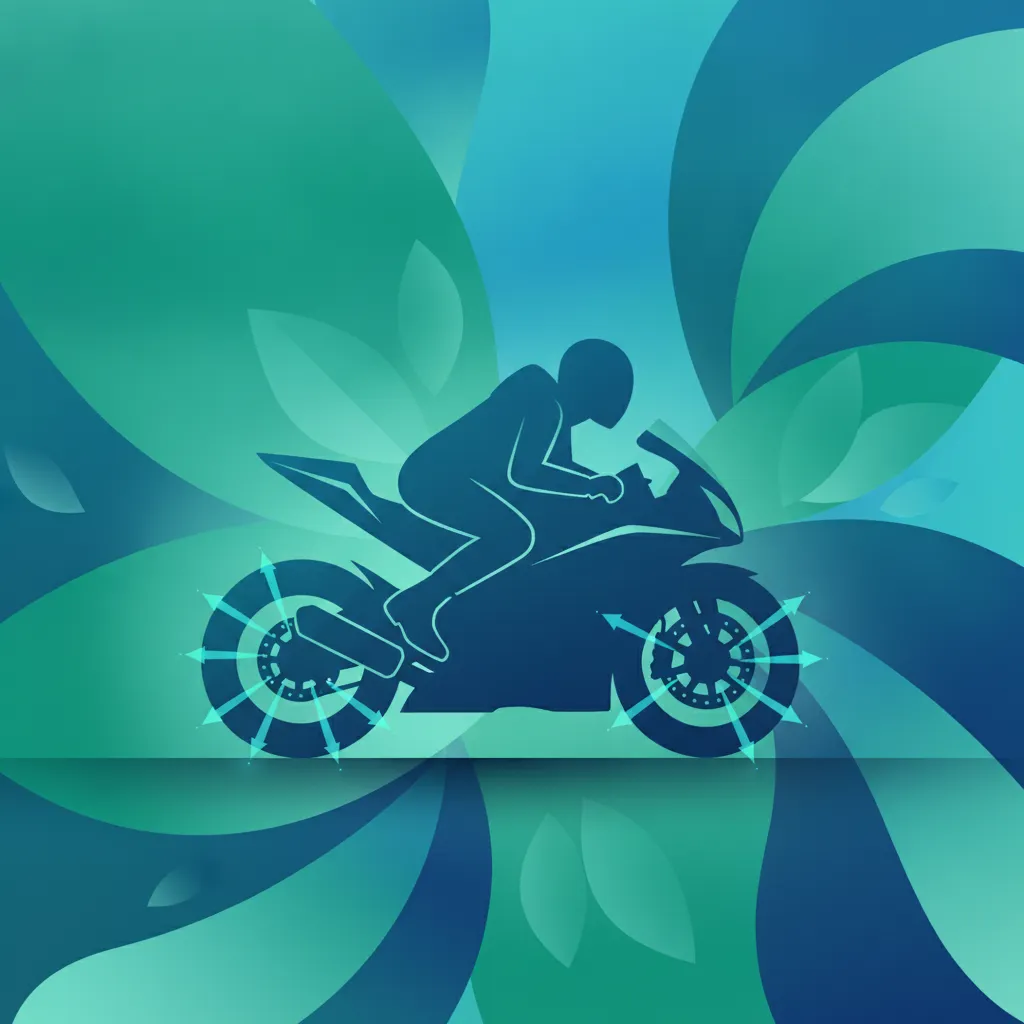
This lesson explains the physics behind motorcycle braking, detailing why the front brake is responsible for the majority of stopping force due to forward weight transfer. It introduces the concept of progressive brake application to manage this weight shift and maximize tyre grip without locking a wheel. Understanding these core principles is the foundation for developing smooth and effective braking skills.

This lesson addresses the complex skill of braking while the motorcycle is leaned over in a corner or on low-traction surfaces. It introduces the concept of trail braking to adjust speed and tighten a cornering line, and provides strategies for gentle brake application on wet or loose surfaces. Mastering these techniques requires a delicate touch and a deep understanding of traction limits.

This lesson details the components and function of a motorcycle's braking system. It explains the roles of the front and rear brakes, the mechanics of hydraulic disc brakes, and the importance of maintaining proper brake fluid levels. Learners will also understand how to recognize the signs of worn brake pads, ensuring the system remains effective for safe stopping.

This lesson focuses on the art of coordinating the front and rear brakes to achieve stable and efficient deceleration. It explains how the ideal balance changes depending on speed, road surface, and whether the bike is traveling in a straight line or a curve. Proper brake balance enhances control, shortens stopping distances, and provides a smoother riding experience.

This lesson breaks down the concept of total stopping distance into its two key components: reaction distance and braking distance. Learners will understand how factors like vehicle speed, driver perception-reaction time, and road surface conditions (e.g., wet or icy) dramatically influence how long it takes to bring a vehicle to a complete stop. This knowledge is crucial for making safe speed choices and maintaining an adequate buffer for hazard avoidance.

This lesson covers the proper techniques for performing an emergency braking manoeuvre in a heavy vehicle. It explains how to apply maximum braking force without losing control, especially in vehicles equipped with an Anti-lock Braking System (ABS). The lesson also discusses how hard braking can affect cargo and the importance of proper load securing.

This lesson explains the various factors that determine the total stopping distance of a heavy vehicle. It covers the effects of speed, vehicle weight, road conditions, and driver reaction time. Understanding these variables helps drivers to maintain a safe following distance and anticipate how much space is needed to stop.
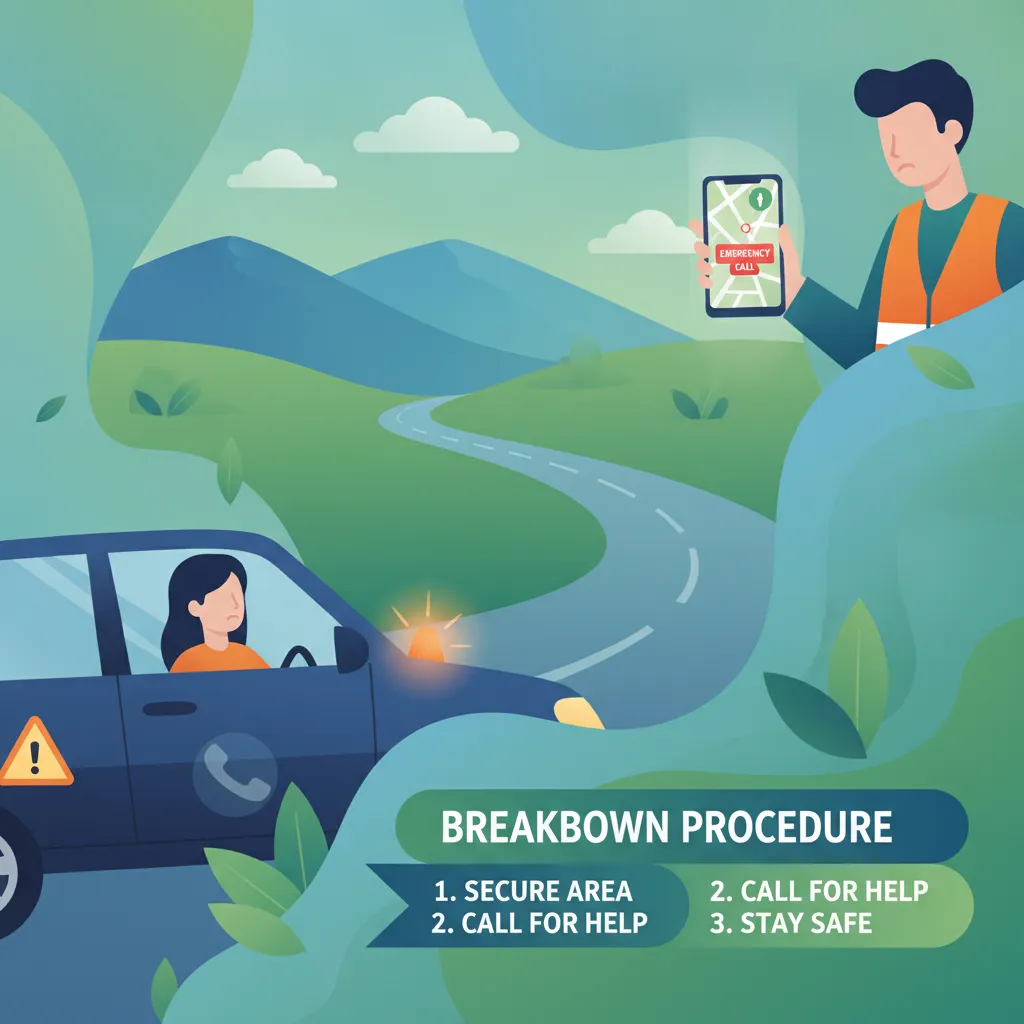
This lesson outlines the step-by-step safety protocol for a vehicle breakdown. It instructs the rider to move the motorcycle to the safest possible location, activate hazard lights, and put on a high-visibility vest. The proper placement of a warning triangle and the procedure for making an emergency call to 112 or a roadside assistance service are also detailed.
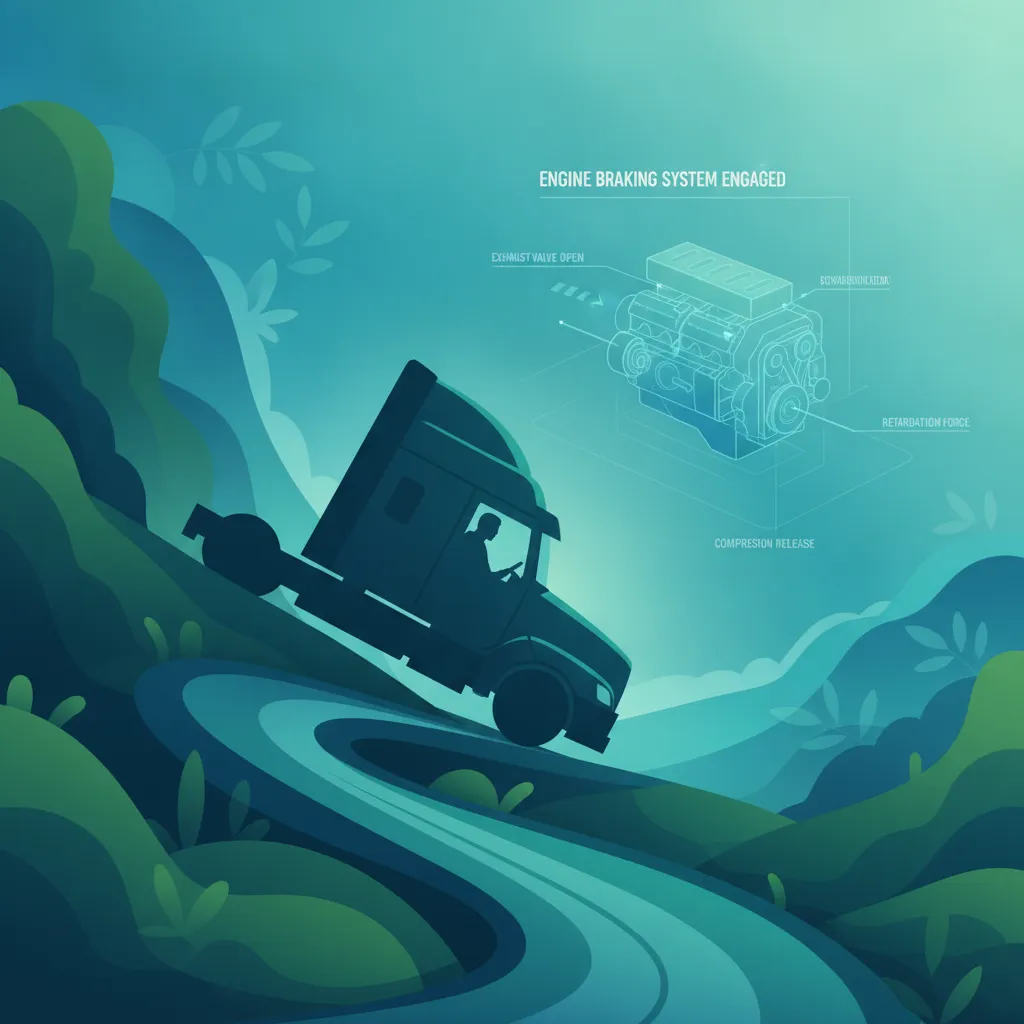
This lesson introduces auxiliary braking systems, such as engine brakes and retarders, which are designed to help control vehicle speed without using the service brakes. It explains how these systems function to slow the vehicle, especially on long downhill gradients. Using them effectively reduces service brake wear and prevents overheating.
Learn how weather, road surfaces, and vehicle load affect motorcycle braking performance. Discover techniques to adjust your braking strategy for optimal safety in varied Austrian traffic environments.

This lesson examines how adverse weather directly affects motorcycle safety. It explains how water on the road reduces tyre grip, increasing braking distances and the risk of aquaplaning. Strategies for riding in fog, dealing with reduced visibility from road spray, and identifying potential ice patches are covered to help riders manage weather-related risks.

This lesson brings together many concepts by focusing on the mindset of an adaptive rider. It teaches how to constantly scan the environment and adjust speed, position, and control inputs in response to changing conditions like road surface, weather, or traffic density. The goal is to develop a proactive, flexible riding style that prioritizes safety and control in any situation.
This lesson addresses the complex skill of braking while the motorcycle is leaned over in a corner or on low-traction surfaces. It introduces the concept of trail braking to adjust speed and tighten a cornering line, and provides strategies for gentle brake application on wet or loose surfaces. Mastering these techniques requires a delicate touch and a deep understanding of traction limits.
This lesson focuses on the art of coordinating the front and rear brakes to achieve stable and efficient deceleration. It explains how the ideal balance changes depending on speed, road surface, and whether the bike is traveling in a straight line or a curve. Proper brake balance enhances control, shortens stopping distances, and provides a smoother riding experience.
This lesson explains the physics behind motorcycle braking, detailing why the front brake is responsible for the majority of stopping force due to forward weight transfer. It introduces the concept of progressive brake application to manage this weight shift and maximize tyre grip without locking a wheel. Understanding these core principles is the foundation for developing smooth and effective braking skills.

This lesson provides guidance on tailoring riding practices to the season. For colder months, it emphasizes the importance of layered clothing and awareness of icy patches, especially in shaded areas. For spring, it highlights hazards like leftover road salt and gravel from winter maintenance, as well as slippery wet leaves, requiring heightened caution.
This lesson teaches correct braking techniques, including the coordinated use of front and rear brakes for maximum efficiency. It explains how to calculate total stopping distance based on speed, perception time, and reaction time. The content also covers adjustments needed for braking on wet or slippery surfaces to avoid loss of control.
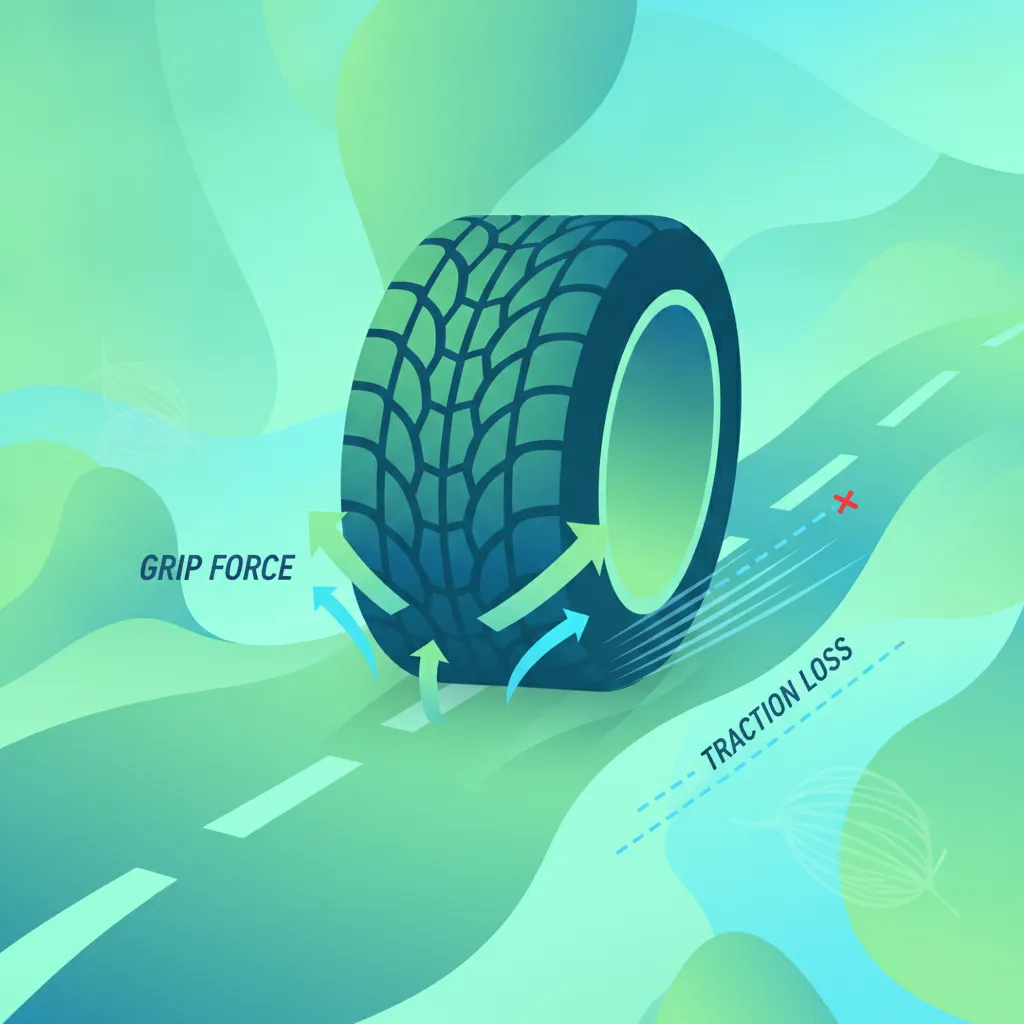
This lesson delves into the science of tyre traction, explaining how the small contact patch is critical for control. It examines how factors like tyre pressure, temperature, and road surface conditions (wet, dry, gravel) affect the available grip. Understanding the limits of traction is essential for knowing how hard a rider can safely brake or corner in any given situation.

This lesson focuses on strategies for riding safely in conditions of poor visibility, such as rain, fog, and low sun glare. It explains how to use lights effectively, increase following distances, and moderate speed to maintain control. The content also addresses braking techniques on wet surfaces to prevent skidding and hydroplaning.
This lesson details the components and function of a motorcycle's braking system. It explains the roles of the front and rear brakes, the mechanics of hydraulic disc brakes, and the importance of maintaining proper brake fluid levels. Learners will also understand how to recognize the signs of worn brake pads, ensuring the system remains effective for safe stopping.
Find clear answers to common questions learners have about Emergency Braking Techniques. Learn how the lesson is structured, which driving theory objectives it supports, and how it fits into the overall learning path of units and curriculum progression in Austria. These explanations help you understand key concepts, lesson flow, and exam focused study goals.
Yes, for maximum efficiency on most motorcycles, you should apply both the front and rear brakes. Using only one can lead to either insufficient stopping power or instability.
ABS prevents wheel lock-up, allowing you to apply firm pressure to the brakes without fear of a skid. However, you should still practice smooth, progressive application to keep the motorcycle stable.
When you brake, weight shifts to the front wheel, increasing its grip. Understanding this allows you to apply more pressure to the front brake compared to the rear during a hard stop.
The exam often covers the factors that influence stopping distances, such as speed, surface conditions, and rider reaction time, so understanding the theory is as important as the technique.
Refine your study plan by searching for specific Austrian driving theory practice sets. Pinpoint questions related to particular road rules, signs, or challenge levels, and begin practicing immediately to reinforce your knowledge and excel in your official exam with confidence. Get started with focused revision today.