
This lesson explores the critical relationship between adverse weather conditions and motorcycle safety on Austrian roads. You will learn how to adapt your riding technique to maintain traction and visibility, preparing you for both real-world challenges and the specific scenarios in your A, A1, or A2 theory test.
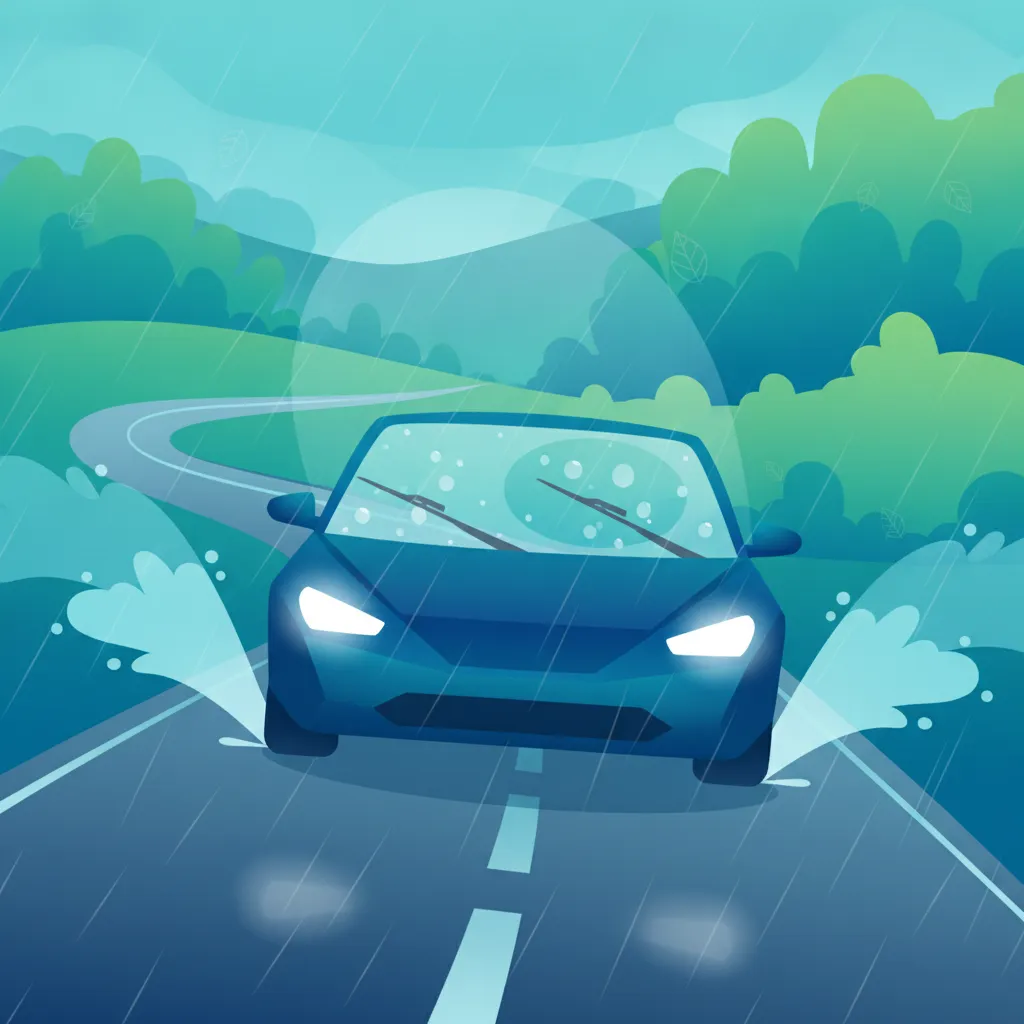
Lesson content overview
Riding a motorcycle offers unparalleled freedom, but it also demands a heightened awareness of your environment, especially when weather conditions turn adverse. This lesson, part of your Austrian Motorcycle Theory preparation for A, A1, and A2 licences, delves into how various weather phenomena directly affect your motorcycle's grip, your visibility, and ultimately, your ability to maintain control. Understanding these impacts is not just about passing an exam; it's fundamental to safe riding and preventing accidents on Austrian roads and beyond.
We will explore the physics behind reduced tyre grip on wet surfaces, the dangers of aquaplaning, and strategies for navigating through fog, heavy rain, and road spray. Crucially, we will also cover how to identify and react to perilous ice patches. By integrating knowledge from previous units, particularly on braking, traction, and tyre technology, you will learn to adapt your riding style, use appropriate lighting, and make informed decisions to mitigate weather-related risks.
The most fundamental interaction between your motorcycle and the road is through its tyres. This interaction, known as tyre grip, is essentially the frictional force that allows you to accelerate, brake, and corner. Under ideal dry conditions, the coefficient of friction between rubber and asphalt is high, providing excellent grip. However, the presence of water dramatically changes this equation.
When water forms a thin film between your tyre and the road surface, it acts as a lubricant, significantly reducing the coefficient of friction. This reduction in grip has immediate and critical implications for your riding. Your braking distances will naturally become longer, as less friction means less stopping power for a given brake application. Similarly, your cornering capabilities diminish, requiring shallower lean angles and reduced speed to maintain stability through bends. Even throttle application needs to be smoother to prevent the rear wheel from spinning out due to reduced traction.
Understanding this principle is vital. It highlights the necessity of slower speeds, smoother inputs (throttle, braking, steering), and increased awareness to maintain control. Many riders underestimate how much stopping distance can increase on a wet road, sometimes even doubling compared to dry conditions. On challenging alpine roads, where curves are frequent, the safe lean angle must be significantly reduced to avoid slipping on slick surfaces.
Beyond merely reducing grip, water on the road can lead to a far more dangerous phenomenon known as aquaplaning (or hydroplaning). This occurs when a motorcycle tyre completely loses contact with the road surface because a layer of water builds up faster than the tyre's tread can displace it. When aquaplaning happens, you effectively lose all traction, making steering, braking, and acceleration ineffective.
There are primarily two types:
The practical meaning of aquaplaning is a sudden and complete loss of control. Imagine riding at 70 km/h on a motorway and hitting a large puddle; the sensation can be an immediate, terrifying loss of steering responsiveness. While tyre pressure plays a role in maintaining the tyre's shape, it alone cannot prevent aquaplaning, especially if the tyre tread is insufficient or the speed is too high for the water depth.
To mitigate the risk of aquaplaning, it is crucial to reduce your speed significantly when approaching standing water or riding in heavy rain. Careful lane selection can also help, as ruts or worn sections of the road may accumulate deeper water. Maintaining adequate tyre tread depth, which we will discuss further, is also a key preventative measure.
Adverse weather doesn't just affect grip; it severely impacts your ability to see and be seen, dramatically increasing reaction times and the risk of collisions. Reduced visibility can stem from several sources:
Fog is one of the most challenging conditions for riders. It scatters light, making objects appear closer or further away than they are, distorting depth perception, and drastically shortening your sight distance. In dense fog, visibility can be reduced to less than 50 metres, making it incredibly difficult to spot hazards, road markings, or other vehicles in time.
Heavy rain not only wets the road but also directly impairs visibility. Raindrops on your visor distort vision, and the general murkiness of the atmosphere reduces the effective range of your headlamp.
Perhaps one of the most frustrating aspects of riding in the rain is road spray. This is the fine mist of water thrown up by other vehicles, especially lorries and cars, which can create a dense "white veil" that momentarily blinds you. Riding behind another vehicle in heavy rain can significantly reduce your forward visibility, sometimes to near zero. Night riding in the rain combines the challenges of low light with spray and reduced headlamp effectiveness, making it particularly hazardous.
To combat reduced visibility, several strategies are essential. Your speed must be adjusted to match your sight distance – you should always be able to stop within the distance you can clearly see ahead. Proper lighting is non-negotiable (discussed in detail below), and increasing your following distance from other vehicles is crucial to provide more reaction time. Never assume other drivers can see you clearly in these conditions; actively work to make yourself more visible.
Ice patches and frost are among the most treacherous conditions a motorcyclist can encounter because they often appear without warning and are sometimes virtually invisible. Even a small patch of ice can lead to an instant, unexpected loss of traction.
Black ice is a thin, transparent layer of ice that forms on road surfaces. It's notoriously dangerous because it blends with the dark asphalt, making it incredibly difficult to spot. It commonly forms when temperatures drop to or below freezing after rain or melting snow, especially in shaded areas, on bridges, and overpasses, which freeze faster than open road surfaces because air cools them from above and below.
Frost can occur on any surface when temperatures drop below freezing, often in early mornings or late evenings. Freezing rain is another extremely hazardous condition where rain falls and immediately freezes upon contact with sub-zero surfaces, coating everything, including roads, in a slick layer of ice.
When ice is a possibility, anticipation and extreme caution are your best defences. Reduce your speed significantly – some recommend a reduction of up to 30% of your usual speed. Avoid any sudden manoeuvres, including abrupt braking, sharp steering, or rapid acceleration. Gentle, progressive inputs are key to maintaining what little grip you might have. If you suspect or encounter an ice patch, keep the motorcycle upright, maintain a steady, gentle throttle (if possible, or roll off slowly), and try to coast over it. Your goal is to keep the wheels rolling and avoid upsetting the bike's balance.
The condition of your tyres is paramount for safety, especially in adverse weather. Tyre tread depth refers to the vertical distance between the top of your tyre's tread blocks and the bottom of the grooves. This tread pattern is critical for dispersing water from beneath the tyre, preventing aquaplaning, and maintaining grip on wet surfaces.
In Austria, the legal minimum tread depth for motorcycle tyres is 1.6 mm. Tyres with tread depth below this must be replaced. However, for optimal performance and safety, particularly in wet conditions, it is highly recommended that motorcycle tyres have a tread depth greater than 2 mm. Worn tyres with minimal tread are significantly less effective at channelling water, drastically increasing the risk of aquaplaning and extending braking distances.
Regular inspection of your tyre tread depth and overall condition (checking for cracks, bulges, or punctures) is a mandatory part of your pre-ride checks. Do not assume that correct tyre pressure alone can compensate for worn tread; it cannot. Proper tyre pressure is also important for maintaining the tyre's optimal contact patch and ensuring even wear.
Correct headlamp usage is not merely a legal requirement; it's a critical safety measure that enhances both your ability to see and, crucially, your visibility to other road users, especially in adverse weather.
Dipped beams, also known as low beams, are the standard headlamp setting designed to illuminate the road ahead without dazzling oncoming traffic. They are mandatory in Austria from sunset to sunrise and whenever visibility is poor due to weather conditions like rain, fog, or heavy snowfall. Always switch to dipped beams in these conditions.
Motorcycles may be equipped with front fog lights, which emit a wide, low beam designed to cut through fog more effectively than dipped beams. In Austria, fog lights may only be used in conjunction with your dipped beams and specifically when visibility is severely reduced (e.g., less than 100 metres in fog or heavy precipitation). They are not a substitute for dipped beams and should be switched off once visibility improves.
High beams (or main beams) provide maximum illumination but must be used with extreme caution. In conditions of severely reduced visibility, such as dense fog or heavy rain, using high beams is prohibited. The powerful light reflects off the water droplets or fog particles directly back into your eyes, creating severe glare that reduces your visibility further and can blind other road users. High beams must also be dimmed when you are within 150 metres of an oncoming vehicle or following another vehicle closely.
Adhering to specific traffic regulations is essential for safe riding in challenging weather conditions. These rules are designed to protect all road users and are legally binding for all licence holders in Austria (A, A1, A2).
Understanding the theory is one thing; applying it correctly on the road is another. Many common errors made by motorcyclists in adverse weather conditions can lead to dangerous situations.
Using High Beams in Fog or Heavy Rain:
Riding Too Fast in Heavy Rain or on Wet Roads:
Neglecting Tyre Tread Depth Checks:
Following Too Closely in Low Visibility:
Sudden Braking or Steering on Wet/Icy Roads:
Ignoring Potential Ice Patches (e.g., on Bridges):
Safe riding in adverse weather is not a one-size-fits-all approach. Your strategy must adapt to various conditional factors, integrating the core principles discussed.
Reduced visibility makes it harder for motorcyclists to be seen by drivers of larger vehicles, and equally, harder for motorcyclists to spot pedestrians or cyclists. Proper lighting, highly visible protective gear, and deliberate lane positioning become even more critical to enhance your presence and awareness.
Mastering the challenges presented by adverse weather is a core component of safe motorcycling. As an Austrian A, A1, or A2 licence holder, you must integrate this knowledge with your fundamental riding skills.
By diligently applying these principles and constantly assessing the road and weather conditions, you will significantly enhance your safety and confidence as a motorcyclist, allowing you to ride responsibly and competently across Austria's diverse landscapes.
Adverse weather directly impacts motorcycle safety by reducing tyre grip and rider visibility, requiring significant adaptations to speed, lighting, and riding technique. Water reduces the coefficient of friction between tyres and road, extending braking distances and creating aquaplaning risk at higher speeds, while phenomena like fog, road spray, and black ice severely limit visibility and traction. Austrian regulations mandate dipped beams in reduced visibility, restrict fog lights to use with low beams when visibility is under 100 metres, and prohibit high beams in fog or heavy rain. Tyre condition is critical - the legal minimum tread depth of 1.6mm must be maintained, with optimal wet-weather performance requiring more than 2mm depth. Safe riding in bad weather demands progressive, gentle control inputs, significantly increased following distances, and constant anticipation of ice patches on bridges and shaded sections.
A short set of high-value points that capture the most important learning from this lesson.
Water on the road acts as a lubricant, dramatically reducing tyre grip and significantly extending braking distances compared to dry conditions
Aquaplaning occurs when water lifts the tyre off the road surface, causing complete loss of steering and control - reduce speed substantially in standing water
Use dipped beams (low beam) whenever visibility is reduced; fog lights may only be used alongside dipped beams when visibility falls below 100 metres
Tyre tread depth of at least 1.6mm is legally required in Austria, but more than 2mm is recommended for effective water dispersal and aquaplaning prevention
Black ice commonly forms on bridges, overpasses, and shaded road sections where temperatures drop below freezing, often invisible against dark asphalt
Explore all units and lessons included in this driving theory course.
Minimum legal motorcycle tyre tread depth in Austria is 1.6mm; replace tyres below this limit immediately
Fog lights may only be used in conjunction with low beams when visibility is severely reduced (under 100m); switch off when conditions improve
High beams are prohibited in dense fog or heavy rain because light reflects off water droplets, creating dangerous glare
In icy conditions, keep the motorcycle upright, use gentle throttle, avoid sudden braking or steering, and reduce speed significantly
Always match your speed to your sight distance - you must be able to stop within the distance you can clearly see ahead
Using high beams in fog or heavy rain, believing brighter light will improve visibility - this causes severe glare that worsens your vision and blinds others
Maintaining normal dry-weather speeds in rain, which dramatically increases aquaplaning risk and braking distances beyond safe limits
Assuming tyres are adequate without regular tread depth checks - worn tyres cannot channel water away effectively, making aquaplaning far more likely
Following other vehicles too closely in low visibility when braking distances are already significantly increased
Applying sudden or aggressive inputs (braking, steering, throttle) on wet or icy surfaces, which easily causes tyres to lose traction
Lesson content overview
A short set of high-value points that capture the most important learning from this lesson.
Water on the road acts as a lubricant, dramatically reducing tyre grip and significantly extending braking distances compared to dry conditions
Aquaplaning occurs when water lifts the tyre off the road surface, causing complete loss of steering and control - reduce speed substantially in standing water
Use dipped beams (low beam) whenever visibility is reduced; fog lights may only be used alongside dipped beams when visibility falls below 100 metres
Tyre tread depth of at least 1.6mm is legally required in Austria, but more than 2mm is recommended for effective water dispersal and aquaplaning prevention
Black ice commonly forms on bridges, overpasses, and shaded road sections where temperatures drop below freezing, often invisible against dark asphalt
Explore all units and lessons included in this driving theory course.
Minimum legal motorcycle tyre tread depth in Austria is 1.6mm; replace tyres below this limit immediately
Fog lights may only be used in conjunction with low beams when visibility is severely reduced (under 100m); switch off when conditions improve
High beams are prohibited in dense fog or heavy rain because light reflects off water droplets, creating dangerous glare
In icy conditions, keep the motorcycle upright, use gentle throttle, avoid sudden braking or steering, and reduce speed significantly
Always match your speed to your sight distance - you must be able to stop within the distance you can clearly see ahead
Using high beams in fog or heavy rain, believing brighter light will improve visibility - this causes severe glare that worsens your vision and blinds others
Maintaining normal dry-weather speeds in rain, which dramatically increases aquaplaning risk and braking distances beyond safe limits
Assuming tyres are adequate without regular tread depth checks - worn tyres cannot channel water away effectively, making aquaplaning far more likely
Following other vehicles too closely in low visibility when braking distances are already significantly increased
Applying sudden or aggressive inputs (braking, steering, throttle) on wet or icy surfaces, which easily causes tyres to lose traction
Explore search topics learners often look for when studying Weather Impact on Grip and Visibility. These topics reflect common questions about road rules, driving situations, safety guidance, and lesson level theory preparation for learners in Austria.
Browse additional driving theory lessons that cover connected traffic rules, road signs, and common driving situations related to this topic. Improve your understanding of how different rules interact across everyday traffic scenarios.
Understand how rain, fog, and ice impact motorcycle tyre grip and visibility in Austria. Learn essential rules and techniques to prevent aquaplaning and handle black ice for safe A, A1, A2 licence riding.

This lesson focuses on strategies for riding safely in conditions of poor visibility, such as rain, fog, and low sun glare. It explains how to use lights effectively, increase following distances, and moderate speed to maintain control. The content also addresses braking techniques on wet surfaces to prevent skidding and hydroplaning.
This lesson covers the significant risks associated with riding in winter conditions, particularly snow and ice. It teaches riders how to identify areas where black ice is likely to form and the techniques for gentle acceleration, braking, and steering to maintain traction. The importance of appropriate tires and other winter equipment is also highlighted.
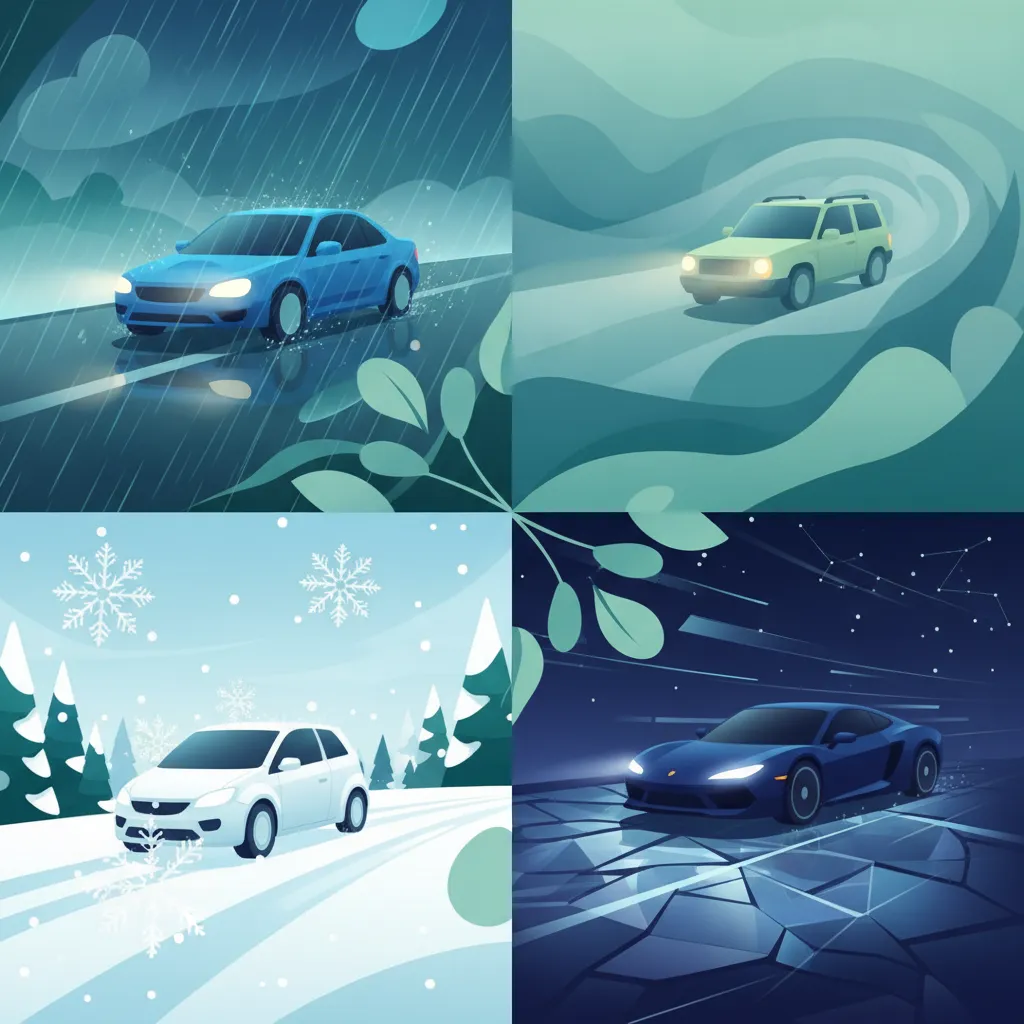
This lesson equips drivers with the knowledge to handle a range of adverse weather conditions safely. It explains the risks of hydroplaning in heavy rain, reduced visibility in fog, and loss of traction on snow and ice, including the hidden danger of black ice. The content provides practical strategies for speed adaptation, correct use of lighting, and maintaining vehicle control, as well as specific considerations for night driving.
This lesson provides guidance on tailoring riding practices to the season. For colder months, it emphasizes the importance of layered clothing and awareness of icy patches, especially in shaded areas. For spring, it highlights hazards like leftover road salt and gravel from winter maintenance, as well as slippery wet leaves, requiring heightened caution.
This lesson covers the foundational principles of making a motorcyclist conspicuous to other road users. It examines the role of brightly colored and reflective clothing, effective helmet colors, and the mandatory use of headlights during the day. Understanding how to create a strong visual presence in traffic is a key component of proactive accident prevention for any rider.
This lesson explains how fatigue, alcohol, and drugs dangerously impair a rider's judgment, coordination, and reaction time. It specifies the legal blood alcohol concentration (BAC) limit for vehicle operators in Austria and describes the severe penalties for driving under the influence (DUI). The importance of being well-rested and completely sober before every ride is strongly emphasized.
This lesson prepares riders for the specific conditions of Austria's mountain passes. It highlights hazards such as tight hairpin turns, potential for sudden weather changes, rockfall, and variable road surfaces. Awareness of these unique challenges allows riders to anticipate risks and adapt their technique for safe and enjoyable alpine touring.
This lesson delves into the science of tyre traction, explaining how the small contact patch is critical for control. It examines how factors like tyre pressure, temperature, and road surface conditions (wet, dry, gravel) affect the available grip. Understanding the limits of traction is essential for knowing how hard a rider can safely brake or corner in any given situation.
This lesson covers the essential personal protective equipment (PPE) required for motorcycling in Austria. It details the safety standards for helmets, including fit and certification, and explains the benefits of armored jackets, gloves, and sturdy boots. The importance of high-visibility and weather-appropriate gear is also discussed to enhance rider protection in all conditions.
This lesson explores the critical relationship between tire grip and different road surfaces. It provides strategies for identifying and navigating hazards such as wet leaves, gravel, and potential black ice. The importance of maintaining correct tire pressure and monitoring tread wear for optimal traction is also emphasized.
Learn how to maximize your visibility in rain, fog, and spray on Austrian roads. This lesson covers essential lighting requirements, including dipped beams and fog lights, for A, A1, and A2 licence holders.
This lesson focuses on strategies for riding safely in conditions of poor visibility, such as rain, fog, and low sun glare. It explains how to use lights effectively, increase following distances, and moderate speed to maintain control. The content also addresses braking techniques on wet surfaces to prevent skidding and hydroplaning.
This lesson covers the foundational principles of making a motorcyclist conspicuous to other road users. It examines the role of brightly colored and reflective clothing, effective helmet colors, and the mandatory use of headlights during the day. Understanding how to create a strong visual presence in traffic is a key component of proactive accident prevention for any rider.
This lesson covers the proper and legal use of a vehicle's entire lighting system to see and be seen. It explains the regulations for using headlights, including daytime running lights, and the specific conditions under which fog lights and high beams are permitted. Correct use of turn signals and brake lights is also emphasized as essential for communicating intentions to other drivers and ensuring safety in all visibility conditions.

This lesson details the mandatory lighting and reflector requirements for Category AM vehicles in Austria. It explains the functions of different light settings, including daytime running lights, and their importance for being seen. Additionally, it covers the legal standards for protective helmets, a critical component of rider safety.
This lesson focuses on clear communication with other road users through the correct use of signals. It covers the proper operation of turn indicators, including the importance of cancelling them after a maneuver, and the use of brake lights. Additionally, it reviews standard hand signals for turning and stopping, which serve as a vital backup or supplementary communication tool.
This lesson teaches the correct technique for setting and using motorcycle mirrors to maintain awareness of traffic behind and to the sides. It emphasizes that mirrors alone are not enough, detailing the necessity of the 'lifesaver' shoulder check to cover critical blind spots. A disciplined observation routine is crucial for safe lane changes, merging, and navigating dense traffic.
This lesson addresses the critical skill of adapting driving behavior to conditions of reduced visibility, such as fog, heavy rain, snow, or darkness. It explains the principle of driving only as fast as you can see, ensuring your stopping distance is within your visibility range. The content covers the correct use of headlights and fog lights and emphasizes why speed reduction is essential for maintaining safety when your ability to perceive hazards is compromised.

This lesson explains the correct techniques for using mirrors to maintain awareness of surrounding traffic and for checking blind spots. It details the proper timing and use of indicators to signal turns and lane changes effectively. The content reinforces that clear, early communication is key to preventing misunderstandings with other drivers.
This lesson equips drivers with the knowledge to handle a range of adverse weather conditions safely. It explains the risks of hydroplaning in heavy rain, reduced visibility in fog, and loss of traction on snow and ice, including the hidden danger of black ice. The content provides practical strategies for speed adaptation, correct use of lighting, and maintaining vehicle control, as well as specific considerations for night driving.
This lesson covers the various lighting and reflector systems required on heavy goods vehicles in Austria. It explains the function and legal requirements for headlights, taillights, brake lights, indicators, and reflective markings. Ensuring all lighting systems are operational is essential for visibility and communicating intentions to other road users.
Find clear answers to common questions learners have about Weather Impact on Grip and Visibility. Learn how the lesson is structured, which driving theory objectives it supports, and how it fits into the overall learning path of units and curriculum progression in Austria. These explanations help you understand key concepts, lesson flow, and exam focused study goals.
When it first starts raining, the water mixes with accumulated dust, oil, and rubber particles on the road surface to create a highly slippery film. This significantly reduces traction compared to when the road has been washed clean by heavier rain.
You must be prepared for sudden changes in visibility and surface friction at tunnel entrances and exits. Lighting changes can disorient you, and the road inside is often drier than outside, requiring smooth adjustments to your speed and braking pressure.
Road spray contains dirt and oil, which can quickly coat your visor, reducing your visibility to nearly zero. Additionally, it leaves the road surface slick, drastically increasing your braking distance and risk of losing traction.
Yes, while the theory exam focuses on riding, it emphasizes that cold or wet gear can lead to rider fatigue and reduced reaction times. Proper waterproof clothing and anti-fog visor treatments are critical for maintaining the focus required for safe riding.
Refine your study plan by searching for specific Austrian driving theory practice sets. Pinpoint questions related to particular road rules, signs, or challenge levels, and begin practicing immediately to reinforce your knowledge and excel in your official exam with confidence. Get started with focused revision today.