
Logo
Belgian theory topics and rule explanationsDefensive Driving

Mastering hazard perception is vital for safely navigating Belgian traffic and performing well on the official risk perception test.

Hazard Perception for Belgian Drivers

Hazard perception is the critical ability to continuously observe your driving environment and anticipate potential dangers before they become immediate threats. In Belgium, developing strong perception skills helps you respond proactively to situations on diverse road types, from urban areas to motorways, and is a key component of the official driving exam. This proactive approach significantly reduces the likelihood of accidents and sudden maneuvers.
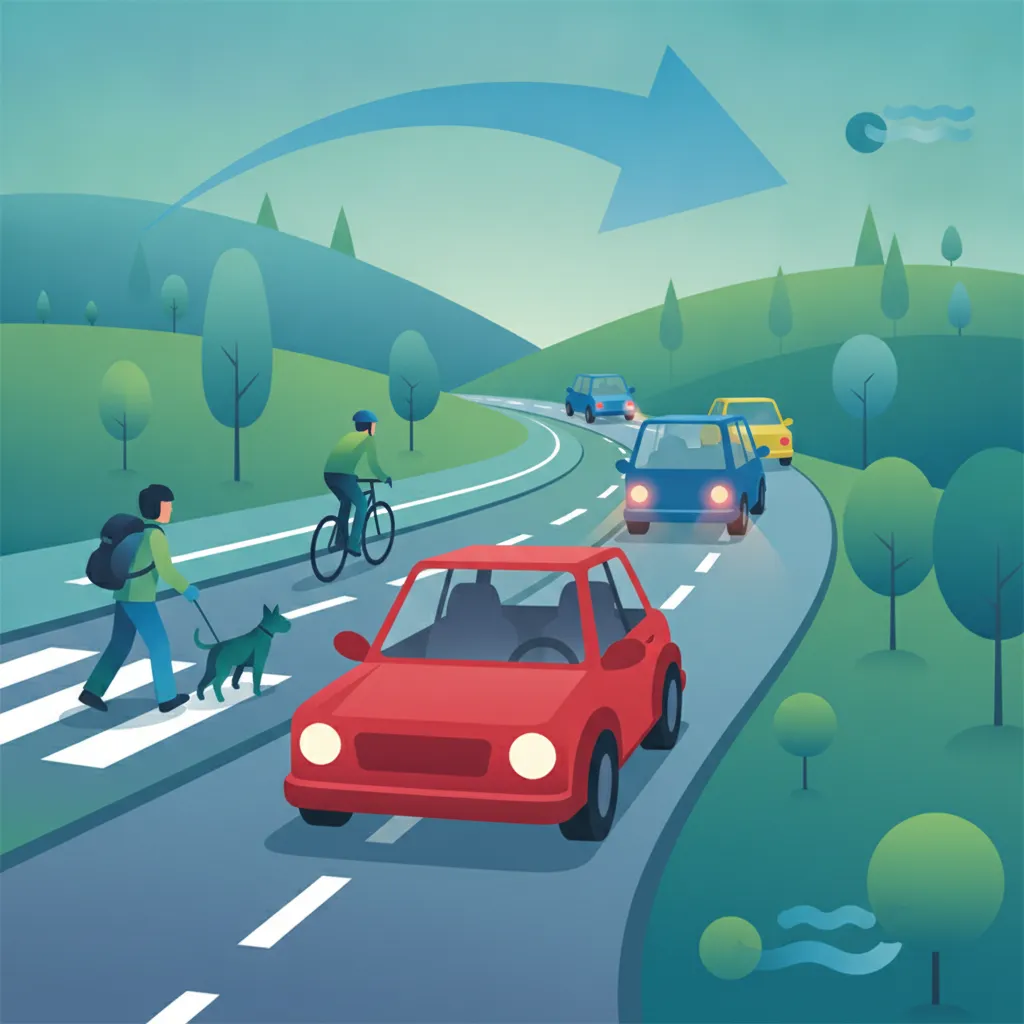
Defensive DrivingRoad SafetyAwarenessRisk ManagementBelgian TheoryDriving Skills
Illustration for the driving theory topic Hazard Perception for learners in Belgium

Theory topic content overview

Complete Driving Theory Explanation: Hazard Perception

Read the full theory topic guide for Hazard Perception with structured, easy-to-scan content built for learners in Belgium. This detailed section explains the exact rule, meaning, traffic context, comparison points, and exam logic behind this Belgian driving theory topic so you can study faster, understand the concept more clearly, and avoid common interpretation mistakes on the theory test.

What is Hazard Perception?

Hazard perception, often referred to as risk perception (risicoperceptie / perception des risques) in Belgian driving theory, is the critical mental skill of continuously observing your driving environment to identify and anticipate potential dangers before they become immediate threats. It's about looking beyond what's directly in front of you and actively seeking out subtle clues that indicate a risk might develop.

Instead of merely reacting to a hazard once it's present, effective hazard perception allows you to detect the early warning signs, giving you more time to adjust your speed, position, or plan your actions smoothly and safely. For drivers in Belgium, this proactive approach is fundamental to navigating diverse road conditions and traffic situations safely.

Why Hazard Perception Matters on Belgian Roads

Mastering hazard perception is not just a theoretical concept; it's a vital skill for safe driving in Belgium and a core component of your driving license journey.

  1. Enhanced Safety: By spotting hazards early, you gain precious seconds to react, significantly reducing the risk of sudden braking, evasive manoeuvres, or collisions. This is crucial on Belgium's varied road network, from busy urban centres like Brussels and Antwerp to rural roads with vulnerable road users.
  2. Belgian Risk Perception Test (Risicoperceptietest): This skill is directly assessed in the mandatory Risk Perception Test, which you must pass to access the practical driving exam in Belgium. The test evaluates your ability to identify developing risks in video scenarios, making theoretical understanding directly applicable to your exam success.
  3. Defensive Driving in Practice: Hazard perception is the cornerstone of defensive driving. It trains you to always expect the unexpected and assume other road users might make mistakes, helping you protect yourself and others on the road.
  4. Navigating Complex Traffic: Belgian traffic often involves interactions with trams, numerous cyclists, and specific priority rules like "priority from the right." Strong hazard perception allows you to manage these complexities safely.

How Hazard Perception Works in Practice: The Proactive Driver's Mindset

Hazard perception isn't a single action, but a continuous cycle of observation, anticipation, and planning.

1. Active Scanning and Observation

Your eyes are your primary tool. Instead of fixed gazing, develop a systematic scanning technique:

  • Far Ahead: Look 10-15 seconds ahead to spot changes in traffic flow, road signs, or upcoming junctions.
  • Near Ahead: Scan the area immediately in front of your vehicle for sudden obstacles or pedestrian movements.
  • Mirrors: Regularly check your rear-view and side mirrors to be aware of what's happening behind and to your sides, especially for motorcycles or cyclists in your blind spots.
  • Periphery: Be aware of movements at the edges of your vision – a child on a pavement, a car emerging from a driveway, or a cyclist approaching a junction.

Novice drivers often struggle with visual scanning, focusing too much on the immediate environment and not using mirrors frequently enough. In Belgium, with its dense cycling infrastructure, constant peripheral awareness and mirror checks are non-negotiable.

2. Anticipating Behaviour

This involves predicting what other road users might do, based on their actions, road conditions, and common behaviours:

  • Vulnerable Road Users: Assume pedestrians or cyclists might step out or change direction without warning. This is particularly important around schools, shopping areas, and dedicated cycle paths in Belgium.
  • Other Drivers: Look for brake lights ahead, indicators that are on but no turn is being made, or drivers behaving erratically.
  • Traffic Flow: Anticipate congestion building up, vehicles merging, or cars suddenly slowing for an exit.

3. Identifying Developing Hazards

A hazard isn't always an immediate danger; it's often a situation that could become dangerous. Look for cues:

  • A ball rolling into the road (a child might follow).
  • A parked car with its reverse lights on or an occupant looking to open a door.
  • A pedestrian standing near a zebra crossing, looking like they might cross.
  • Brake lights appearing several cars ahead, indicating slowing traffic.
  • A vehicle at a junction where you have priority, but the driver is looking away or appears distracted.

By recognizing these developing hazards, you can prepare to adjust your speed or position well in advance, rather than reacting in a panic.

Key Factors Influencing Hazard Perception in Belgium

Several factors can impact your ability to perceive hazards effectively, especially on Belgian roads:

  • Road Conditions: Wet, icy, or snow-covered Belgian roads significantly increase stopping distances and reduce grip, demanding earlier hazard detection and gentler reactions.
  • Weather: Fog, heavy rain, or glare from a low sun can severely reduce visibility, necessitating slower speeds and increased scanning.
  • Traffic Density: Heavy traffic, common during rush hours in Belgian cities or on motorways, means more potential interactions and less space, requiring constant vigilance.
  • Road Type: Urban areas present frequent junctions, pedestrians, and cyclists, while rural Belgian roads might have unexpected bends, farm vehicles, or animals. Motorways demand constant awareness of high-speed traffic and merging vehicles.
  • Driver State: Fatigue, distraction (especially from mobile phones, which is a major issue in Belgium), alcohol, or medication can severely impair your ability to perceive and react to hazards.
  • Vehicle Condition: Poorly maintained brakes, worn tyres, or dirty windows can hinder your ability to respond to hazards effectively.

Important Distinctions and Comparisons

To fully grasp hazard perception, it's helpful to distinguish it from related concepts:

  • Hazard Perception vs. Reaction Time: Hazard perception is the detection and anticipation of a potential danger. Reaction time is the physical time it takes for you to respond after you've perceived the hazard. Good hazard perception increases your available reaction time, allowing you to respond calmly and safely. Without good perception, your reaction time becomes critically short.
  • Risk Perception vs. Risk Taking/Tolerance: As highlighted in Belgian road safety research (VIAS), risk perception is about detecting and assessing hazards. Risk taking is actively engaging in dangerous behaviours, while risk tolerance is the level of risk you are prepared to accept. Effective hazard perception aims to minimise risk, not tolerate or take it.
  • Seeing vs. Understanding: You might "see" a parked car, but hazard perception is "understanding" that a door might open or a child might run out from behind it. It's the cognitive processing of visual information to identify potential threats.

Real-World Scenarios on Belgian Roads

Let's look at how hazard perception applies in common Belgian driving situations:

  • Approaching a Junction with Priority from the Right (Priorité de droite / Voorrang van rechts): You're on a residential street in Flanders. As you approach an unmarked intersection, you see a delivery van in the cross-street. Although you technically have priority from the right, the van driver looks distracted, talking on a phone.
    • Hazard Perception: You perceive the van driver's distraction as a developing hazard. You anticipate they might not observe the priority rule or see you.
    • Action: You ease off the accelerator, hover your foot over the brake, and make eye contact if possible, preparing to slow down or stop even if you have priority.
  • Driving Behind a Tram in Antwerp or Ghent: You're following a tram in a busy urban area. A group of schoolchildren are waiting at a tram stop just ahead.
    • Hazard Perception: You anticipate that children might rush towards or away from the tram without looking for traffic, or that the tram might make an unexpected stop.
    • Action: You increase your following distance, prepare to brake, and scan for any child movements around the tram, maintaining a slow, cautious speed.
  • Joining a Motorway (e.g., E40 towards Liège) during Peak Hour: You're on an acceleration lane, trying to merge into fast-moving motorway traffic.
    • Hazard Perception: You observe traffic flow in the rightmost lane of the motorway. You notice a large truck in that lane that is not moving over, and another car behind it trying to accelerate.
    • Action: You anticipate the truck may not move or slow down. You adjust your speed and look for a gap further back or prepare to slow down slightly to merge behind the truck, rather than forcing your way in front.
  • Overtaking a Cyclist on a Narrow Rural Road in Wallonia: You approach a cyclist on a road with limited visibility due to hedges and upcoming bends.
    • Hazard Perception: You perceive the combination of the cyclist, narrow road, and limited visibility as a developing hazard. You anticipate a potential oncoming vehicle from around the bend.
    • Action: You hold back, increasing your following distance from the cyclist until you have a clear, safe view of the road ahead, ensuring you can complete the manoeuvre safely without rushing.

Common Mistakes for Belgian Learners

Many learners and even experienced drivers make similar mistakes regarding hazard perception:

  • Target Fixation: Staring directly at a hazard (e.g., an animal in the road) instead of scanning for an escape route. As noted in VIAS research, "the hands are following the eyes!"
  • Over-Reliance on Priority: Assuming other drivers will always respect your priority (e.g., priority from the right, or a green light), without anticipating potential failures or misjudgments by others.
  • Inadequate Scanning: Not checking mirrors frequently enough, especially side mirrors for cyclists and motorcycles, or failing to scan the periphery.
  • Misjudging Vulnerable Road Users: Underestimating the unpredictability of pedestrians, children, or cyclists.
  • Clicking Too Late (Risk Perception Test): In the Belgian risk perception test, waiting until a hazard is an immediate danger rather than clicking when it starts to develop can lead to lost points.
  • Distraction: Any form of distraction, especially mobile phone use, severely impairs your ability to perceive hazards. This is a significant factor in Belgian road safety.
  • Assuming Ideal Conditions: Not adjusting perception efforts or speed for adverse weather (rain, fog) or road conditions.

Belgian Context: The Mandatory Risk Perception Test

The Test de perception des risques / Risicoperceptietest is a unique and mandatory part of the Belgian driving license process, serving as a gateway to your practical exam. It directly assesses your hazard perception skills.

  • Format: The test involves watching five video clips, each depicting a driving scenario. You are placed in the driver's perspective and must click on the screen when you identify a developing risk.
  • Scoring: You need to identify 10 risks across these 5 films. Each correct click when a risk starts to develop earns points, while incorrect clicks (too early, too late, or on non-hazards) deduct points. A minimum score (typically 6/10) is required to pass.
  • What Counts as a "Risk": A risk is an external event that requires you to adapt your speed, change direction, or take another action to maintain safety. This includes a child running for a ball, an opening car door, or a vehicle clearly failing to yield priority.
  • Purpose: The test ensures that future Belgian drivers possess the cognitive ability to proactively identify dangers, which is fundamental for accident prevention on roads shared by diverse user groups.

Practical Takeaway: The Proactive Driver's Mindset

Hazard perception for Belgian drivers boils down to being continuously aware, anticipatory, and adaptable.

  • Look Far, Wide, and Often: Keep your eyes moving, scanning the horizon, your mirrors, and your peripheral vision.
  • Think Ahead: Always ask yourself, "What if?" Predict the worst-case scenario from every developing situation.
  • Expect the Unexpected: Assume other road users might make mistakes, especially vulnerable ones like cyclists and pedestrians common in Belgium.
  • Stay Focused: Eliminate distractions to keep your perception sharp.

By developing strong hazard perception skills, you not only improve your chances of passing the Belgian Risk Perception Test but, more importantly, become a safer, more confident driver, capable of anticipating and avoiding dangers on any road.

Quick Answer: Hazard Perception

Start with a short, direct summary of Hazard Perception before reading the full explanation below.

Hazard perception involves constantly scanning the road, anticipating the actions of other road users, and recognizing early warning signs of developing dangers. For Belgian drivers, this means not just seeing what's directly in front of you, but actively looking for potential risks involving pedestrians, cyclists, and traffic flow in advance. Early detection allows you to adjust your speed and position smoothly, preventing the need for emergency actions.

Key Terms and Rule Signals for Hazard Perception

Review the most important terms, rule signals, and traffic concepts linked to Hazard Perception.

hazard perception
risk perception
driving hazards
road safety Belgium
anticipating dangers
scanning techniques
Belgian driving theory
defensive driving
danger detection
theory test Belgium
visual scanning
driver awareness
traffic hazards
vulnerable road users Belgium

Popular Search Queries for Hazard Perception

See the common search queries learners use when trying to understand Hazard Perception in Belgium.

what is hazard perception drivinghazard perception test Belgiumhow to improve hazard perceptionscanning techniques driving Belgiumanticipating road dangers theoryrisk perception Belgian driving examdifference between risk and hazard perceptionhow to spot hazards on the roaddefensive driving Belgian rulesvulnerable road users hazard perceptionwhat is a developing hazardBelgian theory test hazard perception
Decorative theory topics background
50 theory topics

Begin Your Belgian Driving Theory Study Now

Start your comprehensive preparation for the Belgian driving licence theory exam. Dive into our expertly curated topics, master the road rules and concepts, and build the confidence you need to pass your test and drive safely on Belgian roads. Begin mastering theory today.

Explore Belgian Theory Topics

Theory Exam Tip for Hazard Perception

Use this exam-focused revision tip to understand how Hazard Perception is likely to appear in theory questions for learners in Belgium. This section helps you identify the most testable part of the rule, avoid common traps, and remember the concept more effectively during Belgian driving theory exam preparation.

In the Belgian risk perception test, remember that a hazard isn't just an immediate danger but also anything that *could* become dangerous. Look for subtle cues like a ball rolling into the road, brake lights ahead, or a person looking like they might cross. Clicking too early or too late can cost points, so aim for precise timing when the hazard starts to develop.

Hazard Perception: Frequently Asked Theory Questions

Read direct answers to the most common learner questions about Hazard Perception in Belgium. This FAQ focuses on rule confusion, practical meaning, comparison with similar concepts, and the exact uncertainties that appear most often in Belgian driving theory revision and exam preparation.

What is hazard perception?

Hazard perception is the ability to identify potential dangers in the driving environment early enough to react safely and avoid collisions or sudden maneuvers.

Why is hazard perception important for Belgian drivers?

It's a critical skill tested in the Belgian risk perception exam and essential for safely navigating diverse Belgian road conditions, especially with vulnerable road users like cyclists and pedestrians.

How does the Belgian risk perception test work?

The test presents video scenarios where you must click to identify developing hazards as they appear, assessing your ability to recognize risks in real-time. You are scored based on the accuracy and timing of your clicks.

What are common types of hazards to look for?

Common hazards include pedestrians stepping out unexpectedly, vehicles pulling away or changing lanes without signaling, opening car doors, children playing near the road, and sudden changes in traffic flow or road conditions.

What is the difference between risk perception and hazard perception?

While closely related, hazard perception focuses on *detecting* specific potential dangers (e.g., a car turning), whereas risk perception involves *assessing* the overall likelihood and severity of potential harm in a given situation.

How can I improve my hazard perception skills?

Practice active scanning, look further down the road, use your mirrors frequently, and always anticipate what other road users might do, especially in complex Belgian urban traffic or around trams.

Should I anticipate mistakes from other drivers?

Yes, a key part of hazard perception is assuming other drivers, cyclists, or pedestrians might make mistakes or unexpected movements, allowing you to prepare a safe response and maintain adequate space.

Start Your Targeted Belgian Theory Practice Search Now

Ready to focus your Belgian driving theory revision? Utilize our powerful search tool to pinpoint exact topics, road signs, or difficulty levels. Engage with practice questions that directly address your learning needs and solidify your understanding of Belgian traffic laws for your upcoming exam.

Search Belgian Theory Practice Questions