
In Belgium, understanding when and how to give way is critical for every driver. These rules define who has priority in various traffic situations, from basic intersections with 'priority from the right' to complex junctions with specific road signs and markings. This page breaks down the core principles of yielding, ensuring you can make safe decisions and avoid common errors on the road and in your theory test.
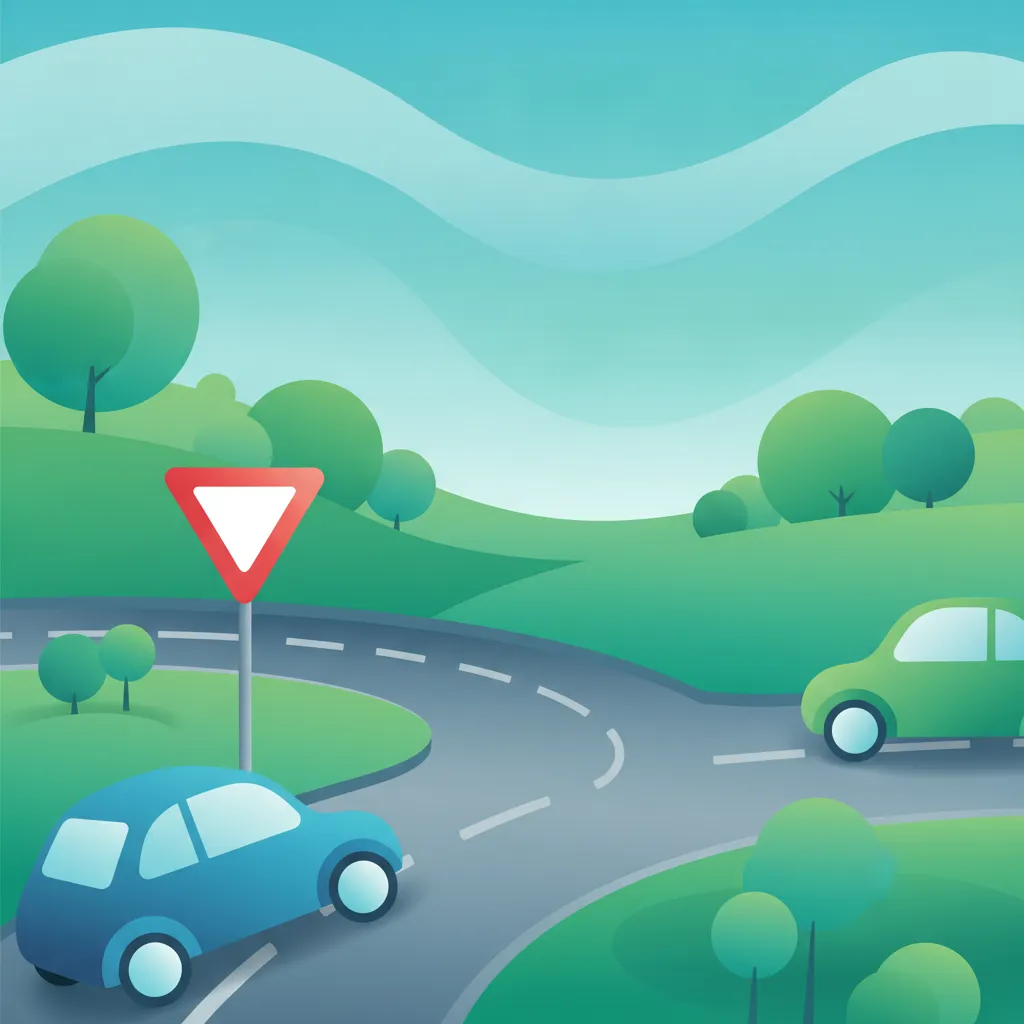
Theory topic content overview
Read the full theory topic guide for Belgian Give Way Rules with structured, easy-to-scan content built for learners in Belgium. This detailed section explains the exact rule, meaning, traffic context, comparison points, and exam logic behind this Belgian driving theory topic so you can study faster, understand the concept more clearly, and avoid common interpretation mistakes on the theory test.
In Belgian traffic, to 'give way' (in French, céder le passage; in Dutch, voorrang verlenen) means to allow another road user to proceed first to prevent any potential conflict or collision. When you are required to give way, you must adjust your speed, and if necessary, stop your vehicle completely to ensure that the road user with priority can continue their journey safely and without interruption. This fundamental principle is crucial for maintaining order, flow, and safety on Belgian roads.
Misunderstanding or failing to correctly apply Belgian give way rules is a leading cause of accidents and a frequent stumbling block for candidates in the Belgian driving theory exam. It's not just about knowing the rules, but about developing the hazard perception and decision-making skills to apply them in dynamic traffic situations.
Before diving into specific give way scenarios, it's vital to understand the hierarchy of priority in Belgian traffic. This hierarchy determines which rule takes precedence when multiple forms of regulation are present. Always remember this order:
The 'priority from the right' rule is a defining characteristic of Belgian traffic law at unmarked intersections. It states that at any intersection where priority is not explicitly regulated by traffic lights or priority signs (like B1, B5, or B9), you must yield to any vehicle approaching from your right.
The rule of priority from the right has several crucial exceptions in Belgium. Failing to recognise these can lead to serious errors:
Belgian road signs play a critical role in regulating priority. Here are the most important ones related to giving way:
Beyond general rules and signs, certain specific situations demand particular attention in Belgium:
Understanding and correctly applying give way rules is not merely an academic exercise for the Belgian theory exam; it's fundamental to safe and efficient driving in Belgium.
Learners and even experienced drivers often make mistakes when it comes to giving way. Be aware of these common pitfalls:
Mastering give way rules in Belgium comes down to constant observation, anticipation, and respect for the defined hierarchy of rules. Always scan intersections for signs, lights, and approaching traffic, especially from your right. Be prepared to slow down or stop, and always give a clear signal of your intentions. When in doubt, it's always safer to assume you should give way. This defensive approach will serve you well, both in your Belgian theory exam and in your daily driving.
Belgian give way rules are built on a clear hierarchy where instructions from traffic agents override all other rules, followed by traffic lights, then road signs like B1 and B5, and finally general traffic rules including the fundamental 'priority from the right' principle that applies at all unmarked intersections. The B9 Priority Road sign is crucial because it exempts you from priority from the right on that road, while special categories like trams, emergency vehicles, and pedestrians on crossings always have priority regardless of other rules. Understanding the difference between the B1 Give Way sign (yield and slow) and the B5 Stop sign (complete halt) is essential, as is knowing that vehicles already in a roundabout always have priority over those entering. These rules are heavily tested in the Belgian theory exam and form the foundation of safe intersection navigation throughout Belgium.
A short set of high-value points that capture the most important ideas from this theory explanation.
The priority hierarchy in Belgium runs in this order: police/agents directing traffic, then traffic lights, then road signs/markings, and finally general rules like priority from the right
At unmarked intersections without signs or lights, you must always yield to traffic approaching from your right, regardless of which road appears wider
The B9 Priority Road sign (yellow diamond) grants you priority over traffic from the right at subsequent intersections until another sign cancels it
Trams have absolute priority in Belgium except when explicitly directed otherwise by traffic lights or authorized agents
Vulnerable road users including pedestrians on crossings, cyclists on dedicated paths, and buses signaling to pull away in built-up areas all require yielding
B1 Give Way sign means slow down and be prepared to stop; B5 STOP sign requires a complete halt behind the stop line
Priority from the right does NOT apply when: you are on a B9 priority road, emerging from an unpaved road, entering a motorway, or entering a roundabout
Yellow diamond with white border (B9) = you have priority; inverted white triangle with red border (B1) = you must yield
When leaving a parking space, private property, or service road, you must give way to ALL traffic on the public road
Drivers entering a roundabout must always yield to traffic already circulating inside the roundabout
Assuming a wider or busier-looking road has priority without checking for priority signs - unmarked intersections always follow priority from the right
Making a rolling stop at a B5 STOP sign instead of a complete halt, even when the road appears clear
Forgetting to yield to pedestrians who are already on a crossing or visibly about to step onto one
Entering a roundabout without yielding to vehicles already inside, particularly when the entry has a B1 sign
Hesitating excessively at intersections when you actually have priority, which disrupts traffic flow and causes confusion for other drivers
Start with a short, direct summary of Belgian Give Way Rules before reading the full explanation below.
To 'give way' in Belgian traffic means allowing another road user to proceed first to prevent conflict. This often involves slowing down or stopping. Key situations include junctions where traffic from the right has priority, or when approaching a B1 'Céder le passage' (Give Way) sign. You must also yield to pedestrians at crossings and vehicles already in a roundabout.
Review the most important terms, rule signals, and traffic concepts linked to Belgian Give Way Rules.
Explore related theory topic pages connected to Belgian Give Way Rules and continue with the next useful rule explanation.
See the common search queries learners use when trying to understand Belgian Give Way Rules in Belgium.

Start your comprehensive preparation for the Belgian driving licence theory exam. Dive into our expertly curated topics, master the road rules and concepts, and build the confidence you need to pass your test and drive safely on Belgian roads. Begin mastering theory today.
Explore Belgian Theory TopicsTheory topic content overview
A short set of high-value points that capture the most important ideas from this theory explanation.
The priority hierarchy in Belgium runs in this order: police/agents directing traffic, then traffic lights, then road signs/markings, and finally general rules like priority from the right
At unmarked intersections without signs or lights, you must always yield to traffic approaching from your right, regardless of which road appears wider
The B9 Priority Road sign (yellow diamond) grants you priority over traffic from the right at subsequent intersections until another sign cancels it
Trams have absolute priority in Belgium except when explicitly directed otherwise by traffic lights or authorized agents
Vulnerable road users including pedestrians on crossings, cyclists on dedicated paths, and buses signaling to pull away in built-up areas all require yielding
B1 Give Way sign means slow down and be prepared to stop; B5 STOP sign requires a complete halt behind the stop line
Priority from the right does NOT apply when: you are on a B9 priority road, emerging from an unpaved road, entering a motorway, or entering a roundabout
Yellow diamond with white border (B9) = you have priority; inverted white triangle with red border (B1) = you must yield
When leaving a parking space, private property, or service road, you must give way to ALL traffic on the public road
Drivers entering a roundabout must always yield to traffic already circulating inside the roundabout
Assuming a wider or busier-looking road has priority without checking for priority signs - unmarked intersections always follow priority from the right
Making a rolling stop at a B5 STOP sign instead of a complete halt, even when the road appears clear
Forgetting to yield to pedestrians who are already on a crossing or visibly about to step onto one
Entering a roundabout without yielding to vehicles already inside, particularly when the entry has a B1 sign
Hesitating excessively at intersections when you actually have priority, which disrupts traffic flow and causes confusion for other drivers
Start with a short, direct summary of Belgian Give Way Rules before reading the full explanation below.
To 'give way' in Belgian traffic means allowing another road user to proceed first to prevent conflict. This often involves slowing down or stopping. Key situations include junctions where traffic from the right has priority, or when approaching a B1 'Céder le passage' (Give Way) sign. You must also yield to pedestrians at crossings and vehicles already in a roundabout.
Review the most important terms, rule signals, and traffic concepts linked to Belgian Give Way Rules.
Explore related theory topic pages connected to Belgian Give Way Rules and continue with the next useful rule explanation.
See the common search queries learners use when trying to understand Belgian Give Way Rules in Belgium.
Start your comprehensive preparation for the Belgian driving licence theory exam. Dive into our expertly curated topics, master the road rules and concepts, and build the confidence you need to pass your test and drive safely on Belgian roads. Begin mastering theory today.
Explore Belgian Theory TopicsUse this exam-focused revision tip to understand how Belgian Give Way Rules is likely to appear in theory questions for learners in Belgium. This section helps you identify the most testable part of the rule, avoid common traps, and remember the concept more effectively during Belgian driving theory exam preparation.
In the Belgian theory exam, pay close attention to priority situations, especially 'priority from the right' at unmarked intersections. Distinguish carefully between the B1 'Give Way' sign, which requires yielding, and the B5 'Stop' sign, which demands a full stop. Also, remember to yield to vulnerable road users like pedestrians and cyclists, and always to trams and emergency vehicles.
Read direct answers to the most common learner questions about Belgian Give Way Rules in Belgium. This FAQ focuses on rule confusion, practical meaning, comparison with similar concepts, and the exact uncertainties that appear most often in Belgian driving theory revision and exam preparation.
To give way means allowing other road users to proceed first to avoid a collision or conflict. This requires you to slow down, and if necessary, stop, to ensure the safety and continuous flow of traffic with priority.
At intersections without specific signs or traffic lights, traffic approaching from your right generally has priority. This fundamental rule applies widely in Belgium unless otherwise indicated.
The B1 sign, a triangular sign with a red border and white background pointing downwards, indicates that you must give way to all traffic on the intersecting road. It requires you to be prepared to stop if necessary.
You must always give way to pedestrians who are already on a designated pedestrian crossing or are clearly about to step onto one. Always approach pedestrian crossings cautiously and at a moderate speed.
No, 'priority from the right' is superseded by traffic lights, police instructions, and specific priority signs (like B1, B5, or signs indicating a priority road). Always observe the hierarchy of traffic rules.
Yes, when entering a roundabout in Belgium, you must give way to traffic already circulating within the roundabout, unless specific signs or signals indicate otherwise.
Both signs require you to yield, but the B5 'Stop' sign (octagonal with 'STOP') specifically mandates a complete halt before the stop line, even if there is no traffic. The B1 'Give Way' sign requires you to yield, but stopping is only necessary if there is traffic to which you must cede passage.
All road users must give way to trams and trains. You should move off the tracks as soon as possible and never obstruct their path.
Ready to focus your Belgian driving theory revision? Utilize our powerful search tool to pinpoint exact topics, road signs, or difficulty levels. Engage with practice questions that directly address your learning needs and solidify your understanding of Belgian traffic laws for your upcoming exam.