
Mastering the Highway Code is more than just memorizing facts; it requires a clear understanding of the legal weight behind every rule. In this guide, we break down the critical differences between mandatory obligations and helpful advice, ensuring you can identify and answer complex theory questions accurately. Developing this foundation is key to demonstrating safe driving habits and achieving a successful result in your DVSA theory examination.
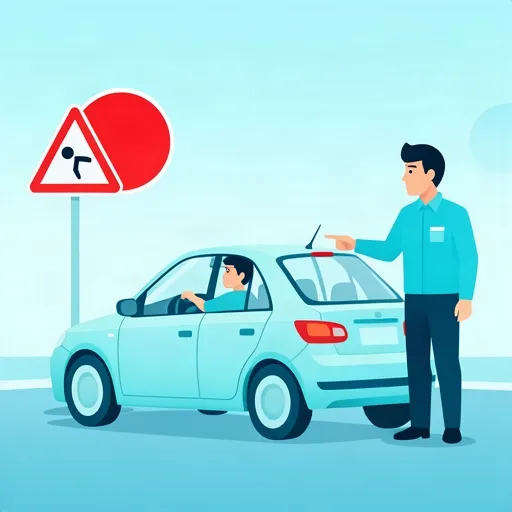
Article content overview
Preparing for the DVSA theory test in Great Britain requires more than just rote memorization of road signs and speed limits. Many learners stumble during their exam because they fail to distinguish between the firm legal obligations—often indicated by the word 'MUST'—and the advisory guidelines labeled as 'SHOULD'. Understanding this distinction is not only vital for achieving a pass on your theory test but is also fundamental to your safety as a new driver. Under the Road Traffic (New Drivers) Act, accumulating six penalty points within two years of passing your test results in the revocation of your licence, making it essential to develop a deep understanding of these rules from day one.
One of the most frequent errors in theory test preparation is treating all Highway Code rules as suggestions. In legal terms, rules that use the word 'MUST' are absolute requirements. If you fail to follow these, you are breaking the law, which can lead to prosecution, heavy fines, penalty points, and potentially driving disqualification. Conversely, rules using 'SHOULD' or 'ADVISED TO' are best practices that significantly improve road safety. While you might not be prosecuted specifically for ignoring an advisory rule, failing to follow one that leads to a collision or dangerous incident can be used as evidence of careless or dangerous driving.
The term 'MUST' indicates a legal requirement as defined by primary legislation or regulations. Ignoring these rules is a criminal offence. The term 'SHOULD' refers to advice that follows best practices; while not a direct breach of criminal law, failing to follow it may be used to establish liability in civil or criminal proceedings regarding accidents.
Many theory exam questions present complex junction scenarios to test your knowledge of priority. A common mistake occurs when learners assume they have the right of way simply because they are on a wider road. In the UK, you must always look for road markings—such as give way lines or stop signs—that dictate who has priority. If you encounter an unmarked junction, there is no inherent rule granting priority to the "main" road; instead, you must proceed with extreme caution, ready to stop if another vehicle has already entered the intersection.
Speed limits are another area where new drivers often face confusion during the theory test. A common trap involves assuming that the posted limit is a target speed, even in adverse weather conditions. The Highway Code explicitly states that you must adjust your speed according to the conditions, including heavy rain, snow, or fog, regardless of the national speed limit for that road type. Even if the signs suggest a 60 mph limit on a rural road, driving at that speed when visibility is reduced could be categorized as driving without due care and attention.
| Road Type | Car Speed Limit (Normal) | Key Consideration |
|---|---|---|
| Built-up Areas | 30 mph | High risk of pedestrians |
| Single Carriageway | 60 mph | Beware of hidden bends |
| Dual Carriageway | 70 mph | Higher speeds, wider lanes |
| Motorway | 70 mph | Strictly motorway regulations |
Hazard perception often fails for learners who lack a systematic approach to observation. You must constantly scan the road, not just for vehicles, but for vulnerable road users such as cyclists, pedestrians, and horse riders. When a theory question asks about a potential hazard, remember that the "correct" answer is almost always the one that prioritizes the safety of the most vulnerable party. Failing to check your mirrors or blind spots before changing speed or direction is a major cause of failure both in the theory and the practical examination.
Do not rely solely on traffic lights or signs to keep you safe. Always maintain a defensive driving posture, anticipating that other road users may make mistakes or disregard signals. Being "legally" right in an accident is no substitute for avoiding the accident entirely.
This article focuses on helping learner drivers avoid the most frequent errors in Highway Code interpretation for the DVSA theory test. The core teaching point is the legal distinction between mandatory 'MUST' rules and advisory 'SHOULD' guidelines, which is essential for both passing the exam and avoiding penalties. It covers priority rules at junctions, where road markings take precedence over road size, and speed limit regulations that require adjustment for weather and visibility. The defensive observation procedure outlines a systematic approach to mirror and blind spot checks that prioritises vulnerable road users. Understanding these nuances helps learners develop the safe driving habits required under the New Drivers Act, which can revoke a licence for six penalty points accumulated within two years of passing.
A short set of high-value points that capture the most important ideas from this article.
Rules marked 'MUST' are legal requirements; breaking them is a criminal offence, while 'SHOULD' rules are advisory best practices that may still be used as evidence in accident proceedings
Priority at junctions is determined by road markings such as give way lines or stop signs, not by the width of the road you are travelling on
Speed limits are maximum speeds that must be reduced according to weather conditions, visibility, and traffic density
Defensive observation requires constant scanning for all road users including cyclists, pedestrians, and horse riders, not just vehicles
The New Drivers Act can revoke your licence if you accumulate 6 penalty points within 2 years of passing your test
'MUST' = absolute legal requirement; 'SHOULD' = advisory guideline that is not a criminal offence but may be used against you in liability cases
Unmarked junctions grant no automatic priority to any road; proceed with extreme caution ready to stop
Never treat posted speed limits as targets in adverse conditions such as heavy rain, snow, or fog
Always perform mirror checks and shoulder checks (lifesaver glances) before changing direction or speed
Six penalty points within two years under the New Drivers Act triggers automatic licence revocation
Treating all Highway Code rules as equally mandatory, missing the legal distinction between MUST and SHOULD requirements
Assuming they have priority at a junction simply because they are on a wider or more prominent road
Driving at the posted speed limit when visibility is reduced without adjusting for conditions
Failing to check blind spots before moving off or changing lanes, a common cause of theory and practical test failure
Believing that being 'legally right' in a situation excuses failing to take evasive action to avoid an accident
Article content overview
A short set of high-value points that capture the most important ideas from this article.
Rules marked 'MUST' are legal requirements; breaking them is a criminal offence, while 'SHOULD' rules are advisory best practices that may still be used as evidence in accident proceedings
Priority at junctions is determined by road markings such as give way lines or stop signs, not by the width of the road you are travelling on
Speed limits are maximum speeds that must be reduced according to weather conditions, visibility, and traffic density
Defensive observation requires constant scanning for all road users including cyclists, pedestrians, and horse riders, not just vehicles
The New Drivers Act can revoke your licence if you accumulate 6 penalty points within 2 years of passing your test
'MUST' = absolute legal requirement; 'SHOULD' = advisory guideline that is not a criminal offence but may be used against you in liability cases
Unmarked junctions grant no automatic priority to any road; proceed with extreme caution ready to stop
Never treat posted speed limits as targets in adverse conditions such as heavy rain, snow, or fog
Always perform mirror checks and shoulder checks (lifesaver glances) before changing direction or speed
Six penalty points within two years under the New Drivers Act triggers automatic licence revocation
Treating all Highway Code rules as equally mandatory, missing the legal distinction between MUST and SHOULD requirements
Assuming they have priority at a junction simply because they are on a wider or more prominent road
Driving at the posted speed limit when visibility is reduced without adjusting for conditions
Failing to check blind spots before moving off or changing lanes, a common cause of theory and practical test failure
Believing that being 'legally right' in a situation excuses failing to take evasive action to avoid an accident
Explore related topics, search based questions, and concepts that learners often look up when studying Common Highway Code Exam Mistakes. These themes reflect real search intent and help you understand how this topic connects to wider driving theory knowledge in Great Britain.
Find clear and practical answers to common questions learners often have about Common Highway Code Exam Mistakes. This section helps explain difficult points, remove confusion, and reinforce the key driving theory concepts that matter for learners in Great Britain.
Rules containing 'MUST' or 'MUST NOT' are legal requirements, and breaking them is a criminal offence. Rules using 'SHOULD' or 'DO' are advisory and represent good practice, though they may be used in court as evidence of liability.
Many theory test questions specifically ask whether a rule is mandatory. Misidentifying an advisory rule as a legal requirement—or vice versa—is a common cause of lost marks.
Under the New Drivers Act, if you accumulate 6 or more penalty points within two years of passing your full driving test, your licence will be revoked, and you will have to retake both the theory and practical tests.
Explore our extensive library of Great Britain driving theory articles to clarify any topic, review specific road rules, or gain deeper insights into vehicle safety and the Highway Code. Use the search to find exactly what you need for comprehensive DVSA theory test preparation.