
Driving in poor weather is a core component of the Great Britain driving theory test that requires precise knowledge of stopping distances and defensive techniques. This guide covers how to adjust your speed, increase your time gap, and use vehicle lighting correctly to remain safe and compliant with the Highway Code.
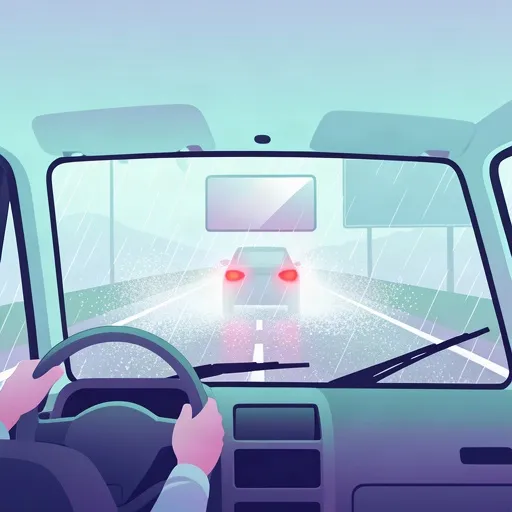
Article content overview
Driving in Great Britain often involves navigating unpredictable weather conditions. As a learner, mastering how to adjust your driving behavior in response to heavy rain, road spray, and standing water is not just a practical necessity; it is a critical component of the DVSA theory test. Understanding the physics of your vehicle on a wet surface and knowing how to apply Highway Code rules ensures you remain safe and compliant on roads in England, Scotland, and Wales.
The core principle for driving in wet weather is the significant reduction in tyre grip. According to Rule 227 of the Highway Code, when the road surface is wet, your stopping distance will be at least double that required for dry roads. This is because water acts as a lubricant between your tyres and the tarmac, dramatically reducing the friction available for braking.
In heavy rain, you must maintain a much larger space between you and the vehicle in front. While the standard dry-weather advice is to keep a two-second gap, in poor visibility or wet conditions, you should extend this to at least a four-second time gap. This adjustment provides you with the extra time needed to react, ease off the accelerator, and slow down gradually rather than braking harshly.
Heavy rain and the spray thrown up by other vehicles—especially heavy goods vehicles and coaches—can severely impair your vision. To combat this, ensure your lights are used correctly to see and, more importantly, to be seen by other road users.
Aquaplaning occurs when a layer of water builds up between your tyres and the road surface, causing your vehicle to lose contact with the ground entirely. When this happens, your steering will suddenly feel very light, and you will lose the ability to brake or turn effectively. This is a terrifying experience, but it is one that you can mitigate through defensive driving.
If you feel your steering becoming unresponsive, do not slam on the brakes or make sharp steering inputs. Instead, ease off the accelerator and allow your speed to drop gradually until your tyres regain contact with the road. By maintaining a steady speed that is appropriate for the conditions, you significantly lower the risk of losing control.
To excel in your theory test, you must be familiar with the specific vocabulary used by the DVSA. Mastering these terms will help you understand the reasoning behind safe driving practices in adverse conditions.
In the Great Britain theory test, you may encounter questions regarding how to react when visibility is poor or the road is slippery. You might be asked whether to double your distance, reduce speed, or change your headlight settings. Remember that the correct answer almost always prioritizes creating more space and reducing speed. Avoid any answer that suggests maintaining a constant speed or using high-intensity lights in heavy spray.
Driving in heavy rain requires understanding that wet road surfaces dramatically reduce tyre grip, effectively doubling stopping distances according to Highway Code Rule 227. Drivers must extend their following gap to at least four seconds, use dipped headlights to improve visibility through spray, and avoid main beam headlights which reflect off rain droplets. Aquaplaning occurs when tyres lose contact with the road, indicated by suddenly light steering; the correct response is to ease off the accelerator gradually until grip is restored. These defensive driving principles are essential for both passing the DVSA theory test and staying safe on roads in England, Scotland, and Wales.
A short set of high-value points that capture the most important ideas from this article.
Wet roads reduce tyre grip and require at least double the stopping distance compared to dry conditions
In heavy rain, extend your following gap to a four-second time interval instead of the standard two seconds
Use dipped headlights when visibility is significantly reduced to see and be seen by other road users
If you feel your steering becoming light, ease off the accelerator gradually rather than braking hard
Spray thrown up by large vehicles can severely impair your vision, increasing the need for increased separation distance
Highway Code Rule 227: stopping distance doubles on wet road surfaces due to reduced friction
Dipped headlights help other drivers spot your vehicle through rain spray
Aquaplaning warning signs include suddenly light steering and loss of braking responsiveness
Main beam headlights should never be used in heavy rain because rain droplets reflect the light back
Defensive driving in wet conditions means anticipating hazards and adjusting speed before problems develop
Assuming only a modest increase in stopping distance is needed in wet weather
Using main beam headlights in heavy rain, which creates glare instead of improving visibility
Failing to increase the time gap when following another vehicle in poor conditions
Panicking during aquaplaning and stamping on the brakes, which worsens loss of control
Not checking that windscreen wipers and washers are functioning before starting a journey
Article content overview
A short set of high-value points that capture the most important ideas from this article.
Wet roads reduce tyre grip and require at least double the stopping distance compared to dry conditions
In heavy rain, extend your following gap to a four-second time interval instead of the standard two seconds
Use dipped headlights when visibility is significantly reduced to see and be seen by other road users
If you feel your steering becoming light, ease off the accelerator gradually rather than braking hard
Spray thrown up by large vehicles can severely impair your vision, increasing the need for increased separation distance
Highway Code Rule 227: stopping distance doubles on wet road surfaces due to reduced friction
Dipped headlights help other drivers spot your vehicle through rain spray
Aquaplaning warning signs include suddenly light steering and loss of braking responsiveness
Main beam headlights should never be used in heavy rain because rain droplets reflect the light back
Defensive driving in wet conditions means anticipating hazards and adjusting speed before problems develop
Assuming only a modest increase in stopping distance is needed in wet weather
Using main beam headlights in heavy rain, which creates glare instead of improving visibility
Failing to increase the time gap when following another vehicle in poor conditions
Panicking during aquaplaning and stamping on the brakes, which worsens loss of control
Not checking that windscreen wipers and washers are functioning before starting a journey
Explore related topics, search based questions, and concepts that learners often look up when studying Driving in Heavy Rain. These themes reflect real search intent and help you understand how this topic connects to wider driving theory knowledge in Great Britain.
Find clear and practical answers to common questions learners often have about Driving in Heavy Rain. This section helps explain difficult points, remove confusion, and reinforce the key driving theory concepts that matter for learners in Great Britain.
According to the Highway Code, you should increase your separation distance to at least a 4-second time gap, as stopping distances can be at least double those required for dry roads.
This may indicate aquaplaning, where water prevents your tyres from gripping the road. You should ease off the accelerator and slow down gradually without braking harshly.
You should use dipped headlights whenever visibility is reduced due to heavy rain or road spray to ensure you can see clearly and that other drivers can see you.
Rain creates a layer of water on the road surface, which significantly reduces the grip (friction) between your tyres and the road, meaning it takes longer for your vehicle to come to a complete stop.
Explore our extensive library of Great Britain driving theory articles to clarify any topic, review specific road rules, or gain deeper insights into vehicle safety and the Highway Code. Use the search to find exactly what you need for comprehensive DVSA theory test preparation.