
Driving in heavy rain or on roads with standing water presents significant hazards that every learner driver must understand. This article explores the physics of why tyres lose grip and provides clear guidance on adjusting your speed and separation distance to comply with Highway Code rules. You will learn how to react calmly and safely if you encounter reduced visibility or unresponsive steering.
Article content overview
Driving in heavy rain or on roads with standing water presents some of the most significant challenges for new drivers. As you prepare for your DVSA theory test, understanding the physical interaction between your tyres and the road surface is not just an academic exercise; it is a vital skill for your safety on the roads of Great Britain. When water accumulates on the tarmac, your vehicle's ability to grip the surface is compromised, leading to the dangerous phenomenon known as aquaplaning.
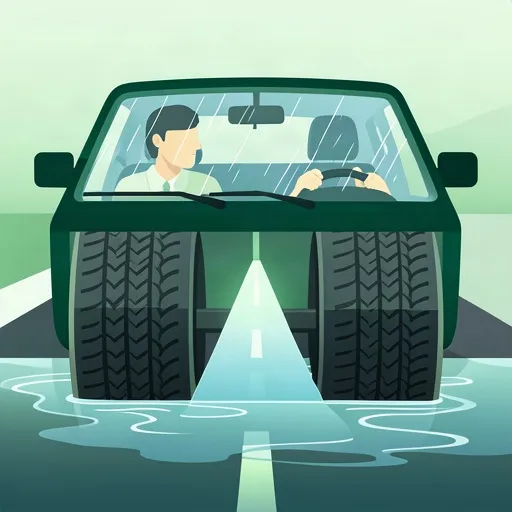
Aquaplaning occurs when a layer of water builds up between your car's tyres and the road surface. In this state, your tyres lose direct contact with the road, effectively causing your vehicle to slide on top of the water rather than rolling across the ground. When this happens, steering becomes light or unresponsive, and your brakes may feel ineffective, leaving you with little to no control over the vehicle's direction or speed.
Several factors contribute to this loss of control, with speed being the most influential. The faster you travel, the less time your tyre treads have to disperse the water beneath them. Poor tyre tread depth significantly worsens this condition, as worn tyres lack the deep channels necessary to clear water away from the contact patch. During your theory test, you must remember that wet weather fundamentally alters your vehicle’s handling characteristics, requiring you to anticipate hazards earlier and adjust your driving style accordingly.
The Highway Code provides specific guidance on how to manage these adverse conditions. Rule 227 of the Highway Code explicitly states that in wet weather, stopping distances will be at least double those required for stopping on dry roads. This increase is a direct result of the reduced friction between your tyres and the road surface.
To remain safe and comply with road safety standards in England, Scotland, and Wales, you should always maintain a greater separation distance from the vehicle in front. In dry weather, a two-second time gap is recommended, but when roads are wet, this should be increased to at least four seconds. By leaving more space, you grant yourself the necessary time to react to the vehicle ahead without needing to apply harsh braking, which could cause your wheels to lock or skid.
Beyond the risk of losing physical control, heavy rain often brings severe reductions in visibility. Spray thrown up by vehicles in front of you, especially large lorries and coaches, can mask the road ahead and make it difficult to see potential hazards. Using your headlights is essential in these conditions to ensure that you can be seen by other road users.
When visibility is significantly reduced, you should switch to your dipped headlights. Using main beam headlights in heavy rain or spray can often be counterproductive, as the light reflects off the water droplets, creating a "dazzle" effect that further impairs your vision. Always maintain your lane position and avoid unnecessary overtaking, as moving through deep puddles of standing water increases the risk of loss of control.
| Condition | Recommended Action |
|---|---|
| Initial rain starts | Use wipers and check mirrors frequently. |
| Heavy spray present | Switch to dipped headlights; increase distance. |
| Standing water visible | Reduce speed; avoid deep puddles. |
| Steering feels light | Ease off accelerator; do not brake harshly. |
The DVSA theory test often presents scenarios involving adverse weather to ensure learners understand the responsibility that comes with driving in Great Britain's variable climate. Questions frequently test your knowledge of stopping distances, your ability to identify the correct usage of lights, and your understanding of how speed affects vehicle stability. Being able to correctly identify that you must double your dry-weather stopping distance or that you should avoid cruise control in the rain is critical for passing your exam.
Aquaplaning is the dangerous condition where water separates tyres from the road, resulting in complete loss of steering and braking control. The primary risk factor is speed, since faster travel reduces the time tyres have to clear water through their tread channels. The Highway Code requires drivers to double their stopping distance in wet weather and maintain a minimum four-second gap from the vehicle ahead. If aquaplaning occurs, the correct response is to ease off the accelerator smoothly while keeping the steering wheel straight—never brake harshly. Using dipped headlights and maintaining proper tyre tread depth are essential preventive measures for driving safely in Great Britain's variable wet weather conditions.
A short set of high-value points that capture the most important ideas from this article.
Aquaplaning occurs when a water layer separates your tyre from the road, causing total loss of steering and braking control.
Speed is the most influential factor in aquaplaning because faster travel leaves less time for tyre treads to disperse water.
Wet weather requires at least double the stopping distance compared to dry conditions according to Highway Code Rule 227.
Loss of steering response (light or unresponsive feel) is an early warning sign that your vehicle is losing tyre contact with the road.
In wet conditions, increase your separation gap from 2 seconds to at least 4 seconds behind the vehicle ahead.
Use dipped headlights (not main beam) when visibility is reduced by heavy rain or spray to avoid dazzle.
If steering becomes light or unresponsive, ease off the accelerator gradually—do not brake harshly.
Poor tyre tread depth significantly increases aquaplaning risk because worn tyres cannot channel water away effectively.
Always hold the steering wheel straight when driving through standing water and avoid cruise control in wet conditions.
Assuming that normal braking will work immediately in wet conditions without accounting for the doubled stopping distance.
Mistaking light steering for normal wet-road handling rather than recognizing it as an early aquaplaning warning.
Using main beam headlights in heavy rain or spray, which reflects off water droplets and worsens visibility.
Braking sharply when aquaplaning, which can lock wheels and extend the loss of control instead of restoring grip.
Article content overview
A short set of high-value points that capture the most important ideas from this article.
Aquaplaning occurs when a water layer separates your tyre from the road, causing total loss of steering and braking control.
Speed is the most influential factor in aquaplaning because faster travel leaves less time for tyre treads to disperse water.
Wet weather requires at least double the stopping distance compared to dry conditions according to Highway Code Rule 227.
Loss of steering response (light or unresponsive feel) is an early warning sign that your vehicle is losing tyre contact with the road.
In wet conditions, increase your separation gap from 2 seconds to at least 4 seconds behind the vehicle ahead.
Use dipped headlights (not main beam) when visibility is reduced by heavy rain or spray to avoid dazzle.
If steering becomes light or unresponsive, ease off the accelerator gradually—do not brake harshly.
Poor tyre tread depth significantly increases aquaplaning risk because worn tyres cannot channel water away effectively.
Always hold the steering wheel straight when driving through standing water and avoid cruise control in wet conditions.
Assuming that normal braking will work immediately in wet conditions without accounting for the doubled stopping distance.
Mistaking light steering for normal wet-road handling rather than recognizing it as an early aquaplaning warning.
Using main beam headlights in heavy rain or spray, which reflects off water droplets and worsens visibility.
Braking sharply when aquaplaning, which can lock wheels and extend the loss of control instead of restoring grip.
Explore related topics, search based questions, and concepts that learners often look up when studying Handling Aquaplaning and Wet Weather. These themes reflect real search intent and help you understand how this topic connects to wider driving theory knowledge in Great Britain.
Find clear and practical answers to common questions learners often have about Handling Aquaplaning and Wet Weather. This section helps explain difficult points, remove confusion, and reinforce the key driving theory concepts that matter for learners in Great Britain.
This indicates you are likely aquaplaning. You should gently ease off the accelerator and avoid braking sharply or making sudden steering movements until your tyres regain grip.
According to the Highway Code, stopping distances in wet weather should be at least double those required for dry roads because your tyres have less grip on the surface.
You should leave a much larger gap than in dry weather, at least a 4-second time gap, to account for the increased stopping distance and reduced visibility caused by spray.
Yes, if visibility is reduced by rain or spray, you should use your dipped headlights so that you can see better and ensure other road users can see you.
Explore our extensive library of Great Britain driving theory articles to clarify any topic, review specific road rules, or gain deeper insights into vehicle safety and the Highway Code. Use the search to find exactly what you need for comprehensive DVSA theory test preparation.