
Before starting your practical driving test, the examiner will require you to perform an eyesight check to ensure you meet the legal standards for safe driving on public roads. This guide clarifies the specific distance requirements set by the DVSA and explains your ongoing responsibility to wear corrective lenses if necessary. Knowing these rules helps you avoid an immediate test failure and ensures you remain compliant with the Highway Code at all times.
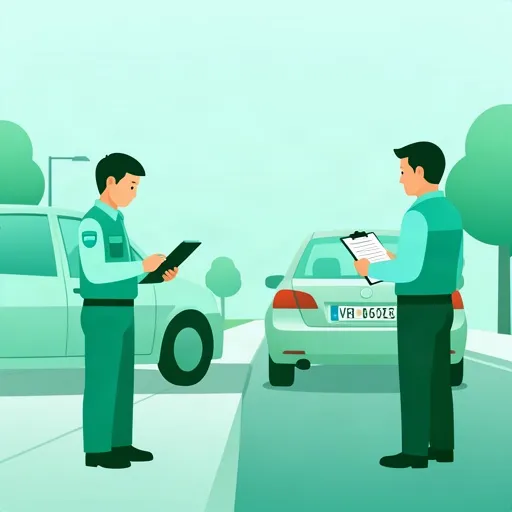
Article content overview
Preparing for your practical driving test involves more than just mastering manoeuvres and understanding the Highway Code. Before you even turn on the ignition, you must meet the mandatory eyesight standards set by the DVSA. This initial check is a critical part of the examination process; if you cannot meet these requirements on the day, your test will be terminated immediately, and you will not be permitted to proceed to the driving assessment.
Road safety in Great Britain relies on the ability of all drivers to identify hazards, read road signs, and monitor traffic from a safe distance. The eyesight check is designed to ensure that every learner driver possesses the visual clarity required to safely navigate public roads. Because this check happens at the start of your test, it serves as a non-negotiable threshold for entry. Failing this check means you have not met the basic legal requirement for driving, leading to an automatic fail and the loss of your test fee.
Failing the eyesight check at the start of your practical test results in the immediate cancellation of your session. Always verify your vision with a professional optician well before booking your exam to avoid disappointment.
The DVSA mandates that you must be able to read a vehicle registration number plate in good daylight from a specific distance. This distance varies slightly depending on whether the vehicle uses the current registration format or the older style. For modern vehicles, which follow the "two letters, two numbers, three letters" format introduced in 2001, you must be able to read the plate from a distance of 20 metres. For vehicles with the older, pre-2001 style number plates, the required distance is 20.5 metres.
It is a common misconception that the vision requirement only applies to the day of your driving test. According to Rule 92 of the Highway Code, you must be able to read a number plate at the required distance at all times while driving. The police hold the power to require a driver to undertake an eyesight test at the roadside if they have reason to believe your vision is below the legal standard. If you fail such a test, your licence could be revoked, and you may face legal prosecution.
If your vision requires corrective measures, such as glasses or contact lenses, you have a legal obligation to wear them whenever you are behind the wheel. Choosing not to wear your prescribed eyewear is not only dangerous but also a direct violation of the Road Traffic Act 1988, which could invalidate your insurance and lead to serious penalties.
The legal requirement to have a visual acuity of at least 0.5 (6/12) on the Snellen scale, with or without glasses or contact lenses, and an adequate horizontal field of vision.
While simple short-sightedness or long-sightedness that can be corrected with glasses does not need to be reported to the DVLA, other medical conditions affecting your eyesight do. You must notify the DVLA if you develop a condition that affects both eyes or if you have a specific visual impairment that could impact your ability to drive. Always check the official A to Z of medical conditions provided by the government to determine if your specific situation requires disclosure. If you have undergone laser eye surgery and your vision now meets the required standard without glasses, you do not need to inform the DVLA of your previous condition.
Before you drive a single metre on your practical test, the DVSA examiner will ask you to read a number plate from a set distance to verify you meet the legal eyesight standard. Modern plates require 20 metres and older-style plates require 20.5 metres; if you wear glasses or contact lenses, you must have them on during the check. Failing means your test ends immediately and you lose your fee, with no driving permitted. Beyond the test, Rule 92 of the Highway Code obliges you to maintain these standards continuously, and police can stop you for a roadside eyesight test at any time. Always wear your prescribed corrective lenses when driving and report any qualifying medical conditions to the DVLA.
A short set of high-value points that capture the most important ideas from this article.
The eyesight check is a non-negotiable gate at the start of your practical test; failing it cancels your test immediately.
Modern post-2001 number plates must be read at 20 metres; pre-2001 style plates require 20.5 metres.
If you need glasses or contact lenses, you must wear them during the test or risk automatic failure.
You get one retest attempt on a different plate if you fail the first reading.
Rule 92 of the Highway Code means you must meet these standards every time you drive, not just on test day.
Distance is 20 metres for current format plates (two letters, two numbers, three letters) and 20.5 metres for older pre-2001 plates.
The test must be conducted in good daylight conditions.
Police can require you to take a roadside eyesight test at any time while driving.
Conditions affecting both eyes or causing specific visual impairments must be reported to the DVLA.
Laser eye surgery that corrects your vision does not require DVLA notification once standards are met.
Confusing the two distance requirements and not knowing which applies to the vehicle shown.
Arriving at the test without prescribed glasses or contact lenses.
Believing the vision check is a minor formality rather than a hard legal threshold.
Assuming vision requirements only apply on test day and can be ignored after passing.
Not checking whether a medical condition needs to be reported to the DVLA.
Article content overview
A short set of high-value points that capture the most important ideas from this article.
The eyesight check is a non-negotiable gate at the start of your practical test; failing it cancels your test immediately.
Modern post-2001 number plates must be read at 20 metres; pre-2001 style plates require 20.5 metres.
If you need glasses or contact lenses, you must wear them during the test or risk automatic failure.
You get one retest attempt on a different plate if you fail the first reading.
Rule 92 of the Highway Code means you must meet these standards every time you drive, not just on test day.
Distance is 20 metres for current format plates (two letters, two numbers, three letters) and 20.5 metres for older pre-2001 plates.
The test must be conducted in good daylight conditions.
Police can require you to take a roadside eyesight test at any time while driving.
Conditions affecting both eyes or causing specific visual impairments must be reported to the DVLA.
Laser eye surgery that corrects your vision does not require DVLA notification once standards are met.
Confusing the two distance requirements and not knowing which applies to the vehicle shown.
Arriving at the test without prescribed glasses or contact lenses.
Believing the vision check is a minor formality rather than a hard legal threshold.
Assuming vision requirements only apply on test day and can be ignored after passing.
Not checking whether a medical condition needs to be reported to the DVLA.
Explore related topics, search based questions, and concepts that learners often look up when studying Driving Test Eyesight Rules. These themes reflect real search intent and help you understand how this topic connects to wider driving theory knowledge in Great Britain.
Find clear and practical answers to common questions learners often have about Driving Test Eyesight Rules. This section helps explain difficult points, remove confusion, and reinforce the key driving theory concepts that matter for learners in Great Britain.
You must be able to read a standard number plate in good daylight from a distance of 20 metres for new-style plates, or 20.5 metres for older-style plates.
If you cannot read the number plate from the required distance, you will fail the eyesight check, and your driving test will be terminated immediately.
Yes. If you require glasses or contact lenses to meet the vision standard, you must wear them at all times while driving, including throughout your entire practical test.
Yes, under the Road Traffic Act 1988, the police have the power to require a driver to undergo an eyesight test at any time to ensure they meet the legal standards for road safety.
Explore our extensive library of Great Britain driving theory articles to clarify any topic, review specific road rules, or gain deeper insights into vehicle safety and the Highway Code. Use the search to find exactly what you need for comprehensive DVSA theory test preparation.