
Proper tyre maintenance is a fundamental part of the Highway Code and a recurring topic in official DVSA theory test questions. By learning how to identify legal tread depths and dangerous physical damage, you will be prepared to answer exam questions accurately while developing vital habits for vehicle safety. This guide provides the necessary knowledge to ensure your vehicle remains roadworthy and safe for every journey.
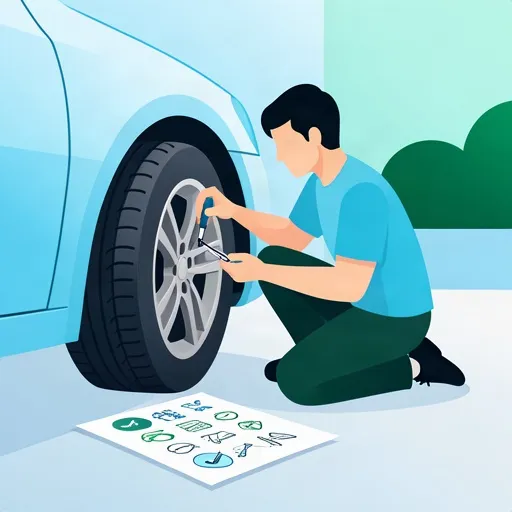
Article content overview
Ensuring your vehicle is roadworthy is a fundamental responsibility for every driver in Great Britain. Tyre safety is not just a critical aspect of your vehicle’s maintenance; it is a core topic in the DVSA theory test. Understanding the legal requirements regarding tyre condition, tread depth, and inflation will help you pass your exam and keep you safe on roads across England, Scotland, and Wales. Neglecting these checks can result in points on your licence, heavy fines, and significantly increased risk of accidents, particularly in wet weather conditions.
One of the most common questions on the DVSA theory test relates to the legal minimum tread depth. It is vital to distinguish between requirements for different classes of vehicles, as the regulations differ significantly.
For a standard passenger car, the legal minimum tread depth is 1.6 mm. This must be maintained across the central three-quarters of the breadth of the tyre and around the entire circumference. Many modern tyres feature tread wear indicators, which are small raised bars in the grooves that show when the tyre is approaching this limit, but manual checks with a tread depth gauge are more reliable and highly recommended.
It is important to note that commercial vehicles, such as lorries and certain buses, are subject to different rules. For these larger vehicles, the legal minimum tread depth is 1 mm, again measured across three-quarters of the breadth of the tyre. Confusing these figures is a common mistake for learner drivers, so always ensure you are applying the correct rule based on the vehicle category in the question.
| Vehicle Type | Legal Minimum Tread Depth | Measurement Area |
|---|---|---|
| Car (Category B) | 1.6 mm | Central 3/4 breadth |
| Lorry / Bus (Category C/D) | 1.0 mm | Central 3/4 breadth |
Beyond tread depth, the physical condition of your tyres is a frequent focus of the theory test. A tyre that appears to have sufficient tread may still be illegal or dangerously unroadworthy if it shows signs of structural damage. You must regularly inspect your tyres for cuts, lumps, or bulges, as these suggest internal damage that could lead to a sudden blowout.
Using different types of tyres on the same axle can also affect the handling of the vehicle, making it unstable, especially under heavy braking or during evasive manoeuvres. Always follow the manufacturer's recommendations for tyre type and size. Furthermore, any sign of uneven wear should be investigated, as it often points to issues with wheel alignment, suspension, or incorrect tyre pressures.
The National Highways T.R.I.P. (Top up, Relax, Inspect, Prepare) initiative provides excellent guidance for preparing for long journeys. Before setting off, you should perform a "walk-around" check of your vehicle. This includes verifying that your tyres are inflated to the manufacturer’s recommended pressure, which can usually be found in your vehicle handbook, inside the driver’s door pillar, or near the fuel filler cap.
By incorporating these checks into your routine, you develop the habits of a safe, conscientious driver. These practices are not just for passing the theory test; they ensure that your vehicle provides the grip and stability needed to handle the diverse and often challenging road conditions found throughout Great Britain.
Tyre safety is a testable topic covering legal tread depths, with cars requiring 1.6 mm and larger vehicles requiring 1.0 mm, measured across the central three-quarters of the tyre. Beyond tread depth, tyres must be free from structural damage including exposed ply, cuts, or bulges. The National Highways T.R.I.P. initiative (Top up, Relax, Inspect, Prepare) provides a framework for pre-journey checks including pressure verification, visual damage inspection, and tread depth measurement. Understanding these requirements prepares you for relevant DVSA theory test questions while building essential vehicle maintenance habits for safe driving in Great Britain.
A short set of high-value points that capture the most important ideas from this article.
The legal minimum tread depth for car tyres is 1.6 mm measured across the central three-quarters of the tyre's width and around its entire circumference
Commercial vehicles such as lorries and buses have a lower legal minimum of 1.0 mm, not the same as cars
Exposed ply or cord showing through the rubber makes a tyre immediately illegal and dangerous, requiring immediate replacement
Pre-journey tyre checks should verify pressure, inspect for damage, and measure tread depth using a gauge
Tyres on the same axle must be the same type and size to maintain vehicle stability and handling
Always match the correct tread depth rule to the vehicle category in the question (1.6mm for cars, 1.0mm for larger vehicles)
Tyre damage such as cuts, bulges, or lumps can make a tyre illegal even with sufficient tread depth
The T.R.I.P. initiative stands for Top up, Relax, Inspect, Prepare as a pre-journey checklist
Tread wear indicators are helpful but a manual depth gauge provides a more reliable measurement
Uneven tyre wear often signals underlying problems with alignment, suspension, or pressure
Confusing car tyre minimum tread depth (1.6 mm) with the commercial vehicle minimum (1.0 mm)
Believing that adequate tread depth alone means a tyre is roadworthy; physical condition matters equally
Using different tyre types or sizes on the same axle, which compromises vehicle handling
Assuming tread wear indicators alone are sufficient without manual checking
Neglecting to check the spare tyre or repair kit during pre-journey inspections
Article content overview
A short set of high-value points that capture the most important ideas from this article.
The legal minimum tread depth for car tyres is 1.6 mm measured across the central three-quarters of the tyre's width and around its entire circumference
Commercial vehicles such as lorries and buses have a lower legal minimum of 1.0 mm, not the same as cars
Exposed ply or cord showing through the rubber makes a tyre immediately illegal and dangerous, requiring immediate replacement
Pre-journey tyre checks should verify pressure, inspect for damage, and measure tread depth using a gauge
Tyres on the same axle must be the same type and size to maintain vehicle stability and handling
Always match the correct tread depth rule to the vehicle category in the question (1.6mm for cars, 1.0mm for larger vehicles)
Tyre damage such as cuts, bulges, or lumps can make a tyre illegal even with sufficient tread depth
The T.R.I.P. initiative stands for Top up, Relax, Inspect, Prepare as a pre-journey checklist
Tread wear indicators are helpful but a manual depth gauge provides a more reliable measurement
Uneven tyre wear often signals underlying problems with alignment, suspension, or pressure
Confusing car tyre minimum tread depth (1.6 mm) with the commercial vehicle minimum (1.0 mm)
Believing that adequate tread depth alone means a tyre is roadworthy; physical condition matters equally
Using different tyre types or sizes on the same axle, which compromises vehicle handling
Assuming tread wear indicators alone are sufficient without manual checking
Neglecting to check the spare tyre or repair kit during pre-journey inspections
Explore related topics, search based questions, and concepts that learners often look up when studying Tyre Safety and Legal Requirements. These themes reflect real search intent and help you understand how this topic connects to wider driving theory knowledge in Great Britain.
Find clear and practical answers to common questions learners often have about Tyre Safety and Legal Requirements. This section helps explain difficult points, remove confusion, and reinforce the key driving theory concepts that matter for learners in Great Britain.
For cars, the legal minimum tread depth is 1.6 mm across the central three-quarters of the breadth of the tyre and around the entire circumference.
Yes, for larger commercial vehicles such as lorries, buses, and coaches, the minimum tread depth requirement is 1 mm across three-quarters of the breadth of the tread and in a continuous band around the entire circumference.
A tyre is considered dangerous and illegal if it has deep cuts, bulges, or exposed ply or cord. Such damage significantly affects handling and poses a serious safety risk to you and other road users.
The National Highways T.R.I.P. initiative encourages drivers to plan their journeys, ensure their vehicle is safe and roadworthy, and maintain proper focus, emphasizing that pre-journey checks like tyre inspection are vital.
Explore our extensive library of Great Britain driving theory articles to clarify any topic, review specific road rules, or gain deeper insights into vehicle safety and the Highway Code. Use the search to find exactly what you need for comprehensive DVSA theory test preparation.