
This unit focuses on the critical physics and techniques behind safe stor knallert operation. You will learn how to manage your speed according to Danish laws and conditions, apply brakes effectively, understand the vital interplay of tyres, road surface, and grip, and maintain a safe following distance. Mastering these principles is key to both passing your theory exam and riding safely.
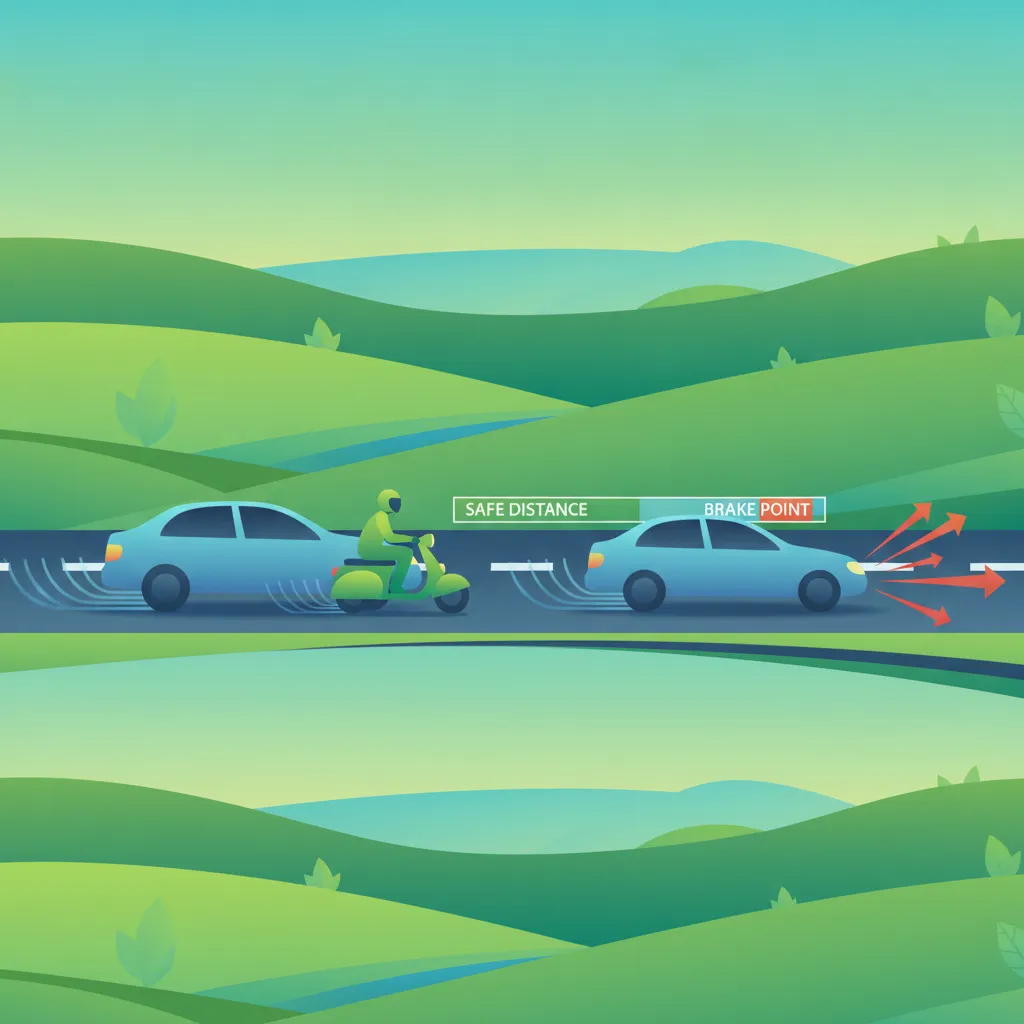
Browse all lessons that make up Speed, Braking, Grip, Balance and Following Distance. Each lesson focuses on specific topics, learning objectives, and core concepts, helping you build essential knowledge and follow a clear, structured progression toward your study goals in Denmark.
This lesson details the specific speed limits applicable to stor knallert riders in various Danish environments, including urban zones and rural roads. It emphasizes the concept of 'appropriate speed,' which requires adjusting speed based on weather, visibility, and traffic density. The content explains how to manage speed to ensure safety and legal compliance.
This lesson explains the components of total stopping distance: reaction distance and braking distance. It provides instruction on how to use both front and rear brakes effectively for a controlled and efficient stop. The content also highlights how factors like speed, road condition, and tyre quality influence how quickly you can stop.
This lesson explores the critical relationship between tyres, road surface, and grip. It explains how rain, ice, gravel, and even painted road markings can reduce traction and increase risk. Learners will understand the importance of having correct tyre pressure and adequate tread depth to maintain control.
This lesson focuses on the fundamental skills of balance and steering. It explains how body position affects the vehicle's center of gravity and stability. The concept of counter-steering is introduced as the primary method for initiating turns at moderate to high speeds, a key skill for effective control.
Explore high-intent keywords and long-tail search topics learners use when researching Speed, Braking, Grip, Balance and Following Distance. These terms reflect how people search for reliable study materials, structured explanations, and unit-level theory preparation support in Denmark.
Find clear answers to the most common questions learners ask about Speed, Braking, Grip, Balance and Following Distance. Understand how the unit is organized, what learning goals it supports, and how it contributes to your study progression with structured explanations and practical guidance tailored for learners in Denmark.
In Denmark, the general speed limit for a stor knallert (Category AM) is 45 km/h in built-up areas and on most roads. Always pay attention to specific signs indicating lower limits, especially near schools, residential areas, or in construction zones. Exceeding these limits can lead to fines and points on your license.
The condition of the road surface significantly impacts braking distance. On dry, clean asphalt, your braking distance will be shortest. However, on wet roads, gravel, or icy surfaces, grip is reduced, dramatically increasing the distance needed to stop. Always adjust your speed and braking intensity based on the surface to maintain control.
Maintaining a safe following distance provides you with adequate time and space to react to sudden stops or hazards from the vehicle in front. For a stor knallert, this is especially critical as your ability to brake quickly might be less than that of larger vehicles. A general guideline is to follow the 'two-second rule,' increasing it in adverse conditions.
Tyre condition is fundamental to grip and stability. Worn tyres have less tread, reducing their ability to grip the road, especially in wet or slippery conditions. Properly inflated tyres with sufficient tread depth ensure optimal contact with the road surface, allowing for effective braking, acceleration, and cornering.
Yes, for stor knallerts, especially those with both front and rear brakes, it's generally best to apply both simultaneously and progressively. Avoid grabbing the brakes suddenly, as this can cause the wheels to lock up, leading to a skid. Understanding your specific scooter's braking system is crucial, and practice in safe areas can help develop good habits.
Rain reduces tyre grip significantly, increasing braking distances and the risk of skidding. Wind, especially strong crosswinds, can affect your balance and stability, making it harder to maintain a straight line and requiring more effort to control the vehicle. In both scenarios, you should reduce your speed, increase your following distance, and be extra vigilant.
All included lessons
Lessons in Speed, Braking, Grip, Balance and Following Distance
See who benefits most from studying Speed, Braking, Grip, Balance and Following Distance. This overview explains how the unit supports different learning needs, what level of knowledge is helpful before starting, and how it fits into the overall study path in Denmark.
This unit is essential for all learners preparing for the Danish Category AM (stor knallert) theory test. It is particularly beneficial for those who need a deeper understanding of the physical forces at play when riding, helping them to make safer decisions on the road.

Begin your official Danish driving licence preparation today by exploring our comprehensive curriculum. Choose a structured course that suits your learning style and progress confidently through all traffic rules, road signs, and practical scenarios required for your exam.
Browse Driving Theory CoursesExplore all units and lessons included in this driving theory course.
Begin your official Danish driving licence preparation today by exploring our comprehensive curriculum. Choose a structured course that suits your learning style and progress confidently through all traffic rules, road signs, and practical scenarios required for your exam.
Browse Driving Theory Courses