
This lesson provides an essential guide to understanding traffic lights and signalization within the Danish road network. By learning how to interpret standard signals and those specifically for cyclists, you will be better prepared to navigate intersections safely as a Category AM moped rider.
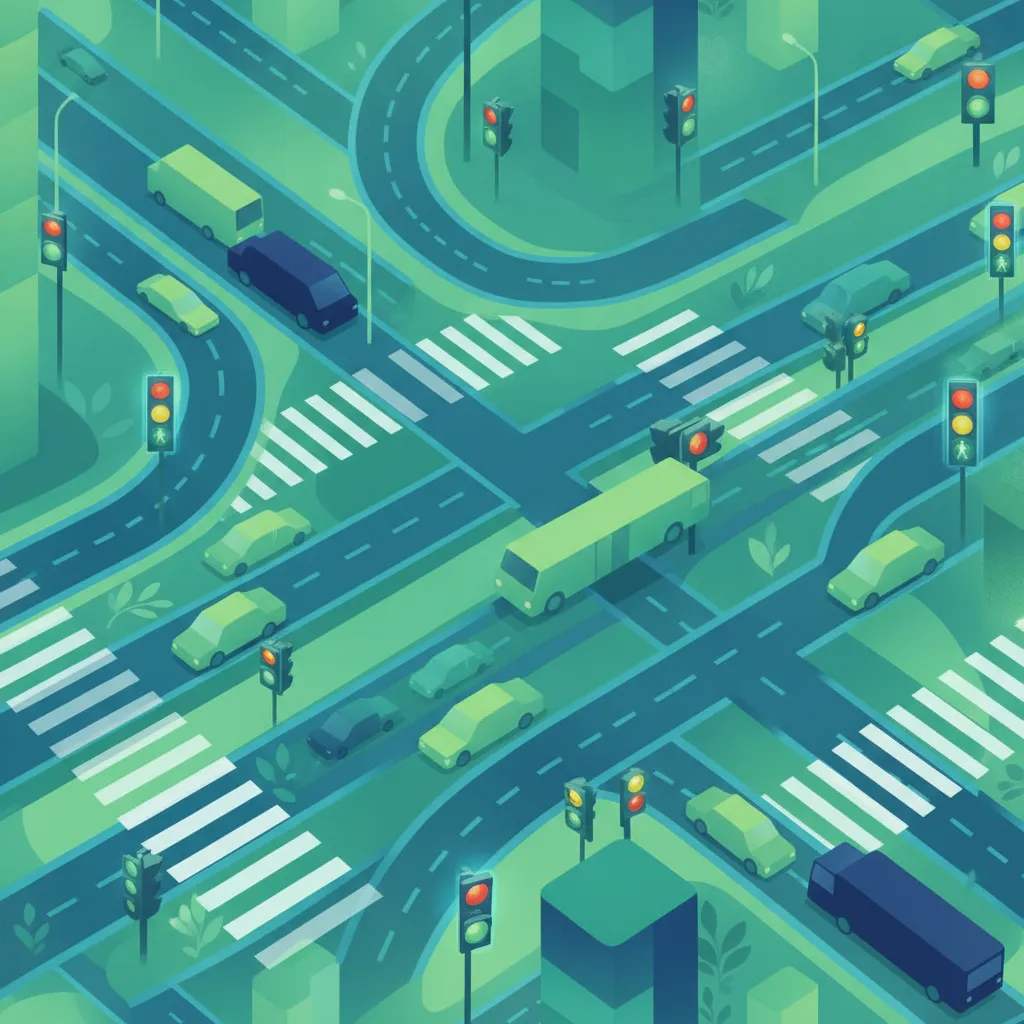
Lesson content overview
Navigating Denmark's roads safely and efficiently as a Category AM (Stor Knallert) rider requires a thorough understanding of traffic lights and their signals. These signals are fundamental to controlling vehicle flow, assigning priority (vigepligt), and preventing collisions at intersections, junctions, and pedestrian crossings. This lesson provides an exhaustive guide to the various types of traffic light signals you will encounter, detailing their specific meanings, legal implications, and how to interpret them correctly from the perspective of a moped rider.
Understanding these signals is not merely about obeying rules; it's about anticipating the actions of other road users and making informed decisions to ensure your safety and the safety of those around you. This knowledge builds upon your understanding of road signs, road markings, and general priority rules, offering a comprehensive framework for safe road participation.
Traffic light signalization serves as a primary method for managing vehicular and pedestrian movement, particularly in urban areas and at complex intersections. These systems are engineered to provide clear, unambiguous commands that dictate right-of-way and promote orderly progression through busy areas. For riders of stor knallert, who are often more vulnerable in traffic, correctly interpreting these signals is paramount for defensive driving and avoiding hazardous situations.
The logic underpinning traffic light operations is rooted in predictable sequences, clear visual distinctions, and strict adherence to legal directives found in Danish traffic law. By understanding the core principles, you gain insight into why signals change as they do, allowing you to anticipate movements and react appropriately.
Traffic signals explicitly assign right-of-way, meaning they override general priority rules at an intersection. Always obey the traffic light before applying general priority rules unless the signal is flashing amber.
The most common traffic signals follow a universal color code: red, amber (yellow), and green. Understanding the precise meaning of each steady light in its sequence is the cornerstone of safe driving. For AM riders, these signals dictate when to stop, when to prepare, and when to proceed.
A steady red light demands an absolute stop. When you encounter a red light, you must bring your stor knallert to a complete halt before the designated stop line. If no stop line is present, you must stop before the crosswalk. If there is neither a stop line nor a crosswalk, you must stop before entering the intersection itself, ensuring you do not impede traffic or block pedestrian paths.
Failing to stop at a red light is a serious traffic violation in Denmark, carrying significant penalties due to the high risk of collision it presents. It is crucial to anticipate traffic light changes and begin braking well in advance, especially when riding a moped, to ensure a safe and smooth stop.
The steady amber light serves as a critical warning signal, indicating that the traffic light is about to change to red. When approaching a steady amber light, the primary rule is to stop if it is safe to do so. This means you should initiate braking and stop before the stop line, crosswalk, or intersection if you can do so without sudden, harsh braking that could endanger yourself or following traffic.
However, if you are already in the intersection or so close to it that a safe stop is not possible without an abrupt maneuver, you should continue through the intersection to clear it. Accelerating to "beat" an amber light is dangerous and illegal. The amber phase is a transition period designed to allow vehicles to safely clear the intersection before cross-traffic receives a green light.
A steady green light grants you permission to proceed through the intersection. While a green light indicates your turn to go, it does not grant you an absolute right-of-way to simply drive through without consideration for others. As an AM rider, you must always exercise caution and remain vigilant.
Even with a green light, you must yield to pedestrians or cyclists who may still be in the intersection or who have a dedicated green or flashing signal indicating their right-of-way. It is also important to ensure the intersection is clear of any vehicles that may still be attempting to clear it from a previous phase. Always look left and right before proceeding to confirm the safety of your path.
Beyond the standard red, amber, and green, specific flashing lights and directional arrows provide nuanced instructions that require careful interpretation. These signals are often used at less busy intersections or to manage complex turning movements.
A continuously flashing amber light is a cautionary signal. It indicates that the full traffic light system is not active or that regular right-of-way rules are suspended. When you encounter a flashing amber light, you must slow down, exercise extreme caution, and be prepared to stop.
The meaning of a flashing amber light is to yield to all other road users, including those on intersecting roads, pedestrians, and cyclists. You may only proceed when the way is completely clear and it is safe to do so. This signal often requires you to apply general priority rules (vigepligt), such as yielding to traffic from the right, or observing signs that indicate other priority rules. It essentially transforms the intersection into one where drivers must rely on caution and priority rules, rather than a fixed signal.
Never assume you have the right-of-way at a flashing amber light. Always be prepared to stop and yield to other traffic.
A flashing red light carries the same authority as a stop sign. When you see a flashing red light, you must bring your stor knallert to a complete stop before the stop line. Only after coming to a full stop and ensuring the intersection is entirely clear of other traffic can you proceed.
This signal is typically used at railway crossings, fire station exits, or other locations where a temporary, absolute stop is required but a full three-color traffic light system is unnecessary. Treat it with the utmost seriousness, as failure to stop can have severe consequences.
A green light displaying a directional arrow (e.g., a green left arrow or a green right arrow) grants exclusive right-of-way for traffic proceeding in that specific direction. This means you can proceed in the indicated direction even if other signals at the same intersection are red for straight-through traffic or other turning movements.
When following a green arrow, you typically have a protected turn, meaning oncoming traffic or conflicting cross-traffic should have a red light. However, it is critically important to remember that this exclusive right-of-way does not automatically extend to pedestrians and cyclists. You must still yield to pedestrians and cyclists who may be crossing your path, even if their dedicated signal is red or flashing. Always check for vulnerable road users before completing your turn.
As a moped rider, you share the road with cyclists and pedestrians, who are considered vulnerable road users. Many intersections feature dedicated signals for these groups, and it is crucial for AM riders to understand and obey them, especially when sharing infrastructure or crossing their paths.
In Denmark, where cycling is prevalent, many intersections have specific traffic lights for cyclists. These are typically smaller than vehicle lights and may show a bicycle symbol. When you are riding on a designated cycle path or in an area where cyclists have priority, you must obey these cycle signals.
It is common for cycle signals to have different timing than vehicle signals. For instance, cyclists might receive a green light before vehicles to give them a head start (known as "early release"), or they might have a green light when vehicle traffic has a red, allowing them to cross unimpeded. As a moped rider, pay close attention to these signals when applicable to your position on the road.
Pedestrian crossings at signalized intersections also have their own lights, typically depicting a standing red figure or a walking green figure. These signals dictate when pedestrians can cross safely. As a moped rider, your responsibility at pedestrian crossings is clear: you must always yield to pedestrians who have a green light.
Even if your vehicle's traffic light is green, if a pedestrian is crossing or has started to cross on a green pedestrian signal, you must stop and wait for them to clear the crossing. Ignoring pedestrian signals or failing to yield to pedestrians is not only illegal but also extremely dangerous, as pedestrians are highly vulnerable to collisions.
Traffic lights operate on precisely engineered timings to optimize traffic flow and ensure safety. Understanding these principles can help you anticipate changes and ride more smoothly and safely.
The "cycle length" refers to the total duration it takes for a traffic light to complete one full sequence of all its phases (red, amber, green, and back to red). This cycle is carefully calculated based on traffic volume, intersection design, and road user types.
Within each cycle, a "clearance interval" is a critical safety feature. This is the period during which all conflicting signals are red (or amber/red combinations) to allow vehicles to clear the intersection before a conflicting flow of traffic is given a green light. The amber and subsequent all-red phases are designed to provide this crucial safety buffer, preventing simultaneous green lights for conflicting traffic streams.
In urban areas, traffic lights are often synchronized, meaning they are coordinated along a corridor or network of roads. The goal of synchronization is to manage overall traffic load, reduce stops, and maintain a steady flow of traffic at a particular speed.
For AM riders, synchronized lights can mean smoother journeys if you maintain a consistent speed. However, variations in traffic or unexpected delays can break this synchronization, so always remain attentive to each individual signal.
Compliance with traffic light signals is a non-negotiable aspect of Danish traffic law (Færdselsloven). The regulations are strict to enforce safety and order on the roads.
The Danish Road Traffic Act, which governs all aspects of road usage, including traffic signals, priority rules, and penalties for violations.
Violations of traffic light regulations in Denmark are taken seriously due to the direct threat they pose to road safety. Running a red light, for instance, can result in significant fines and potentially points on your driver's license, affecting your ability to ride a moped or later drive other vehicles. The exact penalties can vary based on the severity of the violation and any aggravating circumstances.
Many accidents at signalized intersections stem from common misunderstandings or risky behaviors. As an AM rider, being aware of these pitfalls can help you avoid them.
Your interpretation and response to traffic signals must adapt to various environmental and contextual conditions. The road is rarely static, and good riders adjust their behavior accordingly.
Poor visibility conditions like heavy fog, torrential rain, or snowfall can make it difficult to clearly see traffic lights until you are very close. Similarly, at night, the glare of oncoming headlights or ambient city lights can sometimes obscure signals.
In these conditions, it is crucial to:
Traffic light systems can vary between urban and rural environments. Urban intersections are typically more complex, often featuring multiple phases, dedicated turning lanes, and specific pedestrian crossing phases. You will encounter more dedicated cyclist and pedestrian signals.
Rural intersections, while less frequent, might use simpler systems, such as flashing amber lights to denote caution where a full signal system is not warranted. They might also lack dedicated pedestrian signals, requiring you to be even more vigilant for pedestrians or cyclists using the shoulder.
As an AM rider on a stor knallert, your vehicle's dynamics play a significant role in how you approach and react to traffic lights. Mopeds generally have shorter braking distances than cars, but external factors like wet roads or worn tires can drastically increase them.
Your vulnerability as a moped rider means that even minor collisions can have serious consequences. Therefore, you should always err on the side of caution:
The design of traffic signals is not arbitrary; it's based on principles of human psychology and traffic engineering to enhance road safety. The use of distinct colors (red, amber, green) exploits natural human visual processing, allowing for rapid and intuitive decision-making. The predictable sequence helps create a rhythm to traffic flow, reducing uncertainty and conflict.
The very existence of traffic lights at intersections acknowledges a high potential for conflict between different streams of traffic. By assigning specific times for each stream to move, traffic lights minimize collision points and create controlled intervals for safe passage. Compliance with these signals is a collective agreement among all road users, fostering predictability and significantly reducing the risk of accidents, especially for vulnerable riders like those on stor knallert.
Mastering traffic signals is crucial for your success in the Danish Category AM theory test and, more importantly, for your safety on the road. Remember these essential points:
By internalizing these rules and principles, you will be well-prepared to navigate Danish intersections safely and confidently as a Category AM rider.
This lesson covers the complete spectrum of Danish traffic light signals relevant to Category AM moped riders, including standard red-amber-green sequences, flashing signals, and directional arrows. It emphasizes that all traffic signals assign right-of-way and override general priority rules, except flashing amber which requires applying standard vigepligt. The content highlights critical obligations toward vulnerable road users - cyclists and pedestrians - particularly that even with a green arrow, you must yield to those crossing your path. Understanding these signal rules is essential for both passing the Danish theory exam and navigating Danish roads safely as a moped rider.
A short set of high-value points that capture the most important learning from this lesson.
Steady red and flashing red lights are absolute stop commands - always halt before the stop line or intersection.
Flashing amber requires extreme caution and yielding to ALL traffic, including pedestrians and cyclists.
A green light grants permission to proceed but does not override the right-of-way of pedestrians and cyclists already crossing.
Traffic signals override general priority rules (vigepligt) at intersections, except at flashing amber where standard rules apply.
A green arrow grants exclusive right-of-way for turning but still requires yielding to pedestrians and cyclists crossing your path.
Explore all units and lessons included in this driving theory course.
Amber light: stop if safe; otherwise proceed. Never accelerate to beat an amber.
If no stop line or crosswalk exists at a red light, stop before entering the intersection.
Dedicated cyclist signals may have different timing than vehicle signals - cyclists often get early release.
At flashing amber, the intersection becomes a yield-controlled junction where you must apply standard priority rules.
Mopeds have shorter braking distances but greater vulnerability - start braking early at amber signals.
Running a red light by misjudging the timing or failing to anticipate signal changes.
Treating a flashing amber light like a warning rather than a yield signal requiring complete readiness to stop.
Assuming a green arrow means the path is completely clear, leading to conflicts with pedestrians or cyclists.
Neglecting dedicated cyclist signals when riding in areas shared with bicycle traffic.
Proceeding on a green light without checking for pedestrians or vehicles still clearing the intersection.
Lesson content overview
A short set of high-value points that capture the most important learning from this lesson.
Steady red and flashing red lights are absolute stop commands - always halt before the stop line or intersection.
Flashing amber requires extreme caution and yielding to ALL traffic, including pedestrians and cyclists.
A green light grants permission to proceed but does not override the right-of-way of pedestrians and cyclists already crossing.
Traffic signals override general priority rules (vigepligt) at intersections, except at flashing amber where standard rules apply.
A green arrow grants exclusive right-of-way for turning but still requires yielding to pedestrians and cyclists crossing your path.
Explore all units and lessons included in this driving theory course.
Amber light: stop if safe; otherwise proceed. Never accelerate to beat an amber.
If no stop line or crosswalk exists at a red light, stop before entering the intersection.
Dedicated cyclist signals may have different timing than vehicle signals - cyclists often get early release.
At flashing amber, the intersection becomes a yield-controlled junction where you must apply standard priority rules.
Mopeds have shorter braking distances but greater vulnerability - start braking early at amber signals.
Running a red light by misjudging the timing or failing to anticipate signal changes.
Treating a flashing amber light like a warning rather than a yield signal requiring complete readiness to stop.
Assuming a green arrow means the path is completely clear, leading to conflicts with pedestrians or cyclists.
Neglecting dedicated cyclist signals when riding in areas shared with bicycle traffic.
Proceeding on a green light without checking for pedestrians or vehicles still clearing the intersection.
Explore search topics learners often look for when studying Traffic Lights and Signalization. These topics reflect common questions about road rules, driving situations, safety guidance, and lesson level theory preparation for learners in Denmark.
Browse additional driving theory lessons that cover connected traffic rules, road signs, and common driving situations related to this topic. Improve your understanding of how different rules interact across everyday traffic scenarios.
Learn about special traffic light signals like flashing amber and green arrows in Denmark. This lesson covers how to interpret these signals and your crucial responsibility towards cyclists and pedestrians to ensure intersection safety.

This lesson covers the proper methods for signalling intentions to other road users. It details the legal requirements for using turn indicators before turning or changing lanes. The content also explains how to use legally recognized hand signals as a backup or for added clarity.
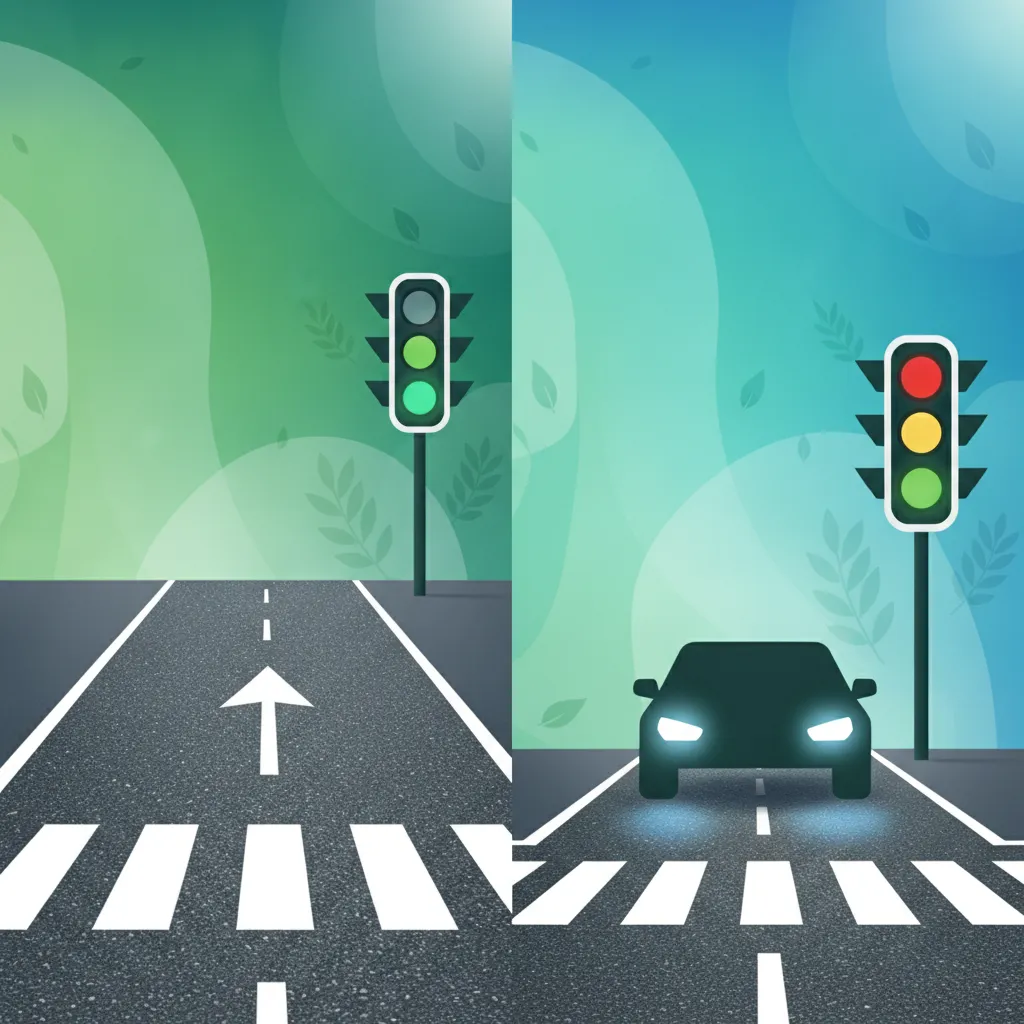
This lesson details the meaning and application of various road surface markings, including lane dividers, solid and broken lines, and directional arrows. You will also learn to interpret the full sequence of traffic light signals, including the specific rules for the amber (yellow) light phase. A proper understanding of these systems is vital for maintaining correct lane discipline and adhering to traffic controls.
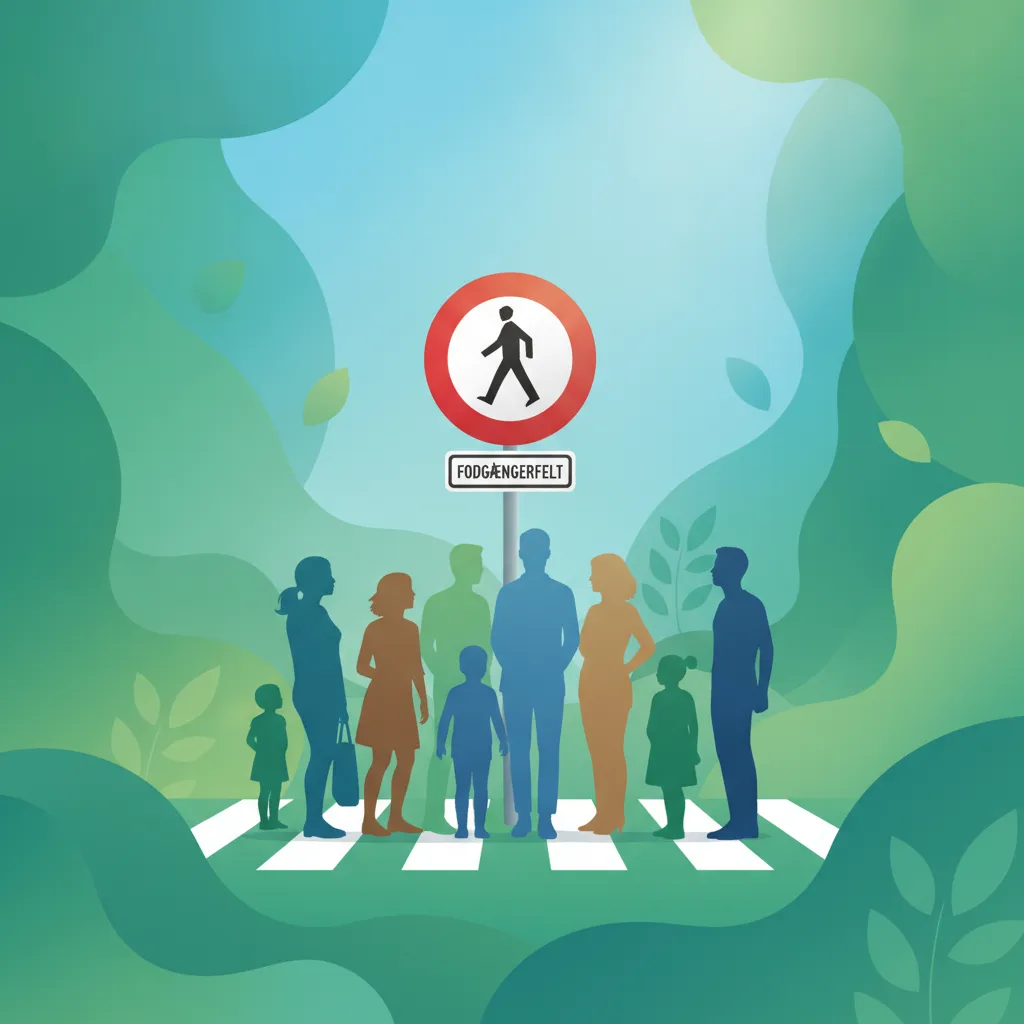
This lesson introduces the primary categories of Danish road signs and their legal implications. It covers regulatory signs that dictate mandatory actions or prohibitions, and warning signs that indicate upcoming hazards. Correct interpretation of these signs is fundamental for lawful and safe riding on Danish roads.
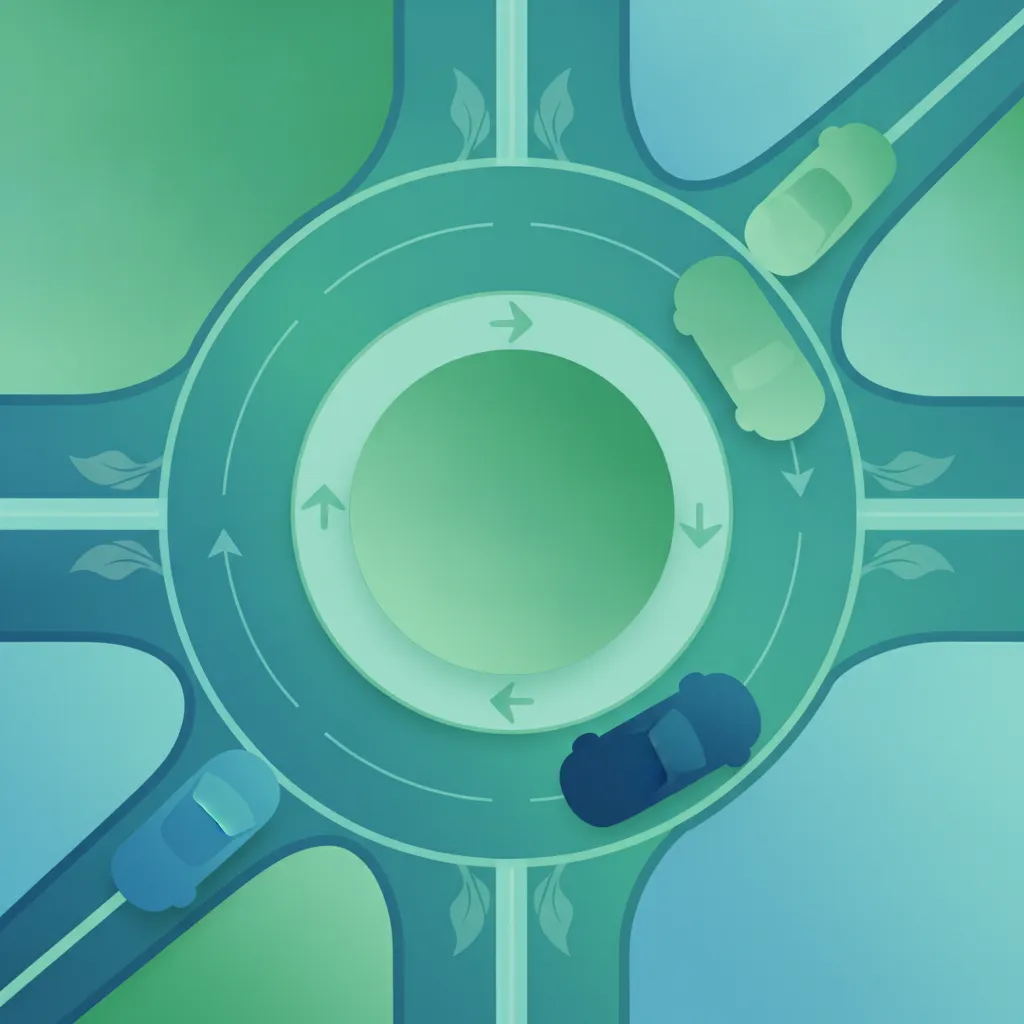
This lesson provides detailed instructions for navigating Danish roundabouts. It covers the rules for yielding upon entry, selecting the correct lane based on the intended exit, and signalling intentions clearly. The lesson also highlights the specific rules regarding priority for cyclists crossing entry and exit lanes.
This lesson focuses on interpreting the various markings painted on Danish road surfaces. It explains the rules associated with solid and broken lane lines, directional arrows, and special-purpose lanes for buses and cyclists. Understanding these markings is crucial for maintaining correct lane discipline and safely navigating complex road layouts.

This lesson explains the critical importance of being visible to other road users. It details the proper use of headlights and daytime running lights as required by Danish law. The content also covers the effectiveness of wearing reflective clothing and ensuring the vehicle's reflectors are clean and functional.

This lesson explores non-verbal communication techniques for safer road sharing. It discusses the importance of making eye contact with other drivers and pedestrians to confirm they have seen you. The content also explains the appropriate and legal use of the horn to alert others of your presence.
This lesson provides detailed guidance on navigating pedestrian crossings (fodgængerfelter) and areas with high cyclist traffic. It clarifies your legal obligation to stop for pedestrians at zebra crossings and the proper speed to approach these zones. A central theme is understanding the rights of vulnerable road users and how to yield safely to them in accordance with Danish traffic law.
This lesson focuses on the safe integration of cyclists and pedestrians within the traffic system, a key feature of Danish roads. It covers the specific rights and common behaviors of cyclists, including those on e-bikes and cargo bikes, and explains procedures for yielding to pedestrians. The content emphasizes maintaining safe distances and heightened awareness to prevent accidents and promote harmonious road sharing.
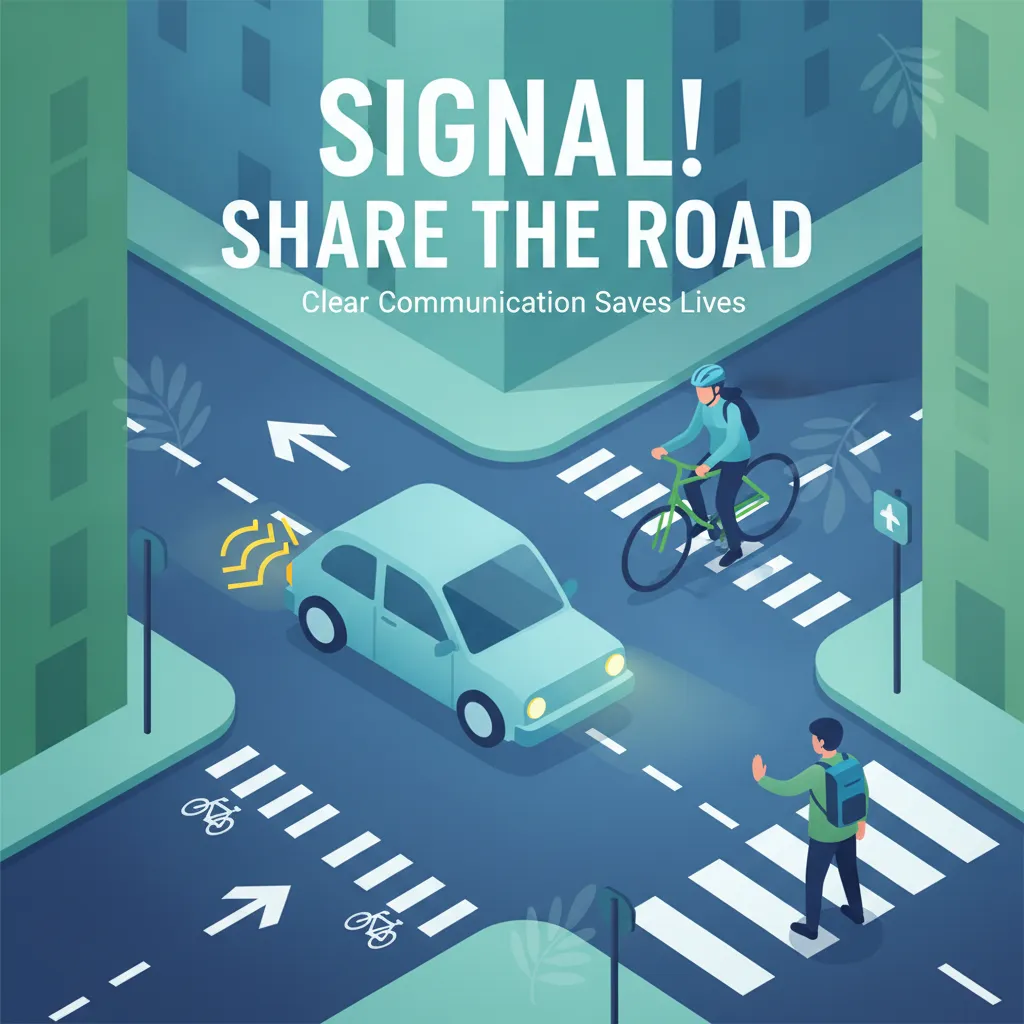
This lesson focuses on the different ways motorcyclists can communicate their intentions to others. It covers the correct use of electronic signals, standard hand signals, and the importance of making eye contact with drivers. Clear and early communication is essential for preventing conflicts and ensuring predictable interactions in traffic.
Understand the most frequent errors drivers make at Danish traffic lights and signals. Learn how to avoid dangerous violations and ensure you follow the correct procedures at intersections for the AM license theory.
This lesson details the meaning and application of various road surface markings, including lane dividers, solid and broken lines, and directional arrows. You will also learn to interpret the full sequence of traffic light signals, including the specific rules for the amber (yellow) light phase. A proper understanding of these systems is vital for maintaining correct lane discipline and adhering to traffic controls.

This lesson teaches you to identify warning signs that alert drivers to upcoming hazards and changing road conditions. It covers common signs such as sharp curves, school zones, animal crossings, and temporary conditions like roadworks or slippery surfaces. Understanding these signs is crucial for anticipating risks and adjusting your driving to ensure safety on all types of Danish roads.

This lesson provides a systematic approach to safely navigating intersections. It covers how to interpret priority signs and traffic signals, establish right-of-way, and scan for potential conflicts from all directions. The importance of clear sightlines and anticipating the movements of other vehicles is a key focus.
This lesson explores non-verbal communication techniques for safer road sharing. It discusses the importance of making eye contact with other drivers and pedestrians to confirm they have seen you. The content also explains the appropriate and legal use of the horn to alert others of your presence.
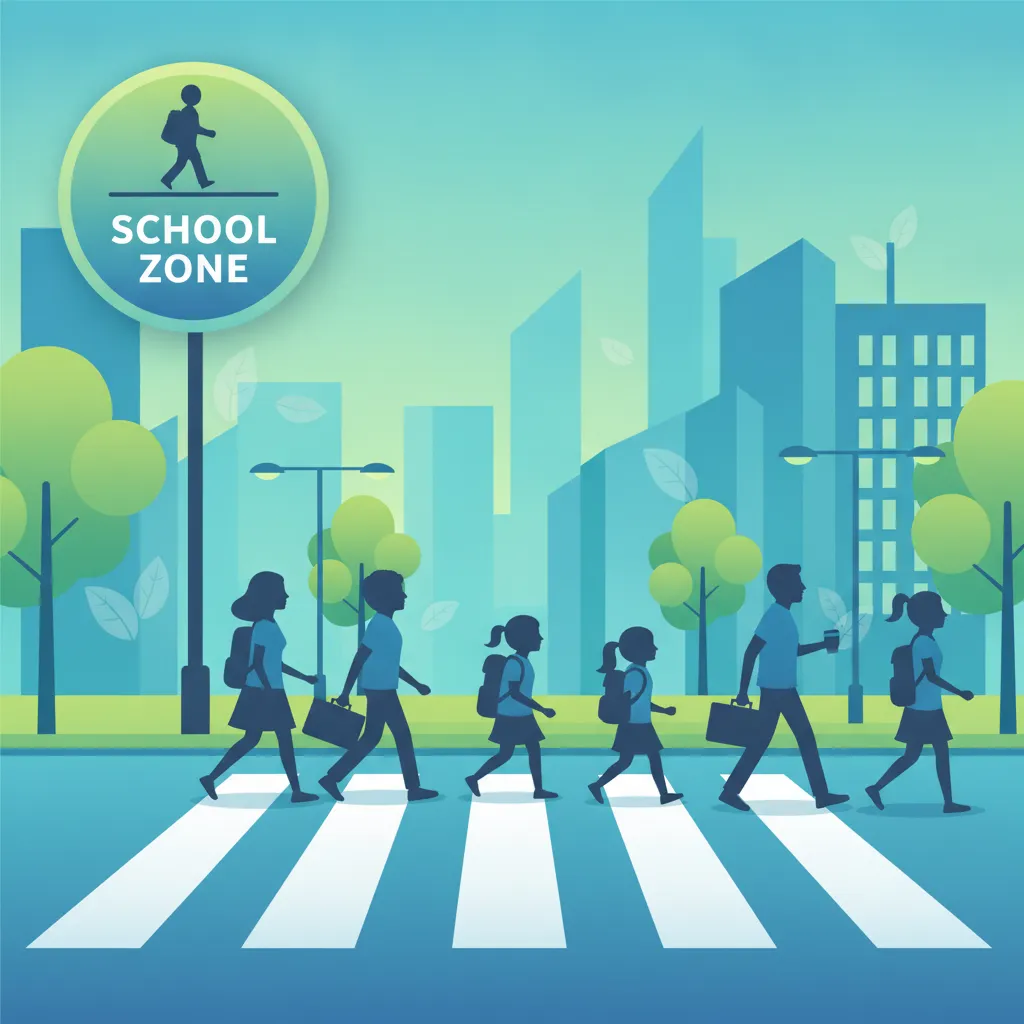
This lesson reinforces the driver's responsibility to protect pedestrians, particularly in busy urban areas and near schools. It details the procedures for approaching pedestrian crossings, the legal requirement to reduce speed significantly in marked school zones, and how to anticipate the unpredictable actions of pedestrians. The content covers traffic calming measures and the legal rights of pedestrians in various settings.
This lesson provides detailed guidance on navigating pedestrian crossings (fodgængerfelter) and areas with high cyclist traffic. It clarifies your legal obligation to stop for pedestrians at zebra crossings and the proper speed to approach these zones. A central theme is understanding the rights of vulnerable road users and how to yield safely to them in accordance with Danish traffic law.
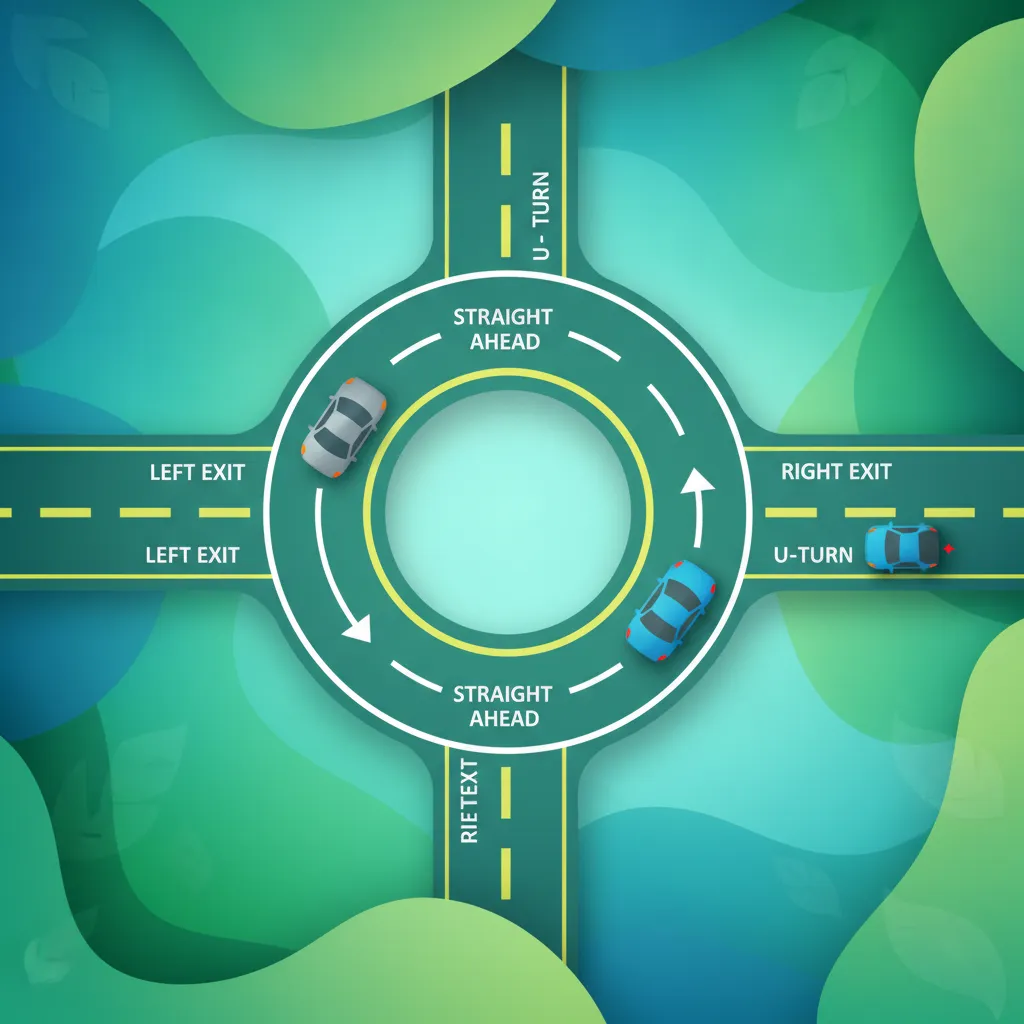
This lesson offers a step-by-step guide to navigating roundabouts in Denmark. You will learn how to approach and enter a roundabout, the requirement to yield to circulating traffic, and how to select the appropriate lane for your intended exit. Special attention is given to safely managing interactions with cyclists and pedestrians who may be present at roundabout entrances and exits.
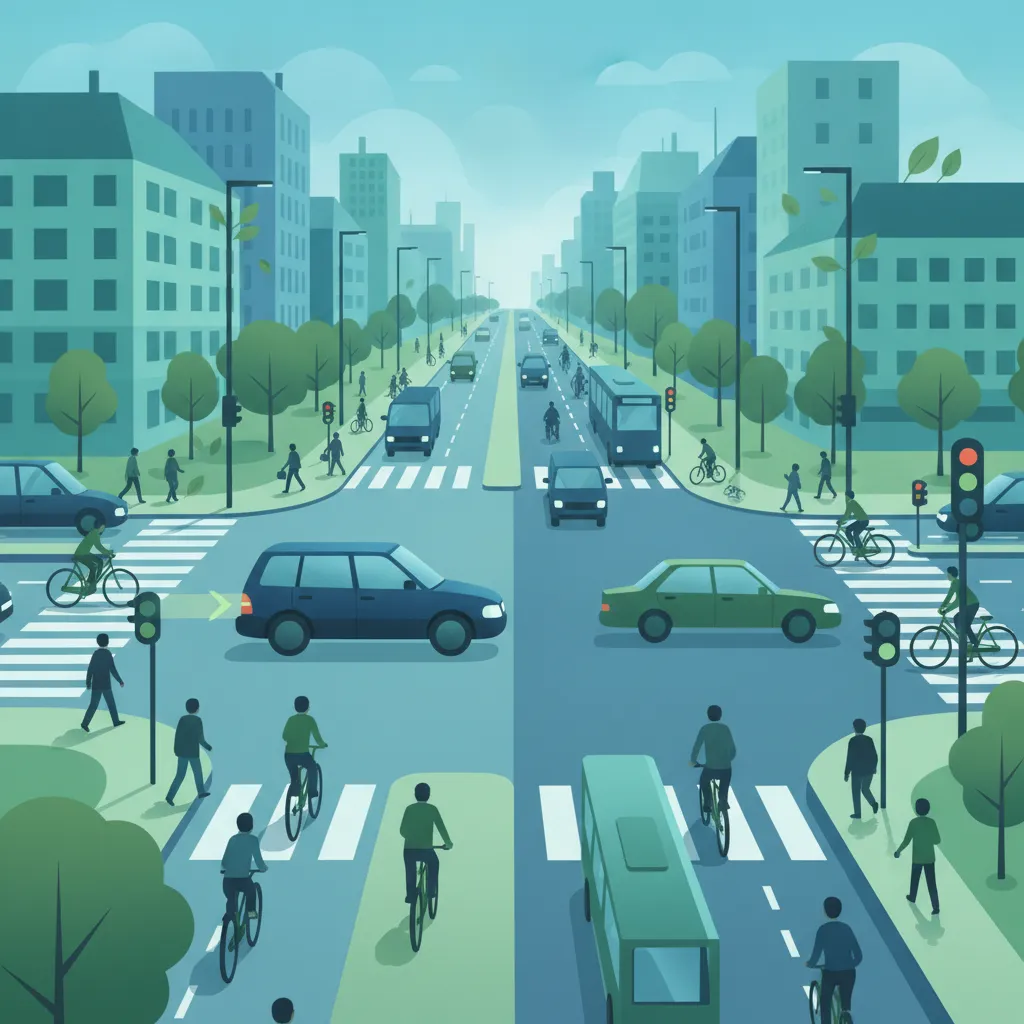
This lesson provides a structured method for approaching and crossing intersections safely. It reinforces the application of priority rules, the interpretation of signs and signals, and the importance of thorough observation. Specific attention is given to looking for cyclists and pedestrians who may be crossing the rider's path.

Properly functioning lighting and signaling systems are fundamental for safe communication on the road. This lesson details the purpose and correct use of all exterior lights, including headlights, brake lights, turn signals, and hazard lights, according to Danish law. It emphasizes the driver's responsibility to ensure these systems are clean and operational to maintain visibility and clearly signal maneuvers to other road users.
This lesson covers the proper methods for signalling intentions to other road users. It details the legal requirements for using turn indicators before turning or changing lanes. The content also explains how to use legally recognized hand signals as a backup or for added clarity.
Find clear answers to common questions learners have about Traffic Lights and Signalization. Learn how the lesson is structured, which driving theory objectives it supports, and how it fits into the overall learning path of units and curriculum progression in Denmark. These explanations help you understand key concepts, lesson flow, and exam focused study goals.
Yes, as a category AM rider, you must generally follow the same circular traffic lights as car drivers. However, you must also be aware of specific bicycle signals which may have different timing or dedicated lanes.
A flashing amber light indicates that the traffic signal is currently out of operation or in a warning mode. In this case, you must yield to other traffic according to the road signs or the general right-of-way rules at that intersection.
Yes, a green arrow indicates that you have a protected path to turn in the direction of the arrow. However, you should still remain alert for pedestrians or cyclists who may have their own crossing signals.
Yellow means stop if you can do so safely. Crossing on yellow when you could have stopped is considered a traffic violation, which can lead to negative results on your theory exam or a fine in real-world traffic.
Use our powerful search tool to pinpoint specific Danish driving theory topics, road signs, or traffic situations you need to review. Start exploring relevant practice sets now to reinforce your knowledge and build confidence for your upcoming driving licence exam.