
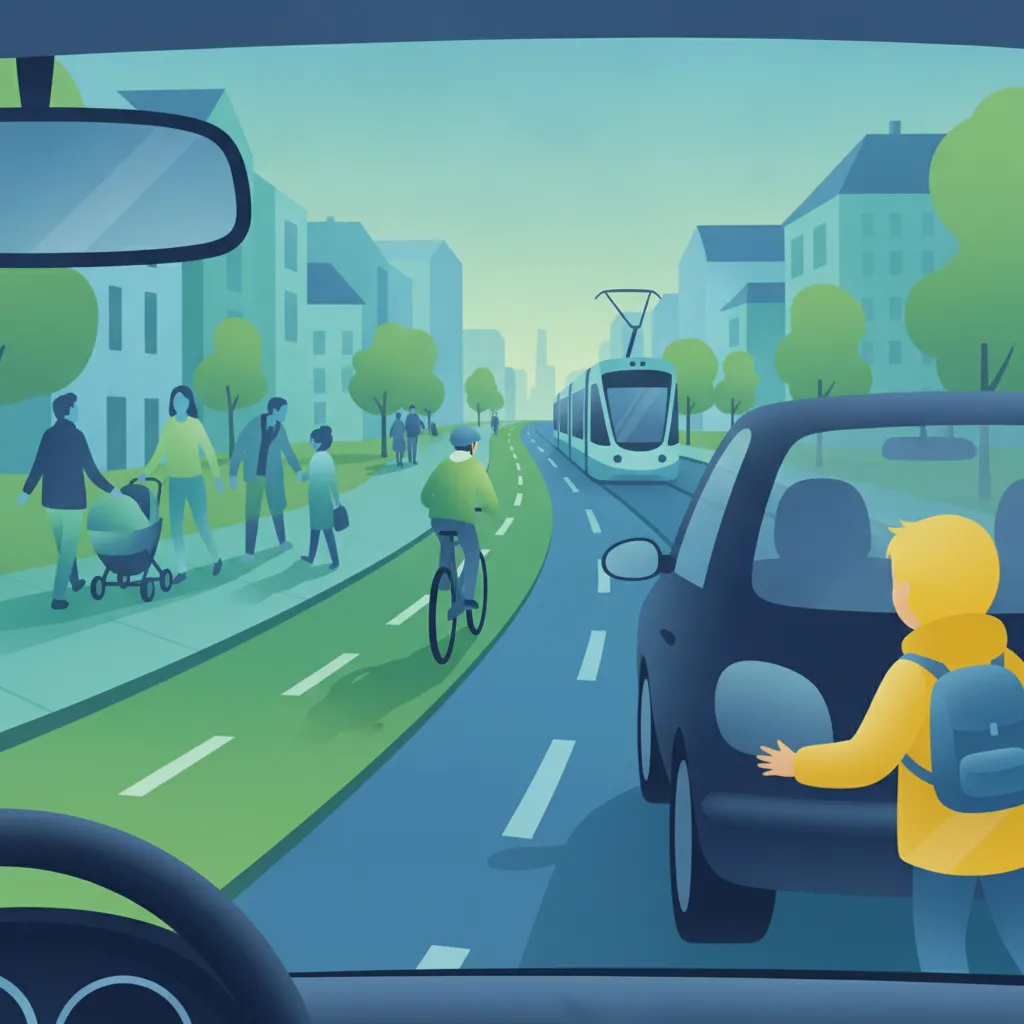
Hazard perception is the ability to identify potential dangers on the road before they become immediate threats. In Denmark, where cyclists are common and road conditions can vary, continuously scanning your environment and anticipating risks is vital. This skill allows you to drive proactively, maintaining safe margins and avoiding sudden braking or evasive maneuvers.
Theory topic content overview
Read the full theory topic guide for Hazard Perception Skills with structured, easy-to-scan content built for learners in Denmark. This detailed section explains the exact rule, meaning, traffic context, comparison points, and exam logic behind this Danish driving theory topic so you can study faster, understand the concept more clearly, and avoid common interpretation mistakes on the theory test.
Hazard perception, known in Danish driving theory as farebedømmelse, is the critical skill of continuously scanning your road environment to identify and anticipate potential dangers before they become immediate threats. It’s much more than simply seeing; it's about processing information, predicting outcomes, and preparing a safe response in advance.
Instead of just reacting to hazards as they happen, strong hazard perception allows you to drive proactively. This means you gain crucial extra time to adjust your speed, change your position, or even avoid a developing situation altogether, significantly enhancing road safety for yourself and others.
Mastering hazard perception is fundamental for becoming a safe and responsible driver in Denmark, and it's a key component of your Danish driving licence theory test.
farebedømmelse ensures you can navigate these complexities safely and smoothly.Hazard perception is an active mental process that improves with practice and a structured approach. It involves a combination of scanning, identifying, predicting, and adjusting.
Your eyes are your most important tool. Don't just focus on the vehicle directly in front of you. Implement a systematic scanning technique:
A developing hazard is anything that could become dangerous. Learn to recognise the subtle indicators:
This is where true farebedømmelse shines. Assume that other road users might make mistakes or unexpected moves.
Once you've identified a developing hazard and predicted potential outcomes, adjust your driving accordingly:
It's crucial to distinguish between hazard perception and reaction time:
Effective hazard perception extends your thinking distance and effectively "buys" you more reaction time by allowing you to initiate your response earlier. A driver with excellent hazard perception might start braking or adjusting speed long before a hazard requires an emergency reaction.
Understanding these real-world scenarios, common in Denmark, will help you apply farebedømmelse:
Learners often struggle with hazard perception because it requires experience and a proactive mindset. Here are frequent errors:
Think of hazard perception, or farebedømmelse, as your driving superpower. It transforms you from a reactive driver into a proactive one. Always drive with the "What if?" question in mind. Continuously scan, predict, and be ready to adapt. This continuous mental engagement with the road environment is not just about passing your Danish theory exam; it's about building a foundation for a lifetime of safe driving.
Hazard perception (farebedømmelse) is the ability to continuously scan your road environment and anticipate potential dangers before they become immediate threats, a fundamental skill tested in the Danish driving theory exam. The process involves systematic scanning (far ahead, mirrors, sides, periphery), identifying subtle developing hazards through body language and vehicle behavior, predicting outcomes using 'what if' scenarios, and adjusting driving accordingly. Strong hazard perception extends your thinking distance and effectively buys you more reaction time, reducing the need for emergency responses. In Danish traffic, cyclists, roundabouts, and urban complexity make this proactive mindset especially critical for safe driving.
A short set of high-value points that capture the most important ideas from this theory explanation.
Hazard perception (farebedømmelse) is the skill of proactively identifying developing dangers before they become immediate threats, not just reacting to obvious hazards
Effective hazard perception transforms you from a reactive into a proactive driver, giving you crucial extra time to respond safely
Active scanning should cover far ahead (10-15 seconds), mirrors, sides, and periphery simultaneously for complete road awareness
Prediction using 'what if' scenarios is essential—assume cyclists, pedestrians, and drivers may make unexpected moves
In Danish traffic, the prevalence of cyclists and complex urban environments makes strong hazard perception especially critical
Hazard perception is a mental anticipation process, distinct from physical reaction time—good perception reduces the need for quick reactions
On the Danish theory exam, watch for subtle developing hazards in images and videos, not just obvious immediate dangers
Never assume cyclists in Denmark have seen you or will follow expected paths—always prepare for unpredictable movements
When hazards develop, adjust driving by reducing speed, increasing following distance, or repositioning away from danger
Keep your foot hovering over the brake when you identify a developing hazard to minimize response time
Tunnel vision—focusing only on the vehicle directly ahead while ignoring the wider environment, mirrors, and distant view
Underestimating cyclists—failing to account for their speed, presence in cycle lanes, and unpredictable swerving or stopping
Assuming other road users will act logically—expecting pedestrians to use crossings properly or drivers to signal correctly
Not scanning far enough ahead—only reacting to immediate hazards instead of identifying developing ones early
Ignoring mirror checks and being passive—waiting for situations to develop rather than actively searching for clues
Start with a short, direct summary of Hazard Perception Skills before reading the full explanation below.
Hazard perception is a driver's continuous awareness and ability to identify potential dangers developing in the road environment, enabling early, safe reactions. It involves active scanning, predicting the actions of other road users (like cyclists or pedestrians), and adjusting your driving to prevent hazardous situations, which is a key component of safe driving in Denmark and tested in the theory exam.
Review the most important terms, rule signals, and traffic concepts linked to Hazard Perception Skills.
Explore related theory topic pages connected to Hazard Perception Skills and continue with the next useful rule explanation.
See the common search queries learners use when trying to understand Hazard Perception Skills in Denmark.

Dive into detailed explanations of Danish traffic legislation, road signs, and driving conventions. Solidify your understanding of key theory topics and prepare confidently for all sections of your official Danish driving license theory exam.
Explore Driving Theory TopicsTheory topic content overview
A short set of high-value points that capture the most important ideas from this theory explanation.
Hazard perception (farebedømmelse) is the skill of proactively identifying developing dangers before they become immediate threats, not just reacting to obvious hazards
Effective hazard perception transforms you from a reactive into a proactive driver, giving you crucial extra time to respond safely
Active scanning should cover far ahead (10-15 seconds), mirrors, sides, and periphery simultaneously for complete road awareness
Prediction using 'what if' scenarios is essential—assume cyclists, pedestrians, and drivers may make unexpected moves
In Danish traffic, the prevalence of cyclists and complex urban environments makes strong hazard perception especially critical
Hazard perception is a mental anticipation process, distinct from physical reaction time—good perception reduces the need for quick reactions
On the Danish theory exam, watch for subtle developing hazards in images and videos, not just obvious immediate dangers
Never assume cyclists in Denmark have seen you or will follow expected paths—always prepare for unpredictable movements
When hazards develop, adjust driving by reducing speed, increasing following distance, or repositioning away from danger
Keep your foot hovering over the brake when you identify a developing hazard to minimize response time
Tunnel vision—focusing only on the vehicle directly ahead while ignoring the wider environment, mirrors, and distant view
Underestimating cyclists—failing to account for their speed, presence in cycle lanes, and unpredictable swerving or stopping
Assuming other road users will act logically—expecting pedestrians to use crossings properly or drivers to signal correctly
Not scanning far enough ahead—only reacting to immediate hazards instead of identifying developing ones early
Ignoring mirror checks and being passive—waiting for situations to develop rather than actively searching for clues
Start with a short, direct summary of Hazard Perception Skills before reading the full explanation below.
Hazard perception is a driver's continuous awareness and ability to identify potential dangers developing in the road environment, enabling early, safe reactions. It involves active scanning, predicting the actions of other road users (like cyclists or pedestrians), and adjusting your driving to prevent hazardous situations, which is a key component of safe driving in Denmark and tested in the theory exam.
Review the most important terms, rule signals, and traffic concepts linked to Hazard Perception Skills.
Explore related theory topic pages connected to Hazard Perception Skills and continue with the next useful rule explanation.
See the common search queries learners use when trying to understand Hazard Perception Skills in Denmark.
Dive into detailed explanations of Danish traffic legislation, road signs, and driving conventions. Solidify your understanding of key theory topics and prepare confidently for all sections of your official Danish driving license theory exam.
Explore Driving Theory TopicsUse this exam-focused revision tip to understand how Hazard Perception Skills is likely to appear in theory questions for learners in Denmark. This section helps you identify the most testable part of the rule, avoid common traps, and remember the concept more effectively during Danish driving theory exam preparation.
In the Danish theory exam, pay close attention to subtle clues in images or videos. Look for signs of potential danger far ahead, to the sides, and in your mirrors. Don't just react to what's obvious; anticipate what *could* happen. Common traps include cyclists appearing suddenly, pedestrians stepping out, or changes in road conditions.
Read direct answers to the most common learner questions about Hazard Perception Skills in Denmark. This FAQ focuses on rule confusion, practical meaning, comparison with similar concepts, and the exact uncertainties that appear most often in Danish driving theory revision and exam preparation.
The primary goal of hazard perception is to identify potential dangers early enough to allow the driver to react safely and avoid an accident, minimizing the need for sudden, emergency maneuvers.
Seeing a hazard means recognizing an existing danger, while hazard perception involves actively anticipating *potential* dangers as they develop. It's about looking for clues that indicate a risk might arise, not just reacting to what's already there.
Common developing hazards include a child running towards the road, a parked car with brake lights coming on (indicating it might pull out), a cyclist signaling a turn but not yet moving, or traffic ahead suddenly slowing down near a motorway exit.
To improve, practice continuous scanning of your surroundings, including mirrors and distant views. Actively question what might happen next, especially with vulnerable road users like pedestrians and cyclists, and consider multiple 'what if' scenarios.
The Danish driving theory test often includes scenarios that assess your ability to identify and respond to developing hazards. Demonstrating strong hazard perception shows you understand how to drive proactively and safely in various traffic situations.
'Farebedømmelse' is the Danish term for hazard perception, referring to the same critical skill of identifying and anticipating potential dangers in traffic to ensure safe driving.
Use our powerful search tool to pinpoint specific Danish driving theory topics, road signs, or traffic situations you need to review. Start exploring relevant practice sets now to reinforce your knowledge and build confidence for your upcoming driving licence exam.