
Understanding the complexities of French motorways is a core requirement for any driver in France. This guide details the legal obligations for entering the autoroute, the correct use of traffic lanes, and the behavior expected when approaching toll gates. By internalizing these rules, learners can navigate high-speed roads confidently and avoid common traps on the official theory test.
Article content overview
Navigating the French autoroute system is a fundamental skill for any driver, and it constitutes a significant portion of the Code de la route theory exam (ETG). While the experience of driving at high speeds can seem intimidating to new learners, the French motorway network is designed with strict, standardized rules that prioritize safety, traffic flow, and orderly lane discipline. Understanding these regulations is not only essential for passing your theory test but is also a critical requirement for safe, real-world driving across France.
Entering an autoroute requires precise timing and a thorough understanding of the bretelle d'accès (slip road). The acceleration lane is specifically designed to allow you to reach a speed that matches the general flow of traffic already on the motorway before you merge. You must always yield to vehicles currently driving on the autoroute, as they have priority over vehicles entering from an acceleration lane.
When preparing to join, you must check your blind spots and mirrors continuously. Avoid the common mistake of stopping at the end of the acceleration lane unless traffic conditions absolutely force you to do so. A smooth, progressive acceleration is the safest way to integrate into the traffic stream.
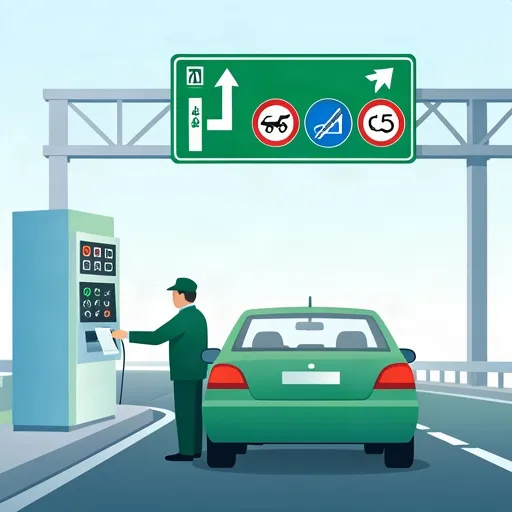
Most motorways in France are péage (toll) roads. Approaching a toll plaza requires heightened vigilance, as traffic will often slow down or converge into multiple lanes. You must observe the overhead signage carefully to choose the correct lane for your vehicle type and payment method.
Drivers should maintain a safe following distance even when traffic is moving slowly through the toll section. Remember that the "Telepeage" lanes (often marked with a orange 't' symbol) are reserved for drivers with electronic toll tags, and entering these lanes without the proper equipment can lead to administrative complications.
Once you are on the autoroute, lane discipline is governed by strict rules. You should always drive in the right-hand lane unless you are overtaking another vehicle. After completing an overtaking maneuver, you are legally required to return to the right lane. Never use the emergency stopping lane (bande d'arrêt d'urgence) for driving or overtaking; it is strictly reserved for vehicles in distress or breakdown situations.
Maintaining a proper interdistance (following distance) is vital. In dry conditions, you must keep a distance equivalent to at least two seconds of travel time behind the vehicle in front, which increases significantly in poor weather or rain.
| Road Condition | Safety Requirement |
|---|---|
| Normal Driving | Stay in the rightmost lane. |
| Overtaking | Use only the middle/left lanes and return to the right. |
| Breakdown | Pull over to the emergency lane and evacuate to safety. |
| Toll Approach | Observe lane signs and slow down early. |
The official French theory exam frequently presents scenarios involving motorway entry or emergency situations. Examiners look for your ability to anticipate the actions of other road users. Pay close attention to questions about tunnel safety, as these sections often have distinct speed limits and mandatory headlight requirements. Furthermore, be prepared for questions regarding the permis probatoire (probationary license) speed restrictions, which are lower than those for experienced drivers.
French autoroutes operate under strict standardized rules from the Code de la route, with entry requiring smooth acceleration to match traffic flow while yielding to vehicles already on the motorway. Lane discipline is mandatory: always drive in the right lane and use the left lane only for overtaking before returning to the right. Toll zones demand early attention to overhead signage to select the correct lane, as last-minute changes are dangerous and frequently tested. The emergency lane (bande d'arrêt d'urgence) is exclusively for breakdowns or emergencies, never for driving or passing. These motorway rules form a significant portion of the ETG theory exam and require dedicated study for both test success and real-world safety.
A short set of high-value points that capture the most important ideas from this article.
Traffic already on the autoroute always has priority over vehicles entering from the acceleration lane (bretelle d'accès)
The emergency stopping lane (bande d'arrêt d'urgence) is strictly reserved for breakdowns and emergencies only
You must return to the right-hand lane immediately after completing any overtaking maneuver
Lane changes near toll plazas are a major safety risk and frequently tested in the ETG exam
The Telepeage lanes (marked with an orange 't' symbol) are exclusively for drivers with electronic toll tags
The bretelle d'accès is the slip road; never stop at its end unless absolutely forced by traffic
A two-second following distance (interdistance) is the minimum in dry conditions, increasing significantly in rain or poor weather
The voie de gauche (left lane) is reserved exclusively for overtaking, not for continuous driving
Road signs A15b and C107 mark road narrowing and motorway start respectively
Permis probatoire drivers face lower speed limits on autoroutes than experienced drivers
Stopping at the end of an acceleration lane instead of matching traffic speed and merging smoothly
Using the emergency lane for overtaking or non-emergency driving maneuvers
Changing lanes at the last moment near toll plazas instead of following overhead signage early
Forgetting that telepeage lanes are electronic-only and cannot be used with cash or card
Failing to check mirrors and blind spots continuously when preparing to merge onto the motorway
Article content overview
A short set of high-value points that capture the most important ideas from this article.
Traffic already on the autoroute always has priority over vehicles entering from the acceleration lane (bretelle d'accès)
The emergency stopping lane (bande d'arrêt d'urgence) is strictly reserved for breakdowns and emergencies only
You must return to the right-hand lane immediately after completing any overtaking maneuver
Lane changes near toll plazas are a major safety risk and frequently tested in the ETG exam
The Telepeage lanes (marked with an orange 't' symbol) are exclusively for drivers with electronic toll tags
The bretelle d'accès is the slip road; never stop at its end unless absolutely forced by traffic
A two-second following distance (interdistance) is the minimum in dry conditions, increasing significantly in rain or poor weather
The voie de gauche (left lane) is reserved exclusively for overtaking, not for continuous driving
Road signs A15b and C107 mark road narrowing and motorway start respectively
Permis probatoire drivers face lower speed limits on autoroutes than experienced drivers
Stopping at the end of an acceleration lane instead of matching traffic speed and merging smoothly
Using the emergency lane for overtaking or non-emergency driving maneuvers
Changing lanes at the last moment near toll plazas instead of following overhead signage early
Forgetting that telepeage lanes are electronic-only and cannot be used with cash or card
Failing to check mirrors and blind spots continuously when preparing to merge onto the motorway
Explore related topics, search based questions, and concepts that learners often look up when studying French Autoroute Rules and Tolls. These themes reflect real search intent and help you understand how this topic connects to wider driving theory knowledge in France.
Find clear and practical answers to common questions learners often have about French Autoroute Rules and Tolls. This section helps explain difficult points, remove confusion, and reinforce the key driving theory concepts that matter for learners in France.
Under normal weather and traffic conditions, the maximum speed limit on French motorways is 130 km/h for experienced drivers, reduced to 110 km/h in wet weather.
Drivers must reduce speed well in advance, observe the lane signals to ensure they choose a lane compatible with their payment method or vehicle class, and maintain a safe following distance.
No, the hard shoulder (bande d'arrêt d'urgence) is strictly reserved for emergency situations, such as vehicle breakdowns or medical emergencies, and must not be used for overtaking or standard driving.
An arrow indicates which lanes are open, closed, or restricted, often managing traffic flow during maintenance or near complex intersections and toll gates.
Continue your preparation for the French permis de conduire exam. Dive deeper into specific Code de la route sections, practice scenarios, or review official procedures. Use our comprehensive article collection to master every aspect of driving theory.