
Learning how to manage vehicle emergencies is a critical part of the French driving theory exam. This guide details when and how to use your reflective vest and warning triangle according to official regulations, helping you avoid fines and respond effectively to breakdowns on French roads.
Article content overview
Preparing for the Code de la route theory exam requires more than just mastering road signs and right-of-way rules; it involves understanding the administrative and safety obligations that every driver must uphold. One of the most frequently tested topics involves the mandatory car equipment you must carry to ensure safety during roadside emergencies. Whether you are driving on a quiet departmental road or a busy autoroute, knowing how to deploy your safety gear is a legal requirement that protects you and other road users.
French law is clear regarding the minimum safety equipment required in any passenger vehicle. Every driver is legally obligated to have a reflective high-visibility vest (gilet de haute visibilité) and a warning triangle (triangle de présignalisation) on board at all times. Failure to present these items during a police control can lead to a fine of up to 38 €.
The reflective vest must be accessible from the driver's seat, meaning you should keep it in the glove box, a door pocket, or under the seat, rather than buried deep in the trunk. It is also important to verify that your gear meets European standards, typically identified by the CE marking on the vest and the official homologation on the triangle.
Always keep your high-visibility vest within reach of the driver’s seat. If you have passengers, it is highly recommended to carry additional vests for them as well, as anyone exiting the vehicle in an emergency must be visible.
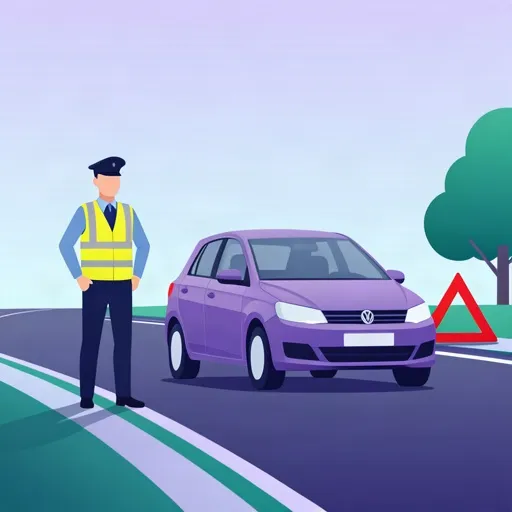
Knowing when and how to use your equipment is a common theme in the French theory exam. If you are forced to make an emergency stop on the roadway or its verges, your first priority is the safety of yourself and your passengers. You must put on your reflective vest before exiting the vehicle. Once you are safely out, you must alert other drivers by activating your hazard lights (feux de détresse).
The warning triangle serves as a critical signaling device to prevent secondary accidents. You should place it at a distance of 30 meters or more from your vehicle, particularly if your car is poorly visible, such as near a bend, a hill crest, or a junction. However, the law provides a crucial "safety first" exception: you are not required to place the triangle if doing so would place your life in danger. In high-speed, high-traffic scenarios where crossing a lane is impossible, your priority remains getting yourself to a safe area away from the traffic.
The Code de la route takes roadside safety very seriously. If your vehicle is immobilized on the road and presents a danger to other motorists, failing to signal your presence properly—or failing to wear your reflective vest—can result in significant penalties. Fines for neglecting these safety duties can reach up to 750 €, reflecting the high risk these omissions create for everyone on the road.
When answering exam questions, remember that the "immobilization" of your vehicle is the trigger for these rules. Whether you have had a mechanical breakdown or a flat tire, the rules for visibility remain the same. The goal of these requirements is to reduce the risk of collisions during low-visibility situations or when your vehicle is not easily seen by oncoming traffic.
The official certification process that ensures your safety equipment, such as a warning triangle, meets the specific technical requirements defined by French and European road safety authorities.
French law requires every vehicle to carry a reflective high-visibility vest and a warning triangle at all times, with the vest accessible from the driver's seat and equipment bearing CE marking and homologation. During an emergency stop, you must activate hazard lights, put on your vest before exiting, and place the triangle at least 30 meters behind your vehicle, unless doing so would endanger your life. Penalties range from 38€ for missing equipment during a control to 750€ for failing to signal properly during an immobilisation. These rules are frequently tested in the Code de la route exam and apply on all French roads, including autoroutes.
A short set of high-value points that capture the most important ideas from this article.
Every vehicle in France must carry a reflective high-visibility vest and warning triangle at all times, accessible from the driver's seat
Activate hazard lights immediately upon emergency stop, then put on your reflective vest before exiting the vehicle
Place the warning triangle at least 30 meters behind your vehicle to warn approaching traffic
Equipment must meet European standards with CE marking and official homologation
You are not required to place the triangle if doing so would endanger your life—safety always comes first
The vest must be accessible from the driver's seat, not buried in the trunk
Failure to present equipment during a police control can result in a fine of up to 38€
Fines for improper emergency signalling or not wearing the vest can reach 750€
The emergency procedure triggers when your vehicle is immobilised, regardless of cause
Exit the vehicle from the side away from traffic after putting on your vest
Keeping the reflective vest in the trunk instead of near the driver's seat
Placing the warning triangle at less than the required 30-meter distance
Exiting the vehicle before putting on the reflective vest
Forgetting that additional vests should be carried for all passengers
Assuming you must place the triangle even when it would be dangerous to do so
Article content overview
A short set of high-value points that capture the most important ideas from this article.
Every vehicle in France must carry a reflective high-visibility vest and warning triangle at all times, accessible from the driver's seat
Activate hazard lights immediately upon emergency stop, then put on your reflective vest before exiting the vehicle
Place the warning triangle at least 30 meters behind your vehicle to warn approaching traffic
Equipment must meet European standards with CE marking and official homologation
You are not required to place the triangle if doing so would endanger your life—safety always comes first
The vest must be accessible from the driver's seat, not buried in the trunk
Failure to present equipment during a police control can result in a fine of up to 38€
Fines for improper emergency signalling or not wearing the vest can reach 750€
The emergency procedure triggers when your vehicle is immobilised, regardless of cause
Exit the vehicle from the side away from traffic after putting on your vest
Keeping the reflective vest in the trunk instead of near the driver's seat
Placing the warning triangle at less than the required 30-meter distance
Exiting the vehicle before putting on the reflective vest
Forgetting that additional vests should be carried for all passengers
Assuming you must place the triangle even when it would be dangerous to do so
Explore related topics, search based questions, and concepts that learners often look up when studying Mandatory Car Equipment in France. These themes reflect real search intent and help you understand how this topic connects to wider driving theory knowledge in France.
Find clear and practical answers to common questions learners often have about Mandatory Car Equipment in France. This section helps explain difficult points, remove confusion, and reinforce the key driving theory concepts that matter for learners in France.
The high-visibility vest must be kept in a location that is easily accessible from within the passenger compartment so you can put it on before exiting the vehicle.
The warning triangle should be placed at a distance of 30 meters or more from your vehicle to effectively warn oncoming traffic.
No, you are not required to place the triangle if doing so would put your life in danger, such as in high-risk traffic conditions on a busy motorway.
Failure to present your reflective vest and warning triangle immediately when requested by law enforcement can result in a fine of up to 38 euros.
Continue your preparation for the French permis de conduire exam. Dive deeper into specific Code de la route sections, practice scenarios, or review official procedures. Use our comprehensive article collection to master every aspect of driving theory.