
Fatigue remains a leading cause of accidents on French motorways, often resulting from ignored warning signs and extended periods of monotonous driving. This article details the recommended frequency for rest breaks and explains how to recognize symptoms like reduced reaction times and lapses in vigilance. Understanding these concepts will help you make safer driving decisions and answer related hazard perception questions correctly on your ETG theory test.
Article content overview
Driving on the autoroute is a core component of the French Code de la route. While high speeds and well-maintained infrastructure make long-distance travel efficient, they also introduce the silent, lethal danger of driver fatigue. For candidates preparing for the ETG (Épreuve Théorique Générale), understanding that fatigue is a primary cause of motorway accidents is not just a safety requirement; it is essential for answering hazard perception questions correctly.
Fatigue in a driving context is not merely feeling tired; it is a profound degradation of cognitive function. When you drive for extended periods on monotonous roads, your brain’s ability to process visual information and anticipate traffic events drops significantly. This leads to reduced vigilance and slower reaction times, which can be catastrophic at high speeds.
In the most severe cases, drivers experience "microsleeps"—brief, involuntary moments of losing consciousness that last anywhere from one to several seconds. During a microsleep, a vehicle traveling at 130 km/h will cover dozens of meters without any driver input, effectively leaving you at the mercy of the road's layout and other traffic.
A very brief, involuntary episode of sleep or loss of consciousness, often lasting just a few seconds, which can result in the vehicle drifting out of its lane or failing to react to sudden traffic changes.
While the Code de la route emphasizes the driver's responsibility to remain in a fit state to operate a vehicle, specific guidelines exist to structure your journey. A general rule of thumb taught in French driving schools is to stop every two hours of driving. However, if you feel the onset of drowsiness—such as heavy eyelids, frequent blinking, or losing track of the last few kilometers—you must stop immediately, regardless of whether two hours have passed.
In the French theory exam, questions often test your ability to recognize the behavioral symptoms of fatigue. You might be presented with a scenario involving a driver who has been on the road for several hours. The exam authority is looking for you to identify the correct intervention: pulling over and resting. It is important to remember that turning up the radio, opening a window, or consuming caffeine are temporary fixes that do not replace the need for physical rest.
Common exam trap: Never assume that modern vehicle technology or cruise control justifies ignoring your own physical limitations. Even with advanced driver-assistance systems, the human driver remains fully responsible for vigilance and reaction times.
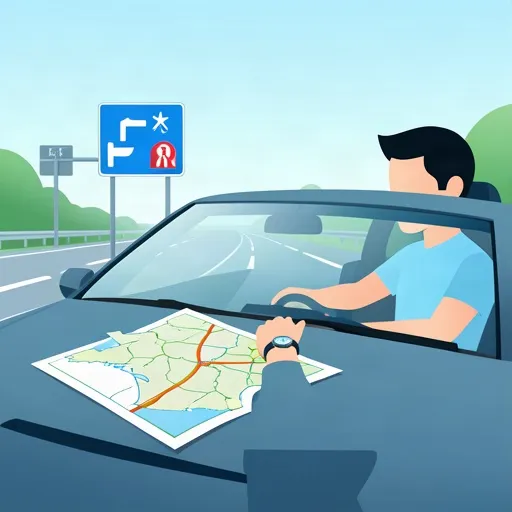
Effective fatigue management involves knowing where you can legally and safely stop. French motorways provide frequent signage alerting drivers to upcoming rest areas.
Fatigue on French autoroutes is a serious hazard caused by cognitive degradation during extended monotonous driving, leading to microsleeps that can cover meters of uncontrolled travel at high speeds. The Code de la route and ETG exam emphasize stopping every two hours for 15 to 20 minutes, recognizing early drowsiness signs, and using designated rest areas (*aires de repos* and *aires de service*). Temporary solutions like caffeine or fresh air do not substitute for real rest, and even with modern vehicle technology, the driver remains fully responsible for vigilance and safety decisions.
A short set of high-value points that capture the most important ideas from this article.
Driver fatigue is a cognitive degradation that significantly impairs visual processing and reaction times, not just feeling tired.
Microsleeps lasting just a few seconds at 130 km/h can cause vehicles to cover dozens of meters without driver input.
You must stop immediately at the first sign of drowsiness, regardless of how long you have been driving.
Temporary countermeasures like opening a window, turning up the radio, or drinking caffeine do not replace the need for physical rest.
Even advanced driver-assistance systems do not eliminate your responsibility for remaining vigilant.
Stop every two hours of continuous driving and take a 15 to 20-minute break away from the vehicle.
Early warning signs of drowsiness include heavy eyelids, frequent blinking, and losing track of recent kilometers driven.
Microsleeps are brief involuntary episodes of unconsciousness that can occur without the driver realizing it.
French motorways provide designated rest areas (*aires de repos*) and service areas (*aires de service*) with signage for safe stops.
For the ETG exam, the correct intervention when recognizing fatigue symptoms is to pull over and rest.
Assuming that feeling only mildly tired is not dangerous enough to warrant stopping.
Believing cruise control or advanced driver-assistance systems justify ignoring physical signs of fatigue.
Relying on temporary fixes like fresh air or loud music instead of taking an actual rest break.
Trying to reach your destination when already feeling drowsy, rather than stopping at the next safe opportunity.
Underestimating how quickly reaction times degrade on monotonous high-speed roads.
Article content overview
A short set of high-value points that capture the most important ideas from this article.
Driver fatigue is a cognitive degradation that significantly impairs visual processing and reaction times, not just feeling tired.
Microsleeps lasting just a few seconds at 130 km/h can cause vehicles to cover dozens of meters without driver input.
You must stop immediately at the first sign of drowsiness, regardless of how long you have been driving.
Temporary countermeasures like opening a window, turning up the radio, or drinking caffeine do not replace the need for physical rest.
Even advanced driver-assistance systems do not eliminate your responsibility for remaining vigilant.
Stop every two hours of continuous driving and take a 15 to 20-minute break away from the vehicle.
Early warning signs of drowsiness include heavy eyelids, frequent blinking, and losing track of recent kilometers driven.
Microsleeps are brief involuntary episodes of unconsciousness that can occur without the driver realizing it.
French motorways provide designated rest areas (*aires de repos*) and service areas (*aires de service*) with signage for safe stops.
For the ETG exam, the correct intervention when recognizing fatigue symptoms is to pull over and rest.
Assuming that feeling only mildly tired is not dangerous enough to warrant stopping.
Believing cruise control or advanced driver-assistance systems justify ignoring physical signs of fatigue.
Relying on temporary fixes like fresh air or loud music instead of taking an actual rest break.
Trying to reach your destination when already feeling drowsy, rather than stopping at the next safe opportunity.
Underestimating how quickly reaction times degrade on monotonous high-speed roads.
Explore related topics, search based questions, and concepts that learners often look up when studying Fatigue and Rest Breaks. These themes reflect real search intent and help you understand how this topic connects to wider driving theory knowledge in France.
Find clear and practical answers to common questions learners often have about Fatigue and Rest Breaks. This section helps explain difficult points, remove confusion, and reinforce the key driving theory concepts that matter for learners in France.
It is officially recommended to take a 15 to 20-minute break at least every two hours of driving to maintain focus and reaction speed.
Common signs include heavy eyelids, frequent blinking, difficulty maintaining a constant speed, drifting in the lane, and failing to recall the last few kilometers driven.
Yes, fatigue significantly slows down your reaction time and reduces your ability to process hazards, which is a frequent theme in critical driving theory questions.
You should stop at the next rest area (aire de repos) immediately, take a short nap if necessary, or switch drivers if possible; do not attempt to 'push through' the sleepiness.
Continue your preparation for the French permis de conduire exam. Dive deeper into specific Code de la route sections, practice scenarios, or review official procedures. Use our comprehensive article collection to master every aspect of driving theory.