Navigating areas frequented by children and pedestrians requires high levels of vigilance and strict adherence to specific traffic laws. This guide covers your legal obligations when approaching pedestrian crossings and designated school zones to help you prepare for the ETG theory exam and become a responsible driver.
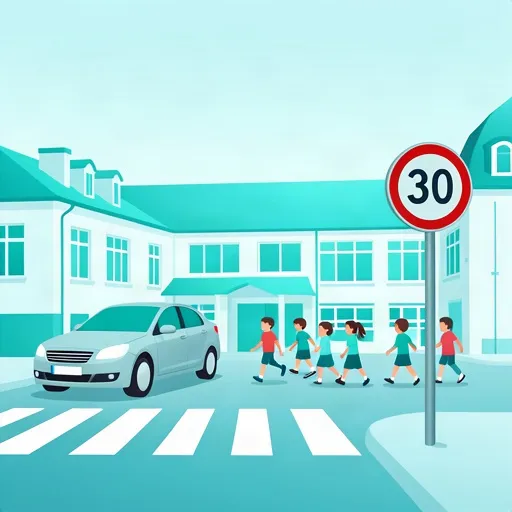
Article content overview
Driving in France requires a heightened sense of situational awareness, especially when navigating urban environments where schools, residential areas, and pedestrian zones are common. The French Code de la route places a significant emphasis on the protection of vulnerable road users. For learners preparing for the ETG (Épreuve Théorique Générale) exam, mastering the nuances of pedestrian priority is not only a requirement for passing your theory test but a fundamental skill for becoming a safe and responsible driver on French roads.
In France, the law is clear regarding the protection of pedestrians. When a pedestrian is either engaged in a crossing or expresses a clear intention to cross—such as by standing at the edge of the curb—drivers are legally required to stop and yield. Failure to yield to a pedestrian is considered a serious traffic violation and can lead to heavy fines and the loss of points on your license.
It is essential to remember that pedestrians are classified as vulnerable users. You must maintain a vigilant scan of both sides of the roadway, particularly in urban areas where sightlines might be obstructed by parked vehicles. Anticipation is your best tool; if you see a pedestrian waiting near a crosswalk, even if it is not marked by a traffic light, you should begin to adjust your speed early to demonstrate your intent to yield.
French urban planning frequently employs the zone de rencontre, a specific type of traffic zone designed to balance the needs of vehicles with those of pedestrians and cyclists. In these zones, pedestrians have priority over vehicles and are allowed to walk on the entire width of the carriageway. Drivers must be extremely cautious, as the speed limit is strictly capped at 20 km/h.
School zones require an even higher level of caution. While not always marked with a specific speed limit sign, the environment near a school often demands a significant reduction in speed due to the unpredictable nature of children. Examiners in the French theory test often use images of schools to check if you understand the need to scan for children who may dart into the street, regardless of whether a formal crossing exists.
Your speed must always be adapted to the conditions of the road. Even if a road has a speed limit of 50 km/h, driving at that speed near a school gate or a crowded pedestrian area is often dangerous and would be marked as a fault in a practical scenario. Always look for signs that indicate specific hazards.
| Sign Category | Name | Driver Action |
|---|---|---|
| A2 | School entrance | Slow down, expect children, be prepared to stop immediately. |
| C20a | Pedestrian crossing | Scan for pedestrians, yield if they are waiting or crossing. |
| B52 | Zone de rencontre | Reduce speed to 20 km/h, yield to all pedestrians. |
The ETG exam frequently tests your reaction to pedestrian scenarios. You will be shown videos or photos where you must determine the correct behavior. Remember that the "correct" answer always prioritizes the safety of the vulnerable user over the convenience of the driver. If in doubt, the safer, more cautious choice is almost always the correct one.
This article covers the critical rules for navigating pedestrian areas and school zones in France as defined by the Code de la route. Drivers must legally yield to pedestrians at crossings and in designated zones de rencontre, where the speed limit drops to 20 km/h and pedestrians have full priority. School zones demand extra vigilance due to unpredictable child behavior, and drivers should always reduce speed and scan for waiting pedestrians well in advance. The ETG exam frequently tests these scenarios, and the key principle is that driver caution and pedestrian safety always take priority over driver convenience.
A short set of high-value points that capture the most important ideas from this article.
Pedestrians have legal priority at crossings in France; drivers must stop when pedestrians show clear intent to cross
In a zone de rencontre, pedestrians have priority over all vehicles and the speed limit is capped at 20 km/h
School zones require heightened caution regardless of posted signs, as children may dart into the road unexpectedly
Never overtake a vehicle that has stopped at a pedestrian crossing, as this creates extreme danger for crossing pedestrians
The safest, most cautious driving response is almost always the correct answer in ETG exam scenarios
The C20a sign marks a pedestrian crossing where you must be prepared to stop
In built-up areas (aggломération), the default speed limit is 50 km/h but must be reduced near schools and pedestrian zones
Pedestrians are classified as vulnerable road users under the Code de la route
Anticipation—scanning ahead for waiting pedestrians—is essential before reaching a crossing
Yield to pedestrians who are already on the crossing or clearly waiting at the curb
Assuming pedestrians will always wait for vehicles rather than exercising their legal right of way
Overtaking a stopped vehicle at a pedestrian crossing, which obscures the pedestrian from view
Driving at the posted speed limit (e.g., 50 km/h) in school zones without reducing for potential child hazards
Failing to scan behind parked vehicles for smaller pedestrians such as children
Believing that unmarked pedestrian areas have no special rules, when zone de rencontre rules still apply
Article content overview
A short set of high-value points that capture the most important ideas from this article.
Pedestrians have legal priority at crossings in France; drivers must stop when pedestrians show clear intent to cross
In a zone de rencontre, pedestrians have priority over all vehicles and the speed limit is capped at 20 km/h
School zones require heightened caution regardless of posted signs, as children may dart into the road unexpectedly
Never overtake a vehicle that has stopped at a pedestrian crossing, as this creates extreme danger for crossing pedestrians
The safest, most cautious driving response is almost always the correct answer in ETG exam scenarios
The C20a sign marks a pedestrian crossing where you must be prepared to stop
In built-up areas (aggломération), the default speed limit is 50 km/h but must be reduced near schools and pedestrian zones
Pedestrians are classified as vulnerable road users under the Code de la route
Anticipation—scanning ahead for waiting pedestrians—is essential before reaching a crossing
Yield to pedestrians who are already on the crossing or clearly waiting at the curb
Assuming pedestrians will always wait for vehicles rather than exercising their legal right of way
Overtaking a stopped vehicle at a pedestrian crossing, which obscures the pedestrian from view
Driving at the posted speed limit (e.g., 50 km/h) in school zones without reducing for potential child hazards
Failing to scan behind parked vehicles for smaller pedestrians such as children
Believing that unmarked pedestrian areas have no special rules, when zone de rencontre rules still apply
Explore related topics, search based questions, and concepts that learners often look up when studying Driving Near Schools and Pedestrians. These themes reflect real search intent and help you understand how this topic connects to wider driving theory knowledge in France.
Find clear and practical answers to common questions learners often have about Driving Near Schools and Pedestrians. This section helps explain difficult points, remove confusion, and reinforce the key driving theory concepts that matter for learners in France.
You must remain vigilant and be prepared to yield to any pedestrian who is already on the crossing or clearly signaling an intention to cross.
While standard urban speed limits usually apply, you must always adapt your speed to the presence of children, who are considered vulnerable road users and may behave unpredictably.
In a 'zone de rencontre', pedestrians have priority over vehicles and can walk on the entire width of the road; the speed limit is strictly capped at 20 km/h.
Drivers are required to facilitate the passage of pedestrians engaged in crossing or showing intent to cross; failing to yield to a pedestrian is a serious traffic infraction.
Continue your preparation for the French permis de conduire exam. Dive deeper into specific Code de la route sections, practice scenarios, or review official procedures. Use our comprehensive article collection to master every aspect of driving theory.