Understanding when to switch between lighting modes is a fundamental skill for every driver in France. This guide explains the strict regulations regarding exterior lights, focusing on how to maintain visibility without dazzling other road users while strictly adhering to French traffic laws.
Article content overview
Understanding when and how to use vehicle lighting is a cornerstone of the French Code de la route. Beyond the mechanical necessity of seeing the road ahead, proper light usage is a vital form of communication between you and other road users. During the ETG (Épreuve Théorique Générale), you will frequently encounter questions that test your ability to distinguish between different visibility conditions and the corresponding lighting requirements. Failing to master these rules can lead to hazardous situations, fines, and potentially the immobilization of your vehicle if lighting systems are found to be non-compliant.
In France, every vehicle must be equipped with specific lighting systems that are in constant, proper working order. These include position lights (sidelights), dipped beams (low beams), main beams (high beams), rear fog lights, indicators, stop lights, and a rear license plate light. Under the Code de la route, failing to maintain these systems can result in a fixed fine, which often amounts to 68 €, though this penalty can climb significantly higher depending on the circumstances.
If a bulb fails, you are legally required to replace it immediately. It is highly recommended—and often tested as a point of practical knowledge—to carry a set of spare bulbs in your vehicle at all times to ensure you can rectify a defect during a journey.
Managing your lights is all about balancing your own visibility with the comfort and safety of other road users. A common mistake in the theory exam involves confusion between when to use dipped beams versus main beams. Dipped beams should be used at night when driving in built-up areas or when following or passing other vehicles to avoid dazzling them. Main beams are reserved for unlit roads at night when there is no other traffic, as they provide significantly greater range but pose a serious glare risk to oncoming drivers.
When visibility is reduced due to heavy rain, snow, or fog, you must adapt your lighting immediately. Rear fog lights are mandatory in thick fog or falling snow, but they must be switched off once visibility improves, as they can blind the driver behind you. Note that front fog lights are optional but recommended in similar conditions to improve road edge visibility.
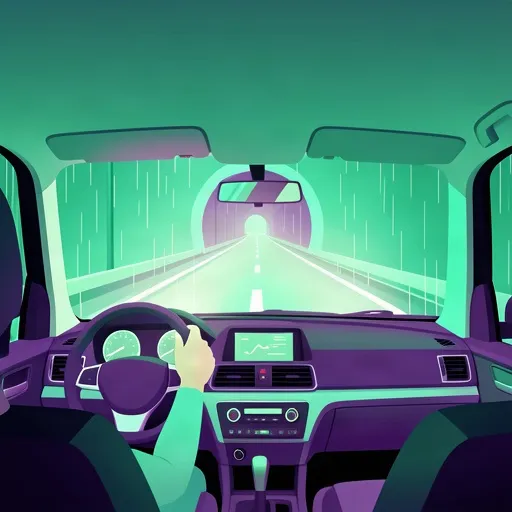
Driving in tunnels presents a specific set of challenges for the French learner driver. As you approach a tunnel, you must switch on your dipped beams even during the daytime. This ensures that you are clearly visible to other drivers and helps you adapt your vision to the lower lighting levels inside the structure. If you are stuck in a queue within a tunnel, remain vigilant; keeping your lights on is essential for your vehicle to be seen by emergency services and other motorists.
| Light Type | Primary Use Case | When to Avoid |
|---|---|---|
| Position Lights | During dawn/dusk or when stopped | Driving at high speeds |
| Dipped Beams | Night, tunnels, rain, following cars | Never, except in clear daylight |
| Main Beams | Unlit roads at night | When following or passing others |
| Fog Lights | Heavy fog or heavy snow | Rain or clear weather |
A legal measure taken by the authorities where the vehicle is prevented from moving, often ordered when essential safety equipment like lights or indicators are found to be dangerously defective, especially at night or in low visibility conditions.
French vehicle lighting regulations require specific systems—position lights, dipped beams, main beams, and fog lights—each with defined use cases tied to visibility conditions and traffic environments. Dipped beams serve as the baseline for night driving, tunnels, and adverse weather, while main beams are strictly for unlit roads with no oncoming traffic. Fog lights have precise triggers: rear fog lights are mandatory only in thick fog or snow and must be deactivated when conditions improve, whereas front fog lights are optional aids. Failure to maintain functional lighting can result in fines and vehicle immobilisation, making proper light management both a legal obligation and a critical safety skill for the ETG exam.
A short set of high-value points that capture the most important ideas from this article.
Dipped beams are the default visibility lights for night driving in built-up areas, rain, and tunnels, and must never be omitted in these conditions.
Main beams are reserved exclusively for unlit roads at night when no other traffic is present to avoid dazzling oncoming drivers.
Rear fog lights are mandatory only in thick fog or falling snow and must be switched off immediately when visibility improves to prevent blinding following drivers.
Tunnel entry requires switching to dipped beams even during daytime to ensure visibility within the artificial lighting environment.
A failed bulb must be replaced immediately; carrying spare bulbs is a legal and practical requirement under French traffic law.
Position lights alone are insufficient for driving; they mark presence when stationary but provide inadequate visibility for motion.
Front fog lights are optional but recommended in heavy rain or snow, while rear fog lights are mandatory only in thick fog or snow.
The legal fine for defective lighting equipment is typically 68 €, and non-compliance can lead to vehicle immobilisation.
Always increase safety distance when visibility is reduced, regardless of which lights you are using.
In tunnels, remain vigilant in queues and keep lights on so emergency services and other motorists can see your vehicle.
Using main beams in urban areas or when following another vehicle, which dazzles other drivers and is a frequent exam trap.
Leaving rear fog lights on in rain or when visibility is merely poor, causing glare for the driver behind.
Believing that position lights are adequate for night driving on unlit roads.
Forgetting to switch to dipped beams when entering tunnels during daytime conditions.
Not carrying spare bulbs, which can result in an immediate defect violation if a light fails during a journey.
Article content overview
A short set of high-value points that capture the most important ideas from this article.
Dipped beams are the default visibility lights for night driving in built-up areas, rain, and tunnels, and must never be omitted in these conditions.
Main beams are reserved exclusively for unlit roads at night when no other traffic is present to avoid dazzling oncoming drivers.
Rear fog lights are mandatory only in thick fog or falling snow and must be switched off immediately when visibility improves to prevent blinding following drivers.
Tunnel entry requires switching to dipped beams even during daytime to ensure visibility within the artificial lighting environment.
A failed bulb must be replaced immediately; carrying spare bulbs is a legal and practical requirement under French traffic law.
Position lights alone are insufficient for driving; they mark presence when stationary but provide inadequate visibility for motion.
Front fog lights are optional but recommended in heavy rain or snow, while rear fog lights are mandatory only in thick fog or snow.
The legal fine for defective lighting equipment is typically 68 €, and non-compliance can lead to vehicle immobilisation.
Always increase safety distance when visibility is reduced, regardless of which lights you are using.
In tunnels, remain vigilant in queues and keep lights on so emergency services and other motorists can see your vehicle.
Using main beams in urban areas or when following another vehicle, which dazzles other drivers and is a frequent exam trap.
Leaving rear fog lights on in rain or when visibility is merely poor, causing glare for the driver behind.
Believing that position lights are adequate for night driving on unlit roads.
Forgetting to switch to dipped beams when entering tunnels during daytime conditions.
Not carrying spare bulbs, which can result in an immediate defect violation if a light fails during a journey.
Explore related topics, search based questions, and concepts that learners often look up when studying Using Car Lights in France. These themes reflect real search intent and help you understand how this topic connects to wider driving theory knowledge in France.
Find clear and practical answers to common questions learners often have about Using Car Lights in France. This section helps explain difficult points, remove confusion, and reinforce the key driving theory concepts that matter for learners in France.
You must switch to dipped beams immediately when meeting another vehicle to avoid dazzling the oncoming driver, when following another vehicle at a close distance, or when entering a well-lit urban area.
Yes, in France, front fog lights may be used in addition to or instead of dipped headlights during heavy rain, snowfall, or fog to improve visibility, provided they do not dazzle other drivers.
Rear fog lights must only be used in cases of fog or heavy snowfall. They are prohibited during heavy rain because their intense brightness can dazzle drivers behind you.
Yes, upon entering a tunnel in France, you are legally required to switch on your dipped headlights, regardless of how well-lit the tunnel may appear.
Continue your preparation for the French permis de conduire exam. Dive deeper into specific Code de la route sections, practice scenarios, or review official procedures. Use our comprehensive article collection to master every aspect of driving theory.