
Learning the specific terminology for parking violations is a core requirement of the French driving theory exam. This guide clarifies the legal thresholds that define whether a vehicle is parked in a dangerous, annoying, or abusive manner, helping you identify these situations in practice questions and on the road.
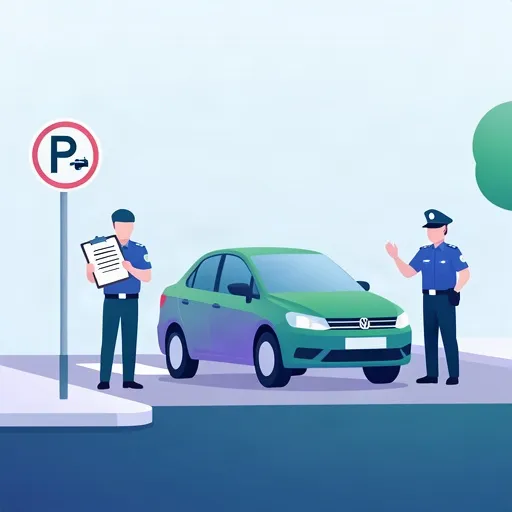
Article content overview
Understanding the nuances of parking regulations is a critical component of the Code de la route and a frequent subject in the official French driving theory exam. For candidates preparing for their Category B license, the ability to distinguish between different types of parking infractions is not merely a theoretical exercise—it is essential for real-world road safety and avoiding significant financial penalties. In France, parking rules are designed to protect vulnerable road users, maintain traffic flow, and ensure that public spaces remain accessible.
The Code de la route categorizes improper stopping and parking into several distinct levels of severity. Each category corresponds to different risks posed to other road users and results in varying levels of administrative and financial sanctions. As a driver, you must be able to identify these scenarios instantly to avoid receiving a notice of contravention or having your vehicle moved by the authorities.
A vehicle is considered to be in a state of abusive parking when it remains in the same spot on a public road for more than 7 consecutive days, unless a municipal decree specifies a shorter duration.
Beyond abusive parking, the law defines infractions based on the level of interference caused to traffic and safety. These range from simple parking violations in prohibited zones to acts classified as "dangerous," which carry the highest level of scrutiny and potential for immediate impoundment.
A common point of confusion for learners is the distinction between "gênant" (annoying) and "très gênant" (very annoying) parking. This distinction is heavily tested in theory exam questions, as it highlights the legislator's focus on protecting vulnerable road users and accessibility.
"Très gênant" (very annoying) parking includes situations where a vehicle obstructs users who are particularly vulnerable or blocks essential infrastructure. This specifically covers parking on sidewalks, in spaces reserved for people with disabilities, or in areas specifically designed for delivery vehicles. Because these actions severely compromise safety or accessibility, they are met with more severe penalties than standard prohibited parking.
| Infraction Category | Key Characteristic | Typical Consequence |
|---|---|---|
| Abusif | Stationary > 7 days | Fine + possible impoundment |
| Gênant | Obstructs flow/visibility | Fine |
| Très Gênant | Blocks vulnerable users | Higher fine + impoundment |
| Dangereux | Endangers life/visibility | Significant fine + points loss |
Under French traffic law, if you are absent from your vehicle or refuse to move it when requested by an officer, your vehicle may be subject to immobilization and subsequent impoundment (mise en fourrière). This process is governed by strict legal procedures through France Titres and local authorities. Understanding that the police have the authority to remove a vehicle that is poorly parked is a fundamental part of responsible driving.
Remember that parking infractions are distinct from the "Forfait de post-stationnement" (FPS). An FPS applies specifically to areas where parking is paid but fees have not been settled. Do not confuse this with a fine for illegal parking, which is a penal sanction for violating the Code de la route.
When answering theory exam questions, always look for cues regarding the visibility of the vehicle and its impact on other road users. If a question asks you to identify "very annoying" parking, focus your answer on the impact to pedestrians, cyclists, or access for the disabled. If the vehicle is parked on a blind curve, the classification will likely shift to "dangerous," as it creates an immediate hazard for oncoming traffic by limiting visibility.
Always verify if there are local municipal signs, as these can impose stricter rules than the national Code de la route. In urban environments, administrative zones and environmental regulations often dictate specific parking limitations that supersede general rules.
French parking law classifies violations into four distinct categories with escalating consequences: abusif (over 7 days stationary), gênant (obstructing flow), très gênant (blocking vulnerable users like pedestrians on sidewalks), and dangereux (creating immediate hazard). The critical distinction between gênant and très gênant hinges on protection of vulnerable road users and accessibility—parking on sidewalks or disabled spaces always qualifies as very annoying. Beyond fines, serious violations risk vehicle impoundment (mise en fourrière) and dangerous parking can result in license points loss. Always verify local municipal signs as they may impose stricter limits than the national Code de la route.
A short set of high-value points that capture the most important ideas from this article.
Abusive parking (stationnement abusif) is legally defined as a vehicle remaining stationary on a public road for more than 7 consecutive days
Very annoying parking (très gênant) specifically protects vulnerable road users and covers parking on sidewalks, disabled spaces, and delivery zones
The severity hierarchy runs from abusive to dangerous, with dangerous parking carrying the highest penalties including license points loss
Parking infractions are separate from the Forfait de post-stationnement (FPS), which only applies to unpaid parking fees in metered zones
Local municipal signs can impose stricter parking rules than the national Code de la route, especially in urban environmental zones
Stationnement means leaving a vehicle stationary beyond a brief stop; Arrêt means a brief stop with the driver remaining nearby
Very annoying parking almost always applies when parked on a trottoir (sidewalk)
Impoundment (mise en fourrière) can occur when a driver is absent or refuses to move a poorly parked vehicle
Dangerous parking is identified by endangering life or blocking visibility, often on blind curves
Exam questions will cue you toward the correct category by mentioning impact on pedestrians, cyclists, or disabled access
Confusing Stationnement with Arrêt when answering questions about legal parking duration limits
Assuming all prohibited parking carries the same penalty without distinguishing between gênant and très gênant categories
Forgetting that FPS (parking fees) is different from a Code de la route fine for illegal parking
Overlooking that dangerous parking can result in license points loss, unlike simpler infractions
Not checking for local municipal signs that may impose stricter rules than national regulations
Article content overview
A short set of high-value points that capture the most important ideas from this article.
Abusive parking (stationnement abusif) is legally defined as a vehicle remaining stationary on a public road for more than 7 consecutive days
Very annoying parking (très gênant) specifically protects vulnerable road users and covers parking on sidewalks, disabled spaces, and delivery zones
The severity hierarchy runs from abusive to dangerous, with dangerous parking carrying the highest penalties including license points loss
Parking infractions are separate from the Forfait de post-stationnement (FPS), which only applies to unpaid parking fees in metered zones
Local municipal signs can impose stricter parking rules than the national Code de la route, especially in urban environmental zones
Stationnement means leaving a vehicle stationary beyond a brief stop; Arrêt means a brief stop with the driver remaining nearby
Very annoying parking almost always applies when parked on a trottoir (sidewalk)
Impoundment (mise en fourrière) can occur when a driver is absent or refuses to move a poorly parked vehicle
Dangerous parking is identified by endangering life or blocking visibility, often on blind curves
Exam questions will cue you toward the correct category by mentioning impact on pedestrians, cyclists, or disabled access
Confusing Stationnement with Arrêt when answering questions about legal parking duration limits
Assuming all prohibited parking carries the same penalty without distinguishing between gênant and très gênant categories
Forgetting that FPS (parking fees) is different from a Code de la route fine for illegal parking
Overlooking that dangerous parking can result in license points loss, unlike simpler infractions
Not checking for local municipal signs that may impose stricter rules than national regulations
Explore related topics, search based questions, and concepts that learners often look up when studying France Parking Rules and Fines. These themes reflect real search intent and help you understand how this topic connects to wider driving theory knowledge in France.
Find clear and practical answers to common questions learners often have about France Parking Rules and Fines. This section helps explain difficult points, remove confusion, and reinforce the key driving theory concepts that matter for learners in France.
Parking is considered abusive when a vehicle remains on the public road at the same location for more than seven consecutive days, or a shorter period defined by local municipal regulations.
Gênant (annoying) parking blocks normal traffic flow, whereas très gênant (very annoying) parking specifically obstructs vulnerable road users, such as pedestrians on sidewalks or cyclists on dedicated paths, or blocks protected infrastructure like handicapped spots.
Yes. If a vehicle is parked in a dangerous, very annoying, or abusive manner, authorities may order its immobilization and subsequent impoundment (mise en fourrière) if the driver is absent or refuses to move the vehicle.
Abusive parking is generally sanctioned by a fixed fine (amende forfaitaire) of 35 euros, which may increase if payment is delayed.
Continue your preparation for the French permis de conduire exam. Dive deeper into specific Code de la route sections, practice scenarios, or review official procedures. Use our comprehensive article collection to master every aspect of driving theory.