
Learning the nuances between stopping and parking is a fundamental requirement for every driver in France. This guide clarifies the legal definitions and sanctions associated with prohibited parking, providing you with the knowledge needed to handle both real-world traffic situations and tricky ETG exam questions with confidence.
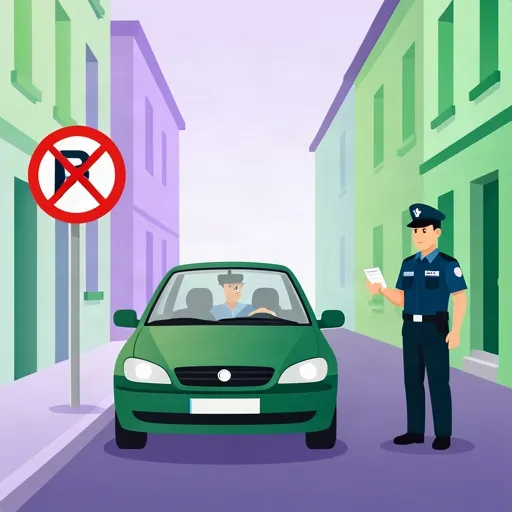
Article content overview
Understanding the difference between stopping (arrêt) and parking (stationnement) is a fundamental pillar of the French Code de la route. For learners preparing for the Épreuve Théorique Générale (ETG), distinguishing between these concepts is not just about avoiding a fine—it is about ensuring road safety and demonstrating that you can interpret traffic signs and road markings correctly. In France, regulations regarding where you can leave your vehicle are strict, and failing to adhere to them can lead to significant penalties, including the potential impoundment of your vehicle.
Before diving into the specific zones where these actions are prohibited, you must understand the legal distinction. According to the French traffic laws, an "arrêt" (stopping) is defined as the temporary immobilization of a vehicle on the road, with the driver remaining at the controls or in the immediate vicinity to allow passengers to board or alight, or to load or unload goods. Crucially, the driver must be ready to move the vehicle at any moment if necessary.
In contrast, "stationnement" (parking) is defined as the immobilization of a vehicle that does not meet the criteria of an "arrêt." Even if you are inside the vehicle, if you are not actively facilitating passenger transit or loading, you are considered parked. On the ETG exam, you will often face scenarios where you are asked if an action is permitted; remember that stopping might be allowed in certain areas where parking is strictly forbidden.
The Code de la route categorizes illegal parking based on the level of risk posed to other road users. Understanding these categories is essential, as they determine the severity of the sanction and the likelihood of your vehicle being taken to the fourrière (impoundment lot).
Abusive parking occurs when a vehicle remains in the same spot on a public road for more than seven consecutive days, or for a duration shorter than that if specified by municipal decree. This is a common point of confusion for new drivers who assume that if a spot is not marked as restricted, it is fair game for an extended stay.
Parking is considered "gênant" (annoying) when it impedes traffic flow or obstructs specific road features. It escalates to "très gênant" (very annoying) if it blocks vulnerable road users, such as pedestrians on sidewalks or cyclists in protected lanes. Finally, "dangereux" (dangerous) parking is the most severe classification, applied when visibility is severely obscured or the vehicle creates a significant risk of collision for other road users.
Violating these rules results in fixed fines (amende forfaitaire). For instance, basic parking offenses often carry a 35€ fine, but this amount can increase significantly based on the severity of the obstruction and whether you fail to pay within the legal timeframe.
Your vehicle can be immobilized or sent to the municipal pound (fourrière) if it is found to be in a dangerous, very annoying, or abusive parking situation, especially if you are absent or refuse to move the vehicle upon instruction by authorities.
| Offense Category | Key Characteristic | Typical Consequence |
|---|---|---|
| Abusive | Over 7 days in the same spot | 35€ fine, possible impoundment |
| Annoying | Obstructing traffic flow | Fixed fine |
| Very Annoying | Blocking pedestrians/cyclists | Higher fine, possible impoundment |
| Dangerous | Obscuring visibility | Major fine, immediate impoundment |
The French theory exam tests these concepts through visual scenarios. You might be shown an image of a vehicle near a curb or an intersection and asked, "Am I authorized to stop here?" or "Is this parking considered dangerous?" When answering these, always check for signs, road markings (such as yellow dashed lines for restricted parking or continuous yellow lines for total prohibition), and the proximity to corners or pedestrian crossings.
Always remember that safety takes precedence. Even if a specific sign does not explicitly forbid parking, the general rules of the Code de la route still apply if your vehicle creates a hazard. Pay close attention to the driver's intent in exam photos—if the driver is behind the wheel and prepared to leave, the rules of "arrêt" apply, which are generally more lenient than those for "stationnement."
This article clarifies the fundamental legal distinction between stopping (arrêt) and parking (stationnement) under French traffic law, emphasizing that driver readiness to move determines the applicable rules. The Code de la route classifies prohibited parking into four escalating categories—abusive (over 7 days), annoying (obstructing traffic flow), very annoying (blocking pedestrians or cyclists), and dangerous (severe visibility or collision risk)—each with progressively harsher penalties including fines and potential vehicle impoundment at the fourrière. Key road signs B6a and B6d differentiate between parking-only and total prohibition respectively. For ETG exam success, learners must check for signs, road markings, and proximity to intersections or crossings while remembering that safety rules apply even when no explicit sign forbids the action.
A short set of high-value points that capture the most important ideas from this article.
The legal distinction between 'arrêt' (stopping) and 'stationnement' (parking) hinges on whether the driver remains ready to move and is actively facilitating passenger or goods transfer
Parking violations are classified into four severity levels: abusif, gênant, très gênant, and dangereux, each carrying different consequences
Abusive parking occurs after 7 consecutive days in the same spot, even without any other restriction sign present
Vehicle impoundment at the fourrière can occur for dangerous, very annoying, or abusive parking when the driver is absent or refuses to move
Road sign B6d prohibits both stopping and parking, while B6a only prohibits parking on that side of the road
If you remain at the controls or immediately nearby to load/unload or allow passengers to board, it is legally an 'arrêt', not 'stationnement'
The 7-day rule for abusive parking can be shortened by municipal decree, so always check local signage
Very annoying parking specifically targets blocking vulnerable road users such as pedestrians on sidewalks or cyclists in protected lanes
Dangerous parking includes situations where your vehicle severely obscures visibility or creates significant collision risk for others
Yellow dashed lines indicate restricted parking zones, while continuous yellow lines mean total prohibition of both stopping and parking
Confusing 'arrêt' and 'stationnement' when answering exam questions about whether an action is permitted in a given location
Assuming that without a visible sign, a spot is available for extended parking beyond the 7-day abusive limit
Mistaking annoying parking for dangerous parking in exam scenarios—dangerous requires severe visibility obstruction or collision risk
Forgetting that even if no sign is visible, the general Code de la route rules still apply if your vehicle creates a hazard
Thinking a vehicle can only be impounded for dangerous parking—very annoying and abusive situations also risk fourrière removal
Article content overview
A short set of high-value points that capture the most important ideas from this article.
The legal distinction between 'arrêt' (stopping) and 'stationnement' (parking) hinges on whether the driver remains ready to move and is actively facilitating passenger or goods transfer
Parking violations are classified into four severity levels: abusif, gênant, très gênant, and dangereux, each carrying different consequences
Abusive parking occurs after 7 consecutive days in the same spot, even without any other restriction sign present
Vehicle impoundment at the fourrière can occur for dangerous, very annoying, or abusive parking when the driver is absent or refuses to move
Road sign B6d prohibits both stopping and parking, while B6a only prohibits parking on that side of the road
If you remain at the controls or immediately nearby to load/unload or allow passengers to board, it is legally an 'arrêt', not 'stationnement'
The 7-day rule for abusive parking can be shortened by municipal decree, so always check local signage
Very annoying parking specifically targets blocking vulnerable road users such as pedestrians on sidewalks or cyclists in protected lanes
Dangerous parking includes situations where your vehicle severely obscures visibility or creates significant collision risk for others
Yellow dashed lines indicate restricted parking zones, while continuous yellow lines mean total prohibition of both stopping and parking
Confusing 'arrêt' and 'stationnement' when answering exam questions about whether an action is permitted in a given location
Assuming that without a visible sign, a spot is available for extended parking beyond the 7-day abusive limit
Mistaking annoying parking for dangerous parking in exam scenarios—dangerous requires severe visibility obstruction or collision risk
Forgetting that even if no sign is visible, the general Code de la route rules still apply if your vehicle creates a hazard
Thinking a vehicle can only be impounded for dangerous parking—very annoying and abusive situations also risk fourrière removal
Explore related topics, search based questions, and concepts that learners often look up when studying French Parking and Stopping Rules. These themes reflect real search intent and help you understand how this topic connects to wider driving theory knowledge in France.
Find clear and practical answers to common questions learners often have about French Parking and Stopping Rules. This section helps explain difficult points, remove confusion, and reinforce the key driving theory concepts that matter for learners in France.
A stop (arrêt) is a temporary immobilization of a vehicle where the driver remains at the controls or nearby, allowing for immediate departure. Parking (stationnement) involves leaving the vehicle unattended or for an extended period.
Parking is considered abusive when a vehicle is left in the same spot on the public highway for more than 7 days, or a shorter period if specified by municipal decree, which may result in a fine and potential impoundment.
Dangerous parking creates a risk for other road users, such as parking near intersections, bends, or hillcrests with poor visibility. It leads to severe sanctions, including significant fines and possible vehicle impoundment (mise en fourrière).
Parking is classified as very annoying when it obstructs vulnerable road users or protected infrastructure, such as parking on sidewalks, pedestrian crossings, or in reserved spaces for people with reduced mobility.
Continue your preparation for the French permis de conduire exam. Dive deeper into specific Code de la route sections, practice scenarios, or review official procedures. Use our comprehensive article collection to master every aspect of driving theory.