
This lesson provides a critical overview of passenger safety obligations for Category B drivers under the French Code de la route. You will learn the legal requirements for seatbelt use, mandatory child restraint systems based on age and weight, and how to safely manage vehicle safety features like airbags. Mastering these rules is essential for ensuring passenger protection and passing the ETG theory exam.
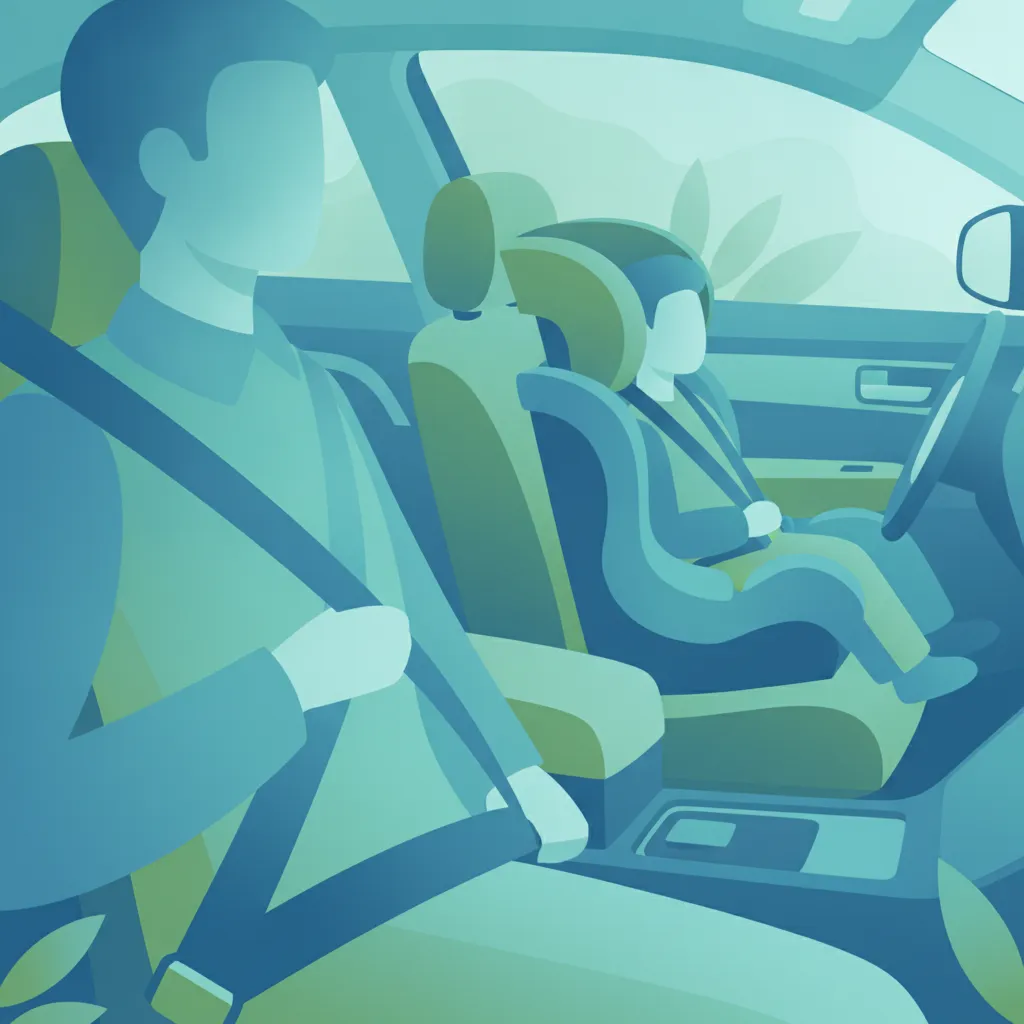
Lesson content overview
Ensuring the safety of every occupant inside a vehicle is one of the most critical responsibilities of any driver. In a collision or during abrupt defensive maneuvers, unsecured passengers become dangerous projectiles, risking their own lives and those of everyone else on board.
For those preparing for the French Category B driving theory exam (Examen de l'Éthique Générale or ETG), mastering the rules governing seatbelts, child restraint systems (CRS), and passenger safety is essential. Under the French Code de la route, proper restraint usage is not merely a safety recommendation—it is a strict, heavily enforced legal obligation with direct penalties for the driver.
In France, the driver is considered the captain of the vessel. Before turning the ignition key, you must ensure that every occupant is safely and legally restrained.
The legal obligation under the Code de la route requiring the driver to verify that all passengers—particularly minors under the age of 18—are correctly secured using approved seatbelts or child restraint systems before the vehicle is put in motion.
The penalties for failing to comply with seatbelt and passenger restraint laws in France are severe and differ depending on the age of the passenger:
To understand why seatbelts are mandatory, we must look at the physics of a car crash. When a car travelling at 50 km/h hits a stationary object, it stops almost instantly. However, any unrestrained occupant continues moving forward at 50 km/h until they strike the dashboard, windshield, or front seats. This is known as the secondary impact.
A standard three-point seatbelt (comprising a diagonal shoulder strap and a lap strap) is designed to distribute the immense forces of a crash across the strongest parts of the human skeletal structure: the pelvis and the ribcage.
Adjust the Seat Height and Angle: Ensure you are sitting upright with your back fully against the backrest.
Position the Lap Strap: Place the lower strap flat and low across your hips and pelvis, never across your soft abdomen.
Position the Diagonal Strap: Guide the shoulder strap across the middle of your collarbone and chest, away from your neck and throat.
Remove Slack: Tug the diagonal strap upward to ensure the belt lies flat against your body without twists or excess play.
Never place the shoulder strap under your arm or behind your back. In a collision, this will cause the lap belt to slice into your abdominal organs, causing life-threatening internal bleeding, and will fail to prevent your head and chest from slamming into the steering wheel or dashboard.
Adult seatbelts are designed for individuals who are at least 135 cm tall. For children, a standard seatbelt can cause severe neck and abdominal injuries because the straps do not align with their smaller skeletal frames. Therefore, the Code de la route mandates the use of an approved Child Restraint System (CRS) (dispositif de retenue pour enfants) for all children under the age of 10, or until they reach a height where they can safely use an adult belt.
In France, child seats must be certified under European safety standards: either the older weight-based standard (ECE R44/04) or the newer, more stringent height-based standard (UN R129, also known as i-Size).
Under the standards, child seats are categorized into distinct groups to match the child's developmental stage:
Traditionally, child seats were secured using the vehicle's adult seatbelts. However, studies showed that up to 70% of seatbelt-installed child seats were fitted incorrectly, reducing their efficacy. To combat this human error, the ISOFIX system was developed and made mandatory in all new passenger vehicles sold in Europe since 2011.
An international standard for anchoring child safety seats directly to a vehicle's chassis using rigid, built-in locking connectors, bypassing the need for adult seatbelts to secure the seat.
An ISOFIX setup relies on three distinct attachment points to prevent the seat from shifting or rotating during a crash:
As a general rule under French law, children under 10 years old must sit in the rear seats of the vehicle. However, there are legally defined exceptions where a child may sit in the front passenger seat:
If you place a rear-facing infant seat in the front passenger seat under one of the exceptions above, you must deactivate the front passenger airbag.
Failure to deactivate the passenger airbag is highly dangerous and illegal. Front airbags deploy at speeds of up to 300 km/h with explosive force. If an active airbag deploys against the back of a rear-facing infant seat, it will crush the seat shell forward, causing catastrophic or fatal head, neck, and brain injuries to the infant.
If you must place a rear-facing seat in the front, follow this exact protocol:
Deactivate the Airbag: Locate the physical key switch (typically on the passenger side of the dashboard or inside the glovebox) and turn it to the "OFF" position.
Verify the Warning Light: Turn on the ignition and confirm that the passenger airbag deactivation warning light (Voyant de désactivation de l'airbag) remains illuminated on the dashboard or central console.
Install the Rear-Facing Seat: Secure the seat using the ISOFIX anchors or the adult seatbelt.
Slide the Vehicle Seat Back: Push the front passenger seat as far back as possible on its runners to maximize the distance between the child and the dashboard.
Understanding the regulations in theory is one thing; applying them dynamically on the road requires vigilance. Below are critical scenarios and common violations drivers must master to pass the ETG and drive safely.
During winter, parents often buckle children into car seats while they are wearing heavy, puffy jackets. This creates a dangerous layer of compressible air between the harness straps and the child's chest. In a crash, the force of the impact instantly compresses the jacket, leaving several centimetres of slack. The child can slide out of the harness or suffer severe spinal whiplash.
An unrestrained dog or a heavy toolbox lying loose on the rear bench seat poses a fatal threat. In a crash at 50 km/h, a 20 kg dog or a 15 kg toolbox acts like a weapon weighing several hundred kilograms, flying forward and striking front-seat occupants.
Many parents move their children from a harnessed toddler seat to a booster seat as soon as they reach the minimum legal age or weight. However, children's skeletal structures develop at different rates. If a child is too small, the booster seat will cause the diagonal belt to rest directly on their neck and the lap belt to sit on their soft stomach, risking severe internal injuries in a crash.
| Restraint Feature | Primary Protective Action | Key Law / Standard | Critical Mistake to Avoid |
|---|---|---|---|
| Three-Point Seatbelt | Distributes deceleration forces across pelvis and ribcage; prevents ejection. | Mandatory for all occupants (Article R412-1). | Routing diagonal strap under the arm or behind the back. |
| Rear-Facing Infant Seat | Supports the fragile head, neck, and spine by distributing impact forces. | Mandatory rear-facing until 15 months (R129/i-Size). | Placing in front seat with an active passenger airbag. |
| ISOFIX System | Establishes a rigid, error-free mechanical link to the vehicle's chassis. | Mandatory on new EU passenger cars since 2011. | Omitting the Top Tether strap or failing to extend the support leg. |
| Booster Seat (Rehausseur) | Repositions the adult seatbelt to fit the child's smaller skeletal structure safely. | Required up to age 10 or 135 cm in height. | Using a booster before the child meets the safe physical height. |
This lesson covers the French legal requirements for passenger restraint under the Code de la route, emphasizing that drivers bear full responsibility for minors and face €135 fines and penalty point deductions for violations. It details the three categories of child restraint systems (rear-facing infant seats, toddler/convertible seats with harnesses, and booster seats), explaining the critical i-Size requirement for rear-facing travel until 15 months. The technical ISOFIX anchoring system is explained, including its mandatory anti-rotation components. Crucially, the lesson addresses the deadly danger of active front passenger airbags with rear-facing seats and provides the step-by-step protocol for safe front-seat infant placement, including airbag deactivation and maximum seat retraction.
A short set of high-value points that capture the most important learning from this lesson.
The driver is legally responsible for ensuring all passengers under 18 are properly restrained, facing a €135 fine for violations involving minors.
Children must remain in an approved child restraint system until age 10 or until they reach 135 cm tall, when an adult seatbelt becomes safe to use.
Under i-Size (R129) regulations, children must stay rear-facing until at least 15 months old, regardless of weight.
ISOFIX anchors child seats directly to the vehicle chassis using rigid connectors, with a mandatory top tether or support leg to prevent rotation.
If a rear-facing infant seat must be placed in the front passenger seat, the airbag MUST be deactivated and the seat pushed fully back.
Explore all units and lessons included in this driving theory course.
Article R412-1 of the Code de la route mandates seatbelt use for all occupants; driver non-compliance costs 3 penalty points.
Adult seatbelts are designed for individuals 135 cm or taller; children below this height require a booster seat or appropriate child restraint.
ISOFIX systems have been mandatory in all new EU passenger vehicles since 2011, using lower anchor points plus either a top tether or support leg.
Front airbags deploy at up to 300 km/h and can crush a rear-facing infant seat, causing fatal injuries.
Child seat standards: Group 0/0+ (up to ~13 kg), Group 1 (9-18 kg), Group 2/3 booster (15-36 kg), with i-Size using height-based classification instead.
Placing the diagonal seatbelt strap under the arm or behind the back, which causes the lap belt to slice into abdominal organs during a crash.
Leaving thick winter jackets on children when buckling them into car seats, as jacket compression creates dangerous harness slack.
Moving children to a booster seat too early based solely on age or minimum weight, before the child meets safe height requirements.
Failing to use the ISOFIX top tether or support leg, leaving the child seat vulnerable to forward rotation during a frontal impact.
Forgetting to deactivate the passenger airbag when installing a rear-facing seat in the front, which is both dangerous and illegal.
Lesson content overview
A short set of high-value points that capture the most important learning from this lesson.
The driver is legally responsible for ensuring all passengers under 18 are properly restrained, facing a €135 fine for violations involving minors.
Children must remain in an approved child restraint system until age 10 or until they reach 135 cm tall, when an adult seatbelt becomes safe to use.
Under i-Size (R129) regulations, children must stay rear-facing until at least 15 months old, regardless of weight.
ISOFIX anchors child seats directly to the vehicle chassis using rigid connectors, with a mandatory top tether or support leg to prevent rotation.
If a rear-facing infant seat must be placed in the front passenger seat, the airbag MUST be deactivated and the seat pushed fully back.
Explore all units and lessons included in this driving theory course.
Article R412-1 of the Code de la route mandates seatbelt use for all occupants; driver non-compliance costs 3 penalty points.
Adult seatbelts are designed for individuals 135 cm or taller; children below this height require a booster seat or appropriate child restraint.
ISOFIX systems have been mandatory in all new EU passenger vehicles since 2011, using lower anchor points plus either a top tether or support leg.
Front airbags deploy at up to 300 km/h and can crush a rear-facing infant seat, causing fatal injuries.
Child seat standards: Group 0/0+ (up to ~13 kg), Group 1 (9-18 kg), Group 2/3 booster (15-36 kg), with i-Size using height-based classification instead.
Placing the diagonal seatbelt strap under the arm or behind the back, which causes the lap belt to slice into abdominal organs during a crash.
Leaving thick winter jackets on children when buckling them into car seats, as jacket compression creates dangerous harness slack.
Moving children to a booster seat too early based solely on age or minimum weight, before the child meets safe height requirements.
Failing to use the ISOFIX top tether or support leg, leaving the child seat vulnerable to forward rotation during a frontal impact.
Forgetting to deactivate the passenger airbag when installing a rear-facing seat in the front, which is both dangerous and illegal.
Explore search topics learners often look for when studying Seatbelts, Child Seats, and Passenger Safety. These topics reflect common questions about road rules, driving situations, safety guidance, and lesson level theory preparation for learners in France.
Browse additional driving theory lessons that cover connected traffic rules, road signs, and common driving situations related to this topic. Improve your understanding of how different rules interact across everyday traffic scenarios.
Understand the comprehensive legal duties of a Category B driver under the French Code de la route. This guide covers documentation requirements, vehicle registration, and the fundamental responsibility for passenger safety, ensuring you follow strict driving regulations to avoid penalties and maintain your licence status.

Operating a passenger vehicle in France requires strict compliance with dynamic safety laws and maintenance rules. This lesson explains your duty of care toward other road users, mandatory child restraint and seatbelt laws, and strict prohibitions on phone use while driving. You will also learn about the required periodic technical vehicle inspections (controle technique) and third-party insurance mandates.

This lesson outlines the core operational roles that drivers must perform, from ensuring safe passenger boarding to maintaining precise vehicle control throughout the journey. It details the active risk assessments required to identify hazards on the road and handle unexpected delays safely. Additionally, candidates will understand the specific procedures for reporting accidents and communicating effectively with both passengers and operations hubs.

This lesson examines the rigorous legal duties imposed on passenger vehicle operators by the French Code de la route and professional transport guidelines. Drivers must balance tight scheduling demands with the absolute priority of passenger safety and general public security. By studying real-world legal scenarios, candidates will learn how to maintain professional conduct, resolve on-board issues, and protect public trust during transit.

This lesson examines the legal consequences, heavy monetary fines, and driver's licence point deductions resulting from traffic and transport safety violations. Learners will study specific infractions such as driving over legal hours, vehicle overloading, and ignoring passenger seatbelt laws. Understanding the strict enforcement systems in France ensures drivers actively avoid risky habits that could end their careers.
This lesson delves into the dual aspects of civil and criminal liability that professional goods vehicle drivers face in the event of traffic violations or accidents. Learners will explore the range of penalties, including fines, licence suspension, vehicle seizure, and potential imprisonment for severe offenses under French law. The discussion also covers the impact of negligence on insurance coverage, the accrual of penalty points, and the broader consequences for both the driver and their employer.

In this lesson, learners examine the heightened duty of care that applies to professional goods vehicle drivers, focusing on how legal obligations extend beyond basic road rules to include ethical considerations and public safety responsibilities. The content outlines expectations for compliance with French traffic laws, the importance of maintaining a professional image through courteous conduct, and the implications of negligent behavior. By integrating ethical decision-making with legal compliance, drivers are prepared to uphold the standards expected of professional operators.

This lesson highlights the critical ethical framework governing public and private passenger transport services within the French Republic. Drivers are trained to provide equitable, non-discriminatory assistance to all travelers while fully respecting passenger privacy and dignity. Understanding these moral obligations helps prevent conflicts, enhances service accessibility, and reinforces the high standard of social responsibility expected of professional coach operators.
This lesson addresses the procedures and expectations when professional drivers encounter law enforcement or customs officials in France. Topics include the types of checks that may be performed, required documentation, rights and obligations of drivers, and the consequences of non-compliance. Learners will be guided on best practices for interacting with authorities, emphasizing cooperation, transparency, and the importance of maintaining valid and up-to-date documents for both the vehicle and driver.

Every driver in France must be able to present official, up-to-date documentation during routine roadside police checks. This lesson details the certificat d'immatriculation (commonly known as the carte grise), valid insurance documents, and the Crit'Air environmental vignette required in low-emission zones. It explains how to complete transfers of ownership and update addresses using the official ANTS digital portal.
Learn how to actively identify road hazards and anticipate risks to ensure passenger and vehicle safety. This theory lesson explores effective defensive driving techniques, including managing stopping distances, identifying vulnerable road users, and adjusting your driving strategy based on environmental conditions and real-world traffic scenarios.

Proactive drivers scan the road constantly, detecting potential dangers before they turn into real-world emergency situations. This lesson teaches scanning techniques, the use of rear-view mirrors, and the interpretation of visual cues from other road users. You will learn to anticipate hazards like child play near roads, merging vehicles, and sudden lane changes, helping you drive defensively.

Learners will develop the ability to anticipate potential hazards on the road, enhancing reaction times and defensive riding strategies. The lesson emphasizes constant scanning, early identification of threats such as sudden stops, pedestrian crossings, or unexpected lane changes, and appropriate response measures. By cultivating proactive risk assessment, AM riders can significantly reduce accident likelihood.

Warning signs on French roads are triangular with a red border, designed to alert drivers to upcoming dangers. This lesson teaches you how to interpret warnings for sharp curves, slippery surfaces, narrowing lanes, and wildlife or animal crossing hazards. You will understand the safety adjustments needed when approaching school zones, active roadworks, or crossings where vulnerable pedestrians are present.

This lesson focuses on French warning signs that alert drivers to potential hazards ahead, such as curves, animal crossings, or slippery surfaces, with particular attention to signs relevant to AM riders. Learners will examine how to interpret these signs, understand the associated risks, and adapt riding behavior accordingly. By mastering warning sign recognition, riders can proactively manage safety risks in diverse road conditions.

In this lesson, drivers will learn strategies to avoid conflicts with smaller vehicles, such as cars and vans, which may not be as visible in large vehicle blind spots. The content emphasizes maintaining adequate spacing, using proper lane discipline, and being aware of small vehicles' behavior during lane changes and turns. Learners will also be introduced to communication techniques, such as signalling and eye contact.

This lesson teaches specific visual scanning methods to detect vulnerable road users, such as children, elderly individuals, and cyclists near stops. Drivers will learn to anticipate sudden movements, like a passenger running to catch a bus or stepping off a sidewalk unexpectedly. Managing the massive blind spots around the front and right-hand sides of passenger vehicles is highlighted as a critical safety duty.

This final lesson integrates all course concepts into a single, cohesive approach to defensive riding and continuous risk assessment. You will study how to maintain a high-mileage visual lead, continuously scanning the road ahead for warning signs of conflict. By learning to assume that other motorists may not see you, you will build the proactive slowing habits and situational awareness needed to remain safe throughout your riding life.

Rural roads account for a high percentage of severe accidents due to narrow widths, winding geometries, and sudden hazards. This lesson teaches strategies for negotiating sharp bends, handling agricultural machinery, and reacting to wildlife warning signs. You will learn to manage your vehicle's lane placement on roads with soft shoulders and understand speed limits on rural networks.
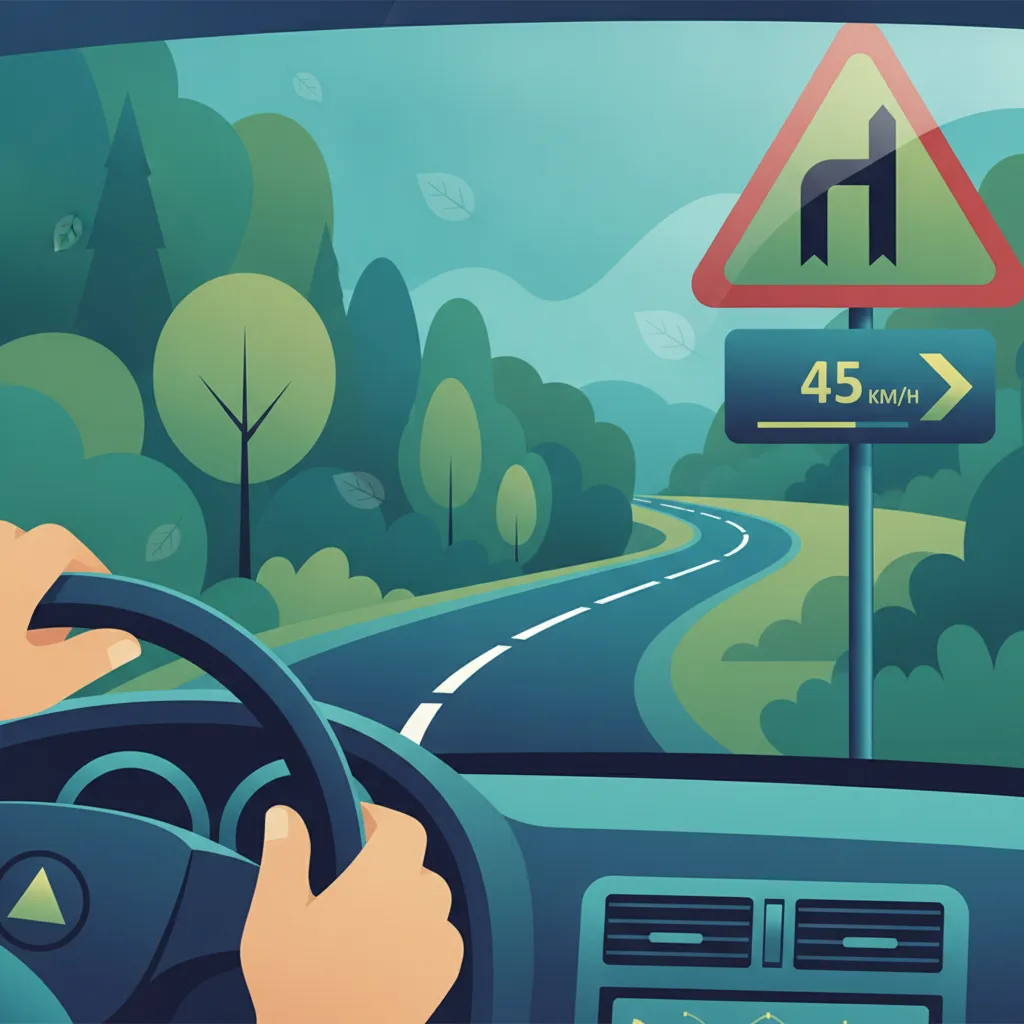
The legal speed limit is a maximum threshold, not a target speed that is always safe to maintain. This lesson teaches you how to select an appropriate, safe speed based on visibility, traffic congestion, and road topography. You will learn how to negotiate blind turns, approach summits with caution, and reduce speeds in heavy traffic to ensure you always maintain complete control of your vehicle.

This lesson addresses the challenges of positioning near larger vehicles such as cars, vans, buses, and lorries on French roads. Learners will learn to identify blind spots (angles morts), maintain a safe distance, and position themselves to maximize visibility and predictability. Understanding these dynamics is crucial for AM riders to avoid dangerous situations and ensure safe overtaking and lane sharing.
Find clear answers to common questions learners have about Seatbelts, Child Seats, and Passenger Safety. Learn how the lesson is structured, which driving theory objectives it supports, and how it fits into the overall learning path of units and curriculum progression in France. These explanations help you understand key concepts, lesson flow, and exam focused study goals.
In France, children under 10 years old must use an approved child restraint system. The specific type, such as a rear-facing infant seat, booster seat, or cushion, depends on the child's weight and height, as regulated by the Code de la route.
Yes, but only if the passenger airbag is deactivated. If the airbag cannot be turned off, you must place the rear-facing seat in the back of the vehicle to prevent serious injury in the event of an impact.
The driver is responsible for ensuring all passengers, especially minors, are correctly buckled up. If a passenger over the age of 18 is not wearing a belt, the driver may be fined and lose points, and the passenger themselves may also be held liable.
ISOFIX is a standardized international system for attaching child car seats directly to the vehicle chassis without using seatbelts. Understanding it is important for the exam as it represents modern vehicle safety standards and correct installation practices.
Ready to focus your study? Use the practice search to find exactly the French driving theory questions you need for the Code de la route and permis de conduire ETG. Refine your knowledge on specific topics or challenging rules to boost your confidence and exam readiness.