
This lesson explores the critical procedures for managing passenger movement during boarding and alighting. You will learn to use vehicle technology like sensitive door edges and camera systems to ensure maximum passenger safety while reducing stop times in urban traffic.

Lesson content overview
Navigating the entry and exit of passengers is one of the most critical daily responsibilities for professional passenger vehicle drivers. Whether operating a standard city transit bus or a long-distance touring coach, managing the physical movement of passengers—collectively known as passenger flow—impacts safety, accessibility, and service scheduling.
In France, transport regulations under the Code de la route and the Code des transports mandate strict procedures to protect passengers during these vulnerable transitional phases. This lesson covers the mechanical safety devices, legal priority boarding rules, and strategic flow management techniques required to pass the French Category D, D1, D1E, and DE theory exams.
Passenger flow refers to the coordinated movement of individuals entering (boarding) and exiting (alighting) a passenger vehicle. This dynamic is highly concentrated at designated stops, transit hubs, and terminals.
The organized movement of passengers as they transition between the ground and the interior of a transport vehicle. Managing this flow effectively reduces stop delays (dwell time) while keeping passenger safety at the highest level.
If passenger flow is poorly managed, two major issues arise:
To prevent these issues, drivers rely on a combination of onboard safety technology, clear communication, and strict adherence to French accessibility laws.
Modern passenger vehicles are equipped with active safety systems designed to prevent door-related accidents. As a professional driver, you must understand how these systems operate and recognize that they supplement—but do not replace—your personal vigilance.
The door safety interlock is a mandatory mechanical and electronic safety system that prevents the vehicle from accelerating while any passenger door is open.
Sensitive edges are active safety devices integrated into the soft rubber seals of the passenger doors.
To overcome the physical blind spots associated with long and articulated passenger vehicles, operators rely on closed-circuit television (CCTV) monitoring cameras.
In France, equal access to public transport is a legal right. Professional drivers must accommodate passengers with reduced mobility (PMR - Personnes à Mobilité Réduite), including wheelchair users, the elderly, pregnant women, and individuals with temporary injuries.
The landmark French Accessibility Law (Loi n°2005-102 du 11 février 2005) mandates that public transportation systems must be fully accessible. It is a legal obligation for drivers to facilitate priority boarding and provide assistance when required.
Vehicles must display clear signage indicating priority seating (places réservées). Drivers must manage passenger flow to ensure these seats are made available to those who need them.
Identify and Anticipate: Scan the bus stop area as you approach. Identify any passengers waiting with wheelchairs, strollers, canes, or visible mobility challenges.
Position the Vehicle: Align the vehicle's middle or designated accessible door perfectly with the raised curb. Utilize the vehicle's kneeling system (système d'agenouillement) to lower the entrance height.
Deploy the Access Ramp: If a wheelchair user is boarding, activate the mechanical or manual boarding ramp (palette d'accès PMR). Ensure the boarding zone is completely clear of pedestrians before deploying.
Monitor Boarding: Allow the priority passenger to board at their own pace. If necessary, request other passengers to clear the designated wheelchair space or priority seats.
Secure the Passenger: Ensure the wheelchair is positioned facing backward against the safety backrest (dossier d'appui) and that the passenger has applied their wheelchair brakes.
Retract the Ramp: Fully retract the ramp and confirm that all safety interlocks have disengaged before closing the doors and moving the vehicle.
Managing passenger flow is a balancing act between schedule precision and safety. Dwell time optimization should never involve rushing passengers. Instead, it relies on structural organization.
The Schedule Pressure Trap: Never let timetable delays pressure you into closing doors prematurely. Rushing passengers leads to slips, trips, and severe liability under French transport safety codes. Safety always takes precedence over punctuality.
The legal framework governing passenger transport in France is designed to protect both the user and the driver. Violations of these rules carry heavy administrative, civil, and criminal penalties.
Adverse weather conditions directly impact how you manage passenger flow. You must modify your stop procedures dynamically based on the environment:
To avoid accidents and legal violations, you must know how to handle complex boarding scenarios:
| Scenario / Edge Case | Associated Risk | Correct Professional Action |
|---|---|---|
| A passenger's bag or clothing is caught in a closed door as the bus starts to pull away. | Dragging hazard, severe physical injury or death. | Immediately apply the brakes. Do not rely entirely on the sensitive edge; perform a visual check of your mirrors before moving. |
| A passenger demands to alight between designated bus stops in heavy traffic. | Pedestrian collision with passing vehicles, illegal under French transport codes. | Politely refuse. Explain that alighting is strictly prohibited outside authorized stop zones for their own safety. |
| The onboard monitoring camera for the rear door is malfunctioning. | Blind spots while closing the doors. | Use physical mirrors, turn your head to check, or request the onboard conductor/passengers to confirm the area is clear. Report the defect at the end of the shift. |
| A child runs toward the closing doors at the last second. | Crushing injury, fall under the wheels. | Manually hit the door open button instantly. Do not wait for the sensitive edge or interlock to engage automatically. |
You are driving a Category D regional coach on a wet autumn morning. As you pull into a stop covered in wet leaves, you observe an elderly passenger waiting.
At a busy urban bus stop, a passenger with a baby stroller (poussette) and a passenger in a wheelchair both attempt to board at the middle door simultaneously.
Safely managing passenger flow requires a balance of mechanical system knowledge, absolute respect for accessibility regulations, and sharp situational awareness. By prioritizing the safety of vulnerable passengers and utilizing your vehicle's safety features correctly, you will ensure a safe, efficient, and law-compliant journey.
To further prepare for your French Category D passenger vehicle theory exam, explore how these boarding procedures integrate with urban traffic rules and pedestrian management.
This lesson covers the critical procedures for managing passenger flow during boarding and alighting for French D-category professional drivers. You must understand how door safety interlocks and sensitive edge detection systems work together to prevent accidents, while recognizing that technology supplements but never replaces driver vigilance. Priority boarding for passengers with reduced mobility (PMR) is a legal right under French accessibility law, requiring the use of kneeling systems and access ramps. Efficient dwell time management depends on structured flow control such as directional boarding rules, not rushing passengers. Legal obligations under the Code des transports mandate unconditional safety duty from the moment passengers begin boarding until they reach safe ground, with severe penalties for non-compliance.
A short set of high-value points that capture the most important learning from this lesson.
Door safety interlock systems automatically apply the halt brake and disable throttle whenever any passenger door remains open, requiring full door closure before departure.
Sensitive edge detection uses pressure or capacitive sensors to reverse door closure if an obstruction is detected, but visual confirmation is always required before moving.
Drivers must actively monitor CCTV camera feeds positioned above each door to verify complete passenger boarding or alighting before initiating door closure.
Under French accessibility law (Loi n°2005-102), wheelchair users and passengers with reduced mobility have legal priority boarding rights that must be facilitated with kneeling systems and access ramps.
Efficient dwell time management relies on structural organization such as front-door boarding and rear-door alighting, not on rushing passengers.
Explore all units and lessons included in this driving theory course.
The door safety interlock uses infrared beams, pressure mats, or weight sensors to detect passengers in the doorway and prevents vehicle movement until all doors are fully closed.
Priority passengers include wheelchair users (PMR), elderly, pregnant women, and those with temporary injuries; the kneeling system lowers the vehicle to curb level.
Safety always takes precedence over schedule punctuality—never close doors prematurely under timetable pressure.
During adverse weather (rain, snow, wet leaves), allocate additional boarding time and ensure step heating or anti-slip mats are functional.
Even with monitoring cameras and sensitive edges, physical mirror checks and visual confirmation remain mandatory before departure.
Relying entirely on automatic safety systems without performing visual checks, assuming sensitive edges will always detect small items like backpack straps.
Closing doors prematurely when running behind schedule, creating risk of trips, falls, or door-crushing injuries.
Failing to properly align the vehicle with the curb before deploying the PMR access ramp, creating a gap that endangers wheelchair users.
Not activating boarding lights and external illumination during night operations, reducing visibility of passengers near the doors.
Allowing passengers to alight between designated stops due to time pressure, which is prohibited under French transport codes.
Lesson content overview
A short set of high-value points that capture the most important learning from this lesson.
Door safety interlock systems automatically apply the halt brake and disable throttle whenever any passenger door remains open, requiring full door closure before departure.
Sensitive edge detection uses pressure or capacitive sensors to reverse door closure if an obstruction is detected, but visual confirmation is always required before moving.
Drivers must actively monitor CCTV camera feeds positioned above each door to verify complete passenger boarding or alighting before initiating door closure.
Under French accessibility law (Loi n°2005-102), wheelchair users and passengers with reduced mobility have legal priority boarding rights that must be facilitated with kneeling systems and access ramps.
Efficient dwell time management relies on structural organization such as front-door boarding and rear-door alighting, not on rushing passengers.
Explore all units and lessons included in this driving theory course.
The door safety interlock uses infrared beams, pressure mats, or weight sensors to detect passengers in the doorway and prevents vehicle movement until all doors are fully closed.
Priority passengers include wheelchair users (PMR), elderly, pregnant women, and those with temporary injuries; the kneeling system lowers the vehicle to curb level.
Safety always takes precedence over schedule punctuality—never close doors prematurely under timetable pressure.
During adverse weather (rain, snow, wet leaves), allocate additional boarding time and ensure step heating or anti-slip mats are functional.
Even with monitoring cameras and sensitive edges, physical mirror checks and visual confirmation remain mandatory before departure.
Relying entirely on automatic safety systems without performing visual checks, assuming sensitive edges will always detect small items like backpack straps.
Closing doors prematurely when running behind schedule, creating risk of trips, falls, or door-crushing injuries.
Failing to properly align the vehicle with the curb before deploying the PMR access ramp, creating a gap that endangers wheelchair users.
Not activating boarding lights and external illumination during night operations, reducing visibility of passengers near the doors.
Allowing passengers to alight between designated stops due to time pressure, which is prohibited under French transport codes.
Explore search topics learners often look for when studying Managing Passenger Flow During Boarding/Alighting. These topics reflect common questions about road rules, driving situations, safety guidance, and lesson level theory preparation for learners in France.
Browse additional driving theory lessons that cover connected traffic rules, road signs, and common driving situations related to this topic. Improve your understanding of how different rules interact across everyday traffic scenarios.
Understand the legal obligations and safety protocols for managing interactions with pedestrians, cyclists, and vulnerable road users near bus stops. This guide details how to navigate dense urban traffic while prioritizing road user safety under the French Code de la route.

This lesson details how to manage high-risk interactions with pedestrians who may step off curbs or cross the road near bus stops. Learners will study French Code de la route laws regarding pedestrian priority at crosswalks and near stopping transit vehicles. Developing heightened spatial awareness around blind zones near the front of the bus is emphasized to prevent tragic pedestrian collisions.

This lesson examines French Code de la route laws regarding pedestrian right-of-way, emphasizing the driver's legal duty to yield to any pedestrian engaged in crossing. It outlines proper approach speeds when approaching zebra crossings with obstructed views. Candidates will learn to maintain a safe physical buffer zone and verify that crosswalks are entirely clear of pedestrians before accelerating.

In France, pedestrians have clear legal priority when stepping onto or indicating an intent to use a crossing (passage pieton). This lesson details standard zebra crossings, refuge islands, and pedestrian crossings managed by synchronized traffic light systems. You will learn to scan crossings ahead, anticipate pedestrian movements, and safely come to a stop whenever a pedestrian attempts to cross.
This lesson focuses on the legal requirement to yield to pedestrians on or about to step onto zebra crossings, a major focus of French road safety. You will learn how to approach school zones and pedestrian islands with heightened vigilance and reduced speed. Additionally, the lesson explores shared urban spaces, explaining how to maintain safe lateral distances when overtaking cyclists or personal electric scooters.

Learners will explore the rules related to pedestrian crossings, focusing on the obligation to yield to pedestrians at zebra crossings and flashing pedestrian signals. The lesson highlights the importance of stopping before the stop line, reducing speed, and maintaining vigilance for pedestrian movement. Mastery of these practices ensures the safety of both pedestrians and AM riders at crossing points.
This lesson examines the specific challenges and responsibilities goods vehicle drivers face when interacting with pedestrians and cyclists in urban environments. Learners will understand right-of-way rules, the importance of yielding at pedestrian crossings, and safe turning practices that protect cyclists. The content emphasizes heightened driver vigilance, especially when navigating bike lanes and crowded sidewalks.

Public transit vehicles like city buses and streetcars (trams) have clear legal priorities and dedicated infrastructure in urban areas. This lesson teaches you to recognize reserved transit lanes and your legal obligation to yield to buses exiting their designated stops. You will also learn safe driving strategies near tram tracks, ensuring you never block public transit lines or risk passenger boarding areas.
This lesson outlines the standardized physical markings and vertical signs that define official bus stop zones, such as yellow zig-zag road lines. Learners will understand the strict stopping and parking prohibitions that protect these areas from other motorists under the Code de la route. Implementing precise approach protocols ensures that the vehicle aligns correctly with the boarding platform for maximum passenger safety.

This lesson focuses on the technical skills required to position a large bus or coach parallel to the boarding curb. Drivers will learn to minimize the gap between the vehicle steps and the sidewalk, preventing tripping hazards for boarding passengers. The lesson also covers safe approach angles, mirror alignment, and positioning rules that avoid contact with curbside objects or waiting pedestrians.
This lesson teaches specific visual scanning methods to detect vulnerable road users, such as children, elderly individuals, and cyclists near stops. Drivers will learn to anticipate sudden movements, like a passenger running to catch a bus or stepping off a sidewalk unexpectedly. Managing the massive blind spots around the front and right-hand sides of passenger vehicles is highlighted as a critical safety duty.
Explore the mandatory accessibility standards for passenger vehicles in France, including the proper use of ramps and kneeling systems. Learn the legal responsibilities of professional drivers toward passengers with reduced mobility, elderly persons, and individuals requiring special boarding assistance for safe and inclusive transport service.

This lesson provides step-by-step instructions for utilizing vehicle accessibility systems, including wheelchair ramps, lifts, and specialized tie-down restraints. Drivers will study French regulatory frameworks mandating equal access to public transport services for all individuals. Crucially, the lesson covers respectful, safe, and efficient communication methods for guiding passengers with sensory, physical, or cognitive impairments.
This lesson introduces the standard interior signage required in passenger vehicles to communicate critical safety and accessibility information clearly. Learners will learn to verify the visibility of handicap symbols, emergency exit markers, and priority seating notifications. Proper maintenance of these visual and auditory warning systems ensures that all passenger groups can navigate the vehicle confidently and safely under any conditions.

This lesson highlights the critical ethical framework governing public and private passenger transport services within the French Republic. Drivers are trained to provide equitable, non-discriminatory assistance to all travelers while fully respecting passenger privacy and dignity. Understanding these moral obligations helps prevent conflicts, enhances service accessibility, and reinforces the high standard of social responsibility expected of professional coach operators.
This lesson covers immediate response steps for critical on-board events, including passenger medical emergencies and engine compartment fires. Learners will study the location and proper application of fire extinguishers, safety hammers, and first aid kits. It also explains how to coordinate effectively with French emergency services (SAMU, Fire Brigade) and reassure passengers to maintain calm during an incident.
This lesson explains the critical documentation required to be kept onboard every passenger vehicle under French and European transport regulations. Learners will explore requirements for passenger manifests, insurance policies, valid transport permits, and official logbooks like the chronotachygraphe. Crucially, the lesson covers proper procedures for presenting these documents during routine roadside inspections by French law enforcement agencies.
This lesson focuses on the technical skills required to position a large bus or coach parallel to the boarding curb. Drivers will learn to minimize the gap between the vehicle steps and the sidewalk, preventing tripping hazards for boarding passengers. The lesson also covers safe approach angles, mirror alignment, and positioning rules that avoid contact with curbside objects or waiting pedestrians.

This lesson covers the preparation and execution of long-distance intercity coach services (such as "Macron buses" in France). Drivers will learn to integrate European Union social regulations on driving limits and mandatory rest breaks into their journey planning. Strategies for checking weather reports, tracking fuel consumption, and monitoring passenger comfort during long transit times are fully explained.

This lesson examines the regulatory limits and environmental controls applied to large passenger vehicles operating in dense French urban centers. Drivers will study the Crit'Air clean air sticker system and low-emission zones (ZFE) that restrict access for older, high-polluting vehicles. It also addresses navigating physical constraints, such as narrow streets, tight turning radii, and strict municipal weight limits.
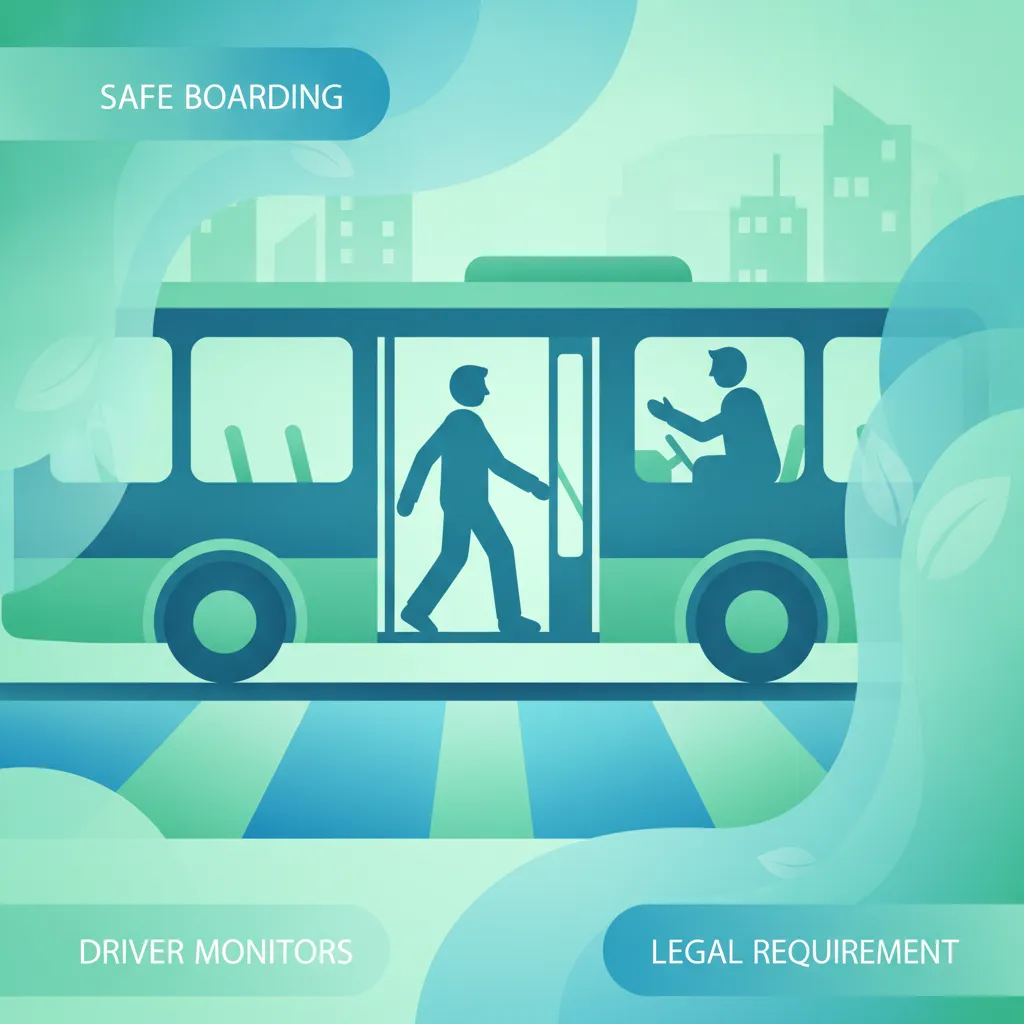
This lesson focuses on the operational rules inside major passenger terminals, bus stations (gares routières), and airport transfer zones. Drivers will learn to navigate designated arrival and departure platforms, respecting strict speed limits and pedestrian safety zones within terminal property. Coordinating luggage retrieval, boarding clearances, and communicating with station dispatchers are also detailed.
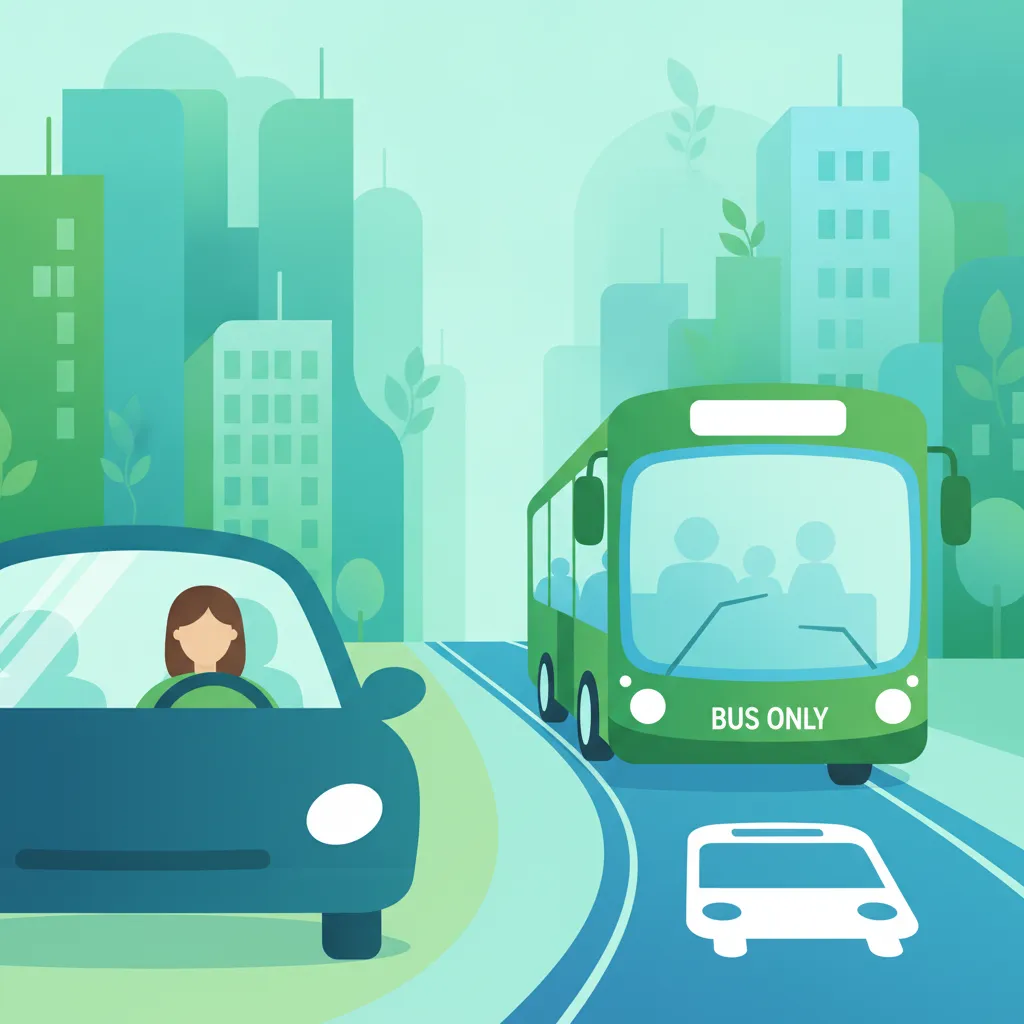
This lesson detail the exact laws governing the use of reserved bus lanes, detailing who may enter them and during what hours of operation. Drivers will study the penalties for unauthorized passenger cars occupying these lanes and the safety protocols for lane sharing with taxi cabs or cyclists. The lesson also highlights safe lane-merging practices when exiting reserved spaces to merge back into general urban traffic.
Find clear answers to common questions learners have about Managing Passenger Flow During Boarding/Alighting. Learn how the lesson is structured, which driving theory objectives it supports, and how it fits into the overall learning path of units and curriculum progression in France. These explanations help you understand key concepts, lesson flow, and exam focused study goals.
The door safety interlock prevents the vehicle from moving while the doors are open or not fully sealed. It is a critical safety feature that ensures passengers cannot fall out while the coach is in motion, and it is a common topic in the French professional licence theory exam.
You must prioritize their safe entry by positioning the vehicle as close to the curb as possible, deploying any required ramps, and ensuring the vehicle does not move until they are safely seated or secured. Polite communication and providing sufficient time are part of the professional duty of care.
Sensitive edges are sensors on bus doors that trigger an automatic stop or reversal if they detect an obstruction, such as a passenger or luggage. Understanding their function is vital for preventing boarding accidents and passing the safety-focused sections of the theory test.
No. In French road law, the use of the horn in built-up areas is strictly regulated to emergency situations only. Using it to signal or hurry passengers is unprofessional and would be marked as a dangerous or incorrect practice in your theory assessment.
Ready to focus your study? Use the practice search to find exactly the French driving theory questions you need for the Code de la route and permis de conduire ETG. Refine your knowledge on specific topics or challenging rules to boost your confidence and exam readiness.