
This lesson explores the essential ethical framework required for professional passenger transport under French law. You will learn how to balance your professional responsibilities with the rights of your passengers to ensure inclusive, safe, and respectful service throughout your career.

Lesson content overview
Operating passenger transport vehicles under the French driving licence categories D1, D, D1E, and DE carries a high level of social, legal, and moral responsibility. As a professional coach or bus driver, your duties extend far beyond navigating a heavy vehicle safely through traffic. You are the custodian of your passengers' safety, dignity, and basic rights.
This lesson covers the ethical framework governing both public and private passenger transport services (transport routier de voyageurs) in the French Republic. Understanding these obligations is critical for passing your passenger transport theory exam and maintaining a safe, inclusive, and legally compliant operation.
In France, professional transport operators are bound by strict ethical standards. These standards are defined by national transport laws (Code des transports), general labor laws (Code du travail), and European regulations.
At its core, ethical driving means aligning your operational decisions with five main principles:
These principles do not merely exist as moral ideals; they are supported by French and European legislation. Violations can lead to severe civil and criminal penalties, along with the immediate revocation of your professional driving credential (Carte de qualification professionnelle - CQP).
Non-discrimination is a pillar of French public service (service public) and private charter operations. Under Article L. 1132-1 of the French Labour Code (Code du travail) and the French Penal Code, it is strictly illegal to treat passengers differently or refuse service based on protected characteristics.
As a driver, you must provide uniform, high-quality service regardless of a passenger's:
The act of refusing boarding, providing substandard assistance, or segregating passengers based on any protected characteristic. This is a criminal offense under French law, punishable by heavy fines and imprisonment.
To prevent discriminatory behavior on duty:
Crucial Distinction: Refusing boarding to a passenger is only legally permissible when safety is directly compromised—for instance, if a passenger is violently disruptive, heavily intoxicated (ivresse publique), or carrying hazardous materials. Refusing service based on personal discomfort or bias is an unlawful act of discrimination.
The widespread use of digital ticketing, transport passes, and onboard safety systems means that passenger transport drivers regularly handle sensitive or personal information. In France, this data is protected under the General Data Protection Regulation (GDPR) and the French Data Protection Act (Loi Informatique et Libertés).
During your shift, you may need to verify school transport cards, nominative season tickets, or medical travel permits. You must handle these documents with extreme discretion:
Many modern French buses and coaches are equipped with onboard video surveillance (vidéosurveillance) to ensure safety and prevent vandalism.
To comply with privacy laws, passenger surveillance must adhere to strict rules:
Dignity in service means treating passengers as human beings who deserve respect, comfort, and consideration. This is particularly vital in passenger transport, where journeys can sometimes be long, tiring, or stressful.
Using formal, polite French forms of address (le vouvoiement) is a basic standard of professional conduct. A simple greeting upon boarding establishes a positive, respectful tone that naturally deters anti-social behavior.
Professional integrity means being transparent, honest, and accountable for your actions on the road.
Provide Immediate, Honest Information: If your vehicle is delayed due to traffic jams, accidents, or mechanical failure, announce the situation clearly and truthfully over the public address system.
Avoid False Promises: Do not give unrealistic arrival times to appease anxious passengers. State the facts and provide updates as you receive them from dispatch.
Accurate Fare Collection: Always issue an official, printed receipt or ticket for cash payments. Pocketing cash or failing to record transactions is a serious breach of integrity and constitutes fraud under the French Transport Code.
Truthful Reporting: In the event of an incident or minor collision, always report the details truthfully to your manager and in the official logbook. Never minimize or alter facts to avoid blame.
Ensuring equal access to transportation is a major legal requirement under French law. Article L. 111-7 of the Code de la route and the Decree of 22 November 2007 outline the strict rules regarding the accessibility of public transport systems for Personnes à Mobilité Réduite (PRM).
Modern coaches and buses are designed with specific technical systems to assist PRM passengers. As a professional driver, you must master the operation of these systems:
French vehicles have designated priority seats (places réservées) located near the entrance doors for passengers with limited mobility, pregnant women, and the elderly.
Ethical guidelines are easy to follow under perfect conditions, but they are tested during difficult, high-stress situations. Here is how to handle complex scenarios ethically and professionally.
If a passenger is highly intoxicated, aggressive, or behaving in a way that threatens passenger safety, you have a duty to intervene.
In international coach travel (such as long-distance services under the DE category), you will often transport passengers who do not speak French.
If you notice a passenger being harassed, bullied, or threatened by another traveler, you cannot simply look away. You have a legal "duty of care" (obligation de sécurité) toward everyone on your vehicle.
Assess the Situation Safely: Use your rearview mirror and onboard cameras to evaluate the severity of the situation without immediately putting yourself in physical danger.
Speak to the Victim: If safe, invite the targeted passenger to move to a seat closer to your driver's cabin, where you can monitor them more easily.
Issue a Firm, Professional Warning: Use the public address system or speak directly to the aggressor. State clearly: "For everyone’s safety and comfort, respectful behavior is mandatory on this vehicle."
Contact Dispatch and Authorities: If the harassment continues or escalates into physical threats, stop the vehicle safely, contact your company's control center, and call the national emergency services (17 or 112) immediately.
Ethics in passenger transport also includes your impact on the wider community and the environment. Large vehicles like buses and coaches consume significant amounts of fuel and generate emissions, making responsible driving an ethical necessity.
This lesson covers the ethical and legal framework governing professional passenger transport in France, including non-discrimination obligations, privacy protections under GDPR, and the requirement to treat all passengers with dignity and respect. Key procedures include operating accessibility equipment for PRM passengers, handling personal data confidentially, and intervening appropriately in safety situations. Understanding these standards is essential for passing situational-judgment questions on the theory exam and maintaining your professional driving qualification.
A short set of high-value points that capture the most important learning from this lesson.
Professional passenger transport drivers must treat all passengers equally regardless of protected characteristics including origin, gender, disability, religion, or age.
Passenger data and documents must be handled with strict confidentiality; photographing or storing personal information on personal devices is prohibited.
Drivers must know how to operate accessibility equipment including kneeling systems, boarding ramps, and wheelchair anchorages.
Refusing service is only legally justified when passenger safety is directly threatened, never based on personal bias or discomfort.
Onboard harassment requires immediate intervention using the duty of care principle, with drivers expected to protect vulnerable passengers.
Explore all units and lessons included in this driving theory course.
Non-discrimination is enforced under Article L.1132-1 of the French Labour Code; violations carry criminal penalties and can revoke your CQP professional qualification.
CCTV surveillance requires mandatory signage near entrance doors and inside the cabin; only authorized personnel may access footage.
Guide dogs and assistance dogs must be allowed onboard free of charge and are exempt from muzzle requirements.
Priority seats must be offered to PRM passengers, pregnant women, and the elderly; drivers should politely request vacating these seats.
During service disruptions, provide honest updates over the public address system without making false promises about arrival times.
Confusing personal discomfort with a legitimate safety concern when considering refusing service to a passenger.
Reading out loud or discussing a passenger's personal details (address, school name, medical information) from their transport card.
Assuming that verbal warnings alone are sufficient when a passenger is being harassed or threatened.
Forgetting to regularly test accessibility equipment like ramps and kneeling systems before service.
Making assumptions about which passengers need assistance rather than offering help based on functional need.
Lesson content overview
A short set of high-value points that capture the most important learning from this lesson.
Professional passenger transport drivers must treat all passengers equally regardless of protected characteristics including origin, gender, disability, religion, or age.
Passenger data and documents must be handled with strict confidentiality; photographing or storing personal information on personal devices is prohibited.
Drivers must know how to operate accessibility equipment including kneeling systems, boarding ramps, and wheelchair anchorages.
Refusing service is only legally justified when passenger safety is directly threatened, never based on personal bias or discomfort.
Onboard harassment requires immediate intervention using the duty of care principle, with drivers expected to protect vulnerable passengers.
Explore all units and lessons included in this driving theory course.
Non-discrimination is enforced under Article L.1132-1 of the French Labour Code; violations carry criminal penalties and can revoke your CQP professional qualification.
CCTV surveillance requires mandatory signage near entrance doors and inside the cabin; only authorized personnel may access footage.
Guide dogs and assistance dogs must be allowed onboard free of charge and are exempt from muzzle requirements.
Priority seats must be offered to PRM passengers, pregnant women, and the elderly; drivers should politely request vacating these seats.
During service disruptions, provide honest updates over the public address system without making false promises about arrival times.
Confusing personal discomfort with a legitimate safety concern when considering refusing service to a passenger.
Reading out loud or discussing a passenger's personal details (address, school name, medical information) from their transport card.
Assuming that verbal warnings alone are sufficient when a passenger is being harassed or threatened.
Forgetting to regularly test accessibility equipment like ramps and kneeling systems before service.
Making assumptions about which passengers need assistance rather than offering help based on functional need.
Explore search topics learners often look for when studying Ethical Considerations in Passenger Transport. These topics reflect common questions about road rules, driving situations, safety guidance, and lesson level theory preparation for learners in France.
Browse additional driving theory lessons that cover connected traffic rules, road signs, and common driving situations related to this topic. Improve your understanding of how different rules interact across everyday traffic scenarios.
Learn the legal obligations for bus and coach operators regarding accessibility in France. This guide covers the use of boarding ramps, kneeling systems, and priority seating to ensure safe, equitable transport for passengers with disabilities and limited mobility under the French transport code.
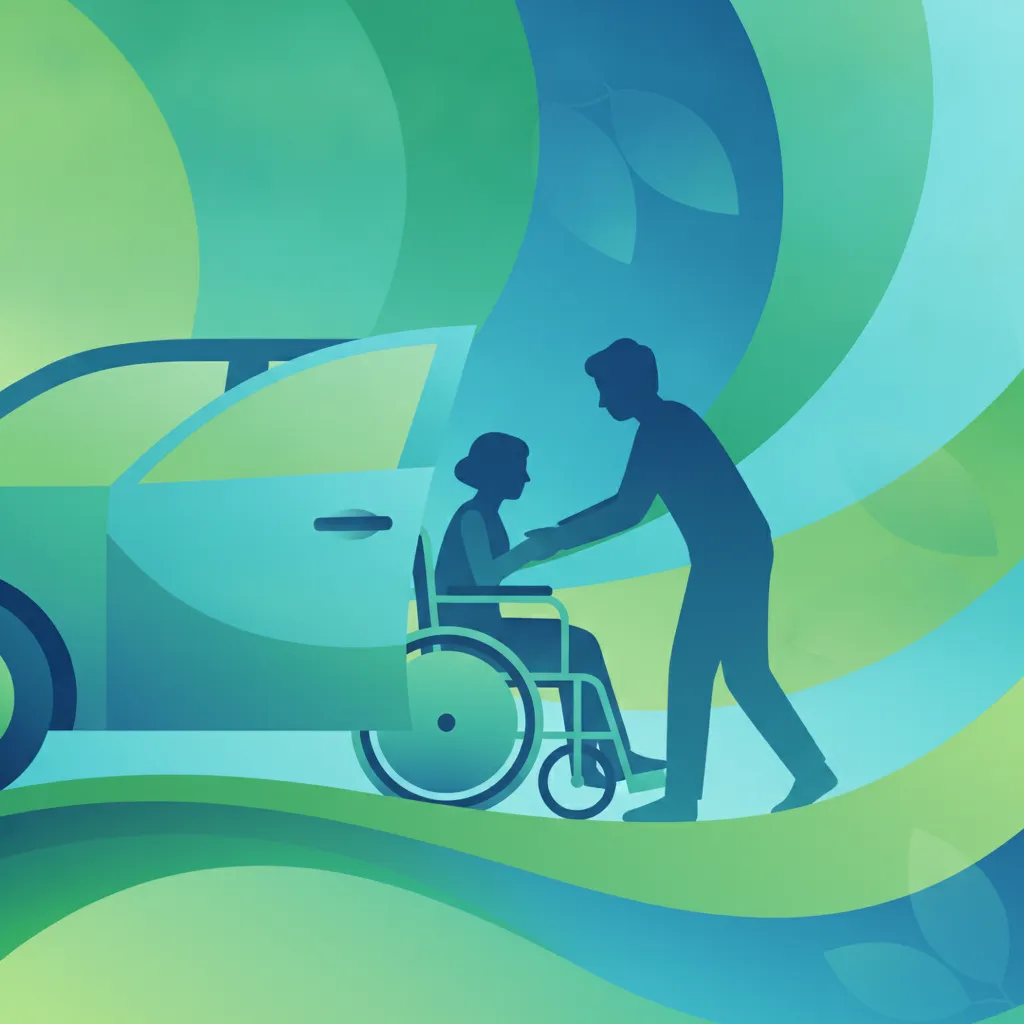
This lesson provides step-by-step instructions for utilizing vehicle accessibility systems, including wheelchair ramps, lifts, and specialized tie-down restraints. Drivers will study French regulatory frameworks mandating equal access to public transport services for all individuals. Crucially, the lesson covers respectful, safe, and efficient communication methods for guiding passengers with sensory, physical, or cognitive impairments.

This lesson examines the flow of passengers entering and exiting the vehicle and how to organize this movement to reduce stop delays safely. Drivers will study the operation of door safety interlocks, sensitive edges, and onboard monitoring cameras to prevent boarding accidents. It also covers coordinating priority boarding for elderly, pregnant, or injured passengers in a polite and structured manner.
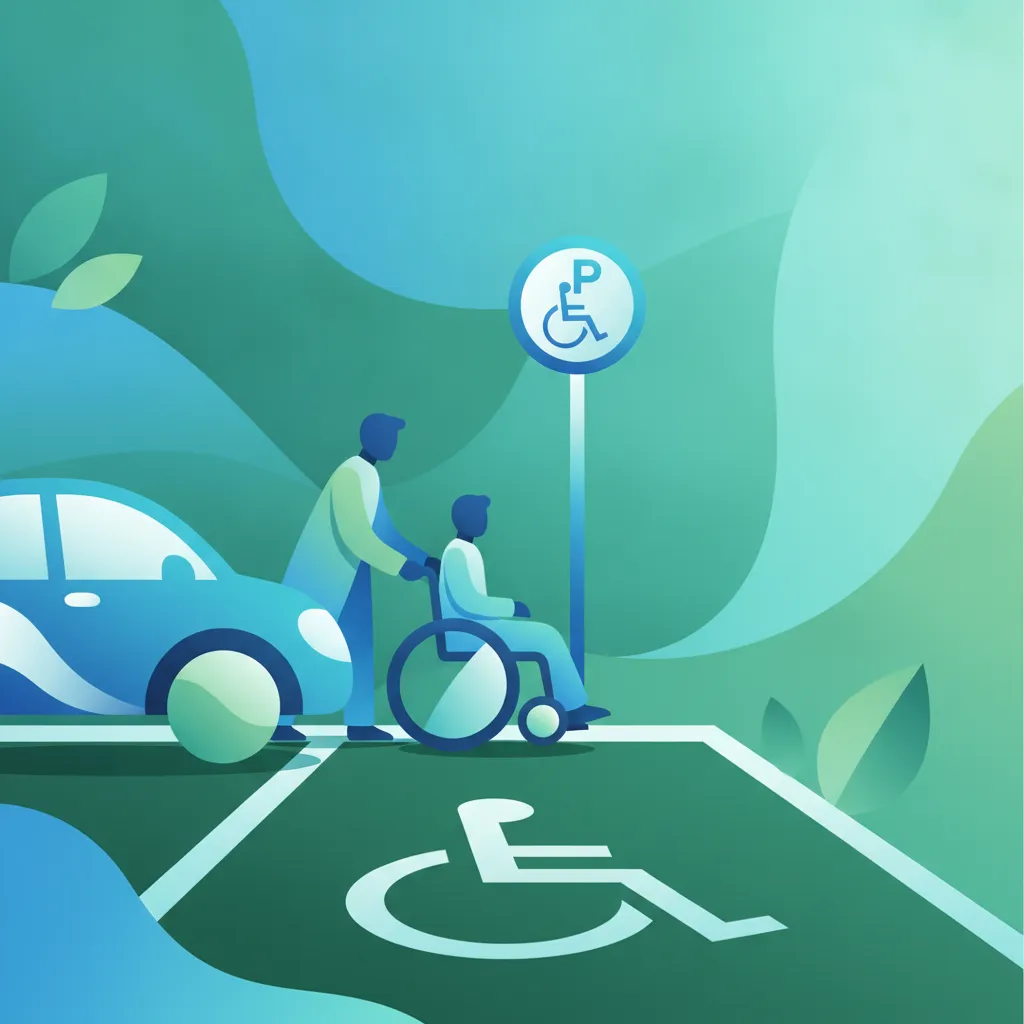
This lesson introduces the standard interior signage required in passenger vehicles to communicate critical safety and accessibility information clearly. Learners will learn to verify the visibility of handicap symbols, emergency exit markers, and priority seating notifications. Proper maintenance of these visual and auditory warning systems ensures that all passenger groups can navigate the vehicle confidently and safely under any conditions.

This lesson focuses on the technical skills required to position a large bus or coach parallel to the boarding curb. Drivers will learn to minimize the gap between the vehicle steps and the sidewalk, preventing tripping hazards for boarding passengers. The lesson also covers safe approach angles, mirror alignment, and positioning rules that avoid contact with curbside objects or waiting pedestrians.

This lesson details the emergency protocols for handling mechanical breakdowns or tire blowouts on public highways and motorways. Drivers will learn how to park the vehicle in the safest possible location, activate hazard warning lights, and deploy the reflective warning triangle. It teaches precise commands and steps for evacuating passengers quickly through safety exits, positioning them behind protective guardrails.

This lesson details how to manage high-risk interactions with pedestrians who may step off curbs or cross the road near bus stops. Learners will study French Code de la route laws regarding pedestrian priority at crosswalks and near stopping transit vehicles. Developing heightened spatial awareness around blind zones near the front of the bus is emphasized to prevent tragic pedestrian collisions.
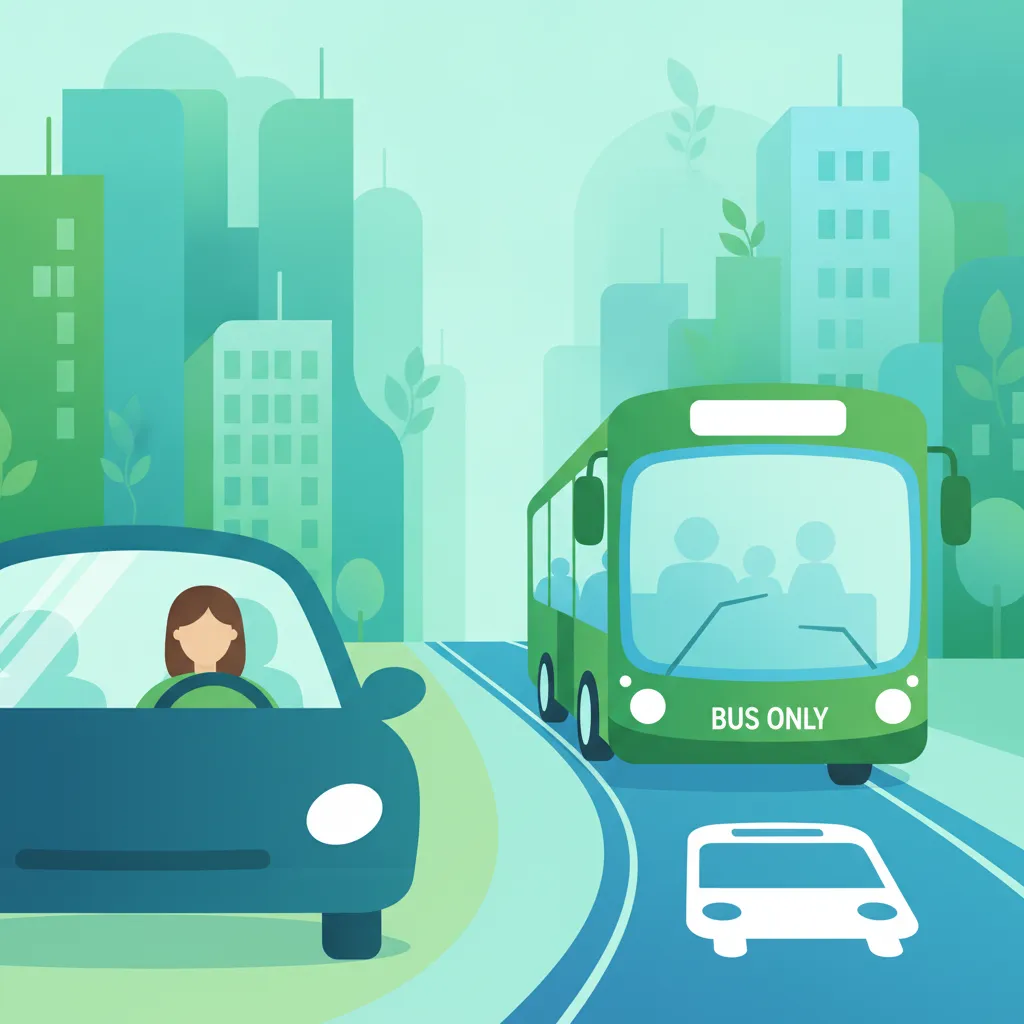
This lesson detail the exact laws governing the use of reserved bus lanes, detailing who may enter them and during what hours of operation. Drivers will study the penalties for unauthorized passenger cars occupying these lanes and the safety protocols for lane sharing with taxi cabs or cyclists. The lesson also highlights safe lane-merging practices when exiting reserved spaces to merge back into general urban traffic.

This lesson examines French Code de la route laws regarding pedestrian right-of-way, emphasizing the driver's legal duty to yield to any pedestrian engaged in crossing. It outlines proper approach speeds when approaching zebra crossings with obstructed views. Candidates will learn to maintain a safe physical buffer zone and verify that crosswalks are entirely clear of pedestrians before accelerating.
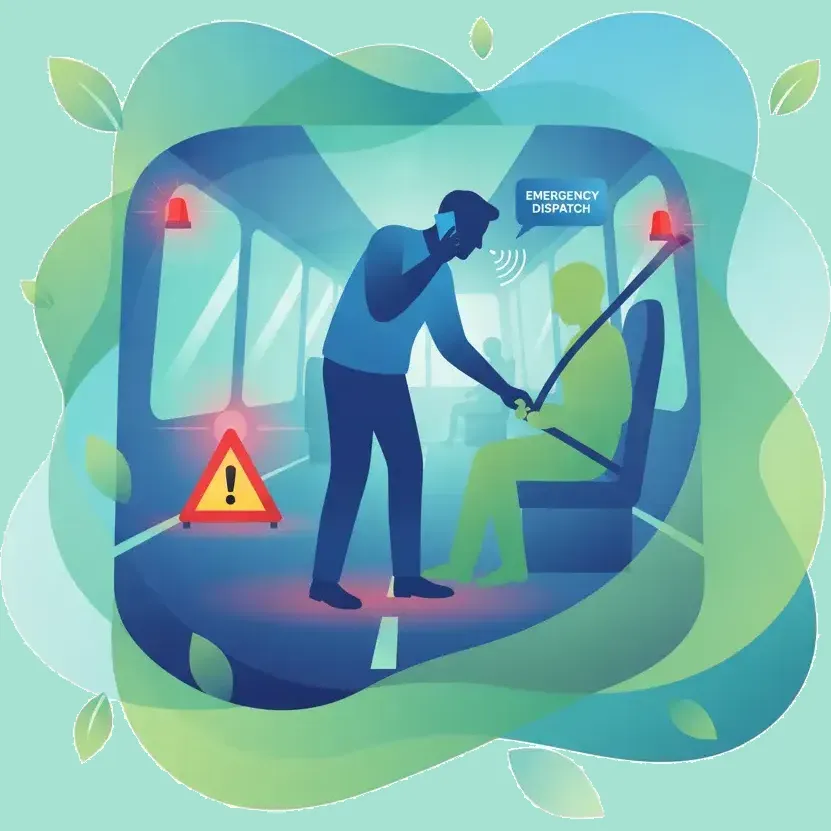
This lesson covers immediate response steps for critical on-board events, including passenger medical emergencies and engine compartment fires. Learners will study the location and proper application of fire extinguishers, safety hammers, and first aid kits. It also explains how to coordinate effectively with French emergency services (SAMU, Fire Brigade) and reassure passengers to maintain calm during an incident.
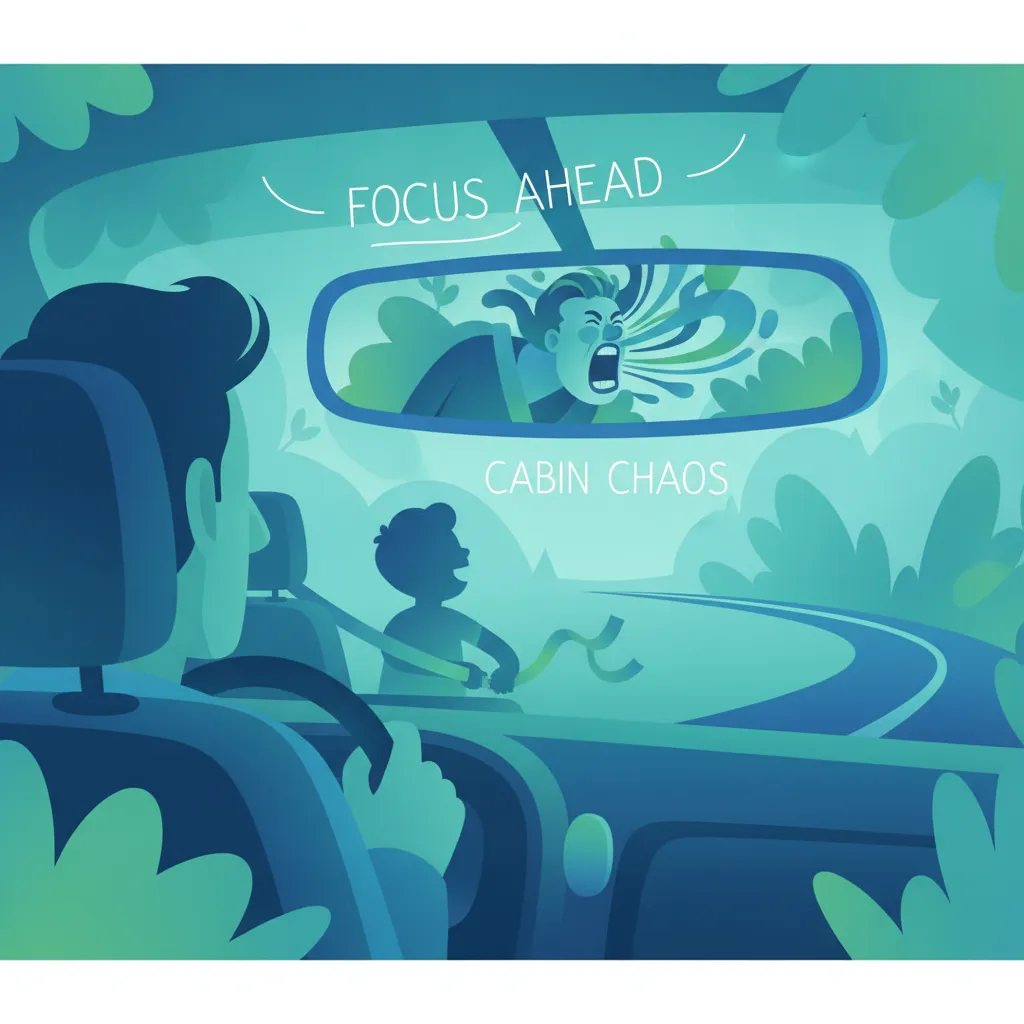
This lesson focuses on techniques for monitoring and managing passenger behavior to maintain a calm and safe environment during transit. Drivers will learn how to enforce seatbelt rules, manage noise levels, and de-escalate verbal conflicts between passengers. Proactive safety announcements and a confident, polite professional demeanor are highlighted as key tools to prevent behavioral issues before they compromise road safety.
Understand how to maintain professional standards when managing challenging situations, including passenger disputes or harassment. This lesson explains the driver’s duty of care and communication protocols required to maintain safety and passenger dignity during regular service and unexpected incidents within the French transit network.
This lesson focuses on techniques for monitoring and managing passenger behavior to maintain a calm and safe environment during transit. Drivers will learn how to enforce seatbelt rules, manage noise levels, and de-escalate verbal conflicts between passengers. Proactive safety announcements and a confident, polite professional demeanor are highlighted as key tools to prevent behavioral issues before they compromise road safety.
Find clear answers to common questions learners have about Ethical Considerations in Passenger Transport. Learn how the lesson is structured, which driving theory objectives it supports, and how it fits into the overall learning path of units and curriculum progression in France. These explanations help you understand key concepts, lesson flow, and exam focused study goals.
Professional driving involves direct interaction with the public. Understanding ethical duties ensures drivers can manage diverse passenger needs, maintain safety, and represent the service standard required by French law.
You must treat every passenger with the same level of respect and provide necessary assistance without bias, particularly regarding accessibility. This means following standardized service protocols consistently for every traveler.
Always prioritize a calm, professional, and firm response. Keep your focus on maintaining a safe transit environment while respecting boundaries and following your company's established procedures for incident management.
Yes, unprofessional conduct can lead to disciplinary action, loss of professional certification, and potential legal repercussions if passenger rights are violated. It is a critical component of your professional liability.
Ready to focus your study? Use the practice search to find exactly the French driving theory questions you need for the Code de la route and permis de conduire ETG. Refine your knowledge on specific topics or challenging rules to boost your confidence and exam readiness.