
This lesson details the mandatory pre-trip safety checks required for heavy goods vehicles in France. Mastering these inspections is vital for both your category C and CE theory exam and for maintaining professional safety standards on the road.

Lesson content overview
Operating a heavy goods vehicle (véhicule de transport de marchandises) under Category C or CE involves immense professional responsibility. Before a single wheel turns on a public road, a professional driver must verify that their vehicle is entirely roadworthy, safe, and fully compliant with the French Code de la route.
A systematic pre-trip inspection (contrôle de sécurité avant le départ) is not merely a bureaucratic chore; it is a critical safety practice that prevents catastrophic mechanical failures, protects other road users, and shields the driver from severe civil and criminal liabilities. Under French law, the driver is legally responsible for the vehicle’s condition and the security of its cargo once the journey commences.
In France, the Code de la route stipulates that driving a vehicle with mechanical defects or an unsecured load is a serious offense. Should an accident occur due to a known, pre-existing defect, the driver can be prosecuted for involuntary manslaughter or negligence.
A thorough pre-trip inspection ensures:
Drivers should adopt a consistent, clockwise walkaround routine. This systematic approach ensures that no component is overlooked.
Tyres are the only contact point between a 26-tonne rigid truck or a 44-tonne articulated combination and the road surface. They must be inspected with extreme care.
Visibility is paramount, especially when operating a vehicle of significant height and width.
A driver cannot react to what they cannot see. Visibility aids must be checked before starting the engine.
Once the exterior walkaround is complete, the driver must perform a series of static checks from inside the cabin before moving.
Seat and Steering Wheel Adjustment: Ensure you can fully depress all pedals comfortably and have a clear view of all mirrors without straining.
Seatbelts: Confirm the driver and passenger seatbelts are in good condition, buckle securely, and retract smoothly.
Instrument Panel & Warning Lights: Turn on the ignition. Ensure all dashboard warning lights perform their self-test cycle and extinguish when the engine starts (especially ABS/EBS and oil pressure lights).
Windscreen Wipers and Washers: Test the operation of the wipers at all speeds and ensure the washer nozzles spray effectively.
Air brakes (freinage pneumatique) are the core safety system of a heavy goods vehicle. A failure in this system can result in a runaway vehicle.
The standard compressed air pressure required to operate the braking system of a heavy vehicle safely, typically between 6 to 8 bar.
If the low-pressure warning buzzer or light activates during your journey, pull over immediately in a safe location. This indicates a critical loss of air pressure that will cause the spring brakes to automatically lock up, locking the wheels and immobilizing the vehicle abruptly.
Under European and French social regulations, professional drivers must record their driving and rest times using an electronic logging device.
For drivers operating Category CE vehicle combinations (semi-trailers or drawbar trailers), checking the mechanical coupling is a critical safety step. Improper coupling can lead to a trailer detaching at high speed.
When inspecting the coupling device (dispositif d'attelage) of a semi-trailer:
An unstable or poorly secured load can destabilize a heavy vehicle, causing rollovers in corners or shifting forward during heavy braking, which can crush the driver's cabin.
Under the French Code de la route and labour laws, a professional driver must carry a specific set of documents. Failure to present these during a roadside check results in heavy fines and immediate vehicle immobilization.
The following documents must be kept in the vehicle and must be current:
| Document Name (English) | French Term | Purpose |
|---|---|---|
| Driver's License | Permis de conduire | Must show Category C or CE, and be valid (renewed via medical examination). |
| Driver Qualification Card | Carte de Qualification Conducteur (CQC) | Proves the driver has completed mandatory training (FIMO/FCO). |
| Vehicle Registration Certificates | Certificat d'immatriculation (Carte Grise) | Required for both the towing vehicle and the trailer. |
| Certificate of Insurance | Attestation d'assurance (Carte Verte) | Valid proof of third-party liability insurance for all registered units. |
| Technical Inspection Report | Contrôle Technique | Proves the vehicle has passed its annual safety inspection. |
| Transport Document / Consignment Note | Lettre de voiture (or CMR) | Legal contract detailing the sender, receiver, nature of cargo, and destination. |
| Tachograph Data | Données du chronotachygraphe | Driver card and records of the current day plus the previous 28 days of activity. |
The pre-trip inspection is a legal shield for the professional driver. If you find a safety-critical defect (such as a deeply cut tyre sidewall, a cracked leaf spring, or a faulty brake caliper), do not drive the vehicle. You must report the defect to your transport manager or fleet maintenance department immediately using a defect report sheet (fiche de signalement d'anomalie).
Driving a vehicle with a known safety defect makes you personally liable for any resulting incidents. By mastering the step-by-step inspections detailed in this guide, you ensure compliance with French road regulations, protect your professional license, and contribute to safer roads for everyone.
This lesson covers the mandatory pre-trip inspection procedures for French Category C and CE goods vehicles, teaching a systematic clockwise walkaround that checks tyres, lights, mirrors, and coupling systems. Critical procedures include air brake pressure build-up and leakage tests with specific numeric thresholds, and verification that cargo is evenly distributed and properly secured using ratchet straps or chains. Drivers must also carry specific documentation including the permis de conduire, CQC, carte grise, attestation d'assurance, contrôle technique, lettre de voiture, and tachograph records. The content directly prepares learners for theory exam questions on vehicle roadworthiness and establishes professional safety habits required under the French Code de la route.
A short set of high-value points that capture the most important learning from this lesson.
A systematic clockwise walkaround inspection ensures no component is overlooked during the pre-trip check
Tyre inspection must cover tread depth, condition, and wheel fasteners—loose nuts are spotted by rust streaks or metal filings
Air brake systems require a pressure build-up test and static leakage test with specific thresholds (0.2 bar/min rigid, 0.3 bar/min articulated)
Fifth wheel coupling must show no gap between trailer apron and fifth wheel plate—a gap indicates dangerous 'high coupling' that can cause detachment
Drivers are legally responsible for the vehicle's condition and cargo security once the journey begins
Explore all units and lessons included in this driving theory course.
Minimum legal tread depth for goods vehicles is 1.6mm, but replacement is required well before reaching this limit
The low-pressure warning buzzer means pull over immediately—spring brakes will auto-lock the wheels when pressure is lost
Blind spot stickers (angles morts) have been mandatory on vehicles over 3.5 tonnes in France since January 2021
Cargo must be evenly distributed across all axles—overloading a single axle is illegal and causes handling difficulties
Mandatory onboard documents include the Permis de conduire, Carte de Qualification Conducteur (CQC), Carte Grise, attestation d'assurance, contrôle technique, lettre de voiture, and tachograph data for the current and previous 28 days
Assuming tyre checks only mean measuring tread depth—visible cuts, bulges, and exposed ply cords are equally critical
Failing to check wheel fasteners by not looking for rust streaks radiating from wheel nuts on steel wheels or shiny filings on alloys
Not allowing sufficient air pressure build-up before performing the leakage test, invalidating the procedure
Overlooking the coupling height check—driving with a 'high coupling' where the kingpin rests on top of the locking jaw causes detachment in turns
Neglecting to verify tachograph driver card insertion and correct time display before departure
Lesson content overview
A short set of high-value points that capture the most important learning from this lesson.
A systematic clockwise walkaround inspection ensures no component is overlooked during the pre-trip check
Tyre inspection must cover tread depth, condition, and wheel fasteners—loose nuts are spotted by rust streaks or metal filings
Air brake systems require a pressure build-up test and static leakage test with specific thresholds (0.2 bar/min rigid, 0.3 bar/min articulated)
Fifth wheel coupling must show no gap between trailer apron and fifth wheel plate—a gap indicates dangerous 'high coupling' that can cause detachment
Drivers are legally responsible for the vehicle's condition and cargo security once the journey begins
Explore all units and lessons included in this driving theory course.
Minimum legal tread depth for goods vehicles is 1.6mm, but replacement is required well before reaching this limit
The low-pressure warning buzzer means pull over immediately—spring brakes will auto-lock the wheels when pressure is lost
Blind spot stickers (angles morts) have been mandatory on vehicles over 3.5 tonnes in France since January 2021
Cargo must be evenly distributed across all axles—overloading a single axle is illegal and causes handling difficulties
Mandatory onboard documents include the Permis de conduire, Carte de Qualification Conducteur (CQC), Carte Grise, attestation d'assurance, contrôle technique, lettre de voiture, and tachograph data for the current and previous 28 days
Assuming tyre checks only mean measuring tread depth—visible cuts, bulges, and exposed ply cords are equally critical
Failing to check wheel fasteners by not looking for rust streaks radiating from wheel nuts on steel wheels or shiny filings on alloys
Not allowing sufficient air pressure build-up before performing the leakage test, invalidating the procedure
Overlooking the coupling height check—driving with a 'high coupling' where the kingpin rests on top of the locking jaw causes detachment in turns
Neglecting to verify tachograph driver card insertion and correct time display before departure
Explore search topics learners often look for when studying Pre-trip Vehicle Inspections. These topics reflect common questions about road rules, driving situations, safety guidance, and lesson level theory preparation for learners in France.
Browse additional driving theory lessons that cover connected traffic rules, road signs, and common driving situations related to this topic. Improve your understanding of how different rules interact across everyday traffic scenarios.
Understand the impact of center of gravity on vehicle rollover risks and learn the legal requirements for securing cargo in accordance with the French Code de la route. This lesson explains how effective load distribution protects against shifting and ensures professional compliance during transport operations.

In this lesson, learners explore the fundamental principles governing load distribution in goods vehicles, focusing on how cargo placement affects the centre of gravity and overall vehicle stability. The content emphasizes the importance of achieving longitudinal and lateral balance to prevent adverse vehicle dynamics such as excessive sway or unintended pivoting. By understanding weight transfer phenomena and the impact of cargo positioning on the vehicle’s pivot point, drivers can make informed decisions to ensure safe loading.

Carrying heavy loads or pulling trailers significantly alters a passenger vehicle's braking distances and stability characteristics. This lesson covers how to read weight limits (like gross vehicle weight ratings), distribute cargo weight evenly, and secure items inside the boot or on roof racks. You will learn to use specialized cargo straps and understand the risks of overloading your suspension and tyres.

This lesson covers the secure loading, distribution, and stowage of passenger luggage inside designated holding areas and overhead storage bins. Candidates will analyze how physical load distribution directly influences vehicle stability, braking distances, and center of gravity during maneuvers. By learning to secure loose cargo effectively, drivers prevent unexpected load shifts that could endanger passengers or degrade vehicle control.

This lesson focuses on methods to secure cargo effectively against shifts during transport, covering a range of anti-shift devices and techniques. Learners will be introduced to tie-down straps, chains, cargo nets, and other securing equipment, and will understand the criteria for selecting appropriate devices based on cargo weight and type. The material also discusses the legal requirements for cargo restraint in France and best practices for ensuring load stability throughout the journey.

In this lesson, the focus is on understanding weight limits for goods vehicles, including total gross vehicle weight and individual axle load restrictions. Learners will explore how French weight regulations define permissible loads and the consequences of exceeding these limits, such as increased wear on road surfaces and safety hazards. The lesson also discusses load balancing techniques to ensure optimal axle distribution, enhancing vehicle stability and compliance with legal standards.

This lesson provides strategies for planning routes that accommodate oversized goods vehicles while complying with French road restrictions. Learners will learn how to identify prohibited routes, evaluate bridge and tunnel limitations, and obtain necessary access permits. The content also addresses the use of specialised GPS systems for heavy vehicle routing and the importance of contingency planning for detours, ensuring safe and efficient transport operations.

In this lesson, drivers will learn how to calculate safe following distances based on vehicle speed, load, road conditions, and traffic density. The content explains the components of total stopping distance, including reaction time and braking distance, and how these are affected by factors such as wet road surfaces and heavy loads. Learners will also be introduced to French road safety guidelines for maintaining appropriate gaps to ensure sufficient time to react.
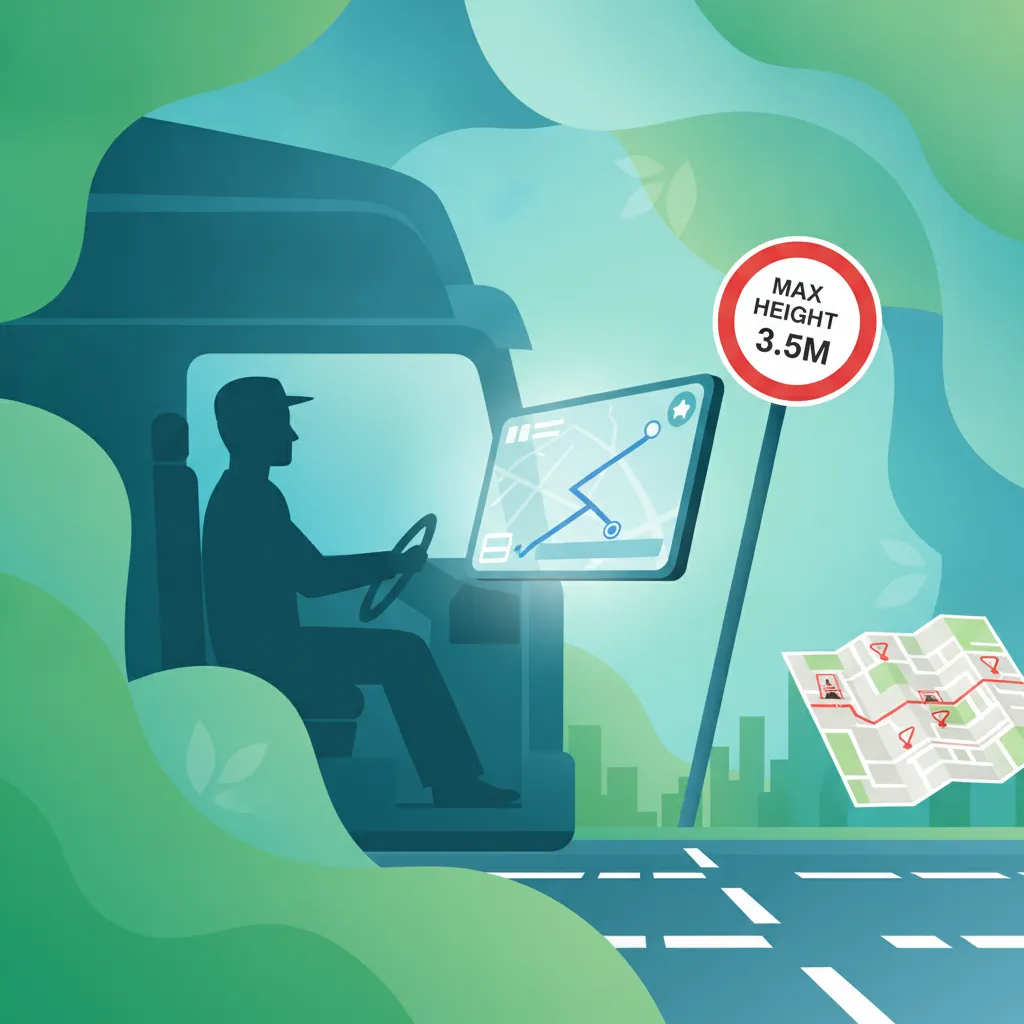
This lesson provides guidance on selecting preferred routes for heavy vehicles, taking into account freight corridors, toll roads, and restricted zones. Learners will be introduced to practical tools for route optimization, including GPS systems tailored for goods vehicles, and strategies for minimizing travel time while adhering to legal constraints. Emphasis is placed on balancing delivery efficiency with compliance to French transport policies.
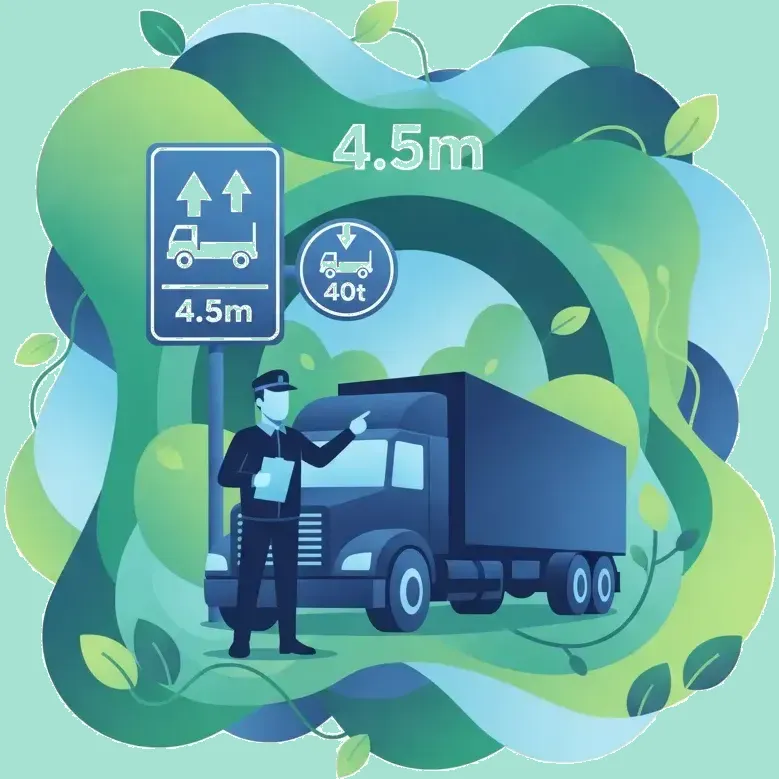
This lesson focuses on the weight and dimension restrictions that goods vehicles must adhere to while traveling on French roads. Learners will understand bridge caps, tunnel clearances, and other physical limitations imposed by infrastructure, and how these restrictions impact route planning and vehicle loading. The content also highlights legal load limits and the importance of compliance checks to avoid fines and roadblocks.
Learn the comprehensive list of mandatory documents required to be carried on board for heavy goods vehicles in France. This guide explains the purpose of each document, including registration certificates, transport notes, and tachograph records, helping ensure full compliance with French roadside inspection regulations.

In this lesson, drivers will learn about the mandatory documentation required for operating a goods vehicle in France. The content covers the NEPH number needed for licence applications, vehicle registration certificates (carte grise), and proof of insurance. Learners will also explore the technical inspection process, load and customs documentation for cross-border transport, and the importance of maintaining an up-to-date driver logbook.

Every driver in France must be able to present official, up-to-date documentation during routine roadside police checks. This lesson details the certificat d'immatriculation (commonly known as the carte grise), valid insurance documents, and the Crit'Air environmental vignette required in low-emission zones. It explains how to complete transfers of ownership and update addresses using the official ANTS digital portal.

This lesson explains the critical documentation required to be kept onboard every passenger vehicle under French and European transport regulations. Learners will explore requirements for passenger manifests, insurance policies, valid transport permits, and official logbooks like the chronotachygraphe. Crucially, the lesson covers proper procedures for presenting these documents during routine roadside inspections by French law enforcement agencies.

This lesson addresses the procedures and expectations when professional drivers encounter law enforcement or customs officials in France. Topics include the types of checks that may be performed, required documentation, rights and obligations of drivers, and the consequences of non-compliance. Learners will be guided on best practices for interacting with authorities, emphasizing cooperation, transparency, and the importance of maintaining valid and up-to-date documents for both the vehicle and driver.
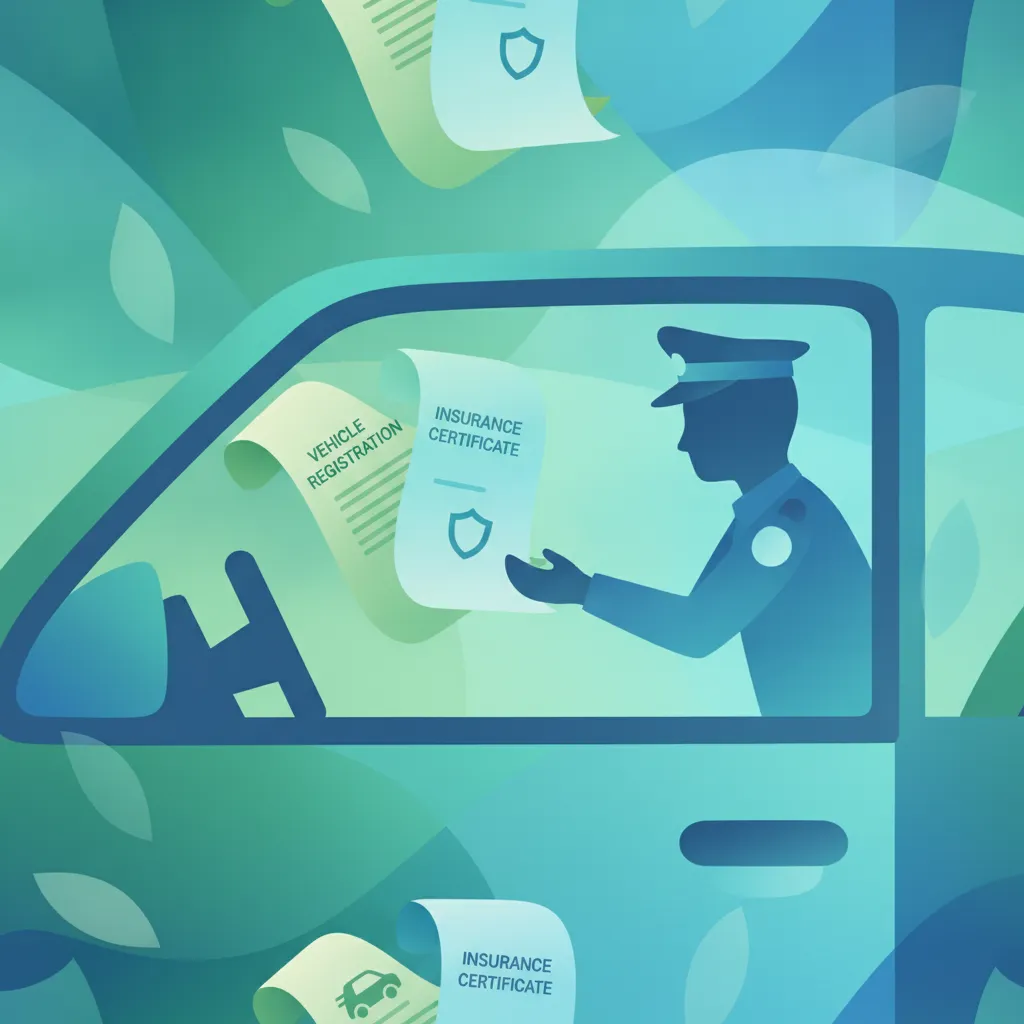
This lesson provides a comprehensive breakdown of the mandatory paperwork required to legally operate a motorcycle in France. It covers the exact details of obtaining the vehicle registration document, known as the carte grise, and securing the mandatory civil liability insurance. Additionally, you will learn how to properly display the green insurance certificate and understand the serious penalties for driving without proper coverage.

Operating a passenger vehicle in France requires strict compliance with dynamic safety laws and maintenance rules. This lesson explains your duty of care toward other road users, mandatory child restraint and seatbelt laws, and strict prohibitions on phone use while driving. You will also learn about the required periodic technical vehicle inspections (controle technique) and third-party insurance mandates.
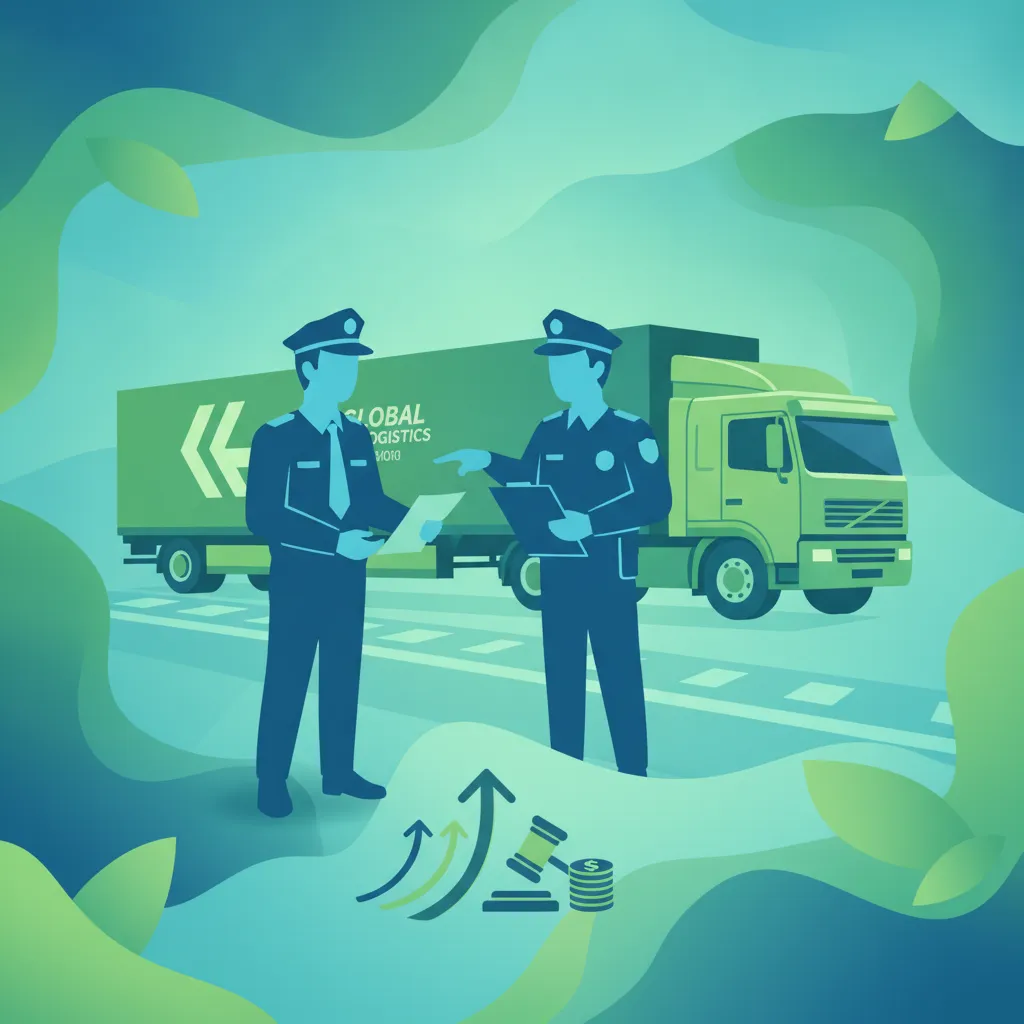
This lesson delves into the dual aspects of civil and criminal liability that professional goods vehicle drivers face in the event of traffic violations or accidents. Learners will explore the range of penalties, including fines, licence suspension, vehicle seizure, and potential imprisonment for severe offenses under French law. The discussion also covers the impact of negligence on insurance coverage, the accrual of penalty points, and the broader consequences for both the driver and their employer.
Find clear answers to common questions learners have about Pre-trip Vehicle Inspections. Learn how the lesson is structured, which driving theory objectives it supports, and how it fits into the overall learning path of units and curriculum progression in France. These explanations help you understand key concepts, lesson flow, and exam focused study goals.
Professional goods vehicle drivers are legally responsible for their vehicle's condition. The exam tests your knowledge of these procedures because a failure to detect a fault can lead to accidents, legal penalties, and severe safety risks.
You must inspect for correct tyre pressure, adequate tread depth, and check for any visible damage, cuts, or bulges on the sidewalls. Ensuring the load rating is appropriate for the vehicle and cargo is also essential.
Yes, professional drivers in France must ensure all transport documents, insurance, and maintenance records are present and valid before departing. The exam often features scenario questions regarding this administrative compliance.
Improperly secured cargo can shift during turns or braking, causing the vehicle's center of gravity to move dangerously, which significantly increases the risk of a rollover. Checking lashings and load distribution is a core safety requirement.
Ready to focus your study? Use the practice search to find exactly the French driving theory questions you need for the Code de la route and permis de conduire ETG. Refine your knowledge on specific topics or challenging rules to boost your confidence and exam readiness.