
Understanding how to recognize and react to aquaplaning is a critical skill for both the German theory exam and real-world safety on the Autobahn. You will learn why water wedges form under tires, how to detect early warning signs, and the specific emergency steps required—such as keeping the steering wheel straight—to regain control. This knowledge is vital for complying with StVO requirements to adjust driving behavior to weather conditions.
Article content overview
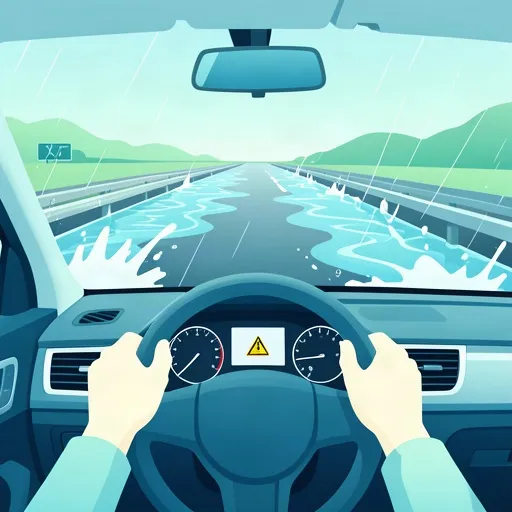
Driving on the German Autobahn requires constant vigilance, especially when weather conditions deteriorate. One of the most dangerous, yet often misunderstood, phenomena a driver can face is aquaplaning, also known as hydroplaning. This occurs when a layer of water builds up between your vehicle's tires and the road surface, leading to a complete loss of traction. When this happens, your steering and braking inputs become ineffective, effectively turning your car into an unguided projectile. Understanding how to prevent this and how to react if it occurs is not just a practical safety skill—it is a cornerstone of the German theoretical driving test.
Aquaplaning is a physical process where the tire's tread pattern can no longer displace the volume of water present on the asphalt. As you drive, your tires are designed to channel water away from the contact patch. However, if the speed of the vehicle exceeds the tire's ability to evacuate this water, a "wedge" of water forms in front of the tire. Once the water pressure under the tire equals the weight of the vehicle, the tire lifts off the road.
Several factors influence the risk of aquaplaning, many of which you can directly control before you even start your engine. Tire tread depth is the most critical factor; the deeper the grooves, the more water the tire can clear. While the legal minimum tread depth in Germany is 1.6 mm, it is widely recommended to replace summer tires at 3 mm or less, as the risk of aquaplaning increases significantly as the tread wears down. Additionally, both under-inflated and over-inflated tires can reduce the effectiveness of the tread pattern, making regular pressure checks an essential part of your vehicle maintenance routine.
Aquaplaning rarely happens without warning, but you must be attentive to your environment to notice the subtle cues. As water accumulates, you may observe heavy spray or a "water wall" thrown up by the wheels of vehicles ahead of you. Another auditory cue is a change in the sound of the tires; the noise often shifts to a louder, rushing sound as excess water is displaced through the wheel arches and hits the underbody.
Furthermore, you should pay close attention to your steering wheel's feedback. If you feel the resistance at the steering wheel suddenly decrease and the car seems to "float" or wander slightly, you may be experiencing the early stages of aquaplaning. Front-wheel-drive vehicles without electronic stability control might show fluctuations in engine speed, while rear-wheel-drive vehicles can become unstable with very little warning, making them particularly tricky to manage on wet surfaces.
When driving in heavy rain, consider turning down the volume of your car radio. This allows you to better perceive changes in engine noise and the characteristic rushing sounds of water that indicate you are entering a high-risk area.
If you feel your vehicle start to float, your immediate instinct might be to slam on the brakes or jerk the steering wheel to regain control. You must resist these urges, as they are often fatal mistakes. In a state of no traction, any sharp input will cause the vehicle to skid uncontrollably once the tires regain contact with the road.
By following these steps, you allow the vehicle to slow down naturally until the tires can once again grip the road surface. Only once you feel the tires "bite" into the tarmac should you consider applying light pressure to the brakes or making small steering adjustments to maintain your lane.
Under the Straßenverkehrs-Ordnung (StVO), you are legally obligated to adapt your driving behavior to the prevailing road, visibility, and weather conditions. This means that "legal" speed limits—such as the recommended 130 km/h on the Autobahn—are not mandatory targets. If the road is flooded or visibility is low, you must reduce your speed significantly, often well below 80 km/h, to ensure you can stop within your field of vision. Failure to adjust your speed during heavy rain can be considered negligence, which may affect liability in the event of an accident.
Aquaplaning happens when water pressure lifts the tire off the road, eliminating all traction and making steering useless. Risk factors include insufficient tread depth below 3 mm and excessive speed for conditions. Drivers should watch for warning signs like heavy spray, unusual tire noise, and a floating sensation in the steering. If aquaplaning occurs, the correct response is to stay calm, keep the steering wheel straight, lift off the accelerator smoothly, and wait for natural deceleration until tires grip again. StVO legally requires drivers to adjust speed to weather conditions, meaning normal speed limits do not apply when safety demands otherwise.
A short set of high-value points that capture the most important ideas from this article.
Aquaplaning occurs when a water layer separates tires from the road surface, eliminating steering and braking effectiveness entirely.
Tire tread depth and vehicle speed are the two primary controllable factors that determine aquaplaning risk.
Early warning signs include heavy water spray from vehicles ahead, a rushing tire sound, and decreased steering resistance causing the car to wander.
The emergency response prioritizes natural deceleration: keep steering straight, lift off the accelerator, and wait for tires to regain contact.
Under StVO, drivers must reduce speed below normal limits during heavy rain to maintain the ability to stop within their field of vision.
The legal minimum tread depth in Germany is 1.6 mm, but aquaplaning risk rises sharply below 3 mm on summer tires.
Both under-inflated and over-inflated tires reduce tread effectiveness and increase aquaplaning vulnerability.
The recommended Autobahn speed of 130 km/h is not mandatory when weather conditions require lower speeds for safety.
Rear-wheel-drive vehicles lose stability more suddenly on wet surfaces than front-wheel-drive vehicles.
Electronic stability control systems like ESP can assist but do not replace correct driver response during aquaplaning.
Slamming on the brakes causes locked wheels, which leads to an uncontrollable skid once tires regain grip.
Jerking the steering wheel attempts to correct the drift but creates a violent spin when traction returns.
Accelerating to speed up is instinctive but counterproductive since reduced weight on rear tires worsens the loss of traction.
Panicking causes drivers to make sharp inputs that transform a recoverable situation into a crash.
Continuing at the same speed without adjusting to the water depth and road conditions.
Article content overview
A short set of high-value points that capture the most important ideas from this article.
Aquaplaning occurs when a water layer separates tires from the road surface, eliminating steering and braking effectiveness entirely.
Tire tread depth and vehicle speed are the two primary controllable factors that determine aquaplaning risk.
Early warning signs include heavy water spray from vehicles ahead, a rushing tire sound, and decreased steering resistance causing the car to wander.
The emergency response prioritizes natural deceleration: keep steering straight, lift off the accelerator, and wait for tires to regain contact.
Under StVO, drivers must reduce speed below normal limits during heavy rain to maintain the ability to stop within their field of vision.
The legal minimum tread depth in Germany is 1.6 mm, but aquaplaning risk rises sharply below 3 mm on summer tires.
Both under-inflated and over-inflated tires reduce tread effectiveness and increase aquaplaning vulnerability.
The recommended Autobahn speed of 130 km/h is not mandatory when weather conditions require lower speeds for safety.
Rear-wheel-drive vehicles lose stability more suddenly on wet surfaces than front-wheel-drive vehicles.
Electronic stability control systems like ESP can assist but do not replace correct driver response during aquaplaning.
Slamming on the brakes causes locked wheels, which leads to an uncontrollable skid once tires regain grip.
Jerking the steering wheel attempts to correct the drift but creates a violent spin when traction returns.
Accelerating to speed up is instinctive but counterproductive since reduced weight on rear tires worsens the loss of traction.
Panicking causes drivers to make sharp inputs that transform a recoverable situation into a crash.
Continuing at the same speed without adjusting to the water depth and road conditions.
Explore related topics, search based questions, and concepts that learners often look up when studying Handling Aquaplaning in Germany. These themes reflect real search intent and help you understand how this topic connects to wider driving theory knowledge in Germany.
Find clear and practical answers to common questions learners often have about Handling Aquaplaning in Germany. This section helps explain difficult points, remove confusion, and reinforce the key driving theory concepts that matter for learners in Germany.
Do not brake, do not accelerate, and do not steer. Keep the steering wheel straight and allow the vehicle to roll, ideally by disengaging the clutch (or keeping the gear level constant in automatic vehicles) until the tires regain road contact.
Watch for water spray from the tires of leading vehicles, listen for changes in tire noise, or observe a sudden decrease in steering resistance, which indicates the front wheels are losing contact with the road.
Yes, significantly. Tires with lower tread depth are less effective at channeling water away, meaning the 'water wedge' forms at much lower speeds compared to new tires with full tread depth.
Yes, signs indicating 'Schleuder- oder Rutschgefahr' (danger of skidding) warn of hazardous road conditions, and 'bei Nässe' (in wet conditions) supplementary signs indicate specific speed limits that must be observed.
Didn't find what you were looking for? Continue your German driving theory preparation by exploring related articles, specific road sign categories, or in-depth guides on complex traffic situations. Deepen your understanding before the official test.