
Navigating German roads requires more than just reading signs, as legal speed limits often depend on your vehicle's specific category, weight, and trailer status. In this guide, you will learn the precise maximum speeds for cars, trucks, buses, and vehicles with trailers, along with the nuances of technical approvals like the Tempo-100-Zulassung. Developing this knowledge is essential for both your safety on the road and your success in the German driving theory examination.
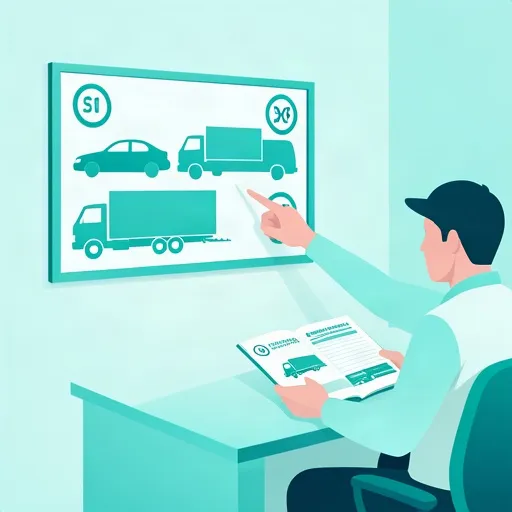
Article content overview
Understanding speed limits in Germany is a fundamental pillar of the driving theory examination. While many learners assume that a speed limit is determined solely by the road they are traveling on, the legal reality is far more nuanced. In the German traffic system, the maximum permissible speed is often dictated by a combination of the road type, the vehicle's classification, its weight, and whether or not it is towing a trailer. Failing to recognize these distinctions can lead to serious errors in your theory test and, more importantly, unsafe driving habits in real-world traffic.
In Germany, the Straßenverkehrs-Ordnung (StVO) establishes clear baselines for speed limits based on whether you are driving within or outside of urban areas. Within built-up areas (innerorts), the general limit is 50 km/h for all motorized vehicles, unless signs indicate otherwise. However, once you leave the urban environment, the rules diverge significantly based on your vehicle category and its technical specifications.
For passenger cars on rural roads (außerorts), the legal limit is 100 km/h. Conversely, for trucks with a maximum authorized mass exceeding 3.5 tonnes, the limit is generally restricted to 80 km/h, even on rural roads. These differences are not merely suggestions; they are strictly enforced legal boundaries designed to account for the varying braking distances and handling characteristics of different vehicle types.
To assist with your exam preparation, the following table summarizes the standard maximum speeds for common vehicle categories in Germany under normal conditions.
| Vehicle Category | Urban (Innerorts) | Rural (Außerorts) | Autobahn |
|---|---|---|---|
| Passenger Car | 50 km/h | 100 km/h | Unrestricted* |
| Car with Trailer | 50 km/h | 80 km/h | 80 km/h (100 km/h opt) |
| Truck (>3.5t) | 50 km/h | 80 km/h | 80 km/h |
| Coach (Bus) | 50 km/h | 100 km/h | 100 km/h |
| Moped/Kleinkraftrad | 45 km/h | 45 km/h | Prohibited |
*Note: The Autobahn advisory speed (Richtgeschwindigkeit) is 130 km/h for passenger cars.
A common trap in the German driving theory exam involves the "Tempo-100-Zulassung." While cars towing trailers are generally restricted to 80 km/h on rural roads and Autobahns, it is legally possible to increase this to 100 km/h under specific conditions. This is not an automatic right; it is a special approval that requires both the towing vehicle and the trailer to meet rigorous technical safety standards.
For a trailer to qualify for this higher limit, the towing vehicle must be equipped with an anti-lock braking system (ABS) and an Electronic Stability Program (ESP). Furthermore, the weight ratio between the trailer and the towing vehicle must be precisely calculated to ensure stability at higher speeds. If you see a question about trailers in your exam, always check if the question mentions the specific "100 km/h" sticker or the formal approval requirements before selecting your answer.
Always remember that specific vehicle categories, such as mopeds (Kleinkrafträder) limited to 45 km/h by their construction, are strictly prohibited from using the Autobahn. Even if you are an experienced driver, attempting to take a vehicle with a low construction speed onto a high-speed road is a dangerous violation of the StVO.
It is vital to distinguish between a limit imposed by law and a limit imposed by the vehicle’s design. Mopeds and certain light motor vehicles are restricted by their construction to a maximum design speed of 45 km/h. This is a technical limitation that applies regardless of the road type. In contrast, heavy goods vehicles and passenger cars are capable of much higher speeds, and their limits are set by the legislature to manage traffic flow and safety.
When reviewing your theory study material, pay close attention to questions about "maximum authorized mass" (zulässige Gesamtmasse). Limits for trucks often change drastically when the weight exceeds 3.5 tonnes or 7.5 tonnes. These thresholds are classic exam material and are used to test your ability to categorize the vehicle you are "driving" in the scenario provided.
An advisory speed limit of 130 km/h on German Autobahns for passenger cars. While not a strict legal limit, driving significantly faster can influence your liability in the event of an accident.
German speed limits are determined by the combination of road type and vehicle classification, requiring learners to identify both factors before selecting a correct limit. Passenger cars may travel up to 100 km/h on rural roads and are unrestricted on Autobahn (advisory 130 km/h), while heavy goods vehicles over 3.5 tonnes are limited to 80 km/h on rural roads and Autobahn. Trailers normally face an 80 km/h limit but can reach 100 km/h only with a formal Tempo-100-Zulassung that requires ABS, ESP, and approved weight ratios. Mopeds and Kleinkrafträder at 45 km/h are banned from Autobahn use entirely. The StVO weight thresholds of 3.5 tonnes and 7.5 tonnes frequently appear in exam questions as differentiating factors for truck speed restrictions.
A short set of high-value points that capture the most important ideas from this article.
Speed limits in Germany depend on both road type and vehicle category, not just the road environment
Passenger cars face a 100 km/h limit on rural roads and unrestricted Autobahn (advisory 130 km/h), while trucks over 3.5t are capped at 80 km/h on both rural roads and Autobahn
The Tempo-100-Zulassung allows trailer towing at 100 km/h only when both ABS and ESP are fitted and specific weight ratios are met
Mopeds (Kleinkrafträder) limited to 45 km/h by construction are strictly prohibited from using the Autobahn regardless of circumstances
Truck speed limits change at weight thresholds of 3.5 tonnes and 7.5 tonnes, which are frequent exam test points
Urban areas (innerorts): 50 km/h general limit for all motorized vehicles
Car with trailer: 80 km/h default on rural roads and Autobahn; 100 km/h only with Tempo-100-Zulassung approval
Buses/coaches on Autobahn: 100 km/h maximum speed
Tempo-100-Zulassung requires ABS, ESP, and correct weight ratio between trailer and towing vehicle
Construction limits (technical design speed) differ from legal limits set by the StVO
Assuming all vehicles follow the same speed limit on a given road type without considering vehicle category
Confusing the advisory Richtgeschwindigkeit of 130 km/h with a mandatory Autobahn speed limit for passenger cars
Selecting 100 km/h for a trailer without verifying if the Tempo-100-Zulassung conditions are mentioned in the question
Overlooking that mopeds at 45 km/h cannot legally access the Autobahn under any circumstance
Missing weight thresholds when answering questions about trucks, confusing limits for vehicles under vs. over 3.5 tonnes
Article content overview
A short set of high-value points that capture the most important ideas from this article.
Speed limits in Germany depend on both road type and vehicle category, not just the road environment
Passenger cars face a 100 km/h limit on rural roads and unrestricted Autobahn (advisory 130 km/h), while trucks over 3.5t are capped at 80 km/h on both rural roads and Autobahn
The Tempo-100-Zulassung allows trailer towing at 100 km/h only when both ABS and ESP are fitted and specific weight ratios are met
Mopeds (Kleinkrafträder) limited to 45 km/h by construction are strictly prohibited from using the Autobahn regardless of circumstances
Truck speed limits change at weight thresholds of 3.5 tonnes and 7.5 tonnes, which are frequent exam test points
Urban areas (innerorts): 50 km/h general limit for all motorized vehicles
Car with trailer: 80 km/h default on rural roads and Autobahn; 100 km/h only with Tempo-100-Zulassung approval
Buses/coaches on Autobahn: 100 km/h maximum speed
Tempo-100-Zulassung requires ABS, ESP, and correct weight ratio between trailer and towing vehicle
Construction limits (technical design speed) differ from legal limits set by the StVO
Assuming all vehicles follow the same speed limit on a given road type without considering vehicle category
Confusing the advisory Richtgeschwindigkeit of 130 km/h with a mandatory Autobahn speed limit for passenger cars
Selecting 100 km/h for a trailer without verifying if the Tempo-100-Zulassung conditions are mentioned in the question
Overlooking that mopeds at 45 km/h cannot legally access the Autobahn under any circumstance
Missing weight thresholds when answering questions about trucks, confusing limits for vehicles under vs. over 3.5 tonnes
Explore related topics, search based questions, and concepts that learners often look up when studying German Speed Limits by Vehicle Class. These themes reflect real search intent and help you understand how this topic connects to wider driving theory knowledge in Germany.
Find clear and practical answers to common questions learners often have about German Speed Limits by Vehicle Class. This section helps explain difficult points, remove confusion, and reinforce the key driving theory concepts that matter for learners in Germany.
The general speed limit for a car with a trailer on the Autobahn is 80 km/h, unless the combination has been granted a specific Tempo-100-Zulassung (approval), which allows it to reach 100 km/h.
No, mopeds and other vehicles with a maximum design speed below 60 km/h are prohibited from using the Autobahn in Germany.
Yes, trucks over 3.5 tonnes are subject to lower maximum speed limits on rural roads and the Autobahn compared to standard passenger cars, typically 80 km/h.
The standard speed limit for all passenger cars inside built-up areas (innerorts) is 50 km/h, unless local signage indicates a different speed limit, such as in a 30 km/h zone.
Didn't find what you were looking for? Continue your German driving theory preparation by exploring related articles, specific road sign categories, or in-depth guides on complex traffic situations. Deepen your understanding before the official test.