
This lesson provides essential training on the specific regulations and safety protocols required when operating passenger vehicles in tunnels. You will learn to interpret specialized signage, apply correct lighting and speed management, and execute critical safety procedures during emergencies, building directly upon your foundational road safety knowledge.
Lesson content overview
Driving a passenger vehicle, especially one in commercial service, demands a high level of situational awareness and adherence to specific regulations. Tunnels present a unique and challenging environment, requiring professional drivers to adapt their driving style, lighting, and speed to ensure the safety of all passengers and other road users. This lesson will delve into the critical aspects of tunnel driving, focusing on mandatory procedures, specific signage, and emergency protocols.
Tunnels are engineered structures designed to bypass natural obstacles or dense urban areas, but they inherently introduce several risk factors not typically encountered on open roads. For professional passenger vehicle drivers operating under categories D1, D1E, D, and DE, understanding these risks is paramount for safe operation. The confined space, sudden change in light, and limited escape routes demand heightened vigilance.
The primary challenges include:
These factors necessitate strict rules and precise signage to mitigate potential hazards and ensure a smooth, safe flow of traffic.
Proper use of vehicle lighting is a non-negotiable safety measure when entering and driving through tunnels. The change in illumination from outside to inside a tunnel can be abrupt, affecting a driver's ability to see and be seen.
It is mandatory for all drivers, including those of professional passenger vehicles, to switch on their dipped beam headlights (Abblendlicht) before entering a tunnel and keep them activated until they have fully exited. This ensures your vehicle is clearly visible to others, compensates for the reduced internal lighting, and helps prevent momentary vision impairment upon entry and exit. Failure to do so significantly increases the risk of an accident due to poor visibility.
Always activate your dipped beam headlights well before entering a tunnel, allowing your eyes and other drivers time to adjust to the changing light conditions. Do not wait until you are already inside.
While high beam headlights (Fernlicht) provide maximum illumination in dark conditions, their use is strictly prohibited inside tunnels. The intense glare from high beams can severely impair the vision of oncoming drivers and those ahead of you, creating a dangerous situation in the confined space of a tunnel. Even if a tunnel appears very dark, the use of dipped beams is sufficient and safer.
If your vehicle becomes disabled or you encounter an emergency situation within a tunnel that forces you to stop or slow down significantly, you should activate your hazard warning lights (Warnblinklicht). These flashing lights alert other drivers to your presence and potential obstruction, providing them with more time to react safely. This is recommended practice for enhancing safety in unexpected circumstances.
Speed control and maintaining a consistent pace are fundamental to safe tunnel driving. The confined environment, limited escape routes, and potential for rapid smoke accumulation in emergencies make precise speed management critical.
Tunnels often have specific speed limits that are lower than those on the open road leading up to them. These limits are carefully set based on the tunnel's length, curvature, ventilation systems, and emergency infrastructure. It is compulsory to obey these posted speed limits. Professional drivers must anticipate these reductions and adjust their speed smoothly and in advance.
Ignoring tunnel speed limits can lead to serious consequences, including:
Driving at a consistent speed, without unnecessary acceleration or deceleration, is crucial for maintaining a smooth traffic flow within tunnels. Sudden braking can create a chain reaction, leading to multi-vehicle collisions. Professional drivers should actively monitor traffic ahead and adjust their speed gradually.
Furthermore, a safe following distance is even more critical in tunnels than on open roads. The confined space and reduced visibility mean that reacting to sudden stops ahead requires more room. The general rule of maintaining at least a "two-second rule" (or often more, depending on conditions and vehicle weight) should be strictly adhered to. This allows sufficient time and space to react to sudden changes in the traffic ahead.
Road signs provide vital information for navigating tunnels safely. Professional drivers must be adept at interpreting these specific signs quickly and accurately. These signs guide drivers on speed, length, emergency facilities, and hazardous materials restrictions.
Always pay close attention to all signage, especially before entering and throughout the tunnel. Misinterpreting or ignoring signs can lead to dangerous situations and legal penalties.
The confined and often long nature of tunnels means that breakdowns and fires require specific, rapid responses to minimize danger to passengers and other road users. Professional drivers must be thoroughly familiar with these emergency procedures.
Should your passenger vehicle break down inside a tunnel:
Activate Hazard Warning Lights: Immediately switch on your hazard warning lights to alert approaching traffic.
Attempt to Reach a Breakdown Bay: If possible and safe to do so, try to steer your vehicle into the nearest designated breakdown bay (Pannennische) or emergency lane. These are clearly marked and designed for this purpose.
Switch Off Engine and Remove Keys: Once safely stopped, switch off your engine to prevent further damage and remove the keys from the ignition.
Evacuate Passengers Safely: If there is any danger, such as smoke, fire, or if you are stopped in a traffic lane, instruct passengers to evacuate the vehicle and move to a safe area, preferably towards an emergency exit or a designated refuge area.
Use Emergency Telephone: Proceed to the nearest emergency telephone (Notrufsäule), usually located within breakdown bays or along the tunnel walls, to contact emergency services. Do not use your mobile phone immediately, as tunnel reception may be poor, and the emergency telephone provides your exact location to operators.
Place Warning Triangle (if safe): Only if it is absolutely safe to do so, place your warning triangle (Warndreieck) a sufficient distance behind your vehicle (e.g., 50-100 metres) to warn other drivers. However, in busy tunnels, prioritizing personal safety and contacting emergency services via the tunnel's system is often more important.
A fire within a tunnel is one of the most serious emergencies. Rapid and correct action can save lives.
Activate Hazard Warning Lights: Turn on your hazard warning lights.
Attempt to Drive Out (if small fire): If the fire is small and you are close to an exit, and it is safe, try to drive the vehicle out of the tunnel.
Stop and Switch Off Engine: If driving out is not possible, stop the vehicle as far to the right as possible, switch off the engine, and remove the keys.
Evacuate Passengers Immediately: Instruct all passengers to evacuate the vehicle immediately. Guide them towards the nearest emergency exit, following the illuminated signs. Do not attempt to retrieve belongings.
Attempt to Extinguish (if safe): If it is a small fire (e.g., engine fire) and it is safe to do so, use the fire extinguisher usually found in breakdown bays or emergency niches. However, prioritize evacuation if the fire is spreading or large.
Alert Emergency Services: Use the nearest emergency telephone to report the fire. Provide as much detail as possible about the location and nature of the fire.
Proceed to Safety: Move all passengers away from the vehicle and the fire, heading towards the emergency exit or a designated refuge area.
Emergency exits often lead to parallel safety tunnels or directly outside. Follow the clear green emergency exit signs, which typically indicate the direction and distance to safety.
Awareness of common errors can help professional drivers avoid dangerous situations in tunnels.
By actively anticipating these situations and adhering to established protocols, professional drivers contribute significantly to overall tunnel safety.
Driving conditions can vary, and professional drivers must adjust their behavior accordingly.
Driving through tunnels requires a proactive, disciplined approach. For professional passenger vehicle drivers, this means not only understanding the rules but also grasping the safety reasoning behind them. The confined, often dark environment magnifies the risks of errors. Always prepare your vehicle, your passengers, and your mindset for the unique challenges of tunnel driving. Your vigilance directly contributes to the safety and well-being of everyone in your care and other road users.
Tunnel driving requires mandatory lighting protocols (dipped beams on, high beams off), strict adherence to reduced speed limits, and maintaining greater following distances than on open roads. Professional drivers must be proficient in interpreting tunnel-specific signage including entrance signs, speed limits, emergency exits, and breakdown bays. In emergencies such as breakdowns or fires, specific step-by-step procedures must be followed: activate hazard lights, attempt to reach breakdown bays, use emergency telephones for location accuracy, and prioritize immediate passenger evacuation during fires following illuminated exit signs. The confined nature of tunnels amplifies all risks, making proactive preparation and disciplined adherence to protocols essential for passenger safety.
A short set of high-value points that capture the most important learning from this lesson.
Dipped beam headlights (Abblendlicht) must be switched on before entering any tunnel and kept on until exiting completely.
Tunnels have reduced speed limits set based on length, curvature, and emergency infrastructure; these must be obeyed to maintain adequate reaction time and braking distance.
In a breakdown, activate hazard lights immediately, attempt to reach a breakdown bay (Pannennische), switch off the engine, and use the tunnel's emergency telephone (Notrufsäule) rather than a mobile phone.
During a tunnel fire, prioritize immediate evacuation of all passengers following emergency exit signs; do not attempt to retrieve belongings.
High beam headlights (Fernlicht) are strictly prohibited in tunnels due to the dangerous glare they create for other drivers in the confined space.
Explore all units and lessons included in this driving theory course.
Always activate dipped beams well before entering a tunnel entrance to allow eyes to adjust; never use high beams inside.
Emergency exits lead to parallel safety tunnels or directly outside; follow the illuminated green signs showing direction and distance.
In a breakdown, the emergency telephone in tunnels provides your exact location to operators; use it instead of a mobile phone.
Following distance in tunnels should be greater than on open roads due to confined space and reduced visibility.
If fire is small and near an exit, attempt to drive out; otherwise, stop, switch off engine, evacuate immediately, and alert services.
Forgetting to turn on dipped beam headlights before entering or immediately after exiting a tunnel, causing momentary visibility impairment.
Exceeding posted tunnel speed limits, which drastically reduces reaction time and increases collision severity in confined spaces.
Using high beam headlights inside tunnels, creating dangerous glare for oncoming and preceding drivers.
Stopping in a traffic lane during a breakdown instead of attempting to reach a designated breakdown bay, obstructing traffic flow.
Hesitating to evacuate passengers during a fire or smoke situation, which can have catastrophic consequences due to rapid smoke spread.
Lesson content overview
A short set of high-value points that capture the most important learning from this lesson.
Dipped beam headlights (Abblendlicht) must be switched on before entering any tunnel and kept on until exiting completely.
Tunnels have reduced speed limits set based on length, curvature, and emergency infrastructure; these must be obeyed to maintain adequate reaction time and braking distance.
In a breakdown, activate hazard lights immediately, attempt to reach a breakdown bay (Pannennische), switch off the engine, and use the tunnel's emergency telephone (Notrufsäule) rather than a mobile phone.
During a tunnel fire, prioritize immediate evacuation of all passengers following emergency exit signs; do not attempt to retrieve belongings.
High beam headlights (Fernlicht) are strictly prohibited in tunnels due to the dangerous glare they create for other drivers in the confined space.
Explore all units and lessons included in this driving theory course.
Always activate dipped beams well before entering a tunnel entrance to allow eyes to adjust; never use high beams inside.
Emergency exits lead to parallel safety tunnels or directly outside; follow the illuminated green signs showing direction and distance.
In a breakdown, the emergency telephone in tunnels provides your exact location to operators; use it instead of a mobile phone.
Following distance in tunnels should be greater than on open roads due to confined space and reduced visibility.
If fire is small and near an exit, attempt to drive out; otherwise, stop, switch off engine, evacuate immediately, and alert services.
Forgetting to turn on dipped beam headlights before entering or immediately after exiting a tunnel, causing momentary visibility impairment.
Exceeding posted tunnel speed limits, which drastically reduces reaction time and increases collision severity in confined spaces.
Using high beam headlights inside tunnels, creating dangerous glare for oncoming and preceding drivers.
Stopping in a traffic lane during a breakdown instead of attempting to reach a designated breakdown bay, obstructing traffic flow.
Hesitating to evacuate passengers during a fire or smoke situation, which can have catastrophic consequences due to rapid smoke spread.
Explore search topics learners often look for when studying Tunnel Driving and Signage. These topics reflect common questions about road rules, driving situations, safety guidance, and lesson level theory preparation for learners in Germany.
Browse additional driving theory lessons that cover connected traffic rules, road signs, and common driving situations related to this topic. Improve your understanding of how different rules interact across everyday traffic scenarios.
Learn essential safety protocols for tunnel emergencies in Germany. This lesson covers breakdown procedures, fire safety, and evacuation routes, vital for professional passenger vehicle drivers.

This lesson focuses on the safe navigation of road tunnels, covering aspects like adjusting to changes in lighting at the entrance and exit. It explains the importance of adhering to specific tunnel speed limits and maintaining lane discipline. Learners will also be taught the correct emergency procedures to follow in case of a breakdown, accident, or fire inside a tunnel.
This lesson covers the specific rules and safety precautions for driving through tunnels. This includes turning on dipped headlights, maintaining a safe distance, and knowing the location and use of emergency exits and equipment. It also addresses the potential hazards on bridges, such as increased risk of ice in winter and susceptibility to strong crosswinds.
This lesson focuses on the safe passage of heavy vehicles through tunnels and over bridges, with an emphasis on clearance checks. It explains how to interpret height restriction signs and assess whether the vehicle's load complies with limits. The content also covers appropriate speed control and emergency procedures specific to these structures.
This lesson outlines a clear, systematic procedure for managing a vehicle breakdown safely and efficiently. It covers immediate actions such as activating hazard lights, placing a warning triangle, and moving the vehicle to a safe location if possible. Learners will understand how to communicate the situation to passengers, decide if an evacuation is necessary, and contact the appropriate breakdown services for assistance.

This lesson provides a step-by-step guide to executing turns safely at intersections and other locations. It details the full observation sequence (mirrors, signal, blind spot check) required before initiating a turn. The lesson covers correct lane positioning for both left and right turns and explains the rules for performing U-turns or three-point turns where permitted.
This lesson provides a step-by-step guide for safely managing a vehicle breakdown on the road. It includes instructions on performing an emergency stop, deploying hazard lights and warning triangles, and contacting assistance. The content emphasizes maintaining safety for both the driver and other road users during the breakdown.
Understand specific German traffic laws, signage, and best practices for driving through tunnels. Covers speed regulations, lighting, and maintaining smooth traffic flow for passenger vehicles.
This lesson covers the specific rules and safety precautions for driving through tunnels. This includes turning on dipped headlights, maintaining a safe distance, and knowing the location and use of emergency exits and equipment. It also addresses the potential hazards on bridges, such as increased risk of ice in winter and susceptibility to strong crosswinds.
This lesson focuses on the safe navigation of road tunnels, covering aspects like adjusting to changes in lighting at the entrance and exit. It explains the importance of adhering to specific tunnel speed limits and maintaining lane discipline. Learners will also be taught the correct emergency procedures to follow in case of a breakdown, accident, or fire inside a tunnel.
This lesson provides a thorough explanation of traffic light systems ('Lichtzeichenanlagen') used in Germany. It details the meaning of red, amber, and green lights and the correct response to each phase of the signal sequence. The lesson also covers special signals, such as the green arrow for turning right on red, pedestrian and cyclist signals, and the authority of signals given by a police officer, which override all other signs.
This lesson focuses on the safe passage of heavy vehicles through tunnels and over bridges, with an emphasis on clearance checks. It explains how to interpret height restriction signs and assess whether the vehicle's load complies with limits. The content also covers appropriate speed control and emergency procedures specific to these structures.
This lesson explains the function of informational signs, which provide helpful guidance for navigation and services. You will learn how to read directional signs on all types of roads, including the Autobahn, and understand distance markers to upcoming cities and exits. The lesson also covers the symbols for services such as fuel stations, restaurants, and tourist attractions.
This lesson provides a complete guide to driving on the German Autobahn. It covers the correct procedure for entering and exiting via acceleration and deceleration lanes, the strict lane discipline rule of keeping right ('Rechtsfahrgebot'), and the principle of overtaking only on the left. It also explains the recommended speed limit and the critical procedure for forming an emergency corridor ('Rettungsgasse') in a traffic jam.

This lesson explains the various types of road markings and their significance for guiding traffic and ensuring safety. It covers the difference between solid and broken lines for lane separation and overtaking rules, the function of stop lines at intersections, and the markings for pedestrian crosswalks. You will also learn to interpret directional arrows, bicycle lane markings, and other symbols painted on the road.
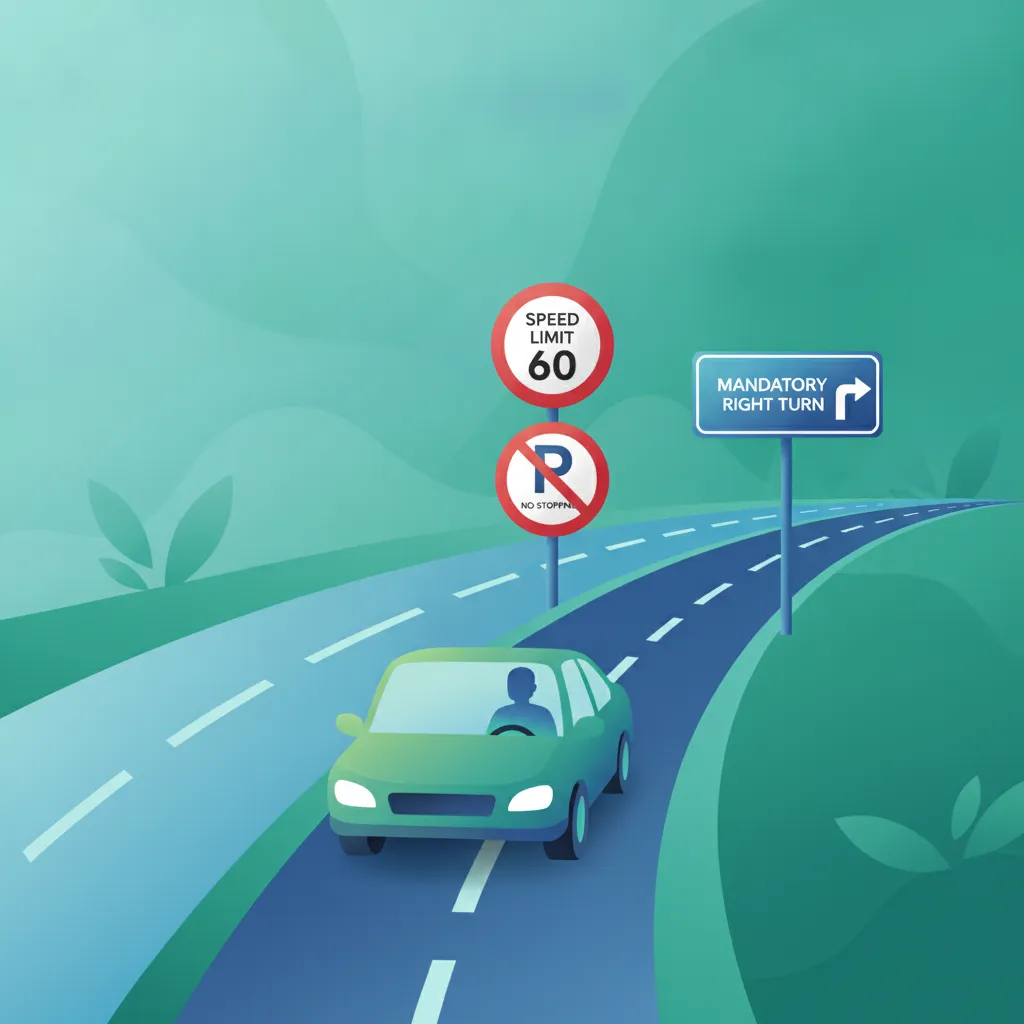
This lesson covers regulatory signs, which are legally enforceable and command specific actions from drivers. You will learn the meaning of critical signs such as the stop sign, yield sign, no-entry signs, and various parking and stopping prohibitions. The content also explains signs that establish speed limits, one-way streets, and restricted areas like environmental or pedestrian zones.
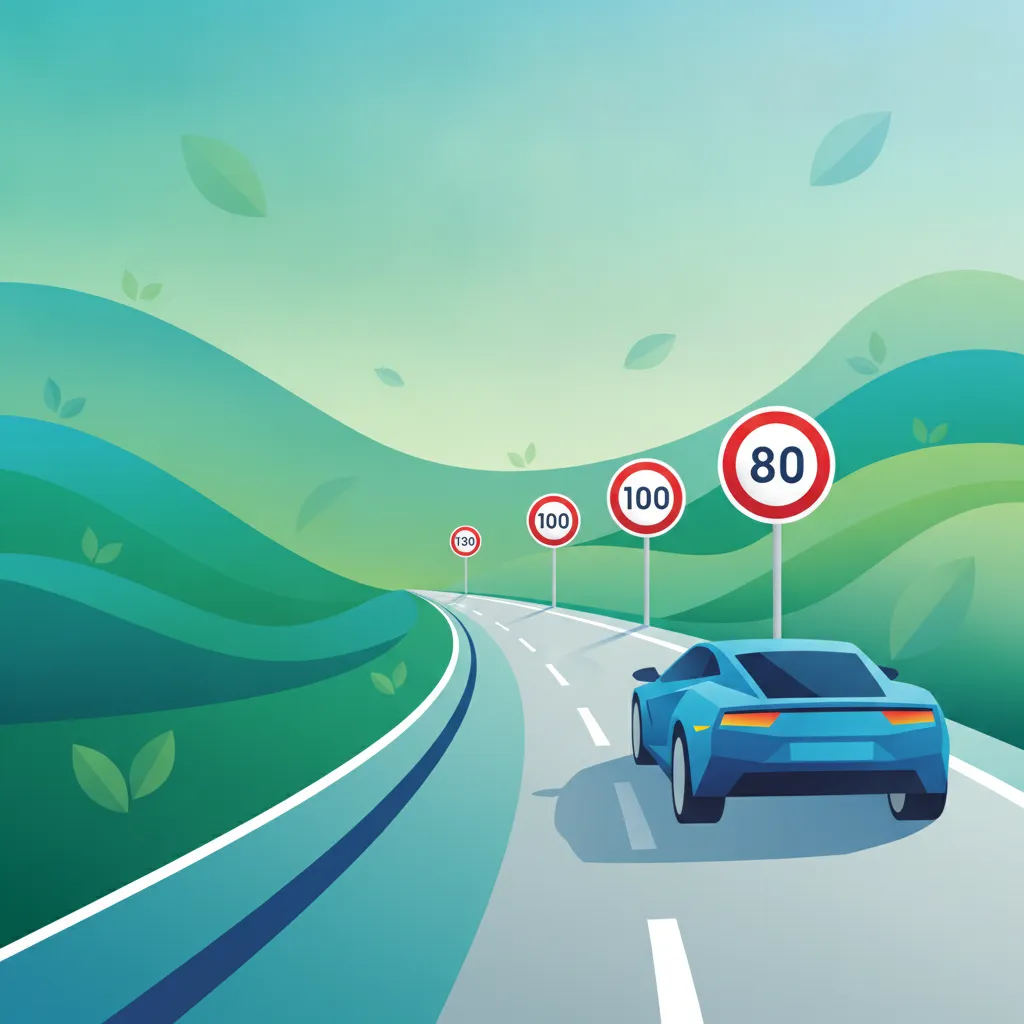
This lesson details the statutory speed limits in Germany, including the standard limits within built-up areas, on rural roads, and on the Autobahn. It emphasizes that the posted limit is a maximum and that drivers must always adapt their speed to traffic, weather, and visibility conditions. The concept of the recommended speed ('Richtgeschwindigkeit') on the Autobahn is also explained.
Effective communication is critical for road safety, and this lesson details the correct use of a vehicle's signaling devices. It explains when and how to use turn signals (indicators), hazard warning lights, the horn, and headlight flashes to clearly communicate your intentions to other road users. Proper signaling helps prevent misunderstandings and is a key component of defensive and cooperative driving.
Find clear answers to common questions learners have about Tunnel Driving and Signage. Learn how the lesson is structured, which driving theory objectives it supports, and how it fits into the overall learning path of units and curriculum progression in Germany. These explanations help you understand key concepts, lesson flow, and exam focused study goals.
Even if a tunnel is well-lit, headlights ensure your vehicle is highly visible to other drivers and traffic cameras, compensating for the sharp transition between natural daylight and artificial tunnel lighting.
You must attempt to reach a designated breakdown bay if possible. If you cannot reach one, pull over as far to the right as possible, switch on your hazard warning lights, turn off the engine, and alert emergency services immediately using the provided SOS niches.
You must be aware of the tunnel's clearance height marked on signs. As a professional driver, hitting the top of a tunnel is a severe failure; always account for the total height of your vehicle, including any roof-mounted equipment.
You must increase your following distance compared to open road conditions. This provides the reaction time needed to stop safely if traffic suddenly slows or stops in a confined space where maneuverability is restricted.
Begin your targeted revision now. Use our practice search to quickly find specific German driving theory questions. Filter by StVO rules, road signs, or hazard perception to create your focused study plan. Master challenging areas and prepare confidently for your theoretical driving test.