
This lesson details the critical legal requirements concerning driving under the influence in Germany. You will learn about blood alcohol limits, the specific zero-tolerance policy for novice drivers, and the serious legal consequences of impairment. It provides the essential knowledge required to safely navigate these responsibilities and answer related questions on your Category B theory exam.
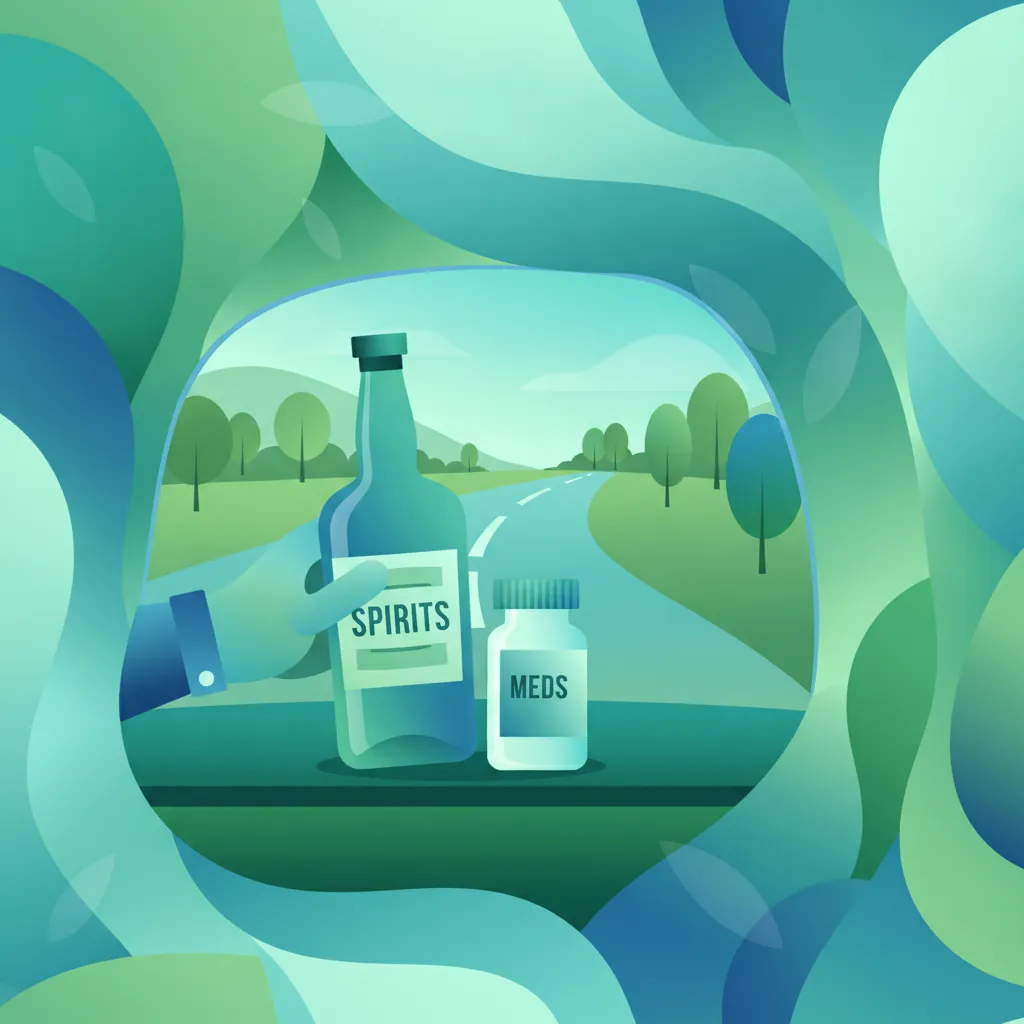
Lesson content overview
Driving in Germany requires strict adherence to traffic laws, especially concerning substances that impair driving ability. For anyone preparing for their German Category B driving license, understanding the regulations around alcohol, drugs, and medication is not just crucial for passing the theoretical exam, but vital for ensuring safety on the roads and avoiding severe legal consequences. This lesson provides an in-depth look at the legal framework, the risks involved, and the penalties for violations.
The primary reason for stringent regulations on substances while driving is the significant impairment they cause to a driver's faculties. Even small amounts of alcohol, certain medications, or any illicit drug can dramatically diminish your ability to safely control a vehicle, increasing the risk of accidents for yourself and other road users.
Alcohol is a central nervous system depressant that slows down brain function. Its effects on driving ability are well-documented and include:
Even at low concentrations, alcohol can subtly affect your driving, making it dangerous. The notion of being "able to handle it" is a dangerous misconception; alcohol's effects are physiological and affect everyone, regardless of perceived tolerance.
Driving under the influence of illegal drugs is strictly prohibited in Germany and carries severe penalties. Like alcohol, drugs can profoundly impair your ability to drive safely, but their effects can vary widely depending on the substance:
Regardless of the specific substance, the common thread is a dangerous reduction in a driver's capacity to operate a vehicle safely and responsibly. German law adopts a zero-tolerance approach to most illicit drugs found in a driver's system.
It's not just illegal drugs that pose a risk; many prescription and even some over-the-counter medications can significantly impair your driving ability. These include:
Always consult your doctor or pharmacist about the potential effects of any medication on your driving ability. Read the package insert carefully for warnings about operating machinery or driving vehicles. If in doubt, do not drive.
In Germany, the legal limit for alcohol in a driver's bloodstream is measured as Blood Alcohol Concentration (BAC), often expressed in permille (‰). Understanding these specific limits is fundamental for every driver.
Blood Alcohol Concentration (BAC), known as "Promille" (‰) in Germany, is a measure of the amount of alcohol present in a person's blood relative to the total volume. For example, 0.5‰ means there is 0.5 grams of alcohol per 1,000 grams of blood.
Your BAC depends on several factors, including the amount of alcohol consumed, your body weight, gender, metabolism, and how quickly you drink. There is no reliable way to "calculate" your own BAC or to speed up the process of sobering up (e.g., coffee, cold showers do not work). Only time can reduce BAC.
For experienced drivers (those who have completed their probationary period and are 21 years of age or older), the general legal BAC limit is 0.5‰ (0.5 Promille).
Germany enforces an absolute zero-tolerance policy for specific groups of drivers. This means their legal BAC limit is 0.0‰ (0.0 Promille) – absolutely no alcohol allowed.
This strict rule applies to:
If you are a novice driver or under 21, the rule is simple: Do not consume any alcohol at all if you plan to drive. Even the smallest amount, like a single beer or a glass of wine, will result in a violation and immediate severe penalties.
The rationale behind this zero-tolerance policy is to protect inexperienced drivers, who are statistically more prone to accidents, from the added risks of alcohol impairment. Their lack of experience combined with reduced faculties due to alcohol creates a particularly dangerous situation.
When police suspect a driver is under the influence of alcohol, they typically use:
Refusing a breathalyzer test can sometimes lead to an immediate request for a blood test and can be viewed negatively by authorities.
German law is unambiguous when it comes to drugs and driving: it is illegal to operate a motor vehicle under the influence of any substance that can impair driving ability, with a particular focus on illicit drugs.
The law specifically prohibits driving with detectable levels of certain illicit substances in your blood, even if you don't overtly appear impaired. This means that a simple blood test can be sufficient for a violation. Common prohibited substances include:
Similar to alcohol, the effects of drugs can lead to serious accidents due to distorted perception, slowed reactions, drowsiness, agitation, or impaired coordination. The penalties for drug-related driving offenses are often as severe as, or even more severe than, those for alcohol offenses.
Police can use various methods to detect drug use:
If you are found to have prohibited substances in your system while driving, you will face severe administrative and potentially criminal penalties.
While taking prescribed medication is often necessary for health, drivers have a responsibility to ensure their medication does not impair their ability to drive safely.
Many medications, both prescription and over-the-counter, carry warnings about their potential to affect driving. These warnings are not to be ignored. Common examples include:
It is your duty as a driver to know the effects of your medication. Always check the package insert for information about driving or operating machinery. Look for symbols like a car with a diagonal line through it, or warnings stating "May impair ability to drive."
When prescribed new medication, or even when taking over-the-counter drugs, it is essential to ask your doctor or pharmacist:
Never adjust your medication dosage or stop taking prescribed medication without consulting your doctor. If you must take impairing medication, arrange for alternative transportation.
Violating German regulations regarding alcohol, drugs, or impairing medication while driving leads to serious and escalating penalties. These consequences are designed to deter dangerous behavior and ensure public safety.
The Medical-Psychological Assessment (Medizinisch-Psychologische Untersuchung), commonly known as "Idiotentest" (idiot test) by some, is a crucial and often mandatory step to regain a driving license after serious violations.
The Medical-Psychological Assessment (MPU) is a comprehensive examination in Germany that assesses a person's physical, mental, and psychological fitness to drive. It is typically required after serious traffic offenses, including repeat alcohol or drug-related driving violations, or driving with very high BAC levels.
An MPU is a rigorous process involving:
The MPU is not a test to "pass or fail" in the traditional sense, but an assessment of whether you have changed your behavior and attitude sufficiently to be considered a safe driver again. It requires genuine reflection, often professional counseling, and a commitment to sobriety or responsible medication use. Failing the MPU means your license will not be reinstated, and you must try again after addressing the issues identified.
In the most severe cases, such as causing an accident resulting in injury or death while under the influence, or driving with extremely high BAC levels, drivers can face criminal charges, including imprisonment, in addition to all other penalties.
Avoiding the risks and severe penalties associated with driving under the influence is straightforward: do not consume alcohol, drugs, or impairing medication if you plan to drive.
Designate a Driver: If you plan to drink alcohol, ensure one person in your group remains sober and agrees to drive.
Use Public Transportation or Taxis: Germany has excellent public transport networks. Plan to use buses, trams, trains, or taxis if you will be consuming alcohol or are unsure about medication effects.
Walk or Cycle (Sober): For short distances, walking or cycling can be an option, but only if you are completely sober and capable. Cycling under the influence of alcohol or drugs also carries penalties.
Wait it Out: Alcohol takes time to leave your system. If you've been drinking, wait several hours, or even until the next day, before driving. There's no quick fix to sober up.
Understand Your Medication: Always discuss potential driving impairments with your doctor or pharmacist before starting any new medication.
Never Mix Substances: The combination of even small amounts of alcohol with certain medications or drugs can have unpredictable and severely dangerous effects, often amplifying impairment.
Your decision to drive sober protects not only your own life and license but also the lives and safety of everyone else on German roads. Adhering to these regulations is a fundamental aspect of driver responsibility within the German Driving License Theory – Comprehensive Category B Course.
This lesson covers Germany's strict regulations on driving under the influence of alcohol, drugs, and impairing medications. Experienced drivers face a 0.5‰ BAC limit, while novice drivers and those under 21 must maintain absolute zero tolerance at 0.0‰. Drug enforcement is zero-tolerance for illicit substances. Consequences escalate from fines and points in the Flensburg register, through temporary driving bans, to permanent license withdrawal requiring an MPU assessment. The lesson emphasizes that only time can reduce BAC and that drivers must consult medical professionals about medication effects before driving.
A short set of high-value points that capture the most important learning from this lesson.
Experienced drivers in Germany have a legal BAC limit of 0.5‰ (0.5 Promille), with criminal liability possible at 0.3‰ if signs of impairment are present.
Novice drivers during their probationary period and all drivers under 21 must maintain absolute zero tolerance at 0.0‰ BAC.
Germany applies zero-tolerance drug enforcement: any detectable level of illicit substances in a blood test constitutes a violation.
The MPU (Medizinisch-Psychologische Untersuchung) is a mandatory assessment to regain a license after serious violations, evaluating physical health, psychological fitness, and behavioral change.
Only time reduces BAC; coffee, cold showers, and other remedies have no effect on sobering up.
Explore all units and lessons included in this driving theory course.
BAC 0.5‰+ for experienced drivers = administrative offense; 0.3‰+ with impairment = criminal offense (relative Fahruntüchtigkeit); 1.1‰+ = absolute Fahruntüchtigkeit (criminal).
Zero tolerance 0.0‰ applies to: anyone in Probezeit AND anyone under 21 years old.
Drug driving: zero tolerance means any detectable prohibited substance in blood is illegal, regardless of apparent impairment.
Fahrverbot is a temporary driving ban keeping the license; Entzug der Fahrerlaubnis is permanent withdrawal requiring reapplication.
Medication warnings: look for car with diagonal line symbol; consult doctor or pharmacist about driving effects.
Assuming a small amount of alcohol is safe for a novice driver—0.0‰ means absolutely no alcohol, not 'just one drink'.
Believing that being below 0.5‰ BAC guarantees no legal consequences; 0.3‰+ with impairment can be a criminal offense.
Thinking one can sober up quickly with coffee or other methods; only time allows the body to metabolize alcohol.
Ignoring medication warnings assuming prescriptions are automatically safe to drive with; many prescriptions impair driving.
Confusing Fahrverbot (temporary ban, keep license) with Entzug (permanent withdrawal, lose license) when considering consequences.
Lesson content overview
A short set of high-value points that capture the most important learning from this lesson.
Experienced drivers in Germany have a legal BAC limit of 0.5‰ (0.5 Promille), with criminal liability possible at 0.3‰ if signs of impairment are present.
Novice drivers during their probationary period and all drivers under 21 must maintain absolute zero tolerance at 0.0‰ BAC.
Germany applies zero-tolerance drug enforcement: any detectable level of illicit substances in a blood test constitutes a violation.
The MPU (Medizinisch-Psychologische Untersuchung) is a mandatory assessment to regain a license after serious violations, evaluating physical health, psychological fitness, and behavioral change.
Only time reduces BAC; coffee, cold showers, and other remedies have no effect on sobering up.
Explore all units and lessons included in this driving theory course.
BAC 0.5‰+ for experienced drivers = administrative offense; 0.3‰+ with impairment = criminal offense (relative Fahruntüchtigkeit); 1.1‰+ = absolute Fahruntüchtigkeit (criminal).
Zero tolerance 0.0‰ applies to: anyone in Probezeit AND anyone under 21 years old.
Drug driving: zero tolerance means any detectable prohibited substance in blood is illegal, regardless of apparent impairment.
Fahrverbot is a temporary driving ban keeping the license; Entzug der Fahrerlaubnis is permanent withdrawal requiring reapplication.
Medication warnings: look for car with diagonal line symbol; consult doctor or pharmacist about driving effects.
Assuming a small amount of alcohol is safe for a novice driver—0.0‰ means absolutely no alcohol, not 'just one drink'.
Believing that being below 0.5‰ BAC guarantees no legal consequences; 0.3‰+ with impairment can be a criminal offense.
Thinking one can sober up quickly with coffee or other methods; only time allows the body to metabolize alcohol.
Ignoring medication warnings assuming prescriptions are automatically safe to drive with; many prescriptions impair driving.
Confusing Fahrverbot (temporary ban, keep license) with Entzug (permanent withdrawal, lose license) when considering consequences.
Explore search topics learners often look for when studying Alcohol, Drugs and Medication Regulations. These topics reflect common questions about road rules, driving situations, safety guidance, and lesson level theory preparation for learners in Germany.
Browse additional driving theory lessons that cover connected traffic rules, road signs, and common driving situations related to this topic. Improve your understanding of how different rules interact across everyday traffic scenarios.
Understand the severe legal penalties for driving under the influence in Germany. This includes detailed information on fines, license suspension, and the mandatory medical-psychological assessment (MPU) for offenders.
This lesson explains the specific regulations for novice drivers during their mandatory two-year probationary period ('Probezeit'). Key rules include a strict zero-percent alcohol limit. The lesson also describes the system of A- and B-level violations and the consequences of committing offenses during this time, which can include a mandatory advanced seminar ('Aufbauseminar') and an extension of the probationary period.
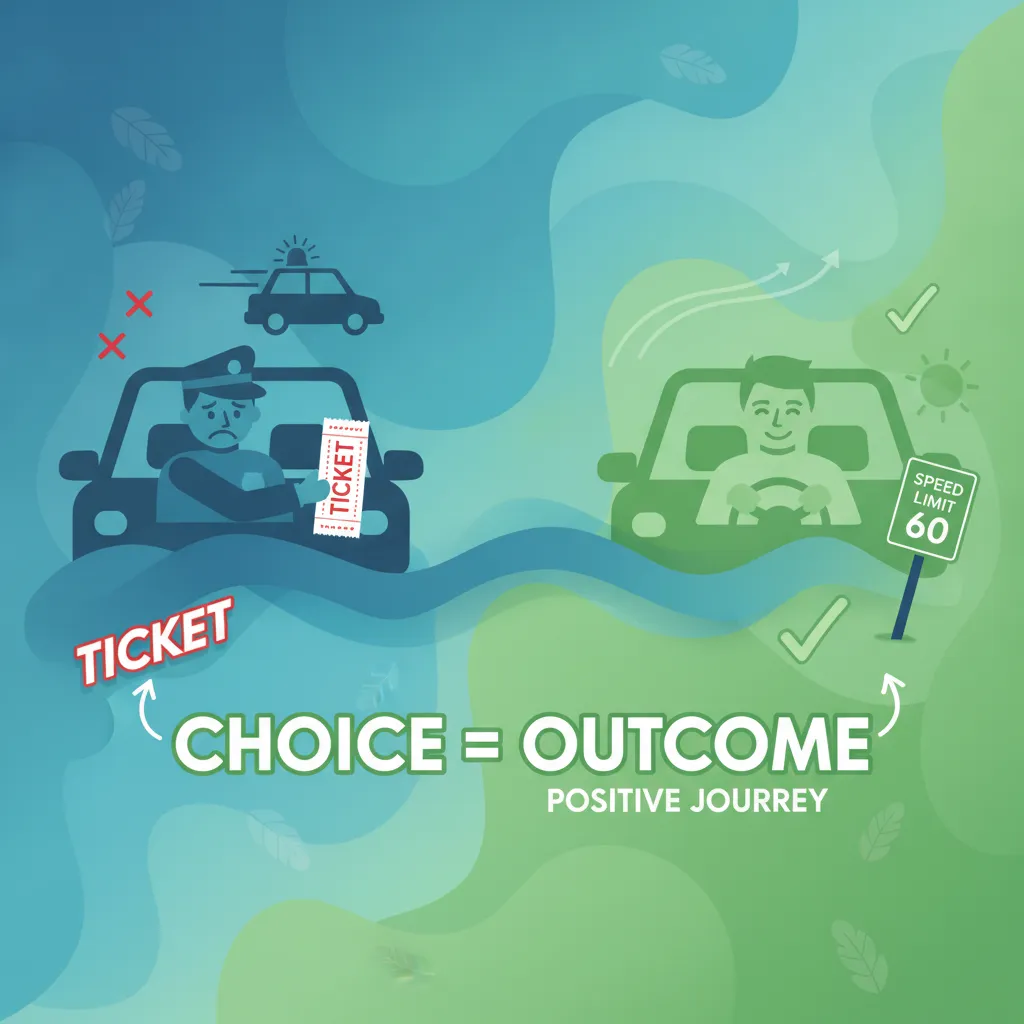
This lesson provides an overview of the German system for penalizing traffic offenses. It explains the catalogue of fines ('Bußgeldkatalog'), the system of demerit points ('Punkte in Flensburg') for more serious violations, and the conditions under which a temporary driving ban ('Fahrverbot') or a full revocation of the license can be imposed. Understanding these consequences reinforces the importance of lawful driving.
This lesson focuses on identifying and managing internal and external risk factors. It discusses the dangers of distractions like mobile phones, the influence of peer pressure in group riding scenarios, and the impairing effects of fatigue, alcohol, and drugs. The goal is to foster a mature and responsible attitude towards riding.
This lesson explains the German catalogue of fines (Bußgeldkatalog) and the points system for traffic violations. It details which offenses lead to fines, points in Flensburg, or even licence revocation. Understanding these consequences reinforces the importance of adhering to all traffic laws.
Learn about Germany's strict zero-tolerance policy for alcohol when driving during your probationary period or if you are under 21. This lesson explains the absolute limits and implications for new drivers.
This lesson explains the specific regulations for novice drivers during their mandatory two-year probationary period ('Probezeit'). Key rules include a strict zero-percent alcohol limit. The lesson also describes the system of A- and B-level violations and the consequences of committing offenses during this time, which can include a mandatory advanced seminar ('Aufbauseminar') and an extension of the probationary period.
Find clear answers to common questions learners have about Alcohol, Drugs and Medication Regulations. Learn how the lesson is structured, which driving theory objectives it supports, and how it fits into the overall learning path of units and curriculum progression in Germany. These explanations help you understand key concepts, lesson flow, and exam focused study goals.
In Germany, there is an absolute zero-tolerance policy for drivers in their probationary period (Probezeit) and for those under 21. You must not have any measurable amount of alcohol in your system while driving.
You must check the label or consult your doctor, as many medications can impair your vision, reaction time, or concentration. Driving while impaired by medication is treated similarly to drug or alcohol impairment if it affects your safety.
Penalties are severe and can include hefty fines, points in Flensburg, mandatory license suspension, and the requirement to pass a medical-psychological assessment (MPU) before regaining your license.
No, the strict policy extends to illegal drugs as well. Driving under the influence of any psychoactive substance is strictly prohibited and carries significant legal consequences.
Begin your targeted revision now. Use our practice search to quickly find specific German driving theory questions. Filter by StVO rules, road signs, or hazard perception to create your focused study plan. Master challenging areas and prepare confidently for your theoretical driving test.