
This lesson details the legal consequences of traffic offenses in Germany, including fines, demerit points, and potential driving bans. It provides the essential knowledge you need to understand how your behavior on the road impacts your driving license validity during and after your training.
Lesson content overview
Driving on German roads requires a thorough understanding of the regulations set forth in the Straßenverkehrs-Ordnung (StVO) and associated laws. Crucially, drivers must also be aware of the legal consequences that follow any infraction. The German legal system for traffic offenses is structured to deter unsafe behavior, ensure road safety, and penalize violations proportionally. This comprehensive lesson explains the key components of this system: the Bußgeldkatalog (catalogue of fines), Punkte in Flensburg (demerit points system), Fahrverbot (temporary driving ban), and Entzug der Fahrerlaubnis (license revocation). Familiarity with these mechanisms is vital for every driver aiming for a German Category B driving license.
The system of legal consequences for traffic violations in Germany is designed to promote road safety through a multi-tiered approach to penalization. It aims not only to punish past infractions but also to educate drivers and prevent future offenses. This framework is primarily governed by the Straßenverkehrsgesetz (StVG – Road Traffic Act) and the Fahrerlaubnis-Verordnung (FeV – Driver's License Regulation). These laws define the types of offenses, the corresponding penalties, and the procedures for enforcement.
The core principle behind these regulations is standardization, ensuring that similar offenses are treated consistently across the country. Penalties are progressive, meaning that repeated or more severe violations lead to increasingly harsh consequences. This can range from minor monetary fines to the complete revocation of a driving license, often requiring a re-examination. Understanding this progressive system reinforces the critical importance of adhering to all traffic laws.
The Bußgeldkatalog (Catalogue of Fines) is a fundamental part of German traffic law, providing a standardized and legally binding framework for fining drivers for various traffic offenses. It lists specific monetary penalties, and in many cases, also specifies the number of demerit points and potential driving bans associated with each violation. This catalog ensures consistent application of fines nationwide, preventing arbitrary penalties.
The Bußgeldkatalog is a regularly updated ordinance that outlines the exact financial consequences for a wide range of traffic infractions, from minor parking violations to serious speeding offenses. Its purpose is to clearly define the financial repercussions, thereby serving as a deterrent against unsafe driving practices. It is a critical document that every driver should be aware of, as its provisions apply to all road users in Germany.
Offenses listed in the Bußgeldkatalog are generally categorized by severity:
For example, exceeding the speed limit by 20 km/h in a built-up area might incur a fine of around €80-€100. However, exceeding it by 50 km/h in the same area could lead to a fine of several hundred euros, two demerit points, and a one-month driving ban.
The authority for imposing fines and other administrative penalties stems from Section 24 of the Straßenverkehrsgesetz (StVG). This section details the administrative offenses (Ordnungswidrigkeiten) and lays the groundwork for the Bußgeldkatalog as the implementing regulation. It distinguishes between minor infractions and more serious offenses that can also lead to demerit points or driving bans.
All fines listed in the Bußgeldkatalog are legally enforceable. Ignoring a fine and refusing payment can lead to escalating consequences, including:
Erzwingungshaft (coercive detention) as a last resort to compel payment.It is critical to address any fines promptly or to contest them through the proper legal channels if there are grounds to do so.
Beyond financial penalties, Germany employs a demerit points system known as Punkte in Flensburg. This system records more serious traffic violations at the Kraftfahrt-Bundesamt (KBA), the Federal Motor Transport Authority, located in Flensburg. The accumulation of these points leads to progressive penalties, designed to deter persistent unsafe driving behavior.
The Punkte in Flensburg system assigns points to a driver's record based on the severity of specific traffic offenses. Unlike the Bußgeldkatalog which deals with immediate financial penalties, the points system tracks a driver's long-term behavior. The goal is to identify and intervene with drivers who repeatedly commit violations that pose a significant risk to road safety.
Points are generally allocated as follows:
The Fahrerlaubnis-Verordnung (FeV) governs the rules for point allocation and the escalating consequences of accumulating points:
Fahreignungsseminar (driving aptitude seminar) to reduce one point every five years.Ermahnung (warning letter) from the KBA, along with information about the point system and the option to participate in a driving aptitude seminar to reduce one point.Verwarnung (caution letter) and is strongly encouraged to attend a driving aptitude seminar. At this stage, attending a seminar will not reduce points.entzogen (revoked). This is the most severe administrative consequence, meaning the driver loses their right to drive entirely.Points do not remain on a driver's record indefinitely. They expire automatically after certain periods, depending on the severity of the offense:
It is important to note that the expiration period starts from the date the legal decision becomes final (Rechtskraft). If a new offense is committed before older points expire, the expiration of the older points may be delayed.
Many common violations can result in demerit points, including:
A Fahrverbot (driving ban) is a temporary prohibition from driving motor vehicles for a specified period. It is a more severe penalty than a fine or points alone and serves as a strong deterrent for serious or repeated traffic offenses.
A Fahrverbot means that a driver is prohibited from operating any motor vehicle on public roads for a defined duration, typically one to three months. During this period, the driver must surrender their driving license to the authorities. It is not a revocation of the license itself, but a temporary suspension of the right to drive. After the ban period expires, the driver can retrieve their license and resume driving.
A Fahrverbot can be imposed for several reasons:
Fahrverbot is imposed, leading to license revocation.The duration of a Fahrverbot usually ranges from one to three months for administrative offenses. For criminal offenses, it can be longer.
Fahrverbot is legally binding, the driver receives official notification and must surrender their physical driving license to the competent authority by a specified date. The ban officially begins when the license is received by the authority.Driving a motor vehicle during a Fahrverbot is a serious criminal offense (Fahren ohne Fahrerlaubnis) and can lead to:
Sperrfrist (blocking period) for reacquiring a license.Entzug der Fahrerlaubnis (license revocation) is the most severe administrative penalty in German traffic law. Unlike a Fahrverbot, which is a temporary suspension of the right to drive, revocation means the permanent loss of the driving license. The driver's suitability to drive is questioned, and they must reapply for a new license after a specific waiting period.
License revocation signifies that the driver is no longer considered suitable to operate motor vehicles and loses the official authorization to drive. The driving license document itself becomes invalid and must be surrendered. The individual is effectively treated as if they have never held a license. Reacquiring the privilege to drive is a lengthy and often complex process.
License revocation is typically imposed for:
unerlaubtes Entfernen vom Unfallort).Gefährdung des Straßenverkehrs).Medizinisch-Psychologische Untersuchung (MPU – Medical-Psychological Assessment).After a license revocation, a Sperrfrist (blocking period) is imposed. This is a minimum period during which a new driving license cannot be issued. The duration of the Sperrfrist is determined by the court or administrative authority and typically ranges from six months to several years (e.g., 6 months to 5 years). For very serious offenses, it can be even longer.
Wait for Sperrfrist Expiration: The driver must wait for the entire blocking period to pass.
Submit Application for New License: Roughly 3-6 months before the Sperrfrist ends, the driver can apply for a new driving license at the local driver's license authority (Fahrerlaubnisbehörde).
Fulfill Conditions: Depending on the reason for revocation, the driver may need to:
Provide proof of stable health.
Undergo a Medizinisch-Psychologische Untersuchung (MPU), often referred to as the "Idiotentest," which assesses their physical, mental, and psychological fitness to drive. This is common after alcohol/drug offenses or severe point accumulation.
Retake the theoretical and practical driving exams.
Provide evidence of abstaining from alcohol or drugs (e.g., through hair or urine samples).
Issuance of New License: If all conditions are met and the authority is convinced of the driver's renewed suitability, a new driving license will be issued.
It is important to understand that there is no automatic right to regain a license after the Sperrfrist. The driver must prove their renewed fitness to drive.
Driving a motor vehicle after one's license has been revoked is a criminal offense (Fahren ohne Fahrerlaubnis) and carries severe penalties, including substantial fines, imprisonment, and extended Sperrfristen. This is distinct from driving during a Fahrverbot, which is also a criminal offense, but usually results in less severe penalties than driving after a full revocation.
The legal consequences can be even more stringent for certain groups of drivers or types of offenses.
New drivers in Germany are subject to a two-year Probezeit (probationary period). During this time, traffic violations are categorized as A-Verstöße (serious violations) or B-Verstöße (less serious violations).
A-Verstoß or two B-Verstöße lead to an extension of the probationary period by another two years and a mandatory, costly Aufbauseminar (advanced seminar).Entzug der Fahrerlaubnis.Germany has strict laws regarding driving under the influence of alcohol, drugs, or impairing medication.
Probezeit or those under 21 years of age have a zero-tolerance policy for alcohol (0.0‰ BAC). Any violation results in an A-Verstoß (extension of probationary period, Aufbauseminar), a fine, and points.Fahrverbot. Repeated offenses lead to higher fines, longer bans, and potentially an MPU.Fahrverbot, and license revocation, often with an MPU requirement. Certain medications can also impair driving ability, and driving while impaired by these can lead to similar consequences.The German system of legal consequences for traffic violations is a robust, multi-layered framework designed to uphold road safety and driver accountability. It progresses from minor financial penalties to the complete withdrawal of driving privileges, ensuring that penalties reflect the severity and recurrence of offenses.
Understanding these consequences is not merely about avoiding penalties; it is about reinforcing the importance of responsible and lawful driving behavior. Adherence to traffic laws ensures personal safety and the safety of all road users.
This lesson covers Germany's comprehensive traffic penalty system, which operates on a progressive scale from financial fines to complete license loss. The Bußgeldkatalog provides standardized fine amounts categorized by severity, while the Punkte in Flensburg system tracks demerit points at the Federal Motor Transport Authority (KBA), with escalating consequences as points accumulate from warnings at 4-5 points through cautions at 6-7 points to automatic revocation at 8 points. A temporary Fahrverbot prohibits driving for typically 1-3 months and requires surrendering the license, whereas permanent Entzug der Fahrerlaubnis means losing the license entirely and requires reapplication including potential Medical-Psychological Assessment (MPU). The probationary period imposes particularly strict rules, including zero alcohol tolerance for new drivers and enhanced consequences for both serious (A-Verstoß) and minor (B-Verstoß) violations.
A short set of high-value points that capture the most important learning from this lesson.
The German penalty system progresses from fines (Bußgeldkatalog) through demerit points (Punkte in Flensburg) to temporary bans (Fahrverbot) and finally permanent license revocation (Entzug der Fahrerlaubnis).
Demerit points are categorized by severity: 1 point for minor offenses, 2 points for serious violations, and 3 points for criminal offenses leading to immediate license revocation.
Reaching 8 points in Flensburg automatically triggers license revocation, with intermediate warnings at 4-5 points and cautions at 6-7 points.
A Fahrverbot is a temporary suspension where the license is surrendered and later returned; Entzug is permanent loss requiring full reapplication including potential MPU.
The probationary period (Probezeit) imposes stricter rules: beginners have zero alcohol tolerance (0.0‰ BAC) and even minor violations can extend probation or require an Aufbauseminar.
Explore all units and lessons included in this driving theory course.
Points expire by severity: 1-point offenses after 2.5 years, 2-point offenses after 5 years, 3-point offenses after 10 years, from the date the decision becomes final.
BAC thresholds: 0.5‰+ for experienced drivers (administrative offense), 0.3‰+ with impairment or 1.1‰+ always (criminal offense), and 0.0‰ for probationary drivers and under-21s.
Drivers can voluntarily attend a Fahreignungsseminar once every five years to reduce one point, but only when holding 1-3 points.
A Sperrfrist (blocking period) follows license revocation before reapplication is permitted, and reaching 8 points triggers an automatic Fahrverbot leading to revocation.
Driving during a Fahrverbot or after revocation is a criminal offense (Fahren ohne Fahrerlaubnis) with severe additional penalties.
Confusing Fahrverbot (temporary suspension, license returned) with Entzug der Fahrerlaubnis (permanent revocation requiring full reapplication).
Believing points disappear immediately after the expiration period passes—in fact, the Tilgung period starts from when the decision becomes legally final, and new offenses can delay older points from expiring.
Assuming that paying fines resolves all consequences—serious offenses also add demerit points that accumulate on the driving record.
Underestimating probationary period severity—two B-Verstöße trigger the same consequences as one A-Verstoß, including a mandatory Aufbauseminar.
Thinking a one-month driving ban means keeping the license at home—in most cases, the physical license must be surrendered to authorities.
Lesson content overview
A short set of high-value points that capture the most important learning from this lesson.
The German penalty system progresses from fines (Bußgeldkatalog) through demerit points (Punkte in Flensburg) to temporary bans (Fahrverbot) and finally permanent license revocation (Entzug der Fahrerlaubnis).
Demerit points are categorized by severity: 1 point for minor offenses, 2 points for serious violations, and 3 points for criminal offenses leading to immediate license revocation.
Reaching 8 points in Flensburg automatically triggers license revocation, with intermediate warnings at 4-5 points and cautions at 6-7 points.
A Fahrverbot is a temporary suspension where the license is surrendered and later returned; Entzug is permanent loss requiring full reapplication including potential MPU.
The probationary period (Probezeit) imposes stricter rules: beginners have zero alcohol tolerance (0.0‰ BAC) and even minor violations can extend probation or require an Aufbauseminar.
Explore all units and lessons included in this driving theory course.
Points expire by severity: 1-point offenses after 2.5 years, 2-point offenses after 5 years, 3-point offenses after 10 years, from the date the decision becomes final.
BAC thresholds: 0.5‰+ for experienced drivers (administrative offense), 0.3‰+ with impairment or 1.1‰+ always (criminal offense), and 0.0‰ for probationary drivers and under-21s.
Drivers can voluntarily attend a Fahreignungsseminar once every five years to reduce one point, but only when holding 1-3 points.
A Sperrfrist (blocking period) follows license revocation before reapplication is permitted, and reaching 8 points triggers an automatic Fahrverbot leading to revocation.
Driving during a Fahrverbot or after revocation is a criminal offense (Fahren ohne Fahrerlaubnis) with severe additional penalties.
Confusing Fahrverbot (temporary suspension, license returned) with Entzug der Fahrerlaubnis (permanent revocation requiring full reapplication).
Believing points disappear immediately after the expiration period passes—in fact, the Tilgung period starts from when the decision becomes legally final, and new offenses can delay older points from expiring.
Assuming that paying fines resolves all consequences—serious offenses also add demerit points that accumulate on the driving record.
Underestimating probationary period severity—two B-Verstöße trigger the same consequences as one A-Verstoß, including a mandatory Aufbauseminar.
Thinking a one-month driving ban means keeping the license at home—in most cases, the physical license must be surrendered to authorities.
Explore search topics learners often look for when studying Legal Consequences for Violations. These topics reflect common questions about road rules, driving situations, safety guidance, and lesson level theory preparation for learners in Germany.
Browse additional driving theory lessons that cover connected traffic rules, road signs, and common driving situations related to this topic. Improve your understanding of how different rules interact across everyday traffic scenarios.
Understand the German 'Bußgeldkatalog' (fine catalogue) and the demerit point system in Flensburg. Learn how different traffic violations are penalized and their impact on your driving license.
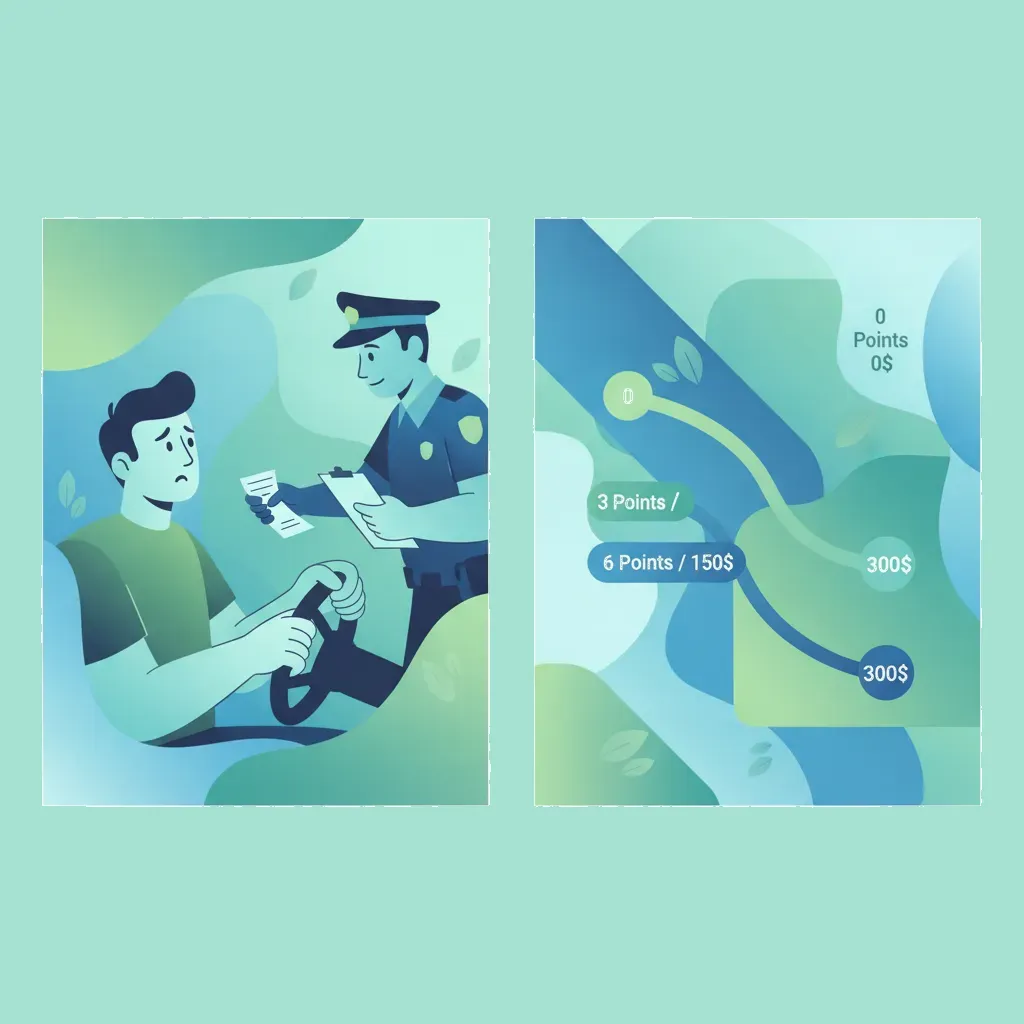
This lesson explains the German catalogue of fines (Bußgeldkatalog) and the points system for traffic violations. It details which offenses lead to fines, points in Flensburg, or even licence revocation. Understanding these consequences reinforces the importance of adhering to all traffic laws.

This lesson focuses on the legal responsibilities and duties of a vehicle operator according to German traffic law, primarily the StVO. It covers the obligation to drive safely, the rules of conduct at an accident scene, and the legal consequences of traffic violations. Understanding these principles is crucial for maintaining road safety and avoiding penalties such as fines, points, or driving bans.

This lesson provides a thorough explanation of traffic light systems ('Lichtzeichenanlagen') used in Germany. It details the meaning of red, amber, and green lights and the correct response to each phase of the signal sequence. The lesson also covers special signals, such as the green arrow for turning right on red, pedestrian and cyclist signals, and the authority of signals given by a police officer, which override all other signs.

This lesson informs riders about the legal ramifications of dangerous riding and traffic violations under German law. It outlines potential penalties, including fines, points, and license suspension, as well as the impact on insurance. The content also provides a step-by-step guide on the correct procedures for reporting an accident to the police and documenting the scene for legal and insurance purposes.
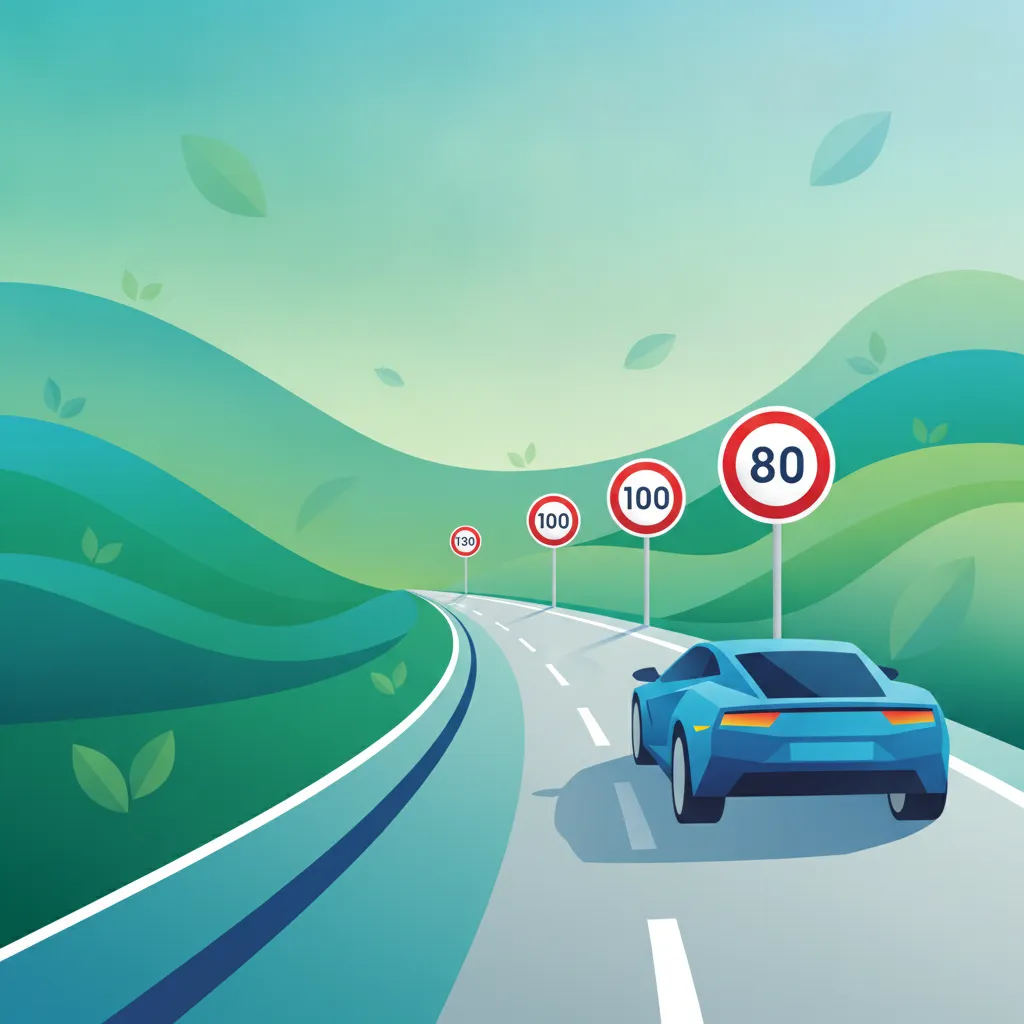
This lesson details the statutory speed limits in Germany, including the standard limits within built-up areas, on rural roads, and on the Autobahn. It emphasizes that the posted limit is a maximum and that drivers must always adapt their speed to traffic, weather, and visibility conditions. The concept of the recommended speed ('Richtgeschwindigkeit') on the Autobahn is also explained.
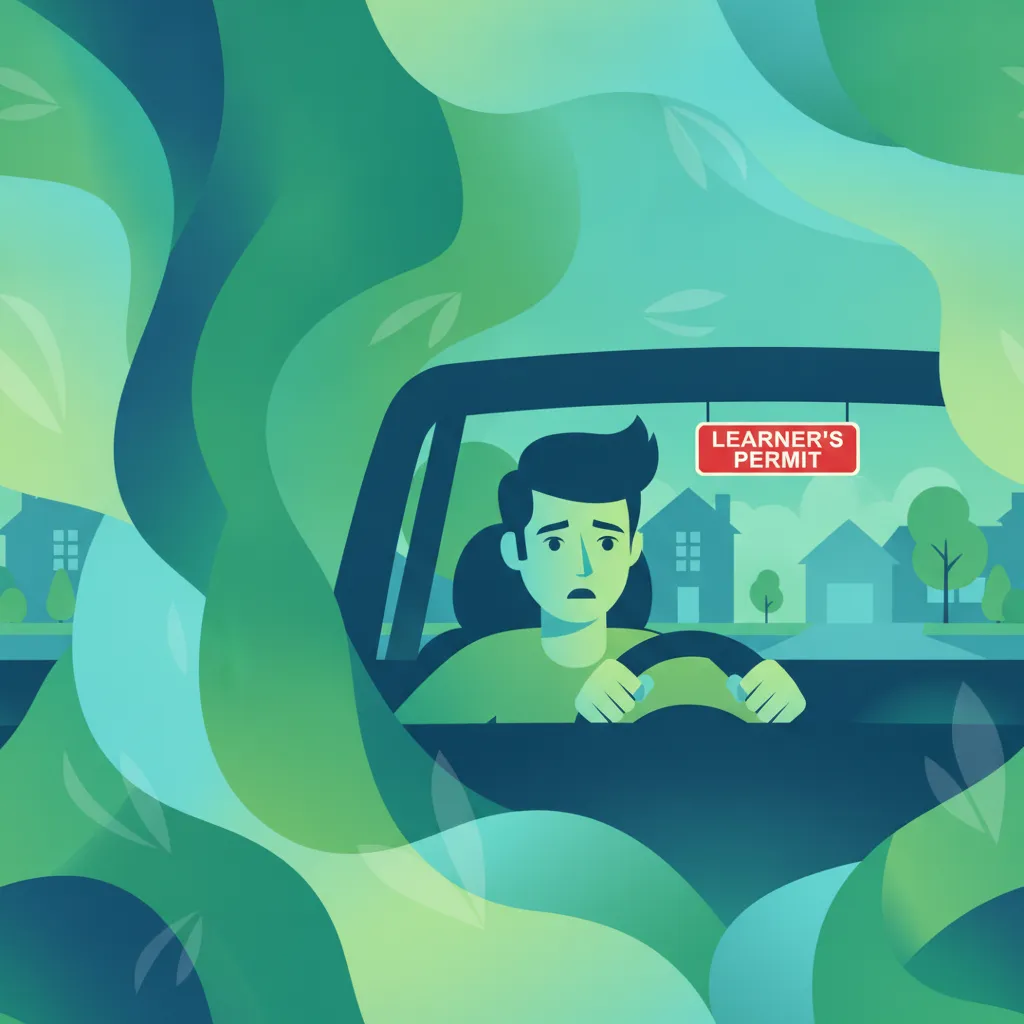
This lesson explains the specific regulations for novice drivers during their mandatory two-year probationary period ('Probezeit'). Key rules include a strict zero-percent alcohol limit. The lesson also describes the system of A- and B-level violations and the consequences of committing offenses during this time, which can include a mandatory advanced seminar ('Aufbauseminar') and an extension of the probationary period.

This lesson explains the various types of road markings and their significance for guiding traffic and ensuring safety. It covers the difference between solid and broken lines for lane separation and overtaking rules, the function of stop lines at intersections, and the markings for pedestrian crosswalks. You will also learn to interpret directional arrows, bicycle lane markings, and other symbols painted on the road.
This lesson clarifies the legal distinction between 'stopping' ('Halten') and 'parking' ('Parken') in Germany and explains the specific rules for each. You will learn to identify areas where stopping and parking are prohibited through signs and road markings. The lesson also covers the correct use of parking aids like the blue parking disc ('Parkscheibe') and paid parking systems.
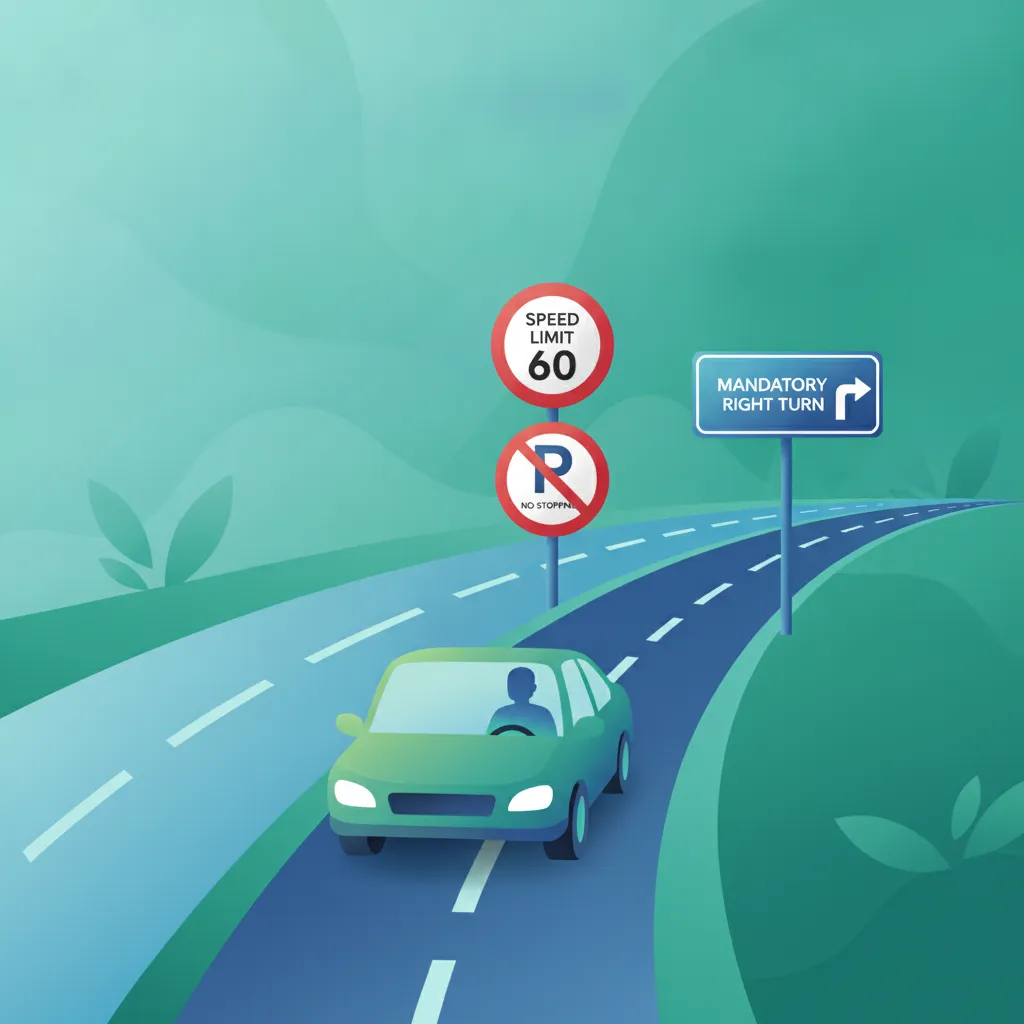
This lesson covers regulatory signs, which are legally enforceable and command specific actions from drivers. You will learn the meaning of critical signs such as the stop sign, yield sign, no-entry signs, and various parking and stopping prohibitions. The content also explains signs that establish speed limits, one-way streets, and restricted areas like environmental or pedestrian zones.

This lesson provides a complete guide to driving on the German Autobahn. It covers the correct procedure for entering and exiting via acceleration and deceleration lanes, the strict lane discipline rule of keeping right ('Rechtsfahrgebot'), and the principle of overtaking only on the left. It also explains the recommended speed limit and the critical procedure for forming an emergency corridor ('Rettungsgasse') in a traffic jam.
Explore the conditions and procedures for temporary driving bans ('Fahrverbot') and permanent license revocation in Germany. Understand the legal framework and consequences for severe traffic offenses.
This lesson explains the specific regulations for novice drivers during their mandatory two-year probationary period ('Probezeit'). Key rules include a strict zero-percent alcohol limit. The lesson also describes the system of A- and B-level violations and the consequences of committing offenses during this time, which can include a mandatory advanced seminar ('Aufbauseminar') and an extension of the probationary period.
This lesson explains the German catalogue of fines (Bußgeldkatalog) and the points system for traffic violations. It details which offenses lead to fines, points in Flensburg, or even licence revocation. Understanding these consequences reinforces the importance of adhering to all traffic laws.

This lesson covers the strict laws in Germany concerning driving under the influence of alcohol, drugs, or impairing medication. It details the legal blood alcohol concentration (BAC) limits for drivers, with a specific focus on the absolute zero-tolerance policy for drivers in their probationary period and those under 21. The severe legal penalties, including fines, license suspension, and the medical-psychological assessment (MPU), are also explained.
This lesson covers the general permissions and limitations that come with holding a German Category B driving license. It clarifies the conditions for license eligibility, including medical fitness and mandatory vehicle insurance coverage. The content also addresses potential restrictions, the process for obtaining special permits, and the circumstances that can lead to a temporary or permanent driving ban.

This lesson introduces the concept of defensive driving ('vorausschauendes Fahren'), a proactive approach focused on anticipating and mitigating potential risks. It teaches techniques for scanning the road ahead, identifying potential hazards early, and managing the space around your vehicle to create a safety buffer. The goal is to develop a mindset that prioritizes safety and collision avoidance above all else.
This lesson provides a complete guide to driving on the German Autobahn. It covers the correct procedure for entering and exiting via acceleration and deceleration lanes, the strict lane discipline rule of keeping right ('Rechtsfahrgebot'), and the principle of overtaking only on the left. It also explains the recommended speed limit and the critical procedure for forming an emergency corridor ('Rettungsgasse') in a traffic jam.
This lesson focuses on the legal responsibilities and duties of a vehicle operator according to German traffic law, primarily the StVO. It covers the obligation to drive safely, the rules of conduct at an accident scene, and the legal consequences of traffic violations. Understanding these principles is crucial for maintaining road safety and avoiding penalties such as fines, points, or driving bans.
This lesson clarifies the legal distinction between 'stopping' ('Halten') and 'parking' ('Parken') in Germany and explains the specific rules for each. You will learn to identify areas where stopping and parking are prohibited through signs and road markings. The lesson also covers the correct use of parking aids like the blue parking disc ('Parkscheibe') and paid parking systems.
This lesson details the statutory speed limits in Germany, including the standard limits within built-up areas, on rural roads, and on the Autobahn. It emphasizes that the posted limit is a maximum and that drivers must always adapt their speed to traffic, weather, and visibility conditions. The concept of the recommended speed ('Richtgeschwindigkeit') on the Autobahn is also explained.
This lesson covers regulatory signs, which are legally enforceable and command specific actions from drivers. You will learn the meaning of critical signs such as the stop sign, yield sign, no-entry signs, and various parking and stopping prohibitions. The content also explains signs that establish speed limits, one-way streets, and restricted areas like environmental or pedestrian zones.
Find clear answers to common questions learners have about Legal Consequences for Violations. Learn how the lesson is structured, which driving theory objectives it supports, and how it fits into the overall learning path of units and curriculum progression in Germany. These explanations help you understand key concepts, lesson flow, and exam focused study goals.
The Bußgeldkatalog is the official German fine catalogue that lists specific traffic offenses and their corresponding penalties, including monetary fines and points in the Flensburg register.
Accumulating too many points in the Flensburg register can lead to mandatory counseling, warnings, and eventually the suspension or revocation of your driving license.
Yes, novice drivers in the probationary period (Probezeit) face much stricter consequences. Certain violations may lead to an mandatory extension of the probationary period and participation in an advanced seminar.
A driving ban (Fahrverbot) is a temporary suspension of your driving privilege for a few months, after which you get your license back. Revocation (Entzug der Fahrerlaubnis) is permanent, requiring you to apply for a new license after a blocking period.
Begin your targeted revision now. Use our practice search to quickly find specific German driving theory questions. Filter by StVO rules, road signs, or hazard perception to create your focused study plan. Master challenging areas and prepare confidently for your theoretical driving test.