
This lesson details the legal consequences of traffic violations under the German StVO for AM licence holders. Understanding the fine catalogue and points system is essential for developing a responsible, safety-conscious attitude as a moped or scooter rider.
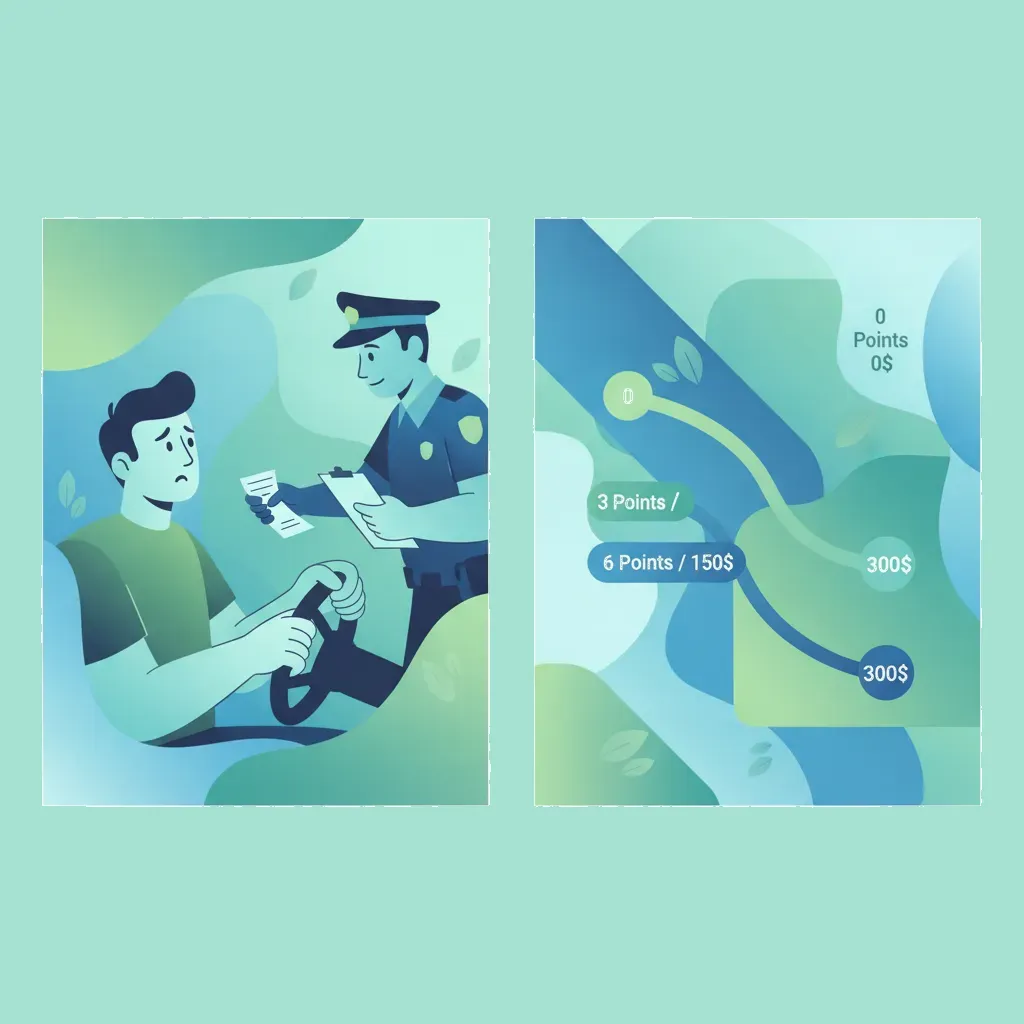
Lesson content overview
Operating a moped or scooter (AM licence) on German roads comes with significant responsibilities. Adhering to traffic laws is paramount not only for your safety and that of others, but also to avoid severe legal repercussions. This lesson provides a comprehensive guide to the German system of penalties for traffic infractions, including monetary fines, demerit points, and driving bans. Understanding these consequences is crucial for every rider, as it reinforces safe and lawful conduct on the road.
Germany employs a robust and standardized system to address traffic violations, ensuring fairness and consistency across the country. This system is designed to deter unsafe driving practices, correct driver behavior, and hold individuals accountable for their actions on the road. For anyone undertaking the German Driving Theory Course for AM Licence, a thorough understanding of these regulations is indispensable.
As an AM licence holder, you are responsible for your actions while operating your vehicle. Mopeds and scooters, while smaller, are integral parts of the traffic flow, and violations can have serious consequences. These include not only personal safety risks but also legal and financial penalties that can impact your future driving privileges and personal finances. Knowledge of the penalty system promotes a proactive approach to safe driving and legal compliance.
The legal framework for traffic violations in Germany is built on a few core principles. Penalties are systematically applied based on the severity of the offense, the driver's history, and potential harm caused. The system aims to be transparent, ensuring that drivers are aware of the potential consequences for different infractions. This predictable enforcement encourages all road users, including AM licence holders, to maintain high standards of driving conduct.
The Bußgeldkatalog is the cornerstone of traffic penalty enforcement in Germany. It is a comprehensive, officially published catalogue that standardizes the fines, demerit points, and driving bans associated with various traffic offenses. This ensures that penalties for similar violations are consistent nationwide.
This catalogue serves as a legal reference for law enforcement agencies, courts, and drivers alike. It outlines precise penalties for everything from minor parking infringements to serious speeding offenses. Its purpose is to create a clear, predictable, and fair system for addressing road traffic violations. For AM licence holders, knowing the specific penalties listed in the Bußgeldkatalog helps you understand the direct financial and legal implications of non-compliance.
The Bußgeldkatalog specifies three primary forms of penalties:
Many violations that apply to cars also apply to mopeds and scooters, although specific fine amounts might differ slightly in some cases. It is vital for AM licence holders to be aware of the most common infractions:
Exceeding the speed limit is a frequent violation with escalating consequences. Even minor speeding can result in fines and points. For instance, exceeding the speed limit by:
Ignoring a red traffic light is considered a severe offense due to the high risk of collision. The penalties are substantial:
Operating a mobile phone without a hands-free system while driving a moped or scooter is strictly prohibited. This significantly impairs concentration and reaction time, increasing accident risk. The penalty typically includes a fine and 1 point in Flensburg.
Beyond monetary fines, Germany's points system, maintained by the Kraftfahrt-Bundesamt (KBA) in Flensburg, tracks severe traffic infractions. This system is designed to identify and address repeat offenders, escalating penalties as a driver accumulates more demerit points.
Each serious traffic violation is assigned a specific number of points, usually 1 or 2, with very serious offenses (e.g., crimes) warranting 3 points. These points are recorded against your driver's licence. The system acts as a progressive warning mechanism, prompting corrective action before more severe consequences are imposed.
The Flensburg points system operates with specific thresholds that trigger different actions:
For novice drivers still in their probationary period, the accumulation of even fewer points can trigger extended probationary periods or mandatory advanced training (Aufbauseminar).
Points do not remain on your record indefinitely. They are automatically reduced after specific periods, provided no new points are added for another offense within that time:
It is important to understand that points are not simply "paid off" or removed immediately after a fine. They remain on your record for their prescribed expiry period, irrespective of when the fine was paid.
A Fahrverbot, or driving ban, is a more severe administrative penalty than a fine or points. It mandates a temporary suspension of your driving privileges for a specific period, usually one to three months. During this time, you are legally prohibited from operating any motor vehicle.
A driving ban is typically imposed for serious single violations or for accumulating too many points. Unlike licence revocation (Fahrerlaubnisentzug), a driving ban is usually for a fixed term, after which your licence is automatically valid again, without needing to reapply or retake tests.
The duration of a driving ban is determined by the severity of the offense and the specific circumstances. Common durations are:
The driving ban takes effect when you surrender your physical driver's licence to the authorities. You typically have a grace period (e.g., four months for first-time offenders) to choose when to begin your ban, allowing you to plan around work or other commitments.
Driving a moped or scooter during a Fahrverbot is a serious criminal offense, not just another traffic infraction. It can lead to heavy fines, imprisonment, and permanent licence revocation.
Encounters with law enforcement are a normal part of road usage. Police controls ensure compliance with traffic laws, vehicle safety, and driver sobriety. Knowing how to act during a police stop is important for all AM licence holders.
Police officers in Germany have the authority to stop any vehicle for routine checks or if they suspect a violation. During a control, you may be asked to:
You have the right to be treated respectfully and to know the reason for the stop. However, you also have obligations:
Failure to cooperate with police, providing false information, or refusing legitimate requests can lead to additional fines, points, or even criminal charges. It is always advisable to remain calm, polite, and cooperative during a police control.
The German traffic law system emphasizes education and correction, not just punishment. For drivers who show a pattern of unsafe behavior, mandatory retraining courses are a key component.
While reaching 8 points leads to licence revocation, for those at 6 or 7 points, the KBA will issue a warning and strongly recommend or mandate participation in a Fahreignungsseminar (driver fitness seminar). The purpose of this seminar is to educate drivers about safe driving practices, identify risky behaviors, and help prevent future violations.
The seminar typically consists of two parts: a traffic-pedagogical part with a driving instructor and a traffic-psychological part with a psychologist. Successfully completing this seminar can reduce your points by 1 (once every 5 years) and prevent your licence from being revoked.
Beyond personal driving conduct, the legal system also governs the technical condition and legal registration of your moped or scooter. Ensuring your vehicle is roadworthy and properly registered is a fundamental legal responsibility.
All motor vehicles in Germany, including mopeds and scooters (depending on type and age, typically after 2-3 years), must undergo periodic technical inspections to verify their roadworthiness. These inspections are commonly referred to by the organization that performs them, such as TÜV or DEKRA. The inspection checks critical safety components like brakes, tires, lights, and emissions.
Driving a moped or scooter without a valid technical inspection sticker (Hauptuntersuchung - HU) or without proper registration (Zulassung) is a serious offense:
While most traffic violations result in administrative fines and points, certain severe offenses can lead to criminal charges, carrying much harsher penalties. These criminal offenses apply to all drivers, including AM licence holders.
Driving under the influence of alcohol or drugs is a criminal offense in Germany, especially for novice drivers (who have a zero-tolerance policy for alcohol during their probationary period).
Operating any motor vehicle without possessing a valid driving licence for that vehicle type is a criminal offense. This includes driving with a suspended licence or driving a vehicle type not covered by your AM licence. Penalties can range from substantial fines to imprisonment.
Leaving the scene of an accident without properly identifying yourself and fulfilling your duties (e.g., waiting for police, exchanging details) is a serious criminal offense. Even for minor damage, this can lead to heavy fines, 3 points, driving licence revocation, and imprisonment.
This criminal offense covers reckless driving actions that seriously endanger others or property, such as dangerous overtaking, racing, or driving in an unsuitable condition (e.g., severe fatigue). Penalties are severe and include licence revocation and potential imprisonment.
The application and severity of penalties can vary based on specific circumstances surrounding the infraction. This contextual logic ensures that the punishment fits the actual risk or harm caused.
In adverse weather conditions like heavy rain, snow, or fog, existing traffic rules are often interpreted more strictly. For example, driving too fast for conditions, even if below the posted speed limit, can lead to fines and points if it causes a dangerous situation. Penalties for certain violations may also be higher if they occurred during poor visibility or on slippery roads, as these conditions amplify the danger.
Traffic laws and penalties often emphasize the protection of vulnerable road users, such as pedestrians, cyclists, and other moped/scooter riders. Infractions that endanger these groups (e.g., failing to yield to a pedestrian at a crossing, close passing of a cyclist) can result in higher fines and more points due to the increased potential for severe injury.
For all new drivers in Germany, including AM licence holders, an initial probationary period of two years applies. During this time, certain violations are treated with increased severity:
Failure to attend the Aufbauseminar when mandated can lead to licence revocation.
The German system imposes increasingly severe penalties for repeat offenders. A second major speeding violation within a year, for example, might automatically trigger a driving ban, even if the first instance did not. This escalating system aims to discourage persistent unsafe driving behaviors.
Understanding the legal consequences of traffic infractions is not just about avoiding penalties; it's about internalizing the importance of safe and lawful driving. As an AM licence holder, your actions on the road directly impact your safety and the safety of everyone around you. By adhering to the Straßenverkehrs-Ordnung (StVO), you contribute to safer roads for the entire community.
Always drive defensively, respect speed limits, follow traffic signs, and maintain full awareness of your surroundings. This proactive approach will help you avoid fines, demerit points, driving bans, and, most importantly, prevent accidents.
This lesson covers Germany's comprehensive traffic penalty system for AM licence holders, including the Bußgeldkatalog, Flensburg points system, and driving bans. Speeding violations escalate from fines at 10 km/h over to 2 points and driving bans at 30+ km/h over. The Flensburg system tracks points with thresholds at 4-5 (warning), 6-7 (seminar recommendation), and 8 (licence revocation). Novice drivers face stricter consequences during their 2-year probationary period, with serious violations requiring mandatory advanced training. Understanding these consequences reinforces why safe, lawful riding is essential for both legal compliance and road safety.
A short set of high-value points that capture the most important learning from this lesson.
The Bußgeldkatalog standardizes fines, demerit points, and driving bans for traffic violations across Germany.
Reaching 8 points in Flensburg triggers mandatory driving licence revocation, requiring a full reapplication process.
Fahrverbot temporarily suspends your licence for 1-3 months, after which it is automatically restored without retesting.
Driving during a Fahrverbot is a criminal offense that can result in imprisonment and permanent licence loss.
Novice drivers face stricter penalties during their 2-year Probezeit, with Category A offenses requiring mandatory Aufbauseminar attendance.
Explore all units and lessons included in this driving theory course.
1-point offenses (e.g., phone use) expire after 2.5 years; 2-point offenses (e.g., serious red light) after 5 years; 3-point offenses (criminal) after 10 years.
At 4-5 points you receive an Ermahnung (warning); at 6-7 points a Verwarnung with strong recommendation for Fahreignungsseminar.
Exceeding speed limits by more than 30 km/h typically results in 2 points and a mandatory driving ban.
A qualified red light violation (red for more than 1 second) carries 2 points and typically a one-month driving ban.
Novice drivers have zero alcohol tolerance during their probationary period.
Assuming points are removed immediately after paying a fine, when in fact they remain for their full expiry period.
Believing a Fahrverbot means retaking the driving test, when the licence is automatically restored after the ban period.
Underestimating the severity of novice driver regulations, thinking adult penalty thresholds apply during the Probezeit.
Confusing Fahrerlaubnisentzug (permanent revocation) with Fahrverbot (temporary ban).
Forgetting that driving an uninspected vehicle can invalidate insurance coverage, leaving you personally liable.
Lesson content overview
A short set of high-value points that capture the most important learning from this lesson.
The Bußgeldkatalog standardizes fines, demerit points, and driving bans for traffic violations across Germany.
Reaching 8 points in Flensburg triggers mandatory driving licence revocation, requiring a full reapplication process.
Fahrverbot temporarily suspends your licence for 1-3 months, after which it is automatically restored without retesting.
Driving during a Fahrverbot is a criminal offense that can result in imprisonment and permanent licence loss.
Novice drivers face stricter penalties during their 2-year Probezeit, with Category A offenses requiring mandatory Aufbauseminar attendance.
Explore all units and lessons included in this driving theory course.
1-point offenses (e.g., phone use) expire after 2.5 years; 2-point offenses (e.g., serious red light) after 5 years; 3-point offenses (criminal) after 10 years.
At 4-5 points you receive an Ermahnung (warning); at 6-7 points a Verwarnung with strong recommendation for Fahreignungsseminar.
Exceeding speed limits by more than 30 km/h typically results in 2 points and a mandatory driving ban.
A qualified red light violation (red for more than 1 second) carries 2 points and typically a one-month driving ban.
Novice drivers have zero alcohol tolerance during their probationary period.
Assuming points are removed immediately after paying a fine, when in fact they remain for their full expiry period.
Believing a Fahrverbot means retaking the driving test, when the licence is automatically restored after the ban period.
Underestimating the severity of novice driver regulations, thinking adult penalty thresholds apply during the Probezeit.
Confusing Fahrerlaubnisentzug (permanent revocation) with Fahrverbot (temporary ban).
Forgetting that driving an uninspected vehicle can invalidate insurance coverage, leaving you personally liable.
Explore search topics learners often look for when studying Legal Consequences of Infractions, Penalties, and Responsibility. These topics reflect common questions about road rules, driving situations, safety guidance, and lesson level theory preparation for learners in Germany.
Browse additional driving theory lessons that cover connected traffic rules, road signs, and common driving situations related to this topic. Improve your understanding of how different rules interact across everyday traffic scenarios.
Understand the legal and financial repercussions of traffic offenses in Germany for AM licence holders. This lesson details the Bußgeldkatalog, the points system in Flensburg, and potential license revocation.
This lesson provides an overview of the German system for penalizing traffic offenses. It explains the catalogue of fines ('Bußgeldkatalog'), the system of demerit points ('Punkte in Flensburg') for more serious violations, and the conditions under which a temporary driving ban ('Fahrverbot') or a full revocation of the license can be imposed. Understanding these consequences reinforces the importance of lawful driving.
This lesson informs riders about the legal ramifications of dangerous riding and traffic violations under German law. It outlines potential penalties, including fines, points, and license suspension, as well as the impact on insurance. The content also provides a step-by-step guide on the correct procedures for reporting an accident to the police and documenting the scene for legal and insurance purposes.
This lesson details the legal obligations every AM licence holder must follow. It emphasizes compliance with the Straßenverkehrs-Ordnung (StVO), including mandatory helmet use and maintaining vehicle roadworthiness. The content covers insurance requirements, accident reporting procedures, and the legal consequences of non-compliance.

This lesson provides a detailed overview of the legal framework governing the AM licence in Germany. It explains the classification of vehicles like mopeds and scooters based on engine displacement, power output, and weight. Learners will understand the official age requirements, licensing procedures, and fundamental StVO regulations.
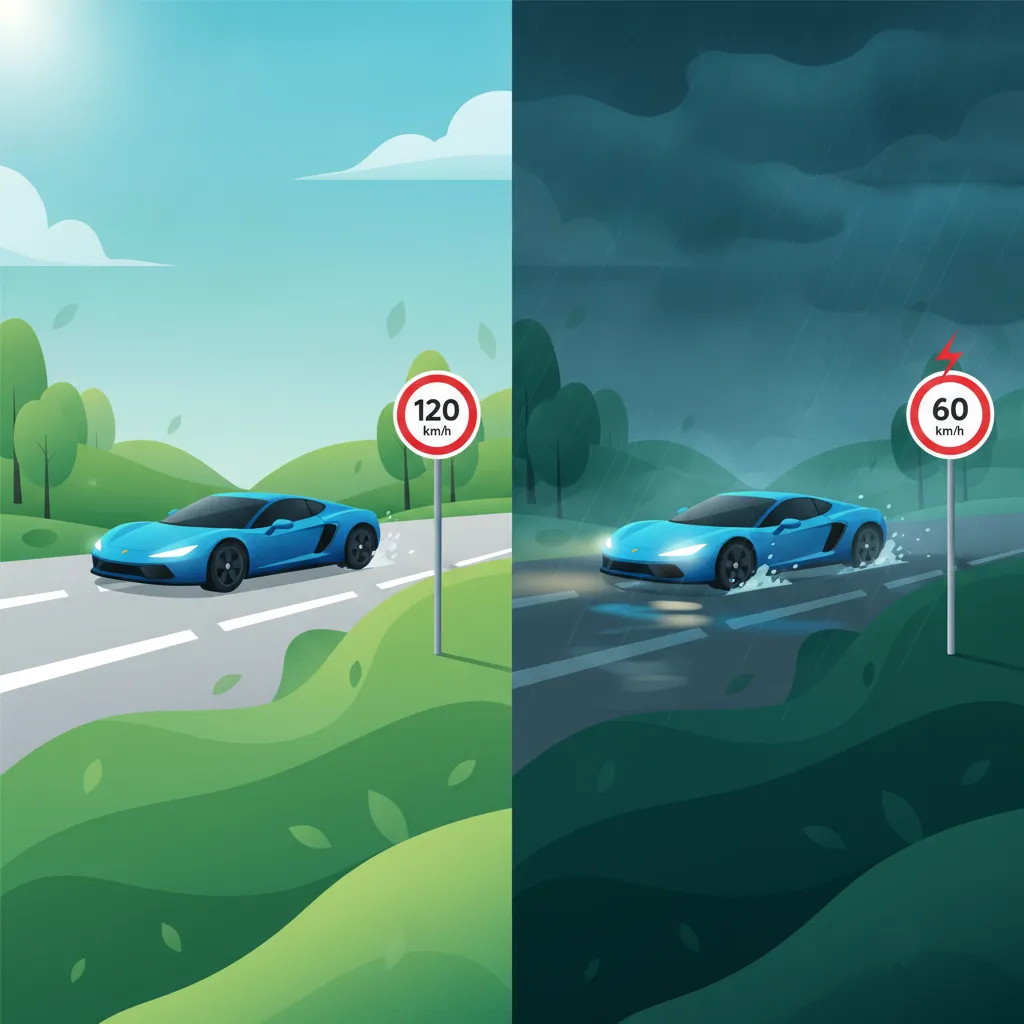
This lesson details the various speed limits applicable in Germany, from urban zones to rural roads. It emphasizes the critical skill of adapting speed to prevailing conditions such as rain, fog, or poor road surfaces. The content explains how external factors significantly impact vehicle handling and stopping distances.
Explore the core principles of the German Road Traffic Regulations (StVO) relevant to AM licence holders. This lesson clarifies responsibilities and the legal framework underpinning traffic law in Germany, reinforcing safe driving practices.
This lesson details the legal obligations every AM licence holder must follow. It emphasizes compliance with the Straßenverkehrs-Ordnung (StVO), including mandatory helmet use and maintaining vehicle roadworthiness. The content covers insurance requirements, accident reporting procedures, and the legal consequences of non-compliance.

This lesson focuses on the legal responsibilities and duties of a vehicle operator according to German traffic law, primarily the StVO. It covers the obligation to drive safely, the rules of conduct at an accident scene, and the legal consequences of traffic violations. Understanding these principles is crucial for maintaining road safety and avoiding penalties such as fines, points, or driving bans.
This lesson provides a detailed overview of the legal framework governing the AM licence in Germany. It explains the classification of vehicles like mopeds and scooters based on engine displacement, power output, and weight. Learners will understand the official age requirements, licensing procedures, and fundamental StVO regulations.
This lesson details the critical right-of-way regulations according to the German StVO. It covers the default 'right before left' rule, the meaning of priority road signs, and specific rules for roundabouts and yielding to pedestrians. A thorough understanding of these priority rules is fundamental for preventing accidents at junctions.
This lesson explains the function and meaning of traffic light signals, including standard cycles, flashing lights, and arrows. It also details how to interpret and obey hand signals given by police officers, which override all other signs and signals. Understanding these instructions is crucial for navigating controlled junctions and emergency situations.
This lesson focuses on interpreting various road markings, from lane lines and directional arrows to stop lines and pedestrian crossings. It explains the rules associated with solid versus broken lines and how to navigate temporary markings found in construction zones. Correctly reading these markings is vital for proper lane discipline and safety.

This lesson explores the legal framework governing heavy vehicle operation in Germany, focusing on the Straßenverkehrs-Ordnung (StVO) and specific commercial transport regulations. It details the professional duty of care required from drivers, including responsibilities for vehicle inspection and documentation. You will understand the enforcement mechanisms and potential penalties for non-compliance.
This lesson covers the essential behavioral rules mandated by the German Road Traffic Act (StVO) that form the foundation of safe driving. Key principles discussed include the mandatory rule to drive on the right side of the road, maintaining a safe following distance, and adapting speed to conditions. It also explains the regulations for overtaking, merging, and parking to ensure smooth and safe traffic flow.
This lesson introduces the various categories of German road signs, focusing on their meaning and application for AM riders. It covers regulatory signs like speed limits, warning signs for hazards, and informational signs for guidance. Learners will be ableto identify signs by their shape, color, and symbols, ensuring correct interpretation while riding.
This lesson addresses the critical skill of safely interacting with other road users, particularly vulnerable ones like pedestrians and cyclists. It covers rules for yielding at crosswalks, maintaining a safe passing distance, and being aware of the limited visibility of a moped to car drivers. The focus is on fostering a defensive and cooperative mindset in mixed traffic.
Find clear answers to common questions learners have about Legal Consequences of Infractions, Penalties, and Responsibility. Learn how the lesson is structured, which driving theory objectives it supports, and how it fits into the overall learning path of units and curriculum progression in Germany. These explanations help you understand key concepts, lesson flow, and exam focused study goals.
As a beginner, points are closely monitored. Accumulating too many points in the central register in Flensburg can lead to mandatory re-education seminars or, in severe cases, the revocation of your driving licence during the probation period.
While the basic principles of the StVO apply to all, certain fines are specific to the vehicle type and speed capacity of your AM-class vehicle. You are subject to the same catalogue of fines for rule violations such as red light running or improper overtaking.
It is the German system for tracking traffic violations. Serious offences result in points being added to your record. Accumulating a certain number of points leads to escalating legal measures, ranging from warnings to the eventual loss of your licence.
Yes, depending on the severity of the infraction, such as driving under the influence or causing a dangerous accident, your licence can be suspended or revoked even if it is your first offence.
Begin your targeted revision now. Use our practice search to quickly find specific German driving theory questions. Filter by StVO rules, road signs, or hazard perception to create your focused study plan. Master challenging areas and prepare confidently for your theoretical driving test.