
This lesson guides you through the legal and practical requirements for managing road accidents in Germany. You will learn the critical steps to secure a scene, call for professional help, and fulfill your obligations as a responsible driver under German traffic law.

Lesson content overview
Road accidents, whether minor or severe, can be stressful and disorienting experiences. Knowing the correct procedures to follow in Germany is not only crucial for your safety and the safety of others, but also a legal obligation under the German Road Traffic Act (StVG) and the Road Traffic Regulations (StVO). This lesson provides a comprehensive, step-by-step guide to help you manage the immediate aftermath of a collision effectively and responsibly.
As a driver involved in an accident, your primary goal is to secure the scene, ensure the well-being of all parties, and fulfill your legal duties. A structured response can prevent secondary accidents, facilitate prompt medical attention for the injured, and ensure proper documentation for insurance purposes. This section outlines the essential immediate actions.
The first and most critical step after any traffic accident, regardless of its perceived severity, is to stop your vehicle immediately. Failure to stop can result in severe legal consequences, including charges of hit-and-run.
Never leave the scene of an accident without fulfilling your obligations, even if it appears minor and no one seems injured. This is a serious offense in Germany.
Once you have stopped, assess the situation. If possible and safe, move your vehicle to the side of the road to avoid obstructing traffic and reduce the risk of further collisions. However, if moving the vehicle might worsen injuries or destroy evidence, it should remain in place. Always ensure your own safety before exiting the vehicle.
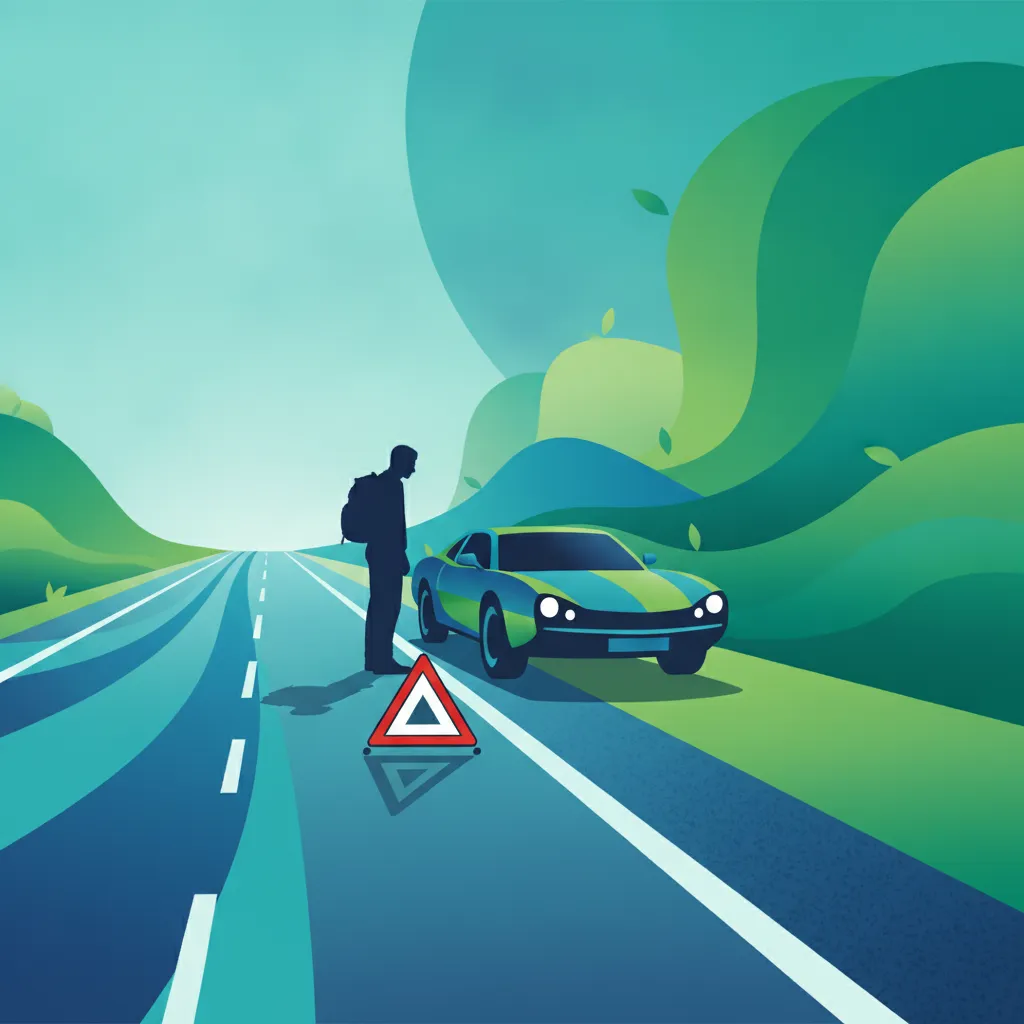
After stopping, securing the accident scene is paramount to prevent subsequent accidents involving approaching traffic. This involves deploying a warning triangle and wearing a high-visibility vest.
A warning triangle is a portable, reflective device designed to alert other road users to a hazard ahead. Proper placement is crucial to give approaching drivers sufficient time to react.
Turn on your vehicle's hazard warning lights immediately after stopping.
Don your high-visibility vest before exiting the vehicle.
Take the warning triangle and walk against the direction of approaching traffic, carefully placing it on the road.
The placement distance depends on the speed limit of the road:
Urban roads (innerorts) or speeds up to 50 km/h: Approximately 50 metres behind the accident scene.
Rural roads (außerorts) or speeds above 50 km/h: Approximately 100 metres behind the accident scene.
Motorways (Autobahnen): Due to high speeds, the triangle should be placed 150 to 200 metres behind the accident scene.
Ensure the warning triangle is clearly visible and stable.
The purpose of these distances is to provide other drivers with enough reaction time, especially in low visibility conditions or at high speeds, to safely slow down or change lanes.
A high-visibility vest (also known as a safety vest or warning vest) is a fluorescent and reflective item of clothing designed to make you easily seen by other road users, especially at night, during dusk, or in adverse weather conditions.
Under German law, it is mandatory to carry at least one high-visibility vest in your vehicle. It is also legally required to wear it if you leave your vehicle on the road after a breakdown or accident, especially outside urban areas or on motorways. Wearing the vest significantly reduces your risk of being struck by passing traffic while you are securing the scene or assisting others.
After securing the scene and ensuring your own safety, your immediate priority should be to check for injured persons. If there are any injuries, or if there is significant property damage, you must call emergency services. In Germany and across the European Union, the universal emergency number is 112.
Always prioritize human life. Attend to injured persons and call for professional medical help before focusing on vehicle damage or legal details.
When you call 112, remain calm and provide clear, concise information to the operator. This will help emergency services dispatch the appropriate units quickly.
Who is calling? Your name and phone number.
Where did it happen? The exact location of the accident. This is critical. Provide road names, nearest city/town, approximate kilometre markers on motorways (if available), or any distinct landmarks.
What happened? Briefly describe the nature of the emergency (e.g., "traffic accident with two cars," "motorcycle collision").
How many people are injured and what is the severity? Provide an estimate of the number of injured persons and describe their condition (e.g., "one person unconscious," "two people complaining of neck pain," "minor cuts and bruises").
Are there any other hazards? Mention any potential dangers such as leaking fuel, smoke, or vehicles blocking traffic.
Do not hang up until the emergency operator tells you to do so, as they may have further questions or instructions for you.
Even if no one is injured and the damage appears minor, you have a legal obligation to exchange information with all other parties involved in the accident. This is crucial for insurance claims and liability assessment.
Under StVG § 7, drivers involved in a traffic accident are legally required to provide specific information to each other.
If you feel threatened or unsafe at the scene, you can retreat to a safe location and call the police to mediate the information exchange. Your safety comes first.
You should exchange the following details with all other drivers involved:
It is also advisable to note the names and contact details of any witnesses who may have seen the accident.
Thorough documentation of the accident scene is vital for a smooth insurance claim process. Memory can be unreliable, and photographic evidence or detailed sketches can clarify facts.
Take photographs: Use your smartphone to take numerous photos from different angles.
Overall scene: Show the position of vehicles relative to each other and the road.
Damage: Capture close-ups of all damage to your vehicle and other vehicles involved.
Road conditions: Document skid marks, debris, traffic signs, road markings, and relevant surroundings.
Weather conditions: Note rain, fog, ice, or bright sunlight if relevant.
Make a sketch: Draw a simple diagram showing the approximate positions of vehicles before, during, and after the collision. Include road names, traffic signs, and direction of travel.
Write notes: Record the exact date and time of the accident, the precise location, names of all parties and witnesses, contact details, and a brief description of how the accident occurred from your perspective.
Do not admit fault: While documenting, stick to factual observations. Avoid making statements that could be interpreted as an admission of guilt. Let the insurance companies and potentially the police determine fault.
While calling 112 for injuries is mandatory, deciding whether to call the police (separate from ambulance/fire services) for a property-damage-only accident can depend on the circumstances. Under StVG § 34, you are generally obliged to notify the police if:
For minor fender-benders where there are no injuries, minimal damage, and all parties agree on the facts and willingly exchange information, a police report might not be strictly necessary. However, if in doubt, it is always safer to call the police for official documentation, as this can prevent future disputes.
Understanding the legal basis for these procedures can reinforce their importance and help you navigate the aftermath of an accident confidently.
The Straßenverkehrs-Ordnung (StVO) governs the rules of the road and how drivers must behave, including aspects related to stopping and securing an accident scene. For example, StVO paragraphs address the use of hazard warning lights and the placement of warning triangles.
The Straßenverkehrsgesetz (StVG) is the overarching German Road Traffic Act, which includes broader legal duties such as the obligation to assist at an accident scene (StVG § 34) and the requirement to exchange information with other involved parties (StVG § 7). Violations of these laws can lead to fines, points on your driving record, and in severe cases, withdrawal of your driving license or even imprisonment.
While the steps are clear, certain errors or specific conditions can complicate accident procedures. Being aware of these can help you avoid pitfalls.
The fundamental steps remain the same, but practical implementation can vary based on external factors.
When an accident involves pedestrians, cyclists, or motorcyclists, extra care must be taken:
Each step in the accident procedure serves a specific, vital purpose. Proper scene securing prevents subsequent accidents by giving other drivers adequate warning and time to react. Immediate emergency calls are directly linked to faster medical response, which can be life-saving. Accurate and comprehensive information exchange, coupled with thorough documentation, ensures fair and efficient processing of insurance claims and provides clarity should legal disputes arise. Failing to adhere to these procedures not only endangers lives but can also lead to significant legal and financial penalties, including fines, driving license points, and increased liability.
Understanding the theory is important, but applying it to real-world situations makes it actionable. Here are a few common accident scenarios and the correct procedures.
Setting: You are involved in a low-speed rear-end collision on a busy city street during daylight. There are no apparent injuries, but both vehicles have minor bumper damage.
Action:
Setting: You are involved in a multi-vehicle pile-up on the Autobahn during heavy rain. There are clearly injured people, and debris is scattered across several lanes.
Action:
Setting: You accidentally scrape a parked car in a quiet residential area, causing minor paint damage to both vehicles. The other driver is not present.
Action:
This lesson covers the complete step-by-step procedure for managing traffic accidents in Germany, from immediate scene securing using warning triangles and high-visibility vests to making effective emergency calls to 112. Learners must understand the specific legal obligations under StVG and StVO, including mandatory information exchange with other parties and the requirement to stop regardless of accident severity. The critical Safety-Warning-Help sequence emphasizes prioritizing human life while preventing secondary accidents through proper triangle placement at road-specific distances. Thorough documentation through photographs, sketches, and notes is essential for insurance claims and liability assessment, while learners should always avoid admitting fault at the scene.
A short set of high-value points that capture the most important learning from this lesson.
Always stop immediately at any accident scene regardless of severity - leaving constitutes Fahrerflucht (hit-and-run) with serious legal consequences
Deploy the warning triangle at road-specific distances: 50m on urban roads, 100m on rural roads, and 150-200m on motorways to give approaching drivers adequate reaction time
Call emergency number 112 immediately when injuries occur, providing exact location, accident description, number and severity of injuries, and any additional hazards
You are legally obligated under StVG §7 to exchange full personal, vehicle, and insurance details with all parties involved
Thoroughly document the scene with photographs, sketches, and written notes without making any statements that could be interpreted as admissions of fault
Explore all units and lessons included in this driving theory course.
Wear your high-visibility vest before exiting the vehicle and activate hazard warning lights immediately after stopping
On an Autobahn, walk against traffic flow when placing the warning triangle and position it 150-200 metres back from the scene
When calling 112, provide: who you are, exact location, what happened, number and condition of injured persons, and any additional hazards present
If you cannot find the owner of a parked car you've damaged, leave a written note with your details and consider reporting to police to avoid Fahrerflucht charges
Never admit fault at the scene - let insurance companies and police determine liability
Leaving the scene prematurely or before fulfilling all legal obligations, which constitutes the serious offense of Fahrerflucht
Placing the warning triangle too close to the accident, especially on high-speed roads, depriving drivers of critical reaction time
Neglecting to wear the high-visibility vest when exiting the vehicle, increasing vulnerability to being struck by passing traffic
Delaying the emergency call to 112 when injuries are suspected, potentially compromising medical outcomes
Inadequate documentation - without clear photos, notes, or sketches, disputes over fault and damage extent become much harder to resolve
Lesson content overview
A short set of high-value points that capture the most important learning from this lesson.
Always stop immediately at any accident scene regardless of severity - leaving constitutes Fahrerflucht (hit-and-run) with serious legal consequences
Deploy the warning triangle at road-specific distances: 50m on urban roads, 100m on rural roads, and 150-200m on motorways to give approaching drivers adequate reaction time
Call emergency number 112 immediately when injuries occur, providing exact location, accident description, number and severity of injuries, and any additional hazards
You are legally obligated under StVG §7 to exchange full personal, vehicle, and insurance details with all parties involved
Thoroughly document the scene with photographs, sketches, and written notes without making any statements that could be interpreted as admissions of fault
Explore all units and lessons included in this driving theory course.
Wear your high-visibility vest before exiting the vehicle and activate hazard warning lights immediately after stopping
On an Autobahn, walk against traffic flow when placing the warning triangle and position it 150-200 metres back from the scene
When calling 112, provide: who you are, exact location, what happened, number and condition of injured persons, and any additional hazards present
If you cannot find the owner of a parked car you've damaged, leave a written note with your details and consider reporting to police to avoid Fahrerflucht charges
Never admit fault at the scene - let insurance companies and police determine liability
Leaving the scene prematurely or before fulfilling all legal obligations, which constitutes the serious offense of Fahrerflucht
Placing the warning triangle too close to the accident, especially on high-speed roads, depriving drivers of critical reaction time
Neglecting to wear the high-visibility vest when exiting the vehicle, increasing vulnerability to being struck by passing traffic
Delaying the emergency call to 112 when injuries are suspected, potentially compromising medical outcomes
Inadequate documentation - without clear photos, notes, or sketches, disputes over fault and damage extent become much harder to resolve
Explore search topics learners often look for when studying Accident Procedures and Emergency Calls. These topics reflect common questions about road rules, driving situations, safety guidance, and lesson level theory preparation for learners in Germany.
Browse additional driving theory lessons that cover connected traffic rules, road signs, and common driving situations related to this topic. Improve your understanding of how different rules interact across everyday traffic scenarios.
Understand the essential steps for responding to traffic accidents in Germany. This lesson covers securing the accident scene, proper use of warning triangles, and making effective emergency calls to ensure safety and compliance with StVO.
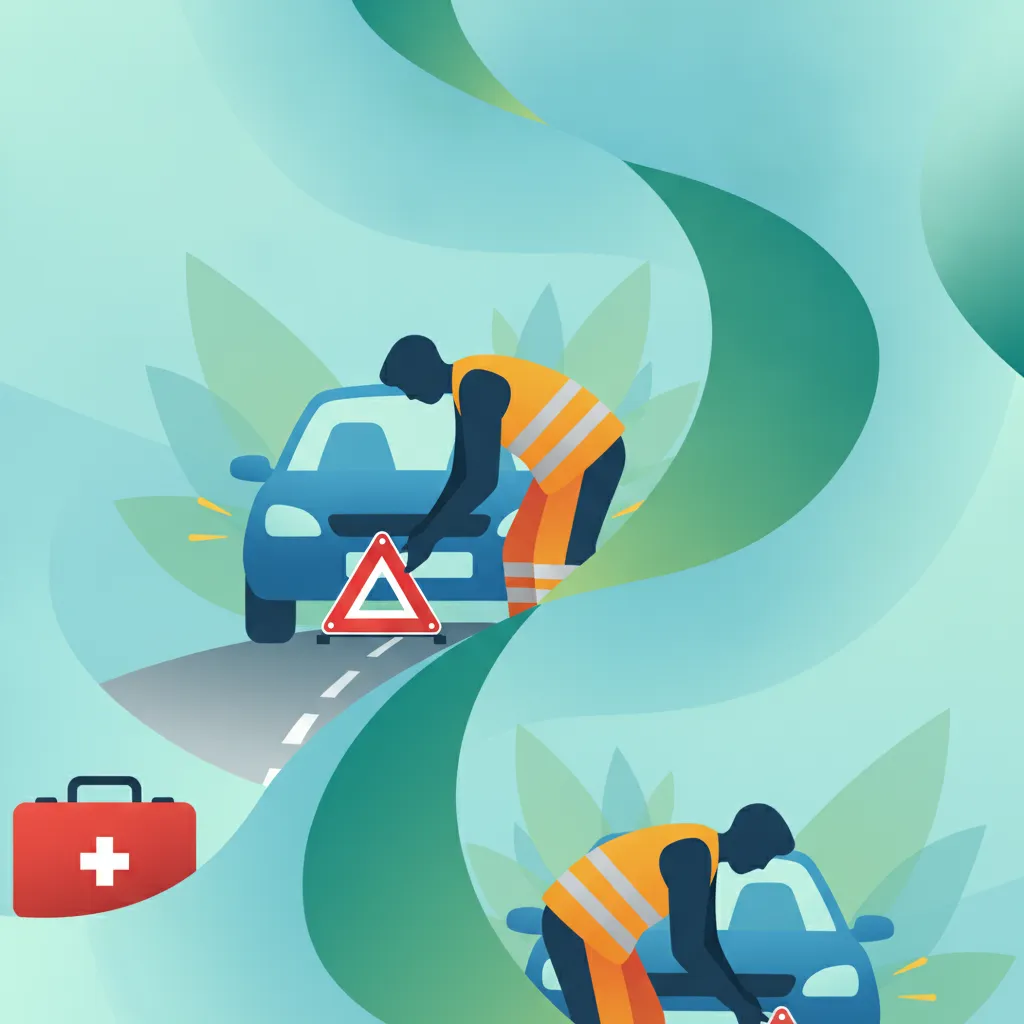
This lesson covers the legal and moral obligation to provide first aid at an accident scene. It outlines basic, life-saving measures such as assessing an injured person's condition, placing them in the recovery position, and the principles of controlling bleeding. The lesson also explains the correct placement of the warning triangle ('Warndreieck') to effectively warn oncoming traffic of the hazard ahead.
This lesson outlines the proper response to an accident involving a heavy vehicle, including immediate actions and contacting emergency services. It details the legal obligations for reporting accidents and cooperating with police investigations. The content also covers documentation requirements for insurance claims and the importance of preserving the accident scene.
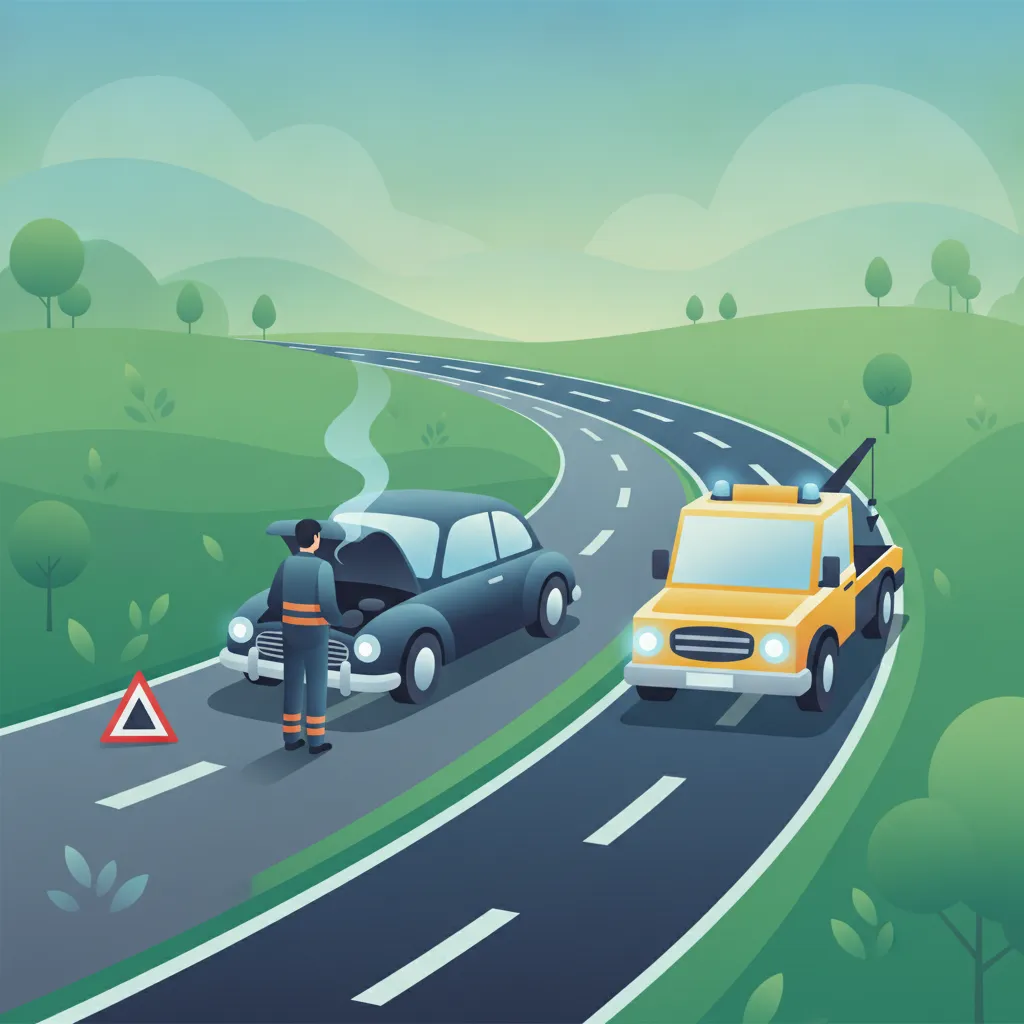
This lesson provides clear, actionable steps for managing a breakdown or being involved in an accident. It covers how to safely move the vehicle off the road, use warning signals, and secure the area. The procedure for contacting roadside assistance and the authorities is also explained in detail.
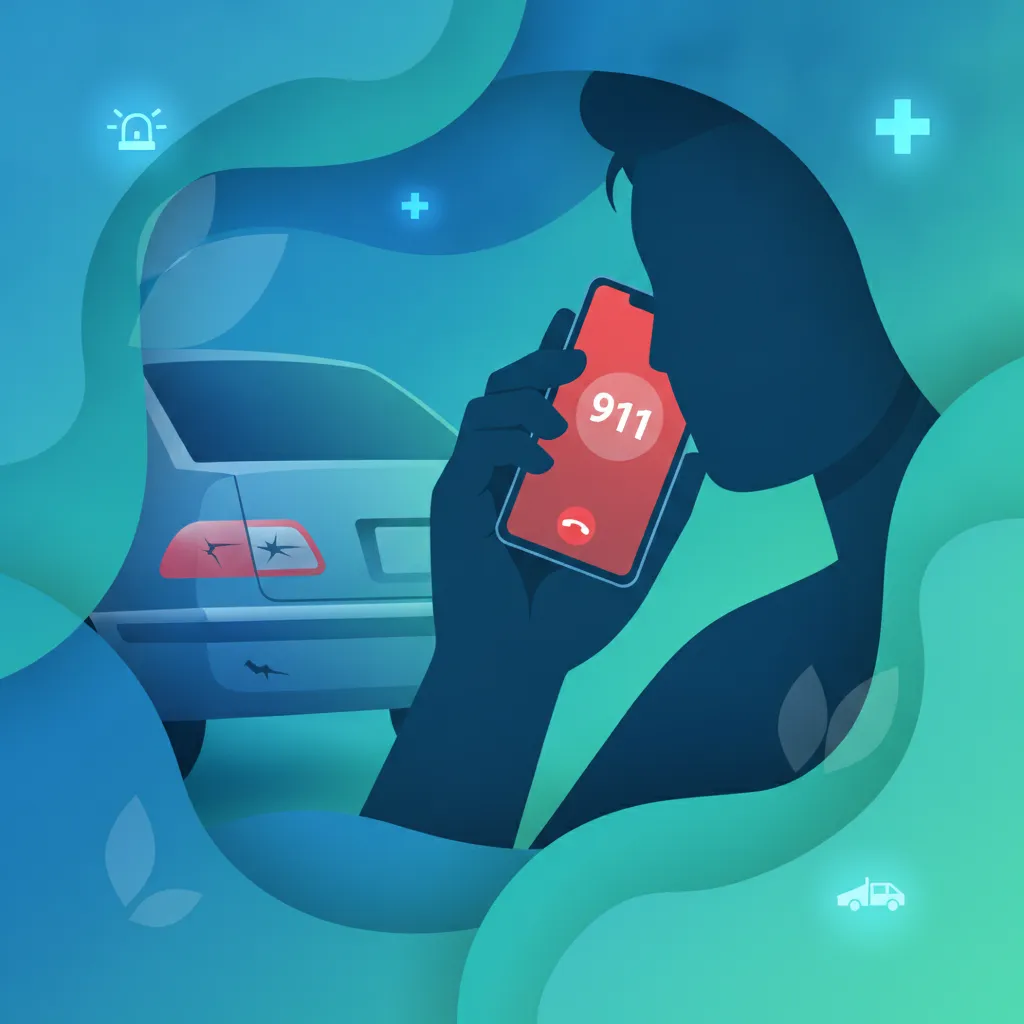
This lesson covers the essential actions to take at an accident scene, focusing on personal safety and providing basic first aid. It explains how to make an effective emergency call to 112 and what information to provide. The lesson also details the legal requirements for documenting and reporting an accident for police and insurance purposes.
This lesson covers the appropriate steps to take in the event of a vehicle breakdown or an accident. It details procedures for safely moving the motorcycle out of traffic, making the area visible with hazard warnings, and contacting emergency services. The content emphasizes personal safety and the correct protocol for managing the scene until professional help arrives.

This lesson outlines a clear, systematic procedure for managing a vehicle breakdown safely and efficiently. It covers immediate actions such as activating hazard lights, placing a warning triangle, and moving the vehicle to a safe location if possible. Learners will understand how to communicate the situation to passengers, decide if an evacuation is necessary, and contact the appropriate breakdown services for assistance.
Learn about your legal responsibilities following a traffic accident in Germany. This lesson details how to correctly exchange insurance information and understand your reporting obligations as per German driving law.
This lesson outlines the proper response to an accident involving a heavy vehicle, including immediate actions and contacting emergency services. It details the legal obligations for reporting accidents and cooperating with police investigations. The content also covers documentation requirements for insurance claims and the importance of preserving the accident scene.
This lesson focuses on the legal responsibilities and duties of a vehicle operator according to German traffic law, primarily the StVO. It covers the obligation to drive safely, the rules of conduct at an accident scene, and the legal consequences of traffic violations. Understanding these principles is crucial for maintaining road safety and avoiding penalties such as fines, points, or driving bans.

This lesson informs riders about the legal ramifications of dangerous riding and traffic violations under German law. It outlines potential penalties, including fines, points, and license suspension, as well as the impact on insurance. The content also provides a step-by-step guide on the correct procedures for reporting an accident to the police and documenting the scene for legal and insurance purposes.
This lesson provides clear, actionable steps for managing a breakdown or being involved in an accident. It covers how to safely move the vehicle off the road, use warning signals, and secure the area. The procedure for contacting roadside assistance and the authorities is also explained in detail.
This lesson covers the essential actions to take at an accident scene, focusing on personal safety and providing basic first aid. It explains how to make an effective emergency call to 112 and what information to provide. The lesson also details the legal requirements for documenting and reporting an accident for police and insurance purposes.
This lesson covers the legal and moral obligation to provide first aid at an accident scene. It outlines basic, life-saving measures such as assessing an injured person's condition, placing them in the recovery position, and the principles of controlling bleeding. The lesson also explains the correct placement of the warning triangle ('Warndreieck') to effectively warn oncoming traffic of the hazard ahead.
This lesson covers the appropriate steps to take in the event of a vehicle breakdown or an accident. It details procedures for safely moving the motorcycle out of traffic, making the area visible with hazard warnings, and contacting emergency services. The content emphasizes personal safety and the correct protocol for managing the scene until professional help arrives.
Find clear answers to common questions learners have about Accident Procedures and Emergency Calls. Learn how the lesson is structured, which driving theory objectives it supports, and how it fits into the overall learning path of units and curriculum progression in Germany. These explanations help you understand key concepts, lesson flow, and exam focused study goals.
Immediately turn on your hazard lights, put on your high-visibility vest before exiting the vehicle, and ensure your own safety before moving to secure the accident scene with a warning triangle.
You must call the police if there are injuries, if the other party leaves the scene, if you cannot agree on insurance details, or if the accident involves significant property damage.
Under German law, you are required to provide your name, address, and insurance details to the other involved parties to ensure the settlement of potential claims.
Place the warning triangle at a sufficient distance to give other drivers time to react. In city traffic, 50 meters is standard, on country roads about 100 meters, and on the Autobahn, it should be at least 150 to 200 meters away.
Begin your targeted revision now. Use our practice search to quickly find specific German driving theory questions. Filter by StVO rules, road signs, or hazard perception to create your focused study plan. Master challenging areas and prepare confidently for your theoretical driving test.