
This lesson introduces the specific legal framework governing novice drivers in Germany during their initial two-year probationary period. You will learn about strict behavioral requirements, including the zero-tolerance alcohol policy, and how various traffic violations impact your license status and lead to mandatory corrective measures.
Lesson content overview
As a new driver in Germany, obtaining your Category B driving license is an exciting milestone. However, this achievement comes with a unique set of responsibilities and stricter regulations during your initial two-year probationary period, known in German as the "Probezeit." This period is designed to help novice drivers gain essential experience, develop safe habits, and understand the profound implications of traffic laws. It is a critical phase where adherence to rules is paramount, as violations carry amplified consequences.
This lesson, part of your German Driving License Theory – Comprehensive Category B Course, will thoroughly explain the specific regulations governing the probationary period. We will cover everything from the strict zero-percent alcohol limit to the classification of novice driver offenses, the mandatory advanced seminar, and the potential extension of your probationary status. Understanding these rules is not just about avoiding penalties; it's about fostering safe driving practices from the very beginning.
The probationary period, or "Probezeit," is a mandatory two-year phase that begins the moment you receive your German Category B driver's license. This legal framework applies to all new drivers, regardless of their age or prior driving experience in other countries. Its primary objective is to monitor and guide novice drivers during their initial, most vulnerable period on the road.
This heightened scrutiny reflects the understanding that new drivers, despite passing their exams, lack real-world experience. They may be more prone to misjudging situations, reacting slower, or taking unnecessary risks. By imposing stricter rules, the German traffic authorities aim to reduce accident rates among beginners, promoting a safer driving environment for everyone. During these two years, drivers must strictly adhere to all traffic laws, with particular emphasis on certain key regulations.
During the probationary period, specific rules and consequences apply that differ significantly from those for experienced drivers. These regulations are designed to provide a clear framework for responsible driving and to implement corrective measures when rules are broken.
One of the most crucial and non-negotiable rules for probationary drivers is the absolute zero alcohol tolerance, or "Nullpromillegrenze." This means that throughout the entire two-year probationary period, you must not have any measurable blood alcohol content (BAC) while operating a motor vehicle.
The strict legal requirement for probationary drivers to have a blood alcohol content (BAC) of 0.0‰ (zero point zero per mille) at all times while driving.
Even a minimal amount of alcohol, which might not be considered illegal for experienced drivers (who generally have a limit of 0.5‰, or 0.3‰ if impaired), is strictly forbidden for beginners. The rationale behind this stringent rule is clear: even small amounts of alcohol can impair judgment, reaction time, and coordination, all of which are critical for new drivers still developing their skills and confidence. Any detectable alcohol in your system while driving during your Probezeit will result in severe consequences, often including immediate revocation of your license.
For probationary drivers, there is absolutely no permissible amount of alcohol before or while driving. Even one small drink can lead to detection and serious penalties. Always choose complete abstinence if you plan to drive.
Traffic offenses committed during the probationary period are categorized into two main groups: A-Level offenses ("A-Verstöße") and B-Level offenses ("B-Verstöße"). This classification system determines the severity of the consequences and the type of remedial action required.
A minor traffic violation committed during the probationary period, typically involving less severe penalties such as fines and warning points. Multiple A-Level offenses can accumulate to trigger more serious consequences.
A serious traffic violation committed during the probationary period, resulting in stricter penalties, often including a mandatory advanced seminar, a probationary period extension, and potentially a license suspension.
A-Level offenses are considered serious violations. Examples include:
B-Level offenses are considered less serious violations, though still significant. Examples include:
The distinction is critical because the consequences differ significantly. One A-Level offense or two B-Level offenses will trigger the most severe measures for probationary drivers.
If a probationary driver commits a serious traffic violation (one A-Level offense or two B-Level offenses), they will typically be mandated to attend an Advanced Seminar ("Aufbauseminar"). This is a remedial course designed to educate drivers on safe driving practices and to address the specific behaviors that led to their violation.
A mandatory remedial course for probationary drivers who have committed a serious traffic violation (one A-Level offense or two B-Level offenses). Attendance is required to retain driving privileges.
The seminar usually consists of multiple sessions, often held over several weeks, where participants discuss traffic rules, analyze their own driving behavior, and work on improving their safety awareness. It is not an optional course; failure to attend and successfully complete the Aufbauseminar within the specified timeframe will lead to the suspension or revocation of the driver's license. The goal is to provide a structured educational intervention rather than just punishment, promoting long-term behavioral change.
In addition to the mandatory Advanced Seminar, committing a serious violation (one A-Level offense or two B-Level offenses) will also result in an extension of your probationary period ("Probezeitverlängerung"). This means that your initial two-year probationary period will be extended by an additional two years, making it a total of four years.
The legal extension of the probationary period by an additional two years, typically imposed as a consequence of committing a serious traffic violation (one A-Level or two B-Level offenses).
During this extended period, all original probationary restrictions and heightened scrutiny remain in effect. This consequence serves as a further deterrent against risky driving and provides a longer timeframe for authorities to monitor drivers who have already demonstrated a propensity for violations. It emphasizes that obtaining a license is a privilege that requires ongoing responsible conduct, especially for those still in the early stages of their driving career.
New drivers often harbor misconceptions about the probationary period, which can lead to serious legal repercussions. Understanding these common pitfalls is crucial for navigating your Probezeit successfully.
The core rules of the probationary period remain consistent regardless of external factors, but understanding how different contexts can influence your driving and risk of violation is key to prevention.
The probationary period is more than just a set of rules; it's a foundational phase for developing into a safe and responsible driver. The German system's approach, with its emphasis on education through the Aufbauseminar, aims to instil lasting good habits. By understanding and respecting these restrictions, you contribute not only to your own safety but also to the safety of all road users.
Embracing the principles of defensive driving, maintaining situational awareness, and consistently adhering to traffic laws are vital. The strict alcohol limit and the tiered violation system serve as powerful reminders that driving is a complex task requiring full attention and an unimpaired state of mind. Successfully completing your probationary period without incident is a testament to your commitment to safe and responsible driving, paving the way for a lifetime of confident and lawful road use.
These scenarios illustrate how the probationary period rules are applied in real-life situations.
Scenario: Julian, a new driver in his first year of Probezeit, attends a small gathering. He has one light beer, convinced that a low amount is acceptable. He then drives his car home.
Scenario: Maria, six months into her probationary period, is running late for an appointment and exceeds the speed limit by 18 km/h in an urban area. She receives a speeding ticket.
Scenario: Thomas, a probationary driver, uses his smartphone to check navigation during a short stop at a red light. He picks up the phone but immediately puts it down as the light changes. A police officer observes this.
Scenario: Lena, who has been driving for 1.5 years on probation, is required to attend an Aufbauseminar after receiving an A-Level offense for running a red light. She repeatedly postpones her attendance.
The German probationary period (Probezeit) is a crucial two-year phase for all new Category B drivers, designed to promote safe driving and experience gain. It features a strict zero-percent alcohol limit (Nullpromillegrenze), where any detectable alcohol leads to severe penalties, including license revocation. Traffic violations are categorized as A-Level (serious) or B-Level (minor) offenses. Committing one A-Level or two B-Level offenses triggers mandatory attendance at an Advanced Seminar (Aufbauseminar) and an extension of the probationary period by an additional two years. Adherence to these rules is paramount for maintaining driving privileges, fostering responsible behavior, and ensuring road safety for everyone.
The German probationary period (Probezeit) is a mandatory two-year phase for all new Category B drivers, imposing stricter rules than experienced drivers face. A strict zero alcohol tolerance (Nullpromillegrenze) means any detectable blood alcohol content results in severe penalties including immediate license revocation. Traffic violations are classified as A-Level (serious) including speeding >20 km/h, red light violations, and mobile phone use, or B-Level (minor) including speeding ≤20 km/h and parking violations. One A-Level offense or two B-Level offenses triggers mandatory attendance at an Advanced Seminar (Aufbauseminar) and extends the probationary period by an additional two years. These heightened requirements are designed to instil safe driving habits and protect both novice drivers and other road users during the critical early driving phase.
A short set of high-value points that capture the most important learning from this lesson.
The probationary period (Probezeit) lasts exactly two years and begins the moment you receive your German Category B driving license.
The zero alcohol tolerance (Nullpromillegrenze) means any detectable blood alcohol content (0.0‰) leads to severe penalties including immediate license revocation.
A-Level offenses are serious violations including speeding by more than 20 km/h, running red lights, mobile phone use, and any alcohol consumption.
B-Level offenses are minor violations such as exceeding speed limits by up to 20 km/h, parking violations, and faulty lights.
One A-Level offense or two B-Level offenses automatically triggers mandatory Aufbauseminar attendance and extends probation by an additional two years.
Explore all units and lessons included in this driving theory course.
Probezeit duration: two years from license issuance, applies to all new drivers regardless of age or prior foreign driving experience.
Nullpromillegrenze: zero tolerance for alcohol, 0.0‰ BAC mandatory for all probationary drivers at all times.
A-Level triggers: one serious offense (speeding >20 km/h, red light, phone use, alcohol, dangerous overtaking) = Aufbauseminar + 2-year extension.
B-Level accumulation: two minor offenses (speeding ≤20 km/h, parking, faulty lights) together equal one A-Level offense in consequences.
Aufbauseminar is mandatory: ignoring the requirement leads to license suspension until the seminar is completed.
Assuming a small amount of alcohol is tolerable; even one beer can register above 0.0‰ and result in license revocation for probationary drivers.
Believing minor speeding is tolerated or overlooked; exceeding speed limits by even small amounts is recorded as an offense during Probezeit.
Thinking hands-free phone use or brief phone interaction at traffic lights is permissible; using a mobile phone while driving is an A-Level offense.
Assuming serious consequences only follow accidents; committing an A-Level offense or accumulating two B-Level offenses triggers mandatory seminars regardless of accident involvement.
Delaying or skipping Aufbauseminar attendance after receiving an official notice; participation is mandatory and non-compliance leads to license suspension.
Lesson content overview
A short set of high-value points that capture the most important learning from this lesson.
The probationary period (Probezeit) lasts exactly two years and begins the moment you receive your German Category B driving license.
The zero alcohol tolerance (Nullpromillegrenze) means any detectable blood alcohol content (0.0‰) leads to severe penalties including immediate license revocation.
A-Level offenses are serious violations including speeding by more than 20 km/h, running red lights, mobile phone use, and any alcohol consumption.
B-Level offenses are minor violations such as exceeding speed limits by up to 20 km/h, parking violations, and faulty lights.
One A-Level offense or two B-Level offenses automatically triggers mandatory Aufbauseminar attendance and extends probation by an additional two years.
Explore all units and lessons included in this driving theory course.
Probezeit duration: two years from license issuance, applies to all new drivers regardless of age or prior foreign driving experience.
Nullpromillegrenze: zero tolerance for alcohol, 0.0‰ BAC mandatory for all probationary drivers at all times.
A-Level triggers: one serious offense (speeding >20 km/h, red light, phone use, alcohol, dangerous overtaking) = Aufbauseminar + 2-year extension.
B-Level accumulation: two minor offenses (speeding ≤20 km/h, parking, faulty lights) together equal one A-Level offense in consequences.
Aufbauseminar is mandatory: ignoring the requirement leads to license suspension until the seminar is completed.
Assuming a small amount of alcohol is tolerable; even one beer can register above 0.0‰ and result in license revocation for probationary drivers.
Believing minor speeding is tolerated or overlooked; exceeding speed limits by even small amounts is recorded as an offense during Probezeit.
Thinking hands-free phone use or brief phone interaction at traffic lights is permissible; using a mobile phone while driving is an A-Level offense.
Assuming serious consequences only follow accidents; committing an A-Level offense or accumulating two B-Level offenses triggers mandatory seminars regardless of accident involvement.
Delaying or skipping Aufbauseminar attendance after receiving an official notice; participation is mandatory and non-compliance leads to license suspension.
Explore search topics learners often look for when studying Beginner Driver Restrictions (Probationary Period). These topics reflect common questions about road rules, driving situations, safety guidance, and lesson level theory preparation for learners in Germany.
Browse additional driving theory lessons that cover connected traffic rules, road signs, and common driving situations related to this topic. Improve your understanding of how different rules interact across everyday traffic scenarios.
Understand the implications of A- and B-level traffic violations for novice drivers in Germany's 'Probezeit'. Learn about mandatory advanced seminars and extended probation periods to maintain your driving licence.
This lesson provides an overview of the German system for penalizing traffic offenses. It explains the catalogue of fines ('Bußgeldkatalog'), the system of demerit points ('Punkte in Flensburg') for more serious violations, and the conditions under which a temporary driving ban ('Fahrverbot') or a full revocation of the license can be imposed. Understanding these consequences reinforces the importance of lawful driving.

This lesson covers the strict laws in Germany concerning driving under the influence of alcohol, drugs, or impairing medication. It details the legal blood alcohol concentration (BAC) limits for drivers, with a specific focus on the absolute zero-tolerance policy for drivers in their probationary period and those under 21. The severe legal penalties, including fines, license suspension, and the medical-psychological assessment (MPU), are also explained.
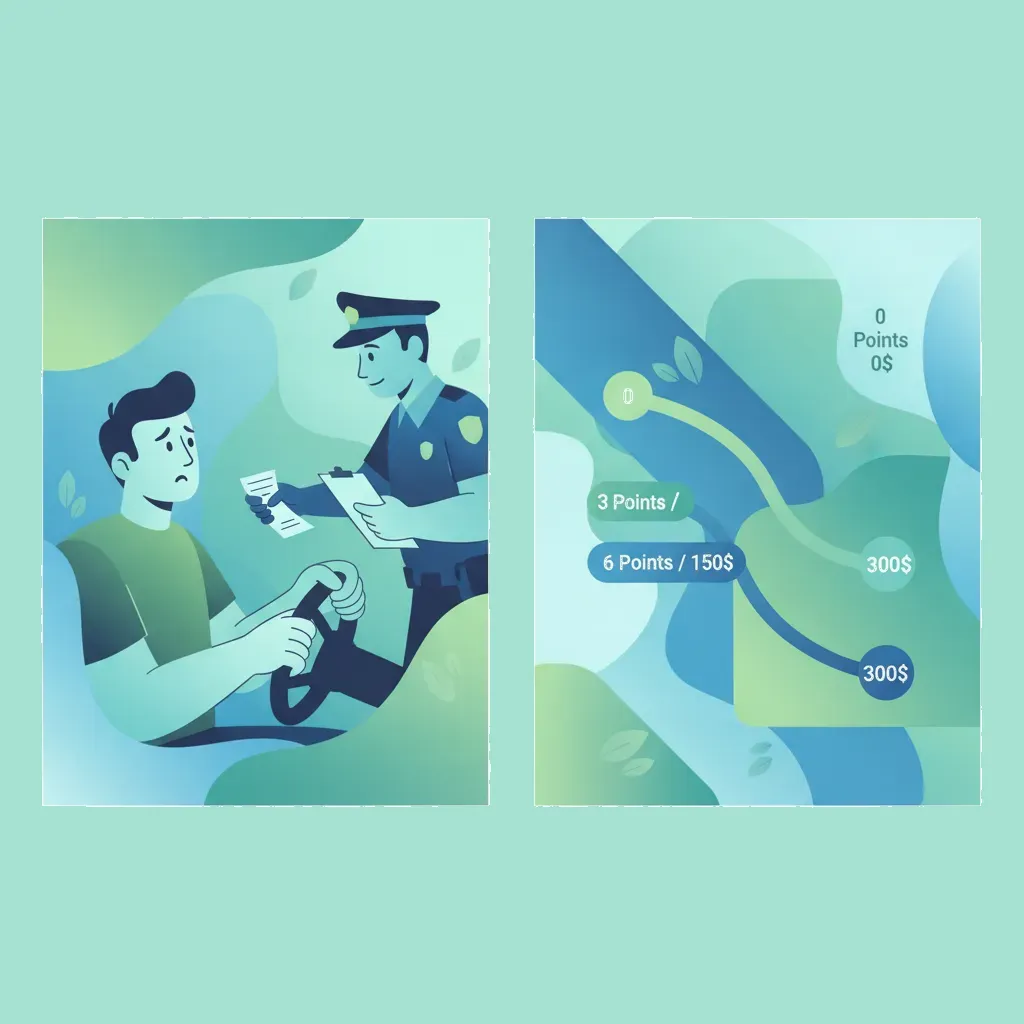
This lesson explains the German catalogue of fines (Bußgeldkatalog) and the points system for traffic violations. It details which offenses lead to fines, points in Flensburg, or even licence revocation. Understanding these consequences reinforces the importance of adhering to all traffic laws.

This lesson focuses on the legal responsibilities and duties of a vehicle operator according to German traffic law, primarily the StVO. It covers the obligation to drive safely, the rules of conduct at an accident scene, and the legal consequences of traffic violations. Understanding these principles is crucial for maintaining road safety and avoiding penalties such as fines, points, or driving bans.
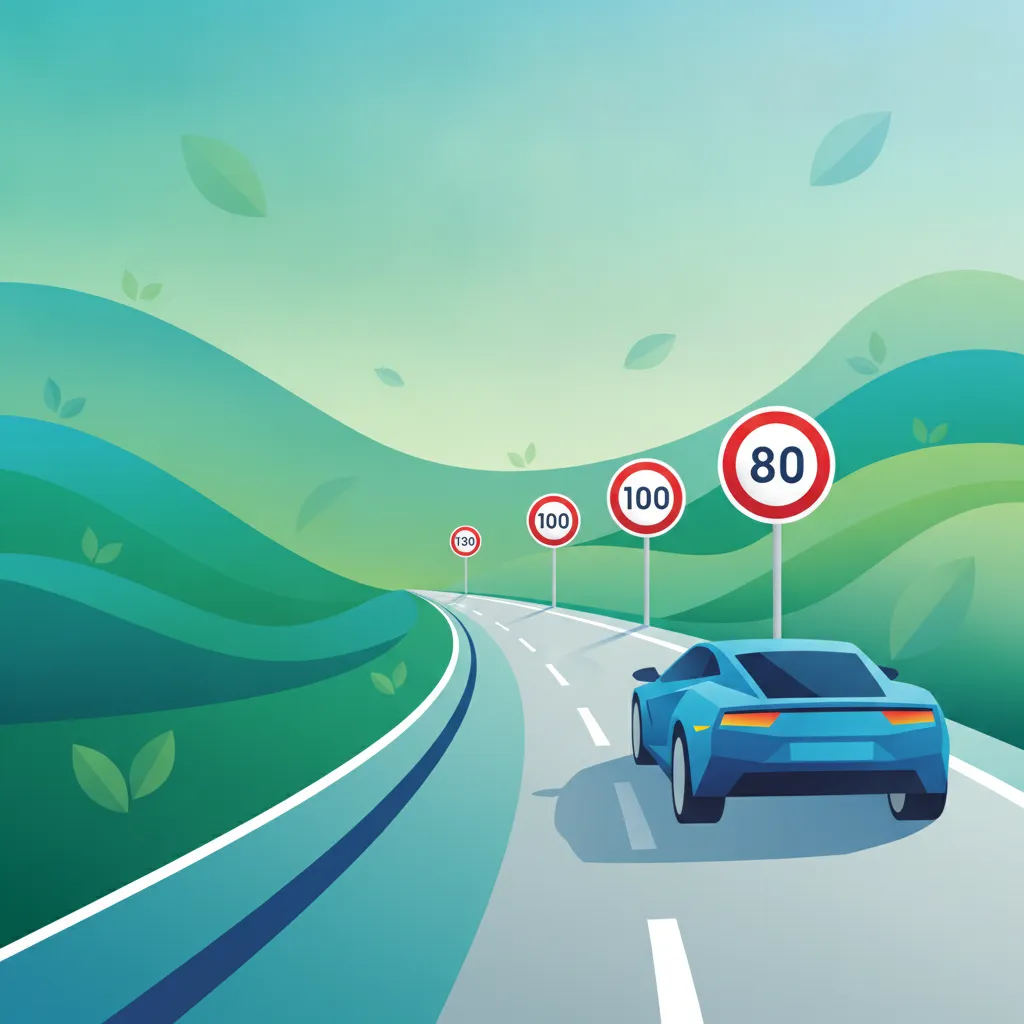
This lesson details the statutory speed limits in Germany, including the standard limits within built-up areas, on rural roads, and on the Autobahn. It emphasizes that the posted limit is a maximum and that drivers must always adapt their speed to traffic, weather, and visibility conditions. The concept of the recommended speed ('Richtgeschwindigkeit') on the Autobahn is also explained.
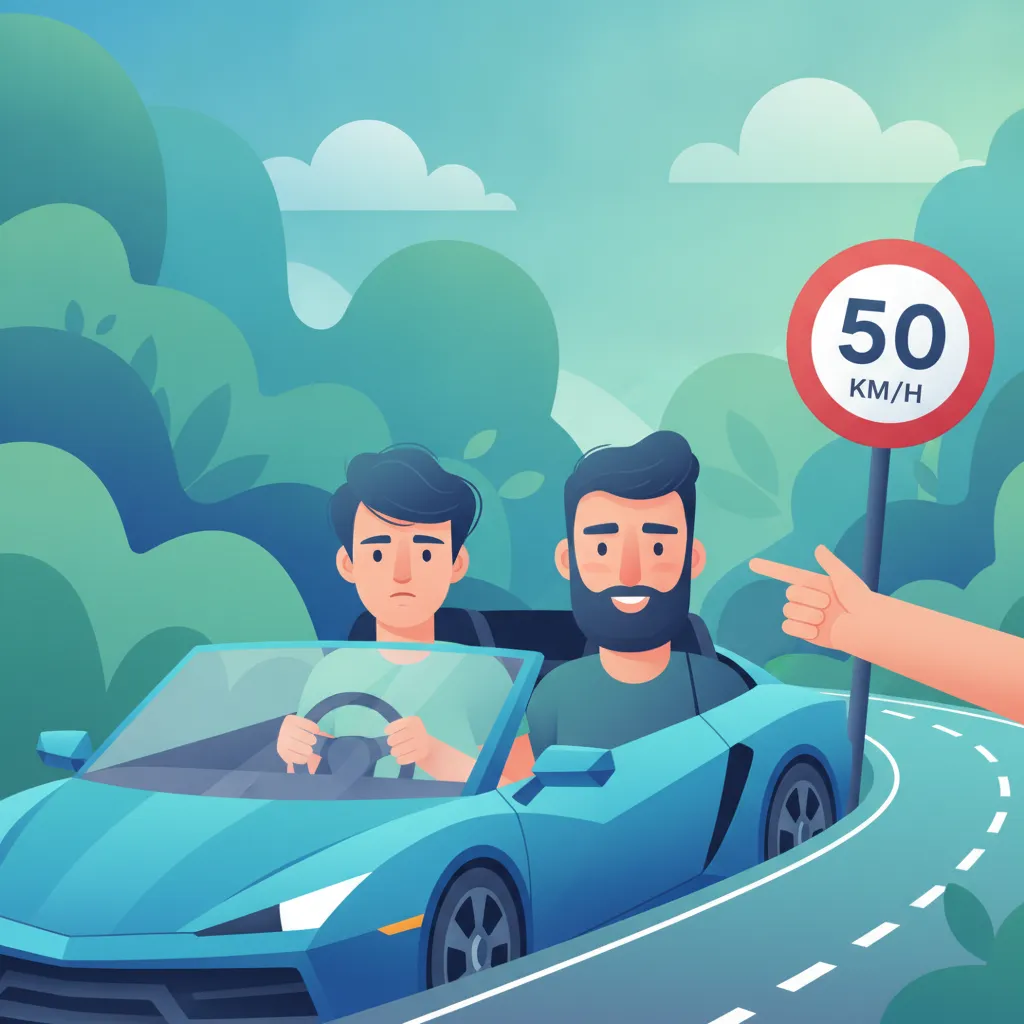
This lesson explains the specific rules for two special German driving license programs: BF17 (Accompanied Driving at 17) and the B197 extension. It details the requirements for young drivers and their supervisors under the BF17 program. Furthermore, it explains how the B197 regulation allows drivers trained on automatic vehicles to also operate manual transmission cars after completing specific training.

This lesson covers the rules and safety considerations for overtaking ('Überholen'). It explains where overtaking is prohibited and how to assess whether it is safe and necessary to do so. The procedure for checking traffic, signaling, moving out, passing, and safely returning to the lane is detailed, with a strong focus on judging the speed and distance of oncoming traffic.
Learn about the strict zero-percent alcohol limit that applies to new drivers during their two-year probationary period ('Probezeit') in Germany. Understand the critical importance of this rule for novice drivers.
This lesson covers the strict laws in Germany concerning driving under the influence of alcohol, drugs, or impairing medication. It details the legal blood alcohol concentration (BAC) limits for drivers, with a specific focus on the absolute zero-tolerance policy for drivers in their probationary period and those under 21. The severe legal penalties, including fines, license suspension, and the medical-psychological assessment (MPU), are also explained.
This lesson explains the specific rules for two special German driving license programs: BF17 (Accompanied Driving at 17) and the B197 extension. It details the requirements for young drivers and their supervisors under the BF17 program. Furthermore, it explains how the B197 regulation allows drivers trained on automatic vehicles to also operate manual transmission cars after completing specific training.
This lesson covers the general permissions and limitations that come with holding a German Category B driving license. It clarifies the conditions for license eligibility, including medical fitness and mandatory vehicle insurance coverage. The content also addresses potential restrictions, the process for obtaining special permits, and the circumstances that can lead to a temporary or permanent driving ban.
This lesson provides an overview of the German system for penalizing traffic offenses. It explains the catalogue of fines ('Bußgeldkatalog'), the system of demerit points ('Punkte in Flensburg') for more serious violations, and the conditions under which a temporary driving ban ('Fahrverbot') or a full revocation of the license can be imposed. Understanding these consequences reinforces the importance of lawful driving.
Find clear answers to common questions learners have about Beginner Driver Restrictions (Probationary Period). Learn how the lesson is structured, which driving theory objectives it supports, and how it fits into the overall learning path of units and curriculum progression in Germany. These explanations help you understand key concepts, lesson flow, and exam focused study goals.
The standard probationary period, known as Probezeit, lasts for two years starting from the date you receive your driving licence.
For drivers in their probationary period (and anyone under 21), there is a strict zero-tolerance alcohol policy. You must not have any alcohol in your system while operating a vehicle.
A-level violations are considered serious traffic offenses, such as hit-and-run or speeding significantly. B-level violations are less serious, such as using a phone while driving, but committing multiple B-level offenses can still result in mandatory seminars.
Committing serious offenses often results in an extension of your probationary period to four years and requires you to attend a mandatory advanced seminar (Aufbauseminar) at your own expense.
Begin your targeted revision now. Use our practice search to quickly find specific German driving theory questions. Filter by StVO rules, road signs, or hazard perception to create your focused study plan. Master challenging areas and prepare confidently for your theoretical driving test.