
Navigating Iceland's diverse roads requires a clear understanding of speed limits. This lesson breaks down the speed regulations for different road types and conditions, ensuring you know how fast you can safely and legally drive. It's a crucial part of Unit 6, preparing you for the Icelandic Transport Authority's theory exam.
Lesson content overview
Navigating the roads of Iceland safely and legally requires a thorough understanding of speed limits, which vary significantly by road type, environmental conditions, and specific zones. This lesson, part of the Official Icelandic Driving License B Theory Course, provides a detailed overview of speed regulations, from statutory maximums to dynamic adjustments, ensuring you are well-prepared for your theory exam and real-world driving. Adhering to these limits is not just a legal obligation; it is a fundamental aspect of road safety, directly influencing stopping distances, collision risk, and the severity of potential accidents.
Speed limits are more than just numbers on a sign; they are carefully calculated maximum speeds established to ensure the safety of all road users, maintain efficient traffic flow, and minimize environmental impact. These limits reflect expert assessments of road design, surface type, typical vehicle types, and historical accident data.
Driving at an appropriate speed is paramount for road safety. The kinetic energy of a moving vehicle increases with the square of its speed. This means that even a small increase in speed can dramatically increase stopping distance and the force of impact in a collision. For instance, traveling at 100 km/h instead of 80 km/h on a motorway significantly extends the distance needed to stop, reducing the margin for error and increasing the likelihood of severe injuries or fatalities in an accident. Speed limits are designed to keep kinetic energy within manageable bounds, allowing drivers sufficient time to react and brake effectively under normal conditions.
The Icelandic Transport Authority (Samgöngustofa) sets and enforces speed limits to create a predictable and safe driving environment. Exceeding a posted speed limit is a direct violation of traffic law, regardless of a driver's perceived skill or vehicle capabilities. These regulations provide a clear basis for enforcement, aiming to deter dangerous driving behaviors. While some tolerance might exist in enforcement thresholds to account for minor measurement inaccuracies, drivers are always expected to stay at or below the posted limit. This principle builds upon earlier lessons on traffic signs and driver responsibilities, emphasizing the mandatory nature of these rules.
Iceland's diverse landscapes and infrastructure necessitate varying speed limits to suit different driving environments. It is crucial to recognize the default limits for common road types, as these form the baseline for safe driving.
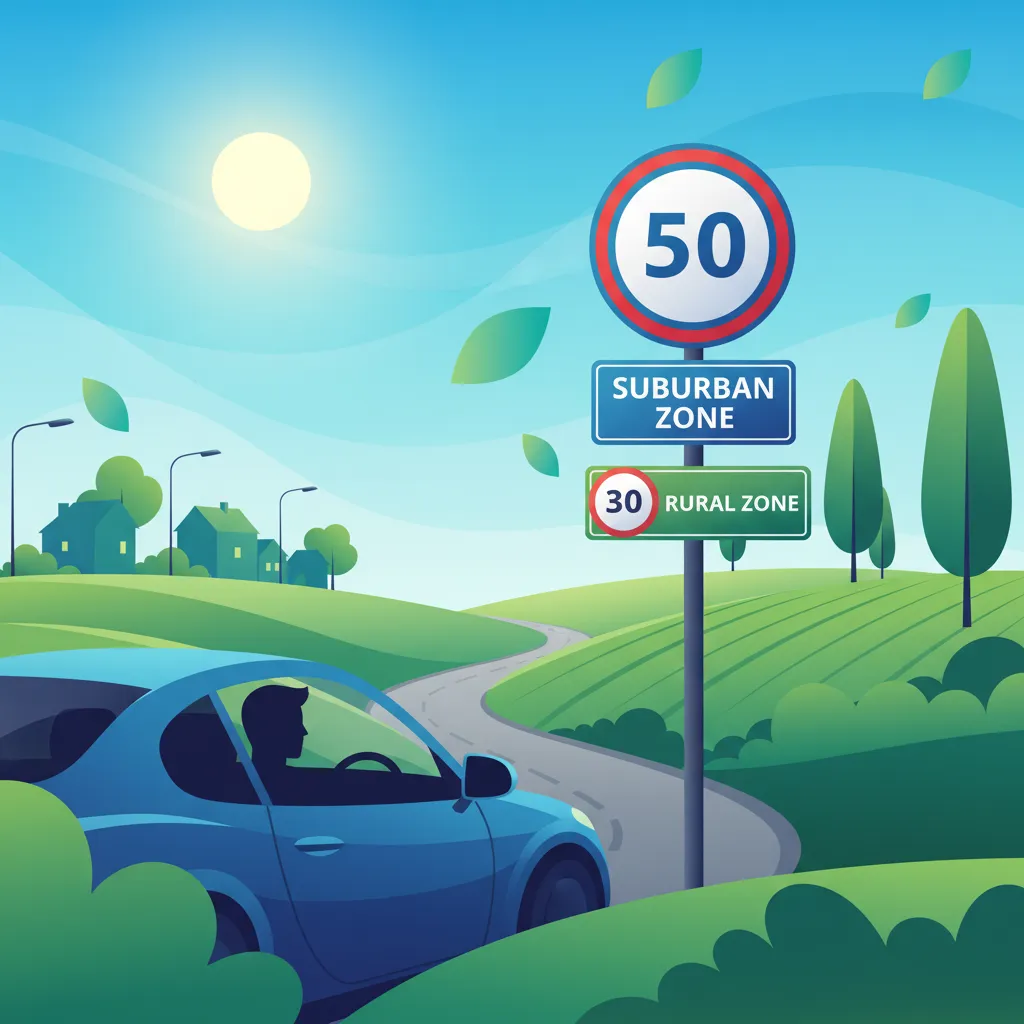
In urban areas and built-up zones, where pedestrian and cyclist traffic is common, the default speed limit is generally 50 km/h. However, this can be further reduced in specific sensitive areas to enhance safety for vulnerable road users. For example, residential streets, areas around schools, hospitals, and busy commercial districts often have limits of 30 km/h. Drivers must be particularly vigilant for signs indicating these reduced limits.
Outside of urban centers, on open rural roads that are not motorways, the standard speed limit is typically 80 km/h. These roads often have two lanes (one in each direction) and may feature varying geometry, bends, and occasional blind spots. While 80 km/h is the general rule, drivers must always assess the actual road conditions, visibility, and potential hazards to determine if a lower speed is more appropriate.
On Iceland's motorways, also known as Ríkbraut or the Ring Road (Hringvegur) in its high-capacity sections, the default speed limit is 90 km/h. On certain upgraded sections designed for higher speeds and traffic volumes, this limit may be increased to 100 km/h where specific signage indicates. Motorways are characterized by multiple lanes, controlled access, and generally separated opposing traffic, allowing for higher speeds under optimal conditions.
Tunnels and longer bridges present unique driving challenges due to limited visibility, enclosed environments, and potentially altered road surfaces. While the speed limit in these structures often mirrors the surrounding road type, it is common for limits to be reduced by 10 km/h or more. For example, a tunnel on an 80 km/h rural road might have a posted limit of 70 km/h. This reduction accounts for reduced sightlines, the potential for sudden changes in light, and the need for increased caution. Always observe specific signage at the entrance and within tunnels.
Iceland has a significant network of gravel roads, particularly in rural and highland areas. These unpaved surfaces dramatically affect vehicle handling and stopping distances. While the default rural limit of 80 km/h might technically apply if no other sign is present, it is crucial to recognize that gravel roads often have lower posted limits, typically 60 km/h or even 50 km/h, depending on the surface condition, width, and traffic volume. Even if the limit is 80 km/h, common sense and safe driving practice dictate reducing speed significantly below the maximum, especially in bends, when encountering other vehicles (to avoid stone chips), or in dusty conditions. Loose gravel greatly reduces tire adhesion compared to paved roads.
Beyond the standard road types, special zones such as parking lots, ferry terminals, industrial areas, and even specific urban developments may have their own unique, and often very low, speed limits. These can be as low as 20 km/h to ensure safety in areas with high pedestrian activity, limited maneuvering space, or specific operational requirements. Always look for signage in these environments.
Icelandic roads frequently experience dynamic changes due to weather or temporary conditions. To address these, variable and temporary speed limits are employed, overriding the permanent limits to ensure safety.
Variable Speed Limits (VSL) are dynamically displayed on electronic overhead signs along certain road sections, particularly on major routes and in areas prone to adverse weather. These limits can be adjusted in real-time based on current conditions such as snow, ice, heavy rain, fog, or high winds. When a VSL sign is active, the displayed limit supersedes any permanent speed limit for that road segment.
How VSL Works: Weather stations and traffic sensors feed data to a central system, which then triggers the appropriate speed limit display. For example, an 80 km/h rural road might be reduced to 60 km/h during a snowstorm to mitigate the reduced traction and visibility. Drivers must obey the displayed limit, as ignoring it is a serious violation and significantly increases accident risk. These systems are critical for maintaining safety during Iceland's rapidly changing weather.
Always obey the displayed variable speed limit. The permanent speed limit does not apply when a lower variable speed limit is active, even if conditions appear to improve slightly.
Temporary speed reductions are implemented for short durations due to specific circumstances like road construction, maintenance work, or special events (e.g., festivals, parades, marathons). These limits are indicated by distinct orange-colored temporary signs, often accompanied by warning symbols or flaggers.
Common Scenarios for Temporary Limits:
It is mandatory to adhere to these temporary limits, as they are put in place to ensure safety in significantly altered environments.
Accurate interpretation of speed limit signs is essential for compliance and safe driving. While most signs are universally recognizable, understanding their specific context and variations in Iceland is key.
The most common speed limit sign is a white circular sign with a red border and black numbers indicating the maximum permissible speed in kilometers per hour.
These signs apply from the point they are displayed until an "End of Speed Limit" sign, a different speed limit sign, or another sign (like entering an urban area) implies a new default limit.
An "End of Speed Limit" sign indicates that a specific, previously posted speed limit no longer applies. It is a white circular sign with a black diagonal line through it, often with the numbers of the previous limit in black.
Upon passing this sign, drivers must revert to the default speed limit for the road type they are currently on. For example, if exiting a 90 km/h motorway section marked with an "End of Speed Limit" sign into a rural area, the default 80 km/h limit would apply, or 50 km/h if entering an urban area.
Icelandic authorities utilize various methods to monitor vehicle speeds and enforce limits, ensuring compliance and contributing to overall road safety. Drivers should be aware of these devices and their legal implications.
Evidence gathered from calibrated speed monitoring devices is legally admissible in Icelandic courts. Drivers who receive a fine based on such evidence can contest it, but the burden of proof typically lies with the driver to demonstrate equipment miscalibration or procedural errors. It is the driver's responsibility to ensure their vehicle's speedometer is accurate and to always drive within the posted limits.
Violating speed limits in Iceland carries a range of penalties that escalate with the degree of excess speed. These consequences are designed to deter speeding and reinforce the importance of safe driving.
Speeding offenses are typically met with fines and, for more severe violations, demerit points on the driver's license.
For reckless or extreme speeding, more severe penalties apply:
These penalties underscore the legal system's commitment to discouraging dangerous driving behavior.
Beyond legal penalties, speeding violations can also have a negative impact on vehicle insurance. Insurance providers may increase premiums for drivers with a history of speeding tickets, viewing them as higher risk. In the event of an accident caused by speeding, insurance coverage might be affected, potentially leading to higher out-of-pocket expenses or even liability for damages not covered by the policy.
While speed limits define the maximum permissible speed, a responsible driver always adjusts their actual driving speed to be appropriate for the prevailing conditions. This might mean driving significantly below the posted limit.
The weight and balance of a vehicle significantly impact its handling and braking performance.
In areas with pedestrians, cyclists, or children, even if the speed limit is 50 km/h, reducing speed to 30 km/h or lower is a critical safety measure. Slower speeds:
Always prioritize safety over speed. If conditions dictate a lower speed than the posted limit, adjust accordingly. The speed limit is a maximum, not a target.
Understanding common pitfalls can help drivers avoid infractions and stay safe.
Ignoring Variable Speed Limits:
Disregarding Temporary Construction Signs:
Misinterpreting "End of Speed Limit" Signs:
Overestimating Control on Gravel Roads:
Using Cruise Control Carelessly:
Mastering speed limits is a core component of safe and legal driving in Iceland. It requires not only knowledge of the rules but also constant vigilance and adaptive driving practices.
Iceland's speed limits vary by road type: 50 km/h in urban areas, 80 km/h on rural roads, and 90 km/h on motorways (up to 100 km/h on upgraded sections). Variable Speed Limits displayed on electronic signs supersede permanent limits during adverse weather conditions such as snow, ice, or heavy rain, and must be obeyed regardless of conditions appearing to improve. Special zones including construction areas, tunnels, and gravel roads have additional restrictions enforced through orange temporary signs, lower tunnel limits, and reduced posted speeds. Speed enforcement includes radar cameras, average speed control systems, and police patrols, with penalties escalating from fines for minor infractions to license suspension for serious violations or demerit point accumulation.
A short set of high-value points that capture the most important learning from this lesson.
Speed limits are legal maximums, not targets—always adjust to conditions even if it means driving below the posted limit
Default limits: 50 km/h in urban areas, 80 km/h on rural roads, 90 km/h on motorways (100 km/h where signed)
Variable Speed Limits (VSL) displayed on electronic signs override all permanent limits during adverse weather
Gravel roads and unpaved surfaces typically have posted limits of 60 km/h or lower due to reduced traction
"End of Speed Limit" signs require reverting to the default limit for the next road type, not continuing at the previous speed
Explore all units and lessons included in this driving theory course.
Built-up areas default to 50 km/h, often reduced to 30 km/h or 20 km/h in schools, residential zones, and special areas
Tunnels and bridges typically impose 10 km/h reductions below the surrounding road's speed limit
Temporary construction and event limits use orange signs—these are mandatory and often set at 30–40 km/h
Average speed control systems measure your speed over a distance, so slowing only near cameras is ineffective
Demerit point accumulation can lead to license suspension; exceeding limits by over 20 km/h incurs significant penalties
Continuing at the permanent speed when a VSL displays a lower limit, especially thinking conditions have improved
Maintaining high speed through construction zones marked with orange temporary signs set at 30 km/h or 40 km/h
Assuming "End of Speed Limit" sign returns you to motorway speed when entering an urban area where 50 km/h applies
Overestimating vehicle control on gravel roads and exceeding posted limits believing the vehicle can handle higher speeds
Leaving cruise control active when VSL reduces the limit, failing to manually adjust to the displayed speed
Lesson content overview
A short set of high-value points that capture the most important learning from this lesson.
Speed limits are legal maximums, not targets—always adjust to conditions even if it means driving below the posted limit
Default limits: 50 km/h in urban areas, 80 km/h on rural roads, 90 km/h on motorways (100 km/h where signed)
Variable Speed Limits (VSL) displayed on electronic signs override all permanent limits during adverse weather
Gravel roads and unpaved surfaces typically have posted limits of 60 km/h or lower due to reduced traction
"End of Speed Limit" signs require reverting to the default limit for the next road type, not continuing at the previous speed
Explore all units and lessons included in this driving theory course.
Built-up areas default to 50 km/h, often reduced to 30 km/h or 20 km/h in schools, residential zones, and special areas
Tunnels and bridges typically impose 10 km/h reductions below the surrounding road's speed limit
Temporary construction and event limits use orange signs—these are mandatory and often set at 30–40 km/h
Average speed control systems measure your speed over a distance, so slowing only near cameras is ineffective
Demerit point accumulation can lead to license suspension; exceeding limits by over 20 km/h incurs significant penalties
Continuing at the permanent speed when a VSL displays a lower limit, especially thinking conditions have improved
Maintaining high speed through construction zones marked with orange temporary signs set at 30 km/h or 40 km/h
Assuming "End of Speed Limit" sign returns you to motorway speed when entering an urban area where 50 km/h applies
Overestimating vehicle control on gravel roads and exceeding posted limits believing the vehicle can handle higher speeds
Leaving cruise control active when VSL reduces the limit, failing to manually adjust to the displayed speed
Explore search topics learners often look for when studying Speed Limits by Road Type and Conditions. These topics reflect common questions about road rules, driving situations, safety guidance, and lesson level theory preparation for learners in Iceland.
Browse additional driving theory lessons that cover connected traffic rules, road signs, and common driving situations related to this topic. Improve your understanding of how different rules interact across everyday traffic scenarios.
Understand the specific speed limits for different road types in Iceland, including urban, rural, and motorways. Learn about variable speed limits due to weather and the legal consequences of speeding, such as fines and demerit points.
This lesson focuses on the regulations governing highland travel and off-road restrictions, including environmental protections that prohibit off-road driving in certain zones. The lesson details how to interpret highland road signage, understand restrictions related to wildlife crossings like reindeer and sheep, and adhere to road width management guidelines. Learners are also instructed on using emergency contact points in sparsely populated regions.
This lesson examines the calculation of safe following distances using the two-second rule and formulas that factor in vehicle speed and road conditions. The content explains how reaction time, weather conditions like ice or rain, and vehicle load affect braking zones. Students also learn specific techniques for stopping on hills and how to avoid tailgating, thereby maintaining sufficient safety margins under all Icelandic weather conditions.
This lesson covers the statutory speed limits applicable to Category AM vehicles in various environments, from urban centers to rural roads. It emphasizes the critical importance of adapting speed to conditions such as rain, wind, or poor visibility. Riders will learn practical techniques for managing acceleration and maintaining a safe, legal speed at all times.

This lesson details the legal blood alcohol concentration (BAC) limits applicable to drivers in Iceland and outlines the procedures used by police to enforce these limits. Learners will understand the specific BAC threshold, the operation of breathalyzer devices during roadside checks, and the signs of intoxication. The lesson also covers the penalties associated with exceeding limits, including fines, licence suspension, and the legal implications of refusing a test.
This lesson focuses on the rules governing vehicle parking throughout Iceland, including the correct use of parallel and angle parking and compliance with time-limited zones. Learners will review signage indicating disabled parking spaces, restrictions on roadside parking, and rules about parking on sidewalks or in narrow rural areas. The content also details the legal consequences and penalties for illegal parking and the impact of infractions on vehicle inspection records.
This lesson addresses the challenges of driving in rain and fog, focusing on strategies to maintain visibility and vehicle control. Learners will explore the correct use of windshield wipers, defoggers, and appropriate headlight settings, including when to use fog lights. The content also covers the increased risk of hydroplaning, the importance of adjusting speed in wet conditions, and the need to extend following distances to account for longer stopping distances.

This lesson examines the broader dynamics of urban traffic flow, focusing on interactions with public transport, pedestrian islands, and traffic calming measures. Content includes the rules for navigating bus priority lanes, yielding to trams, and handling congested intersections safely. Learners also study speed restrictions in school zones and the use of pedestrian islands to manage cross-traffic, emphasizing the importance of anticipation in complex urban settings.
This lesson examines procedures for crossing single-lane bridges and water fords, paying particular attention to right-of-way rules and appropriate vehicle positioning. Learners will learn how to assess water depth before fording, understand seasonal restrictions that may affect access, and recognize signage indicating temporary closures. The lesson also covers the need for highland travel permits on certain routes and weight limits for bridges.
This lesson focuses on the operation of traffic lights in Iceland, describing standard three-phase cycles (red, amber, green) and variations such as flashing amber for yielding. Learners will also explore dedicated signals for pedestrians, cyclists, and turning movements, including arrow indications. The lesson explains how signal timing integrates with right-of-way rules at intersections, ensuring drivers can interpret and respond to each light state to maintain safety.
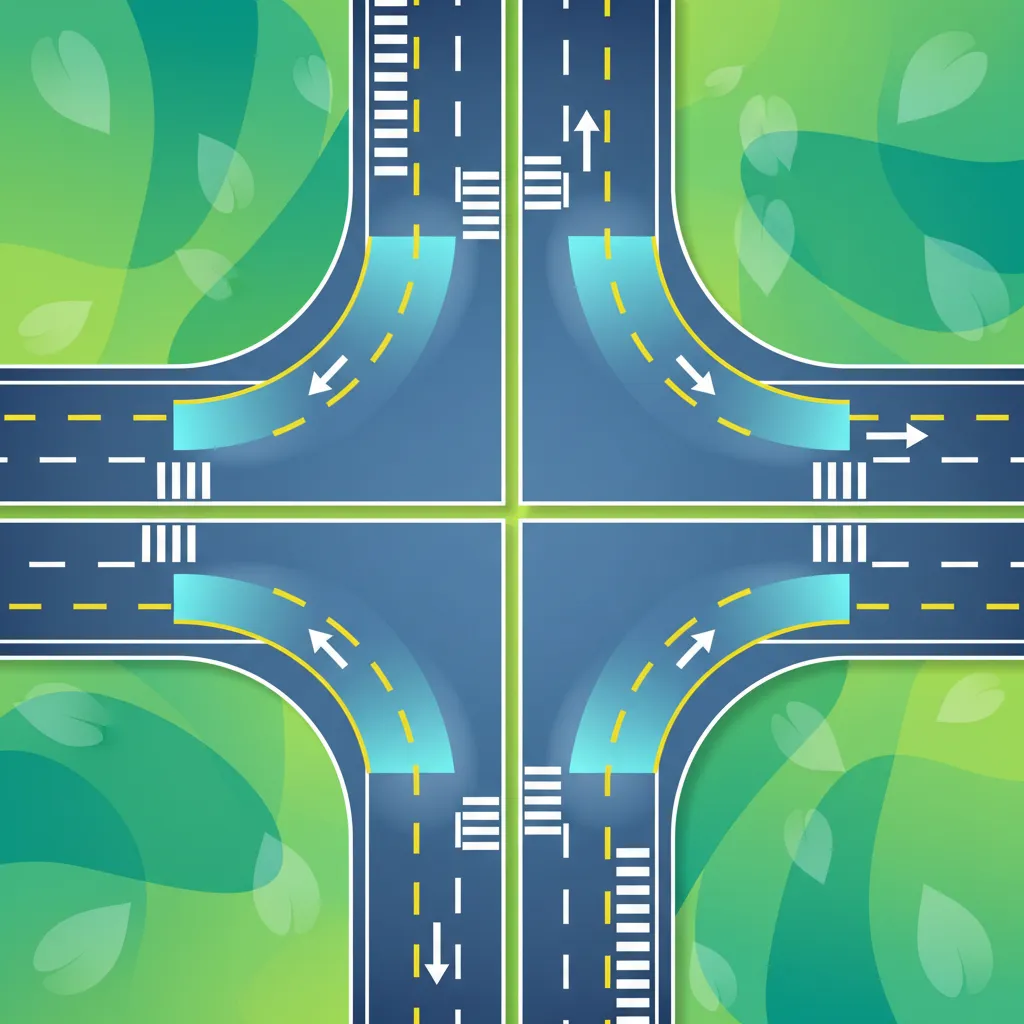
This lesson provides a comprehensive overview of the road markings found on Icelandic roads, from solid and broken lane lines to symbols indicating turning lanes and pedestrian crossings. The content details the visual meanings of each marking, such as solid lines indicating no crossing and broken lines permitting lane changes. Additionally, the lesson addresses the purpose of reflective markers and surface textures used in low-visibility or icy conditions, providing a framework for interpreting pavement cues.
Learn how to adapt your driving speed in Iceland based on challenging weather like snow, ice, rain, and wind, as well as different road surfaces such as gravel. Understand how to manage speed with varying vehicle loads and for vulnerable road users.
This lesson explores the specific challenges of driving on Icelandic gravel roads, focusing on the reduced traction and vehicle dynamics associated with loose surfaces. The content explains how to adapt speed appropriately, maintain safe following distances, and use gentle braking to avoid skidding. Learners also study proper lane sharing etiquette, including how to safely pass other vehicles and manage loose stones that may be thrown, ensuring vehicle stability.
This lesson addresses the challenges of driving in rain and fog, focusing on strategies to maintain visibility and vehicle control. Learners will explore the correct use of windshield wipers, defoggers, and appropriate headlight settings, including when to use fog lights. The content also covers the increased risk of hydroplaning, the importance of adjusting speed in wet conditions, and the need to extend following distances to account for longer stopping distances.
This lesson examines the specific techniques required for safe driving on snow-covered or icy roads in Iceland, covering the mandatory use of winter tires and the operation of anti-lock braking systems. Learners will study optimal low-speed cornering, proper braking distances on ice, and how to recover from a skid safely. By mastering these techniques, drivers can maintain control in challenging winter conditions and significantly reduce the risk of accidents on slippery surfaces.
This lesson focuses on the regulations governing highland travel and off-road restrictions, including environmental protections that prohibit off-road driving in certain zones. The lesson details how to interpret highland road signage, understand restrictions related to wildlife crossings like reindeer and sheep, and adhere to road width management guidelines. Learners are also instructed on using emergency contact points in sparsely populated regions.
This lesson examines the calculation of safe following distances using the two-second rule and formulas that factor in vehicle speed and road conditions. The content explains how reaction time, weather conditions like ice or rain, and vehicle load affect braking zones. Students also learn specific techniques for stopping on hills and how to avoid tailgating, thereby maintaining sufficient safety margins under all Icelandic weather conditions.
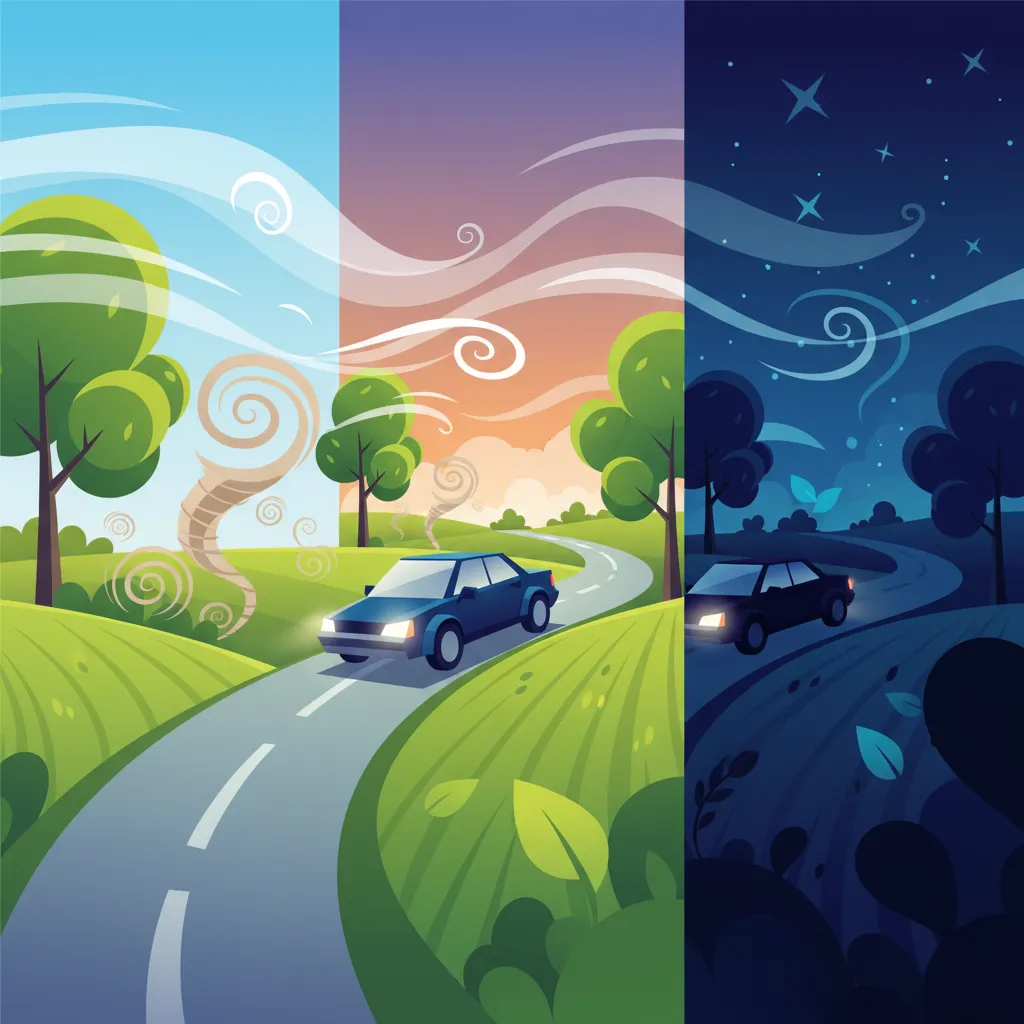
This lesson examines how strong winds and varying light conditions affect vehicle handling and safety, including techniques for maintaining stability under cross-winds and assessing gust intensity. The content also explains proper headlight usage during daylight, dusk, and nighttime, addressing glare reduction strategies and when to employ high-beam headlights. By mastering these concepts, drivers can navigate Icelandic weather and lighting challenges confidently and safely.
This lesson focuses on the specific challenges of riding on gravel and uneven rural roads. It teaches techniques for maintaining stability and traction on loose surfaces, including speed management, body positioning, and gentle control inputs. Understanding how to handle these conditions is essential for safely exploring areas outside of main urban centers in Iceland.
This lesson covers the statutory speed limits applicable to Category AM vehicles in various environments, from urban centers to rural roads. It emphasizes the critical importance of adapting speed to conditions such as rain, wind, or poor visibility. Riders will learn practical techniques for managing acceleration and maintaining a safe, legal speed at all times.
This lesson examines procedures for crossing single-lane bridges and water fords, paying particular attention to right-of-way rules and appropriate vehicle positioning. Learners will learn how to assess water depth before fording, understand seasonal restrictions that may affect access, and recognize signage indicating temporary closures. The lesson also covers the need for highland travel permits on certain routes and weight limits for bridges.
This lesson details how various weather conditions impact moped stability, traction, and visibility. It provides practical strategies for handling crosswinds, avoiding hydroplaning in rain, and maintaining grip on icy or snowy surfaces. Riders will learn to assess weather-related risks and adapt their speed and control inputs to navigate challenging conditions safely.
Find clear answers to common questions learners have about Speed Limits by Road Type and Conditions. Learn how the lesson is structured, which driving theory objectives it supports, and how it fits into the overall learning path of units and curriculum progression in Iceland. These explanations help you understand key concepts, lesson flow, and exam focused study goals.
In Iceland, the standard speed limit within built-up areas (towns and cities) is generally 50 km/h, unless otherwise indicated by signage. Always look for signs that may specify a lower or higher limit.
Yes, while there isn't a single fixed speed limit for all gravel roads, they are typically considered rural roads. Unless a specific sign indicates otherwise, the general speed limit on rural roads outside built-up areas is 90 km/h. However, due to the reduced traction and potential hazards on gravel, it is strongly advised to drive significantly slower than the maximum limit.
Variable speed limits use electronic signs that can change the speed limit based on real-time conditions, such as traffic density, weather (e.g., snow, ice, heavy rain), or road conditions. You must always adhere to the speed displayed on these signs, as they reflect the safest speed for the current situation.
Exceeding speed limits in Iceland carries significant penalties, including substantial fines, demerit points on your driving record, and potential suspension of your driving licence. The severity of the penalty often increases with the amount by which you exceed the limit.
Generally, speed limits posted on signs apply 24 hours a day, regardless of whether it is day or night. However, reduced visibility during dark conditions, especially in rural areas or during winter, necessitates driving at a slower, more cautious speed, even if it's below the posted limit.
Utilize our advanced practice set search to pinpoint the exact Icelandic driving theory topics you need to review. Filter by subject, difficulty, or question type to create a highly effective study plan and ensure you are fully prepared for your official driving licence test in Iceland.