
Navigating Iceland's roads involves more than just driving; it requires understanding where and how to park legally. This lesson delves into the specific regulations surrounding vehicle parking across Iceland, including designated parking zones, disabled bays, and prohibited areas. Mastering these rules is crucial for both passing your theory exam and ensuring safe, lawful parking in real-world driving scenarios.

Lesson content overview
Navigating stationary vehicle placement is as crucial as understanding moving traffic rules. This comprehensive lesson covers the essential parking regulations in Iceland, ensuring drivers understand where, how, and for how long they can park. Proper parking is vital for maintaining traffic flow, ensuring safety for all road users, and avoiding legal penalties.
Parking regulations are designed to manage the use of public space, prevent obstructions, and enhance safety and accessibility. In Iceland, these rules are clearly defined by signage and road markings, which every driver must understand and obey. Adhering to these regulations is not only a legal requirement but also a fundamental aspect of responsible driving, contributing to the overall order and safety of Icelandic roads.
Parking rules apply to all vehicles and vary depending on the road type, location, time of day, and specific signage present. Misunderstanding or ignoring these rules can lead to fines, penalty points, and potential impacts on your vehicle's inspection record.
Designated parking areas are specific zones where parking is explicitly permitted. These areas are crucial for organizing vehicle placement, preventing obstruction, and ensuring that sufficient space remains for traffic flow and pedestrian movement. Identifying and correctly using these spaces is a core skill for any driver.
Parallel parking is common in urban and residential areas, especially alongside curbs. These spaces are typically marked by solid white lines painted on the road surface, delineating the length of the parking bay. Drivers must position their vehicle parallel to the curb, ensuring it fits entirely within the marked lines and does not protrude into the traffic lane.
The general parking sign, a blue square with a white 'P', indicates a permissible parking zone. Within these zones, you must look for specific markings that define individual parking bays. Proper parallel parking requires careful maneuvering to align your vehicle correctly, respecting the space available and ensuring you do not obstruct other vehicles or pedestrians.
Angle parking is often found in car parks, shopping areas, or wider streets where space allows vehicles to park at an angle to the curb. These bays are marked by diagonal lines, typically angled at 45° to 60° relative to the curb. The angled design allows for easier entry and exit compared to parallel parking in some situations.
When using angle parking, ensure your vehicle is fully within the marked bay. Avoid letting any part of your vehicle extend beyond the lines, as this can impede traffic or block adjacent spaces. Always park heading into the bay, unless specific signs indicate reverse angle parking.
Certain areas are designated as prohibited for parking or even stopping, to maintain critical traffic flow, ensure visibility, and facilitate emergency access. It is imperative for drivers to recognize these zones and understand the difference between "no stopping" and "no parking."
In Iceland, signs and road markings clearly indicate areas where stopping or parking is restricted. The two main categories are:
Road markings such as double yellow lines generally indicate a no-stopping zone, while a single yellow line typically signifies a no-parking zone. It's vital to recognize these visual cues to avoid violations. Common locations for these restrictions include intersections, bus stops, taxi stands, bridge entrances, and narrow road sections where stopping would create a hazard.
Many urban areas in Iceland utilize time-limited parking zones to manage demand and ensure a turnover of available spaces. These zones often include payment systems. Understanding how to interpret time limits and use payment methods correctly is crucial for avoiding penalties.
Time-limited parking zones are typically indicated by a parking sign (blue 'P' square) accompanied by a supplementary plate showing a clock symbol and a duration (e.g., "2 klst." for 2 hours, or "30 mín." for 30 minutes). These signs may also specify the days and hours when the limit applies. For instance, a sign might say "2 klst. 9-18" meaning a 2-hour limit applies between 9:00 AM and 6:00 PM. Outside these hours, parking might be unlimited or subject to different rules.
When parking in a time-limited zone, you must ensure your vehicle is moved before the maximum allowed duration expires. Simply moving your car a short distance within the same zone and immediately re-parking is generally not considered compliant; the intent is to free up the space for other users.
In many paid parking zones, especially in city centers, you will encounter parking meters or electronic pay-and-display machines. These systems require you to pay for your parking duration.
Locate the Meter: Find the nearest parking meter or pay-and-display machine.
Enter Vehicle Details (if required): Some modern systems require you to enter your vehicle's registration number.
Select Duration: Choose how long you wish to park. The machine will typically show the corresponding fee.
Make Payment: Pay using coins, bank card, or a dedicated parking app (if available).
Display Ticket (if applicable): If the machine issues a physical ticket, ensure it is clearly displayed on your dashboard so it is visible from outside the vehicle. For electronic systems, no ticket display is needed.
Failure to pay, overstaying your paid time, or not displaying a ticket where required will result in a parking fine. Always check the signage carefully for specific payment instructions and operating hours.
Accessible parking spaces are reserved for individuals with disabilities to ensure convenient access to facilities. These spaces are identifiable by specific markings and signs and are subject to stricter enforcement to protect accessibility rights.
Disabled parking spaces are clearly marked with the international symbol of accessibility—a white wheelchair figure on a blue background—often accompanied by a standard parking sign (B7) and sometimes a supplementary sign like "Þjónusturauðar" (Service Red). These spaces are typically wider than standard bays to accommodate wheelchair access.
Only vehicles displaying a valid disability badge (parked on the dashboard or hung from the rearview mirror, clearly visible from outside) are permitted to use these spaces. The badge is issued to an individual, not a vehicle, and must only be used when the badge holder is either driving or being transported in the vehicle.
Misusing a disabled parking space is a serious offense in Iceland. Penalties are significantly higher than for other parking violations to deter unauthorized use and uphold accessibility standards. Such misuse can result in substantial fines and, in some cases, the vehicle may be towed. It is illegal to borrow, lend, or transfer a disability badge to someone who is not the authorized holder.
Contra-flow parking refers to parking on the left side of the road, opposite to the normal direction of traffic flow, when driving in a country where traffic generally drives on the right (like Iceland). This practice is generally prohibited on two-way streets due to safety concerns, but it can be explicitly permitted in specific circumstances, such as on certain one-way streets.
In Iceland, contra-flow parking is only allowed where specifically indicated by signage. You should never assume it is permissible simply because there is an available space on the left side of the road. Signs allowing contra-flow parking typically show a blue 'P' with an arrow pointing to the left side of the road, or text explicitly stating "Leyfilegt að leggja vinstra megin" (Allowed to park on the left side).
This type of parking is most commonly found on one-way streets in urban areas where it helps maximize parking capacity or improves traffic flow by using available curb space efficiently. On two-way streets, parking against the flow of traffic is illegal and dangerous.
If you are parking contra-flow where permitted, you must:
Improper contra-flow parking can confuse other drivers, create blind spots, and increase the risk of collisions, especially when pulling out or when other drivers are attempting to pass.
Parking rules extend beyond designated bays to cover sidewalks and narrow rural roads, areas where safety and accessibility for pedestrians and other road users are paramount.
In Iceland, as in most countries, parking on sidewalks is generally prohibited. Sidewalks are reserved for pedestrians, and parking a vehicle on them, even partially, obstructs their path and can force them into the road, creating dangerous situations. This rule applies even if you leave what seems like enough space for pedestrians.
Exceptions are rare and always clearly indicated by specific signage, which might show a vehicle partly on the pavement and partly on the road. Without such explicit signage, assume sidewalk parking is illegal. Violating this rule can lead to significant fines.
Iceland's rural roads can be narrow, often with limited visibility, especially on gravel surfaces or through mountainous terrain. On such roads, parking along the main carriageway is often unsafe and usually prohibited.
Drivers must utilize designated pull-outs or widened areas specifically designed for temporary stops. These pull-outs are often marked by white triangles or clear signage. When using a pull-out, ensure your entire vehicle is off the main road and does not obstruct the flow of traffic or impede emergency vehicle access. Parking on the main carriageway of a narrow rural road, even for a short time, can create a serious hazard, especially around blind bends or crests.
Parking violations in Iceland carry specific legal and administrative consequences designed to encourage compliance and maintain public order. These consequences can range from monetary fines to impacts on your vehicle's administrative records.
The most immediate consequence of a parking violation is a monetary fine. The amount of the fine varies significantly depending on the severity of the offense. For instance, parking in a disabled space without a valid badge typically incurs a much higher fine than overstaying in a time-limited zone.
While parking violations generally do not result in penalty points unless they are part of a more serious traffic infraction, repeated violations can attract administrative attention.
In Iceland, multiple parking infractions can have an administrative impact on your vehicle. If a vehicle accumulates three or more parking offenses within a 12-month period, these violations may be recorded in the vehicle's inspection file. This can potentially complicate or delay the regular vehicle inspection process (skoðun) or affect insurance renewals. This administrative measure serves as an additional deterrent, encouraging consistent compliance with parking regulations.
Parking rules, while generally fixed, can be influenced by various contextual factors. Responsible drivers adapt their parking behavior based on surrounding conditions to enhance safety and compliance.
Adverse weather conditions, such as heavy snowfall or icy roads, can significantly reduce road width and visibility. In such conditions, roadside parking that might normally be permissible could become a serious hazard. Vehicles parked on roads that need snow clearing may be subject to fines or towing. Always consider how your parked vehicle might affect snow plows, emergency services, or other drivers in poor weather.
The type and size of your vehicle can also dictate appropriate parking. Longer vehicles, such as those towing trailers or larger vans, may struggle to fit into standard parallel parking bays without protruding. In such cases, it is essential to seek larger, more suitable parking spaces to avoid creating obstructions or hazards. Heavy vehicles may also have additional restrictions in certain areas.
When parking, always be mindful of vulnerable road users, particularly pedestrians and cyclists. Avoid parking in a way that blocks pedestrian crossings, cycle paths, or creates blind spots near schools, playgrounds, or bus stops. Ensuring clear sightlines and pathways helps protect those who are most at risk in traffic environments.
To park safely and legally in Iceland, always remember these core principles:
C28 or double yellow lines) and "No Parking" (C29 or single yellow lines) zones, and strictly adhere to their rules.By mastering these parking regulations, you will contribute to safer and more efficient traffic environments throughout Iceland, ensuring compliance and avoiding unnecessary penalties.
Icelandic parking regulations are clearly communicated through signage and road markings, requiring drivers to distinguish between absolute no-stopping zones (C28) and no-parking zones (C29) where brief attended stops are permitted. Time-limited parking zones use clock symbols on signs and require payment at meters, with drivers obligated to move before the limit expires. Disabled parking spaces are strictly enforced with high penalties for misuse, and contra-flow parking on the left side is only legal when explicitly authorized by signage. Repeated violations are recorded on your vehicle's inspection file and can impact renewal eligibility.
A short set of high-value points that capture the most important learning from this lesson.
Iceland distinguishes between 'No Stopping' (Stoppbann, C28 sign) which is absolute, and 'No Parking' (Bílastæðabann, C29 sign) which allows brief attended stops only
Contra-flow parking on the left side of the road is only permitted where explicitly indicated by signage; never assume it is allowed on two-way streets
Time-limited parking requires you to move your vehicle before the limit expires; simply repositioning within the same zone does not reset the timer
Disabled parking spaces can only be used by vehicles displaying a valid badge when the badge holder is present in the vehicle
Repeated parking violations (three or more within 12 months) are recorded on your vehicle's inspection file (skoðun) and can affect renewal eligibility
Explore all units and lessons included in this driving theory course.
The blue 'P' square sign (B7) indicates a designated parking zone, but you must also check for specific markings and supplementary restrictions
Double yellow lines mean no stopping; single yellow lines mean no parking; always match the road marking to the applicable restriction
Parking on sidewalks is generally prohibited unless specific signage explicitly permits it, even if you leave space for pedestrians
On narrow rural roads, use only marked pull-outs (often indicated by white triangles) rather than stopping on the main carriageway
Adverse weather conditions can make normally permissible parking dangerous; parked vehicles blocking snow clearing may be fined or towed
Confusing 'no parking' with 'no stopping' and believing brief unattended stops are permitted in a no-stopping zone
Assuming contra-flow parking is generally allowed whenever there is space on the left side of the road
Using a disabled parking space without ensuring the badge is valid, properly displayed, and the badge holder is in the vehicle
Failing to display the pay-and-display ticket on the dashboard after paying at a parking meter
Believing that moving your car a short distance within a time-limited zone resets or extends the allowed parking duration
Lesson content overview
A short set of high-value points that capture the most important learning from this lesson.
Iceland distinguishes between 'No Stopping' (Stoppbann, C28 sign) which is absolute, and 'No Parking' (Bílastæðabann, C29 sign) which allows brief attended stops only
Contra-flow parking on the left side of the road is only permitted where explicitly indicated by signage; never assume it is allowed on two-way streets
Time-limited parking requires you to move your vehicle before the limit expires; simply repositioning within the same zone does not reset the timer
Disabled parking spaces can only be used by vehicles displaying a valid badge when the badge holder is present in the vehicle
Repeated parking violations (three or more within 12 months) are recorded on your vehicle's inspection file (skoðun) and can affect renewal eligibility
Explore all units and lessons included in this driving theory course.
The blue 'P' square sign (B7) indicates a designated parking zone, but you must also check for specific markings and supplementary restrictions
Double yellow lines mean no stopping; single yellow lines mean no parking; always match the road marking to the applicable restriction
Parking on sidewalks is generally prohibited unless specific signage explicitly permits it, even if you leave space for pedestrians
On narrow rural roads, use only marked pull-outs (often indicated by white triangles) rather than stopping on the main carriageway
Adverse weather conditions can make normally permissible parking dangerous; parked vehicles blocking snow clearing may be fined or towed
Confusing 'no parking' with 'no stopping' and believing brief unattended stops are permitted in a no-stopping zone
Assuming contra-flow parking is generally allowed whenever there is space on the left side of the road
Using a disabled parking space without ensuring the badge is valid, properly displayed, and the badge holder is in the vehicle
Failing to display the pay-and-display ticket on the dashboard after paying at a parking meter
Believing that moving your car a short distance within a time-limited zone resets or extends the allowed parking duration
Explore search topics learners often look for when studying Parking Regulations and Contra‑flow Parking. These topics reflect common questions about road rules, driving situations, safety guidance, and lesson level theory preparation for learners in Iceland.
Browse additional driving theory lessons that cover connected traffic rules, road signs, and common driving situations related to this topic. Improve your understanding of how different rules interact across everyday traffic scenarios.
Understand the specific rules for parking in Iceland, including restrictions, time limits, and disabled spaces. Learn about the fines and administrative consequences for common parking violations to ensure legal compliance and avoid penalties.
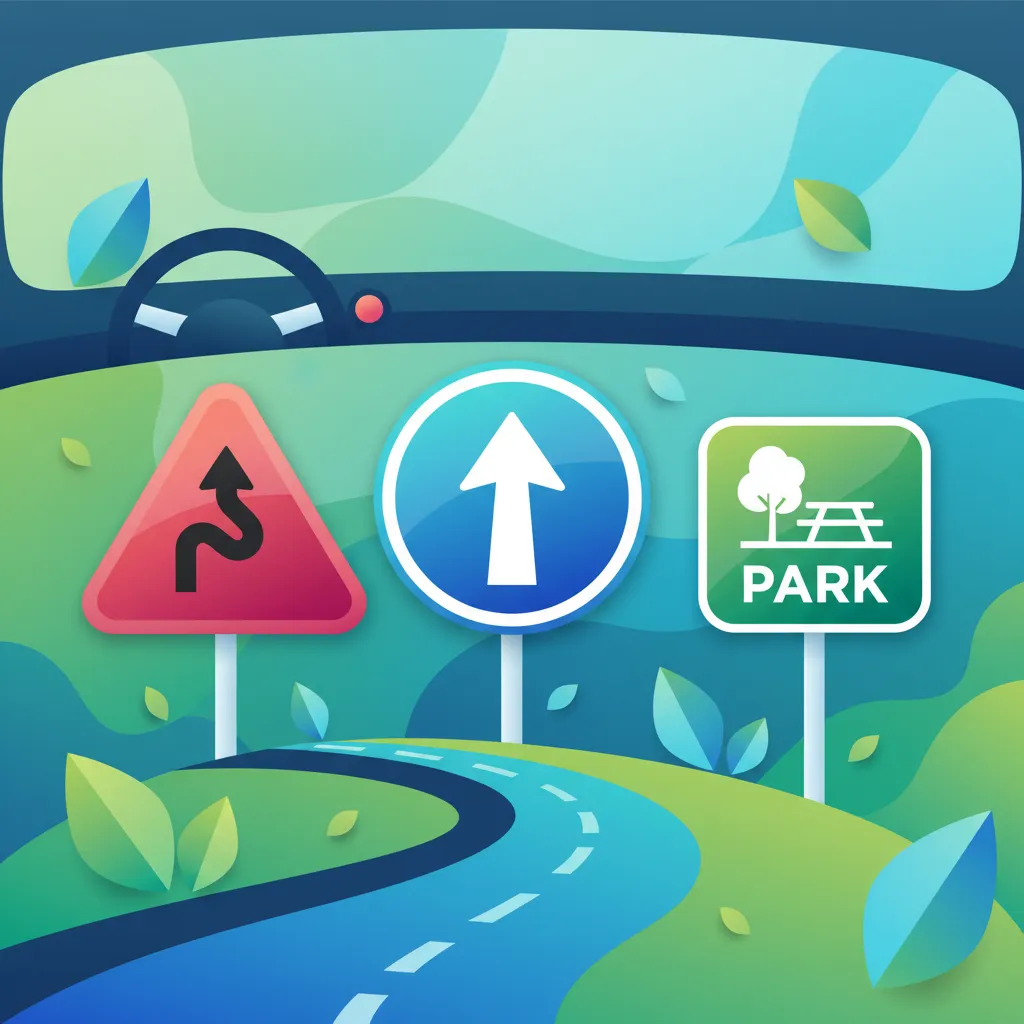
This lesson categorizes Icelandic road signs into regulatory signs that dictate mandatory actions, warning signs that alert drivers to hazards, and informational signs that provide guidance. It explains the distinctive shapes and colour schemes for each category, such as circles for prohibitions and triangles for warnings. By mastering these conventions, students will be able to interpret sign intent instantly and adapt their driving behaviour accordingly to comply with legal obligations.
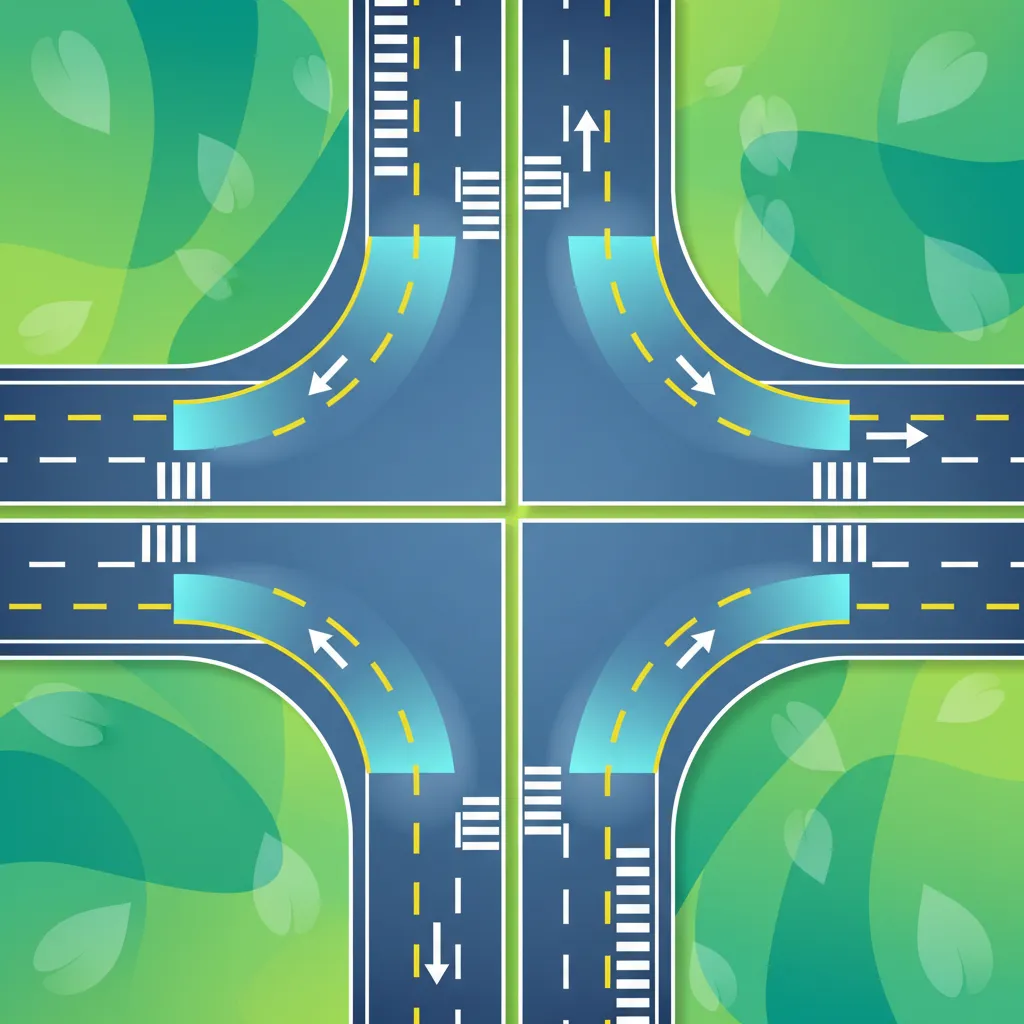
This lesson provides a comprehensive overview of the road markings found on Icelandic roads, from solid and broken lane lines to symbols indicating turning lanes and pedestrian crossings. The content details the visual meanings of each marking, such as solid lines indicating no crossing and broken lines permitting lane changes. Additionally, the lesson addresses the purpose of reflective markers and surface textures used in low-visibility or icy conditions, providing a framework for interpreting pavement cues.
This lesson focuses on the regulations governing highland travel and off-road restrictions, including environmental protections that prohibit off-road driving in certain zones. The lesson details how to interpret highland road signage, understand restrictions related to wildlife crossings like reindeer and sheep, and adhere to road width management guidelines. Learners are also instructed on using emergency contact points in sparsely populated regions.
This lesson outlines the speed limits applicable to various road types in Iceland, from urban streets to rural highways and special zones like tunnels. Learners will interpret speed sign markings, understand variable speed limits that adjust for weather, and recognize when temporary speed reductions are enforced. The content also covers speed monitoring devices and the legal consequences of exceeding limits, emphasizing speed awareness in all driving contexts.

This lesson focuses on interpreting road surface markings, including solid and broken lines that govern lane changes and positioning. Learners will understand the rules associated with turning arrows, pedestrian crossings, and markings for dedicated lanes. Correctly reading these markings is essential for maintaining proper lane discipline and navigating complex road layouts safely.

This lesson examines regulatory signs that impose legal obligations, focusing on those most relevant to moped riders like speed limits and mandatory direction signs. Learners will understand how sign shapes and colors convey specific commands or prohibitions. Attention is given to signs with vehicle-specific restrictions, ensuring riders know when rules apply directly to them.

This lesson outlines the regulations governing pedestrian crossings, including zebra crossings, pedestrian traffic lights, and the driver’s obligations to yield. Learners will study how to identify crosswalk markings, interpret pedestrian signal phases, and understand the enhanced caution required in school zones and areas with high foot traffic. The content also emphasizes the need for drivers to anticipate vulnerable pedestrians and provide additional yielding in low-visibility conditions.

This lesson focuses on the routine maintenance tasks essential for preserving vehicle safety and compliance in Iceland, including how to check tire pressure, assess brake wear, and monitor fluid levels. The content also outlines the periodic vehicle inspection process, the requirement for emissions testing, and the steps needed to renew vehicle registration. Understanding these procedures ensures the vehicle remains roadworthy and legally compliant.
This lesson familiarizes learners with signs that warn of upcoming hazards, such as sharp curves, slippery surfaces, or animal crossings. It emphasizes the importance of early hazard recognition and response, which is especially critical for vulnerable moped riders. Understanding these signs allows riders to anticipate road conditions and adjust their riding strategy accordingly for increased safety.
This lesson provides a contextual overview of Iceland's traffic law hierarchy, explaining how national statutes, road codes, and local rules interact. Learners will understand the precedence of national laws and how to interpret regulations in different jurisdictions. This knowledge ensures riders can correctly apply the relevant rules in any driving scenario, ensuring consistent legal compliance.
Explore less common but important parking scenarios in Iceland, such as contra-flow parking, parking on narrow rural routes, and rules for sidewalks. Learn how to navigate these situations safely and legally according to Icelandic driving theory.
This lesson outlines the regulations governing pedestrian crossings, including zebra crossings, pedestrian traffic lights, and the driver’s obligations to yield. Learners will study how to identify crosswalk markings, interpret pedestrian signal phases, and understand the enhanced caution required in school zones and areas with high foot traffic. The content also emphasizes the need for drivers to anticipate vulnerable pedestrians and provide additional yielding in low-visibility conditions.
This lesson focuses on the regulations governing highland travel and off-road restrictions, including environmental protections that prohibit off-road driving in certain zones. The lesson details how to interpret highland road signage, understand restrictions related to wildlife crossings like reindeer and sheep, and adhere to road width management guidelines. Learners are also instructed on using emergency contact points in sparsely populated regions.
This lesson examines procedures for crossing single-lane bridges and water fords, paying particular attention to right-of-way rules and appropriate vehicle positioning. Learners will learn how to assess water depth before fording, understand seasonal restrictions that may affect access, and recognize signage indicating temporary closures. The lesson also covers the need for highland travel permits on certain routes and weight limits for bridges.
This lesson provides a comprehensive overview of the road markings found on Icelandic roads, from solid and broken lane lines to symbols indicating turning lanes and pedestrian crossings. The content details the visual meanings of each marking, such as solid lines indicating no crossing and broken lines permitting lane changes. Additionally, the lesson addresses the purpose of reflective markers and surface textures used in low-visibility or icy conditions, providing a framework for interpreting pavement cues.

This lesson explores the specific challenges of driving on Icelandic gravel roads, focusing on the reduced traction and vehicle dynamics associated with loose surfaces. The content explains how to adapt speed appropriately, maintain safe following distances, and use gentle braking to avoid skidding. Learners also study proper lane sharing etiquette, including how to safely pass other vehicles and manage loose stones that may be thrown, ensuring vehicle stability.

This lesson explores the proper use of lane markings to maintain correct vehicle centering and adherence to the prescribed traffic flow direction in Iceland. The content describes how to interpret solid and broken lines, maintain safe following distances within a lane, and avoid unintended lane departures. Learners also examine the legal prohibitions on using the road shoulder for general travel, ensuring compliance with lane discipline rules for overall traffic safety.

This lesson introduces the fundamental concepts of right-of-way in Iceland, explaining the priority hierarchy that dictates when a driver must yield to others. Learners study the meaning of give-way and yield signs, the distinction between main and side roads, and how stop signs and markings affect vehicle positioning. By understanding these legal obligations, students will be able to determine correct actions at any junction, reducing the risk of collisions.

This lesson focuses on the operation of roundabouts, which are common in Icelandic towns and rural areas, and explains how drivers must yield to circulating traffic upon entry. The content covers how to interpret roundabout signage and follow lane markings to maintain correct positioning. Students also learn strategies for safe exit, handling multi-lane roundabouts, and recognizing deceptive entries that require heightened vigilance for smooth navigation.

This lesson examines the broader dynamics of urban traffic flow, focusing on interactions with public transport, pedestrian islands, and traffic calming measures. Content includes the rules for navigating bus priority lanes, yielding to trams, and handling congested intersections safely. Learners also study speed restrictions in school zones and the use of pedestrian islands to manage cross-traffic, emphasizing the importance of anticipation in complex urban settings.
This lesson examines the calculation of safe following distances using the two-second rule and formulas that factor in vehicle speed and road conditions. The content explains how reaction time, weather conditions like ice or rain, and vehicle load affect braking zones. Students also learn specific techniques for stopping on hills and how to avoid tailgating, thereby maintaining sufficient safety margins under all Icelandic weather conditions.
Find clear answers to common questions learners have about Parking Regulations and Contra‑flow Parking. Learn how the lesson is structured, which driving theory objectives it supports, and how it fits into the overall learning path of units and curriculum progression in Iceland. These explanations help you understand key concepts, lesson flow, and exam focused study goals.
Contra-flow parking refers to parking on the side of the road that is opposite to the direction of traffic flow. Icelandic regulations specify when and where this type of parking is permitted, usually requiring specific signage and ensuring it does not impede traffic. It's essential to understand these rules to avoid penalties and ensure safety.
Disabled parking spaces in Iceland are clearly marked with the international symbol of access (a blue square with a white wheelchair). These spaces are reserved for vehicles displaying a valid disabled parking permit. Misusing these bays is a serious offense with significant penalties.
While specific gravel road parking rules might not be as extensively signed as in urban areas, general principles apply. You must not obstruct traffic, block driveways or entrances, or cause damage to the roadside. Always ensure your vehicle is safely off the main carriageway where possible, especially on narrow rural roads.
Illegal parking in Iceland can result in fines, towing of your vehicle, and penalty points. Repeated offenses or serious violations might also affect your vehicle's inspection status. It's crucial to always check for signs and understand parking restrictions before leaving your vehicle.
While parking itself doesn't directly affect a standard vehicle inspection, frequent illegal parking and the resulting fines or towing can indicate a disregard for traffic laws. Serious infractions might be noted, and consistent issues could indirectly impact your vehicle's overall compliance record.
Utilize our advanced practice set search to pinpoint the exact Icelandic driving theory topics you need to review. Filter by subject, difficulty, or question type to create a highly effective study plan and ensure you are fully prepared for your official driving licence test in Iceland.