
This lesson guides you through the essential calculations for determining the maximum load capacity, or portata, of your heavy vehicle. By understanding the relationship between unladen weight and authorized mass, you will be prepared to manage vehicle stability and stay compliant with Italian transport law. These skills are vital for both your professional exam and daily logistics operations.

Lesson content overview
Navigating the complexities of heavy goods vehicle operations in Italy requires a precise understanding of weight regulations. For aspiring professional drivers pursuing their Italian Goods Vehicle License (C, C1, C1E, or CE), mastering payload calculations is not merely an academic exercise; it is a fundamental aspect of road safety, legal compliance, and operational efficiency. This lesson delves into the practical knowledge necessary to correctly determine the maximum permissible payload, known as 'portata', for any goods vehicle. We will explore the critical relationship between a vehicle's unladen weight (massa a vuoto) and its maximum authorized mass, providing the tools to accurately calculate available cargo capacity, plan loads effectively, and mitigate the risks associated with overloading.
At the core of all weight calculations for goods vehicles is the Massa Complessiva a Pieno Carico (MCPC), or Maximum Authorized Mass. This crucial figure represents the total weight a vehicle is legally permitted to have when fully loaded and ready for travel. It encompasses not only the vehicle itself but also its entire contents, including the cargo, passengers, fuel, and any additional equipment.
The MCPC is a fixed legal limit established by the vehicle manufacturer and certified by regulatory authorities. It is prominently displayed in the vehicle's registration documents, known as the 'libretto' in Italy. Adhering to this limit is paramount, as it is designed to protect road infrastructure, maintain the structural integrity of the vehicle, and, most importantly, ensure the safety of all road users. Exceeding the MCPC can severely compromise a vehicle's braking performance, handling characteristics, and overall stability, drastically increasing the risk of accidents.
It is vital to distinguish MCPC from the vehicle's actual weight at any given moment. While the vehicle's actual loaded weight can fluctuate, its MCPC remains a static ceiling that must never be surpassed. Italian regulations, particularly sections of the Codice della Strada pertaining to heavy goods vehicles, strictly enforce these mass limits. Drivers who fail to comply face significant penalties, including fines and potential impoundment of the vehicle, highlighting the severe legal ramifications of misunderstanding or disregarding this fundamental concept.
While MCPC defines the absolute maximum, it's helpful to be aware of other related mass terms, though MCPC remains the primary focus for payload calculations. For instance, Massa Complessiva a Vuoto (MCFV) refers to the vehicle's weight when empty, but with all standard equipment, a full fuel tank, and fluids at optimal levels. This is distinct from the simpler "Massa a Vuoto" which we will discuss next. Understanding these different categories helps build a holistic picture of vehicle weight.
The absolute maximum permissible total weight of a vehicle when fully loaded, including the vehicle itself, cargo, passengers, fuel, and any accessories, as specified in its registration documents. This limit must never be exceeded.
To calculate how much cargo a goods vehicle can legally carry, we first need to know its starting weight when empty. This is defined as the Massa a Vuoto (MV), or Tare Weight. MV represents the weight of the vehicle in its unladen condition, devoid of any passengers, cargo, fuel, or additional equipment. Think of it as the vehicle's baseline weight, exactly as it leaves the factory or in its standard operational configuration without any load.
The Massa a Vuoto is a crucial component in determining the usable load capacity. It provides the initial figure that is subtracted from the MCPC to reveal the available payload. This value is precisely recorded in the vehicle's registration documents, similar to the MCPC. Accurate knowledge of the MV is essential for proper load planning, as any miscalculation here will directly impact the permissible cargo weight.
A common misunderstanding among drivers is to assume that the MV includes fuel or passengers. It does not. The Massa a Vuoto specifically refers to the vehicle's empty weight without these additions. Therefore, when preparing to load, the weight of the fuel in the tank and any passengers must be factored in separately as part of the total load, on top of the cargo itself.
Always consult your vehicle's registration document ('libretto') for the exact Massa a Vuoto (MV) figure. Do not rely on estimates or outdated information, as even minor discrepancies can lead to incorrect payload calculations and potential overloading.
It's also important to note that any additional equipment or optional accessories permanently fitted to the vehicle (such as a crane, specialized bodywork, or an extra spare wheel beyond standard provisions) will contribute to the vehicle's overall Massa a Vuoto. While the initial MV from the manufacturer's specification provides a baseline, modifications or additions can increase this weight, thereby reducing the available payload. Always consider these factors when assessing a vehicle's true unladen weight.
With a clear understanding of the Maximum Authorized Mass (MCPC) and the Massa a Vuoto (MV), we can now determine the vehicle's Portata, which translates to Payload or Usable Load Capacity. This is the amount of weight that can be added to the vehicle without exceeding its legal limits. The calculation is straightforward yet fundamental:
The usable load capacity of a goods vehicle, calculated by subtracting the Massa a Vuoto (MV) from the Massa Complessiva a Pieno Carico (MCPC). This figure represents the total weight of cargo, passengers, fuel, and any additional accessories that can be transported.
Portata = Massa Complessiva a Pieno Carico (MCPC) – Massa a Vuoto (MV)
This simple subtraction yields the maximum total weight that can be transported, which must then accommodate the cargo, any passengers, the fuel, and any items not included in the original MV calculation (e.g., driver's personal gear, tools not permanently fitted). The resulting Portata is the absolute limit for everything you intend to add to the vehicle.
Identify MCPC: Locate the Maximum Authorized Mass (Massa Complessiva a Pieno Carico) in your vehicle's registration document (libretto). This is your absolute upper limit.
Identify MV: Find the Massa a Vuoto (Tare Weight) in the same document. This is the vehicle's empty weight.
Calculate Gross Payload: Subtract MV from MCPC to find the total theoretical payload capacity. For example, if MCPC = 18,000 kg and MV = 10,000 kg, then Gross Payload = 8,000 kg.
Account for Fuel: Determine the weight of the fuel required for your journey. A full diesel tank for a heavy goods vehicle can easily add hundreds of kilograms (e.g., 500-800 kg). Subtract this from your Gross Payload.
Account for Passengers: Include the weight of the driver and any other passengers. A standard estimate for an adult is around 75 kg. Subtract this from the remaining payload.
Account for Additional Equipment/Accessories: If any temporary or non-standard equipment is being carried (e.g., straps, blankets, spare parts not included in MV), factor in their weight. Subtract this from the remaining payload.
Determine Available Cargo Capacity: The final remaining figure is the maximum weight of actual cargo you can load.
Example: A goods vehicle has an MCPC of 12,000 kg and an MV of 6,000 kg.
In this scenario, the driver can load a maximum of 5,620 kg of cargo without exceeding the MCPC. Failing to account for fuel or passengers is a common mistake that can easily lead to an overloaded vehicle, even if the cargo itself appears to be within limits.
While adhering to the total Massa Complessiva a Pieno Carico (MCPC) is critical, it is only one part of safe and legal loading. Equally important is how that total weight is distributed across the vehicle's axles. Every axle or axle group on a goods vehicle has a specific Axle Load Limit, which is the maximum weight it can individually bear. These limits are determined by the vehicle's design and are also specified in the registration documents.
The maximum permissible weight that can be exerted on a single axle or an axle group of a vehicle. These limits are critical for maintaining vehicle stability, preventing premature wear, and ensuring road safety.
Ignoring individual axle load limits, even if the total MCPC is respected, can lead to severe problems. An overloaded axle can cause:
Proper load distribution involves strategically placing cargo within the vehicle to ensure that no single axle or axle group exceeds its specified limit. This often requires:
For vehicles with multiple axles or specific configurations (e.g., 'Assi Tripodici' – tridem axles), the calculation and distribution become more complex, requiring careful planning and often the use of weighing scales to verify compliance. It’s not enough to know the total weight; you must know where that weight rests.
Adherence to weight limits is not just a matter of safety; it is a strict legal requirement under Italian law. The Codice della Strada (Italian Road Code) contains explicit articles detailing maximum permissible weights and axle loads for various vehicle types. Failure to comply with these regulations carries significant penalties for the driver and, in some cases, the transport company.
Attempting to transport an overloaded vehicle, even for a short distance or "just around the corner," is illegal and extremely dangerous. Law enforcement officers conduct routine checks, and sophisticated weighing stations are employed to detect non-compliance.
Drivers should regularly consult updated information regarding the Italian Codice della Strada to ensure they are aware of the latest regulations and penalty structures concerning heavy vehicle weights. Remaining informed is a key professional responsibility.
Effective load planning goes beyond simple arithmetic; it involves a holistic approach that considers various factors that can influence a vehicle's weight and stability.
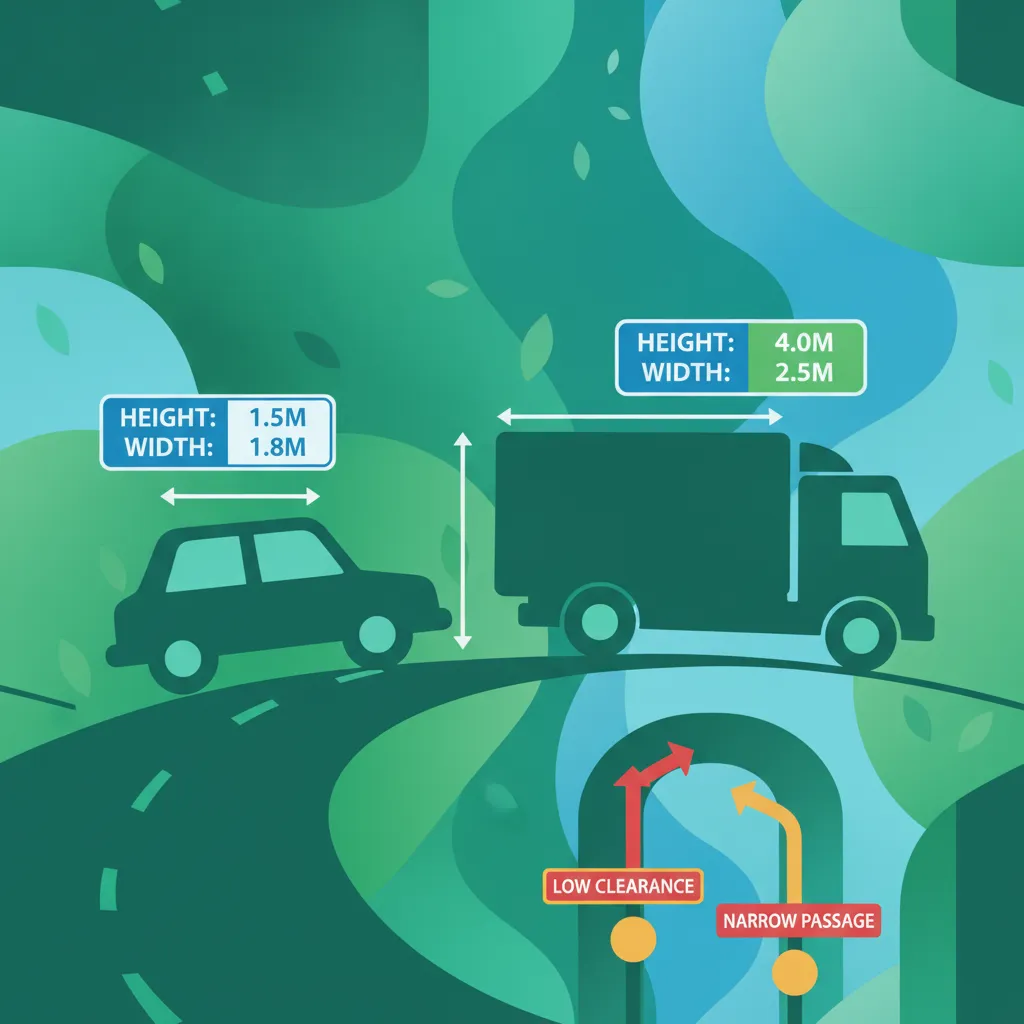
The Sagoma Limite refers to the maximum permissible dimensions (height, width, length) for a vehicle, including its load. While not directly a weight calculation, it is intrinsically linked to load planning. Cargo must not only be within weight limits but also fit within these dimensional restrictions. For example, loading unusually tall or wide cargo, even if light, can cause the vehicle to exceed its Sagoma Limite, making it illegal to transport and potentially unsafe (e.g., hitting bridges or overhead structures).
The maximum permissible overall dimensions (height, width, and length) for a vehicle, including its load, as defined by legal regulations. This ensures vehicles can safely navigate roads, tunnels, and infrastructure.
Understanding the specific Italian terms related to vehicle weight and payload is crucial for professional drivers operating in Italy.
Let's look at how these principles apply in everyday driving situations for goods vehicle operators.
A driver is preparing to transport a load of construction materials. The truck's libretto states an MCPC of 26,000 kg and an MV of 11,000 kg. The driver estimates the cargo weight at 14,000 kg. The fuel tank is full (approximately 700 kg of diesel), and there will be one driver (80 kg) and one passenger (75 kg).
Calculation:
Correct Action: The driver can proceed with this load, ensuring the cargo is correctly distributed to respect individual axle load limits. Incorrect Action: If the cargo was, for example, 14,500 kg, proceeding would result in an overload of 355 kg (14,500 - 14,145), which is illegal and unsafe.
An articulated vehicle (tractor unit and semi-trailer) has a combined MCPC of 40,000 kg. The tractor unit's MV is 8,000 kg, and the semi-trailer's MV is 7,000 kg. The driver has loaded 24,000 kg of goods.
Calculation:
Correct Action: The driver can transport the load, provided that the 24,000 kg of cargo is distributed evenly between the tractor's rear axles and the trailer's axles, ensuring no individual axle group exceeds its limit. Special attention must be paid to the fifth-wheel coupling's load and the trailer's kingpin weight. Incorrect Action: Concentrating too much weight on the trailer's rear axles could exceed their limit, even if the total combined weight is within bounds.
The rigorous enforcement of weight and payload regulations for goods vehicles is rooted deeply in principles of physics, engineering, and public safety. These laws are not arbitrary; they are designed to mitigate demonstrable risks.
By mastering the calculation of payload (Portata), diligently checking Massa a Vuoto (MV) and Massa Complessiva a Pieno Carico (MCPC), and meticulously planning axle load distribution, you contribute significantly to safer roads and a more efficient transport industry.
This lesson covers the essential calculations for determining maximum payload capacity (Portata) of goods vehicles under Italian law. The core formula is Portata = MCPC - MV, where MCPC is the maximum authorized mass and MV is the unladen weight. Learners must account for fuel, passengers, and accessories when planning loads, and must respect both total mass limits and individual axle load limits. Non-compliance with weight regulations violates the Codice della Strada and results in penalties. Practical examples demonstrate how to perform these calculations correctly for both standard vehicles and articulated combinations.
A short set of high-value points that capture the most important learning from this lesson.
Portata (payload) is calculated as Massa Complessiva a Pieno Carico (MCPC) minus Massa a Vuoto (MV)
MCPC is the absolute maximum authorized weight including vehicle, cargo, fuel, passengers, and equipment
Massa a Vuoto excludes fuel, passengers, and cargo; it is the bare vehicle weight without any load
Axle load limits must be respected independently from total MCPC to ensure vehicle stability
All weight calculations must account for fuel, passengers, and any additional accessories not in the base MV specification
Explore all units and lessons included in this driving theory course.
Formula: Portata = MCPC - MV, where MV is the unladen weight from the libretto
Fuel weight must be subtracted from gross payload before calculating actual cargo capacity
Overloading (exceeding MCPC or axle limits) violates Italian Codice della Strada and carries severe penalties
Axle load distribution affects braking, handling, and rollover risk; proper cargo placement is essential
Permanent accessories increase MV and permanently reduce available Portata
Assuming MV includes fuel or passengers, leading to underestimation of total weight
Calculating payload only from cargo weight without accounting for fuel and passengers
Focusing solely on total MCPC while ignoring individual axle load limits
Confusing MCPC with actual vehicle weight; MCPC is a fixed legal ceiling, not current weight
Loading cargo equal to the gross payload figure without deducting fuel, driver, and accessories
Lesson content overview
A short set of high-value points that capture the most important learning from this lesson.
Portata (payload) is calculated as Massa Complessiva a Pieno Carico (MCPC) minus Massa a Vuoto (MV)
MCPC is the absolute maximum authorized weight including vehicle, cargo, fuel, passengers, and equipment
Massa a Vuoto excludes fuel, passengers, and cargo; it is the bare vehicle weight without any load
Axle load limits must be respected independently from total MCPC to ensure vehicle stability
All weight calculations must account for fuel, passengers, and any additional accessories not in the base MV specification
Explore all units and lessons included in this driving theory course.
Formula: Portata = MCPC - MV, where MV is the unladen weight from the libretto
Fuel weight must be subtracted from gross payload before calculating actual cargo capacity
Overloading (exceeding MCPC or axle limits) violates Italian Codice della Strada and carries severe penalties
Axle load distribution affects braking, handling, and rollover risk; proper cargo placement is essential
Permanent accessories increase MV and permanently reduce available Portata
Assuming MV includes fuel or passengers, leading to underestimation of total weight
Calculating payload only from cargo weight without accounting for fuel and passengers
Focusing solely on total MCPC while ignoring individual axle load limits
Confusing MCPC with actual vehicle weight; MCPC is a fixed legal ceiling, not current weight
Loading cargo equal to the gross payload figure without deducting fuel, driver, and accessories
Explore search topics learners often look for when studying Payload, Portata, and Weight Calculations. These topics reflect common questions about road rules, driving situations, safety guidance, and lesson level theory preparation for learners in Italy.
Browse additional driving theory lessons that cover connected traffic rules, road signs, and common driving situations related to this topic. Improve your understanding of how different rules interact across everyday traffic scenarios.
Understand how to calculate the payload (portata) of goods vehicles in Italy. This lesson explains Massa a Vuoto (tare weight) and Massa Complessiva a Pieno Carico (maximum authorized mass) to ensure legal load compliance and safety.
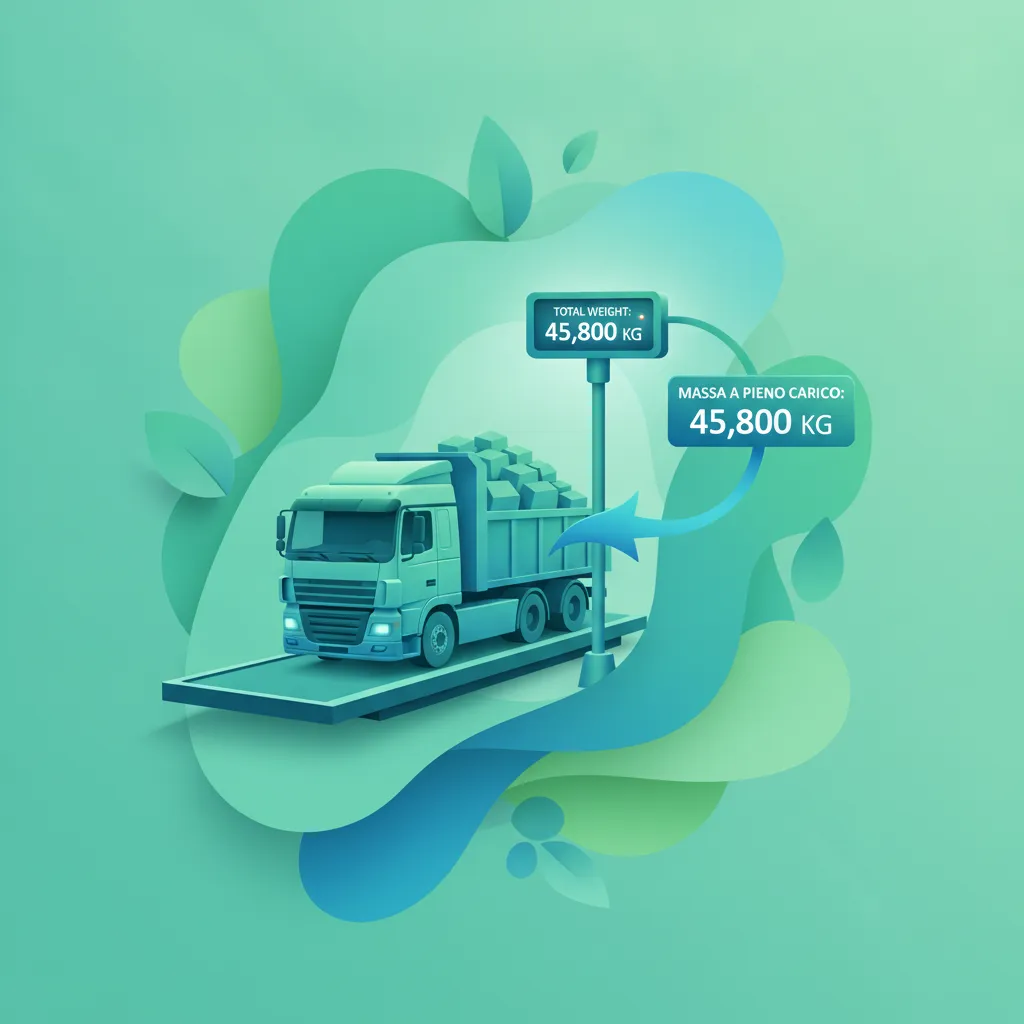
This lesson clarifies two fundamental weight concepts in Italian transport law: 'massa complessiva a pieno carico' (gross vehicle mass) and the vehicle's unladen mass. Learners will understand how to interpret these values from the vehicle's registration documents and use them to determine the maximum legal operating weight. This knowledge is crucial for calculating payload and ensuring compliance with the weight limits associated with the driver's license category.

This lesson synthesizes the unit's concepts through practical, real-world examples of load planning. Learners will work through scenarios that require calculating payload, distributing weight across axles, and checking dimensions to ensure full compliance with 'sagoma limite'. These exercises reinforce the importance of meticulous pre-trip planning to guarantee a safe, legal, and efficient transport operation from start to finish.

This lesson focuses on the practical skill of distributing the load's weight evenly across the vehicle's axles. It explains how improper placement can overload one axle while underloading another, leading to legal violations and poor vehicle handling, steering, and braking performance. Learners will understand how to create a balanced load plan that respects legal axle limits and ensures the vehicle remains stable and controllable.
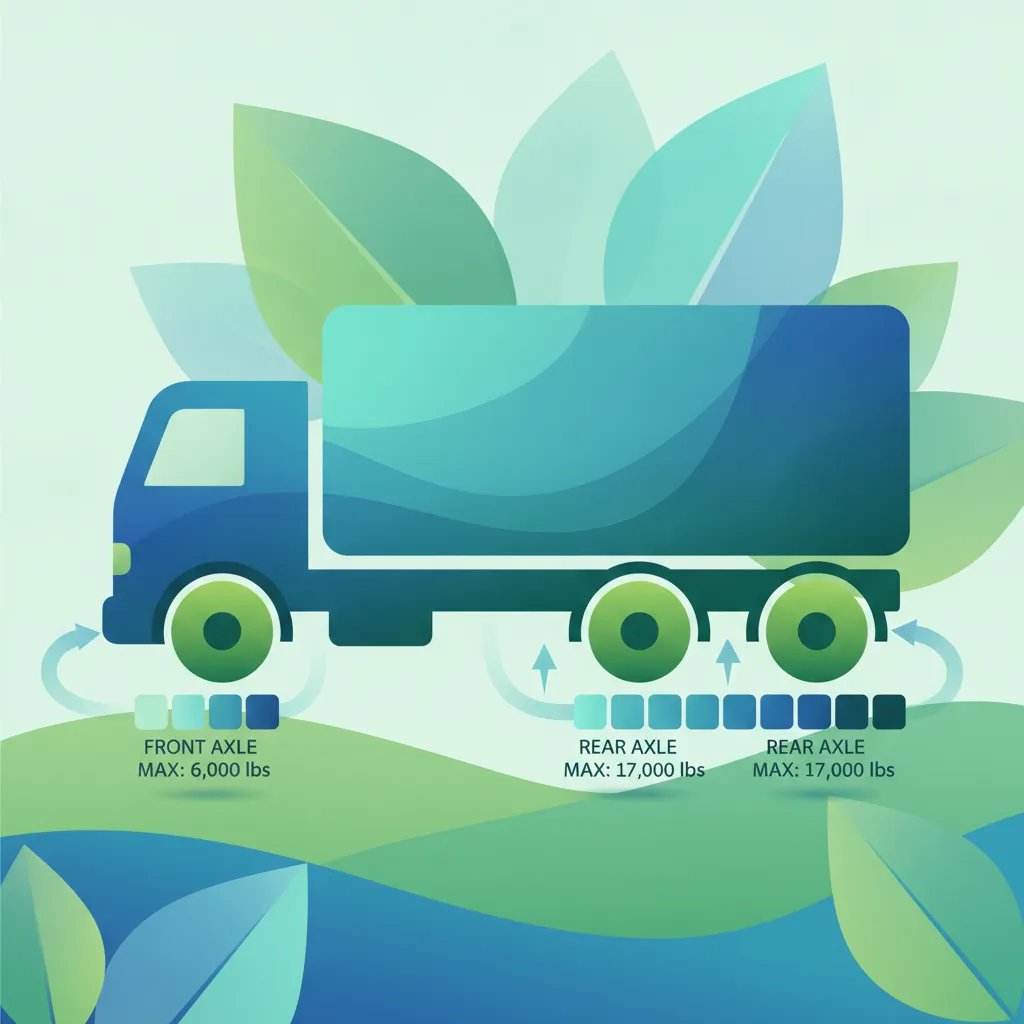
This lesson details the legal restrictions on the weight that can be supported by a single axle or a group of axles. It explains the importance of distributing the load correctly across the vehicle's length to prevent exceeding these limits, which can cause significant road damage and compromise vehicle safety. Learners will understand the relationship between load placement, axle pressure, and overall stability, particularly during braking and cornering.
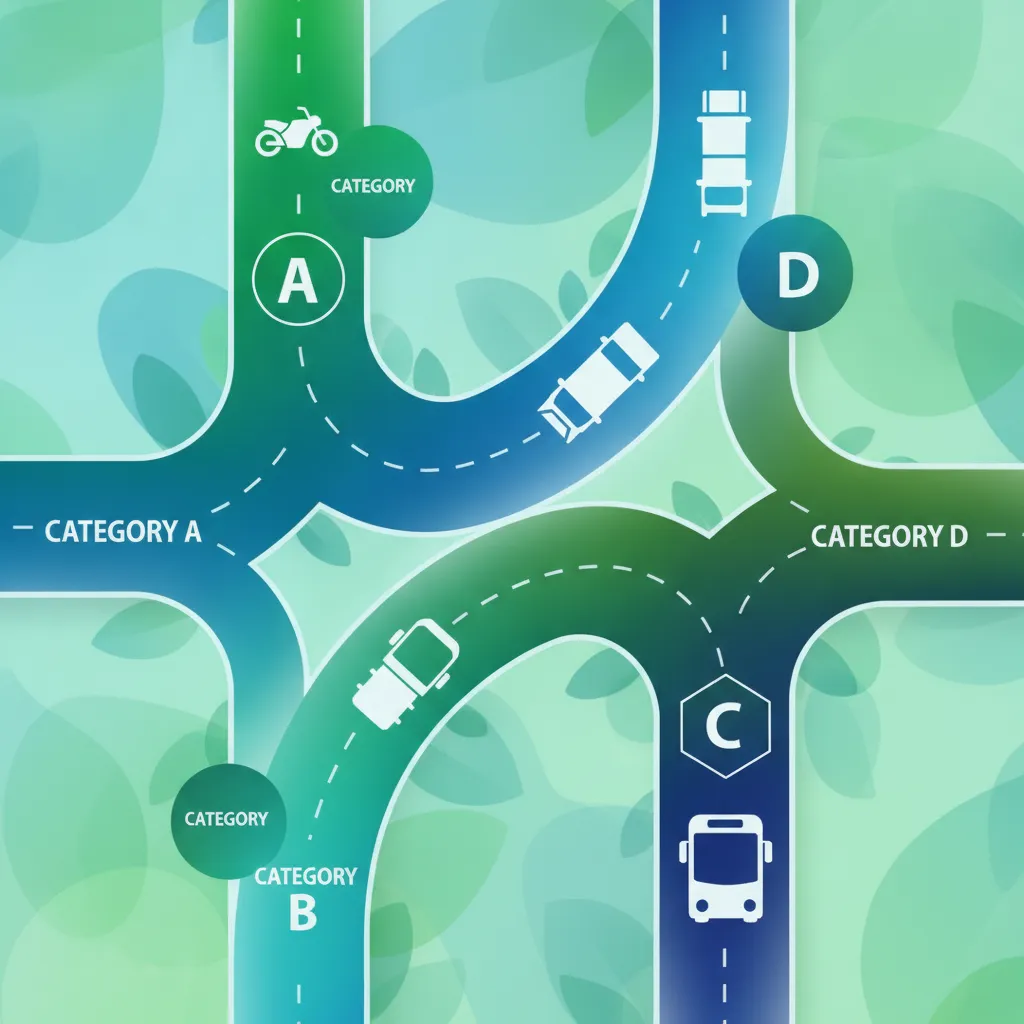
This lesson provides a detailed breakdown of the Italian goods vehicle licence categories, explaining the criteria that define each one. It covers the maximum authorized mass (MAM), vehicle configurations such as rigid trucks and articulated combinations, and the specific permissions granted by the C1, C1E, C, and CE licenses. Understanding these distinctions is fundamental to ensuring legal operation and choosing the correct qualification for specific transport tasks and vehicle types.

This lesson explores the critical physics behind stopping a heavy vehicle. It breaks down the components of total stopping distance—thinking distance and braking distance—and explains how this is significantly increased by vehicle mass and speed. Learners will understand the necessity of maintaining a much greater following distance than a car to allow enough space to stop safely in all conditions.
Learn about legal axle load limits and proper weight distribution for Italian goods vehicles. Understand how to avoid overloading individual axles and the risks associated with imbalanced loads for C/CE license theory.
This lesson details the legal restrictions on the weight that can be supported by a single axle or a group of axles. It explains the importance of distributing the load correctly across the vehicle's length to prevent exceeding these limits, which can cause significant road damage and compromise vehicle safety. Learners will understand the relationship between load placement, axle pressure, and overall stability, particularly during braking and cornering.
This lesson focuses on the practical skill of distributing the load's weight evenly across the vehicle's axles. It explains how improper placement can overload one axle while underloading another, leading to legal violations and poor vehicle handling, steering, and braking performance. Learners will understand how to create a balanced load plan that respects legal axle limits and ensures the vehicle remains stable and controllable.
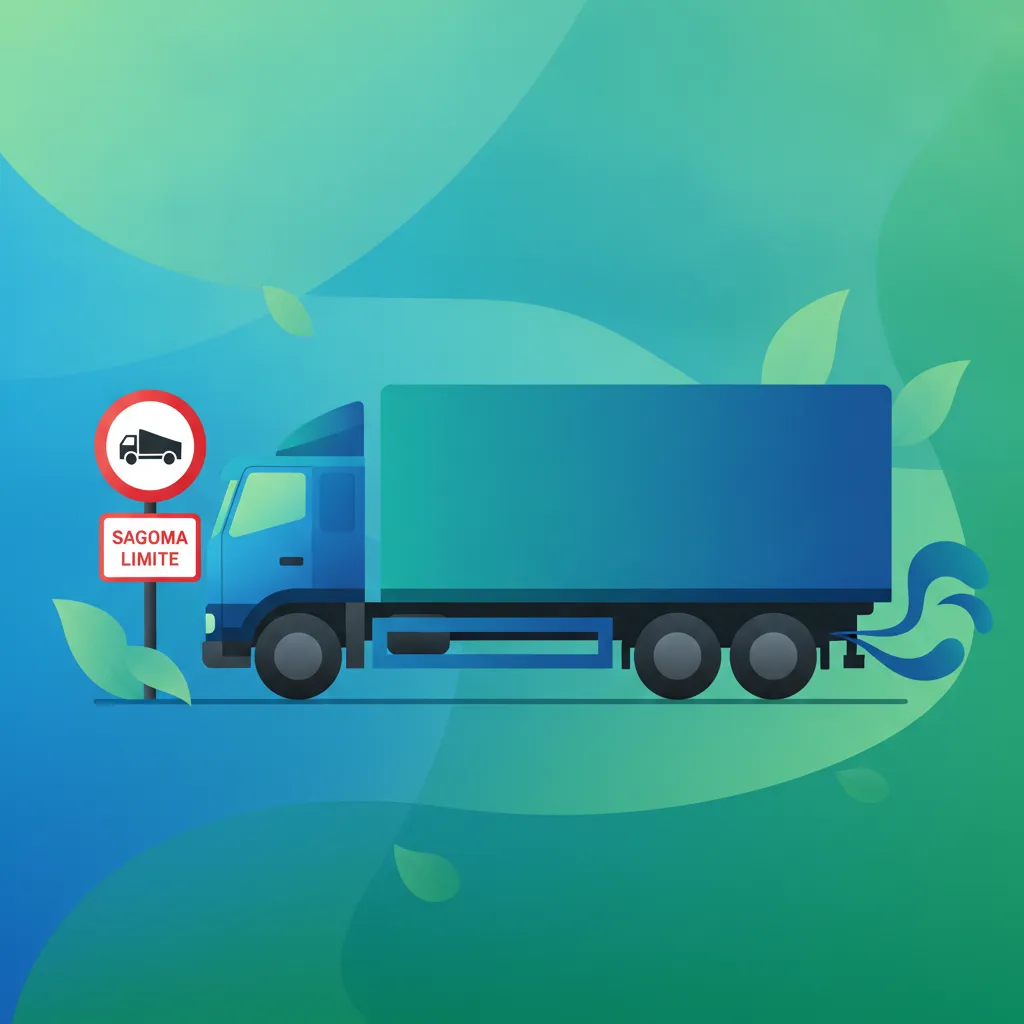
This lesson defines 'sagoma limite', which refers to the maximum outline or silhouette a vehicle and its load can occupy. It then explores the serious repercussions of overloading, which include substantial legal fines, increased stress on vehicle components like brakes and suspension, and dangerously compromised handling and stability. Learners will understand that overloading is not just a legal issue but a critical safety hazard for the driver and all other road users.
This lesson focuses on the specific dimensional limits that heavy goods vehicles must adhere to on Italian roads, as stipulated by the Codice della Strada. It covers the maximum permissible length, width, and height, explaining how these restrictions impact navigation through tunnels, under bridges, and within urban environments. Learners will also understand the conditions under which special permits for exceptional or oversized transport are required.
This lesson clarifies two fundamental weight concepts in Italian transport law: 'massa complessiva a pieno carico' (gross vehicle mass) and the vehicle's unladen mass. Learners will understand how to interpret these values from the vehicle's registration documents and use them to determine the maximum legal operating weight. This knowledge is crucial for calculating payload and ensuring compliance with the weight limits associated with the driver's license category.

This lesson bridges the gap between general traffic laws and their specific application to heavy goods vehicles. It examines how rules regarding speed limits, lane discipline, overtaking, and priority are modified or have special considerations for trucks due to their size, weight, and reduced maneuverability. Drivers will learn to correctly interpret road signs and signals within the context of operating a large vehicle, ensuring safe and compliant integration with other traffic.
This lesson explores the critical physics behind stopping a heavy vehicle. It breaks down the components of total stopping distance—thinking distance and braking distance—and explains how this is significantly increased by vehicle mass and speed. Learners will understand the necessity of maintaining a much greater following distance than a car to allow enough space to stop safely in all conditions.
This lesson synthesizes the unit's concepts through practical, real-world examples of load planning. Learners will work through scenarios that require calculating payload, distributing weight across axles, and checking dimensions to ensure full compliance with 'sagoma limite'. These exercises reinforce the importance of meticulous pre-trip planning to guarantee a safe, legal, and efficient transport operation from start to finish.

This lesson explains the critical concept of the center of gravity (CoG) and its direct impact on a vehicle's susceptibility to rolling over. It demonstrates how placing heavy items high up raises the CoG, making the vehicle less stable in corners or during evasive maneuvers. Learners will understand the importance of loading the heaviest goods as low and as centrally as possible to maximize stability and reduce rollover risk.
Find clear answers to common questions learners have about Payload, Portata, and Weight Calculations. Learn how the lesson is structured, which driving theory objectives it supports, and how it fits into the overall learning path of units and curriculum progression in Italy. These explanations help you understand key concepts, lesson flow, and exam focused study goals.
Tara is the unladen weight of the vehicle including fuel and fluids but excluding the driver and cargo. Portata represents the maximum load capacity the vehicle is legally allowed to carry, calculated as the difference between the massa a pieno carico and the tara.
Exam questions often present specific weight scenarios to test if you can determine whether a vehicle is overloaded. Failing to identify that a load exceeds the vehicle's portata can lead to dangerous stability issues and heavy legal penalties under the Italian Codice della Strada.
In Italian regulations, the driver's weight is generally accounted for in the vehicle's documentation, but you must ensure that the total load (goods plus passengers/driver) does not exceed the maximum authorized mass assigned to the specific category.
An unevenly distributed load shifts the center of gravity, which can cause excessive strain on one axle, reduce braking efficiency, and significantly increase the risk of jack-knifing or loss of control, especially during emergency stops.
Start searching now to pinpoint exactly which Italian driving theory topics, road signs, or traffic rules you need to master. Use our advanced filters to build a custom practice session and ensure you're fully prepared for every aspect of your official driving licence exam.