
This lesson explores the essential physics behind stopping a heavy goods vehicle in Italy. You will learn how mass, speed, and road conditions influence braking distance, and why professional drivers must adapt their following distance to maintain road safety.
Lesson content overview
Driving heavy goods vehicles requires a profound understanding of vehicle dynamics, especially concerning how far it takes to bring such a massive machine to a complete stop. Unlike passenger cars, fully loaded commercial vehicles possess significantly greater kinetic energy and inertia, translating into substantially longer stopping distances. This lesson, crucial for the Italian Goods Vehicle License Theory Course (C, C1, C1E, CE), will delve into the critical physics governing these distances, the factors that influence them, and the practical implications for maintaining road safety and complying with Italian regulations.
Total stopping distance is a fundamental concept in road safety, representing the entire distance a vehicle travels from the moment a driver perceives a hazard until the vehicle comes to a complete halt. For heavy goods vehicles, accurately assessing and managing this distance is paramount to preventing collisions, particularly rear-end incidents, and ensuring the safety of all road users. Ignoring the increased stopping distances of loaded vehicles is a common cause of serious accidents.
The total stopping distance is always divided into two primary, distinct phases:
The sum of these two components—thinking distance plus braking distance—gives the total stopping distance. Understanding each component individually is key to appreciating how different factors contribute to the overall stopping capability of a heavy vehicle.
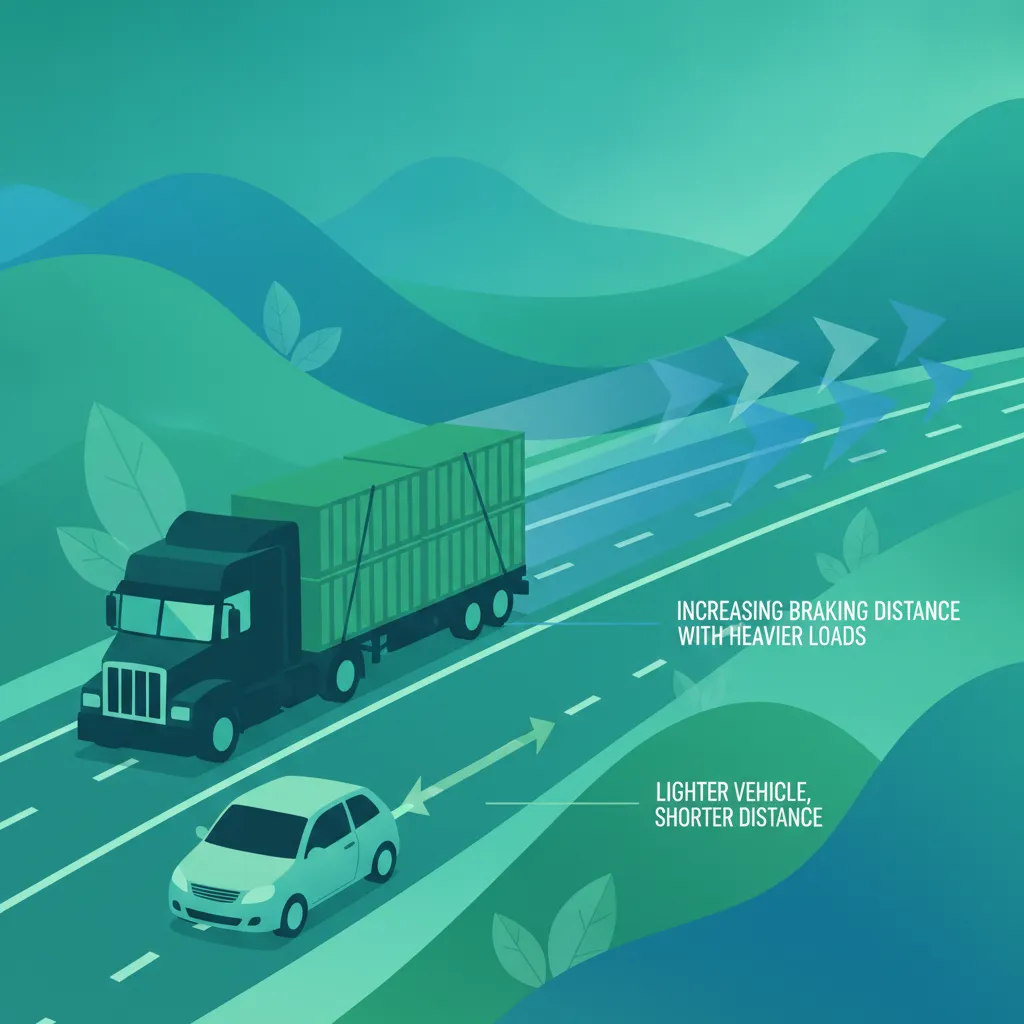
Heavy goods vehicles, by their very nature, transport significant loads, which dramatically increases their overall mass. This increased mass directly translates into higher kinetic energy at any given speed compared to lighter passenger cars. Consequently, more force and a longer distance are required to dissipate this energy and bring the vehicle to a stop. This inherent characteristic necessitates drivers of heavy vehicles to maintain much greater following distances and to adjust their speed far more cautiously than drivers of smaller vehicles, especially when carrying a full load or operating in challenging conditions.
Thinking distance is a critical element of total stopping distance, solely dependent on the driver's cognitive and physical response time. It highlights the human element in the complex act of stopping a moving vehicle.
The distance a vehicle travels from the moment a driver perceives a hazard until they physically initiate the braking process.
Driver reaction time is the elapsed period between perceiving a stimulus (e.g., seeing brake lights ahead, noticing a pedestrian) and initiating an action (e.g., moving the foot to the brake pedal). For an alert driver, this reaction time is typically estimated to be between 1 and 1.5 seconds. During this crucial interval, the vehicle continues to travel at its current speed, covering what is known as the thinking distance. It is important to note that thinking distance is directly proportional to speed and driver reaction time but is largely independent of the vehicle's mass. A heavier vehicle travelling at the same speed with the same driver reaction time will have the same thinking distance as a lighter vehicle.
Several factors can significantly influence a driver's reaction time, thereby increasing the thinking distance:
Professional drivers must consistently monitor their physical and mental state, ensuring optimal alertness to minimize reaction time and thus thinking distance.
Calculating thinking distance is straightforward. It is the product of the vehicle's speed and the driver's reaction time.
Formula for Thinking Distance: Thinking Distance = Speed (m/s) × Reaction Time (s)
To use this formula, speed must be converted from kilometres per hour (km/h) to metres per second (m/s). A useful conversion factor is that 1 km/h is approximately 0.278 m/s (or simply divide km/h by 3.6).
For example, if a heavy goods vehicle is travelling at 80 km/h (which is approximately 22.2 m/s) and the driver's reaction time is 1.5 seconds, the thinking distance would be: 22.2 m/s × 1.5 s = 33.3 metres.
This means the vehicle will travel over 33 metres before the driver even begins to apply the brakes. This highlights the critical importance of anticipating hazards and maintaining a safe following distance.
Braking distance is the second, often longer, component of total stopping distance. It is determined by the vehicle's physical characteristics, the road environment, and the effectiveness of the braking system.
The distance a vehicle travels from the moment its brakes are applied until it comes to a complete stop.
At the heart of braking distance is the concept of kinetic energy (KE). Every moving object possesses kinetic energy, which is directly proportional to its mass (m) and the square of its velocity (v): KE = ½ * m * v². This quadratic relationship with speed is crucial: doubling the speed quadruples the kinetic energy, requiring four times the braking force or distance to dissipate that energy.
When brakes are applied, the vehicle's kinetic energy is converted primarily into heat through friction at the brake pads and tires. Deceleration is the rate at which the vehicle's velocity decreases. A higher deceleration rate means the vehicle loses speed more quickly and thus stops in a shorter distance. For heavy goods vehicles, typical deceleration values on dry roads can range from 3 to 4 m/s².
The braking distance can be calculated using a physics formula:
Formula for Braking Distance: Braking Distance = (v²) / (2 * a) Where: v = initial speed of the vehicle (in m/s) a = deceleration rate (in m/s²)
Using our previous example of 80 km/h (22.2 m/s) and assuming a typical deceleration rate (a) of 3.5 m/s² for a loaded truck on a dry road: Braking Distance = (22.2²) / (2 * 3.5) = 492.84 / 7 = 70.4 metres.
This shows that for a heavy vehicle, the braking distance alone can be substantial, often exceeding the thinking distance, especially at higher speeds.
One of the most significant factors affecting braking distance for commercial vehicles is their mass, which includes the vehicle's tare weight and the weight of its load (cargo or attached trailers).
brake fade, where braking power significantly diminishes.For these reasons, drivers must always adjust their speed according to the vehicle's load, ensuring that the total stopping distance remains within safe limits.
Modern heavy goods vehicles are equipped with sophisticated braking systems designed to handle immense loads. These typically include:
Effective maintenance of these systems is crucial. Worn brake pads, contaminated air lines, or malfunctioning ABS components can severely compromise a heavy vehicle's stopping ability, increasing braking distance and posing serious safety risks.
The slope of the road, or gradient, has a direct impact on braking distance:
Drivers must compensate for downhill gradients by reducing speed and making proactive use of engine braking systems (retarders, exhaust brakes) and lower gears to control the vehicle's speed and preserve the effectiveness of the service brakes. Relying solely on service brakes on long descents with a heavy load is extremely dangerous due to the risk of brake fade.
The condition of the road surface and prevailing weather conditions are critical determinants of the coefficient of friction between the tires and the road, directly affecting braking distance:
Drivers of heavy goods vehicles have a legal and moral obligation to adjust their speed and increase following distances dramatically in adverse weather and on slippery surfaces. The typical deceleration rates assumed for dry roads are entirely inapplicable in such conditions.
Combining thinking distance and braking distance yields the total stopping distance, which is the absolute minimum space required to stop.
Total Stopping Distance = Thinking Distance + Braking Distance
Let's combine our previous calculations for a fully loaded heavy vehicle travelling at 80 km/h on a dry, level road:
This calculation demonstrates that even in optimal conditions, a fully loaded truck requires over 100 metres to stop from 80 km/h. This is significantly longer than the stopping distance for a passenger car under similar conditions.
Now, consider the impact of adverse conditions:
These examples underscore why professional drivers must constantly assess road conditions, vehicle load, and speed to maintain a following distance that is at least equal to their estimated total stopping distance.
The Italian Codice della Strada (Highway Code) incorporates these physics principles into legal requirements for heavy goods vehicles, focusing on speed limits and safe following distances to mitigate collision risks. Compliance with these regulations is not only a legal obligation but a critical safety measure.
Italian law imposes specific speed limits for heavy goods vehicles, which vary depending on the vehicle's maximum permissible mass, the presence of a trailer, and the type of road. These limits are generally lower than those for passenger cars to account for their longer stopping distances and larger dimensions.
Generally, for vehicles over 3.5 tonnes:
Adhering strictly to these speed limits is non-negotiable for professional drivers. Exceeding them, even slightly, disproportionately increases the required stopping distance and the severity of potential accidents.
While the Codice della Strada may not stipulate an exact numerical following distance for every scenario (besides specific tunnel or weather conditions), it mandates that drivers must always maintain a sufficient distance to be able to stop safely. This implies that the following distance must be at least equal to the total stopping distance calculated for the vehicle's current speed, load, and prevailing road and weather conditions.
Rule: Drivers must always maintain a following distance that allows them to stop safely within the total stopping distance under current conditions. This is a continuous obligation and a violation can lead to penalties for unsafe following.
This rule is particularly pertinent for heavy goods vehicles due to their extended stopping distances. Drivers should also be aware of specific regulations, such as those that might apply in tunnels or during adverse weather, which may require even greater minimum distances.
Proper load securing and distribution are fundamental to safe heavy vehicle operation and directly impact braking performance. The Codice della Strada and related regulations mandate that:
On long or steep downhill stretches, the Italian regulations, and best practices, strongly recommend or implicitly require the proactive use of engine braking systems (retarder, exhaust brake) and appropriate gear selection.
Recommendation: On steep, prolonged descents, drivers must engage auxiliary braking devices (retarder, exhaust brake) and select a lower gear to control speed and prevent the service brakes from overheating.
This practice prevents the service brakes from overheating (brake fade), which would drastically reduce their effectiveness and potentially lead to a catastrophic loss of braking capability. By using engine brakes, drivers can maintain a controlled speed and preserve the service brakes for emergency situations.
Understanding the theory is only the first step. Applying this knowledge correctly in real-world driving situations, and avoiding common errors, is essential for every professional heavy vehicle driver.
Many collisions involving heavy vehicles are attributable to a misunderstanding of stopping distances or a failure to adjust driving behaviour for prevailing conditions.
Consider these scenarios, which demonstrate the practical application of understanding braking distances for heavy vehicles:
Scenario 1: Emergency Braking on a Motorway
Scenario 2: Mountain Descent in Wet Conditions
Mastering the principles of braking distance is fundamental for every professional driver of heavy goods vehicles. It is not merely about memorizing formulas, but about internalizing the dynamic interplay of speed, mass, human reaction, road conditions, and vehicle systems.
By consistently applying these principles, drivers of heavy goods vehicles can make informed decisions, maintain optimal control, comply with the Italian Codice della Strada, and significantly contribute to road safety for themselves and others.
This lesson explains the critical physics behind stopping heavy goods vehicles, dividing total stopping distance into thinking distance (reaction phase) and braking distance (mechanical phase). Thinking distance depends only on speed and driver reaction time, while braking distance is heavily influenced by vehicle mass, speed squared, road conditions, gradient, and braking system efficiency. A fully loaded truck at 80 km/h on a dry road may require over 100 metres to stop—far exceeding passenger car distances. Italian regulations set specific speed limits for heavy vehicles and mandate that drivers maintain following distances sufficient to stop safely under all conditions. Professional drivers must also use engine brakes on descents to prevent brake fade and preserve service brake effectiveness for emergencies.
A short set of high-value points that capture the most important learning from this lesson.
Total stopping distance equals thinking distance plus braking distance, and both must be accounted for in safe driving.
Kinetic energy increases with the square of speed, meaning doubling speed quadruples the energy that must be dissipated to stop.
Heavy goods vehicles require substantially longer stopping distances than passenger cars due to their greater mass.
Safe following distance must always be at least equal to the estimated total stopping distance under current conditions.
Engine braking systems are essential tools for managing speed on descents and preventing service brake failure.
Explore all units and lessons included in this driving theory course.
Thinking distance depends only on speed and driver reaction time; vehicle mass does not affect it.
Wet road conditions can increase braking distances by 30-50%, while snow and ice may triple or quadruple stopping distances.
Italian speed limits for heavy vehicles over 3.5 tonnes are typically 80 km/h on motorways and dual carriageways, and 70 km/h on secondary roads.
Improper load distribution can overload specific axles, reducing overall braking efficiency and stability.
Formula for thinking distance: Speed (m/s) × Reaction Time (s); Formula for braking distance: v² / (2 × a).
Believing braking distance increases linearly with speed when it actually increases with the square of speed.
Assuming passenger car stopping distances apply to heavy vehicles, which have significantly longer distances even when unloaded.
Thinking driver reaction time is constant; it varies with fatigue, distraction, age, health, and impairment.
Relying solely on service brakes for descents without using engine brakes, risking dangerous brake fade.
Underestimating the impact of wet or slippery roads on braking performance for loaded vehicles.
Lesson content overview
A short set of high-value points that capture the most important learning from this lesson.
Total stopping distance equals thinking distance plus braking distance, and both must be accounted for in safe driving.
Kinetic energy increases with the square of speed, meaning doubling speed quadruples the energy that must be dissipated to stop.
Heavy goods vehicles require substantially longer stopping distances than passenger cars due to their greater mass.
Safe following distance must always be at least equal to the estimated total stopping distance under current conditions.
Engine braking systems are essential tools for managing speed on descents and preventing service brake failure.
Explore all units and lessons included in this driving theory course.
Thinking distance depends only on speed and driver reaction time; vehicle mass does not affect it.
Wet road conditions can increase braking distances by 30-50%, while snow and ice may triple or quadruple stopping distances.
Italian speed limits for heavy vehicles over 3.5 tonnes are typically 80 km/h on motorways and dual carriageways, and 70 km/h on secondary roads.
Improper load distribution can overload specific axles, reducing overall braking efficiency and stability.
Formula for thinking distance: Speed (m/s) × Reaction Time (s); Formula for braking distance: v² / (2 × a).
Believing braking distance increases linearly with speed when it actually increases with the square of speed.
Assuming passenger car stopping distances apply to heavy vehicles, which have significantly longer distances even when unloaded.
Thinking driver reaction time is constant; it varies with fatigue, distraction, age, health, and impairment.
Relying solely on service brakes for descents without using engine brakes, risking dangerous brake fade.
Underestimating the impact of wet or slippery roads on braking performance for loaded vehicles.
Explore search topics learners often look for when studying Braking Distance Calculations for Loaded Vehicles. These topics reflect common questions about road rules, driving situations, safety guidance, and lesson level theory preparation for learners in Italy.
Browse additional driving theory lessons that cover connected traffic rules, road signs, and common driving situations related to this topic. Improve your understanding of how different rules interact across everyday traffic scenarios.
Explore the two key components of total stopping distance: thinking distance related to driver reaction and braking distance influenced by vehicle dynamics. Essential theory for Italian heavy vehicle license candidates.

This lesson covers the techniques for executing a controlled emergency stop in a heavy goods vehicle. It explains the function of Anti-lock Braking Systems (ABS) in preventing wheel lock-up and maintaining steering control during maximum braking effort. Learners will understand how to brace for the effects of rapid deceleration and anticipate potential load shifts, focusing on bringing the vehicle to a stop as quickly and safely as possible.

This lesson covers three critical risks associated with heavy vehicle braking systems. It explains 'brake lag' in air brake systems, the delay between pedal application and brake activation, and 'brake fade', the loss of braking efficiency due to overheating. Learners will be taught to recognize the warning signs and, more importantly, to use correct driving techniques, such as utilizing endurance brakes, to prevent these potentially catastrophic failures.

This lesson focuses on auxiliary or 'endurance' braking systems designed to manage vehicle speed on long downgrades, reducing the risk of service brake overheating. It explains the operating principles of engine brakes (compression release brakes), hydrodynamic retarders, and exhaust brakes. Learners will understand when and how to use these powerful tools to maintain a safe, controlled speed and preserve the service brakes for when they are most needed.
This lesson focuses on the factors that determine a motorcycle's total stopping distance: perception time, reaction time, and braking distance. It provides a clear understanding of how speed exponentially increases the distance required to come to a complete stop. Learners will be able to apply principles like the two-second rule to maintain a safe and appropriate following distance in various traffic situations.
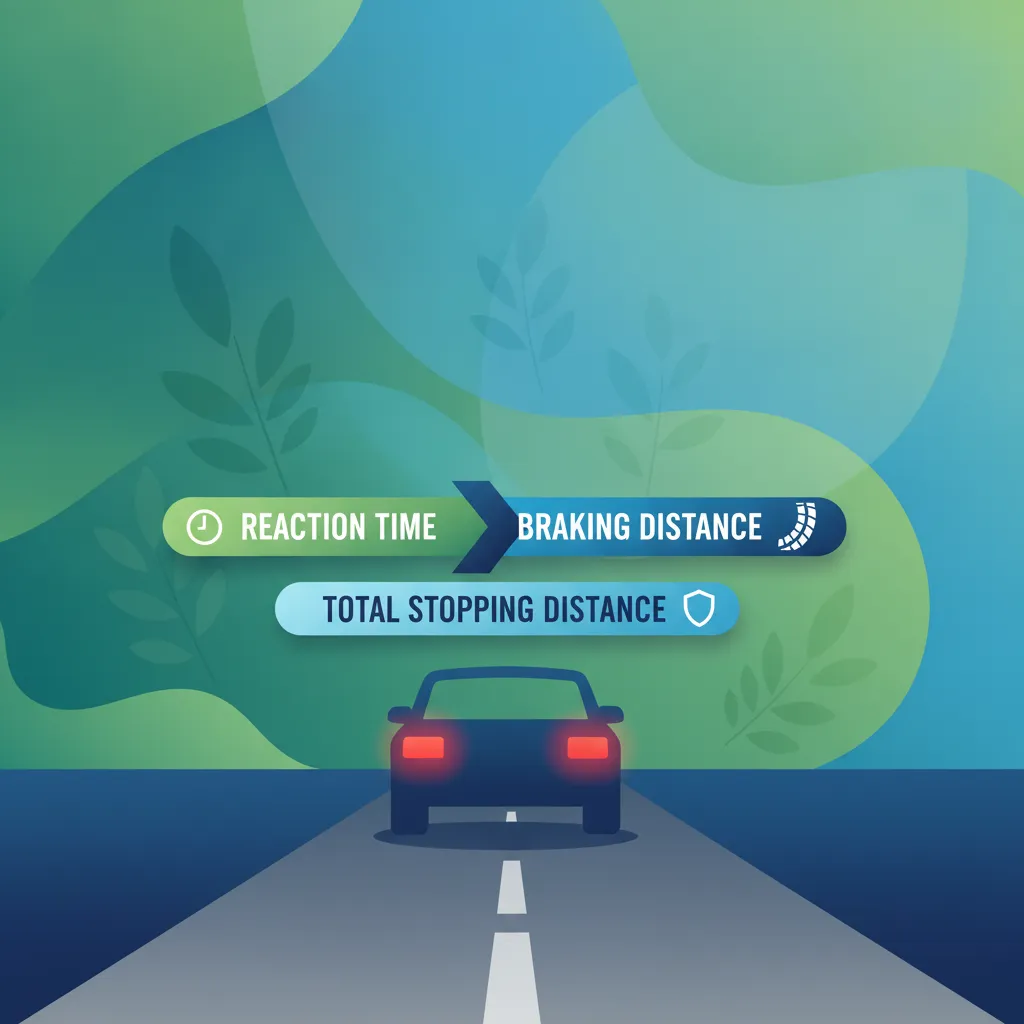
This lesson provides a technical breakdown of the total stopping distance, explaining its two key components: reaction distance and braking distance. It details how factors like driver alertness affect reaction time, while speed, vehicle weight, and road grip influence braking distance. Understanding this relationship is fundamental to managing speed and maintaining a safe distance from other road users.

This lesson introduces the three distinct categories of braking systems on a heavy vehicle. It explains the role of the service brake for normal stopping, the parking brake for securing the vehicle when stationary, and endurance brakes for sustained speed control. Understanding the purpose and correct application of each system is fundamental to safe and efficient vehicle operation, as well as minimizing wear on the primary service brakes.
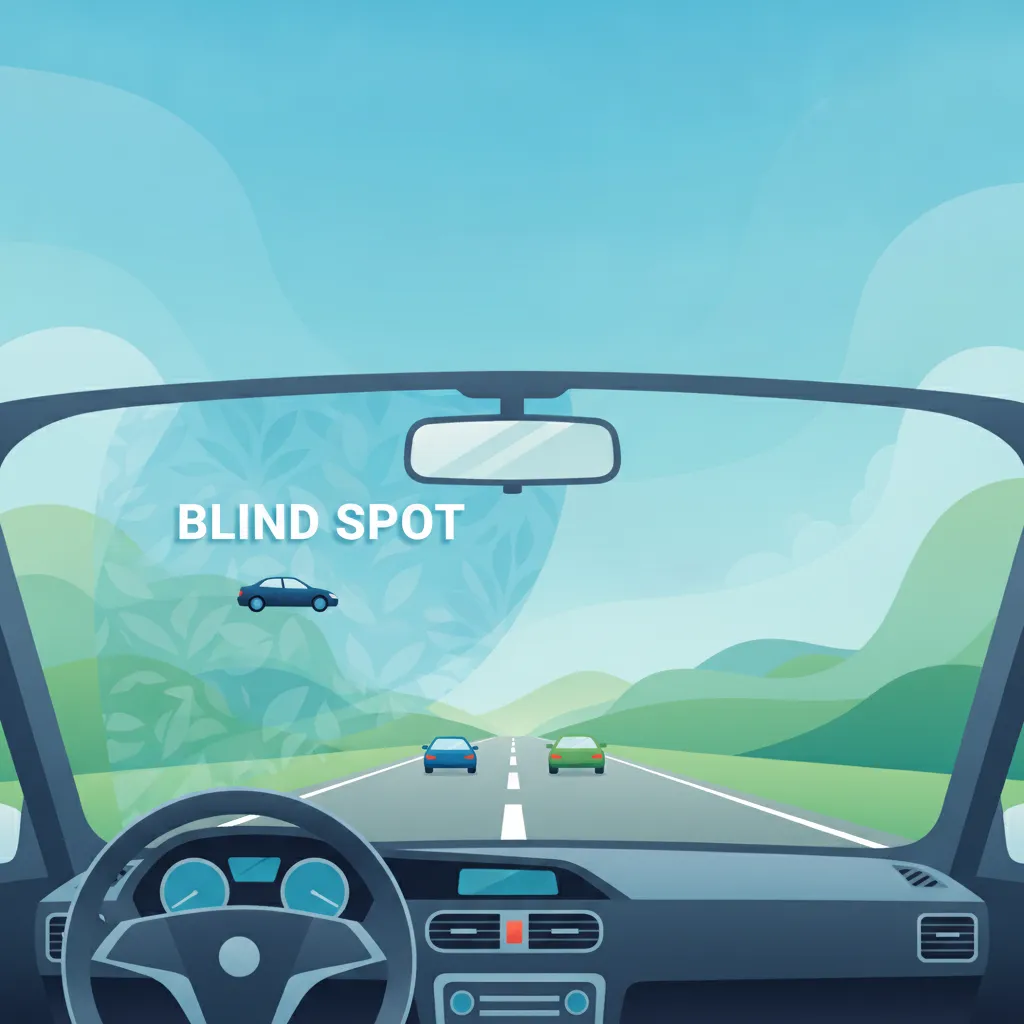
This lesson highlights the large blind spots—or 'no-zones'—that exist to the front, back, and sides of a heavy vehicle, where smaller vehicles, cyclists, and pedestrians can disappear from view. It teaches proactive scanning techniques, the importance of anticipating hazards, and how to use mirrors and direct vision effectively to manage these high-risk areas. Awareness and mitigation of blind spots are crucial for preventing collisions, especially in urban traffic.
Understand how speed, load, road conditions, and gradient influence heavy vehicle stopping distances in Italy. Learn the legal requirements for speed limits and safe following distances for C, C1, C1E, and CE licenses.
This lesson covers three critical risks associated with heavy vehicle braking systems. It explains 'brake lag' in air brake systems, the delay between pedal application and brake activation, and 'brake fade', the loss of braking efficiency due to overheating. Learners will be taught to recognize the warning signs and, more importantly, to use correct driving techniques, such as utilizing endurance brakes, to prevent these potentially catastrophic failures.
This lesson focuses on auxiliary or 'endurance' braking systems designed to manage vehicle speed on long downgrades, reducing the risk of service brake overheating. It explains the operating principles of engine brakes (compression release brakes), hydrodynamic retarders, and exhaust brakes. Learners will understand when and how to use these powerful tools to maintain a safe, controlled speed and preserve the service brakes for when they are most needed.
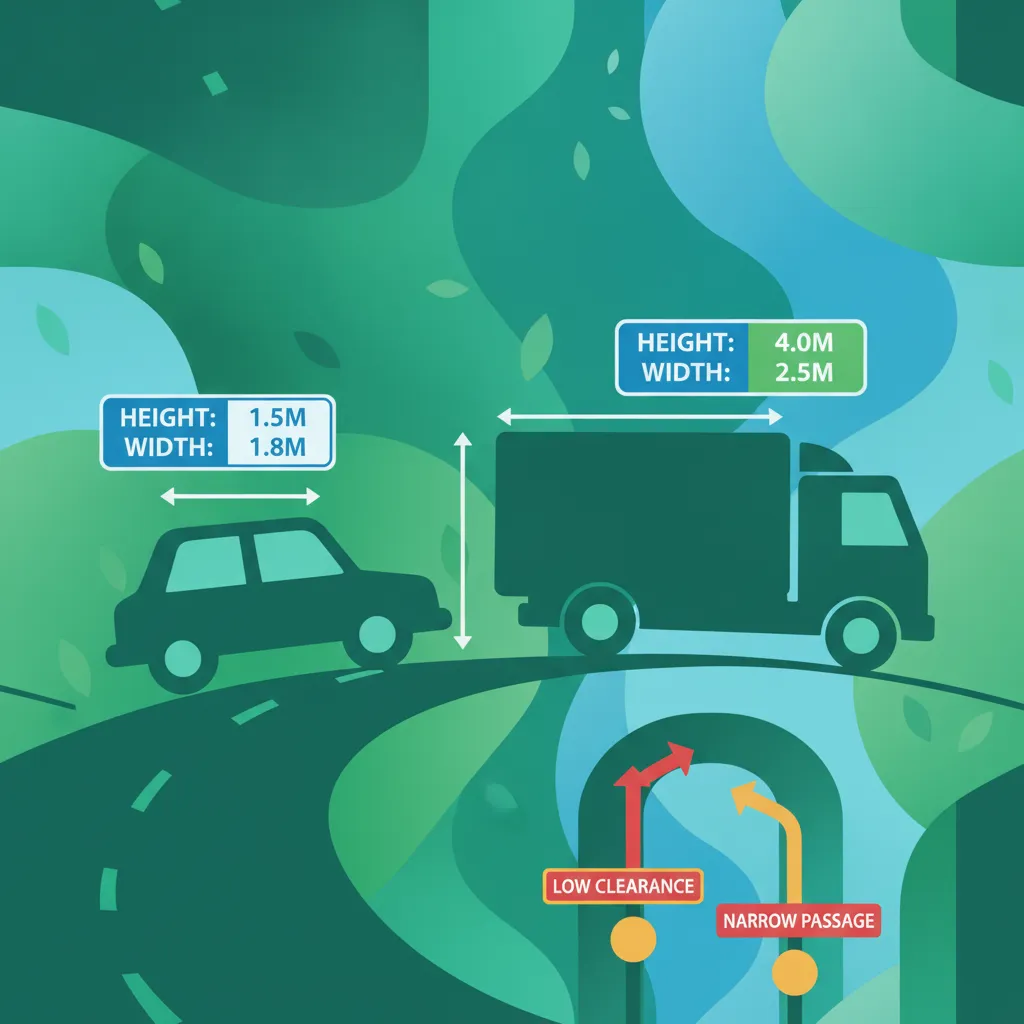
This lesson focuses on the specific dimensional limits that heavy goods vehicles must adhere to on Italian roads, as stipulated by the Codice della Strada. It covers the maximum permissible length, width, and height, explaining how these restrictions impact navigation through tunnels, under bridges, and within urban environments. Learners will also understand the conditions under which special permits for exceptional or oversized transport are required.
This lesson focuses on the factors that determine a motorcycle's total stopping distance: perception time, reaction time, and braking distance. It provides a clear understanding of how speed exponentially increases the distance required to come to a complete stop. Learners will be able to apply principles like the two-second rule to maintain a safe and appropriate following distance in various traffic situations.
This lesson introduces the three distinct categories of braking systems on a heavy vehicle. It explains the role of the service brake for normal stopping, the parking brake for securing the vehicle when stationary, and endurance brakes for sustained speed control. Understanding the purpose and correct application of each system is fundamental to safe and efficient vehicle operation, as well as minimizing wear on the primary service brakes.
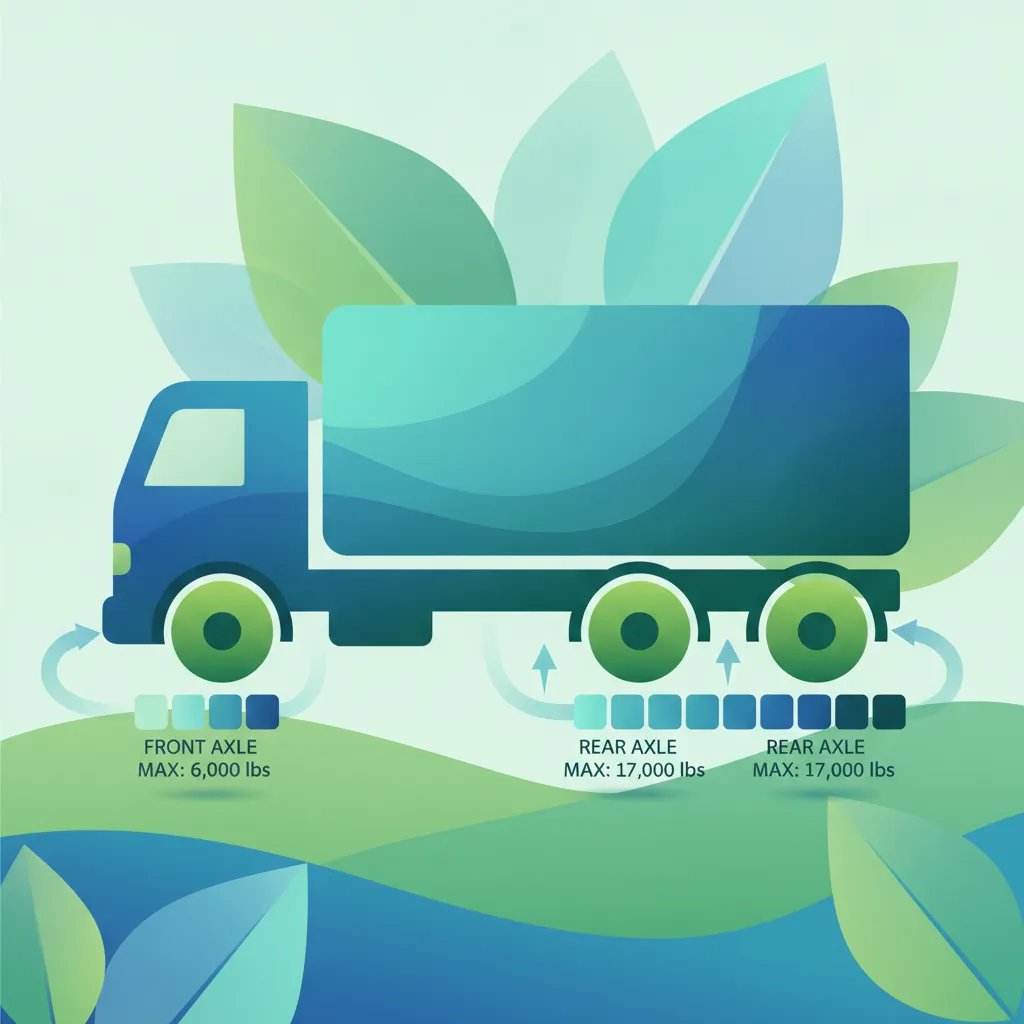
This lesson details the legal restrictions on the weight that can be supported by a single axle or a group of axles. It explains the importance of distributing the load correctly across the vehicle's length to prevent exceeding these limits, which can cause significant road damage and compromise vehicle safety. Learners will understand the relationship between load placement, axle pressure, and overall stability, particularly during braking and cornering.
This lesson provides a technical breakdown of the total stopping distance, explaining its two key components: reaction distance and braking distance. It details how factors like driver alertness affect reaction time, while speed, vehicle weight, and road grip influence braking distance. Understanding this relationship is fundamental to managing speed and maintaining a safe distance from other road users.

This lesson focuses on the specific regulations and techniques for operating a heavy vehicle on high-speed motorways. It covers mandatory lane discipline for trucks, the rules governing overtaking other heavy vehicles, and the specific speed limits that apply. Best practices for merging onto and exiting the motorway, maintaining safe following distances, and using the hard shoulder only in genuine emergencies are also detailed.

This lesson vividly illustrates the dangers of a load that moves during transit. It explains how a sudden load shift during braking can increase stopping distance or cause a jack-knife, while a shift during cornering can easily lead to a rollover. By understanding these dynamic forces, learners will appreciate the absolute necessity of ensuring every piece of cargo is properly and robustly secured before starting a journey.

This lesson bridges the gap between general traffic laws and their specific application to heavy goods vehicles. It examines how rules regarding speed limits, lane discipline, overtaking, and priority are modified or have special considerations for trucks due to their size, weight, and reduced maneuverability. Drivers will learn to correctly interpret road signs and signals within the context of operating a large vehicle, ensuring safe and compliant integration with other traffic.
Find clear answers to common questions learners have about Braking Distance Calculations for Loaded Vehicles. Learn how the lesson is structured, which driving theory objectives it supports, and how it fits into the overall learning path of units and curriculum progression in Italy. These explanations help you understand key concepts, lesson flow, and exam focused study goals.
Heavy goods vehicles have significantly higher mass and inertia. According to the laws of physics, a heavier vehicle requires more force and a longer distance to come to a complete stop, even if the braking system is highly advanced.
As the total weight of your vehicle and trailer increases, the kinetic energy that the brakes must dissipate also increases. A fully loaded vehicle will always have a significantly longer braking distance than an empty one, requiring you to increase your safety gap.
Thinking distance is the distance travelled between seeing a hazard and hitting the brake pedal. Braking distance is the distance travelled from the moment the brakes are applied until the vehicle comes to a complete halt. Total stopping distance is the sum of both.
Yes, provided the braking system is functioning correctly. Increased mass leads to increased momentum, meaning the vehicle will travel further before coming to a stop compared to when it is running empty.
Start searching now to pinpoint exactly which Italian driving theory topics, road signs, or traffic rules you need to master. Use our advanced filters to build a custom practice session and ensure you're fully prepared for every aspect of your official driving licence exam.