
This lesson breaks down the essential weight concepts of Massa Complessiva and Massa a Pieno Carico as required for Italian C, C1, and CE license holders. You will learn how to read your vehicle's registration document to identify these limits and apply them to ensure your heavy goods vehicle operates safely and legally.
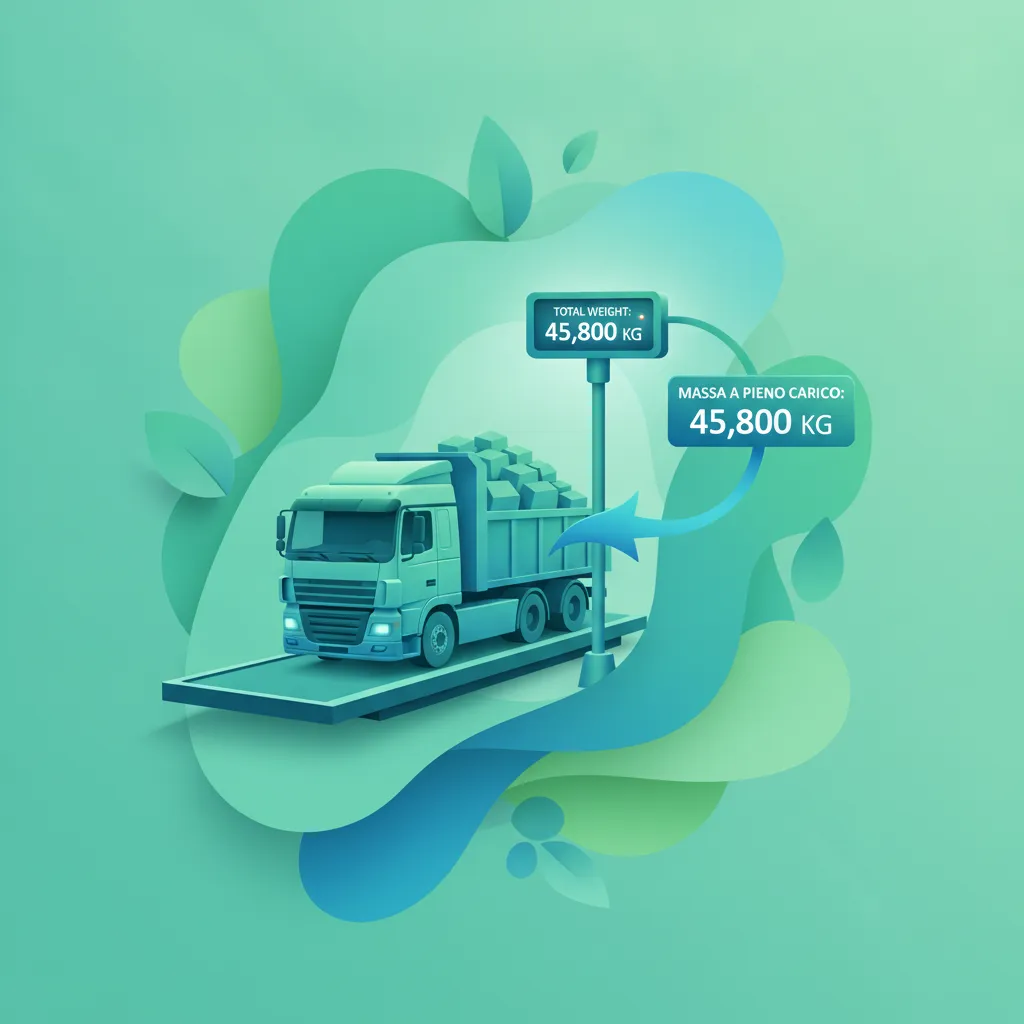
Lesson content overview
Operating heavy goods vehicles in Italy requires a precise understanding of various weight classifications and their legal implications. Among the most fundamental concepts are Massa Complessiva a Pieno Carico (Gross Vehicle Mass) and Massa a Vuoto (Unladen Mass). These values, found on your vehicle's registration document, the Carta di Circolazione, dictate everything from your maximum legal payload to the driver's license category required to operate the vehicle.
This lesson delves into these crucial concepts, providing a comprehensive guide for aspiring professional drivers undertaking the Italian Goods Vehicle License Theory Course (C, C1, C1E, CE). Mastering this knowledge is not only vital for passing your theoretical examination but also essential for ensuring road safety, complying with legal regulations, and avoiding severe penalties associated with overloading.
The term Massa Complessiva a Pieno Carico, often shortened to Massa Complessiva, refers to the maximum permissible total weight of a vehicle when it is fully loaded and ready for operation on public roads. This comprehensive weight includes the vehicle's own mass (Massa a Vuoto), its entire payload (cargo), any passengers, fuel, and, if applicable, the weight of an attached semi-trailer or trailer.
This critical value is not merely a suggestion; it is a legally binding limit established by the vehicle manufacturer and officially registered on the vehicle's Carta di Circolazione. Exceeding this limit compromises the vehicle's structural integrity, braking efficiency, handling, and overall safety, while also contributing to premature wear on road infrastructure.
In contrast to Massa Complessiva, Massa a Vuoto represents the vehicle's unladen mass. This is the weight of the vehicle as it leaves the manufacturer, complete with its standard equipment, essential fluids (such as oil and coolant), and, according to Italian regulations, a full tank of fuel. It specifically excludes any occupants, cargo, or additional non-standard equipment.
The Massa a Vuoto serves as the baseline from which all other weight calculations are made. It determines the vehicle's minimum operating weight and is crucial for accurately calculating the vehicle's Portata, or payload capacity. Accurate knowledge of this value ensures that drivers can determine how much cargo they can legally carry without exceeding the overall maximum weight limit.
The concept of Portata, or payload capacity, directly links Massa Complessiva and Massa a Vuoto. Portata represents the maximum weight of cargo, passengers, and any additional equipment that can be safely and legally added to a vehicle without exceeding its Massa Complessiva a Pieno Carico. It is calculated using a straightforward formula:
Payload Capacity (Portata) = Massa Complessiva a Pieno Carico - Massa a Vuoto
This calculation is fundamental for effective load planning. Professional drivers must consistently verify that the combined weight of their cargo, driver, passengers, and any other non-standard additions does not surpass the calculated Portata. Failing to do so can result in overloading, which carries significant legal and safety consequences.
The Carta di Circolazione, Italy's official vehicle registration document, is the primary source for all legally relevant vehicle data, including mass specifications. Both Massa a Vuoto and Massa Complessiva a Pieno Carico are clearly indicated on this document.
Drivers are legally obliged to carry the Carta di Circolazione with them whenever operating the vehicle. Before undertaking any journey, especially when transporting goods, it is imperative to consult this document to verify the vehicle's specific weight limits. Misinterpretation or neglect of these values can lead to severe penalties.
The regulation of vehicle mass in Italy is primarily governed by the Codice della Strada (Italian Highway Code). These laws are designed to ensure public safety, protect road infrastructure, and define the operational parameters for various vehicle types and driver's license categories.
Article 90 of the Codice della Strada explicitly defines Massa Complessiva a Pieno Carico as the maximum permissible total weight for a vehicle's road operation. This includes the vehicle's own weight, its cargo, passengers, fuel, and any attached semi-trailer or trailer. This value is mandatory and must be stated on the Carta di Circolazione. Adhering to this limit is crucial for vehicle stability, braking performance, and preventing excessive stress on vehicle components and road surfaces.
The Massa a Vuoto must also be precisely indicated on the vehicle's registration documents. Its definition, encompassing the vehicle as built with standard equipment and, crucially, a full fuel tank (unless specified otherwise by particular regulations for certain vehicle types), provides the fundamental weight for calculating payload. This baseline is essential for accurate load planning and for law enforcement verification during inspections.
Article 87 of the Codice della Strada establishes a direct link between the Massa Complessiva of a vehicle and the required driver's license category. Different license categories are granted based on the driver's proven capability to handle vehicles of increasing size and weight.
Understanding these license category limits is non-negotiable. Operating a vehicle that exceeds the weight limits of your license category can lead to severe penalties, including fines, license suspension, and potential criminal charges in case of an accident.
Here’s a breakdown relevant to goods vehicle licenses:
Operating a vehicle with a total weight exceeding its Massa Complessiva a Pieno Carico is a serious offense under Article 169 of the Codice della Strada. The penalties for overloading are significant and can include:
Beyond legal repercussions, overloading poses immense safety risks. It severely impairs braking performance, increases stopping distances, reduces steering control and stability, and places excessive strain on tyres, suspension, and other critical vehicle components, significantly increasing the likelihood of mechanical failure and accidents.
Drivers, especially those new to heavy goods vehicles, often encounter specific challenges and make common errors related to vehicle mass:
Understanding vehicle mass is not static; it requires dynamic application based on various operational contexts.
Consider a medium-duty truck with a Massa a Vuoto of 4,500 kg and a Massa Complessiva of 7,500 kg. The calculated Portata is 3,000 kg. When planning a delivery, the driver must meticulously weigh all cargo. If the cargo totals 2,800 kg, and the driver (80 kg) plus a full fuel tank (200 kg) are added, the total mass would be 4,500 kg (Massa a Vuoto) + 2,800 kg (cargo) + 80 kg (driver) = 7,380 kg. This is well within the 7,500 kg Massa Complessiva, allowing for a safe journey.
For a combination vehicle, such as a tractor unit with a Massa Complessiva of 11,000 kg and a semi-trailer with its own Massa Complessiva of 30,000 kg, the combined Massa Complessiva must be considered. The driver must ensure the total weight of the entire combination, including all cargo, does not exceed the maximum allowed for the specific route or the legal combined limit for a category CE license. It is crucial to remember that the combined total load is often limited not just by the individual units, but by overall limits for the road network or specific bridges.
Safe operation often requires maintaining a margin below the maximum Massa Complessiva. On wet or icy roads, reduced traction necessitates longer stopping distances. Operating at the absolute maximum weight in such conditions significantly increases accident risk. Similarly, steep uphill gradients place immense strain on the engine and braking systems; a fully loaded heavy vehicle requires careful management to prevent overheating or brake fade. Local road conditions and specific infrastructure (e.g., old bridges with lower weight limits) always take precedence over the vehicle's general Massa Complessiva.
Understanding Massa Complessiva a Pieno Carico and Massa a Vuoto is foundational for all professional drivers in Italy. These concepts are not just theoretical constructs for an exam; they are practical tools that dictate daily operational limits, impact road safety, preserve vehicle longevity, and ensure compliance with the Codice della Strada.
By diligently consulting the Carta di Circolazione, accurately calculating Portata, respecting license category limits, and being aware of the severe consequences of overloading, drivers can operate their heavy goods vehicles responsibly and legally. This comprehensive knowledge forms a critical component of safe and professional driving practices within the Italian transport sector.
This lesson establishes the foundational weight concepts required for operating heavy goods vehicles in Italy under the Codice della Strada. Learners must distinguish between Massa Complessiva a Pieno Carico (the absolute maximum loaded weight) and Massa a Vuoto (the unladen mass as manufactured), using these to calculate the vehicle's Portata (payload capacity). The Carta di Circolazione is the authoritative source for both values and must be checked before every journey. Understanding the specific weight thresholds tied to each license category—C1, C, C1E, and CE—is essential for both exam success and legal compliance, as overloading carries severe penalties including fines, license points, vehicle immobilisation, and potential criminal charges.
A short set of high-value points that capture the most important learning from this lesson.
Massa Complessiva a Pieno Carico is the legally binding maximum total weight of a fully loaded vehicle, including its own mass, all cargo, passengers, fuel, and any attached trailer or semi-trailer.
Massa a Vuoto is the unladen mass of the vehicle including standard equipment, essential fluids, and a full fuel tank, but excluding cargo, passengers, and additional non-standard equipment.
Portata (payload capacity) is calculated as: Massa Complessiva a Pieno Carico minus Massa a Vuoto, and represents the maximum weight of cargo and passengers that can be added.
The Carta di Circolazione is the official document where both mass values are recorded, and it must be consulted before any journey to verify legal operating limits.
License categories C1, C, C1E, and CE are directly linked to specific Massa Complessiva thresholds defined in Article 87 of the Codice della Strada.
Explore all units and lessons included in this driving theory course.
Portata = Massa Complessiva - Massa a Vuoto: always calculate available payload before loading.
Categoria C1 covers vehicles with Massa Complessiva between 3,500 kg and 7,500 kg; Categoria C covers vehicles exceeding 3,500 kg.
For C1E combinations, the combined Massa Complessiva must not exceed 12,000 kg.
Massa a Vuoto includes a full fuel tank, but all passengers and non-standard equipment must still be subtracted from available Portata.
Axle load limits (carico sull'asse) are separate from total Massa Complessiva limits; even a legally loaded vehicle can violate axle limits through poor weight distribution.
Assuming fuel weight does not affect payload calculations, when in fact the actual weight of a full tank must be accounted for against the available Portata.
Confusing Massa a Vuoto with Massa Complessiva when reading the Carta di Circolazione, leading to incorrect payload calculations and potential overloading.
Neglecting to include the driver's weight and any passengers when calculating total load against the vehicle's Portata.
Forgetting that C1E drivers must respect the 12,000 kg combined mass limit and assuming only individual vehicle limits apply.
Focusing only on total vehicle weight while ignoring axle load distribution, which can cause illegal overloading on specific axles despite compliant total mass.
Lesson content overview
A short set of high-value points that capture the most important learning from this lesson.
Massa Complessiva a Pieno Carico is the legally binding maximum total weight of a fully loaded vehicle, including its own mass, all cargo, passengers, fuel, and any attached trailer or semi-trailer.
Massa a Vuoto is the unladen mass of the vehicle including standard equipment, essential fluids, and a full fuel tank, but excluding cargo, passengers, and additional non-standard equipment.
Portata (payload capacity) is calculated as: Massa Complessiva a Pieno Carico minus Massa a Vuoto, and represents the maximum weight of cargo and passengers that can be added.
The Carta di Circolazione is the official document where both mass values are recorded, and it must be consulted before any journey to verify legal operating limits.
License categories C1, C, C1E, and CE are directly linked to specific Massa Complessiva thresholds defined in Article 87 of the Codice della Strada.
Explore all units and lessons included in this driving theory course.
Portata = Massa Complessiva - Massa a Vuoto: always calculate available payload before loading.
Categoria C1 covers vehicles with Massa Complessiva between 3,500 kg and 7,500 kg; Categoria C covers vehicles exceeding 3,500 kg.
For C1E combinations, the combined Massa Complessiva must not exceed 12,000 kg.
Massa a Vuoto includes a full fuel tank, but all passengers and non-standard equipment must still be subtracted from available Portata.
Axle load limits (carico sull'asse) are separate from total Massa Complessiva limits; even a legally loaded vehicle can violate axle limits through poor weight distribution.
Assuming fuel weight does not affect payload calculations, when in fact the actual weight of a full tank must be accounted for against the available Portata.
Confusing Massa a Vuoto with Massa Complessiva when reading the Carta di Circolazione, leading to incorrect payload calculations and potential overloading.
Neglecting to include the driver's weight and any passengers when calculating total load against the vehicle's Portata.
Forgetting that C1E drivers must respect the 12,000 kg combined mass limit and assuming only individual vehicle limits apply.
Focusing only on total vehicle weight while ignoring axle load distribution, which can cause illegal overloading on specific axles despite compliant total mass.
Explore search topics learners often look for when studying Massa Complessiva and Massa a Pieno Carico. These topics reflect common questions about road rules, driving situations, safety guidance, and lesson level theory preparation for learners in Italy.
Browse additional driving theory lessons that cover connected traffic rules, road signs, and common driving situations related to this topic. Improve your understanding of how different rules interact across everyday traffic scenarios.
Understand the critical Italian driving theory concepts of Massa Complessiva (Gross Vehicle Mass) and Massa a Vuoto (Unladen Mass). Learn how these weight definitions determine legal payload capacity and driver license requirements.

This lesson provides the practical knowledge needed to calculate the maximum permissible payload ('portata') for a goods vehicle. It explains how to subtract the vehicle's unladen weight (tare) from its maximum authorized mass to determine the available capacity for cargo. Mastering this calculation is essential for planning loads, ensuring legal compliance, and avoiding the risks associated with exceeding the vehicle's design limits.

This lesson synthesizes the unit's concepts through practical, real-world examples of load planning. Learners will work through scenarios that require calculating payload, distributing weight across axles, and checking dimensions to ensure full compliance with 'sagoma limite'. These exercises reinforce the importance of meticulous pre-trip planning to guarantee a safe, legal, and efficient transport operation from start to finish.

This lesson focuses on the practical skill of distributing the load's weight evenly across the vehicle's axles. It explains how improper placement can overload one axle while underloading another, leading to legal violations and poor vehicle handling, steering, and braking performance. Learners will understand how to create a balanced load plan that respects legal axle limits and ensures the vehicle remains stable and controllable.
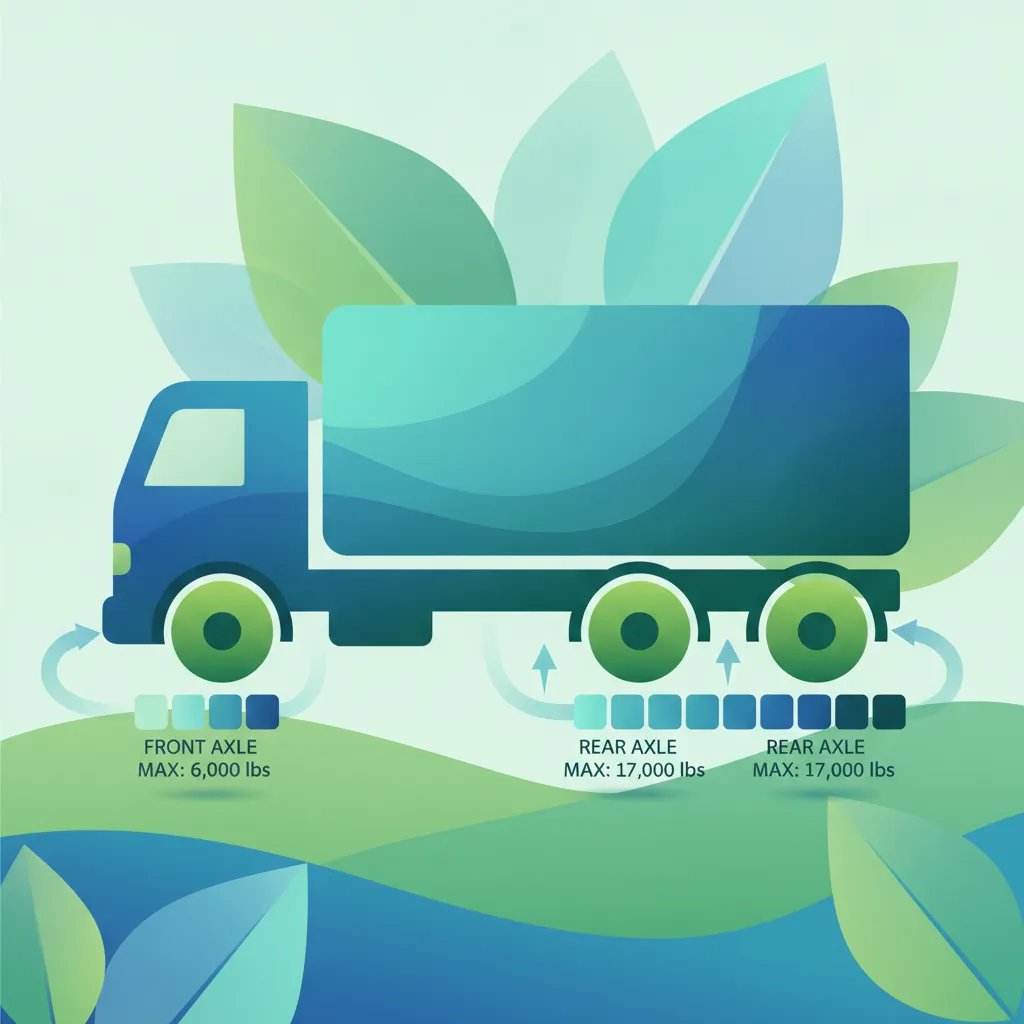
This lesson details the legal restrictions on the weight that can be supported by a single axle or a group of axles. It explains the importance of distributing the load correctly across the vehicle's length to prevent exceeding these limits, which can cause significant road damage and compromise vehicle safety. Learners will understand the relationship between load placement, axle pressure, and overall stability, particularly during braking and cornering.
Explore the relationship between vehicle Massa Complessiva (Gross Vehicle Mass) and the required Italian driver's license categories (C1, C, C1E, CE). Ensure you are qualified to drive vehicles of different weight classes according to the Codice della Strada.
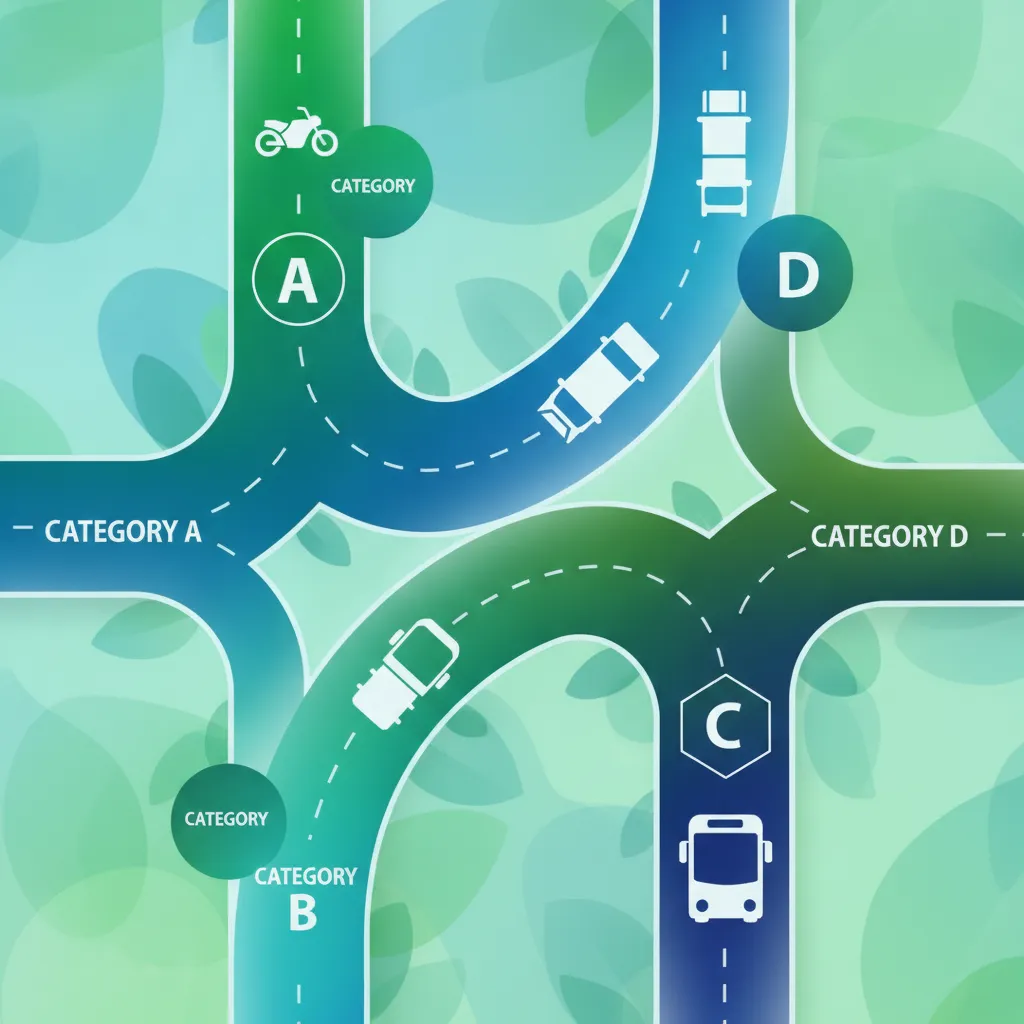
This lesson provides a detailed breakdown of the Italian goods vehicle licence categories, explaining the criteria that define each one. It covers the maximum authorized mass (MAM), vehicle configurations such as rigid trucks and articulated combinations, and the specific permissions granted by the C1, C1E, C, and CE licenses. Understanding these distinctions is fundamental to ensuring legal operation and choosing the correct qualification for specific transport tasks and vehicle types.
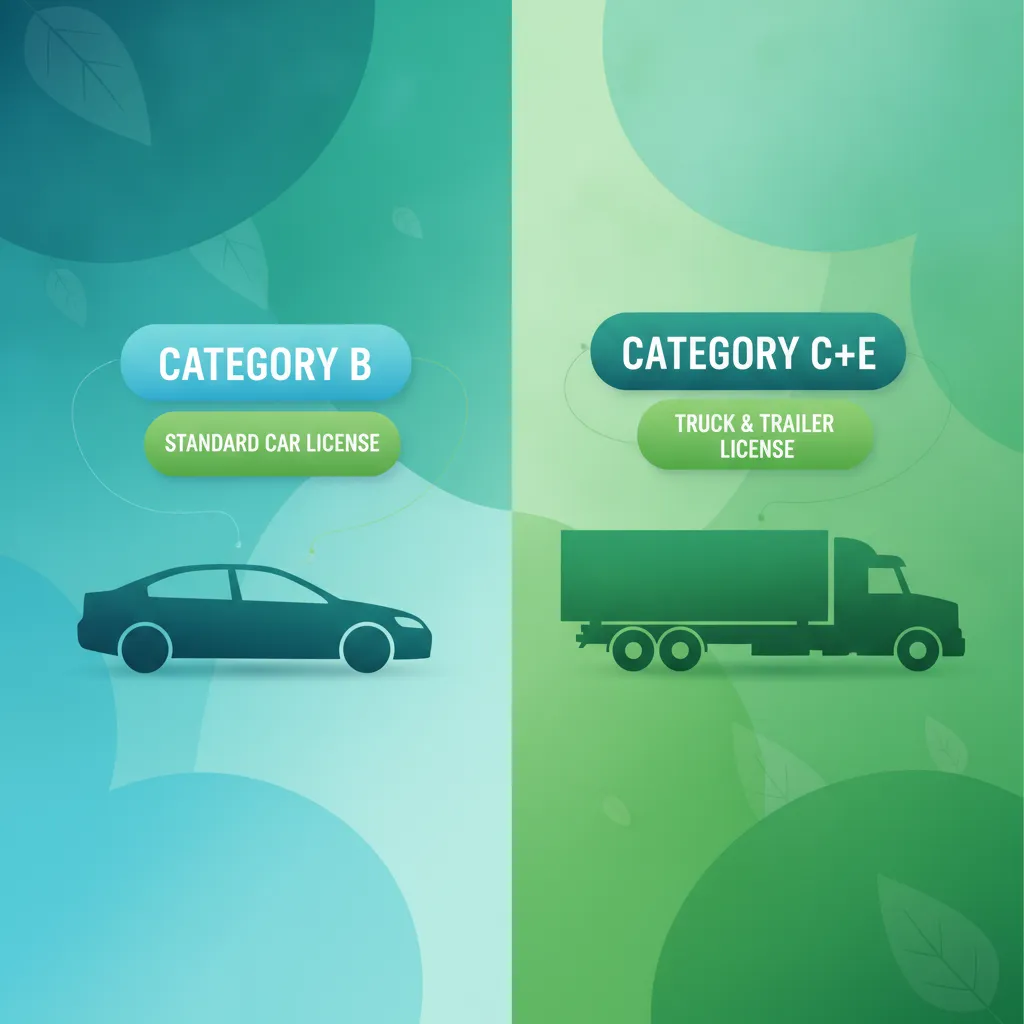
This lesson clearly contrasts the Category B license with the C1, C1E, C, and CE categories, focusing on the significant increases in vehicle mass, dimensions, and operational complexity. It explains the differences in braking systems, vehicle controls, and handling characteristics that necessitate specialized knowledge and skills. Understanding this progression helps learners appreciate the advanced responsibilities and technical competencies required for professional goods vehicle driving.
This lesson provides the practical knowledge needed to calculate the maximum permissible payload ('portata') for a goods vehicle. It explains how to subtract the vehicle's unladen weight (tare) from its maximum authorized mass to determine the available capacity for cargo. Mastering this calculation is essential for planning loads, ensuring legal compliance, and avoiding the risks associated with exceeding the vehicle's design limits.
This lesson details the legal restrictions on the weight that can be supported by a single axle or a group of axles. It explains the importance of distributing the load correctly across the vehicle's length to prevent exceeding these limits, which can cause significant road damage and compromise vehicle safety. Learners will understand the relationship between load placement, axle pressure, and overall stability, particularly during braking and cornering.
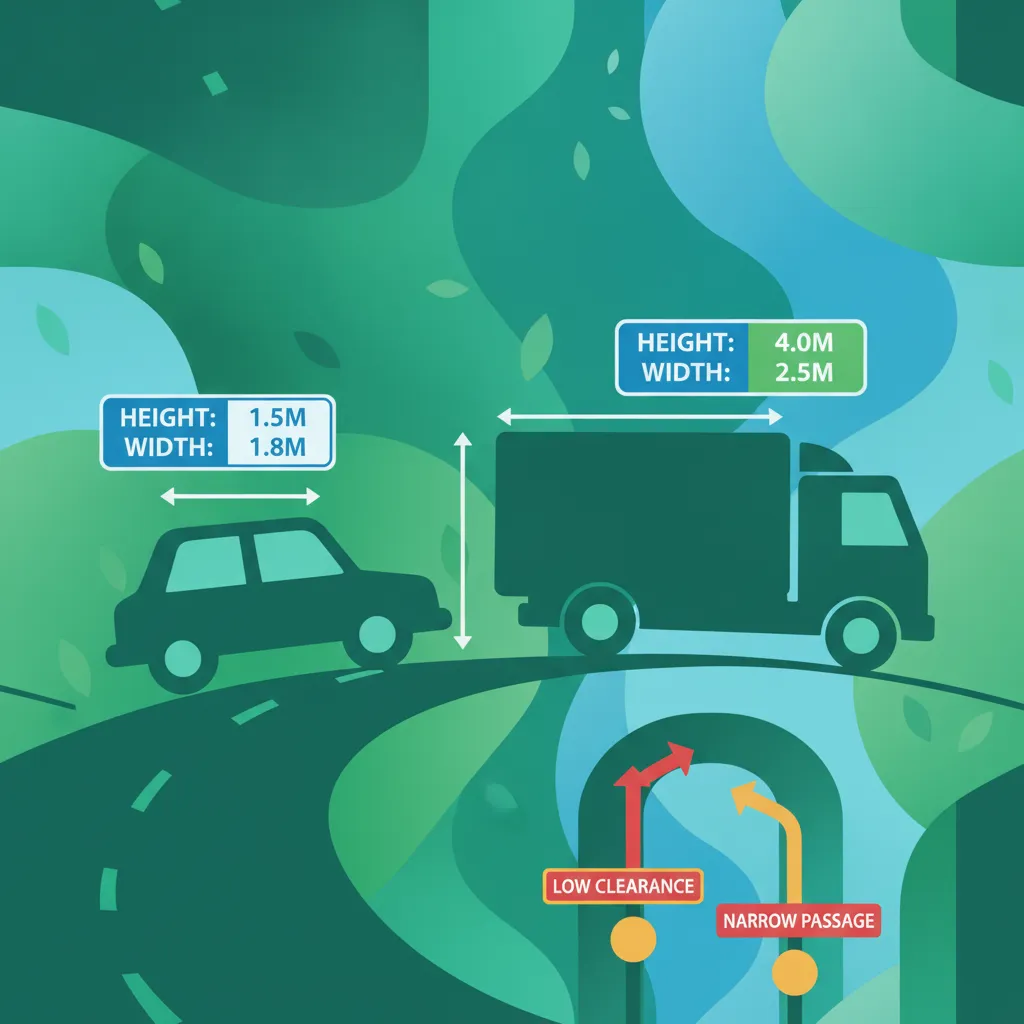
This lesson focuses on the specific dimensional limits that heavy goods vehicles must adhere to on Italian roads, as stipulated by the Codice della Strada. It covers the maximum permissible length, width, and height, explaining how these restrictions impact navigation through tunnels, under bridges, and within urban environments. Learners will also understand the conditions under which special permits for exceptional or oversized transport are required.
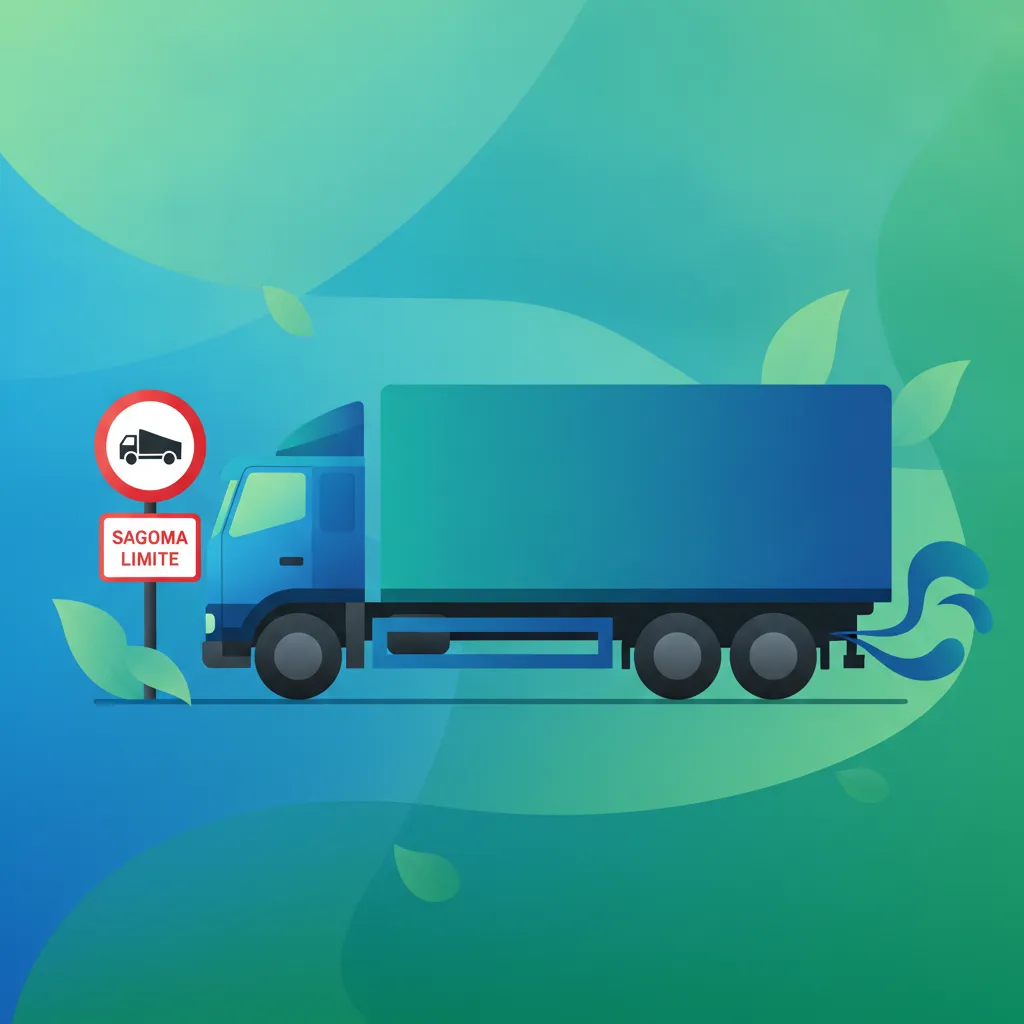
This lesson defines 'sagoma limite', which refers to the maximum outline or silhouette a vehicle and its load can occupy. It then explores the serious repercussions of overloading, which include substantial legal fines, increased stress on vehicle components like brakes and suspension, and dangerously compromised handling and stability. Learners will understand that overloading is not just a legal issue but a critical safety hazard for the driver and all other road users.
This lesson defines the scope of the Italian Patente B license according to the Codice della Strada. It clarifies the specific types of vehicles, including maximum weight and passenger capacity, that can be operated. The content also details the official requirements for applicants, such as minimum age, necessary health certifications, and vision standards needed to qualify for the license.
This lesson synthesizes the unit's concepts through practical, real-world examples of load planning. Learners will work through scenarios that require calculating payload, distributing weight across axles, and checking dimensions to ensure full compliance with 'sagoma limite'. These exercises reinforce the importance of meticulous pre-trip planning to guarantee a safe, legal, and efficient transport operation from start to finish.

This lesson focuses on the specific regulations and techniques for operating a heavy vehicle on high-speed motorways. It covers mandatory lane discipline for trucks, the rules governing overtaking other heavy vehicles, and the specific speed limits that apply. Best practices for merging onto and exiting the motorway, maintaining safe following distances, and using the hard shoulder only in genuine emergencies are also detailed.
Find clear answers to common questions learners have about Massa Complessiva and Massa a Pieno Carico. Learn how the lesson is structured, which driving theory objectives it supports, and how it fits into the overall learning path of units and curriculum progression in Italy. These explanations help you understand key concepts, lesson flow, and exam focused study goals.
In the context of the Italian Codice della Strada, these terms are often used interchangeably to describe the maximum authorized mass of the vehicle, including the weight of the vehicle itself and its maximum permitted payload. You must look for these values on the Carta di Circolazione.
Understanding this difference is critical for calculating your available payload. If you do not correctly subtract the unladen mass from the gross mass, you risk overloading your vehicle, which leads to heavy fines, license points, and severe safety risks.
Yes, the Italian theory exam often includes questions where you must identify or calculate the maximum loading capacity based on values provided in a sample registration document. Mastering these definitions ensures you can answer these technical questions quickly.
Yes, these concepts apply across all professional categories (C, C1, CE). However, for articulated vehicles (CE), you must also consider the specific mass limits for both the tractor unit and the trailer, which are documented separately.
Start searching now to pinpoint exactly which Italian driving theory topics, road signs, or traffic rules you need to master. Use our advanced filters to build a custom practice session and ensure you're fully prepared for every aspect of your official driving licence exam.