
This lesson details the specific legal dimensions and mass restrictions for heavy goods vehicles under the Italian Codice della Strada. You will learn how to interpret and apply these critical limits to ensure your vehicle is compliant and safe for navigating various road environments, including tunnels and urban routes.
Lesson content overview
Driving heavy goods vehicles (HGVs) in Italy requires a thorough understanding of the specific dimensional limits mandated by the Codice della Strada (Italian Road Code). These regulations are critical for ensuring road safety, protecting vital infrastructure like bridges and tunnels, and maintaining the smooth flow of traffic. Adhering to these limits, or obtaining the necessary special permits when loads exceed standard dimensions, is a fundamental responsibility for every professional driver seeking an Italian Goods Vehicle License Theory Course (C, C1, C1E, CE).
This lesson will delve into the maximum permissible length, width, and height for various heavy vehicle categories, exploring how these restrictions impact navigation, especially through challenging environments such as urban areas, tunnels, and underpasses. We will also examine the conditions under which special permits for exceptional or oversized transport become indispensable, ensuring you are fully equipped to comply with Italian law and operate safely on the roads.
The Codice della Strada sets precise rules for the dimensions of heavy vehicles for several compelling reasons. Firstly, these limits are designed to prevent collisions with fixed road infrastructure, such as bridge supports, tunnel walls, and overhead gantries. Secondly, they ensure that vehicles can safely navigate the existing road network, including turns, narrow lanes, and shared spaces with other road users. Finally, strict adherence to dimension limits reduces the risk of traffic congestion and accidents caused by oversized vehicles impeding flow or creating unforeseen hazards.
Understanding and respecting these rules is not merely about avoiding fines; it is about promoting collective safety and preserving the integrity of Italy's extensive road network. Failure to comply can lead to severe penalties, vehicle impoundment, and, most importantly, dangerous situations on the road.
Italy's Codice della Strada defines statutory limits for the length, width, and height of heavy vehicles. These limits vary slightly based on the vehicle category and configuration. It is crucial to measure your vehicle accurately, including any load and protruding parts, to ensure full compliance before commencing any journey.
The lunghezza (length) refers to the overall measurement of a heavy vehicle, stretching from its foremost point to its rearmost point. This includes the vehicle's bumpers and any load that might extend beyond them. Accurate length measurement is vital for safe navigation, particularly on winding roads, during turns, and when entering tight spaces.
For single rigid vehicles in the C1 category, the maximum permissible length is generally 7.5 meters. Vehicles classified under Category C have a more generous limit, typically up to 12 meters. Combinations of vehicles, such as those in categories C1E and CE (trucks with trailers or semi-trailers), have different regulations, with standard limits often reaching 15.5 meters, and potentially up to 16.5 meters under specific conditions, which usually necessitate a special permit. Overlooking load overhangs when calculating total length is a common mistake that can lead to non-compliance.
The larghezza (width) is the total transverse distance of a heavy vehicle, measured at its widest point. This measurement is critical for determining a vehicle's ability to fit within road lanes, cross narrow bridges, and pass other vehicles safely. A common oversight is failing to account for side mirrors, which often protrude beyond the main bodywork and must be included in the overall width calculation.
For most heavy goods vehicles in Italy, the general maximum width limit is 2.55 meters. This limit includes all permanent or temporary parts, such as side mirrors, cargo, and specialized equipment. If a vehicle's width, including its mirrors, exceeds this 2.55-meter threshold, it is considered oversized and will require a special permit to operate on public roads. Special care should be taken in urban environments or on smaller provincial roads where lane widths might be narrower.
The altezza (height) refers to the vertical distance from the ground to the highest point of the vehicle. This includes the top of the cab, any cargo stacked on the vehicle, and any mounted equipment like cranes or roof boxes. Vehicle height is a critical dimension for ensuring safe passage under bridges, through tunnels, and beneath overhead gantries.
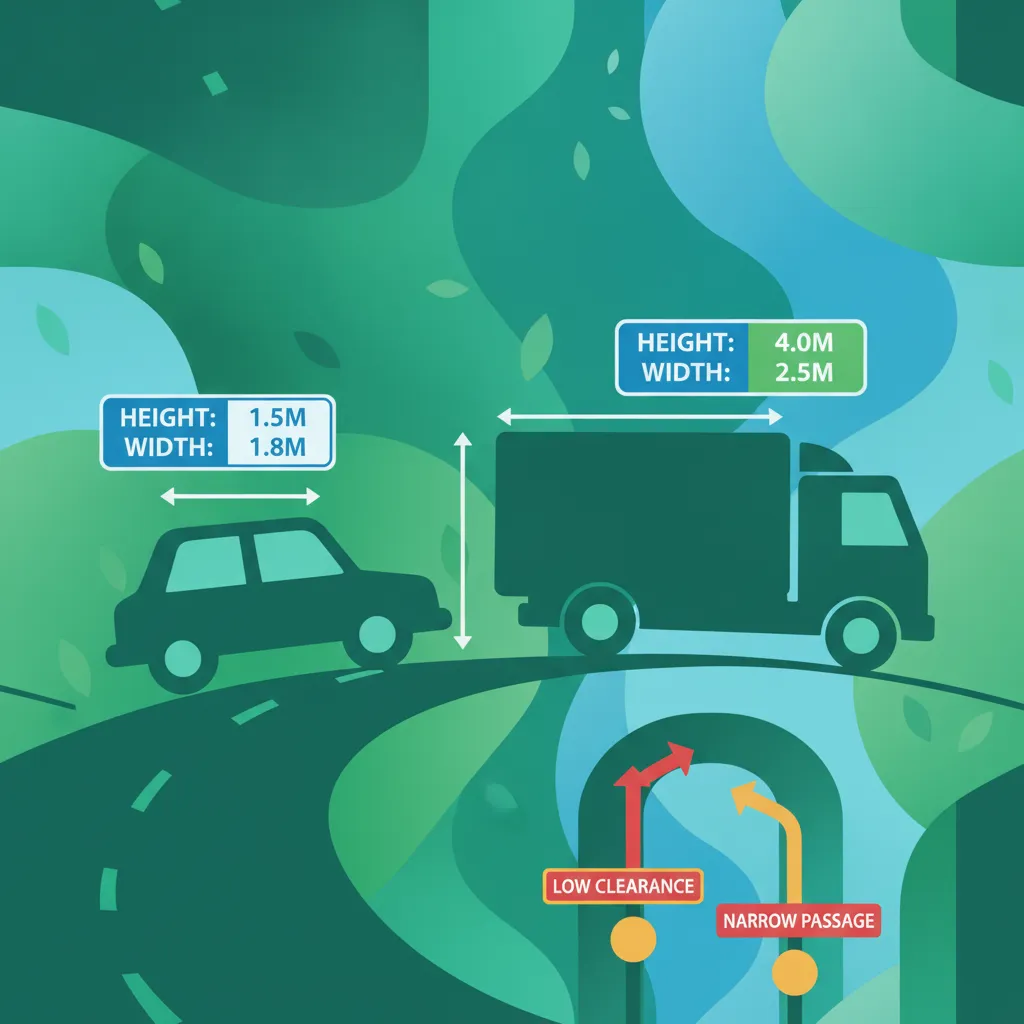
The standard maximum height for most heavy goods vehicles in Italy is 4.0 meters. Exceeding this limit without a special permit can have severe consequences, including structural damage to the vehicle and the infrastructure it impacts, as well as significant legal penalties. Drivers must always be aware of posted height restrictions, which may be lower than the general limit in specific locations such as older tunnels or urban underpasses. Checking the vehicle's actual height, especially when laden, is a crucial step before embarking on any journey.
The Codice della Strada specifies different dimensional limits tailored to the characteristics and intended use of various heavy vehicle categories. Understanding these distinctions is fundamental for licensed drivers.
| Category | Maximum Length | Maximum Width (incl. mirrors) | Maximum Height |
|---|---|---|---|
| C1 | 7.5 m | 2.55 m | 4.0 m |
| C | 12 m | 2.55 m | 4.0 m |
| C1E | 12 m | 2.55 m | 4.0 m |
| CE | 15.5 m | 2.55 m | 4.0 m |
| CE (Articulated/Road Train) | Up to 16.5 m* | 2.55 m | 4.0 m |
Note: CE combinations (articulated vehicles or road trains) are typically limited to 15.5 meters, but can extend to 16.5 meters under specific conditions, such as for specific cargo types or configurations, and almost always require a Permesso di Trasporto Eccezionale (Special Permit for Exceptional Transport). These special conditions are strictly regulated and require specific endorsements and route planning.
Drivers must always verify their vehicle's specific category and its corresponding dimensional limits. Any deviation from these standards, whether due to the vehicle's inherent design or the nature of its load, necessitates a special permit.
Certain road environments pose unique challenges for heavy vehicles due to inherent infrastructural limitations. Tunnels, bridges, and dense urban areas frequently feature stricter dimension restrictions than the general national limits.
Tunnels, underpasses, and bridges often have explicit clearance (soglia) values indicated by prominent road signs. These signs specify the maximum permissible height for vehicles to pass safely. It is imperative that drivers scrupulously observe these signs, as attempting to pass through a structure with insufficient clearance can result in catastrophic collisions, severe damage to the vehicle and infrastructure, and potential injury.
Beyond height, some tunnels, particularly older or more winding ones, may also impose length or width restrictions to ensure safe passage and prevent obstructions. Drivers of long articulated vehicles must be particularly mindful of turning radii and potential tail swing in such confined spaces. Always consult signage and, if available, route-specific information.
Urban environments present a complex array of challenges for heavy vehicles, largely due to tighter turning radii, narrower streets, and the presence of numerous fixed obstacles like streetlights, parked cars, and building facades. The increased length and width of HGVs can make maneuvering difficult and heighten the risk of collision.
In urban areas, drivers might encounter signs indicating specific restrictions for heavy vehicles, such as bans on certain streets, reduced speed limits, or restrictions on vehicle dimensions. Longer vehicles may need to plan routes carefully to avoid streets with sharp turns or insufficient space, while wider vehicles must constantly monitor their clearance from parked cars and other street furniture. Special care is needed near pedestrian zones, schools, and cycle lanes, where the sheer size of an HGV can pose a greater risk to vulnerable road users.
The sbalzo (overhang) refers to the portion of a load that extends beyond the physical extremities of the vehicle, either to the front or, more commonly, to the rear. The Codice della Strada (specifically Art. 148 and 149) regulates permissible overhangs and mandates specific marking requirements to ensure visibility and safety for other road users.
Generally, loads may not extend forward beyond the front of the vehicle. Rear overhangs are permissible but are subject to strict limits. For single rigid vehicles, the rear overhang of the load typically cannot exceed 3/10 (30%) of the length of the vehicle itself, and in no case may it exceed 1.0 meter without special marking. For articulated vehicles, specific rules apply to the trailer.
Crucial Overhang Rule: If a load extends beyond the outermost rear point of the vehicle by more than 1.0 meter, or if it constitutes a significant overhang, it must be visibly marked with a square panel (often red and white diagonal stripes, conforming to Art. 149 of the Codice della Strada) and, during hours of darkness or poor visibility, with appropriate lighting.
Failure to properly mark an overhanging load creates a significant hazard, as other drivers may not accurately perceive the vehicle's true length, leading to potential rear-end collisions or misjudged overtaking maneuvers.
When a heavy vehicle, including its load, exceeds the standard dimensional limits (length, width, or height) defined by the Codice della Strada, it is classified as an trasporto eccezionale (exceptional transport). Such transport is only permitted on public roads with a valid Permesso di Trasporto Eccezionale (Special Permit for Exceptional Transport).
A special permit is legally required in the following scenarios:
Obtaining a special permit is a complex process that involves careful planning and adherence to strict conditions. These conditions are designed to mitigate the risks associated with transporting oversized loads and typically include:
Non-compliance with any of these conditions, even if a permit has been issued, can lead to serious legal consequences, including fines, vehicle impoundment, and revocation of the permit.
Several articles within the Codice della Strada directly govern vehicle dimensions and exceptional transport. Familiarity with these regulations is paramount for any professional driver in Italy.
| Article Number | Subject | Rationale | Implications for Drivers |
|---|---|---|---|
| Art. 119 | Maximum vehicle dimensions | Defines standard limits to protect infrastructure and ensure road safety. | Drivers must ensure their vehicle (including load) does not exceed 12 meters length (rigid vehicles), 2.55 meters width, and 4.0 meters height, unless authorized by special permit. Combinations have specific rules. |
| Art. 120 | Width including mirrors | Ensures overall vehicle width (including protruding parts) fits road infrastructure. | The stated maximum width (e.g., 2.55 m) includes side mirrors. Drivers must consider mirrors in their overall width and ensure they do not exceed the limit. |
| Art. 122 | Height restrictions (tunnels, overpasses) | Prevents collisions with overhead structures. | Drivers must observe all posted height restriction signs, which may be lower than the general 4.0 m limit. Attempting to pass with excess height is strictly prohibited and dangerous. |
| Art. 124 | Oversized load permits (Trasporti Eccezionali) | Legal framework for safe transport of inherently oversized goods. | If a vehicle's dimensions (length, width, or height) exceed standard limits, a "Permesso di Trasporto Eccezionale" is mandatory. This permit specifies route, time, and other conditions. |
| Art. 148 | Forward and rear overhang limits | Manages load extensions to ensure safe maneuverability and prevent hazards. | Loads cannot extend forward. Rear overhang is limited (e.g., 3/10 of vehicle length, max 1.0 m without marking). Drivers must adhere to these limits to prevent collisions and maintain vehicle stability. |
| Art. 149 | Rear overhang marking | Ensures visibility of extended loads for other road users, reducing accident risk. | If a load extends beyond the rear of the vehicle by more than 1.0 meter, or significantly, it must be clearly marked with a square panel with red and white diagonal stripes (or equivalent as per regulations) and appropriate lighting at night/poor visibility. |
These articles form the backbone of dimensional compliance for heavy vehicles in Italy. Regular review of the Codice della Strada for any updates or amendments is a responsible practice for all professional drivers.
Despite clear regulations, violations of vehicle dimension limits are unfortunately common. Understanding these frequent errors can help drivers avoid costly fines and, more importantly, dangerous situations.
Pre-Trip Checks: Before every journey, especially with a new load or vehicle configuration, perform a comprehensive dimensional check. Measure the total length, width (including mirrors!), and height (from the highest point of the load or vehicle). Compare these measurements against the legal limits for your vehicle category and the known restrictions of your planned route.
Vehicle dimensions and their safe navigation are not static concepts; they are influenced by various environmental and operational factors.
Navigating Italy's roads as a professional heavy goods vehicle driver demands a comprehensive understanding of vehicle dimensions and their associated restrictions. The Codice della Strada establishes clear boundaries for lunghezza (length), larghezza (width), and altezza (height) for all heavy vehicle categories, from C1 rigid trucks to CE articulated combinations.
Crucially, these limits are not arbitrary; they are meticulously designed to protect road infrastructure, ensure safe passage, and prevent accidents involving all road users. Drivers must meticulously measure their vehicles, including all load and protruding elements like side mirrors, to confirm compliance. Special attention must be paid to local restrictions, such as the lower clearance limits often found in tunnels and under bridges.
When a vehicle or its load exceeds these standard dimensions, a Permesso di Trasporto Eccezionale (Special Permit for Exceptional Transport) becomes a mandatory legal requirement. Such permits come with strict conditions regarding route, time, accompanying escorts, and specific signage, including the "EC" warning sign and proper marking of sbalzo (overhangs). Adhering to these regulations is paramount for safety, legality, and the smooth operation of commercial transport across Italy.
This lesson covers the legal dimensional limits for heavy goods vehicles in Italy under the Codice della Strada, including maximum length (7.5m to 16.5m depending on category), width (2.55m including mirrors), and height (4.0m standard). It explains how these limits protect infrastructure and road safety, the rules for load overhangs including mandatory markings, and the conditions requiring a Permesso di Trasporto Eccezionale when standard limits are exceeded. Understanding these regulations is essential for both passing the Italian theory exam and operating professionally as a heavy vehicle driver.
A short set of high-value points that capture the most important learning from this lesson.
Maximum dimensions for heavy vehicles are 12m length (rigid), 2.55m width (including mirrors), and 4.0m height for categories C, C1, C1E, and CE.
Vehicle combinations (CE) can reach 15.5m standard length, with a possible 16.5m extension only under special permit conditions.
Overhangs extending more than 1.0m beyond the vehicle's rear must be marked with red and white diagonal stripes and illuminated at night.
A Permesso di Trasporto Eccezionale is mandatory whenever any dimension exceeds standard limits, specifying route, time windows, and escort requirements.
Posted clearance signs in tunnels and under bridges may set lower height limits than the national 4.0m maximum.
Explore all units and lessons included in this driving theory course.
Side mirrors are included in the total width measurement; 2.55m limit applies to the entire vehicle, not just the body.
Rear overhang is limited to 3/10 (30%) of vehicle length for single rigid vehicles and cannot exceed 1.0m without mandatory marking.
Special permits require application to ANAS for national roads or provincial authorities, and violations can void the permit.
Oversized vehicles must display 'EC' signs and may require escort vehicles (scorte tecniche) depending on dimensions.
Always check actual vehicle height when laden, as suspension compression can affect clearance.
Assuming width limits refer only to the vehicle body and forgetting that side mirrors add to overall width.
Neglecting to measure load overhang when calculating total vehicle length, leading to unintentional violations.
Attempting to pass through tunnels or under bridges without checking posted clearance signs that may be lower than 4.0m.
Failing to mark an overhanging load with the required red and white diagonal panel, especially at night or in poor visibility.
Assuming a special permit covers all conditions without following its specific route, time, or escort requirements.
Lesson content overview
A short set of high-value points that capture the most important learning from this lesson.
Maximum dimensions for heavy vehicles are 12m length (rigid), 2.55m width (including mirrors), and 4.0m height for categories C, C1, C1E, and CE.
Vehicle combinations (CE) can reach 15.5m standard length, with a possible 16.5m extension only under special permit conditions.
Overhangs extending more than 1.0m beyond the vehicle's rear must be marked with red and white diagonal stripes and illuminated at night.
A Permesso di Trasporto Eccezionale is mandatory whenever any dimension exceeds standard limits, specifying route, time windows, and escort requirements.
Posted clearance signs in tunnels and under bridges may set lower height limits than the national 4.0m maximum.
Explore all units and lessons included in this driving theory course.
Side mirrors are included in the total width measurement; 2.55m limit applies to the entire vehicle, not just the body.
Rear overhang is limited to 3/10 (30%) of vehicle length for single rigid vehicles and cannot exceed 1.0m without mandatory marking.
Special permits require application to ANAS for national roads or provincial authorities, and violations can void the permit.
Oversized vehicles must display 'EC' signs and may require escort vehicles (scorte tecniche) depending on dimensions.
Always check actual vehicle height when laden, as suspension compression can affect clearance.
Assuming width limits refer only to the vehicle body and forgetting that side mirrors add to overall width.
Neglecting to measure load overhang when calculating total vehicle length, leading to unintentional violations.
Attempting to pass through tunnels or under bridges without checking posted clearance signs that may be lower than 4.0m.
Failing to mark an overhanging load with the required red and white diagonal panel, especially at night or in poor visibility.
Assuming a special permit covers all conditions without following its specific route, time, or escort requirements.
Explore search topics learners often look for when studying Vehicle Dimensions and Restrictions. These topics reflect common questions about road rules, driving situations, safety guidance, and lesson level theory preparation for learners in Italy.
Browse additional driving theory lessons that cover connected traffic rules, road signs, and common driving situations related to this topic. Improve your understanding of how different rules interact across everyday traffic scenarios.
Learn the legal requirements and procedures for obtaining special permits for oversized heavy vehicles in Italy. Understand route planning, necessary signage, and conditions for exceptional transport under the Codice della Strada.

This lesson focuses on the importance of meticulous pre-journey planning for urban deliveries. It teaches drivers how to use maps and digital tools to plan routes that avoid physical restrictions (low bridges, narrow streets), legal restrictions (ZTLs, weight limits), and temporary disruptions. Effective route planning saves time, reduces stress, and ensures that all deliveries can be made legally and safely.

This lesson bridges the gap between general traffic laws and their specific application to heavy goods vehicles. It examines how rules regarding speed limits, lane discipline, overtaking, and priority are modified or have special considerations for trucks due to their size, weight, and reduced maneuverability. Drivers will learn to correctly interpret road signs and signals within the context of operating a large vehicle, ensuring safe and compliant integration with other traffic.

This lesson focuses on the specific regulations and techniques for operating a heavy vehicle on high-speed motorways. It covers mandatory lane discipline for trucks, the rules governing overtaking other heavy vehicles, and the specific speed limits that apply. Best practices for merging onto and exiting the motorway, maintaining safe following distances, and using the hard shoulder only in genuine emergencies are also detailed.

This lesson provides a comprehensive overview of the essential documentation required for both the driver and the vehicle. It covers the driver's license (patente), CQC card, vehicle registration (carta di circolazione), insurance certificate, and transport-specific documents like the cargo manifest. Learners will understand the importance of ensuring all documents are valid and readily available for inspection by authorities to avoid legal penalties and operational delays.
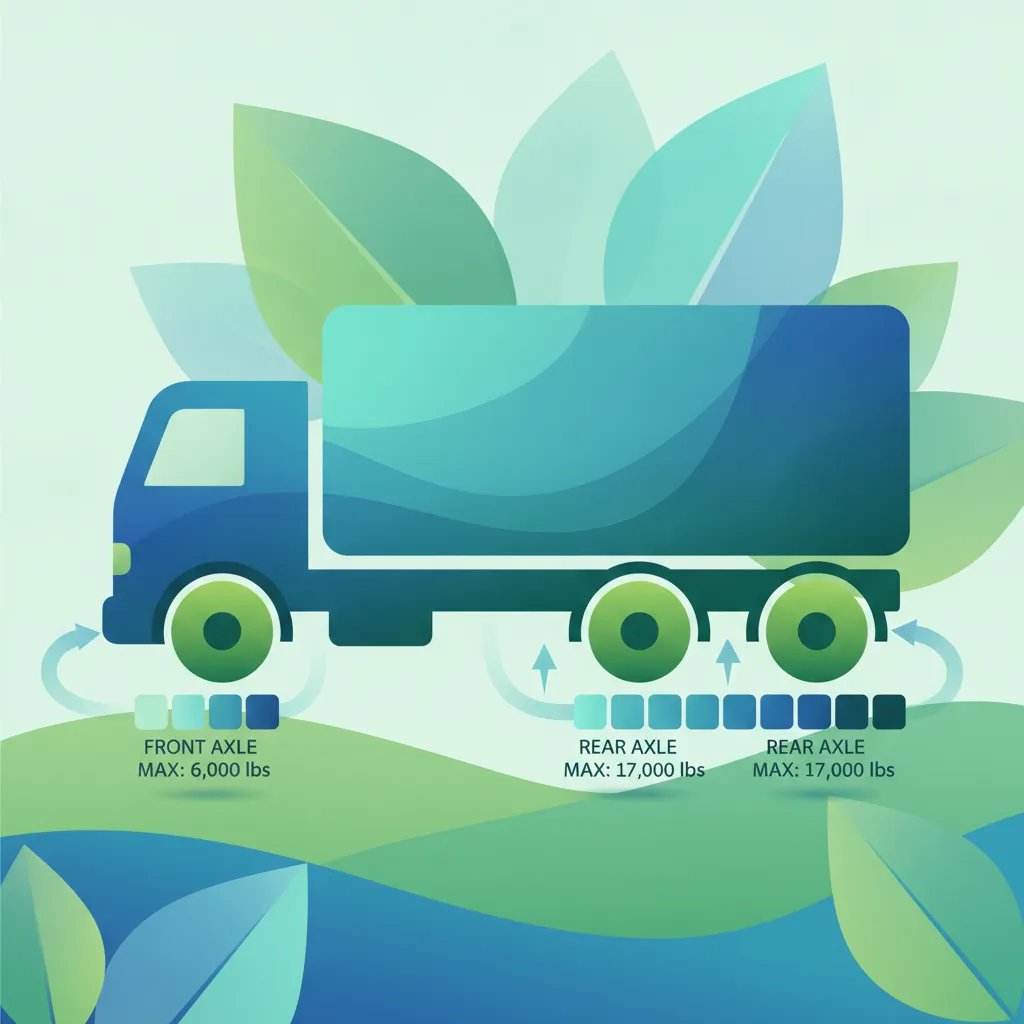
This lesson details the legal restrictions on the weight that can be supported by a single axle or a group of axles. It explains the importance of distributing the load correctly across the vehicle's length to prevent exceeding these limits, which can cause significant road damage and compromise vehicle safety. Learners will understand the relationship between load placement, axle pressure, and overall stability, particularly during braking and cornering.

This lesson outlines the correct protocols for stopping to make a delivery in a public area. It covers the legal use of designated loading bays, the importance of making the vehicle highly visible with hazard lights, and ensuring that the parking brake is securely applied. The lesson stresses the need to conduct loading and unloading activities efficiently and safely, without causing undue obstruction or danger to other road users and pedestrians.

This lesson focuses on the logistical aspects of long-haul driving. It teaches drivers how to plan journeys to comply with legal driving hours and mandatory rest periods, using a tachograph to record activity. The lesson also covers how to plan for fuel stops and select safe and secure overnight parking locations at motorway service areas or designated truck stops.
Understand the challenges and best practices for driving heavy vehicles through tunnels, under bridges, and within restricted urban areas in Italy. Learn how vehicle dimensions impact route choices and safety in confined spaces.

This lesson details the specific rules and safety considerations for driving through the extensive tunnels and high viaducts common in Italy. It covers pre-entry checks, maintaining a safe following distance, and the correct procedures to follow in case of a breakdown or fire inside a tunnel. The lesson also addresses the hazard of strong crosswinds on exposed viaducts and how to maintain vehicle control.

This lesson focuses on the principle of 'appropriate speed' in urban environments, which often means driving slower than the legal maximum. It explains how to assess the environment for potential hazards—such as schools, parked cars, and busy intersections—and adjust speed accordingly to allow for adequate reaction time. Maintaining a safe, consistent speed reduces the need for harsh braking and contributes to a safer environment for everyone.
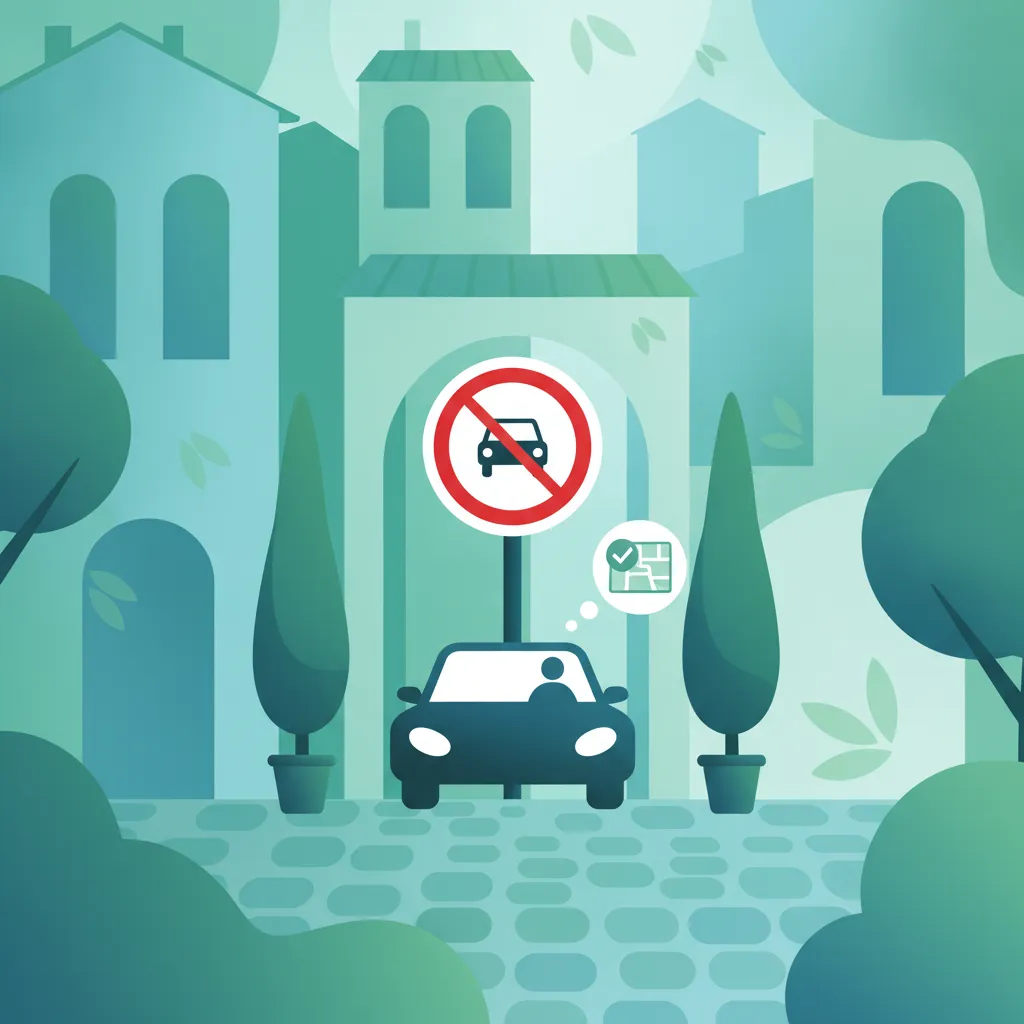
This lesson explains the concept of 'Zone a Traffico Limitato' (ZTL), common in Italian city centers, which restricts vehicle access at certain times. It covers how to identify ZTL boundaries, understand the operating hours, and the procedures for obtaining permits for commercial deliveries. The lesson also touches on environmental zones that may restrict access based on a vehicle's emission standards.
This lesson focuses on the specific regulations and techniques for operating a heavy vehicle on high-speed motorways. It covers mandatory lane discipline for trucks, the rules governing overtaking other heavy vehicles, and the specific speed limits that apply. Best practices for merging onto and exiting the motorway, maintaining safe following distances, and using the hard shoulder only in genuine emergencies are also detailed.
This lesson bridges the gap between general traffic laws and their specific application to heavy goods vehicles. It examines how rules regarding speed limits, lane discipline, overtaking, and priority are modified or have special considerations for trucks due to their size, weight, and reduced maneuverability. Drivers will learn to correctly interpret road signs and signals within the context of operating a large vehicle, ensuring safe and compliant integration with other traffic.
This lesson focuses on the importance of meticulous pre-journey planning for urban deliveries. It teaches drivers how to use maps and digital tools to plan routes that avoid physical restrictions (low bridges, narrow streets), legal restrictions (ZTLs, weight limits), and temporary disruptions. Effective route planning saves time, reduces stress, and ensures that all deliveries can be made legally and safely.
This lesson details the specific safety protocols required when driving through tunnels. It covers the mandatory use of dipped headlights, adherence to specific speed limits, and the general prohibition on overtaking or stopping. The content also explains the correct procedures to follow in case of a breakdown, traffic jam, or fire inside a tunnel, including how to use emergency exits and SOS call boxes.
This lesson explains the rules for special urban traffic situations common in Italy. It provides a detailed explanation of Limited Traffic Zones (ZTL), including how to recognize the signage and understand the access restrictions to avoid fines. The content also offers guidance on navigating the narrow and complex streets of historic centers and safely maneuvering around frequently stopping delivery vehicles.

This lesson provides an in-depth focus on sharing the road with the most vulnerable users. It teaches drivers to be acutely aware of pedestrians at crossings, cyclists filtering through traffic, and motorcyclists who may be in blind spots. The lesson emphasizes the importance of leaving extra space, signaling intentions clearly, and exercising extreme caution at junctions, where the majority of serious incidents occur.

This lesson covers the complete set of lighting, reflective equipment, and protective guards mandated for heavy vehicles. It explains the function of each light, from headlights to side markers, and the importance of keeping them clean and operational to ensure the vehicle is visible to others. The lesson also details the legal requirements and safety purpose of side guards and rear underrun protection, which are designed to protect vulnerable road users in a collision.
Find clear answers to common questions learners have about Vehicle Dimensions and Restrictions. Learn how the lesson is structured, which driving theory objectives it supports, and how it fits into the overall learning path of units and curriculum progression in Italy. These explanations help you understand key concepts, lesson flow, and exam focused study goals.
The sagoma limite defines the maximum clearance limits for road structures like tunnels and bridges. Knowing these allows you to determine if your vehicle can safely traverse specific routes, which is a common testing point in the C and CE theory exams.
While general maximums exist, specific limits depend on the vehicle type, number of axles, and whether it is a combination (like a truck and trailer). This lesson breaks down these variations to ensure you distinguish between C1 and CE vehicle requirements correctly.
A permit is required whenever your vehicle or load exceeds the standard dimensions or weight limits stipulated by the Codice della Strada. Failure to secure this permit leads to heavy fines and potential suspension of your professional driving privileges.
Urban environments in Italy often feature narrow streets and strict height restrictions. Understanding your vehicle's exact dimensions is crucial for avoiding accidents in historic centers or low-clearance areas that are not suitable for heavy vehicles.
Start searching now to pinpoint exactly which Italian driving theory topics, road signs, or traffic rules you need to master. Use our advanced filters to build a custom practice session and ensure you're fully prepared for every aspect of your official driving licence exam.