
This lesson provides a foundational overview of the Italian goods vehicle licence categories, including C1, C1E, C, and CE. By clarifying the specific mass limits and vehicle configurations for each, you will establish the necessary legal context to progress through your professional driving qualification.
Lesson content overview
Understanding the various categories of heavy goods vehicle (HGV) licences in Italy is fundamental for anyone aspiring to a professional driving career. This lesson, part of the Italian Goods Vehicle License Theory Course, provides a detailed breakdown of the C1, C1E, C, and CE licence categories, defining the criteria that differentiate each one. It covers crucial concepts such as Maximum Authorized Mass (MAM), distinguishes between rigid trucks and articulated combinations, and outlines the specific permissions granted by each licence. Mastering these distinctions is not only essential for legal operation under the Codice della Strada but also vital for selecting the correct qualification for diverse transport tasks and vehicle types.
The Italian road traffic code, known as the Codice della Strada, categorizes driving licences to ensure that drivers possess the appropriate knowledge and skills for the vehicles they operate. This tiered system addresses the increased risks and complexities associated with larger and heavier vehicles. For professional goods transport, a distinct set of licences (C1, C1E, C, CE) governs the operation of vehicles designed for carrying goods beyond the scope of a standard car (B) licence.
This foundational understanding is crucial before delving into specific vehicle dimensions, braking systems, or load securing techniques. It establishes the legal boundaries within which all subsequent operational knowledge is applied, ensuring both driver competence and public safety on Italy's roads.
Before exploring the individual licence categories, it is imperative to grasp two core concepts that underpin the entire heavy goods vehicle licensing structure: Maximum Authorized Mass (MAM) and the distinction between rigid trucks and articulated combinations. These definitions determine which licence is required for a given vehicle or vehicle combination.
The Maximum Authorized Mass (MAM) refers to the highest total mass a vehicle or vehicle combination is legally permitted to carry. This includes the vehicle's own weight (tare weight), its fuel, lubricants, driver, passengers, and the entire load. The MAM is determined by the vehicle manufacturer and is legally recognised and enforced, often marked on a plate on the vehicle itself.
The maximum total weight a vehicle or combination may legally carry, including its own mass and any cargo, as stated by the manufacturer and legally recognised.
The primary purpose of MAM is to set safe operational limits based on a vehicle's design, braking performance, and the strength of road infrastructure. Exceeding the MAM is a serious violation, invalidating the vehicle's roadworthiness and posing significant safety risks, regardless of the driver's licence category. It directly dictates which licence category a driver must hold for a specific transport task. For example, a rigid truck with a MAM of 5.5 tonnes can be driven with a C1 licence, while a similar truck with a MAM of 9 tonnes requires a C licence.
The structural configuration of a goods vehicle profoundly impacts its handling characteristics, braking requirements, and, consequently, the licence category needed to operate it. Italian law differentiates between two primary types: rigid trucks and articulated combinations.
A rigid truck is a single, non-segmented vehicle frame where the cab and cargo area are integrated into one chassis. These vehicles are generally more straightforward to manoeuvre than combinations, as they operate as a single unit. Their mass limits are typically tied directly to the C1 and C licence categories.
An articulated combination, on the other hand, consists of two or more separate vehicles linked by a coupling device. The most common form involves a tractor unit (a vehicle designed to tow trailers) coupled with one or more trailers, which can be either full trailers or semi-trailers. Articulated combinations present different driving challenges due to their length, multiple pivot points, and increased complexity in braking and cornering. They require a higher level of driver skill and are therefore governed by the C1E and CE licence categories.
Understanding this distinction is vital. Assuming any trailer can be added to a tractor unit without considering licence implications, or neglecting the specific characteristics of semi-trailers versus full trailers, can lead to serious legal and safety breaches.
The Italian licensing system for heavy goods vehicles is structured to ensure that drivers incrementally gain the necessary expertise for increasingly complex and heavier vehicles. Each category builds upon the previous one, granting broader permissions but also requiring a higher level of demonstrated competence.
The C1 licence is the entry point for driving medium-sized rigid goods vehicles. It permits the operation of rigid trucks with a Maximum Authorized Mass (MAM) ranging from 3.5 tonnes up to, but not exceeding, 7.5 tonnes. This category serves as a crucial stepping stone for drivers who aim to operate larger vehicles in the future.
Holders of a C1 licence are authorized to drive vehicles like smaller delivery trucks, furniture removal vans, or specific utility vehicles within the specified mass limits. The C1 licence implicitly means the driver is not authorised to drive vehicles over 7.5 tonnes MAM or any articulated combinations unless they also hold an E category extension. Its purpose is to ensure drivers are competent with vehicles that are significantly larger and heavier than standard cars but do not yet possess the full complexity of larger HGVs.
The C1E licence extends the permissions of the C1 category to include certain articulated combinations. Specifically, it allows the operation of vehicle combinations where the tractor unit is a C1 category vehicle (MAM between 3.5 and 7.5 tonnes) and is coupled with a trailer or semi-trailer. The crucial stipulations for a C1E licence are that the Maximum Authorized Mass (MAM) of the trailer or semi-trailer must not exceed 3.5 tonnes, and the combined MAM of the entire articulated combination must not exceed 12 tonnes.
Remember the key limits for C1E: tractor unit (rigid) MAM 3.5-7.5 t, trailer MAM ≤ 3.5 t, and combined MAM ≤ 12 t. All three conditions must be met.
This category is designed for operators handling medium-sized tractor-trailer combinations, bridging the gap between basic rigid truck operation and the full heavy goods and articulated vehicle licences. It expands professional opportunities by allowing drivers to transport larger volumes or specialized equipment that might require a trailer, while still maintaining a manageable vehicle size.
The C licence represents a significant step up, granting authority to operate heavy rigid trucks with a Maximum Authorized Mass (MAM) exceeding 3.5 tonnes, with no upper limit on the rigid vehicle's MAM (subject to vehicle design and road regulations). Furthermore, a C licence permits the operation of any tractor unit for an articulated combination, provided that the tractor unit is not currently towing a trailer that would necessitate a CE licence.
A motor vehicle designed primarily to tow trailers, especially semi-trailers, forming an articulated combination.
This licence reflects a higher level of professional competence for general heavy goods vehicle operations. A C licence holder can drive virtually any rigid truck found on Italian roads, from large construction vehicles to long-haul delivery trucks. While it permits driving a tractor unit, the key distinction from CE is the limitation on the trailer's MAM when forming an articulated combination. Without the 'E' extension, a C licence only permits towing light trailers up to 750 kg.
The CE licence is the highest tier of heavy goods vehicle licensing in Italy, specifically designed for operating full heavy articulated combinations. It extends the permissions of the C licence to include combinations where the Maximum Authorized Mass (MAM) of the trailer or semi-trailer exceeds 3.5 tonnes. This category is essential for drivers involved in long-haul logistics, transporting large volumes, or operating specialized heavy equipment on semi-trailers.
With a CE licence, a driver can operate a tractor unit towing any size trailer or semi-trailer, subject only to the overall legal limits for vehicle dimensions and total combination mass allowed on specific roads and infrastructure. This licence signifies the utmost professional competence for operating the largest and most complex goods vehicles, addressing the unique challenges of controlling multiple pivot points, extended braking distances, and managing significant overall mass.
Operating heavy goods vehicles under C, C1, C1E, or CE licences in Italy involves adherence to a strict legal framework and a range of professional obligations. These are not merely administrative requirements but are fundamental to ensuring road safety and maintaining the integrity of professional transport.
The primary legal authority governing heavy goods vehicle operation and licensing in Italy is the Codice della Strada (Italian Road Traffic Code). Article 115, among others, specifically delineates the vehicle categories and the corresponding licence requirements. These provisions are mandatory for all drivers operating goods vehicles in Italy and are designed to align driver qualifications with vehicle capabilities.
The Codice della Strada sets clear rules for:
Failure to comply with these regulations can result in severe penalties, including fines, licence suspension, and legal liability in case of an accident. The legal framework's rationale is to mitigate the risk of accidents caused by insufficient driver training or poorly maintained vehicles, which can have catastrophic consequences when dealing with heavy masses.
Beyond simply holding the correct licence, professional HGV drivers in Italy have continuous obligations. These include:
Professional drivers must stay informed about legislative updates and ensure continuous compliance with all relevant transport regulations. Ignoring these obligations not only carries legal risks but also compromises road safety.
Despite the clear legal definitions, certain common violations and misunderstandings persist regarding Italian goods vehicle licence categories. These often arise from insufficient knowledge or attempts to circumvent regulations, leading to significant penalties and safety hazards.
These scenarios highlight the importance of not only obtaining the correct licence but also thoroughly understanding its specific limitations and adhering to all associated regulations.
The legal categorisation of driving licences is intrinsically linked to fundamental safety principles and operational considerations unique to heavy goods vehicles. The increased mass and complex configurations demand a heightened level of driver awareness and skill.
Effective training, as provided by the Italian Goods Vehicle License Theory Course, addresses these factors, ensuring that drivers are not only legally qualified but also possess the practical knowledge and defensive driving skills necessary for safe HGV operation.
Navigating the Italian goods vehicle licence categories is a critical first step for any aspiring professional driver. This lesson has detailed the key distinctions and requirements for C1, C1E, C, and CE licences, emphasizing their importance in ensuring legal compliance and road safety.
These distinctions ensure a clear hierarchy of competence and progressively allow drivers to handle more complex and heavier transport tasks, contributing to a safer and more efficient professional transport sector in Italy.
This lesson explains the Italian HGV licence hierarchy for heavy goods vehicles, distinguishing between C1 (rigid 3.5-7.5t), C1E (medium articulated combinations up to 12t combined), C (heavy rigid trucks and tractor units), and CE (full heavy articulated combinations). The key determinant is the Maximum Authorized Mass (MAM), which includes the vehicle, fuel, driver, passengers, and cargo. Understanding whether a vehicle is a rigid truck or an articulated combination is essential, as articulated vehicles require the 'E' extension due to their increased complexity. The Codice della Strada establishes these categories to ensure drivers have appropriate competence for the mass and configuration they operate, with specific legal obligations including medical fitness checks and compliance with driving and rest time regulations.
A short set of high-value points that capture the most important learning from this lesson.
Maximum Authorized Mass (MAM) is the primary determinant for licence categories, representing the maximum legal weight including vehicle, driver, fuel, and cargo.
Rigid trucks and articulated combinations require different licence categories due to their distinct handling characteristics and operational complexity.
The C1 licence covers rigid trucks between 3.5 and 7.5 tonnes MAM, serving as the entry point for medium-sized goods vehicles.
The C1E licence extends C1 to articulated combinations with strict limits: tractor MAM 3.5-7.5t, trailer MAM ≤3.5t, and combined MAM ≤12t.
The CE licence is required for full heavy articulated combinations where the trailer's MAM exceeds 3.5 tonnes, while a standard C licence only permits light trailers up to 750 kg.
Explore all units and lessons included in this driving theory course.
C1 covers rigid trucks up to 7.5 tonnes MAM; any rigid truck exceeding this limit requires a C licence.
For C1E, all three conditions must be satisfied simultaneously: tractor 3.5-7.5t, trailer ≤3.5t, and combined ≤12t.
A C licence permits heavy rigid trucks and tractor units, but does not authorise heavy trailers—CE is needed for those.
The Codice della Strada governs all HGV licensing and imposes mandatory medical checks for C and CE holders.
Exceeding the MAM is a serious violation regardless of licence category and invalidates vehicle roadworthiness.
Assuming a rigid truck over 7.5 tonnes MAM can be driven with a C1 licence, when it actually requires a C licence.
Attempting to tow a trailer exceeding 3.5 tonnes MAM with only a C licence, which requires the CE endorsement.
Exceeding the 12-tonne combined MAM limit for C1E combinations, even when individual limits appear compliant.
Believing that C licence permits all tractor-trailer combinations, when in fact it only covers light trailers and heavy combinations require CE.
Neglecting mandatory periodic medical fitness assessments, which can lead to licence revocation for professional HGV drivers.
Lesson content overview
A short set of high-value points that capture the most important learning from this lesson.
Maximum Authorized Mass (MAM) is the primary determinant for licence categories, representing the maximum legal weight including vehicle, driver, fuel, and cargo.
Rigid trucks and articulated combinations require different licence categories due to their distinct handling characteristics and operational complexity.
The C1 licence covers rigid trucks between 3.5 and 7.5 tonnes MAM, serving as the entry point for medium-sized goods vehicles.
The C1E licence extends C1 to articulated combinations with strict limits: tractor MAM 3.5-7.5t, trailer MAM ≤3.5t, and combined MAM ≤12t.
The CE licence is required for full heavy articulated combinations where the trailer's MAM exceeds 3.5 tonnes, while a standard C licence only permits light trailers up to 750 kg.
Explore all units and lessons included in this driving theory course.
C1 covers rigid trucks up to 7.5 tonnes MAM; any rigid truck exceeding this limit requires a C licence.
For C1E, all three conditions must be satisfied simultaneously: tractor 3.5-7.5t, trailer ≤3.5t, and combined ≤12t.
A C licence permits heavy rigid trucks and tractor units, but does not authorise heavy trailers—CE is needed for those.
The Codice della Strada governs all HGV licensing and imposes mandatory medical checks for C and CE holders.
Exceeding the MAM is a serious violation regardless of licence category and invalidates vehicle roadworthiness.
Assuming a rigid truck over 7.5 tonnes MAM can be driven with a C1 licence, when it actually requires a C licence.
Attempting to tow a trailer exceeding 3.5 tonnes MAM with only a C licence, which requires the CE endorsement.
Exceeding the 12-tonne combined MAM limit for C1E combinations, even when individual limits appear compliant.
Believing that C licence permits all tractor-trailer combinations, when in fact it only covers light trailers and heavy combinations require CE.
Neglecting mandatory periodic medical fitness assessments, which can lead to licence revocation for professional HGV drivers.
Explore search topics learners often look for when studying Licence Category Overview. These topics reflect common questions about road rules, driving situations, safety guidance, and lesson level theory preparation for learners in Italy.
Browse additional driving theory lessons that cover connected traffic rules, road signs, and common driving situations related to this topic. Improve your understanding of how different rules interact across everyday traffic scenarios.
Understand the specific definitions and legal limits for Italian C1, C1E, C, and CE goods vehicle licences. Learn about Maximum Authorized Mass (MAM), rigid trucks, and articulated combinations for professional driving.
This lesson clearly contrasts the Category B license with the C1, C1E, C, and CE categories, focusing on the significant increases in vehicle mass, dimensions, and operational complexity. It explains the differences in braking systems, vehicle controls, and handling characteristics that necessitate specialized knowledge and skills. Understanding this progression helps learners appreciate the advanced responsibilities and technical competencies required for professional goods vehicle driving.
This lesson provides a detailed breakdown of the Italian motorcycle licence categories: A1, A2, and the unrestricted A. It explains the specific technical limits for engine displacement, power output in kW, and the power-to-weight ratio that define each category. Understanding these distinctions is fundamental for selecting a compliant vehicle and recognizing the legal scope of each license.
This lesson explores the practical, on-road consequences of the different motorcycle license categories. It analyzes how power and weight restrictions directly affect a motorcycle's handling, acceleration, and braking capabilities. Learners will understand how these factors shape riding strategies and safety considerations, highlighting the competency development needed for each successive license level.

This lesson focuses on the specific regulations and techniques for operating a heavy vehicle on high-speed motorways. It covers mandatory lane discipline for trucks, the rules governing overtaking other heavy vehicles, and the specific speed limits that apply. Best practices for merging onto and exiting the motorway, maintaining safe following distances, and using the hard shoulder only in genuine emergencies are also detailed.
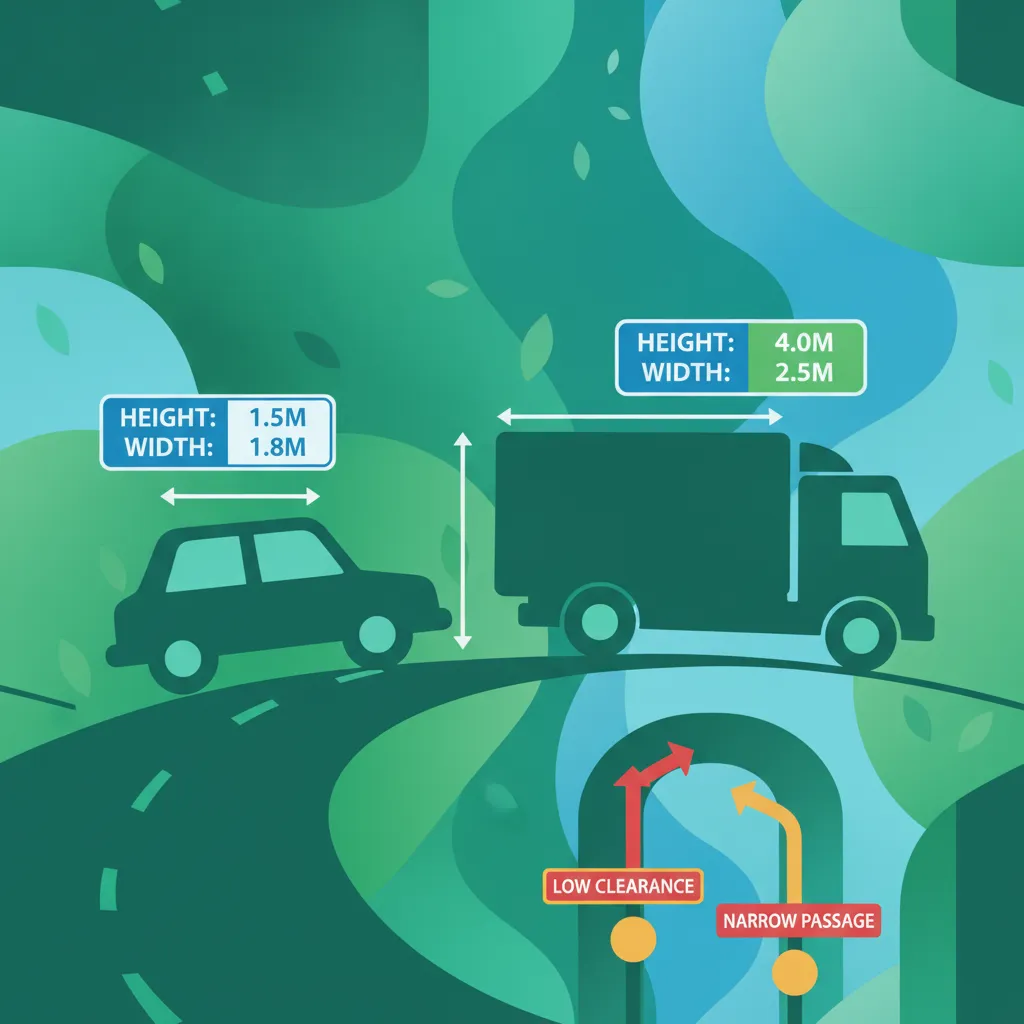
This lesson focuses on the specific dimensional limits that heavy goods vehicles must adhere to on Italian roads, as stipulated by the Codice della Strada. It covers the maximum permissible length, width, and height, explaining how these restrictions impact navigation through tunnels, under bridges, and within urban environments. Learners will also understand the conditions under which special permits for exceptional or oversized transport are required.
This lesson explains the difference between daily checks and long-term scheduled maintenance. It covers the legal requirement for periodic technical inspections ('revisione') to certify a vehicle's roadworthiness and the importance of adhering to manufacturer-recommended service intervals. Learners will understand their crucial role in reporting any mechanical defects promptly to ensure issues are rectified, maintaining the vehicle's safety and reliability over its service life.
This lesson provides a detailed breakdown of the vehicle types authorized under the Patente AM license. You will learn to distinguish between ciclomotori, scooters, three-wheeled mopeds, and light quadricycles by their specific characteristics. Key topics include engine displacement limits, power output, and mandatory equipment like lights, mirrors, and brakes as required by Italian law.
This lesson defines the scope of the Italian Patente B license according to the Codice della Strada. It clarifies the specific types of vehicles, including maximum weight and passenger capacity, that can be operated. The content also details the official requirements for applicants, such as minimum age, necessary health certifications, and vision standards needed to qualify for the license.

This lesson provides a comprehensive overview of the essential documentation required for both the driver and the vehicle. It covers the driver's license (patente), CQC card, vehicle registration (carta di circolazione), insurance certificate, and transport-specific documents like the cargo manifest. Learners will understand the importance of ensuring all documents are valid and readily available for inspection by authorities to avoid legal penalties and operational delays.
This lesson provides a clear overview of the legal consequences for failing to comply with road transport regulations in Italy. It covers the system of fines for common offenses like speeding, overloading, and violations of driving hours. The lesson also explains the penalty point system that can lead to license suspension and touches upon the responsibilities and potential liability of the transport company.
Explore the legal framework and professional obligations for HGV drivers in Italy, focusing on the Codice della Strada. Understand licensing, roadworthiness, and compliance requirements for C, C1, C1E, and CE categories.

This lesson delves into the specific articles of the Italian Codice della Strada that apply to heavy goods vehicles. It outlines the core legal and professional obligations of a driver, including the heightened duty of care owed to other road users and the responsibility for the vehicle's roadworthiness and load. Learners will understand the legal consequences of non-compliance, such as fines and sanctions, reinforcing the importance of adhering to all traffic regulations.

This lesson bridges the gap between general traffic laws and their specific application to heavy goods vehicles. It examines how rules regarding speed limits, lane discipline, overtaking, and priority are modified or have special considerations for trucks due to their size, weight, and reduced maneuverability. Drivers will learn to correctly interpret road signs and signals within the context of operating a large vehicle, ensuring safe and compliant integration with other traffic.
This lesson focuses on the specific dimensional limits that heavy goods vehicles must adhere to on Italian roads, as stipulated by the Codice della Strada. It covers the maximum permissible length, width, and height, explaining how these restrictions impact navigation through tunnels, under bridges, and within urban environments. Learners will also understand the conditions under which special permits for exceptional or oversized transport are required.
This lesson focuses on the specific regulations and techniques for operating a heavy vehicle on high-speed motorways. It covers mandatory lane discipline for trucks, the rules governing overtaking other heavy vehicles, and the specific speed limits that apply. Best practices for merging onto and exiting the motorway, maintaining safe following distances, and using the hard shoulder only in genuine emergencies are also detailed.
This lesson provides a comprehensive overview of the essential documentation required for both the driver and the vehicle. It covers the driver's license (patente), CQC card, vehicle registration (carta di circolazione), insurance certificate, and transport-specific documents like the cargo manifest. Learners will understand the importance of ensuring all documents are valid and readily available for inspection by authorities to avoid legal penalties and operational delays.

This lesson provides a detailed overview of the legal framework for load securing in Italy, focusing on the relevant articles of the Codice della Strada. It outlines the driver's legal responsibility for ensuring the load is secure and covers the standards that securing equipment must meet. Learners will be made aware of the significant fines and other penalties that can be imposed for violations, reinforcing the importance of diligent compliance.
This lesson provides a clear overview of the legal consequences for failing to comply with road transport regulations in Italy. It covers the system of fines for common offenses like speeding, overloading, and violations of driving hours. The lesson also explains the penalty point system that can lead to license suspension and touches upon the responsibilities and potential liability of the transport company.

This lesson outlines the correct protocols for stopping to make a delivery in a public area. It covers the legal use of designated loading bays, the importance of making the vehicle highly visible with hazard lights, and ensuring that the parking brake is securely applied. The lesson stresses the need to conduct loading and unloading activities efficiently and safely, without causing undue obstruction or danger to other road users and pedestrians.
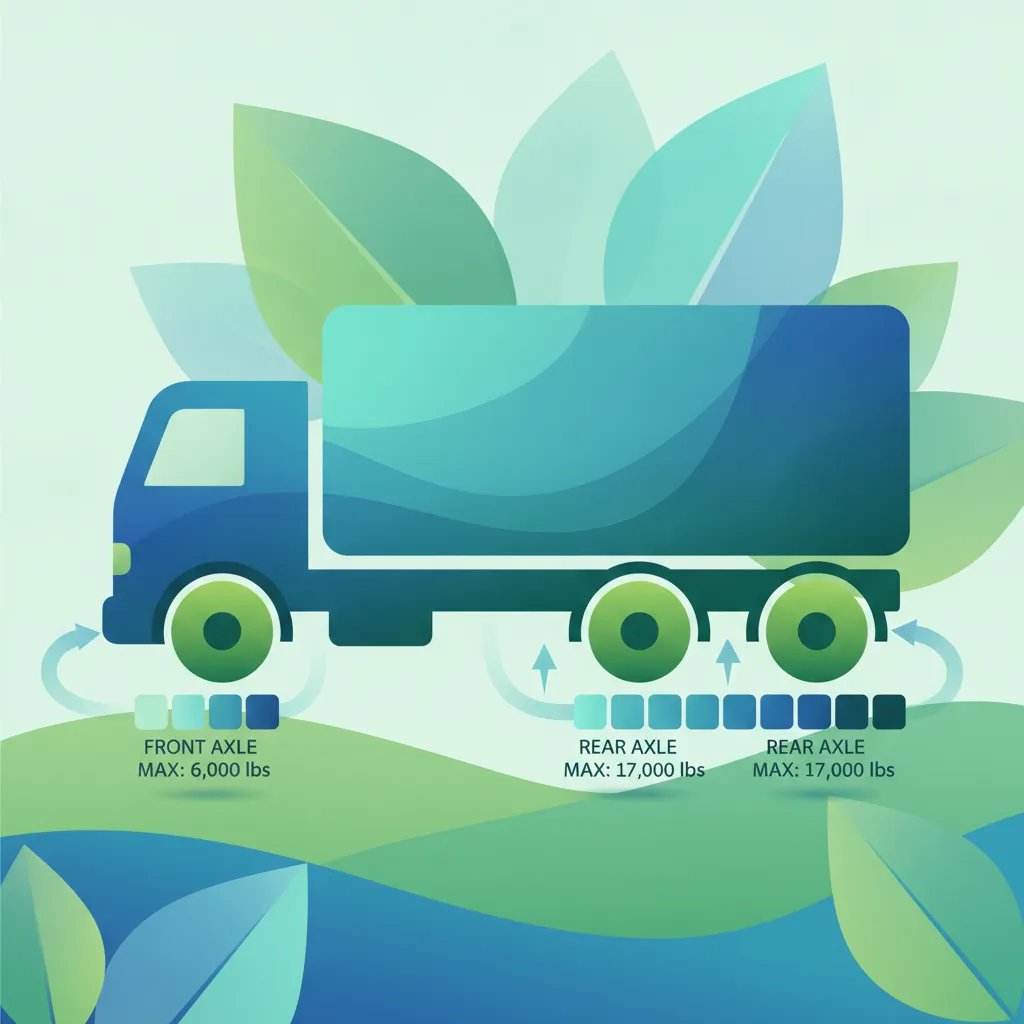
This lesson details the legal restrictions on the weight that can be supported by a single axle or a group of axles. It explains the importance of distributing the load correctly across the vehicle's length to prevent exceeding these limits, which can cause significant road damage and compromise vehicle safety. Learners will understand the relationship between load placement, axle pressure, and overall stability, particularly during braking and cornering.
This lesson covers the complete set of lighting, reflective equipment, and protective guards mandated for heavy vehicles. It explains the function of each light, from headlights to side markers, and the importance of keeping them clean and operational to ensure the vehicle is visible to others. The lesson also details the legal requirements and safety purpose of side guards and rear underrun protection, which are designed to protect vulnerable road users in a collision.
Find clear answers to common questions learners have about Licence Category Overview. Learn how the lesson is structured, which driving theory objectives it supports, and how it fits into the overall learning path of units and curriculum progression in Italy. These explanations help you understand key concepts, lesson flow, and exam focused study goals.
A C1 licence is generally for medium-sized vehicles with a maximum authorized mass between 3.5 and 7.5 tonnes, while a C licence covers vehicles exceeding 3.5 tonnes with no upper limit for weight, subject to vehicle construction.
Yes, if you wish to tow a trailer exceeding 750kg, you typically require an E-category extension (C1E or CE), which signifies you are qualified to operate articulated combinations.
The exam focuses on your ability to correctly identify the load and mass limits applicable to the specific category you are pursuing, often using technical diagrams and weight calculations.
Understanding these terms is vital because they define the legal payload you can carry and the vehicle's classification for administrative purposes, which is a common topic in the theory test.
Start searching now to pinpoint exactly which Italian driving theory topics, road signs, or traffic rules you need to master. Use our advanced filters to build a custom practice session and ensure you're fully prepared for every aspect of your official driving licence exam.